Theresa May will ignore cost warnings and bring in net zero emissions goal
Business Green 7th June 2019 Theresa May will ignore cost warnings and bring in net zero emissions goal before her successor takes over in Downing Street, reports suggest. The Prime Minister will set in law a target for the UK to reach net zero
greenhouse gas emissions by 2050 before she leaves office, although she is
unlikely to bring forward any new policy or detailed action plan for
achieving the goal, according to reports.
As recommended by the Committee
on Climate Change (CCC) in its landmark report last month, Theresa May is
set to announce a net zero goal for 2050 and could do so as soon as next
week, in a move the government expects to garner broad parliamentary
support, reports The Independent.
Chernobyl disaster: how radiation affected the UK, and which parts of Britain are most radioactive today
Background radiation levels are much higher in some parts of the UK than in others,
The poisonous radiation that spewed into the atmosphere drifted over to Western Europe, causing a spike in radiation-related diseases and deaths in the years following the disaster.
How was the UK affected by Chernobyl?
In the immediate aftermath of the accident, the UK government banned the sale of sheep across thousands of farms on the basis that the animals had likely ingested radioactive material from fallout absorbed by plants.
In June of the same year, almost 9,000 British farms were affected by restrictions brought in on the movement and sale of sheep meat. This meant livestock had to be scanned by government officials before they were allowed to enter the food chain.
Parts of Cumbria, Scotland and Northern Ireland were impacted, and North Wales was hardest hit, with sheep in Wales still failing radioactive tests 10 years after the accident in 1996.
The last restrictions on the movement and sale of sheep in the UK were lifted in 2012, 26 years after the meltdown.
There have also been some studies linking increased incidences of infant leukaemia in Britain to the Chernobyl disaster but results are not conclusive.
Which parts of the UK are most radioactive?
Most of the background radiation present in the UK today comes from radon rather than fallout from Chernobyl.
Radon is an odourless, colourless gas formed by the radioactive decay of the small amounts of uranium that occur naturally in all rocks and soils.
Due to the variations in terrain across the UK, this means that some areas nationwide have far higher levels of background radiation than others……. https://inews.co.uk/news/science/chernobyl-disaster-radiation-uk-today-most-radioactive-areas-britain/
12 year old children from irradiated areas in Ukraine helped by a Scottish charity
Chernobyl’s TV success will help with fallout from nuclear horror that never ends
A Scots charity supporting children from communities affected by radiation hopes the hit show will encourage more people to lend their support. Emylie Howie, 9 JUN 2019
t’s the television series that has reignited interest in the nuclear disaster that shocked the world 33 years ago.
Now a charity is hoping the success of the hit show Chernobyl will result in an increase of support for victims of the power station catastrophe.
Co-ordinator Michael Lafferty, of Saltcoats , Ayrshire, said he hopes Sky’s HBO show will encourage more people to volunteer to look after the children. He said: “I’m hoping this programme leads to a bit more interest in families who’d like to host children and give them time away from radiation.
“We’re now dealing with children of the people who were alive at that time and when these kids grow up and have kids of their own we may see more genetic malformations.
“The radiation is going to be there for hundreds of years.”
The series dramatises the Chernobyl nuclear plant disaster in Soviet Union-ruled Ukraine.
During a test on April 26, 1986, reactor four exploded, releasing huge amounts of radiation into the atmosphere until the resulting fire was put out nine days later.
The official death toll was 31 but the figure is thought to be in the millions as a result of radioactive poisoning. Belarus and Ukraine received more than 70 per cent of the fallout and many children were born with severe disabilities or illnesses, including thyroid cancer, bone cancer, leukaemia and facial defects…….. https://www.dailyrecord.co.uk/news/scottish-news/chernobyls-tv-success-help-fallout-16487018
Mini series Chernobyl unfolds the horror of radiation sickness – a warning for the future
‘A horrible way to die’: how Chernobyl recreated a nuclear meltdown, Guardian, Julie McDowall, 5 June 19,
From ‘painting on’ radiation sickness to making the explosion less ‘Die Hard’, the acclaimed drama has gone to great lengths to evoke the chaos and terror of the Soviet-era disaster.
We were lucky to have survived the Cold War without a nuclear attack. The pop culture of that chilly era warned what the bomb would do: the crisping of the skin; the slow agony of radiation sickness; the pollution of the land; and the death of cities.
The bomb didn’t explode, but some people experienced a fragment of this horror. The Chernobyl disaster of 1986 brought explosions, radiation sickness, evacuations, contaminated earth and, finally, medals awarded and memorials erected. It was war after all – but not against the west; this was another type of nuclear enemy.
Sky Atlantic/HBO’s drama Chernobyl unfolds over five distressing episodes that show the 1986 explosion was more than just another disaster in a decade horribly cluttered with them: it was a ghastly taste of nuclear war, a monstrous cover-up and, finally, an event that helped bring down the Soviet Union.
So it is fitting that the series begins with the explosion, as if to get it out of the way so that we might focus on what happens afterwards………..
Surprisingly, Parker didn’t look to photos of Hiroshima or Nagasaki victims for examples of radiation damage, as he suspects these were tempered by wartime propaganda. He went instead to medical textbooks, and this allowed him to pioneer a technique for Chernobyl where he “layered” the skin: painting the actors’ bodies with wounds, then putting a semi-translucent layer on top, giving the impression that sores are forcing themselves to the surface as the body degrades from within. The effect is dreadful to see. Yet, Parker was strict in saying these men must not be relegated to Hollywood “zombies”, and he explains that the director made sure sympathy stayed with these characters: even as they lie rigid on the bed, gurgling and fading, they still speak, and a wife may still hold her husband’s rotting fingers.
“It’s the worst way to die,” says Parker. “Beyond anything you can imagine. The most horrible way to die. I think it’s the worst, in line with medieval torture.” What makes it particularly atrocious is that the victims were denied pain relief. In the latter stages of radiation sickness you cannot inject morphine, he explains. “The walls of the veins are breaking down.”
So the Chernobyl disaster produced agonising deaths without pain-relieving drugs, which brings us back to the horror of nuclear war. Plans for the NHS after a nuclear attack show drug stockpiles would quickly be exhausted, and those who were hopelessly injured would be allowed to die without the tiny mercy of a supermarket paracetamol.
Chernobyl is a compelling and brilliantly realised drama, but it’s also a warning – of the dangers of lies, arrogance and complacency, and of nuclear war itself.
The final episode of Chernobyl airs Tuesday, 9pm on Sky Atlantic. The whole series is available to view on Sky Go and NowTV
Holtec’s involvement in the Ukraine’s Chernobyl’s dry store facility
 Halting Holtec – A Challenge for Nuclear Safety Advocates, CounterPunch, 7 June 19 “……….The California – Chernobyl Connection
Holtec and its client Edison would have the public believe that the San Onofre ISFSI is top of the line, up to date and state-of-the-art spent fuel handling. But that image seems to be contradicted by a recent Holtec press release and accompanying animated video that may seem to describe something like the kind of waste storage system many are advocating for at San Onofre.
On May 6, 2019, Holtec was “pleased to announce the start of final system-wide trials for Chernobyl’s dry store facility….” In the next two months, Holtec expects to complete “stem-to stern functional demonstrations of the [SF-2] spent fuel handling and storage processes before handing over the facility to Ukraine’s State owned enterprise Chernobyl Nuclear Power Plant (ChNPP).”
The Holtec press release boasts, “Dismembering more than 21,000 RBMK spent fuel assemblies in a special purpose “hotcell,” packaging those fuel assemblies in double walled canisters(DWCs), and transferring them from (open) water-cooled pools into hermetically sealed rugged helium-filled storage systems inside ventilated modules will mark a huge safety milestone for Ukraine.” https://youtu.be/GYR3GmkRZV0
Holtec is also building a project called a Central Spent Fuel Storage Facility (CSFSF) for the Ukrainian company Energoatom. Holtec says the “CSFSF will employ double-confinement DWCs, the world’s first double-walled, double-lid multi-purpose canister system for dry storage of spent nuclear fuel.”
Many may now be asking, “Why isn’t what’s good for Ukraine, also good for California?” But, Donna Gilmore points out that, “It’s a thin-wall canister system. Exterior wall is 3/8″ thick. Interior wall is 1/2″ thick. Both welded shut. Still must be stored in Holtec concrete cask with air vents. Still cannot be inspected, maintained, monitored or repaired inside or out.” …………https://www.counterpunch.org/2019/06/07/halting-holtec-a-challenge-for-nuclear-safety-advocates/
It is absurd to question whether we can afford to keep our planet liveable
 Guardian Fiona Harvey 7 June 19, The chancellor has warned against cutting UK emissions to net zero. But failing to act will have dire consequences.
The chancellor, Philip Hammond, has written to the prime ministerto warn against adopting the strict targets on greenhouse gas emissions recommended by the government’s advisers.
His intervention, first reported by the Financial Times (£), raises the important question of whether or not it makes economic sense to save the planet.
If the question sounds absurd, that’s because it is. If we fail to move to a low-carbon economy, the consequences will be dire. According to the Intergovernmental Panel on Climate Change, the body of the world’s leading climate scientists convened by the UN, we must drastically reduce our emissions in the next decade to avoid a catastrophic situation in which droughts, floods, heatwaves and extreme weather across the globe devastate lives, destroy agriculture, lay waste to wildlife and force millions to flee.
Set against that, the costs – of £50bn a year in investment, according to the Committee on Climate Change(CCC), which set out the case last month for a target of net-zero emissions by 2050, or £70bn a year, according to the Department for Business, Energy and Industrial Strategy – of maintaining our current lifestyles and orderly existences are trivial. The UK’s economy is worth roughly £2tn a year at present, so Hammond’s estimate of a £1tn cumulative cost by 2050 amounts to less than half of one year’s GDP in three decades.
Doug Parr, the chief scientist for Greenpeace UK, said: “The Treasury is putting their ideology before our wellbeing, and trying to shape the public debate for political ends. If you want to know whether a policy is good, include the benefits as well as the costs. In this case, the benefits include an economy fit for the 21st century, cleaner air, warmer homes, and maximising the chances of civilisation surviving. If reality doesn’t fit with the Treasury models, it’s the models that need to change.”…….
When we ask whether we can afford to tackle climate change, we are really asking – as the IPCC report and decades of climate science show us – whether we want humanity to survive in anything like our current structures. If our economic system stands in the way of doing so, perhaps it is the economics that are at fault. And economics, like politics, are just a human construct. The physics of the earth’s atmosphere are not. https://www.theguardian.com/environment/2019/jun/06/it-is-absurd-question-whether-we-can-afford-keep-our-planet-liveable
As Uk’s nuclear power plans fumble, time to boost renewable energy to ensure electricity supply
Report: Boost renewables for ‘no-regrets insurance’ against nuclear gap Business Green, Michael Holder 7 June 19, Boosting renewable power sources in the UK would provide “no-regrets insurance” against a looming gap in the UK’s nuclear capacity, playing a crucial role in reaching net zero greenhouse gas emissions by 2050 in the process, a report today by a leading think tank has found.
The government’s plans for a fleet of new nuclear plants in the UK are facing major challenges after recent decisions by Hitachi and Toshiba to halt projects in North Wales and Cumbria respectively, creating a shortfall between official projections of future nuclear capacity and what the market appears set to deliver.
Meanwhile, the discovery of cracks in graphite bricks around the core of nuclear reactors – such as that which has led to Hunterston B power station in Ayrshire shutting down a reactor – has raised fears some of the UK’s existing nuclear plants could yet close earlier than planned.
The industry’s travails could potentially leave the UK with a looming nuclear capacity gap, which could have huge implications for both the electricity system and the UK’s long-term carbon targets, according to the Energy and Climate Intelligence Unit (ECIU).
Assessing the potential impact of a future nuclear energy gap, the report argues that accelerating the rollout of renewables alongside energy storage and grid flexibility technologies to make up the shortfall in expected capacity during the late 2020s and early 2030s would prove a “no-regrets” solution……
Reports suggests the government may legislate for a 2050 net zero emissions target in the coming week, and if so the government will have to increase its ambitions for renewables in the coming years, said ECIU director Richard Black.
“It would economically pragmatic to accelerate decarbonisation in the near-term by building up capacity in low-cost renewables and flexibility mechanisms,” he explained. “If it turns out they’re not needed, all ministers will have done is to accelerate decarbonisation which they say they need to do anyway; so this really is a no-regrets pathway. But it’s one where decisions are needed soon.” https://www.businessgreen.com/bg/news/3076976/report-boost-renewables-for-no-regrets-insurance-against-nuclear-gap
UK Labour party has accused the government of “actively dismantling” the UK’s solar power industry
the UK’s solar power industry after new installations by households
collapsed by 94% last month. Rebecca Long-Bailey, the shadow business
secretary, used prime minister’s questions to challenge the
government’s record on climate action after scrapping subsidies for
domestic solar panels from April. Standing in for Jeremy Corbyn,
Long-Bailey said solar power had the potential to cut household bills and
carbon emissions while creating thousands of jobs. “But the government,
for some reason, appears to be determined to kill it off, while continuing
to cheerlead for fracking,” she said. (NB – story by Jillian Ambrose
who has moved from the Telegraph to replace Adam Vaughan at the Guardian).https://www.theguardian.com/environment/2019/jun/05/home-solar-panel-installations-fall-by-94-as-subsidies-cut
Chernobyl miniseries could not be made in the real Chernobyl wasteland – radiation would have damaged the film kit
Not at the real Chernobyl wasteland that still stands today in what is now Ukraine, but rather in Lithuania, mainly at Chernobyl’s sister power plant, Ignalina, with other portions filmed in suitably… (subscribers only) https://www.telegraph.co.uk/travel/destinations/europe/lithuania/articles/chernobyl-tv-show-real-filming-locations/
In UK civilian nuclear power’s real purpose is to subsidise nuclear weapons, nuclear submarines
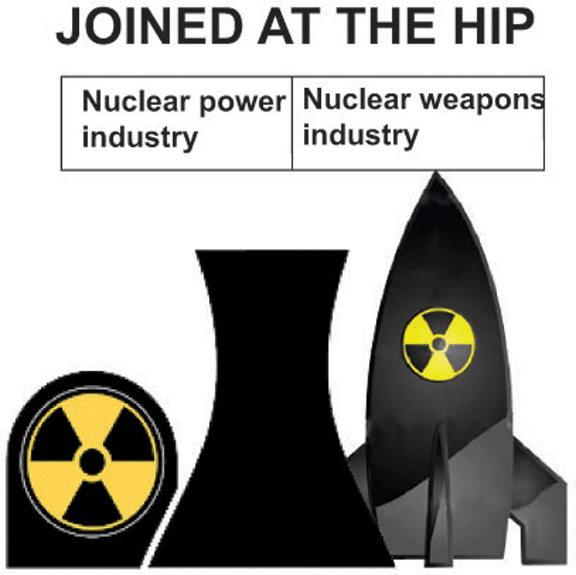 Nuclear: Energy bills ‘used to subsidise submarines’ BBC, Nuclear: Energy bills ‘used to subsidise submarines’ BBC,
|
|
Germany’s energy plant operators as well as government are clear that nuclear station lifetimes will not be extended
|
Germany’s env min and plant operators dismiss call for nuclear lifetime extensions,Clean Energy Wire
Germany’s env min and plant operators dismiss call for nuclear lifetime extensions, Germany certainly does not need to return to nuclear energy and should push through with its energy transition instead, according to environment minister Svenja Schulze. Following isolated calls to extend the lifetime of the country’s nuclear plants, Schulze said the technology is very expensive, on closer inspection not CO₂-neutral, and always carries the risk of an accident. Germany’s remaining nuclear power plant operators RWE, E.ON and EnBW also rejected the idea to upend the country’s societal consensus to phase out nuclear power by the end of 2022. Germany’s environment minister Svenja Schulze has dismissed recent isolated calls for a postponement of the country’s nuclear exit to protect the climate. “We certainly don’t need a return to nuclear power. That would cause nothing but problems,” Schulze told energy managers at utility association BDEW’s annual conference. The technology is very expensive, on closer inspection not CO2-neutral, and always carries the risk of an accident, according to Schulze, whose ministry is also in charge of nuclear security…… Opposition to nuclear power has been particularly strong in Germany, and there is a broad societal consensus to phase it out as part of Germany’s landmark Energiewende (energy transition). While the country struggles with aspects of the phase out – such as what to do with the waste – one issue that isn’t a problem is public consent. The vast majority of Germans want to see nuclear power gone sooner rather than later. …… With reference to Germany’s unsolved challenges of dealing with nuclear waste, Schulze said the country had used nuclear power for only three generations, and now left radioactive waste for thousands of following generations to deal with. Schulze also said nuclear power stations would not fit into Germany’s future electricity system. “Nuclear power would only block the grid. We don’t need more inflexible large power stations in a decentralised flexible system.”…… Plant operators have repeatedly said nuclear power will come to an end by the end of 2022 as planned and utility association BDEW said that reaching climate targets in the energy sector does not require a longer operating life for nuclear power plants. “It doesn’t make sense at all to start a discussion about lifetime extensions shortly before reaching the finishing line,” BDEW head Stepan Kapferer said at the conference, adding the operators had already clearly rejected the idea anyway. Nuclear power in Germany “is finished”, plant operators E.ON, RWE and EnBW told Jakob Schlandt for an article in Tagesspiegel Background. “This chapter is over,” said a RWEspokesperson…… The BDEW expressed confidence that its companies can benefit hugely from the energy transition. The Energiewende offered “huge opportunities for growth”, said BDEW head Stefan Kapferer in his opening remarks with reference to renewables and the charging infrastructure for electric mobility. He repeated his association’s call for a CO2 price for heating and transport. “It’s a joke that electricity, as the greenest available form of energy, is also the most expensive,” Kapferer said. https://www.cleanenergywire.org/news/germanys-env-min-and-plant-operators-dismiss-call-nuclear-lifetime-extensions |
|
Concern in Suffolk, UK, over the environmental threat of Sizewell nuclear project
in part of east Suffolk – and the lack of coordinated policy to deal with
the concentration of development. Campaigners fear the massive schemes,
which could be built in 25 square miles of rural landscape, could cause
serious harm to an Area of Outstanding Natural Beauty – and devastate the
area’s tourism industry.
been set up to fight the Government over the issue and secure a national
plan for where vital infrastructure will be located. Graeme Murray,
chairman of the Anglian Energy Planning Alliance, said the group was not
against the generation and provision of electricity to secure the country’s
future power needs, but wanted “proper planning” to ensure local
communities were treated fairly and precious landscape and habitat was
protected.
hub” is bounded by Friston, Theberton, Thorpeness and Sizewell – small
communities which will see new power stations, wind farm substations, and
national grid interconnector sites to bring power from abroad.
https://www.eadt.co.uk/news/east-suffolk-energy-hub-anglian-planning-alliance-fears-1-6084835
Sweden’s Uppsala District Court rules against extraditing Assange to Sweden
Sweden’s Uppsala District Court has found in favour of Assange: the court ruled NOT to detain Assange in absentia. The preliminary investigation can proceed without Assange’s extradition to Sweden. This was always the case as Assange has always cooperated with the investigation.
Suzie Dawson on Julian Assange’s mistreatment #FreeAssange
UK Labour’s plan for a :Green Jobs” tour
bid to ignite national support for its ‘Green Industrial Revolution’
agenda. Shadow Business Secretary Rebecca Long-Bailey visited Morecambe in
Lancashire on Saturday to discuss the area’s potential for “green jobs” in
sectors such as offshore wind, tidal power and community-owned renewable
energy.
and ideas of people throughout society”. “That’s why we’re talking to
unions, businesses and communities across the country to prepare detailed
and ambitious plans to deliver a Green Industrial Revolution,” she said.
Alongside the tour, Labour is hosting an online call for evidence, asking
for input from trade unions, businesses, public sector bodies, party
members, civil society groups and members of the public on its plans to
develop the green jobs market around the UK. The consultation is open until
the end of 2019.https://www.businessgreen.com/bg/news/3076624/labour-launches-green-jobs-tour
1 This Month
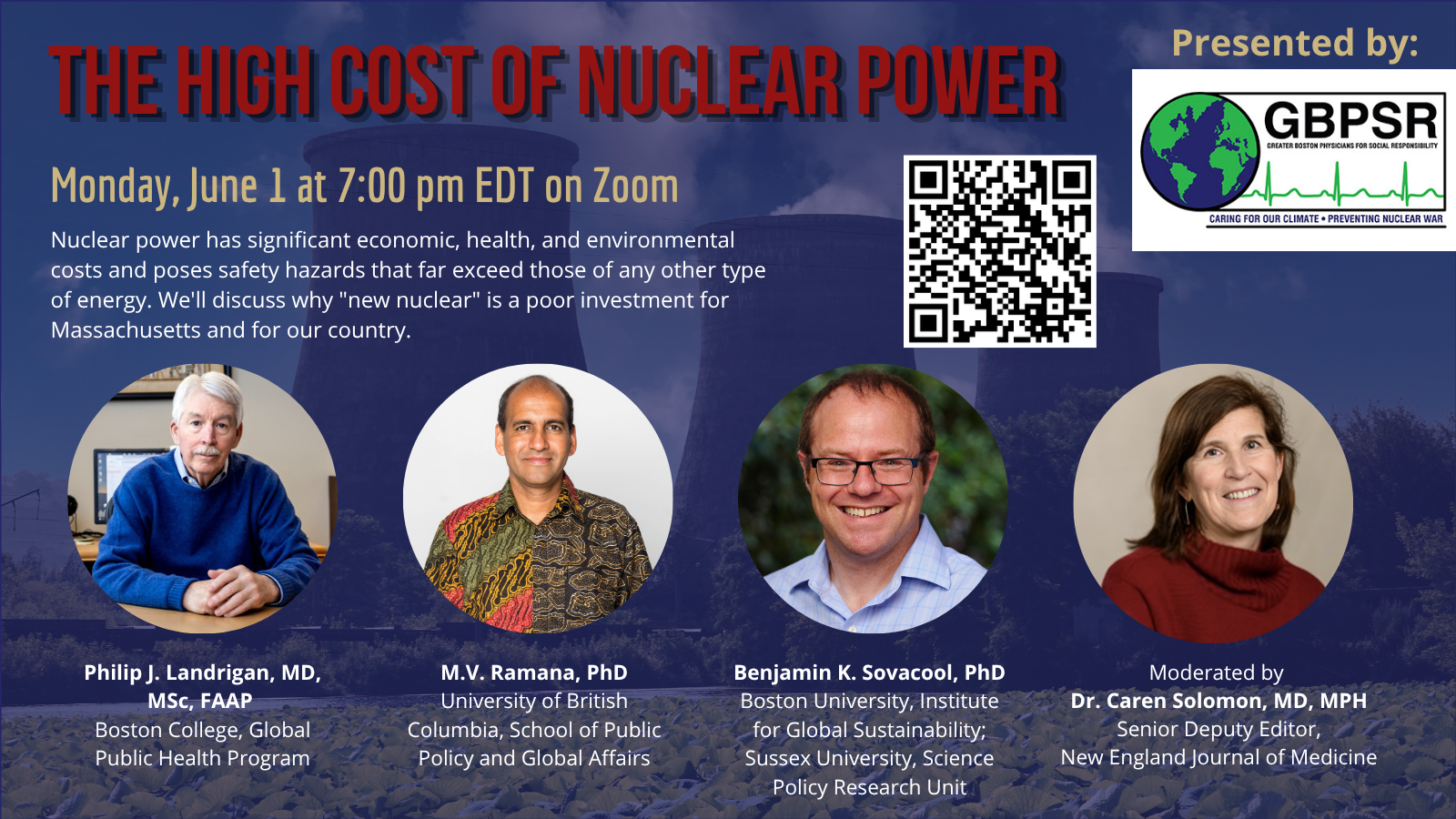
1 June Webinar – The High Cost of Nuclear Power – Register


of the week– Nuclear Reactor Information Task Force
To see nuclear-related stories in greater depth and intensity – go to https://nuclearinformation.wordpress.com
-
Archives
- May 2026 (255)
- April 2026 (356)
- March 2026 (251)
- February 2026 (268)
- January 2026 (308)
- December 2025 (358)
- November 2025 (359)
- October 2025 (376)
- September 2025 (257)
- August 2025 (319)
- July 2025 (230)
- June 2025 (348)
-
Categories
- 1
- 1 NUCLEAR ISSUES
- business and costs
- climate change
- culture and arts
- ENERGY
- environment
- health
- history
- indigenous issues
- Legal
- marketing of nuclear
- media
- opposition to nuclear
- PERSONAL STORIES
- politics
- politics international
- Religion and ethics
- safety
- secrets,lies and civil liberties
- spinbuster
- technology
- Uranium
- wastes
- weapons and war
- Women
- 2 WORLD
- ACTION
- AFRICA
- Atrocities
- AUSTRALIA
- Christina's notes
- Christina's themes
- culture and arts
- Events
- Fuk 2022
- Fuk 2023
- Fukushima 2017
- Fukushima 2018
- fukushima 2019
- Fukushima 2020
- Fukushima 2021
- general
- global warming
- Humour (God we need it)
- Nuclear
- RARE EARTHS
- Reference
- resources – print
- Resources -audiovicual
- Weekly Newsletter
- World
- World Nuclear
- YouTube
-
RSS
Entries RSS
Comments RSS
 nuclear-news