Chernobyl meltdown: the melted metal, with uranium and zirconium, formed radioactive lava.

How The Chernobyl Nuclear Plant Meltdown Formed World’s Most Dangerous Lava, Forbes, David Bressan 16 June 19 “………Even areas thousands of kilometers away from Chernobyl are still today contaminated with radioactive particles, transported by the wind in a gigantic plume over Europe.
As the cooling system of the reactor was shut down and the insertion of control rods into the reactor core failed, the nuclear fission went out of control, releasing enough heat to melt the fuel rods, cases, core containment vessel and anything else nearby, including the concrete floor of the reactor building. The fuel pellets inside the fuel rods are almost entirely made of uranium-oxide while the encasing in which the pellets are placed is made of zirconium alloys. Melting at over 1,200°C the uranium and zirconium, together with melted metal, formed radioactive lava burning through the steel hull of the reactor and concrete foundations at a speed of 30 cm (12″) per hour. Concrete doesn’t melt, but decomposes and becomes brittle at high temperatures. Part of the concrete was incorporated in the lava flow, explaining its high content of silicates, minerals composed mostly of silicon, aluminum and magnesium. Due to its chemical composition and high temperature, the lava-like material has a very low viscosity. When lava has low viscosity, it can flow very easily as demonstrated by stalactites hanging from valves and tubes in the destroyed reactor core.
Four hundred miners were brought to Chernobyl to dig a tunnel underneath. It was feared that the radioactive lava would burn through the containment structure and contaminate the groundwater. Only later it was discovered that the lava flow stopped after 3 meters (9 feet). Chemical reactions and evaporating water cooled the mixture below 1,100°C, below the decomposition temperature of the concrete.
About eight months after the incident and with the help of a remotely operated camera, the solidified lava was discovered in the ruins of the reactor building. Externally resembling tree bark and grey in color, the mass was nicknamed the Elephant’s Foot.

At the time of its discovery, radioactivity near the Elephant’s Foot was approximately 10,000 roentgens, a dose so high, only minutes of exposure would prove fatal. In 1996, radioactivity levels were low enough to visit the reactor’s basement and took some photographs. The photos are blurry due to radiation damage. The lava-like material resulting from a nuclear meltdown is also named corium, after the core of the reactor. An unknown uranium-zirconium-silicate found in the corium of Chernobyl was named later chernobylite. Chernobylite is highly radioactive due to its high uranium content and contamination by fission products. Corium will likely remain radioactive for the next decades to centuries. https://www.forbes.com/sites/davidbressan/2019/06/14/how-the-chernobyl-nuclear-plant-meltdown-formed-worlds-most-dangerous-lava-flow/#4d73b4f01691
Lithuanian Energy Institute scientists seriously working on nuclear decommissioning system
David Lowry’s Blog 13th June 2019 Last week I attended the European Commission-sponsored Euradwaste
conference in Pitesti, Romania, where a presentation on decommissioning
Ignalina was made by scientists (Prof. Poskas & Dr Narkunas) from the
nuclear engineering laboratory of the Lithuanian Energy Institute in
Kaunas, the nation’s second city after capital Vilnius.
Their work has been on assessing and modelling the distribution of radioactive carbon-14,
in the very high stack of graphite blocks around the reactor core prior to
dismantling. This suggests that even though Ms Rekasiute feels the
Lithuanian government “mainly pretends” the adjoining company city of
Visaginas “isn’t there”, the government in Vilnius is seriously
trying to find safe ways to dismantle the plant using the trained local
workforce.
The experience gained will certainly prove useful to the UK,
which has several reactors either already closed, or close to closure, such
as the troubled Hunterson reactors near Glasgow, where hundreds of cracks
have been discovered in the graphite core.
http://drdavidlowry.blogspot.com/2019/06/lessons-learned-from-lithuanian-reactor.html
UK Labour’s energy policy means that nuclear energy could be prioritised over renewables
Dave Toke’s Blog 15th June 2019 Labour’s proposals to take the national and regional energy grid back
into public ownership may give a boost to workers’ interests over
shareholder profits, but the way the proposals are set out produces an
increased risk of nuclear power being given priority over renewable energy.
Put simply that is because the way the proposals are structured means more
power to the GMB in particular, a body which is very pro-nuclear and which
is relatively hostile to renewable energy and a smart energy network.
Labour announced the plan, in May, to take the transmission and
distribution energy structure into public ownership, as well as plans to
set up a ‘National Energy Agency’ (to run the National Grid), Regional
Energy Agencies (to run regional distribution), and give opportunities for
municipal ownership of distribution on a local basis.
This plan can achieve traditional Labour Movement objectives, but its impact on pushing forward a
green agenda is doubtful. Put bluntly, the more that power is given to
bodies that will be influenced by organisations like the GMB (who favour
centralised power station solutions), the less useful will be the outcome.
The proposals make a gesture in favour of municipalisation, but for most
places the reality will be central control.
Control over the grid should be
given to local authorities as a matter of course, perhaps in consortia
(certainly at a national, transmission, level). Local authorities are
influenced by the local electorate and local citizen groups. They will be
sympathetic to green energy priorities. On the other hand centrally owned
quangos will be insulated from such democratic input and will be under the
thumb of the existing industrial establishment. Innovation will go out of
the window.
Chernobyl ‘suicide divers’ saved Europe from nuclear devastation
The world held its breath as the brave volunteers risked it all to but to prevent a second huge explosion. he world owes him an eternal debt, but for Chernobyl hero Alexei Ananenko, it was just part of the job.Engineer Alexei was one of three men who volunteered to wade through radioactive water to prevent a second cataclysmic explosion at the stricken nuclear reactor.
Decked from head to toe in protective clothing, they descended into the bowels of Reactor 4 on a doomsday mission as the world held its breath.
Their heroism gripped viewers of Sky Atlantic drama Chernobyl. But with great understatement, 60-year-old Alexei insisted last night: “It’s nothing to brag about. Why should I feel a hero?
“I was on duty and it was my job. I was trained in what to do.”………
Experts believed that if 185 tons of molten nuclear lava hit the water below it would cause a radioactive steam explosion of 3-5 megatons – so massive that it would leave much of Europe uninhabitable for 500,000 years. Alexei was one of the few employees who knew where the latches and valves were located to drain water from the coolant system.
He, senior engineer Valeri Bespalov and shift supervisor Boris Baranov were tasked with turning them off.
Firefighters drained a huge volume of water so the men would not have to swim, but they were still forced to walk through radioactive fluid three metres below ground level.
The image of them carrying search lights as they wade through a toxic soup is captured in the TV drama…….
After the explosion a cloud of radioactive strontium, caesium and plutonium affected mainly the Ukraine and neighbouring Belarus, as well as parts of Russia and Europe. Between 1987 and 1990, 530,000 workers – known as liquidators and conscripted from across the USSR – worked in and around Chernobyl to clear up the toxic mess. ……….. https://www.mirror.co.uk/news/world-news/selfless-chernobyl-suicide-divers-saved-16523155
France’s big plans for offshore wind
|
Renews Biz 14th June 2019 , French environment minister Francois de Rugy has outlined today how France
intends to meet its new 10GW offshore wind target by 2028. A 1GW fixed-bottom project to be built off Normandy will soon be open to public consultation, he said. Tenders will also be launched in the near future for three 250MW floating offshore wind farms and an up to 1GW fixed-bottom development off the island of Oleron. One 250MW floating project, comprising about 20 turbines, will be allocated to the south of Brittany in 2021, with the other two will be located in the Mediterranean in the Occitanie and PACA regions, De Rugy said. |
|
How Russia’s nuclear industry co-opted religion
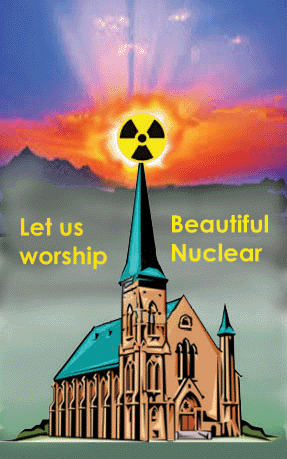
 How the Russian Church Learned to Stop Worrying and Love the Bomb https://www.foreignaffairs.com/articles/russian-federation/2019-06-14/how-russian-church-learned-stop-worrying-and-love-bomb
Orthodoxy’s Influence on Moscow’s Nuclear Complex
U.S. military intelligence agency increases accusations against Russia about nuclear testing
U.S. military intelligence steps up accusation against Russia over nuclear testing, WP, By Paul Sonne, 14 June 19 The U.S. military intelligence agency stepped up its accusations against Russia over low-yield nuclear testing on Thursday, saying that the country has conducted nuclear weapons tests that resulted in nuclear yield.
The new statement from the Defense Intelligence Agency amounted to a more direct accusation against Russia, compared to hedged comments about Russian nuclear testing that DIA Director Lt. Gen. Robert P. Ashley Jr. made in a speech in Washington in late May.
“The U.S. Government, including the Intelligence Community, has assessed that Russia has conducted nuclear weapons tests that have created nuclear yield,” the DIA statement released Thursday said. The agency didn’t give any details about the alleged tests or release any evidence backing the accusation.
Previously, the agency’s director said that Russia “probably” was not adhering to the “zero-yield” standard the United States applies for nuclear testing. He suggested that Russia was probably conducting tests with explosions above a subcritical yield as part of its development of a suite of more-sophisticated nuclear weapons.
Russia has vehemently rejected Washington’s accusations, with Russian Foreign Minister Sergei Lavrov describing them as delusional.
“We consider claims that Russia may be conducting very low-yield nuclear tests as a crude provocation,” Russia’s Foreign Ministry said in a statement after the DIA first aired the allegations. “This accusation is absolutely groundless and is no more than another attempt to smear Russia’s image.”
DIA’s latest accusation came a day after Under Secretary of State for Arms Control and International Security Andrea L. Thompson met with Russian Deputy Foreign Minister Sergei Ryabkov in Prague to discuss arms control.
The meeting didn’t result in any significant decisions. After the meeting, Thompson said in a message on Twitter that she raised a range of issues on which the United States would like to engage in a more constructive dialogue with Russia. …… https://www.washingtonpost.com/world/national-security/us-military-intelligence-steps-up-accusation-against-russia-over-nuclear-testing/2019/06/13/2dadf2e2-8e26-11e9-b162-8f6f41ec3c04_story.html?utm_term=.9b2400d2dfbe
“Chernobyl” TV series gets high rating, highly viewed in Russia and Ukraine
BBC 12th June 2019 , Hours after the world’s worst nuclear accident, engineer Oleksiy Breus
entered the control room of the No. 4 reactor at the Chernobyl nuclear
power plant in Ukraine. A member of staff at the plant from 1982, he became
a witness to the immediate aftermath on the morning of 26 April 1986.
The story of the reactor’s catastrophic explosion, as told in an HBO/Sky
miniseries, has received the highest ever score for a TV show on the film
website IMDB. Russians and Ukrainians have watched it via the internet, and
it has had a favourable rating on Russian film site Kinopoisk. Mr Breus
worked with many of the individuals portrayed and has given his verdict of
the series. https://www.bbc.co.uk/news/world-europe-48580177
Climate change denier makes big donations to Boris Johnson and Jeremy Hunt.
 Open Democracy 12th June 2019 Revealed: Climate change denier makes big donations to Boris Johnson and
Jeremy Hunt. Tory hopefuls under fire for accepting cash from company
linked to major ‘climate science denial’ group. Johnson has yet to
declare the funding, ‘raising questions about who else is bankrolling
him’.
each to both Boris Johnson and Jeremy Hunt’s leadership campaigns,
openDemocracy has discovered. Foreign Secretary Jeremy Hunt’s largest
donation was £25,000 on May 22 from First Corporate Shipping, according to
the register of MPs’ interests.
name of Bristol Port, which is co-owned by Tory donors Terence Mordaunt and
Sir David Ord. Mordaunt is a director of the Global Warming Policy Forum,
the advocacy arm of the climate sceptic Global Warming Policy Foundation.
The clean-up of the Chernobyl nuclear wreck- the costs and international effort
|
Viewpoint: Chernobyl and a very modern safety culture, WNN, 10 June 2019
The HBO/Sky mini-series Chernobyl is a stark reminder of the immensity of the accident that destroyed unit 4 in 1986. It vividly recalls the pain and suffering of those people, in particular, who tried to address the consequences of the accident in the first few days and weeks. But Chernobyl also clearly highlights how a culture of secrecy and obedience contributed to the accident and hampered efforts to deal with its aftermath. Soviet authorities knew about precursors to the Chernobyl accident but did not share this vital information with operators, who were ordered to run the fatal test without sufficient knowledge about unstable core conditions. A key reminder, if one was needed, is that an effective nuclear safety culture requires well-informed and empowered operators and transparency as well as competent, independent oversight. While Soviet authorities eventually managed to get unit 4 into a relatively stable state by using hundreds of thousands of ‘liquidators’ to cover the reactor with what became known as the ‘object shelter’, the site remains a radiological and technical challenge to this day. If one good thing came out of the Chernobyl disaster, it was the unprecedented international cooperation and solidarity to tackle the consequences of the accident and the cooperation on nuclear safety issues in general. The international community, including the EBRD, has engaged with Ukraine on the various challenges posed by the Chernobyl site since the mid-1990s. One of the first tasks was to finance safety and security upgrades at the sister unit, immediately adjacent to the shelter, which almost unbelievably continued producing electricity until the year 2000. Permanent closure of units 1 to 3 was a clear demand by the international community and, when achieved, it was the first major improvement at the site. In 1997, the EBRD agreed to set up a Donor Fund to finance the Shelter Implementation Plan – a strategy to transform unit 4 and the shelter into an environmentally safe condition. This task came to be supported by 45 donor governments and the EBRD, even though at the time the exact scope, schedule and cost were tentative. The first phase consisted of studies to determine the radiological situation in various parts of the object, the structural stability of the shelter (which had been built quickly using remote technologies as far as feasible), and the possibility of criticality in the destroyed core. What slowly emerged was the outline for a strategy including the construction of a New Safe Confinement (NSC) to enclose unit 4, including the old shelter. A possible collapse of the shelter was the biggest risk to the success of the programme and it could have jeopardised finding a sustainable solution for decades. A priority, therefore, was the design and implementation of measures to stabilise the shelter to minimise that risk. Before the sliding of the NSC, the most visible feature in recent years was a gigantic yellow steel structure to stabilise the western wall of the shelter and to take off most of the weight of its roof. That was one of a dozen measures implemented inside and outside of the shelter, and carried out under extremely difficult radiological conditions, which helped extend the lifetime of the old structure. In parallel, the design for the NSC took shape. One of the requirements was to assemble this structure of more than 100 meters high and 250 meters wide, away from the shelter and to slide it into place once completed. This was necessary to keep radiation exposure to workers to a minimum. A consortium of French companies, Vinci and Bouygues, accomplished this feat. By the end of 2016, the arch-shaped steel structure, complete with a sophisticated crane system, ventilation ducts and cabling for monitoring and control systems, was slid into position over unit 4. The completion of the structure’s sealing and commissioning of all systems was achieved in April 2019. This successful operational test is a game changer for Chernobyl. Now, with the NSC in place and with a design life of 100 years, the conditions have been created to take the next steps……. Thanks to this international effort, Chernobyl is now in a much better shape than it has been for the last 33 years. But it remains a challenging place. Used fuel from units 1 to 3 is stored in a Soviet-era wet storage facility that needs to be decommissioned. Transport of fuel assemblies to a new dry interim storage facility, also funded through an EBRD-managed Donor Fund and EBRD’s own resources, is expected to start before the end of this year. Ukraine will have to decommission Chernobyl units 1 to 3, operate the NSC and waste management facilities (most of which have been funded by international donors), develop an integrated waste management strategy and manage the exclusion zone, large parts of which will not be released for general use for decades to come……. Future work in Chernobyl would greatly benefit from continued international cooperation due to the scale of the task, and including a number of unique challenges. Today, Ukraine would of course no longer be the recipient of technical assistance in dire need of international solidarity that it was when the country emerged from the Soviet Union with the worst nuclear legacy in the history of mankind. Future cooperation will need to be a partnership, the foundation of which has been successfully created by Ukraine and the international community by solving key technical challenges in Chernobyl. The European Bank for Reconstruction and Development is an international financial institution founded in 1991. As a multilateral developmental investment bank, the EBRD uses investment as a tool to build market economies. Read more about the EBRD’s work at Chernobyl. http://world-nuclear-news.org/Articles/Viewpoint-Chernobyl-and-a-very-modern-safety-cultu |
|
Holtec and Ukraine developing Small Modular Nuclear Reactors (dodgy underground devices)
 Consortium established for SMR-160 deployment in Ukraine, WNN 12 June 2019
The consortium document was signed by Holtec CEO Kris Singh, Energoatom President Yury Nedashkovsky and SSTC President Igor Shevchenko. The signing ceremony – held at Holtec’s headquarters in Camden, New Jersey – was attended by senior Holtec officials and delegations from Mitsubishi Electric, the US Department of Energy and Energoatom.
The consortium is a US company registered in Delaware with each of the three parties owning allotted shares. Its technology operation centre will be based in Kiev, Ukraine…….
The MoU includes the licensing and construction of SMR-160 reactors in Ukraine, as well as the partial localisation of SMR-160 components. The Ukrainian manufacturing hub is to mirror the capabilities of Holtec’s Advanced Manufacturing Plant in Camden, and will be one of four manufacturing plants Holtec plans to build at distributed sites around the world by the mid-2020s.
Holtec’s 160 MWe factory-built SMR uses low-enriched uranium fuel. The reactor’s core and all nuclear steam supply system components would be located underground, and the design incorporates a wealth of features including a passive cooling system that would be able to operate indefinitely after shutdown….
The SMR-160 is planned for operation by 2026.
The SMR-160 is currently undergoing the first phase of the Canadian Nuclear Safety Commission’s three-phase pre-licensing vendor design review process. State Nuclear Regulatory Inspectorate of Ukraine, the nuclear regulatory authority in Ukraine, is expected to coordinate its regulatory assessment of SMR-160 under a collaborative arrangement with its Canadian counterpart. http://www.world-nuclear-news.org/Articles/Consortium-established-for-SMR-160-deployment-in-U
Edwin lyman on the safety of these reactors “Holtec SMR-160. The Holtec SMR-160 will generate 160 MWe. Like the NuScale, it is designed for passive cooling of the primary system during both normal and accident conditions. However, the modules would be much taller than the NuScale modules and would not be submerged in a pool of water. Each reactor vessel would be located deep underground, with a large inventory of water above it that could be used to provide a passive heat sink for cooling the core in the event of an accident. Each containment building would be surrounded by an additional enclosure for safety, and the space between the two structures would be filled with water. Unlike the other iPWRs, the SMR-160 steam generators are not internal to the reactor vessel. The reactor system is tall and narrow to maximize the rate of natural convective flow, which is low in other passive designs. Holtec has not made precise dimensions available, but the reactor vessel is approximately 100 feet tall, and the aboveground portion of the containment is about 100 feet tall and 50 feet in diameter (Singh 2013)
For these and other SMRs, it is important to note that only limited information is available about the design, as well as about safety and security. A vast amount of information is considered commercially sensitive or security-related and is being withheld from the public. ….
in the event of a serious accident, emergency crews could have greater difficulty accessing underground reactors.
Underground siting of reactors is not a new idea. Decades ago, both Edward Teller and Andrei Sakharov proposed siting reactors deep underground to enhance safety. However, it was recognized early on that building reactors underground increases cost. Numerous studies conducted in the 1970s found construction cost penalties for underground reactor construction ranging from 11 to 60 percent (Myers and Elkins). As a result, the industry lost interest in underground siting. This issue will require considerable analysis to evaluate trade-offs…. ” https://nuclearinformation.wordpress.com/2017/11/29/edwin-lyman-on-small-modular-reactors/ erious accident, emergency crews could have greater difficulty accessing underground reactors.
UN and Western countries covered up the facts on the huge health toll of Chernobyl radiation
Soviet doctors treating Chernobyl-exposed suddenly had an unwelcome crash course in this medical problem. They found that radioactive contaminants, even at relatively low levels, infiltrated the bodies of their patients, who grew sicker each year. Gradually, health officials understood they had a public health disaster on their hands. Thousands of archival records document the catastrophe. Ukrainian doctors registered in the most contaminated regions of Kiev province an increase between 1985 and 1988 in thyroid and heart disease, endocrine and GI tract disorders, anaemia and other maladies of the blood-forming system.
In two closely watched regions of the province, infants born with congenital malformations grew from 10% to 23% between 1986 and 1988. And 46% of newborns in some fallout regions died within 28 days of life. Half of these deaths were stillborn, the other half had congenital malformations “that were not compatible with life”.
Consultants from UN agencies dismissed the findings of scientists in Ukraine and Belarus…
Why would UN officials whitewash evidence of Chernobyl health damage? At the time the US, Russia, France and the UK faced huge lawsuits from their own exposures of people to radioactive contamination during four decades of reckless bomb production. If they could assert that Chernobyl was “the worst disaster in human history” and only 54 people died, then those lawsuits could go away. And that is indeed what happened.
 Chernobyl horror has nuclear lessons for SA https://www.businesslive.co.za/bd/life/2019-06-04-chernobyl-horror-has-nuclear-lessons-for-sa/
As we consider this energy option it is key to bear in mind that the manipulation following this disaster means the full scale of damage can only be guessed at, 04 JUNE 2019 – 05:10 Powerful storms, record-breaking temperatures and rising water levels remind us daily of the impact of climate change and our need to address it. Policymakers are debating what shape the post-carbon future will take and SA is one country where that conversation is taking place.
Proponents of nuclear power argue that nuclear energy is the most viable and powerful alternative to fossil fuels. Opponents point to waste storage problems, plus the slow pace and high cost of building new reactors. And, they ask, what about when something goes wrong?
I recently published a book called Manual for Survival: A Chernobyl Guide to the Future, about the 1986 explosion of reactor number four at the Chernobyl nuclear power plant in Ukraine, which was at the time a republic in the Soviet Union. I found as I worked through 27 archives that much of what we are told about the Chernobyl accident is incomplete or incorrect. People were far sicker and far more people died than we are led to believe. Chernobyl contaminants were not safely enclosed within the Chernobyl Zone. Nor has the chapter been closed. We are still ingesting Chernobyl fallout from 33 years ago.
The official tally records 300 people hospitalised after the accident. These were mostly firemen and plant operators, but I found that Soviet leaders gave orders to release information on Chernobyl patients from only one Moscow hospital. In the months after the accident, villagers in contaminated regions streamed into many other hospitals. Archival records show that not 300 but 40,000 people were hospitalised for Chernobyl exposures in the summer after the accident. Many of them were children.
Journalists tend to focus on the Chernobyl Zone, a 30km circle around the plant that was depopulated in the weeks after the 1986 accident. Many correspondents report that nature in the zone is “thriving”, teeming with animals and plants that prefer radioactivity to human habitation. That story is wrong on two counts.
First, shortly after the accident, pilots chased clouds of radioactive fallout flowing northeast from the burning reactor. They manipulated the weather to make radioactive rain land on rural Belarus in order to save several Russian cities, including Moscow. That triage operation saved the contamination of millions of people but created a second Chernobyl Zone that few know about today.
At the time, Moscow officials told no one in Belarus about the weather manipulation operation. The head of the Belarusian communist party, Nikolai Sliunkov, only found out about the accident, about 5km over the Belarusian border, by phoning the head of the Ukrainian communist party several days later. The 200,000 people who lived in the Mogilev province under the seeded clouds of fallout were mostly farmers. They ate what they grew and lived with high levels of radioactivity for up to 15 years until the territory was finally evacuated in 1999.
Nor is nature in the zone thriving. I observed the work of two biologists, Tim Mousseau and Anders Møller, who have since 2000 conducted twice-yearly experiments in the Chernobyl Zone and published hundreds of papers on their findings. Their studies show cascades of extinction in the most contaminated areas. “Every rock we turn over,” Mousseau commented, “we see damage.”
The records of the Soviet state committee for industrial agriculture reveal how radioactive contaminants concentrated in the food chain and in places of human habitation. A few weeks after the accident, Soviet shepherds corralled 100,000 head of livestock from a 60km radius around the Chernobyl plant. While teamsters drove the bleating animals to slaughterhouses, Moscow agronomists issued a special manual for meat packers with instructions to mix low- and medium-level radioactive flesh with appropriate proportions of clean meat to make sausage.
The sausage was to be labelled as it normally would and to be shipped across the great Soviet Union, everywhere but Moscow. Meat with high levels of radiation was to be stored in freezers until the radioactivity decayed. Soon managers in Belarus were asking for more freezers. They asked again and again, but no freezers arrived, so they located a refrigerated train car and packed in 317 tons of highly radioactive meat and sent the dubious gift to the Georgian Republic, where it was rejected and passed on.
For the next three years, the radioactive ghost train circled the western half of the Soviet Union; no-one wanted it. Finally, four years later, KGB agents buried the train and its radioactive meat inside the Chernobyl Zone, where it should have gone in the first place.
Germany’s foreign minister has arrived in Tehran in hopes of saving nuclear agreement
 German minister lands in Iran in bid to save nuclear pact, Sabine Siebold, TEHRAN (Reuters) 9 June 19, – Germany’s foreign minister has arrived in Tehran to hold talks with President Hassan Rouhani on Monday, as part of a concerted European effort to preserve Iran’s nuclear pact with world powers and defuse rising U.S.-Iranian tensions.A cautious thaw in relations between Tehran and Washington set in in 2015 when Iran struck a deal with six big powers limiting its nuclear activity. But tensions with the United States have mounted again since President Donald Trump withdrew Washington from the accord in 2018 and reimposed sweeping sanctions. German minister lands in Iran in bid to save nuclear pact, Sabine Siebold, TEHRAN (Reuters) 9 June 19, – Germany’s foreign minister has arrived in Tehran to hold talks with President Hassan Rouhani on Monday, as part of a concerted European effort to preserve Iran’s nuclear pact with world powers and defuse rising U.S.-Iranian tensions.A cautious thaw in relations between Tehran and Washington set in in 2015 when Iran struck a deal with six big powers limiting its nuclear activity. But tensions with the United States have mounted again since President Donald Trump withdrew Washington from the accord in 2018 and reimposed sweeping sanctions.
West European signatories, including Germany, want to try to keep the nuclear accord alive although they share the Trump administration’s disquiet about Iran’s ballistic missile program and its role in conflicts around in the Middle East. Germany, France and Britain maintain that the nuclear pact remains the best way to limit Iran’s enrichment of uranium, a potential pathway to the development of nuclear weapons……. https://www.reuters.com/article/us-usa-iran-germany/german-minister-to-meet-irans-rouhani-in-bid-to-save-nuclear-pact-idUSKCN1TA0JW |
|
Scandinavian farmers still impacted by radioactive fallout from Chernobyl nuclear disaster
Chernobyl: 33 Years On, Radioactive Fallout Still Impacts Scandinavian Farmershttps://www.forbes.com/sites/davidnikel/2019/06/08/chernobyl-33-years-on-radiation-still-impacts-scandinavian-farmers/#390eeebd949f, David Nike 8 June 19
The smash-hit HBO series ‘Chernobyl’ has introduced an entire new generation to the nuclear disaster that shook the world in 1986. Initially covered up by Soviet authorities, the disaster only came to light when nuclear power stations in Sweden – hundreds of miles away – detected high levels of radiation and began to ask questions. 33 years later, radiation remains a problem in both Sweden and Norway especially for farmers.
“Who would have thought that a small northern Norwegian mountain village could be hit by a nuclear accident in Europe. Overnight we were powerless. The Chernobyl accident shows that our food production is vulnerable. It’s scary,” sheep farmer Laila Hoff from Hattfjelldal told Norwegian state broadcaster NRK. She said all meat had to be destroyed in the first year following the accident. But even now in 2019, animals in 37 Norwegian municipalities are subject to radiation testing and control before they can be slaughtered. One leading researcher says it will take “decades” for the controls to no longer be necessary.
How Chernobyl hit farming in Norway and Sweden
The radioactive substance cesium-137 takes many years to break down with an estimated half-life of 30 years. It still exists in the earth in the areas affected by the Chernobyl accident, including large parts of Norway and Sweden. The substance is taken up from the soil by plants and fungi, which in turn are eaten by sheep, reindeer and other grazing animals.
In the wake of the 1986 accident, cesium-137 spread over much of northern and central Scandinavia. The weather conditions were such that Norway and Sweden were two of the countries worst hit outside the Soviet Union. In Sweden, the areas around Uppsala, Gävle and Västerbotten were hardest hit, while in Norway the area between Trondheim and Bodø along with mountainous areas further south suffered, mainly because of rainfall.
The radiation impacted vegetation to varying degrees, but also led to radioactivity in grazing animals, primarily sheep and reindeer. In reindeer calf meat, up to 40,000 becquerels per kilogram (Bq/kg) were measured, with up to 10,000 Bq/kg in sheep meat. Norwegian authorities set the highest acceptable level in meat at just 60 Bq/kg, which led to the widespread feeding of animals with non-contaminated feed. This process of feeding livestock from contaminated pastures with non-radioactive feed for a period to reduce radioactivity in meat or milk is known as nedfôring.
Chernobyl 2.0? Cracks found in UK nuclear reactor could lead to evacuation of millions.
radioactive contamination and full evacuation of major Brit cities, experts
have said in a terrifying warning. Experts have warned that in the very
worst case the hot graphite core could become exposed to air and ignite
leading to radioactive contamination and evacuation of a large area of
Scotland’s central belt – including Glasgow and Edinburgh.
currently making a case for turning them back on, with help from trade
union GMB. Although the probability of a meltdown is still low, the
consequences could be incredibly severe.
Edinburgh would need to be entirely evacuated due to radioactive
contamination. According to Dr Ian Fairlie, an independent consultant on
radioactivity in the environment, and Dr David Toke, Reader in Energy
Policy at the University of Aberdeen, the two reactors definitely should
not be restarted. Speaking about the cracks in the barrels, they warned:
“This is a serious matter because if an untoward incident were to occur –
for example an earth tremor, gas excursion, steam surge, sudden outage, or
sudden depressurisation, the barrels could become dislodged and/or
misaligned.
1 This Month
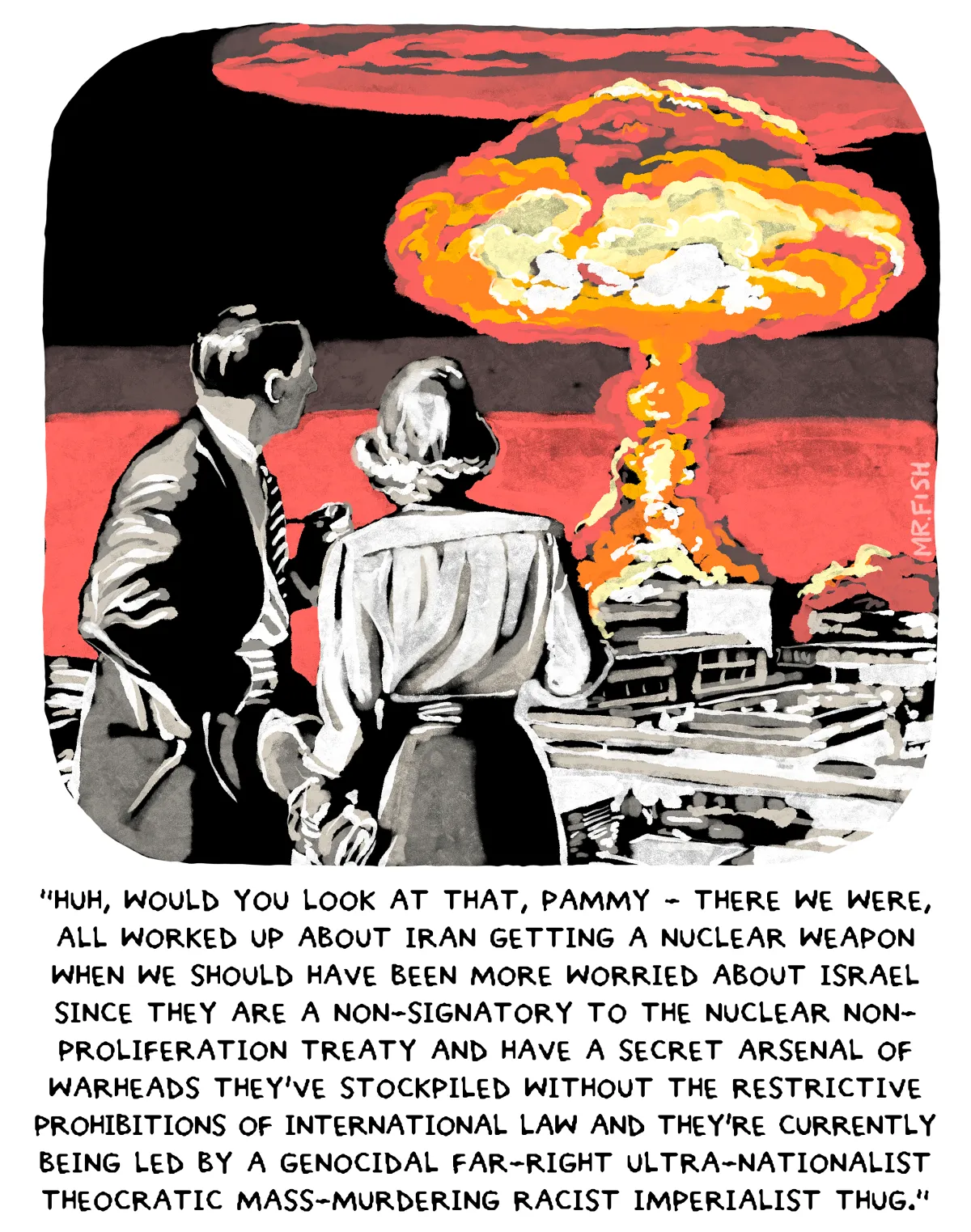
1 June Webinar – The High Cost of Nuclear Power – Register


of the week– Nuclear Reactor Information Task Force
To see nuclear-related stories in greater depth and intensity – go to https://nuclearinformation.wordpress.com
-
Archives
- May 2026 (255)
- April 2026 (356)
- March 2026 (251)
- February 2026 (268)
- January 2026 (308)
- December 2025 (358)
- November 2025 (359)
- October 2025 (376)
- September 2025 (257)
- August 2025 (319)
- July 2025 (230)
- June 2025 (348)
-
Categories
- 1
- 1 NUCLEAR ISSUES
- business and costs
- climate change
- culture and arts
- ENERGY
- environment
- health
- history
- indigenous issues
- Legal
- marketing of nuclear
- media
- opposition to nuclear
- PERSONAL STORIES
- politics
- politics international
- Religion and ethics
- safety
- secrets,lies and civil liberties
- spinbuster
- technology
- Uranium
- wastes
- weapons and war
- Women
- 2 WORLD
- ACTION
- AFRICA
- Atrocities
- AUSTRALIA
- Christina's notes
- Christina's themes
- culture and arts
- Events
- Fuk 2022
- Fuk 2023
- Fukushima 2017
- Fukushima 2018
- fukushima 2019
- Fukushima 2020
- Fukushima 2021
- general
- global warming
- Humour (God we need it)
- Nuclear
- RARE EARTHS
- Reference
- resources – print
- Resources -audiovicual
- Weekly Newsletter
- World
- World Nuclear
- YouTube
-
RSS
Entries RSS
Comments RSS
 nuclear-news