Inside the Russian Woodpecker, the top secret military facility in the shadow of Chernobyl, We all know about the Chernobyl nuclear disaster but few have heard of the nearby secret military facility whose purpose is shrouded in mystery. News.com.au, Benedict Brook@BenedictBrook 23 June 19
“…….in the highest echelons of the Soviet military, Chernobyl had long been known for something else: an ominous top secret Cold War facility buried deep in the forest just a few kilometres from the notorious power plant.
To the USSR military it was known as the Duga array. To those who discovered its existence in the West it was dubbed the “Russian Woodpecker.” A cheery name that belied the fear and mystery that surrounded the facility.
When Chernobyl blew, it wasn’t just the city of Pripyat which disappeared off the map; so did the enormous military installation. It became bathed in radioactive dust and was left to rust in the exclusion zone, where it remains to this day.
Not that Duga was on any maps. It was marked, instead, as a children’s camp. But there were no kids here. Secret it may have been but come anywhere near it and it was hard to miss.
Built in 1976, from afar it looks like a giant wall towering over the forest. But get closer and it’s far more porous — a massive metal lattice work that stands some 50 stories tall and stretches for 500 meters long.
Despite its size, few outside of Chernobyl knew of its existence. Few of the West knew of it either — but then they began to hear it.
From the mid 1970s onwards a strange rapidly repeating interference began to be noticed on some radio frequencies. The incessant tapping was reminiscent of a woodpecker. Now and then, the signal would stray off little used frequencies and interrupt radio stations around the world.
THE RUSSIAN WOODPECKER’S ROLE
Ham radio enthusiasts, as well military experts, deduced the signal was coming from somewhere north of Kiev, now in Ukraine but at the time part of Moscow ruled USSR. The Duga array had successfully given away its own secret location.
Luke Johnson, who took a tour of the Duga for Atlas Obscura magazine, said it wasn’t just the west that was picking up the eerie signal from Chernobyl.
“Higher-end Soviet television sets were sold with a special ‘woodpecker jamming’ device built in. More alarmingly, the mysterious signal began to interfere with emergency frequencies for aircraft,” he wrote.
But what exactly was the purpose of the Russian Woodpecker? Speculation in the West was rife with some theories that it could control the weather or even that the huge structure transmitted some kind of mind control power.
At the time the US and USSR were at the height of the Cold War with thousands of nuclear tipped missiles ready to be launched at a moment’s notice.
The Duga’s main role was as a huge radar receiver, part of a network of facilities designed to detect the launch of missiles headed towards the USSR.
…….. THREE MINUTE WARNING
While most visitors to Chernobyl make a beeline for the power station and abandoned town of Pripyat, the Duga array remains off the beaten track.
“During the Cold War, even approaching this spot would have had dire consequences, but today there is just one guard, near a dilapidated guard house with wood smoke rising from the chimney,” writes Mr Johnson.
…… Masses of discarded computer terminals, that once would have provided the USSR with the three minute warning, now lie broken and battered in the snow.
“While the nuclear reactor remains a nexus of international concern, the Russian Woodpecker stands largely forgotten,” said Mr Nazarayan.
….. The distinctive tapping sound was last heard sometime around 1989. And with that, the Russian Woodpecker fell silent.
BBC 23rd June 2019 Hundreds of climate change activists have stormed an open cast coal mine in
western Germany to campaign against fossil fuels. https://www.bbc.co.uk/news/world-europe-48734321
Le Point 18th June 2019 “France could switch to 100% renewable energy” INTERVIEW. According to Rana
Adib, head of the network of experts REN21, the effort in favor of
renewable energies must be relaunched to comply with the Paris agreement.
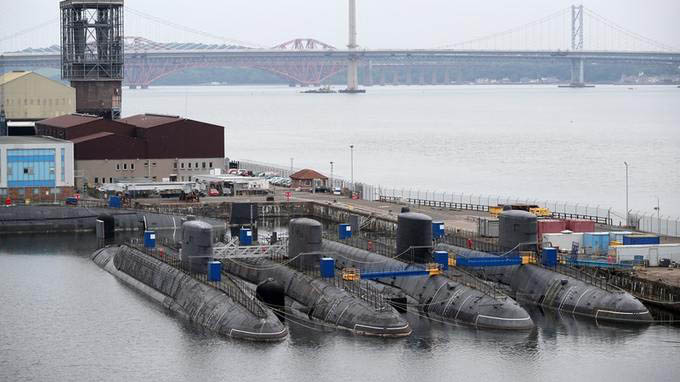
Plymouth Live 22nd June 2019, Devonport is home to 13 retired Royal Navy submarines – some of which
were removed from service almost 30 years ago. Now the MoD wants to get
permission to store four more unwanted nuclear subs in the city. Dubbed
Plymouth’s nuclear graveyard, this week Plymouth MP Luke Pollard warned the
taxpayer is spending £30 million a year to maintain sites such as these,
including the one in Devonport, and another one in Rosyth, Scotland.
Sizewell budget meltdown could hit taxpayers under EDF proposals, Rachel Millard, June 23 2019, The Sunday Times, Taxpayers could end up on the hook for cost overruns if a new £20bn nuclear power station in Suffolk blows its budget by more than 30%, under plans proposed by French energy giant EDF.
It is trying to attract investors to bankroll Sizewell C. EDF has told investment funds it wants similar state support for London’s £4.2bn super sewer.
Ministers have pledged to fund any cost overruns of more than 30% on the Thames Tideway Tunnel, and to act as lender of last resort if funding dries up.
The proposal by EDF is part of a broader push to create a new model for funding nuclear power after Japanese giants Hitachi and Toshiba ditched plans to build reactors in the UK.
THE CHERNOBYL nuclear power plant has had a new roof installed to contain radioactive waste, 33 years after the April 1986 disaster. By ABBIE LLEWELYN Jun 21, 20196
The roof has been in construction since 2010, moved into position in 2016 and systems began operation in February this year. The huge structure was placed over the original sarcophagus, which was hastily put together in 1986 after Reactor 4 exploded and released huge amounts of radiation into the atmosphere. The New Safe Confinement (NSC) aims to prevent the release of radioactive material for the next 100 years.
The Shelter Implementation Plan, of which the roof is the main element, has cost around £1.9billion – the roof alone costing around £1.3billion.
The NSC is designed to withstand temperatures ranging from -43C to 45C, a class-three tornado and an earthquake with a magnitude of 6 on the Richter scale.
The first container that encased the offending reactor was assembled in just five months. But by 1996, the original sarcophagus was damaged beyond repair from prolonged exposure to the radiation.
Rain water was leaking through the roof and came into contact with radioactive material before dripping into the soil, posing a serious threat to the environment.
Radiation levels in the area had risen to 10,000 roentgens per hour – normal levels are around 20-50 roentgens per hour.
The first sarcophagus was meant to last 30 years and repairs and maintenance was carried out until as recently as 2011, but ultimately it was decided that a second sarcophagus would be necessary.
The new roof is 162m long, 257m wide and 108m tall: the arch could house the Statue of Liberty or Notre Dame Cathedral – before the fire.
It was built so large in order to allow for machines to enter and remove the old sarcophagus.
After the nuclear disaster, a 30km exclusion zone was put in place, and 335,000 forced to evacuate – 115,000 from the surrounding area in 1986 and 220,000 more people from Belarus, Russia and Ukraine after the fact.
However, there has still been an increase in the incidence of cancer amongst those living near Chernobyl.
There have even been studies suggesting that the DNA of birds in the area has been altered.
Interest in Chernobyl has skyrocketed in recent weeks due to the HBO historical drama series ‘Chernobyl’.
The programme, available in the UK on Sky Atlantic, shows the events of that fateful day unfold, as well as the attempted cover-up by the Soviet Union.
It has been rated the highest of any programme on IMDB.
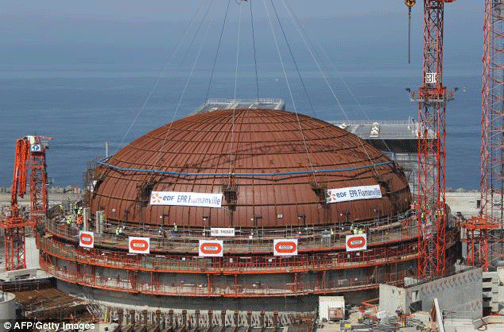
French energy group EDF says it is reviewing the start-up schedule and costs of its flagship Flamanville nuclear project after the regulator said it would have to fix faulty weldings, which have already delayed the project.
ASN, the nuclear watchdog, said on Wednesday that nuclear-focused EDF needs to repair eight of the joins at Flamanville in northern France.
“EDF is currently analysing the impact of this decision on the Flamanville EPR [nuclear reactor] schedule and cost, and, in the upcoming weeks, it will give a detailed update on the next steps in the project,” said the company in a statement on Thursday.
“This is negative news but it does not come as a surprise,” said analysts at Société Générale, since EDF had already flagged the likelihood of a delay. EDF’s shares fell 1.8 per cent by midday in Paris. The ASN said in October that the weldings were being reviewed. While, in July, EDF said there would be further delays and cost overruns due to problems with the connections. It pushed back the loading of nuclear fuel and the target construction costs at the late and over-budget plant.
EDF had said the loading of nuclear fuel was scheduled for the end of 2019 with commercial activity starting in 2020 and costs revised up again from €10.5bn to €10.9bn. Initially, Flamanville was expected to cost €3.3bn and start operations in 2012. ASN suggested in its communication to EDF that the plant would not be operational before 2022.
The Flamanville plant in France is one of three being built in Europe using the next-generation European Pressurised Reactor technology. The other two projects are the Olkiluoto project in Finland, which is more than a decade late, and the UK’s Hinkley Point, which is mired in controversy over the high cost of the project.
More broadly, EDF is expected to brief trade unions on Thursday about plans to reorganise the company. The plan, codenamed Hercules, say people familiar with the matter, would involve a holding company 100 per cent-owned by the state and two subsidiaries sitting beneath it. EDF Bleu, or EDF Blue, would house all nuclear and hydroelectric assets and EDF Vert, or EDF Green, would hold the renewables, services and network assets.
EDF Vert would then be floated to raise funds.
The company will also propose a regulated pricing mechanism for 100 per cent of France’s nuclear production to replace the current mechanism, said analysts at Bernstein. The plan to split the company stems from this move since, as Bernstein add, a “100 per cent regulated price for nuclear production in France would likely be considered state aid by the EU”.
The plan thus still has to clear the European Commission as well as probable public pushback to higher regulated prices and heavy union opposition. French trade unions remain particularly powerful within EDF and has used threats of power cuts in the past.
In a joint statement this week, the unions said they “oppose a strictly financial reorganisation that would lose sight of the industrial project, the social ambition and the general interest” of the group.
Chernobyl Episode 4 Scene | HBO | Graphite Clearing
This man knows what it’s really like shovelling radioactive debris on top of Chernobyl’s reactor ABC News
By Katri Uibu “Sometimes it happens in life that someone, somewhere, has to do something. Whether they want to or not.”
Key points:
At age 32, Jaan Krinal was forced to go to Chernobyl and clean the roof of the reactor
He says men were initially enthusiastic to help eliminate the radiation
One-third of the men of his town he served with in Chernobyl have died
When he left his wife and two children on May 7, 1986 and went to work, Jaan Krinal didn’t know he would be one of those people.
The 32-year-old was working on a state-owned farm in Soviet-occupied Estonia.
Because he’d been forced to complete the Soviet military’s retraining a year before, he was confused when officers surprised him at work and said he’d been called up again — immediately.
Jaan and 200 other men were taken to a nearby school. Once they’d walked through the door, no-one was allowed to leave.
The men’s passports were seized before they were loaded onto buses and taken to a forest, where they were told to slip into brand new army uniforms.
“That’s when I first questioned what’s really going on here,” Jaan recalls………
Workers told radiation could have health benefits
It all happened fast.
Hundreds of men boarded a Ukraine-bound train on May 8. By the next evening, they were setting up camp on the edge of Chernobyl’s exclusion zone.
They were just 30 kilometres away from the site of the world’s worst nuclear disaster — the still-smouldering wreckage of a reactor torn apart by a series of explosions and spewing radiation in a plume across Europe.
Jaan was among the first group sent to clean up in the aftermath of the catastrophe.
Tasked with hosing down radiation on the houses in nearby villages, he was thrown into the thick of it……
Despite the apparent uselessness of the job, they continued to work 11-hour days without a day off until the end of June. After that, they had two days of downtime a month.
As the weeks rolled on, suspicions grew.
“We started to have doubts. But all the officers said, ‘Why are you fretting, the radiation levels aren’t that high.”
In a cruel irony, the commanders told the men that being exposed to radiation would actually have health benefits.
“They joked that whoever has cancer can now get rid of it — because the radiation helps,” Jaan says.
Men unaware of deadly reason behind roof time limit
By the end of September, whatever enthusiasm the men initially felt had faded.
As many developed a cough, concerns grew about whether they were being lied to about the radiation being harmless. The respirators the men were given wouldn’t stay on because of the heat and were used until they got holes in them.
Later they found they should have been replaced every day…….
A rumour had it that the very last leg of the assignment was going on the roof of the reactor to clean up as much debris as possible.
Humans were going to be given a task that remote-control robots had previously attempted, but failed. The machines simply stopped working due to the unprecedented levels of radiation.
“When they told us, ‘You have to go to the roof’, we thought, ‘Oh, this means we can go home soon’,” he says.
On the day, he changed his army uniform for a protective suit, glasses and a gas mask, and a metal groin guard.
“We were all lined up and told, ‘who doesn’t want to go on the roof, step forward’. But only a couple of us did,” he says.
“There was no mass rejection. Most people went up there.
“It had to be done. We couldn’t just leave it. I think everyone realised the longer the reactor would have stayed open, the more dangerous it would have become.”
Jaan was shown on a small screen exactly which piece of debris he had to pick up with a shovel and throw off the roof of the reactor, but strictly warned against going too close to the edge.
He had two minutes to complete the assignment — a bell would ring to tell him when to run back.
The two-minute timeframe was to limit exposure to radiation, which could kill a man.
But this wasn’t communicated to the men at the time.
Jaan says the roof-cleaning scene depicted in HBO’s mini-series Chernobyl mirrored real life events…….
A staggering one-third of the men of his town who went to Chernobyl have died.
The average age of death has been 52.
“Over the past couple of years, just a couple of us have died. But not too long ago it was around 10 men a year,” he says.
“There have been cancers. There have been suicides too, but thankfully not too many.”……
he hopes tourists won’t start flocking to the ghost city.
“I hope they’ll never start sending large groups of tourists there. It’s still a dangerous zone,” he says.
BY CRISTINA MAZAON 6/19/19 Terrorist groups are making a concerted effort to access nuclear and biological weapons technology to carry out attacks, officials in Russia warned on Wednesday.
Russian officials, for example, claimed that terrorist groups are targeting Russian military facilities in Syria in an effort to steal advanced weapons technology.
“A number of tendencies in the tactics of international terrorist organizations’ steps deserve special attention and analysis,” Yuri Kokov, Russia’s Deputy Security Council Secretary, said during an international security forum held in the Russian city of Ufa.
“First of all, this concerns the continued attempts to get access to data about the manufacturing of nuclear, chemical and biological weapons, their increased attention to issues related to the use of pathogenic biological agents and toxic chemicals for terrorist purposes,” Kokov continued, without providing details of specific incidents.
Kokov said that terrorist groups are using a variety of methods, including underwater attacks carried out by trained swimmers and the use of minors. The comments focused entirely on the tactics of terrorist groups and not on the activities of state-backed actors.
The Ufameeting, which will run until June 20, will be attended by at least one member of the U.S. National Security Council, Russian officials have claimed.
“The Americans have been skipping our forum in the recent years. But this year we hope to see them at a meeting in Ufa. At least, they have confirmed the visit by one of the U.S. Security Council’s directors,” Russian Security Council Deputy Secretary Alexander Venediktov told reporters on Sunday before the event began.
The White House has not confirmed whether the report is accurate or who, if anyone, will be attending the Ufa forum from the U.S. National Security Council.
At least one Iranian official, Admiral Ali Shamkhani, secretary of Iran’s Supreme National Security Council, will attend the event, raising questions about whether U.S. and Iranian officials could potentially meet at a moment when tensions are rising between the two countries.
Chernobyl workers are adopting the site’s contaminated dogs, but not all of them are safe to pet, Business Insider ARIA BENDIX, JUN 19, 2019,
Many dogs were exterminated following the 1986 Chernobyl disaster to prevent the spread of radiation.
Those who survived continued to reproduce in the wild. Today, hundreds of their descendants roam the Chernobyl Exclusion Zone.
Workers at the Chernobyl power plants have started to adopt the animals, but nuclear experts still warn against petting them, since their fur might contain radiation.
Not all Chernobyl dogs are unsafe pets. Last year, the US welcomed the first round of puppies to ever be allowed outside the exclusion zone.
One of the most chilling moments in HBO’s new miniseries, “Chernobyl,” takes place on a sunny day after the evacuation of the Chernobyl Exclusion Zone, a restricted area in Ukraine. Hours earlier, the core of a nuclear reactor opened at the Chernobyl Nuclear Power Plant, releasing plumes of radioactive material into the air.
The zone is quiet (residents have already been loaded onto buses and sent to nearby settlements), but the Soviet “liquidators” tasked with cleaning up the disaster are hard at work.
A young civilian recruit reports for duty, where he’s given his first assignment: to join two other liquidators in shooting stray dogs that patrol the region. Of all the horrors depicted in the series – a fatal helicopter crash, the death of a just-born baby, people’s flesh peeling off due to acute radiation syndrome – the animal killings are perhaps the most visceral.
19/06/2019 PARIS (Reuters) – French nuclear regulator ASN said in a statement on Wednesday that utility EDF will have to repair eight faulty weldings that traverse the containment vessel at the nuclear reactor EDF is building in Flamanville, northern France.
In April, IRSN – ASN’s technical arm – had already recommended that EDF repair the eight weldings, which are hard to reach and hard to repair. EDF had hoped to convince ASN that the flaws in the weldings were not a threat to the reactor’s safety and wanted to leave them in place.
The ASN was due to rule on the recommendation this month. Its statement gave no further details.
EDFCEO Jean-Bernard Levy said on Tuesday that repairing the weldings would cause further delays to the reactor, which is already years behind schedule and billions of euros over budget.
Following the discovery of the problems with the weldings, EDF in July 2018 delayed the scheduled loading of nuclear fuel by a year to the fourth quarter of 2019.
(Reporting by Geert De Clercq; Editing by Leigh Thomas)
HBO’s new series, “Chernobyl,” claims that these changes were designed to “prevent an accident like Chernobyl from happening again.”
But some nuclear scientists still worry that the fundamental design of an RBMK could pose a safety risk………
The type of reactor involved in the explosion, an RBMK or high-power channel reactor, has since been modified throughout Russia to account for some of its fatal design flaws, such as control rods with graphite tips and uranium with a low enrichment level. Many of the reactor’s original features were likely chosen to cut costs.
The goal of the retrofit, according to the HBO series, was to “prevent an accident like Chernobyl from happening again.” But that might be easier said than done.
The World Nuclear Association lists ten RBMK reactors that are still operating in Russia(one RBMK was recently decommissioned in Saint Petersburg in 2018). Russia is now the only country with these reactors, which were designed and built by the Soviet Union.
Four RBMKs are located in Kursk, a city in western Russia. Another three are found Saint Petersburg, a city with more than 5 million inhabitants, and three more are in Smolensk (about five hours outside Moscow). One of the Smolensk RBMKs is licensed to operate until 2050. The rest of the licenses expire sometime between 2021 and 2031.
Russia unveils a floating nuclear power plant NHK, 19 June 19, A Russian floating nuclear power plant was opened to the foreign media on Tuesday in the Arctic city of Murmansk.
The country’s state nuclear energy corporation Rosatom developed the vessel-like unit. The plant will provide power to sparsely populated regions, mainly in the Arctic circle and the Russian Far East…… https://www3.nhk.or.jp/nhkworld/en/news/20190619_26/
The Chernobyl miniseries is a compelling account of how the disaster unfolded, based largely on the testimony of those present, most of whom died soon afterwards. It rings true but only scratches the surface of another, more cruel reality– that, in their desperation to save face, the Soviets were willing to sacrifice any number of men, women and children.
The truth about Chernobyl? I saw it with my own eyes. Guardian, 16 June 19,Kim Willsherreported on the world’s worst nuclear disaster from the Soviet Union. HBO’s TV version only scratches the surface, she says.There is a line in the television series Chernobyl that comes as no surprise to those of us who reported on the 1986 nuclear disaster in what was the Soviet Union – but that still has the power to shock:
“The official position of the state is that global nuclear catastrophe is not possible in the Soviet Union.”
It was not possible, so in the days and months after the world’s worst such accident, on 26 April, the Kremlin kept up its pretence. It dissembled, deceived and lied. I began investigating Chernobyl in the late 1980s after Ukrainian friends insisted authorities in the USSR were covering up the extent of the human tragedy of those – many of them children – contaminated by radiation when the nuclear plant’s Reactor 4 exploded, blasting a cloud of poisonous fallout across the USSR and a large swathe of Europe.
When photographer John Downing and I first visited, the Soviet Union, then on its last political legs, was still in denial about what happened despite president Mikhail Gorbachev’s new era of glasnost. Continue reading →
French Nuclear Power Producer EDF Plans a Turnaround, CFO Xavier Girre is selling assets and trailing new financing tools ahead of a potential reorganization of the company. WSJ By Nina Trentmann June 14, 2019
Aging nuclear reactors, soaring debt and large capital-spending commitments that generate are just some of the problems facing Xavier Girre, the chief financial officer of French electricity supplier Electricité de FranceSA .
The room to maneuver is limited: Key operating decisions must be taken in conjunction with the French government, EDF’s largest shareholder.
“We are not the decision makers,” Mr. Girre told CFO Journal. “With regards to regulation, the state is.”……..
France’s largest energy producer has also sold assets worth €10 billion ($11.24 billion), and assets worth a further €2 billion to €3 billion are to be divested by 2021. The government recently allowed EDF to give shareholders new shares instead of a cash dividend
A planned restructuring of the company’s assets and a new pricing structure for the French energy market could help Mr. Girre make further improvements, said Claire Mauduit-Le Clercq, analyst at S&P GlobalInc.
The plan could allow EDF to separate its nuclear plants—it currently operates 58—from the rest of the business, a move that would enable the company to focus on investments in renewable energy. A large part of the company’s energy production comes from nuclear reactors…….
Analysts say the challenge for EDF will be to fund the turnaround given its hefty debt load. EDF’s net debt—a measure of total loans and financial liabilities less cash and liquid assets—was €33.38 billion at the end of 2018, up from €33.01 billion at the end of 2017.
Further complicating the picture is EDF’s large capital spending program. The company committed in 2014 to spending up to €45 billion by 2025 to extend the lifespan of its nuclear reactors fleet from around 40 to 50 years. The average age of an EDF nuclear power plant currently stands at 33 years.
New plants under construction, for example in Britain’s Hinkley Point, are adding to that cost burden. Total capital expenditures were about €14 billion in 2018. “EDF would not have to sell business after business to fund new investments if this was a viable business model,” AB Bernstein’s Ms. Becker said.
Meanwhile, the company’s net income slumped to €1.17 billion in 2018 from €3.17 billion a year earlier. Fluctuating energy prices, mean “the company lacks visibility into its future earnings,” said Ms. Mauduit-Le Clercq.
“You have a company that faces major investment needs, that has a negative cash flow equation and that has high debt levels—this creates tension in the balance sheet,” she said.
But the company’s financial standing is more vulnerable when other obligations, such as pension liabilities, future obligations to retire certain assets and costs for managing nuclear waste, are factored in. Adjusted net debt was €70 billion at the end of 2018, S&P Global said. https://www.wsj.com/articles/french-nuclear-power-producer-edf-plans-a-turnaround-11560526991





 nuclear-news