Anxiety over’Belarus nuclear reactor starting up: Lithuania buys iodine tablets
 Lithuania to purchase 4 mln iodine tablets to use in case of BelNPP accident, Belsat, 28 June 19 The Lithuanian Ministry of Health will spend about one million euros on 4 million iodine tablets to be used in case of an accident at the Belarusian NPP. This year they should be distributed to residents of the Belarusian-Lithuanian borderland and Vilnius, ru.delfi.lt reports.
Minister of Internal Affairs of Lithuania Eimutis Misiūnas assures that the state institutions are ready for a possible accident at the nuclear power plant in Astravets. But he is not hiding the fact that the agency lacks coordination….
According to him, in case of “the worst scenario”, when the wind blows from east to west, Lithuania will have to evacuate about 20 thousand people in the 30 km zone of the nuclear power plant. Misiūnas believes that this is unlikely, as such weather conditions happen on average 16 days per year.
The first power unit of BelNPP will start operating in autumn. https://belsat.eu/en/news/lithuania-to-purchase-4-mln-iodine-tablets-to-use-in-case-of-belnpp-accident/
Radioactive contamination triggers evacuation at shuttered Dounreay nuclear site in Scotland
 Radioactive contamination triggers evacuation at shuttered nuclear site in Scotland, https://www.rt.com/uk/462857-radioactive-contamination-evacuation-scotland/ 28 Jun, 2019 Workers tasked with cleaning the decommissioned Dounreay nuclear facility in northern Scotland were evacuated from the site after “human error” resulted in low-level radioactive contamination, it has been revealed.
After an employee detected the contamination, a further investigation was quickly launched revealing several other “hot-spots” around the facility. Workers were immediately forced to vacate the area and work temporarily suspended, reportedthe Aberdeen-based Press and Journal.
Site managing director Martin Moore told a stakeholder group on Wednesday that the contamination had been “insignificant,” and was a result of a “lack of due diligence in monitoring around one of the barriers.”
It was human error. It shouldn’t have happened and we’re very disappointed that it did.
The incident actually took place on June 7, but it was only revealed to the public on Wednesday. Some people expressed anger that there was no public statement made on the day it occurred, although the Office for Nuclear Regulation was reportedly informed.
Officials from Dounreay Site Restoration Ltd (DSRL), the company tasked with decommissioning the plant, said that the measure had been precautionary and that the public was never in any danger.
There was no risk to members of the public, no increased risk to the workforce and no release to the environment.
DSRL has been working to decommission the site, which was shut down in 1994. Although they are also tasked with ensuring the area is decontaminated and clean of nuclear waste, they have already been censured for a safety violation at the same site in 2014, when a fire caused by employees released radioactivity into the atmosphere. In the wake of that incident, the company promised to “learn lessons” and implement a wide-ranging new safety strategy, which seemingly turned out to have issues as well.
Located in northern Scotland, Dounreay was established in 1955 to test UK nuclear reactor technology and shuttered in the mid-1990s. Barring any further accidents, work is expected to be completed between 2030 and 2033.
Scotland’s renewable energy success
The National 28th June 2019 , SCOTLAND produced a record amount of renewable energy in the first three
months of 2019, with enough power generated to supply almost nine out of 10
homes. A total of 8877 Gigawatt hours (GWh) of green electricity were
generated in the first quarter of this year – 17% more than in the same
period of 2018. The bulk of this power – 5792 GWh – came from onshore wind
farms, the figures from the UK Department for Business, Energy and
Industrial Strategy (BEIS) show.
Overall, the amount of renewable energy
generated was enough to power around 88% of Scottish households for a year,
the Scottish Government said. Energy minister Paul Wheelhouse said the
sector is going from “strength to strength”. The BEIS data also shows
renewable energy capacity in Scotland rose from 10.4 Gigawatts (GW) in
March 2018 to 11.3 GW in March this year. Electricity exports from Scotland
were at their highest since the last three months of 2017, rising to 4543
GWh – the equivalent of enough energy to power more than 1.1 million homes
for a year. https://www.thenational.scot/news/17735413.scotland-producing-record-renewable-energy-output/
European Parliament excludes nuclear energy from EU’s green investment fund

 French nuclear to suffer after exclusion from EU’s green investment label, by Romain Thomas | EURACTIV.fr | translated by Daniel Eck 26 June 19, The European Parliament’s decision to exclude the nuclear energy sector from the list of investments that can benefit from the EU’s green investment label will have consequences for the sector, particularly in France. EURACTIV France reports.
Russia threatens military response to any NATO action over nuclear-ready missile
https://www.cnbc.com/2019/06/26/russia-threatens-response-to-nato-over-nuclear-ready-ssc-8-missile.html, JUN 26 2019
NATO says it will act unless Russia destroys nuclear-ready missile
NATO says it will act unless Russia destroys nuclear-ready missile https://www.cnbc.com/2019/06/25/nato-says-russia-must-end-nuclear-ready-missile-ssc-program.html , JUN 26 2019 David Reid@CNBCDAVY
Finland’s nuclear waste burial site to store wastes from two nuclear power plants

Nuclear waste firm plans big investment at Olkiluoto final disposal site https://yle.fi/uutiset/osasto/news/nuclear_waste_firm_plans_big_investment_at_olkiluoto_final_disposal_site/10847558 26 June 19
According to Posiva, the decision will lead to the world’s first safe final disposal system for nuclear waste. Nuclear waste firm Posiva is to spend some 500 million euros on a production facility for spent fuel handling at its underground Onkalo site, adjacent to the Olkiluoto nuclear power plant in Eurajoki, southwest Finland.
The company plans to build a final disposal facility and an encapsulation plant, which it says will allow spent nuclear fuel rods to be stored safely for millennia.
Posiva is owned by the utilities TVO and Fortum, which plan to use Onkalo to store waste from Olkiluoto and Loviisa nuclear power plants.
Olkiluoto has two reactors, with a long-delayed third one due to begin operations sometime next year, more than a decade behind schedule. Plans for a fourth reactor have been shelved. Loviisa has two reactors built in the late 1970s. Posiva has said there is no room at Onkalo for waste from the proposed Fennovoima plant in northern Finland, which has yet to receive a construction permit.
“World’s first”
Sections of the Onkalo storage cave that have already been dug out will be upgraded with systems needed for begin the final disposal procedures.
According to Posiva CEO Janne Mokka, the investment decision paves the way for the world’s first safe final disposal system for nuclear waste.
“In Finland, full life-cycle management is a precondition for the production of climate-friendly nuclear electricity. Posiva will execute the final disposal of the spent fuel of its owners’ Olkiluoto and Loviisa nuclear power plants responsibly,” he said in a statement on Tuesday.
The firm estimates that the half-billion-euro construction project will generate some 2,500 person years of employment.
“We expect to award contracts for the most significant works in the near future,” Mokk
UK’s Nuclear Free Local Authorities (NFLA) alarmed at likely promotion of nuclear power in govt’s White Paper
NFLA 24th June 2019 The Nuclear Free Local Authorities (NFLA) has been monitoring with concern
the UK Government’s expected summer White Paper expected to advocate the
funding of new nuclear power stations through the Revenue Asset Base (RAB).
In the view of the NFLA this could put a heavy financial burden and
unnecessary risks for such projects on to the public purse and the consumer
– effectively us the taxpayer.
This move largely arises from the heavy
costs of contract for delivering the Hinkley Point C reactor project and
the collapse of the Sellafield Moorside and the Wylfa B projects over the
past year. It also comes at a time when the financial costs of offshore
wind, onshore wind, solar and energy storage schemes all continue to come
down in cost.
http://www.nuclearpolicy.info/news/nfla-concerned-edf-financial-risks-public-purse-new-nuclear/
The worrying secrecy of Russia about the true state of its nuclear wastes

Environmentalists concerned about where Andreyeva Bay spent nuclear fuel is being sent Bellona, June 24, 2019 by Anna Kireeva, translated by Charles Digges
Representatives from Rosatom, Russia’s nuclear corporation, have sought to sooth environmentalist over concerns that removing tons of spent nuclear fuel from an old submarine base near Murmansk won’t cause further contamination risks at Mayak, the country’s notorious fuel reprocessor, located 3,000 kilometers to the south.
The submarine base is Andreyeva Bay, situated 60 kilometers east of Russia’s Norwegian border, and its cleanup is one of the most important joint environmental efforts that Oslo and Moscow have taken on in decades. Bellona has been at the forefront of advocating for the removal of the base’s 22,000 spent nuclear submarine fuel rods, which threaten to contaminate the Barents Sea.
After years of negotiations among Bellona, and the governments of Norway and Russia, removal of the fuel at Andreyeva Bay finally began in June of 2017. From there it is taken to Mayak, near the Ural Mountain city of Chelyabinsk, for treatment and reprocessing.
But Mayak has a checkered past. Now one of he world’s most voluminous nuclear fuel reprocessing facilities, the Mayak Production Association is also responsible for decades of nuclear contamination throughout the Ural region.
The Russian government also has a history of covering up that contamination, and it was these concerns that some environmentalists brought to a press conference in Tromsø, Norway when a joint Russian-Norwegian Commission on nuclear submarine disposal wrapped up on Friday.
Vitaly Servetnik, co-chairman of the Russian Social-Ecological Union, was among the environmentalists who attended the press conference, which was a first time event for the Commission, which has traditionally closed its doors to the press and the public.
“Sending spent nuclear fuel and radioactive waste from the Murmansk region to the Chelyabinsk Region, in our opinion, is not only moving the problem from one region to another through the whole country, but also aggravating existing problems in the areas around the Mayak plant,” Servetnik said, addressing the commission. “In addition, there is no information available to us about how much and what kind of waste is being brought there.”
It’s necessary to point out that Russia doesn’t view spent nuclear fuel as waste. The Russian nuclear industry — like the ones Britain and France but unlike the one in the United States — adopts a closed nuclear fuel cycle. This means that it treats spent nuclear fuel – including the submarine fuel found at Andreyeva Bay, as a resource from which more fuel can be synthesized.
At present, and for the foreseeable future, Mayak is the only facility in Russia capable of reprocessing spent nuclear fuel. Simply not taking the spent nuclear fuel from Andreyeva Bay to Mayak, as Servetnik suggests, is therefore a technological impossibility for Russia’s nuclear industry.
Servetnik also expressed concern about the transparency about how Mayak is run, and how difficult it is to get information about its procedures if an environmental group is not a member of Rosatom’s public council.
“The real situation at Mayak is much worse than what Rosatom representatives are telling us about it,” he said at the conference.
Rosatom representatives who were present fundamentally disagreed with Servetnik’s statement……….
After the conclusion of the conference, Servetnik and other environmentalists who attended weren’t reassured by Rosatom’s insistence that they need not worry about the fuel transfers from Andreyeva Bay to Mayak.
“The state corporation views the movement of radioactive waste and spent nuclear fuel as part of an integrated process,” he said. “If that’s the case, then all of the attention the Russian and international community devoted to the project of cleaning up Andreyeva Bay should now be devoted to Chelyabinsk Region [where Mayak is located].”
Andrei Zolotkov, who heads Bellona’s Murmansk office, agrees that much of Mayak’s environmental history leaves much to be desired, that that its transparency about its activities past and present is required.
Russia’s nuclear company Rosatom on a drive to sell nuclear technology overseas
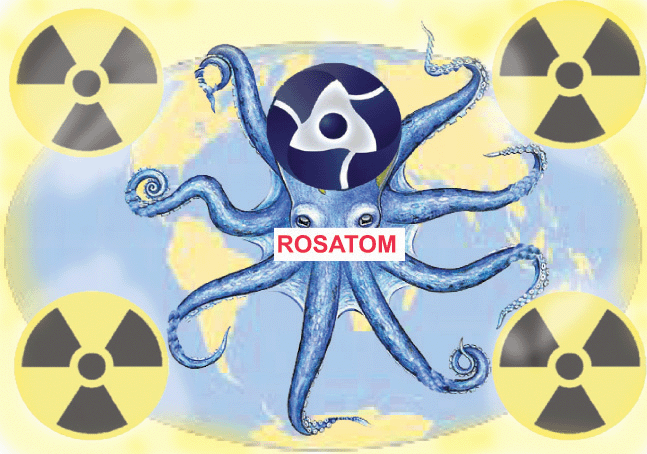 Russia’s Rosatom Sees Foreign Revenues, New Products Fuelling Rapid Growth, The state nuclear company aims to triple its revenues through new projects. Moscow Times, 24 June 19, Russian state nuclear company Rosatom aims to triple its revenues in U.S. dollar terms by 2030, driven by foreign projects from Belarus to Bangladesh and new product areas such as carbon fibre, its chief executive told Reuters.
Rosatom is the world’s only integrated nuclear firm, providing a one stop shop from uranium enrichment to handling nuclear waste, after its two biggest rivals Areva and Westinghouse hit financial troubles.
Alexey Likhachyov, 58, has led Rosatom since 2016, with goals to increase competitiveness, add new markets and products, and boost its share of global nuclear technology exports.
By 2030, he expects up to 70 percent of Rosatom’s revenue to come from outside Russia and up to 40 percent from new products, including non-nuclear ones.
“The first step is to implement our entire order book portfolio — this is around $190 billion overall, of which $133 billion is for this decade. Out of these, around $90 billion are (started) plants abroad. This is 12 countries,” he said.
Rosatom is the world’s biggest nuclear company by foreign orders, with a total of 36 nuclear blocks on order outside Russia, including in Belarus, Bangladesh, China, India, Turkey, Finland, Hungary and Egypt. …….. https://www.themoscowtimes.com/2019/06/24/russias-rosatom-sees-foreign-revenues-new-products-fuelling-rapid-growth-a66135
France wants EDF to sell more nuclear power to rivals, price could increase,
“If we want power prices to be contained in 2020, we need to increase the ceiling and it is the wish of the government to move quickly on those two measure before the November auction window,” an official of the energy ministry told journalists.
“There would likely be a slight increase in the fixed price”, the official added.
The EU’s executive arm, which regulates market competition in the bloc would have to approve any change in the fixed wholesale nuclear price……..https://www.reuters.com/article/us-france-electricity/france-wants-edf-to-sell-more-nuclear-power-to-rivals-price-could-increase-idUSK
Insurer Looks at Ending Cover for Gambling, Arms, Nuclear Power
- ASR Nederland may refuse to sell insurance to 243 companies
- Allianz says engaging with ‘black sheep’ will do more good
Europe’s biggest insurers refuse to sell policies to coal miners and arms producers. A Dutch firm may go further by denying coverage to gambling companies and nuclear-power generators.
The asset-management arm of ASR Nederland NV already has a list of 243 companies that it won’t invest in for ethical reasons. Now the Utrecht, Netherlands-based firm is considering applying that list to the insurance side as well, according to Chief Executive Officer Jos Baeten.,,,, (subscribers only) https://www.bloomberg.com/news/articles/2019-06-24/insurer-looks-at-ending-cover-for-gambling-arms-nuclear-power
Sweden says two aging nuclear reactors safe to run till 2028
Russia’s nuclear weapons and the religious connection
 BLESSED BE THY NUCLEAR WEAPONS: THE RISE OF RUSSIAN NUCLEAR ORTHODOXY, War on the Rocks, MICHAEL KOFMAN June 21 2019 Dmitry Adamsky, Russian Nuclear Orthodoxy: Religion, Politics, and Strategy (Stanford University Press, 2019).
Russia’s Federal Nuclear Center, the All-Russian Institute of Experimental Physics (RFNC-VNIIEF), recently placed a somewhat unusual government tender: It is seeking a supplier of religious icons with the images of Saint Seraphim of Sarov and Saint Fedor Ushakov. Meanwhile, a private foundation, backed by President Vladimir Putin and Minister of Defense Sergei Shoigu, has been gathering funds to build a massive temple to the Russian Armed Forces at Patriot Park,. Artisans are crafting a new icon for the temple, while the steps are to be made from melted-down Nazi equipment captured by the Red Army in World War II.
Viewed in isolation, these may seem to be the occasional eccentric habits of a latter-day authoritarian state. However, Dima Adamsky’s new book, Russian Nuclear Orthodoxy: Religion, Politics, and Strategy, demonstrates convincingly that there are indeed important signs being missed all around us, pointing to a longstanding nexus between the Russian Orthodox Church and the country’s nuclear-military-industrial complex.
Adamsky’s groundbreaking book lays out the largely unstudied history of how a nuclear priesthood emerged in Russia, permeated the units and commands in charge of Russia’s nuclear forces, and became an integral part of the nuclear weapons industry. Continue reading
Danger of nuclear bomb convoys in Scotland
Safety risks exposed by nuclear bomb convoy exercise in Scotland, The Ferret, Rob Edwards on June 23, 2019 An emergency exercise imagining an explosion spreading radioactive contamination from a nuclear bomb convoy crash in East Lothian was hampered by communication breakdowns that would have put people at risk.
An official assessment of the exercise by the Ministry of Defence (MoD) has been passed to The Ferret. It reveals that paper masks worn by the emergency services would have failed to protect them from radioactivity leaking from a damaged nuclear warhead.
During the exercise police could not hear the convoy commander over the radio because he was wearing a respirator. Police also missed vital safety information because they failed to invite the commander to briefing meetings, and were criticised by the MoD for being “unfamiliar” with emergency procedures.
Campaigners condemned the exercise, codenamed Astral Climb, for not testing measures for protecting the public. They accused the MoD of failing to learn from mistakes made in previous nuclear bomb convoy exercises. …….
Convoys comprising up to 20 or more military vehicles transport Trident nuclear warheads by road at least six times a year between the Royal Naval Armaments Depot at Coulport on Loch Long, near Glasgow. and the bomb factory at Burghfield in Berkshire. The warheads have to be regularly maintained at Burghfield.
Though they are meant to be secret, the convoys are often photographed, filmed and followed on social media. They travel close to major centres of population such as Glasgow, Edinburgh, Newcastle, Manchester and Birmingham.
In May 2018 The Ferret revealed that safety problems plaguing the convoys had risen to a record high, with 44 incidents logged in 2017. A report by campaignershas warned that Scotland was “wholly unprepared” to deal with an accident or an attack on a convoy……..
It took more than two years for the MoD to release the report on Astral Climb in response to a freedom of information request by the campaign group, Nukewatch. The MoD apologised for such a “severe delay” and redacted sections of the report to protect “national security” and “personal information”.
The Scottish co-ordinator of Nukewatch, Jane Tallents, accused the MoD of failing to safeguard the public. “The MoD is now conducting convoy accident exercises which don’t even pretend to test any measures to protect the public from a radiation release,” she said.
“In the past more realistic exercise scenarios still stopped short of actual evacuation and sheltering of the public but at least played out on paper how that might be done. For Astral Climb 2016 the MoD imagined a convoy on a back road it never uses nowhere near any population centres.”
She added: “Nukewatch can only conclude that the MoD itself realises that a robust test of emergency procedures would always show that the public would be put at risk. Therefore they have moved to an annual box ticking exercise with the minimum of information being released to the public.”
Tallents urged the Scottish Government and emergency services to demand more transparency. “The scenarios for future exercises should be set by the regulators and civil emergency services to ensure that they are realistic and challenging,” she told The Ferret.
“Of course the best way to protect the public is to stop transporting nuclear warheads on our roads altogether.”…….
The Scottish Campaign for Nuclear Disarmament (SCND) described the MoD report on Astral Climb as a “massive cause for concern”. Nuclear weapons were a “major threat” to the health and safety of local communities, it warned……
The Scottish Government pointed out that the transportation of defence nuclear material in Scotland was a reserved matter for the MoD. “The Scottish Government expects any such transportation to be carried out safely and securely and has made this expectation clear to the UK government,” said a spokesperson……..https://theferret.scot/astral-climb-nuclear-bomb-convoy-exercise/
1 This Month
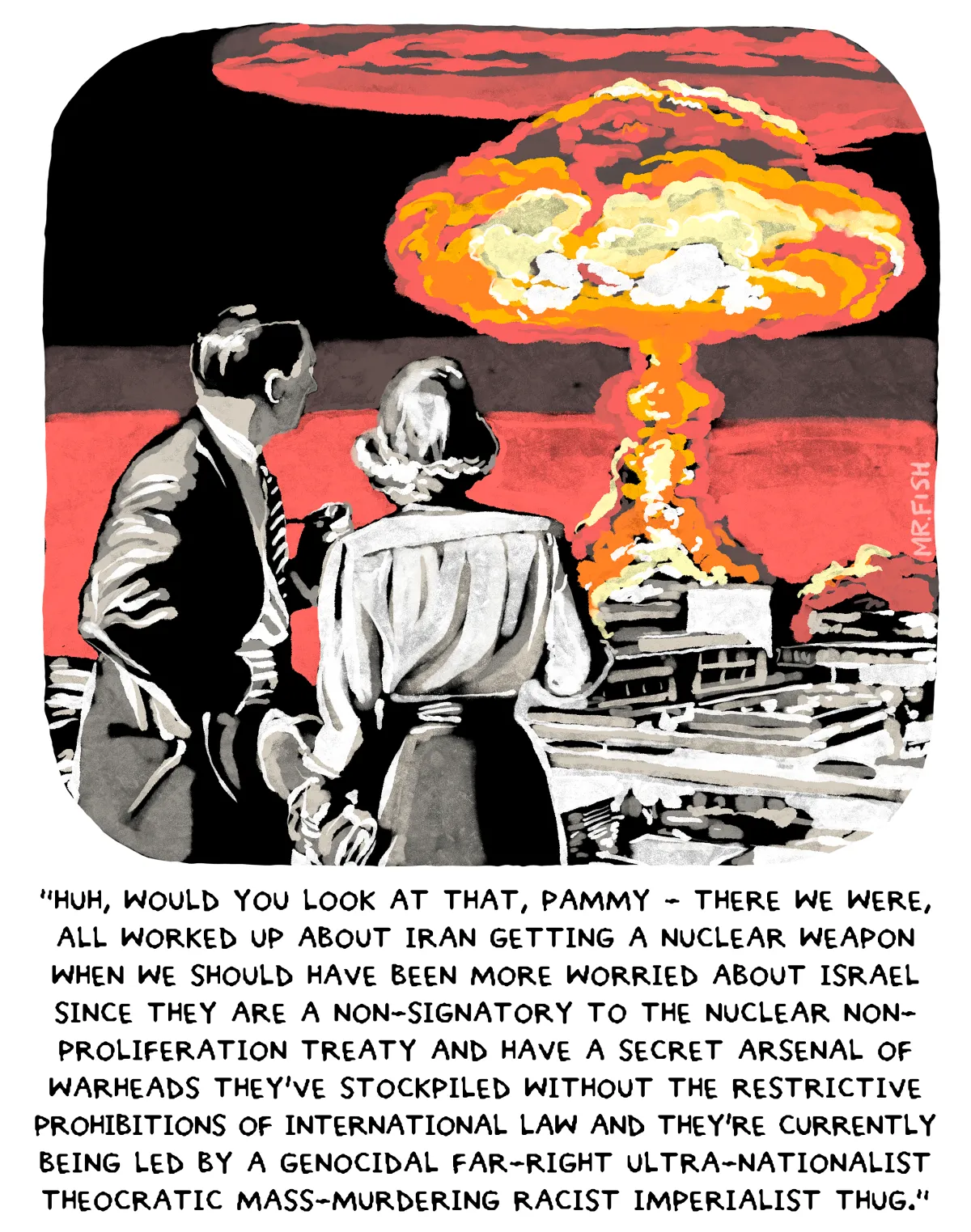
1 June Webinar – The High Cost of Nuclear Power – Register
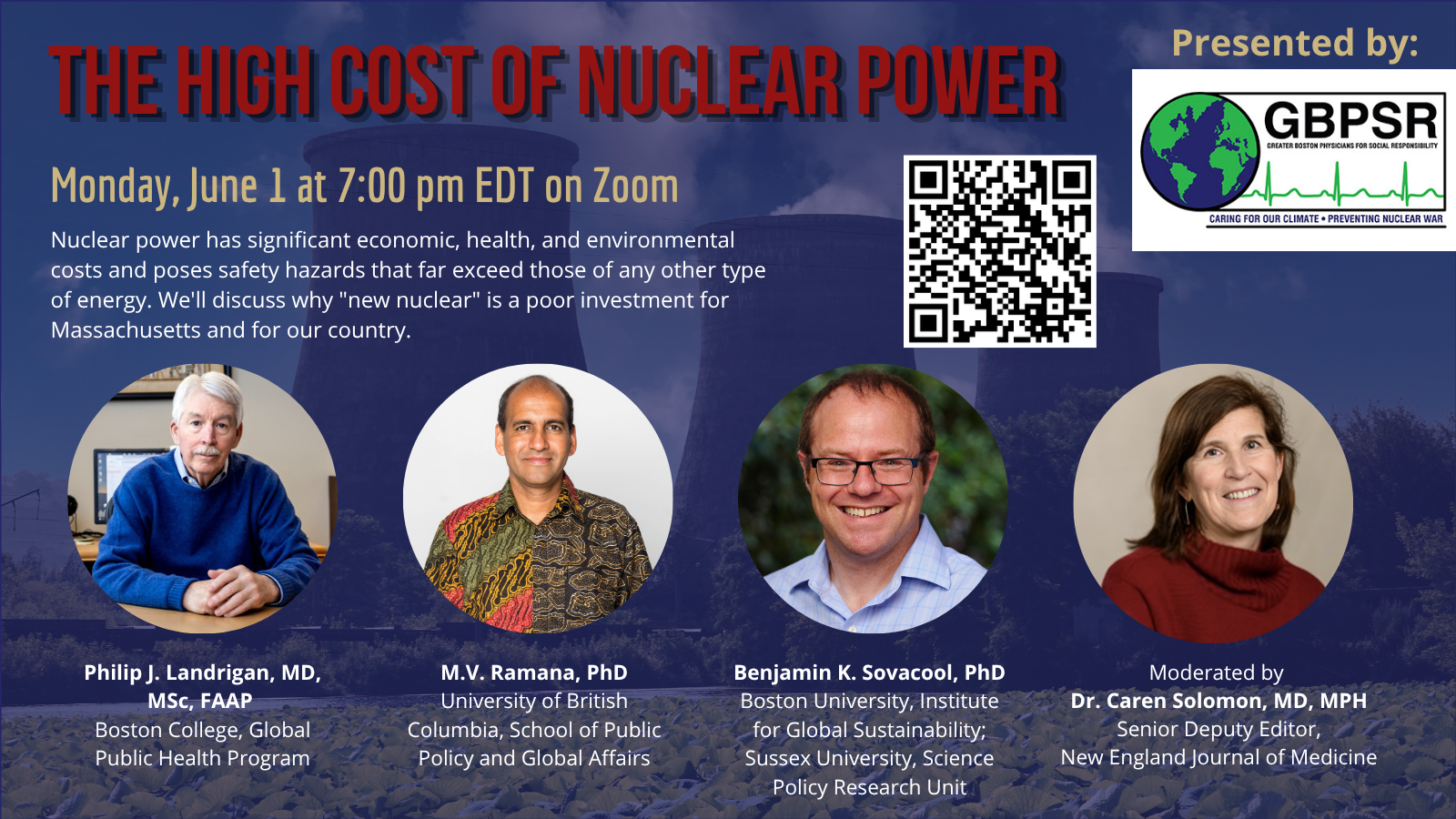


of the week– Nuclear Reactor Information Task Force
To see nuclear-related stories in greater depth and intensity – go to https://nuclearinformation.wordpress.com
-
Archives
- May 2026 (255)
- April 2026 (356)
- March 2026 (251)
- February 2026 (268)
- January 2026 (308)
- December 2025 (358)
- November 2025 (359)
- October 2025 (376)
- September 2025 (257)
- August 2025 (319)
- July 2025 (230)
- June 2025 (348)
-
Categories
- 1
- 1 NUCLEAR ISSUES
- business and costs
- climate change
- culture and arts
- ENERGY
- environment
- health
- history
- indigenous issues
- Legal
- marketing of nuclear
- media
- opposition to nuclear
- PERSONAL STORIES
- politics
- politics international
- Religion and ethics
- safety
- secrets,lies and civil liberties
- spinbuster
- technology
- Uranium
- wastes
- weapons and war
- Women
- 2 WORLD
- ACTION
- AFRICA
- Atrocities
- AUSTRALIA
- Christina's notes
- Christina's themes
- culture and arts
- Events
- Fuk 2022
- Fuk 2023
- Fukushima 2017
- Fukushima 2018
- fukushima 2019
- Fukushima 2020
- Fukushima 2021
- general
- global warming
- Humour (God we need it)
- Nuclear
- RARE EARTHS
- Reference
- resources – print
- Resources -audiovicual
- Weekly Newsletter
- World
- World Nuclear
- YouTube
-
RSS
Entries RSS
Comments RSS
 nuclear-news