Putin talks of Russia, USA , resuming negotiations on nuclear arms reduction treaty
Putin was commenting on his meeting with US President Donald Trump the day before, most of which took place behind closed doors.
“We have tasked our respective foreign minister to start lower-level talks on [nuclear disarmament],” Putin said.
The talks, according to Putin’s comments carried by the Russian Interfax news agency, would be related to extending the New START (Strategic Arms Reduction Treaty), which went into force in 2011 after talks between Trump’s predecessor Barack Obama and Russia’s then-President Dmitry Medvedev.
Fears of restarting nuclear race
The New START limits the number of deployed nuclear warheads ready to use on intercontinental missiles and heavy bomber bases to 1,550. The treaty also imposes various other restrictions to US and Russian nuclear capabilities. It is set to expire in 2021.
According to 2019 data provided by the Bulletin of the Atomic Scientists, both the US and Russia currently have about 1,600 deployed strategic nuclear heads at their disposal. Russia has a total of 6,500 nuclear warheads, compared to 6,185 on the US side.
Russia’s Putin has repeatedly warned that the New START expiry date could signal a new nuclear arms race.
INF on the brink
On Saturday, he refused to give a timeline for the talks and said it was “too early to talk about” the likelihood of getting to an agreement.
Putin’s remarks come after the US accused Russia of violating the Intermediate-Range Nuclear Forces (INF) Treaty by developing a new missile system.
The document, signed in 1987 between the US and the now defunct Soviet Union, prohibits the possessing and testing of short- and medium-range nuclear weapons.
Both Russia and the US have since suspended their participation in the accord. The US has pledged to pull out of the agreement if Russia is not in compliance by August 2 this year.
Russia threatens military response to any NATO action over nuclear-ready missile
NATO says it will act unless Russia destroys nuclear-ready missile
NATO says it will act unless Russia destroys nuclear-ready missile, CNBC, JUN 26 2019
KEY POINTS
- NATO has said Russia’s SSC-8 missile violates terms of a 1987 missile treaty.
- The U.S. says it will exit the treaty unless Russia stops their production.
- But Russia has continued to develop and site the missiles within range of Europe.
- NATO said Russia must destroy its short-range nuclear-ready cruise missile system, or the alliance will be forced to respond.
The U.S. has previously said it will quit a decades-old missile treaty with Russia if the latter fails to destroy the missile, labeled the SSC-8 by NATO.
The 1987 INF Treaty between the U.S. and Russia sought to eliminate nuclear and conventional missiles, as well as their launchers, with short ranges (310–620 miles) and intermediate ranges (620–3,420 miles).
NATO has said the SSC-8 violates those terms and that Russia has been deploying the system at locations which could threaten countries across Europe.
Speaking at a press conference in Brussels Tuesday, NATO Secretary-General Jens Stoltenberg said Russia had just five weeks to scrap the system and save the treaty…….. https://www.cnbc.com/2019/06/25/nato-says-russia-must-end-nuclear-ready-missile-ssc-program.html
UK’s Office for Nuclear Regulation (ONR) has concerns about the security of Sellafield’s plutonium
David Lowry’s Blog 28th June 2019 A week ago the UK national nuclear regulator, the Office for Nuclear Regulation (ONR), released its annual report and accounts to zero media
attention. But embedded in its 164 pages was the following intriguing
revelation:
“Early in the reporting year, a number of security events
required us to apply regulatory attention to several of Sellafield Ltd’s
security investigations.” It then added: ” Appropriate lessons have been
identified and we will continue our regulatory focus on security culture
and on influencing improvements in the security competence of the internal
assurance function.
” Sellafield is a big nuclear site that, inter alia,
holds 140,000 kilogrammes of plutonium. A devastating warhead can be made
with just 5kgs. We cannot afford any serious security events at
Sellafield!
http://drdavidlowry.blogspot.com/2019/06/sellafield-security-questioned-by.html
Russia’s nuclear power station for the Arctic- a floating Chernobyl?
Russia plans to tow a nuclear power station to the Arctic. Critics dub it a ‘floating Chernobyl’, By Mary Ilyushina, CNN, June 29, 2019 Murmansk, Russia (CNN)Next month, a floating nuclear power plant called the Akademik Lomonosov will be towed via the Northern Sea Route to its final destination in the Far East, after almost two decades in construction.
Doubts on the “usability” of Russia’s Submarines Armed with Nuclear Drone-Torpedoes
Russia Plans to Build Four Submarines Armed with Nuclear Drone-Torpedoes, Should America be worried? National Interest,
The Poseidon is the largest torpedo ever built, measuring approximately twenty-four meters long and 1.6-meters in diameter. Using a tiny nuclear reactor to power a pump-jet propulsion system, the Poseidon can traverse thousands of miles across oceans, autonomously navigating around obstacles and evading interception. U.S. intelligence estimates the Poseidon will complete testing by 2025 and enter operational service in 2027.
There remain large question-marks on the Poseidon’s exact capabilities and its operational concept.The Poseidon has been claimed to be capable of blistering-fast speeds of 100 knots, acoustic stealth, and diving as deep as 1,000 meters.
Of these claims, Poseidon’s low operating depth is considered most credible. By itself, this would render interception extremely difficult with current technology. For comparison, U.S. attack submarines (officially) operate down to 240 meters and travel up to 30 knots. Their Mark 48 torpedoes can accelerate to 55 knots and are not rated for much deeper than 800 meters………
In an email in 2018, Kofman wrote me that the Poseidon amounted to a “third-strike” revenge weapon, guaranteeing annihilation of an adversary’s coastal cities, even should Russia’s own nuclear forces be annihilated in a first strike.
While the Poseidon doesn’t fundamentally alter the balance of power, nor the horrifying destructiveness of nuclear war, it does show that humanity is inclined to continue devising ingenious but largely redundant new weapons of mass destruction.
Gaps revealed in Scotland’s nuclear convoy crash preparations

Gaps revealed in nuclear convoy crash preparations, A series of shortfalls in Scotland’s emergency arrangements for coping with a nuclear bomb convoy crash have been exposed by a Scottish Government review. The Ferret, Rob Edwards on June 28, 2019
Leaking radioactivity from an accident would put “strains” on the resources for monitoring the contamination of people, food and the environment, it says. Monitoring may be required “at scale” because of the large number of people involved.
The review reveals that the fire service hasn’t finalised its emergency procedures for convoy crashes, the police need to be better briefed and vetted, while the ambulance service is not told about convoy movements.
The emergency services have also failed to properly record the lessons they learn from emergency exercises, it adds.
Convoys comprising up to 20 or more military vehicles transport Trident nuclear warheads by road at least six times a year between the Royal Naval Armaments Depot at Coulport on Loch Long, near Glasgow, and the bomb factory at Burghfield in Berkshire. The warheads have to be regularly maintained at Burghfield.
Though the Ministry of Defence attempts to keep them secret, the convoys are often photographed, filmed and followed on social media. They travel close to major centres of population such as Glasgow, Edinburgh, Newcastle, Manchester and Birmingham.
The Ferret revealed on 23 June 2019 that an emergency exercise in Scotland called Astral Climb in 2016 had suffered communication breakdowns that could have put people at risk.
A report by campaigners in August 2017 warned that Scotland was “wholly unprepared” to deal with an accident or an attack on a convoy. When the issue was raised in the Scottish Parliament in May 2018, Scottish ministers promised to ask the police and fire inspectorates to conduct a review. ……..
According to the review, the hazards from a bomb convoy crash come from the “explosive, radioactive and toxic materials” that are transported. “The explosive hazard is the same as that which is associated with any chemical high explosive,” it said.
“The main radioactive materials are plutonium and uranium. Plutonium and uranium are both toxic and radioactive. The convoy may also contain other toxic (but not radioactive) materials such as beryllium and lithium. Beyond the immediate hazard area, the potential dispersion of airborne plutonium particles represents the dominant radioactive hazard.”The Scottish Government’s review listed five emergency procedures that have still to be “finalised” by the Scottish Fire and Rescue Service, including operational guidance and intelligence sharing. They should be completed “as a matter of priority”, the review concluded.
Police Scotland were criticised for only conducting a “verbal briefing” for officers prior to convoy movements. “There would be merit in considering a more formal process to provide a record of the information given to officers,” the review said.
“We found that Police Scotland uses appropriate measures to secure information but there was a lack of clarity regarding vetting and which staff and officers have access to sensitive information.”
The fire and police services were both upbraided for failing to record the lessons learned from emergency exercises such as Astral Climb in 2016. They were urged to introduce new systems to ensure that that improvements were made. ……….. https://theferret.scot/nuclear-convoy-safety-scotland-review/
UK’s Department for Business, Energy and Industrial Strategy reports solely on England’s responses re nuclear waste issues
BEIS 27th June 2019 The final policy is published in Implementing geological disposal: working
with communities, which updates and replaces the 2014 white paper,
Implementing Geological Disposal in England.
This consultation was on
behalf of the UK government and the Department of Agriculture, Environment
and Rural Affairs (DAERA) in Northern Ireland. The Department of
Agriculture, Environment and Rural Affairs (DAERA) has published separately
a summary of responses from respondents in Northern Ireland.
Future policy decisions in relation to geological disposal in Northern Ireland would be a
matter for the Northern Ireland Executive, which is currently suspended.
Accordingly, the summary of the responses and consequential final policy
decisions referred to in this document, apply solely to England. The Welsh
Government consulted in parallel with the UK government on policy proposals
for working with communities as part of a consent-based approach to finding
a location for a GDF for higher activity radioactive waste. The Welsh
Government will publish its response to the consultation shortly.
UK’s Department for Business, Energy and Industrial Strategy reports on progress in Radioactive Waste Management
BEIS 27th June 2019 Department for Business, Energy & Industrial Strategy, Eighth annual report explaining the background to the Geological Disposal Programme and covering progress between April 2017 and April 2019. In its
November 2010 response to the House of Lords Science and Technology Select
Committee’s report, Radioactive Waste Management: a Further Update (March
2010), the UK government committed to producing an annual report to
Parliament, setting out progress in relation to the management of higher
activity radioactive waste.
The eighth report sets out progress made in
relation to the management of higher activity radioactive waste for the
period April 2017 to April 2019. Following the publication of the updated
policy framework for higher activity radioactive waste in December 2018,
and the launch of the process to identify a location to develop a
geological disposal facility (GDF), this will be the last report produced
under our 2010 commitment.
Chernobyl survivors confirm the accuracy of the TV series, about nuclear radiation
Chernobyl survivors assess fact and fiction in TV series,
Nuclear power limited by climate change: France’s nuclear reactors can’t cope with the heat
 EDF to curb Bugey nuclear reactor output as Rhone river flow slows https://www.reuters.com/article/us-france-weather-nuclearpower/edf-to-curb-bugey-nuclear-reactor-output-as-rhone-river-flow-slows-id Reporting by Bate Felix; Editing by Geert De Clercq, PARIS (Reuters) 29 June 19 – French utility EDF said on Friday that power generation at its 3,600 megawatt (MW) Bugey nuclear power plant in eastern France could be curbed from Tuesday July 2 due to a lower flow rate of the Rhone river.The plant near the Swiss border has four 900 MW reactors and uses water from the river for cooling.
EDF’s use of water from rivers as coolant is regulated by law to protect plant and animal life. It is obliged to reduce output during hot weather when water temperatures rise, or when river levels and the flow rate are low.
France saw new all-time record temperatures about 45 degrees Celsius in the south of the country on Friday afternoon as a sweltering heatwave engulfed much of southern and central Europe.
Climate change’s new normal? Heat waves, wildfires, in Europe
 ‘Worst is still to come’: Sizzling Europe battles wildfires, health risks, New records are being set as Europe swelters, sparking forest fires – and debates over public nudity. SBS News, 28 June 19 Wildfires raged across Catalonia and French authorities stepped up restrictions on water use and driving in cities as swathes of western Europe remained in the grip of an intense heatwave.
Temperatures climbed towards 44 degrees Celsius (111 degrees Fahrenheit) in parts of northern Spain and southern France, driving many people to seek relief in the sea, rivers, lakes, fountains and swimming pools.
Grid operator RTE said French electricity demand on Thursday was close to a summer record seen two years ago, as people turned on fans and coolers to full blast for relief from the scorching temperatures……….
The stifling heat has elsewhere prompted traffic restrictions in France and fanned debate in Germany over public nudity as sweltering residents stripped off. …….
Exceptional for arriving so early in summer, the heatwave will on Thursday and Friday likely send thermometers above 40 degrees in France, Spain and Greece.
In Spain, hundreds of firefighters and soldiers, backed by water-dropping aircraft, battled on Wednesday to put out a wind-fuelled forest fire that erupted in Torre del Espanol in the northeastern region of Catalonia…….
Scientists warn that global warming linked to human fossil fuel use could make such scorchers more frequent.
“Global temperatures are increasing due to climate change,” said Len Shaffrey, professor of climate science at the University of Reading.
“The global rise in temperatures means the probability that an extreme heatwave will occur is also increasing.”……… European heatwave could be the norm in a climate change affected world…….. https://www.sbs.com.au/news/worst-is-still-to-come-sizzling-europe-battles-wildfires-health-risks
Belgium needs to speed up renewable energy investment, to phase out nuclear power by 2025
That is higher than its previous forecast of 3.6 GW, made in a similar study in 2017.
Neighboring countries, including Germany, are accelerating an exit from coal while others are cutting back on nuclear power generation, reducing Belgium’s ability to import electricity.
The Belgian parliament passed legislation in April aimed at spurring investment in gas-fired power generation and building 4,000 megawatt of new offshore wind farm capacity by 2030. The study, co-sponsored by Elia and energy agencies, said more efforts are needed.
While some action has been taken over the past year, “we are not yet ready for any scenario. It is still five minutes to midnight,” Elia said.
World War 3: The secret underground nuclear bunkers hiding below forest revealed
The Secret Soviet Nuclear Bunker
World War 3: The secret underground nuclear bunkers hiding below forest revealed
TWO bunkers leading to a secret underground city were discovered in the former Soviet state of Moldova, which were built for high ranking officers to pull the strings from should World War 3 break out, an explorer revealed. Express UK By CALLUM HOARE, Jun 28, Known to the British and US spies as “Object 1180” these two structures were built in 1985 – at the height of the Cold War. As the threat of a nuclear strike from either side seemed more than likely, high-ranking officers needed somewhere to orchestrate their retaliation and prepare for a second strike. As a result, the cylinders were built with thick walls to withstand a direct nuclear hit and an entire city was concealed below with shops, hospitals and a vast amount of supplies to provide the generals with everything they needed.They were only discovered when spy planes and satellites noticed increased activity heading towards the forests of Moldova and were soon abandoned following the fall of the Soviet Union in 1991.
However, YouTube star Benjamin Rich, the man behind popular exploration channel “Bald and Bankrupt” treated fans to a history lesson when he visited earlier this month. He explained: “In 1985, western satellites picked up some strange activity in the rural countryside of what was then the Moldavia Soviet Socialist Republic.
“They didn’t know what it was at the time and they named them Object 1180.
“It was only years later, with the fall of the Soviet Union, that they discovered that it was an underground nuclear bunker.”
Mr Rich, who treats his 800,000 subscribers to visits all over the former Soviet Union, explained why leaders in Moscow thought the construction was necessary.
He added: “The Eighties were quite a scary time for people in England and in the Soviet Union.
“It seemed at one point there was a real possibility of a nuclear war between the Soviet Union and the West.
“So the Soviet Union built about four of these giant nuclear bunkers dotted around the former nation for the high command to hide in and command the forces should, what seemed like the inevitable, happen.
“They started construction in 1985, but as the Soviet Empire came to an end, there was no need for [them] anymore.
“The West and East were friends so these monoliths were just left as reminders of how close we came to a war between our nations. ”
Finally, taking a look inside the dark abandoned remains, Mr Rich then revealed how things would have looked more than 30 years ago.
He continued: “These things were designed for the bigwigs, the apparatchiks, the nomenclature of the Soviet Communist Party in the military High Command. ……… https://www.express.co.uk/news/world/1146430/world-war-3-soviet-union-underground-bunker-moldova-forest-object-1189-spt
Belarus nuclear physicist warns on the unsafety of new nuclear plant
Nuclear physicist about Chernobyl / ENG subs
Professor Heorhi F. Lepin, a physicist, co-chairman of the public association ‘Scientists For A Nuclear-Free Belarus’, who took part in the rectification of the consequences of the Chernobyl disaster, warns the Belarusians against launching the nuclear power plant in Astravets. https://belsat.eu/en/?p=1108658
According to him, the site chosen is no good and even dangerous – once an earthquake happened on the spot; there is an intersection of crust fractures. However, President Alyaksandr Lukashenka called the scientists who are critical of nuclear-power engineering and particularly the Astravets NPP ‘undercover bandits’ and ‘enemies of the people’, Lepin stressed. The Belarusian NPP with two VVER-1200 reactors with a total capacity of 2,400 MW is being built according to the Russian project near Astravets in the Hrodna region. The first power unit is scheduled to be commissioned in 2019, the second one — in 2020. Subscribe to our channels:
1 This Month
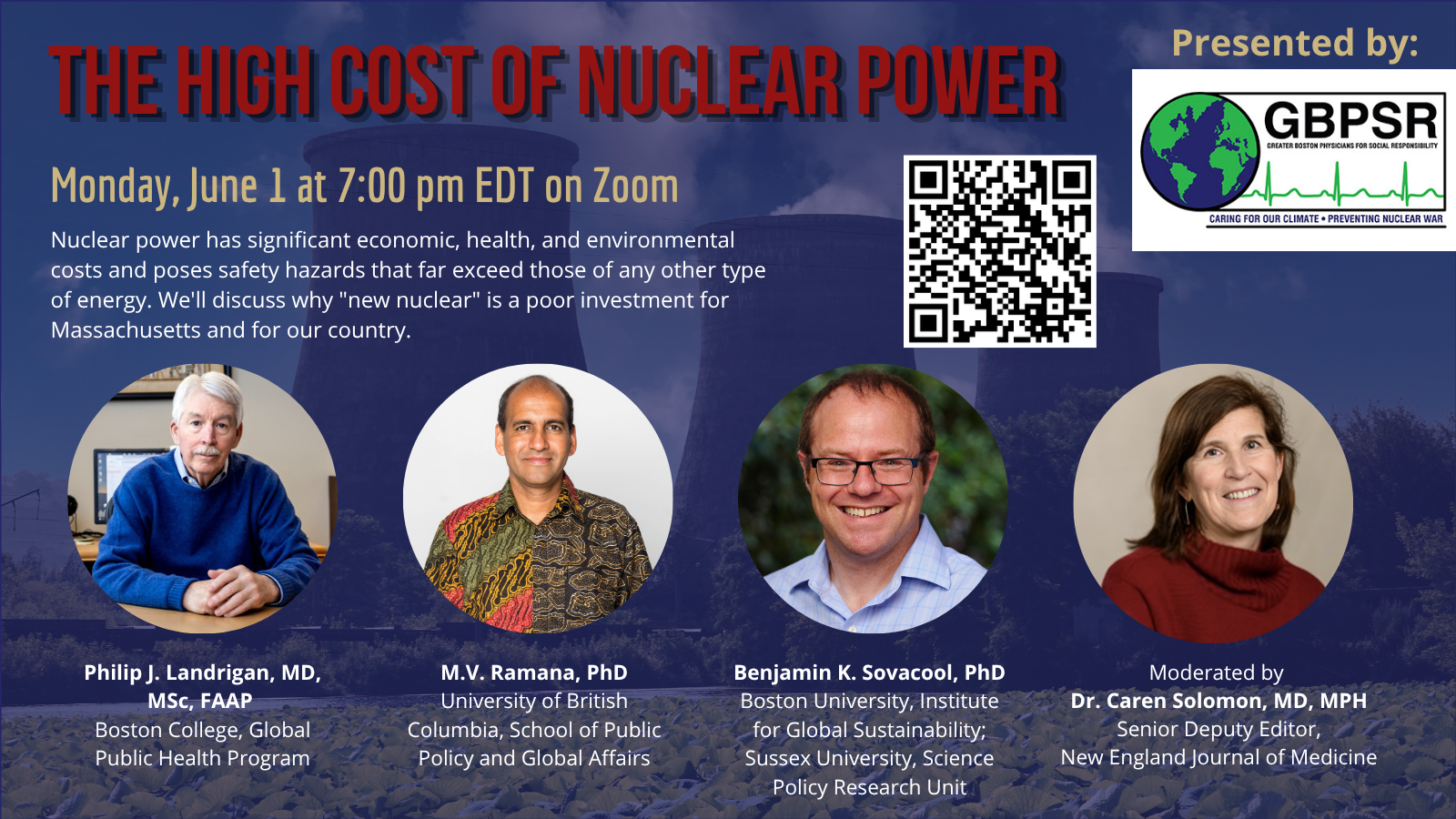
1 June Webinar – The High Cost of Nuclear Power – Register


of the week– Nuclear Reactor Information Task Force
To see nuclear-related stories in greater depth and intensity – go to https://nuclearinformation.wordpress.com
-
Archives
- May 2026 (255)
- April 2026 (356)
- March 2026 (251)
- February 2026 (268)
- January 2026 (308)
- December 2025 (358)
- November 2025 (359)
- October 2025 (376)
- September 2025 (257)
- August 2025 (319)
- July 2025 (230)
- June 2025 (348)
-
Categories
- 1
- 1 NUCLEAR ISSUES
- business and costs
- climate change
- culture and arts
- ENERGY
- environment
- health
- history
- indigenous issues
- Legal
- marketing of nuclear
- media
- opposition to nuclear
- PERSONAL STORIES
- politics
- politics international
- Religion and ethics
- safety
- secrets,lies and civil liberties
- spinbuster
- technology
- Uranium
- wastes
- weapons and war
- Women
- 2 WORLD
- ACTION
- AFRICA
- Atrocities
- AUSTRALIA
- Christina's notes
- Christina's themes
- culture and arts
- Events
- Fuk 2022
- Fuk 2023
- Fukushima 2017
- Fukushima 2018
- fukushima 2019
- Fukushima 2020
- Fukushima 2021
- general
- global warming
- Humour (God we need it)
- Nuclear
- RARE EARTHS
- Reference
- resources – print
- Resources -audiovicual
- Weekly Newsletter
- World
- World Nuclear
- YouTube
-
RSS
Entries RSS
Comments RSS
 nuclear-news