nuclear-news

The News That Matters about the Nuclear Industry Fukushima Chernobyl Mayak Three Mile Island Atomic Testing Radiation Isotope

Nuclear Waste In The Arctic

  https://www.rferl.org/a/nuclear-waste-in-arctic-ocean/30052061.html

July 13, 2019 Posted by | ARCTIC, oceans, Russia, wastes | 2 Comments

Planetary catastrophe – was not likely from the Russian nuclear submarine accident

Russian Navy Claims Sailors Prevented ‘Planetary Catastrophe’
Was the damaged submarine’s reactor in danger of causing a nuclear accident?
https://www.popularmechanics.com/military/navy-ships/a28340271/submarine-nuclear-reactor-accident/  By Kyle Mizokami, Jul 10, 2019  A senior Russian Navy official said that accident on the nuclear-powered submarine Losharik was nearly a “planetary catastrophe,” were it not for the fourteen sailors killed in the incident. The submarine, widely believed to be a spy sub capable of operating on the deep ocean floor, was damaged in an accident on July 1st. The Kremlin denied there was risk of such a “catastrophe.”

An aid to the head of the Russian Navy, Sergei Pavlov, stated at a funeral for the sailors lost in the accident, “With their lives, they saved the lives of their colleagues, saved the vessel and prevented a planetary catastrophe.” Pavlov reportedly did not elaborate.

The Kremlin denied that the reactor had been at risk, stating that it had been “totally sealed off” and there were no problems with it. Radiation monitoring stations in Norway relatively near where the incident took place have not reported any spikes in radioactivity.

The accident, according to Russian Defense Minister Sergei Shoigu, started in the sub’s battery compartment and spread. This suggests a fire that was the result of a buildup of hydrogen gasses inside the ship. Submarines, even nuclear ones, carry banks of batteries to provide a temporary source of power, and hydrogen is produced as a byproduct of the battery charging process. If the gas reaches a critical level of concentration, a spark onboard the ship could set off a fire.

According to Shoigu, the crew battled the fire for an hour and a half. Although the automatic fire extinguishers kicked in, they proved insufficient. The surviving crew managed to initiate an emergency blow procedure and the ship surfaced off the coast of the Kola Peninsula, where the remaining crew members were rescued.

Losharik, named after a cartoon horse made of interconnected juggling balls, got its name because the interior of the ship is made of seven interconnected steel or titanium spheres. The spheres give the ship its deep diving capability, with the sub reportedly capable of reaching depths of at least 1,000 meters (3,280 feet).

It is not clear where Losharik’s 5 megawatt nuclear reactor resides, but the ship is only 230 feet long with all personnel, propulsion systems, and mission equipment inside the seven spheres. The fire could not have been far from the reactor, but if the reactor and batteries resided in different spheres they could have been closed off from one another. Shoigu seems to be stating that was the case.

Even if the fire did reach the reactor it seems unlikely that the ejection of radioactive materials could cause a “planetary catastrophe” on the scale of the 1986 Chernobyl accident. Losharik’s reactor generated just five megawatts, the RBMK reactor at Chernobyl was much more powerful and used much more nuclear material to generate up to 3,200 megawatts.

July 13, 2019 Posted by | incidents, Russia | 1 Comment

Russia’s grandiose nuclear ambitions – expressed in its floating nuclear plant for the Arctic

Russian floating nuclear plant prepares for towing into Arctic seas,  Plant to support 50,000-person Chukotka region with power for oil and gas industries  Katie Toth · CBC News  Jul 10, 2019   Russia’s controversial nuclear barge is ready to travel through the Arctic seas — and observers across the globe are watching.

Greenpeace has called it a “floating Chornobyl.” 

But the Akademik Lomonosov, which will dock in the Eastern Siberian town of Pevek, also provides a small glimpse into Russia’s northern ambitions and the role of nuclear power in achieving them.

Russia’s atomic energy agency, the Rosatom State Atomiс Energy Corporation (ROSATOM), has said in news releases that the future floating nuclear power plant will be a key piece of infrastructure as it develops its Arctic shipping route. 

Meanwhile, the agency has started work on a fleet of nuclear-powered icebreakers to keep that route open. Its latest three ships can cut through three metres of ice, and each can produce 350 megawatts of power. 

It’s a lot more difficult to counter a catastrophe there than anywhere else on the globe.– Jan Haverkamp, Greenpeace

Rebecca Pincus, an assistant professor with the U.S. Naval War College, says Russia’s vision for itself as a global superpower in the 21st century hinges on the far North.

Russia’s grand strategy for the century is centred on developing Arctic resources,” Pincus said. “That economic engine [is] … integral to Russia relaunching its place in the world.” 

According to statements by ROSATOM, the plant will supply the 50,000-person Chukotka region with power and it will support “key industries” in this oil-and-gas rich region. 

‘It’s a classical Russian solution’

The choice to build a floating nuclear power station is “a fabulous little encapsulation of all the challenges Russia faces in developing its Arctic zone,” Pincus said. “Floating a nuclear power plant to a tiny little city in the Russian Arctic is colossally challenging, colossally expensive … it’s a classical Russian solution.”

………. Jan Haverkamp, a nuclear energy expert with Greenpeace, says his organization is right to be worried. The Lomonosov will be docking in one of the most remote places in the world.

The Lomonosov, prior to a paint job. Greenpeace is concerned about the plant and its isolated location, saying that it would be difficult to counter a catastophe in the remote region. (ROSATOM)

“It’s a lot more difficult to counter a catastrophe there than anywhere else on the globe,” he said.

Haverkamp is also concerned about the power being used to extract fossil fuels.

“Climate change is a given.… Opening up new fossil projects at the moment, when the world needs to be fossil-free in 2050, does not seem to make very much sense.”

Meanwhile, ROSATOM says this barge is only a small piece of a new future for floating nuclear power. It’s building a second generation of the floating nuclear units, and it’s in talks with several countries looking to buy nuclear barges of their own.

Emails to ROSATOM’s media contact were not returned before publication.

The barge will start getting towed to Pevek in August. https://www.cbc.ca/news/canada/north/russia-floating-nuclear-plant-1.5206448

July 13, 2019 Posted by | politics, Russia, technology | Leave a comment

In the 1980s Hungarian villagers defeated a nuclear waste dump plan. Can they do it again?

July 13, 2019 Posted by | EUROPE, opposition to nuclear, wastes | Leave a comment

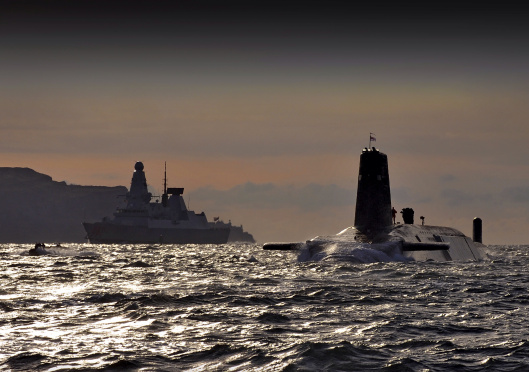
France’s nuclear-powered ‘Barracuda’ submarine lunched by President Emmanuel Macron

French President Emmanuel Macron unveils France’s nuclear-powered ‘Barracuda’ submarine   12/07/2019  French President Emmanuel Macron unveiled France’s latest nuclear-powered ‘Barracuda’ class submarine on Friday, a €9 billion stealth vessel programme Paris says is key to maintaining its naval presence for decades to come…….

The French government has placed an order for six of the 5,000-tonne submarines made by Naval Group, in which defence company Thales has a 35 percent stake.

The Australian defence minister Linda Reynolds attended the ceremony unveiling the submarine. Australia recently ordered a non-nuclear attack class submarine fleet from the Naval Group……… https://www.euronews.com/2019/07/12/french-president-emmanuel-macron-to-unveil-france-s-nuclear-powered-barracuda-submarine

July 13, 2019 Posted by | France, weapons and war | Leave a comment

Tax-payer funding absolutely critical to Russia’s nuclear industry

State support pivotal to Russia’s nuclear sector, says report, WNN 12 July 2019

Russia’s nuclear power industry consists of 89 enterprises that are owned by the state-run joint stock company Atomic Energy Power Corporation (AEPC), or Atomenergoprom, its Russian name.

Since commissioning its first, five-megawatt, nuclear power plant, in Obninsk in 1954, Russia has been one of the world’s leading countries in nuclear power generation, S&P says, and the country plays an important role in all parts of the nuclear cycle, from mining to construction.

The report – What Makes Russia’s Nuclear Sector Competitive – says state support includes capacity-supply agreements, ad hoc equity contributions from the government, and low nuclear liabilities that accrue only after 2011……….

“We expect domestic nuclear capacity to increase only moderately because electricity demand in Russia is stagnating, given only modest GDP growth, a significant potential for energy savings, and the government’s intention to avoid raising electricity prices through additional increases in capacity payments,” the report says.

The key risks, according to S&P, concern international projects: tighter requirements for new builds, which are likely to mean potential delays – “as seen with” the Hanhikivi project in Finland; and, nuclear phase-out policies in Western Europe that “could weigh on exports in the longer run”.

“That said, we believe exports of fuel and enrichment services should be resilient in the next several years because Russia mostly exports to nuclear-supportive countries under long-term contracts,” the report says.

“Meanwhile, treatment of nuclear waste or decommissioning services could increase in importance,” it adds.

AEPC has “solid” profitability and financial metrics compared with international and local peers, S&P says, which provides “financial capacity” for new nuclear power construction, domestically and abroad.

Although Russia is involved in a “record number” of international nuclear power construction projects, the prime contractor is AEPC’s unrated sister entity Atomstroyexport, and AEPC is only directly involved in two projects, Hanhikivi in Finland (34%) and Akkuyu in Turkey (96%), the report notes.

AEPC covers all stages of the civil nuclear cycle,  from uranium extraction (about 13% of global production) through enrichment and fuel fabrication (about 36% and 17% global market shares) to electricity generation in Russia. It is the sole operator of nuclear plants with 29.1 GW, or 12% of Russia’s total installed capacity, and 18% of the country’s electricity production, at ten plants and 35 units in operation. http://www.world-nuclear-news.org/Articles/S-P-report-on-Russia

July 13, 2019 Posted by | business and costs, politics, Russia | Leave a comment

THIS SUNKEN NUCLEAR SUB IS LEAKING RADIATION INTO THE OCEAN

July 11, 2019 Posted by | environment, oceans, Russia | 1 Comment

Belgium’s green party demands review of nuclear waste storage project

Belgium’s green party demands review of nuclear waste storage project  https://www.brusselstimes.com/all-news/belgium-all-news/science/60278/deforestations-impact-on-climate-change-deemed-worse-than-expected/

July 9, 2019 Posted by | EUROPE, wastes | Leave a comment

Was Russian nuclear submarine accident close to a planetary catastrophe?

Russian servicemen ‘averted planetary catastrophe’ during nuclear submarine accident, military official claims at funeral https://www.independent.co.uk/news/world/europe/russia-submarine-accident-fire-nuclear-reactor-catastrophe-sailors-dead-a8991531.html

Kremlin refuses to reveal mission of vessel, citing state secrets Tom Embury-Dennis   8 July 19, Families of the 14 Russian servicemen who were killed after a fire broke out on a nuclear submarine have reportedly been told that their relatives averted a “planetary catastrophe” before they died.

A high-ranking military official is said to have made the comment at a funeral for the crew in St Petersburgh days after the accident in the Barents Sea earlier this week.

The incident remains shrouded in mystery after the Russian government refused to reveal the submarine’s name and its mission, claiming them as state secrets.

However, the Kremlin has said the accident was sparked by a fire in the battery compartment of the submarine.

Defence minister Sergei Shoigu said earlier this week that the onboard nuclear reactor was “operational” after the crew took “necessary measures” to protect it.

  • His deputy Andrei Kartapolov also claimed the “hero” submariners sealed a hatch to contain the blaze.
  • The Kremlin has not revealed what exactly occurred, or whether a major incident was averted by the servicemen’s actions.Paying tribute to the crew at the memorial, the unnamed military official said the submariners had prevented a much bigger tragedy, Russian news outlet Open Media reported.

July 8, 2019 Posted by | incidents, Russia | Leave a comment

£1.68bn pre-tax loss forHorizon Nuclear Power, builder for suspended Wylfa Newydd project

BBC 5th July 2019 The company behind plans to build a new nuclear power station on Anglesey has reported a £1.68bn pre-tax loss. Work at Wylfa Newydd was suspended in
January by Hitachi due to rising costs. The latest accounts filed by its
subsidiary Horizon Nuclear Power Ltd show it cut the value of the land and
equipment by £1.52bn as it does not intend to build a new power station.

The accounts also show that staff redundancies and winding up work also
cost £127m. Horizon will now be put into a “suspended state” following the
release of most of its workforce and termination of most of its commercial
contracts, according to its annual report.

A report by the Welsh Affairs Committee said the UK government should encourage Hitachi to sell the site if it is not prepared to resume work. Horizon previously said its main
planning permission was being considered, as it keeps its options open.
“They are going ahead with the application because they’ve done so much
work already, it’s worth spending the additional money to finish that
work,” said Dr Edward Jones, economics lecturer at Bangor University.

https://www.bbc.co.uk/news/uk-wales-48888093

July 8, 2019 Posted by | business and costs, UK | Leave a comment

Expert opinion: small nuclear reactors a very bad deal for Scotland

“Even if a safe and affordable design were to emerge from the current research projects, the whole concept relies on there being a sufficient guaranteed pipeline of orders for the construction and ramping up to scale of a large and expensive production facility,” NCG said.

“Without such a pipeline – itself requiring an unlikely level of long-term policy consistency – it is difficult to see the private sector being willing to finance such a facility.”

“We need to rapidly scale up investments in clean, safe renewable power and improving energy efficiency rather than fall for the latest sales pitch of the failing nuclear industry.”

Small nuclear reactors for Scotland? No thanks, say experts, The Ferret, Jenny Tsilivakou on July 7, 2019

A report by scientists proposing that Scotland should consider building an array of small nuclear power reactors to help combat climate warming has been dismissed as “disingenuous”.

Three experts under the banner of the Nuclear Consulting Group think tank say that a new report from the Royal Society of Edinburgh (RSE) displayed a “disappointingly poor grasp of the realities of the nuclear issue”.

They have been backed by campaigners, but the RSE has warned against ruling out energy technologies that may not meet “every possible criterion”. The nuclear power industry welcomed RSE’s report.

The RSE report on ‘Scotland’s Energy Future’ was published on 17 June 2019 following a two-year inquiry. Its lead authors were Sir Muir Russell, who was head of the Scottish civil service and principal of the University of Glasgow, and Rebecca Lunn, an engineering professor at the University of Strathclyde.

It accepted that there were “well recognised challenges” with nuclear such as costs, decommissioning, and the disposal of radioactive waste. “Addressing these issues will require substantial investment over a prolonged period of time,” it said.

But the RSE report suggested that “small modular reactors” (SMRs) could be a solution. They are reactors designed to be assembled from pre-made parts to generate under 300 megawatts of electricity, a quarter of that produced by current nuclear stations……

“SMRs could provide many of the benefits of large-scale nuclear energy, but in a form that may prove more acceptable to the public,” the report said.

“There is a high level of uncertainty over how long this technology will take to sufficiently develop.”

The RSE report cautioned that “no energy policy, no matter how well-considered, will ever solve all of the problems and paradoxes of energy supply and use”. There was an “energy quadrilemma”, it contended, that had to take account of climate change, affordability, energy security, and social acceptability and economic wellbeing.

The Nuclear Consulting Group (NCG) has now issued a sharp riposte to the RSE report. It has published a paper by three experts: Dr Paul Dorfman from University College London; Tom Burke from the climate think tank E3G; and Steve Thomas, emeritus professor of energy policy from the University of Greenwich.

They concluded that “Scotland’s energy future has no need for nuclear”. They criticised the RSE report for “conflicting” and “confusing” messages about nuclear power.

The RSE report didn’t provide evidence to back up some of its claims, the NCG paper argued. The RSE failed “to note that all nuclear is significantly more carbon intensive than all renewables”.

NCG maintained that renewables such as wind power were cheaper than new nuclear. It was particularly critical of the idea that SMRs could help Scotland achieve its climate targets. Continue reading

July 8, 2019 Posted by | Small Modular Nuclear Reactors, UK | Leave a comment

Together Against Sizewell C: the battle to save UK’s Suffolk coast from nuclear development

The nuclear fight for Sizewell on Suffolk’s coast, BBC, 7 July 2019  

Joan Girling has been fighting the nuclear industry most of her adult life.

She was at school when the new Magnox reactor was begun on the Suffolk coast at Sizewell in the 1960s.

Her father told her it was a “necessary evil”.

But when she moved to Leiston, just a few miles from the nuclear power station, and work began on Sizewell B in the 1980s, she could no longer ignore it………

in 1989 the Central Electricity Generating Board (CEGB) proposed a Sizewell C and Joan decided she had to do something.

At a fractious meeting at the Leiston Film Theatre in the High Street opposite the fish and chip shop, she founded Community Against Sizewell C.

Joan and an array of other anti-nuclear groups won that fight. Sizewell C was cancelled. The plan was resurrected in 1993 and Joan helped fight and win that one as a local councillor. But she has no illusions about what swung the argument.

“It was the finances that didn’t work out for them, ” she says resignedly. “Not the environment. It’s always finance that has the final say.” ……..

EDF and Sizewell C

The CEGB is now long gone. Today it is the giant French energy group EDF who wants to build Sizewell C. The protestors now call themselves Together Against Sizewell C (TASC).

In the next few weeks the plans will go to the Planning Inspectorate and then on to Secretary of State. If it is approved Joan expects ten years or more of construction, millions of tonnes of aggregate roaring in by road or rail, spoil heaps and a campus of more than 6,000 workers, on what she calls “my beloved coast.”………

Sizewell and Hinkley would  be a blueprint for a nuclear future.

Joan sighs at the thought: “No, nuclear plant, never, not one, has come in on time and on budget.”

Protected areas

Sizewell is hemmed in with every kind of protected area. Philip Ridley, Head of Planning and Coastal Management at East Suffolk Council, admits: “If you were looking for a place to build a nuclear power station you could not have chosen a more environmentally sensitive spot.”

The whole coast is an Area of Outstanding Natural Beauty (AONB). The shingle beach is a Site of Special Scientific Interest (SSSI). Sizewell Marshes, just behind the plant is a Special Protected Area (SPA). The Leiston Sandlings to the south are another SPA. There’s even an ancient monument nearby, Leiston Abbey.

Minsmere

But it is hard to compromise on Minsmere, a Special Area of Conservation (SAC) and an SSSI. The thousand hectares of marsh, less than a mile to the north, is the pride of the RSPB, where in 1947 the avocet, now the emblem of the charity, started breeding again for the first time in 100 years. It is home to 5,800 plant and animal species, marsh harriers, otters, water voles and bearded tits.

Adam Rowlands, Minsmere senior site manager, says: “For the RSPB, the scale of risk is higher than anything else we have ever been faced with before.

“The proposed footprint extends into the marshes behind the site which is managed by the Suffolk Wildlife Trust, and we are concerned at the loss of habitat over the ten years of construction due to noise and light and disturbances, and also the effects on the water table.”

At the moment Minsmere’s water levels are delicately controlled by sluices. Mr Rowlands says any unexpected rise or fall of a few centimetres could flood nests and destroy habitats.

It’s not just the fresh water inland but the salt water of the North Sea that worries the RSPB.

It is an unpredictable and mobile coastline. The RSPB fears that higher sea defences and a concrete landing strip for barges could drastically alter the shoreline – and Minsmere.

Consultations

In response EDF has issued lengthy consultation papers. The local Suffolk Wildlife Trust’s response to the latest and most detailed one is littered with references to “inadequate assessment”.

What’s more, there are fears EDF will only release a full assessment immediately before the plans go before the Planning Inspectorate, giving local groups little time to respond…….https://www.bbc.com/news/business-48828820

July 8, 2019 Posted by | environment, opposition to nuclear, UK | Leave a comment

Chernobyl’s $1.7B nuclear confinement shelter finally revealed

Chernobyl’s $1.7B nuclear confinement shelter revealed after taking 9 years to complete,  By Paulina Dedaj | Fox News  4 July 19  A new structure built to confine the Chernobyl reactor at the center of the world’s worst nuclear disaster was previewed for the media Tuesday.

Reactor No. 4 at the Chernobyl nuclear power plant in Ukraine exploded and burned April 26, 1986.

The complex construction effort to secure the molten reactor’s core and 200 tons of highly radioactive material has taken 9 years to complete under the auspices of the European Bank for Reconstruction and Development. It was built to cover the temporary concrete and steel Shelter Structure, which was built immediately after the disaster, but which had begun to deteriorate in the 1990s.

The structure itself cost 1.5 billion euros (almost $1.7 billion) and the entire shelter project cost 2.2 billion euros. The European Bank for Reconstruction and Development managed a fund with contributions from 45 countries, the European Union and 715 million euros in the bank’s own resources.

The shelter is the largest moveable land-based structure ever built, with a span of 843 feet and a total weight of over 36,000 tonnes.

“This was a very long project,” said Balthasar Lindauer, director of the bank’s Nuclear Safety Department. He noted that preliminary studies began in 1998 and the contract for the structure was placed in 2007.

He said Ukraine was a big contributor, contributing 100 million euros in cash along with expertise and personnel. ……. https://www.foxnews.com/world/chernobyl-nuclear-confinement-shelter-revealed

July 8, 2019 Posted by | safety, Ukraine | Leave a comment

French government wants an independent audit of EDF’s Flamanville nuclear plant

Reuters 5th July 2019 The French government has requested an independent audit of EDF’s
(EDF.PA) Flamanville nuclear plant, which faces new cost overruns and
delays of up to three years after a regulator ordered repairs last month.
ASN, the French nuclear watchdog, said that state-owned EDF would have to
repair eight faulty weldings in the reactor’s containment building,
adding that it had rejected a request to delay repairs until 2024.
France’s Economy minister Bruno Le Maire told BFM television on Friday
that “incidents” at Flamanville, northern France, were
“unacceptable”, adding that he had asked a former executive with car
maker PSA (PEUP.PA), Jean-Martin Folz, to conduct an independent inquiry.

https://uk.reuters.com/article/uk-edf-nuclearpower-flamanville/france-asks-for-independent-audit-of-edfs-flamanville-nuclear-plant-idUKKCN1U0268?rpc=401&

July 8, 2019 Posted by | Arclight's Vision, business and costs, France, politics | 1 Comment

Trip to check radiation after 1989 sinking of Russian sub 

AP News July 5, 2019  COPENHAGEN, Denmark (AP) — A joint Norwegian-Russian expedition will assess whether a Russian submarine that sank 30 years ago is leaking radioactive material, Norwegian authorities said Friday.

The Radiation and Nuclear Safety Authority say Norwegian research vessel G.O. Sars will set off Saturday from Tromsoe, northern Norway, to the Arctic Barents Sea where the Komsomolets submarine sank in 1989. Forty-two of the 69 crewmen died in a fire, and the submarine’s nuclear reactor and two nuclear warheads are still on board.

The agency said a Norwegian-built remote-controlled submersible would be used and the work “would be demanding” as the submarine “lies deep” at about 1,700 meters (5,610 feet)…… https://www.apnews.com/dd6e18dafde14bf799de6d9b5f13fccd

July 8, 2019 Posted by | oceans, radiation, Russia | Leave a comment