New research: 2017 radioactive cloud traced to an unacknowledged nuclear accident in southern Russia

Mysterious Radiation Cloud Over Europe Traced to Secret Russian Nuclear Accident https://www.livescience.com/66050-radiation-cloud-secret-russian-nuclear-accident.html By | July 29, 2019 A vast cloud of nuclear radiation that spreadover continental Europe in 2017 has been traced to an unacknowledged nuclear accident in southern Russia, according to an international team of scientists.
The experts say the cloud of radiation detected over Europe in late September 2017 could only have been caused by a nuclear fuel-reprocessing accident at the Mayak Production Association, a nuclear facility in the Chelyabinsk region of the Ural Mountains in Russia, sometime between noon on Sept. 26 and noon on Sept. 27.
Russia confirmed that a cloud of nuclear radiation was detected over the Urals at the time, but the country never acknowledged any responsibility for a radiation leak, nor has it ever admitted that a nuclear accident took place at Mayak in 2017. [Top 10 Greatest Explosions Ever]
The lead author of the new research, nuclear chemist Georg Steinhauser of Leibniz University in Hanover, Germany, said that more than 1,300 atmospheric measurements from around the world showed that between 250 and 400 terabecquerels of radioactive ruthenium-106 had been released during that time.
Ruthenium-106 is a radioactive isotope of ruthenium, meaning that it has a different number of neutrons in its nucleus than the naturally occurring element has. The isotope can be produced as a byproduct during nuclear fission of uranium-235 atoms.
Although the resulting cloud of nuclear radiation was diluted enough that it caused no harm to people beneath it, the total radioactivity was between 30 and 100 times the level of radiation released after the Fukushima accident in Japan in 2011, Steinhauser told Live Science.
The research was published today (July 29) in the journal Proceedings of the National Academy of Sciences.
Ruthenium release
The cloud of radiation in September 2017 was detected in central and eastern Europe, Asia, the Arabian Peninsula and even the Caribbean.
Only radioactive ruthenium-106 — a byproduct of nuclear fission, with a half-life of 374 days — was detected in the cloud — Steinhauser said.
During the reprocessing of nuclear fuel — when radioactive plutonium and uranium are separated from spent nuclear fuel from nuclear power reactors — ruthenium-106 is typically separated out and placed into long-term storage with other radioactive waste byproducts, he said.
That meant that any massive release of ruthenium could only come from an accident during nuclear fuel reprocessing; and the Mayak facility was one of only a few places in the world that carries out that sort of reprocessing, he said.
Advanced meteorological studies made as part of this new research showed that the radiation cloud could only have come from the Mayak facility in Russia. “They have done a very thorough analysis and they have pinned down Mayak — there is no doubt about it,” he said.
The accident came a little more than 60 years since a nuclear accident at Mayak in 1957 caused one of the largest releases of radiation in the region’s history, second only to the 1986 explosion and fire at the Chernobyl nuclear power plant, which is now in the Ukraine. [Chernobyl Nuclear Disaster 25 Years Later (Infographic)]
In the 1957 accident, known as the Kyshtym disaster after a nearby town, a tank of liquid nuclear waste at the Mayak facility exploded, spreading radioactive particles over the site and causing a radioactive plume of smoke that stretched for hundreds of miles.
Nuclear accident
The study showed that the 2017 accident at Mayak was unlikely to have been caused by a relatively simple release of radioactive gas, Steinhauser said. Rather, a fire, or even an explosion, might have exposed workers at the plant to harmful levels of radiation, he added.
Russia has not acknowledged that any accident occurred at the Mayak facility, maybe because plutonium is made there for thermonuclear weapons. However, Russia had established a commission to investigate the radioactive cloud, Steinhauser said.
The Russian commission ruled that there was not enough evidence to determine if a nuclear accident was responsible for the cloud. But Steinhauser and his team hope it may look again at this decision in the light of the new research.
“They came to the conclusion that they need more data,” he said. “And so we feel like, okay, now you can have all of our data — but we would like to see yours as well.”
Any information from Russia about an accident at the Mayak facility would help scientists refine their research, instead of having to rely only on measurements of radioactivity from around the world, Steinhauser said.
The international team of scientists involved are keenly interested in learning more about its causes. “When everybody else is concerned, we are almost cheering for joy, because we have something to measure,” he said. “But it is our responsibility to learn from this accident. This is not about blaming Russia, but it is about learning our lessons,” he said.
Boris Johnson’s secret instructions on nuclear action
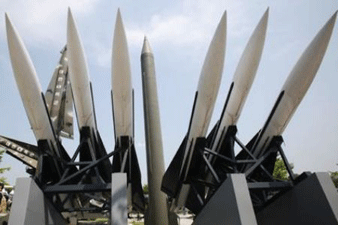
 EXPLAINER: The Letters of Last Resort – Boris Johnson’s secret instructions on nuclear action, There are, at most, nine countries on earth with nuclear weapons. Joe, 28 July 19
Before today, two of those arsenals were in the hands of Donald Trump and Kim Jong-un. As of today, they have been joined by Boris Johnson.
Among the very first things that will happen as Johnson begins is premiership, is a briefing from the Chief of the Defence Staff, who will tell him exactly the kind of devastation and death a nuclear Trident missile would cause. Johnson will then be tasked with composing the “letters of last resort.”
The letters of last resort are an almost mythical device, the kind of thing that would make more sense in a Tom Clancy novel than they do in real life. But they are real, and they are terrifying.
They are four letters, each one issued to the commanding officers of each of the United Kingdom’s four nuclear-capable ballistic missile submarines. They are only to be opened under one specific circumstance: the destruction of the government of Britain through a major, likely nuclear, bombing campaign.
The letters are only to be opened under the assumption that the Prime Minister and any designated deputies are dead, and that it is up to the UK’s military submarines to respond.
Typically, the UK has one of these submarines patrolling at any given time, armed with 40 of its 120 operational nuclear warheads. The other three subs are based in Faslane naval base in Scotland.
And right now, those letters are being written by Boris Johnson. Cool.
Four possible directives are known:
- That the UK should retaliate.
- That the UK should not retaliate, and should retreat to a commonwealth nation.
- That the commanding officer should use their own judgment.
- Place the submarines under the command of an allied country, such as the United States.
It is very possible, however, that a PM will be much more specific than this.
When quizzed on the matter of their own letters by the BBC, former Prime Ministers John Major, Tony Blair and Gordon Brown all revealed that they had included a caveat that under no circumstances should civilians be targeted with nuclear weapons.
Nobody will ever know for sure though, since the letters are burned in their unopened state as soon as an outgoing premiership comes to a close……… https://www.joe.ie/life-style/boris-letters-of-last-resort-676243
Tax-payers still on the hook for UK’s planned ‘nuclear renaissance’
Despite Hinkley, the new plan for nuclear is hardly better than the old one https://www.theguardian.com/business/2019/jul/27/despite-hinkley-new-plan-nuclear-hardly-better-than-old-one
EDF Energy’s deal to build Hinkley Point C, Britain’s first new nuclear power plant in a generation, has been dubbed the world’s most expensive power plant of all time, a “white elephant” in a changing energy landscape, and a risky and expensive gamble with taxpayers’ money.
There was little chance that a deal so politically unpalatable could be repeated for EDF’s follow-on project at Sizewell B. Instead, officials returned to the drawing board to re-engineer a multibillion-pound funding framework that could help lower the eye-watering costs of constructing a nuclear reactor.
The £20bn Hinkley Point C project will cost energy bill payers £92.50 for every megawatt-hour of electricity it produces for 35 years. It is a price well above both the UK’s wholesale energy price of around £55 a megawatt-hour, and the new breed of offshore wind farms.
The new funding model promises to cut the cost of building a new nuclear plant by a fifth – but this, too, comes at a cost. The government’s plans to make nuclear affordable means Britons will twice shoulder the risk of building new nuclear reactors.
First, by paying upfront for the reactors through energy bills to help fund their construction. Second, by taking on the cost of any overruns or construction delays through a taxpayer guarantee. The public purse would also compensate nuclear investors if the project were scrapped.
It is the same model used to fund London’s £4.2bn super-sewer project, the Thames Tideway tunnel, which has drawn criticism for raising water bills while investors reap financial rewards.
By shifting the risk from private investors to taxpayers, nuclear developers will be able to borrow money at cheaper rates, which will lead to lower bills for consumers.
On paper, the proposal is a better deal than Hinkley, but it’s far from perfect.
The National Infrastructure Commission has taken a dim view of the model. “This makes projects appear cheaper as consumers are effectively financing the projects at zero interest. At least some of the risk associated with construction costs also sit with consumers, a further hidden cost, since consumers are not paid to hold these risks in the way investors would be,” it said.
In addition, the sums hold true only if the project remains on schedule and on budget for the decade it takes to construct a nuclear plant. There are worryingly few examples where this has been the case; EDF Energy’s forerunner to the Hinkley project, at Flamanville in Normandy, is expected to cost four times original estimates. It was expected to begin generating electricity in 2012, but is now expected to start up in 2022.
he French energy giant has said the lessons learned from Flamanville mean Hinkley Point will avoid a similar fate. Sizewell will be at an even greater advantage because it will use the same UK workers once Hinkley is complete.
Why take the risk at all, though?
“If ministers want affordable and clean energy, the fastest, safest and cheapest way to do that is to boost renewables like wind and solar,” said Doug Parr, chief scientist at Greenpeace.
There have been major advances in flexible renewable energy technologies in recent years, but ministers retain an appetite for the “firm” low-carbon electricity generated by nuclear reactors despite the financial hurdles to building them.
The UK’s energy landscape is littered with stalled nuclear plant projects which have so far failed to make a financial case. Already half the projects proposed three years ago have foundered.
But the government’s commitment to a new atomic era is still the most reliable element of its nuclear programme to date.
Nuclear power losing its appeal in Eastern Europe
Eastern Europe’s Love Affair With Nuclear Is Hitting the Rocks
Countries in the former Soviet bloc are desperately trying to upgrade facilities but are squeezed by time and money. Bloomberg, By James M Gomez and Zoltan Simon, July 28, 2019 Zoltan Gorog is ready for the Russian invasion. The real estate agent in the Hungarian town of Paks has added Cyrillic to the blue and white sign hanging above his offices. He’s set up empty desks for when he needs to expand to cope with the surge in business.
Rather than a flood of people, though, there’s barely a trickle. Five years after Hungary’s government signed an agreement with nuclear energy company Rosatom Corp. to build two new reactors at the aging plant near the town, there’s still no start date for the bulk of the work….. (subscribers only) https://www.bloomberg.com/news/articles/2019-07-28/eastern-europe-s-love-affair-with-nuclear-is-hitting-the-rocks
Constructive talks between Iran and Europe, but no definite result
Emergency talks on nuclear deal constructive but inconclusive, Iranian minister says WP, By Adam Taylor, July 28
DUBAI — Iran’s deputy foreign minister said Sunday that an emergency meeting in Vienna between Tehran and its partners in the Iran nuclear deal had yielded positive developments but had not “resolved everything.”
“The atmosphere was constructive, and the discussions were good,” Abbas Araghchi told reporters.
Araghchi said he and his partners from Germany, France, Britain, China, Russia and the European Union remain determined to save the deal.
The fate of the agreement remains uncertain after the Trump administration pulled out last year and reimposed sanctions on Iran. That move prompted Tehran to scale back its commitments under the pact.
Iran said this month it had breached a stockpile limit for low enriched uranium allowed under the deal and was enriching uranium at a higher levelthan permitted. Officials have said they will continue to reduce their obligations if the remaining parties to the deal do not help alleviate Iran’s economic isolation.
Salehi also said Iran was moving to restart activity at the heavy-water nuclear reactor at its Arak facility, according to the reports.
Iran’s uranium enrichment capabilities and its heavy-water nuclear reactor were restricted under the 2015 deal, formally known as the Joint Comprehensive Plan of Action, for fear that they could be used by Iran to pursue a nuclear weapons program.
To be used in nuclear weapons, uranium must be highly enriched. The JCPOA placed a limit on the amount of enriched uranium Iran could possess and the level to which it could be enriched.
The claim that Iran’s enriched-uranium stockpile had exceeded the 300-kilogram limit was subsequently confirmed by the International Atomic Energy Agency. But in Iranian media on Sunday, Salehi was reported to have said that it went further than this………
The IAEA did not immediately respond to a request for comment.
Analysts see Arak’s heavy-water reactor as a risk for proliferation because it could allow Iran to produce weapons-grade plutonium. The nuclear deal required Iran to pour concrete into the pipes of the reactor’s core as part of a redesign.
Salehi said last week that the redesign, in partnership with China and Britain, was making progress. Britain replaced the United States in the project after the Trump administration pulled out of the nuclear deal.
In his meeting with lawmakers on Sunday, Salehi was reported to have said that the developments were not indicative of an intent to produce nuclear weapons.
“We do not intend to produce nuclear weapons because of religious reasons,” lawmaker Mehrdad Lahouti quoted Salehi as saying, according to the Iranian Students News Agency.
Though Iran and Britain are working together on the heavy-water reactor, relations between the countries have been tense in recent weeks, since British marines helped seize an Iranian-flagged tanker near Gibraltar and Iran seized a British-flagged tanker that was passing the Strait of Hormuz in the Persian Gulf.
The often forgotten nuclear disaster in Russia’s Ural Mountains
River of radiation: Life in the area of the world’s 3rd-worst nuclear disaster Rt.com 28 Jul, 2019 Before Fukushima and Chernobyl, the worst-ever nuclear disaster was a massive leak from a plant in the eastern Urals. RT went to see how people live in areas affected by the fallout from the USSR’s risky rush to the nuclear bomb.
Chernobyl and Fukushima are the two names that are most likely to come to mind when one thinks about nuclear disaster, and rightfully so. People in the US will likely recall the Three Mile Island accident, while Britons may say the “Windscale fire.”
The name “Kyshtym” will probably mean nothing to the wider public, despite it belonging to the third-worst nuclear accident in history. An RT Russian correspondent traveled to the area to speak with locals, some of whom personally witnessed the 1957 disaster, to find out what living in such a place feels like.
Bomb at any cost
Kyshtym is the name of a small town in what is now Chelyabinsk Region in Russia, located in an area dotted by dozens of small lakes. A 15-minute car ride east will bring you to another town called Ozyorsk. Six decades ago, you wouldn’t find it on any publicly available map because it hosted a crucial element of the Soviet Union’s nascent nuclear weapons program, the Mayak plant.
The Soviet leadership considered building up a stockpile of weapons-grade plutonium to be a high priority, while environmental and safety concerns came as an afterthought. Some of the less-dangerous radioactive waste from Mayak was simply dumped into the Techa River, while the more-dangerous materials were stored in massive underground tanks.
The sealed steel containers, reinforced with meter-thick concrete outer walls, were considered strong enough to withstand pretty much anything. In September 1957 this assumption was proven wrong, when one of the tanks exploded with an estimated power of 70-100 tons of TNT. This happened due to an unrepaired cooling system, which allowed radioactive waste to build heat and partially dry up, forming a layer of explosives, an investigation later found. An accidental spark was then enough to blow off the 160-ton lid of the tank, damage nearby waste storages, and shatter every window pane within a 3km radius.
A plume of radioactive waste was ejected high into the air. Some 90 percent of the material fell right back, contaminating the area and adding to the pollution in the Techa River, but some was atomized and traveled northeast with the wind. A 300km long, 10km wide stretch of land running through three Russian regions is what’s left by the fallout. The worst-affected part of it was designated a natural reserve a few years after the disaster.
Cover up
The disaster was covered up in the Soviet media, which reported that the strange lights in the night sky – actually a glow caused by ionization from radioactive waste – was a rare event related to the aurora. The locals knew something was wrong, of course, due to the evacuation of two dozen nearby villages and the large-scale decontamination work that was to be carried out over the next several years.
Later, the military came to get radiation readings in it. Afterwards, soldiers demolished the banya and took away not only the house but even the layer of soil on which it was built.
Officially, the scale of the disaster remained a state secret until the late 1980s.
Poisoned river
The Techa River remains contaminated now, long after Mayak stopped dumping waste in it. The radiation is relatively low, however: standing next to it is no worse than traveling on an airplane. Thousands of people cross it every day via a bridge road that connects Chelyabinsk and Ekaterinburg – the two nearest provincial capitals.
The only inhabited village down the river is called Brodokalmak and is about 85km downstream from Ozyorsk, and 50km away from the bridge crossing …….
Ghost village
Halfway between the bridge and Brodokalmak is another village, Muslyumovo. It was inhabited until about a decade ago, when Rostatom, the Russian nuclear monopoly, offered to relocate its 2,500 residents. Now it’s a ghost village………
Triple exposure
Another place that had a close brush with Mayak’s waste is Metlino, a town about 25 minutes east from Ozyorsk. Some residents were unfortunate enough to have been exposed to radiation three times in their lives, according to Lyudmila Krestinina, who heads a lab at a local radiation research medical center.
First, they lived on the Techa River when it was used to dump waste. Then the disaster happened, and the cloud went past, close enough for some fallout but not close enough for it to become a major risk. The third time happened in 1967.
“There was drought and the Karachay bog, where waste was dumped from the Mayak, caught fire. The wind brought radioactive smoke over Metlino,” she said. “Now the contamination level has decreased several times, but it’s still higher than background radiation.”
The bog used to be a lake in the early days of Mayak, which started to dry up in the 1960s. The 1967 incident prompted major landscaping work to cover its shallow parts with earth and provide greater water supply. This solution was ultimately deemed unfeasible, so the rest of the lake was covered as well. The work ended just four years ago. ……. https://www.rt.com/russia/465243-kyshtym-nuclear-disaster-mayak/
Boris Johnson enthusiastic for a new ‘nuclear renaissance’ in UK
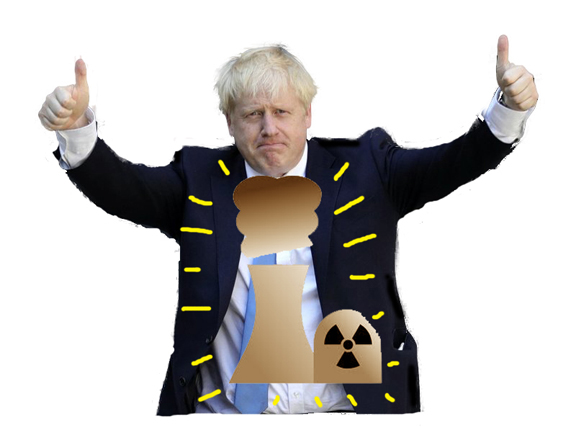 UK’s new premier promises boost for nuclear power, WNN. 26 July 2019 Boris Johnson expressed his “passionate” support for nuclear power when he addressed the House of Commons for the first time as UK prime minister yesterday. Seven of the country’s eight existing nuclear plants are set to be retired by 2030, while new-build projects have faced financial uncertainty over the last two year………On 22 July, the day that Johnson was elected leader of the Conservative Party and two days before he officially replaced Theresa May as prime minister, the government launched a consultation into funding large-scale nuclear power plants and a proposed GBP18 million (USD22 million) investment into small modular reactors.
Greg Clark, secretary of state for the Department for Business, Energy and Industrial Strategy (BEIS) – who Johnson replaced this week with Andrea Leadsom – announced in June 2018 that the government would review the viability of a Regulated Asset Base (RAB) model for new nuclear projects. The consultation states that, as the cost of renewable technologies continues to fall, they are likely to provide the majority of the country’s low-carbon generating capacity in 2050. It adds however there will still be a crucial role for low-carbon ‘firm’ – always available – power in 2050.
The RAB model would not apply to Hinkley Point C (HPC), which is currently under construction by EDF Energy in Somerset, England, but would apply to future plants. As many as five more new-build projects had been planned – by EDF Energy together with China General Nuclear (CGN); NuGeneration (NuGen); and Horizon Nuclear Power……… http://world-nuclear-news.org/Articles/UKs-new-premier-promises-boost-for-nuclear-power
Boris Johnson government could reach net zero, without nuclear power
Utility Week 26th July 2019 , Boris may not need the nuclear option to reach net zero. The proposal to use the regulated asset base model to fund new nuclear projects this week
was given a mixed reaction. SSE chief executive Alistair Phillips-Davies
writes exclusively for Utility Week about why he believes the government
should now be showing the same level of support for renewable electricity
if it is serious about reaching net-zero emissions by 2050.
https://utilityweek.co.uk/boris-may-not-need-nuclear-option-reach-net-zero/
Yet more delay at Flamanville nuclear debacle – doesn’t bode well for UK’s Hinkley Point C project
Times 27th July 2019 As French existential jokes go, little beats building a nuclear power plant
at a place called Flammable. OK, it’s actually Flamanville. But who cares
about that sort of nicety – not least when the project’s proving so
incendiary?
It was due to be up and running in 2012 at a cost of €3.3
billion. Not only that. Flaming Ville was to be the showcase for the
European Pressurised Reactor, the wizzy new tech developed by the
state-backed EDF. True, it’s living up to the pressurised bit, at least for
EDF boss Jean-Bernard Lévy.
He’s just been forced to announce another
delay: a howitzer, even by usual standards, of “more than three years”. The
end of 2022 is now the earliest start date; a delay bound to jack up
project costs that have already exploded to €10.9 billion
The reason?
France’s spoilsport nuclear safety authority has ordered EDF to repair
eight bits of dodgy welding: who’d have thought nukes had to be welded
together properly? And, yes, the whole thing is turning into a nice French
farce. Except for one thing, of course: the joke’s on us.
Flamanville is the prototype for our very own nuclear disaster: the £20 billion Hinkley
Point C. It’s being built by EDF and the Chinese in return for the
contractual right to fleece UK consumers for 35 years: an index-linked,
guaranteed £92.50 per megawatt hour that’s twice the wholesale price. Even
better, the 3,200MW Hinkley is the planned forerunner for a fleet of new
nukes.
Indeed, so thrilling is the prospect that Greg Clark spent his dying
days as business secretary agonising over whether it might actually be
better to fleece consumers upfront instead, via his “regulated asset base”
funding model, before the plant was built. His verdict? A “consultation”,
the sort of non-decision-making for which he was deservedly sacked. Surely
someone in government can see the big picture here.
It’s not just
Flamanville that’s proving new nuclear so radioactive; a heady mix of
last-century tech, uncontrollable costs, endless delays and a dirty great
clean-up bill. EDF’s sister project, at Olkiluoto in Finland, has proved a
similar disaster. And didn’t ministers notice while their mooted plant at
Moorside was imploding that the project’s promoter, Japan’s Toshiba, was
blowing itself in the US with subsidiary Westinghouse?
No bribe was big enough, either, for Hitachi at Wylfa: no big shock when the group’s from
Fukushima-land. True, nuclear accounts for a fifth of Britain’s energy
needs. But its costs keep going up, while those of wind, solar, battery
power and carbon capture are falling. And they don’t require dangerous
clean-ups. Yes, maybe it’s too late to stop Hinkley. But someone in Boris’s
new team must see that new nuclear’s a route to torching money. Flammable
is all the evidence they need.
https://www.thetimes.co.uk/article/5268801e-afd9-11e9-84cf-31ddba0e0fae
The dreadful truth of Chernobyl radiation’s health and death toll is now coming out
a contentious report published by members of the Russian Academy of Sciences indicates that there could have been as many as 830,000 people in the Chernobyl clean-up teams. They estimated that between 112,000 and 125,000 of these – around 15% – had died by 2005. Many of the figures in the report, however, were disputed by scientists in the West, who questioned their scientific validity.
The Ukrainian authorities, however, kept a registry of their own citizens affected by the Chernobyl accident…… In Ukraine, death rates among these brave individuals has soared, rising from 3.5 to 17.5 deaths per 1,000 people between 1988 and 2012. Disability among the liquidators has also soared. …… In Belarus, 40,049 liquidators were registered to have cancers by 2008 along with a further 2,833 from Russia.
Viktor Sushko, deputy director general of the National Research Centre for Radiation Medicine (NRCRM) based in Kiev, Ukraine, describes the Chernobyl disaster as the “largest anthropogenic disaster in the history of humankind”. The NRCRM estimate around five million citizens of the former USSR, including three million in Ukraine, have suffered as a result of Chernobyl, while in Belarus around 800,000 people were registered as being affected by radiation following the disaster.
Even now the Ukrainian government is paying benefits to 36,525 women who are considered to be widows of men who suffered as a result of the Chernobyl accident.

|
The true toll off the Chernobyl nuclear disaster. http://www.bbc.com/future/story/20190725-will-we-ever-know-chernobyls-true-death-toll By Richard Gray, 26 July 2019
Springtime was always the busiest time of year for the women working at the wool processing plant in Chernihiv, northern Ukraine. More than 21,000 tons of wool passed through the factory from farms all across the country during the annual sheep shearing period. The April and May of 1986 were no exception. The workers pulled 12-hour shifts as they sorted the piles of raw fleece by hand before they were washed and baled. But then the women started getting sick. Some suffered nosebleeds, others complained of dizziness and nausea. When the authorities were called to investigate, they found radiation levels in the factory of up to 180mSv/hr. Anyone exposed at these levels would exceed the total annual dose considered to be safe in many parts of the world today in less than a minute. Fifty miles away was the Chernobyl nuclear power plant. On 26 April 1986 reactor number four at the power plant suffered a catastrophic explosion that exposed the core and threw clouds of radioactive material over the surrounding area as a fire burned uncontrollably. But Chernihiv was regarded to be well outside the exclusion zone that was hastily thrown up around the stricken plant and readings elsewhere in the town had shown it to have comparatively low levels of radiation. “The area was yellow on the radiation maps which means the town didn’t get hit very hard,” says Kate Brown, a science historian at the Massachusetts Institute of Technology (MIT). “Yet there were 298 women in this factory who were given liquidator status, which was normally reserved for those who had documented exposures during the early days of the clean-up after the accident.” Brown uncovered the story of the Chernihiv wool workers as part of her research into the impact of the Chernobyl disaster. Her determination to unravel the true cost of the disaster has seen her travel to many parts of Ukraine, Belarus and Russia, to interview survivors, trawl through official archives and search old hospital reports. According to the official, internationally recognised death toll, just 31 people died as an immediate result of Chernobyl while the UN estimates that only 50 deaths can be directly attributed to the disaster. In 2005, it predicted a further 4,000 might eventually die as a result of the radiation exposure.
Brown’s research, however, suggests Chernobyl has cast a far longer shadow.“When I visited the wool factory in Chernihiv, I met some of the women who were working at the time,” she says. “There were just 10 of these women still there. They told me that they were picking up bales of wool and sorting them on tables. In May 1986, the factory was getting wool that had radiation readings of up to 30Sv/hr. The bales of wool the women were carrying were like hugging an X-ray machine while it was turned on over and over again.” Thousands of animals were slaughtered in the area around Chernobyl as it was being evacuated. Brown believes fleeces from some of these animals appear to have found their way to the factory in Chernihiv along with other contaminated wool from farms enveloped in the clouds of radioactive material that spread out across northern Ukraine. When Brown spoke to the 10 “liquidators” at the wool factory, their stories gave a grim picture of what appears to have happened all across the region as ordinary people who had nothing to do with the clean-up of the disaster were exposed to radioactive material. “They pointed to different parts of their bodies that had aged more than the rest and where they had health problems,” says Brown. “They knew all about which radioactive isotopes had lodged in their organs.” The other 288 women, they told her, had either died or had taken pensions for ill health. In the weeks and months that followed the Chernobyl disaster, hundreds of thousands of firefighters, engineers, military troops, police, miners, cleaners and medical personnel were sent into the area immediately around the destroyed power plant in an effort to control the fire and core meltdown, and prevent radioactive material from spreading further into the environment. These people – who became known as “liquidators” due to the official Soviet definition of “participant in liquidation of the Chernobyl nuclear power plant accident consequences” – were given a special status that meant they would receive benefits such as extra healthcare and payments. Official registries indicate that 600,000 people were granted liquidator status. But a contentious report published by members of the Russian Academy of Sciences indicates that there could have been as many as 830,000 people in the Chernobyl clean-up teams. They estimated that between 112,000 and 125,000 of these – around 15% – had died by 2005. Many of the figures in the report, however, were disputed by scientists in the West, who questioned their scientific validity. The Ukrainian authorities, however, kept a registry of their own citizens affected by the Chernobyl accident. In 2015 there were 318,988 Ukrainian clean-up workers on the database, although according to a recent report by the National Research Centre for Radiation Medicine in Ukraine, 651,453 clean-up workers were examined for radiation exposure between 2003 and 2007. A similar register in Belarus recorded 99,693 clean-up workers, while another registry including included 157,086 Russian liquidators. In Ukraine, death rates among these brave individuals has soared, rising from 3.5 to 17.5 deaths per 1,000 people between 1988 and 2012. Disability among the liquidators has also soared. In 1988 68% of them were regarded healthy, while 26 years later just 5.5% were still healthy. Most – 63% – were reported to be suffering from cardiovascular and circulatory diseases while 13% had problems with their nervous systems. In Belarus, 40,049 liquidators were registered to have cancers by 2008 along with a further 2,833 from Russia. The International Atomic Energy Agency, however, says that health studies on liquidators have “failed to show any direct correlation between their radiation exposure” and cancer or other disease. Another group who bore the brunt of the radiation exposures in the hours and days after the explosion were those living in the nearby town of Pripyat and the surrounding area. It took a day and a half before the evacuation began and led to 49,614 people being evacuated. Later a further 41,986 people were evacuated from another 80 settlements in a 30km (18.7 mile) zone around the power plant, but ultimately some 200,000 people are thought to have been relocated as a result of the accident. Some of those living closest to the power plant received internal radiation doses in their thyroid glands of up to 3.9Gy – roughly 37,000 times the dose of a chest x-ray – after breathing radioactive material and eating contaminated food. Doctors who have been studying the evacuees report that mortality among the evacuees has gradually increased, reaching a peak in 2008-2012 with 18 deaths per 1,000 people. But this still represents a small proportion of the people affected by Chernobyl. Brown has found evidence hidden in hospital records from around the time of the accident that show just how widespread problems were. “In hospitals throughout the region and as far away as Moscow, people were flooding in with acute symptoms,” she says. “The accounts I have indicate at least 40,000 people were hospitalised in the summer after the accident, many of them women and children.” Political pressure is widely thought to have led to the true picture of the problem to be suppressed by the Soviet authorities, who were keen not to lose face on the international stage. But following the collapse of the USSR and as people living in the areas that were exposed to radiation begin to present with a wide range of health problems, a far clearer picture of the toll taken by the disaster is emerging. Viktor Sushko, deputy director general of the National Research Centre for Radiation Medicine (NRCRM) based in Kiev, Ukraine, describes the Chernobyl disaster as the “largest anthropogenic disaster in the history of humankind”. The NRCRM estimate around five million citizens of the former USSR, including three million in Ukraine, have suffered as a result of Chernobyl, while in Belarus around 800,000 people were registered as being affected by radiation following the disaster. Even now the Ukrainian government is paying benefits to 36,525 women who are considered to be widows of men who suffered as a result of the Chernobyl accident. As of January 2018, 1.8 million people in Ukraine, including 377,589 children, had the status of victims of the disaster, according to Sushko and his colleagues. There has been a rapid increase in the number of people with disabilities among this population, rising from 40,106 in 1995 to 107,115 in 2018. Interestingly, Sushko and his team also report that the number of Chernobyl victims in Ukraine has decreased by 657,988 since 2007 – a fall of 26%. Although they don’t explain why, this is likely to be partly due to migration as victims have left the country, reclassification of victim status and, inevitably, some deaths. Mortality rates in radiation contaminated areas have been growing progressively higher than the rest of the Ukraine. They peaked in 2007 when more than 26 people out of every 1,000 died compared to the national average of 16 for every 1,000. In total some 150,000sq km (57,915 sq miles) of Belarus, Russia and Ukraine are considered to be contaminated and the 4,000sq km (1,544 sq miles) exclusion zone – an area more than twice the size of London – remains virtually uninhabited. But radioactive fallout, carried by winds, scattered over much of the Northern Hemisphere. Within two days of the explosion, high levels of radiation were picked up in Sweden while contamination of plants and grasslands in Britain led to strict restrictions on the sale of lamb and other sheep products for years. In areas of Western Europe hit by Chernobyl fallout there have also been indications that the rates of neoplasms – abnormal tissue growths that include cancers – have been higher than in areas that escaped contamination. But Brown believes some of the actions of those attempting to deal with the aftermath of the disaster also led to contamination spreading far further than it otherwise would. In an archive in Moscow she found records that indicated that meat, milk and other produce from contaminated plants and animals were sent all over the country. “They came up with manuals for the meat, wool and milk industries to classify produce as high, medium and low in terms of radiation,” she says. “Meat with high levels, for example, was shoved into a freezer so they could wait until it fell. Medium and low-level meat was supposed to be mixed with clean meat and turned into sausage. It was labelled as normal and sent all over the country, although they were told not to send it to Moscow.” Brown, who has written a book about her findings called Manual for Survival: A Chernobyl Guide to the Future, also discovered similar stories of blueberries that were over the accepted radiation limit being mixed with cleaner berries so the whole batch would fall under the regulatory limit. It meant people outside Ukraine would “wake up to a breakfast of Chernobyl blueberries” without even knowing it, she says. Establishing the links between radiation exposure and long-term health effects, however, is a difficult task. It can take years, even decades before cancers appear and attributing them to a particular cause can be difficult. One recent study, however, identified problems in the genomes of children who were either exposed during the disaster, or were born to parents who were exposed. It found increased levels of damage and instability in their genomes. “Genome instability represents a significant risk of cancer,” says Aleksandra Fučić, a genotoxicologist at the Institute for Medical Research and Occupational Health in Zagreb, Croatia. The daughter of a Ukrainian woman herself, she has been working with Russian scientists to study the effects of Chernobyl’s radiation on children from the region. “In Chernobyl cases, time is not healing. Time is a latency period for cancer development.” There have been other impacts too, she says. Suicide rates among people involved in the clean up at Chernobyl are higher than in the general population. Studies have also found that people who reported living in the Chernobyl affected zones in Ukraine had higher rates of alcohol problems and poorer levels of mental health. Putting a figure on exactly how many deaths around the world may result from the Chernobyl disaster is almost impossible. But despite the grim picture much of the research paints, there are some stories of hope too. Three engineers who volunteered to drain millions of gallons of water from tanks beneath the burning reactor in the days immediately after the explosion waded through highly radioactive water and debris to reach the release valves. Their heroics are one of the most dramatic moments in HBO’s recent dramatisation of the disaster. Astonishingly, two of the three men are still alivedespite having minimal protection from the radiation during their mission. The third man, Borys Baranov, survived until 2005. |
|
Surprise surprise! UK’s New Prime Minister Boris Johnson is a big fan of the nuclear industry
In Cumbria 25th July 2019 New Prime Minister Boris Johnson has pledged his support for a nuclear renaissance, the Barrow-based Dreadnaught submarine programme and Northern
Powerhouse Rail in his maiden speech. On nuclear, Copeland MP Trudy
Harrison asked him: “Does the Prime Minister agree that the time is now
for a nuclear renaissance and that Copeland is the centre of nuclear
excellence?”
Mr Johnson replied: “It is time for a nuclear renaissance
and I believe passionately that nuclear must be part of our energy mix and
she is right to campaign for it and it will help us to meet our carbon
targets.”
His comments were made just days after the Government launched
a consultation into funding large-scale nuclear power stations and an £18
million Government investment into the development of small modular
reactors through a consortium led by Rolls-Royce, and including the
National Nuclear Laboratory, Wood and Nuvia. Opinions are being sought
between now and October 14 on a proposed Nuclear Regulated Asset Base (RAB)
model to fund large power stations.
International kindness to Chernobyl children from radiation-contaminated areas – but more help is needed
Chernobyl children are taking vacation breaks to escape radiation, but there aren’t enough families to host them. https://www.businessinsider.com/chernobyl-children-international-vacation-radiation-2019-7/?r=AU&IR=T,Aria Bendix, Jul. 24, 2019
UK Nuclear Finance: From No Subsidies to Nuclear Tax
|
The hope is that the “regulated asset base”, or RAB model, will make major infrastructure projects cheaper by shifting the risk of spiralling costs from the developer to the taxpayer. Under the model, the developer would receive a regulated price to give it a return on its investment expenditure, including during the construction period, and this would be levied on energy bills. In the case of an extreme overrun, the government – effectively the taxpayer – could either have to step in and pay the extra cost or scrap the project and pay compensation to investors. The Government says its assessment of the RAB model has concluded that it has the potential to reduce the cost of raising private finance for new nuclear projects, thereby reducing consumer bills and maximising value for money for consumers and taxpayers. (1) The energy industry will have until mid-October to respond to the plans before a final decision is made by ministers. (2) Dr Doug Parr, the chief scientist at Greenpeace, said: “The nuclear industry has gone in just 10 years from saying they need no subsidies to asking bill payers to fork out for expensive power plants that don’t even exist yet and may never. This ‘nuclear tax’ won’t lower energy bills – it will simply shift the liability for something going wrong from nuclear firms to consumers.” Last summer, when the plans first emerged, the economist Dieter Helm, an influential government adviser, backed the RAB model as a better deal than the contract handed to EDF Energy to build the Hinkley Point project. But he added that it is “neither necessary nor desirable to meet the twin objectives of security of supply and decarbonisation No smart contracting and regulating framework can magic away the deep challenges that nuclear faces, notably: the possibility that in the next 60 years much cheaper new low carbon technologies may become available, possibly including new nuclear ones too; the very large upfront and sunk costs; the risk and the safety regulation; and the challenges of getting rid of the waste.” (3) “Let’s face it: nuclear power is hideously dear and far from ideal”, says Nils Pratley in the Guardian. “The government should be backing renewables, not tying itself to an expensive nuclear future. That bill-payers got stuffed in the deal that brought the Hinkley Point C project into existence is beyond dispute these days. Even government ministers barely quibble with the National Audit Office’s assessment that consumers will be paying through the nose for 35 years.” He says the “regulated asset base” (RAB) approach exposes consumers to the cost of overruns, and in effect also requires them to provide financing at zero interest, a point made by the National Infrastructure Commission last year. The NIC report said: “There is limited experience of using the RAB model for anything as complex and risky as nuclear.” Second, no financing model can disguise the core truth about nuclear – the technology is hideously expensive. Even after recognising the need to have secure “baseload” supplies, it recommended commissioning only one more nuclear plant, on top of Hinkley, before 2025. That remains a common sense analysis. Renewables are winning the price race. Let us pray, then, that a love-in with RAB does not reignite ministerial fantasies about a “resurgence” in nuclear. We don’t want a resurgence. We want to build as few new reactors as possible. (4) RAB financing is more usually applied to projects where there is a natural monopoly, such as the Thames Tideway where Thames Water is a monopoly provider of water and sewage services to the ratepayers who bear the burden of the additional cost. Applying a RAB to a specific project in a competitive market raises difficulties with the need to ensure that only those ratepayers who would benefit from the additional cost of a nuclear RAB would incur the additional cost. It will be difficult, for instance, to explain to consumers on non-nuclear green tariffs why they are being compelled to pay an additional cost for generating capacity that offers them no benefit. Even if an assurance of minimal risk to investors is offered, it is not clear whether the investors targeted, for example, pension funds, sovereign wealth funds and investment funds, will be willing to invest the huge sums required. Such investors have never invested in nuclear projects so the RAB model may fail simply due to lack of investors. The new funding model won’t make any difference to the construction and operation record of nuclear reactors around the world, and the record of EPRs in particular is abysmal. Nor will it change the fact that nuclear vendors are in financial disarray. (5) Dave Toke at Aberdeen University has published a layman’s guide to the ‘Regulated Asset Base’. (6) He says the system will allow the Government, though an appointed ‘Regulator’ to launder electricity consumer’s money to pay for the inevitable cost overruns, whilst the Regulator assures the public that this all represents ‘value for money’. The RAB proposals were supposed to be included in a long-awaited energy white paper that the business department has been working on for months, but, according to Bloomberg, this was blocked by the Chancellor of the Exchequer Philip Hammond, because of the potential spending implications for a new prime minister. The plans also included funding for carbon capture and storage and a domestic energy efficiency programme. Whitehall officials across departments were concerned the document was both incomplete and too sizable a policy plan to put forward just before a new premier takes over The nuclear tax will apply to all electricity consumers even if they have chosen a 100% renewable tariff or live in Scotland where the Government is opposed to the construction of new nuclear power stations.http://www.no2nuclearpower.org.uk/wp/wp-content/uploads/2019/07/NuClearNewsNo118.pdf |
|

A damning new report on the unlikely future for Small Modular Nuclear Reactors (SMRs)
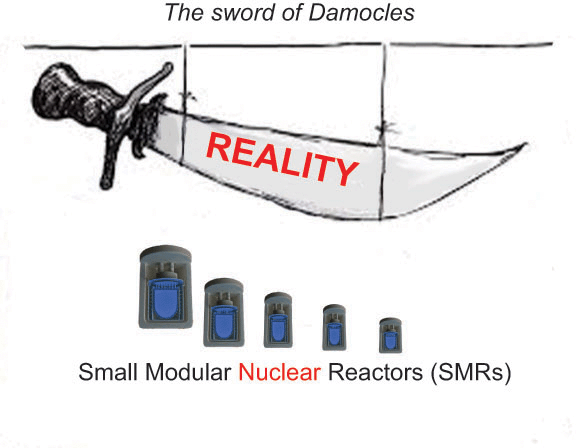 NFLA support joint report with the Nuclear Consulting Group which looks at the prospects of Small Modular Nuclear Reactors in the UK and globally and concludes they will not be built to any significant scale http://www.nuclearpolicy.info/news/nfla-joint-ncg-report-on-smrs/ 25 Jul 19
The Nuclear Free Local Authorities (NFLA) welcomes cooperating with the Nuclear Consulting Group (NCG) in its development of one of the most detailed analyses of the technologies being developed to create small modular nuclear reactors (SMRs) in the UK and around the world. This report concludes there remains fundamental barriers to any significant development of this new nuclear technology, and its prospects for creating some kind of ‘nuclear renaissance’ are unlikely to be realised.
The report has been developed by Professor Stephen Thomas of Greenwich University, Dr Paul Dorfman of University College London and NCG Founder, Professor M V Ramana of British Columbia University, and the NFLA Secretary. (1) The global nuclear industry has put forward SMRs as a panacea to the problems of high cost and the difficulty of financing large nuclear reactors; a ready-made alternative that can fill the gap.
However, as the NCG / NFLA report outlines in detail, there are huge obstacles to overcome. Some of these are technical issues, others are around building up an effective supply chain, while the financing of such schemes will only be possible with significant and large subsidy from the public purse.
The report starts with considering the failures in delivering larger nuclear reactors, and then takes in turn each type of SMR technology that has been put forward by companies involved in the nuclear industry.
The report outlines in some detail UK Government policy on SMRs. It notes that after some considerable early promotion of the technology, interest has markedly cooled, despite another fairly limited amount of money being offered to develop the technology, announced earlier this week. (2) The report notes the extraordinary set of conditions set out by Rolls Royce to be met by the UK Government if it is to invest significant amounts of money in its own SMR design, which the authors argue could and should not be committed to at a time when serious doubts remain about the economic viability of the technology.
At a global level, the report concludes that, as with the much-heralded ‘nuclear renaissance’ of recent times, SMRs will not be built in any significant scale. The authors note that the two main rationales for SMRs – promised lower overall project costs and lowering the risk of cost overruns by shifting to an assembly line approach – are more than offset by the loss of scale economies that the nuclear industry has pursued for the past five decades. Indeed, many of the features of the SMRs being developed are the same ones that underpinned the latest, failed generation of large reactors. Reactor cost estimates will remain with a large degree of uncertainty until a comprehensive review by national nuclear regulators is completed, the design features are finalised and demonstration plants are built. Whether the economies claimed from the use of production line techniques can be achieved will only be known if reactors are built in very large numbers, and at significant cost.
Spending so much time and effort pursuing such an uncertain technology, at a time when the ‘climate emergency’ has now reached the political and public lexicon in requiring urgent attention, does not appear to be an effective use of taxpayer resources. Abundant evidence shows that renewable energy supply, storage, distribution and management technologies are being developed ever cheaper and swifter at a time when real urgency is required across society and government to mitigate the worst effects of climate change. SMRs are no answer to creating low-carbon economies by 2030 or close to that date. Governments should consider this report carefully and not be diverted by an unproven technology inherent with many difficult issues still to overcome.
In the overall view of the report authors, the prospects for SMRs in the UK and Worldwide are limited and not worth the huge levels of effort or finance being proposed for them.
NFLA Steering Committee Chair Councillor David Blackburn said:
“This excellent independent analysis on the prospects for small modular nuclear reactors needs to be read by the new Business Secretary Andrea Leadsom and senior civil servants in the UK Government who have been providing support to the development of small modular nuclear reactors. It is clear from this joint report between the NCG and the NFLA that this technology is not the panacea to kick start new nuclear reactors, far from it. As Councils around the country declare ‘climate emergencies’ it is clear from this report that scarce available resource should not be spent developing this technology but rather diverted into renewable energy, smart energy, energy efficiency and energy storage projects instead. As large new nuclear like at Moorside and Wylfa has failed to be realised, it is time now to move away from small nuclear reactors as an expensive sideshow to the critical needs of mitigating carbon.”
Report co-author Professor Steve Thomas added:
“Nuclear proponents are saying that SMRs will be the next big thing – but the reality is they are as expensive as large reactors, produce the same waste, carry the same radiation risks, and are a long way from any real deployment.”
Ends – for more information please contact Sean Morris, NFLA Secretary, on 00 44 (0)161 234 3244.
Notes for editors:
(1) NCG / NFLA report – Prospects for Small Modular Reactors in the UK and Worldwide, July 2019
http://www.nuclearpolicy.info/wp/wp-content/uploads/2019/07/Prospects-for-SMRs-report-2.pdf
(2) Energy Live News, Government mulls investing £18 million to develop UK’s first mini nuclear reactor, 23rd July 2019 https://www.energylivenews.com/2019/07/23/government-mulls-investing-18m-to-develop-uks-first-mini-nuclear-reactor/
Soaring temperatures in Europe – risk of record ice melt in Greenland
 Europe hit by heatwave and hailstorms as experts warn Greenland ice could melt , 27 July 19, Soaring temperatures have broken records in Germany, France and the Netherlands, as a heatwave gripped Europe for the second time in a month, while experts warned the heat could move north towards Greenland causing record ice melts. Europe hit by heatwave and hailstorms as experts warn Greenland ice could melt , 27 July 19, Soaring temperatures have broken records in Germany, France and the Netherlands, as a heatwave gripped Europe for the second time in a month, while experts warned the heat could move north towards Greenland causing record ice melts.
Key points:
On Friday (AEST), temperatures reached as high as 43.6 degrees Celsius near Paris as fires devastated some 6,500 hectares of forests, farm fields and other land. Belgium, where temperatures topped 41C in some areas, suffered the first death recorded this year as a direct result of the record-breaking heat when a woman was found dead near her caravan close to the beach……. The UN’s weather agency is warning that record-breaking temperatures will become more frequent in the near future due to climate change. ….. Hailstorms cause flight delays, halt Tour de France But the heat was closely followed by hailstorms, forcing an extraordinary halt to the Tour de France. The riders had pushed through a sweltering 40C — riding with ice vests and drinking double the usual amount of liquids — before organisers stopped the world’s premier cycling event for the safety of riders when the sudden storm made the route through the Alps too dangerous…….. High temperatures could melt Greenland ice sheet
The UN’s weather agency voiced concern that the hot air which produced the extreme heatwave is headed towards Greenland, where it could contribute to increased melting of ice. Ice has been melting at high levels over the last few weeks in Greenland, which is home to the world’s second-largest ice sheet…… The Greenland Ice Sheet covers 80 per cent of the island and has developed over many thousands of years, with layers of snow compressed into ice. The dome of ice rises to a height of 3,000 metres and the total volume of the ice sheet is approximately 2,900,000 cubic kilometres, which would raise global sea levels by 7 metres if it melted entirely, according to the Polar Portal website. https://www.abc.net.au/news/2019-07-27/europe-hit-by-heatwave-and-hailstorms/11352766 |
|
1 This Month
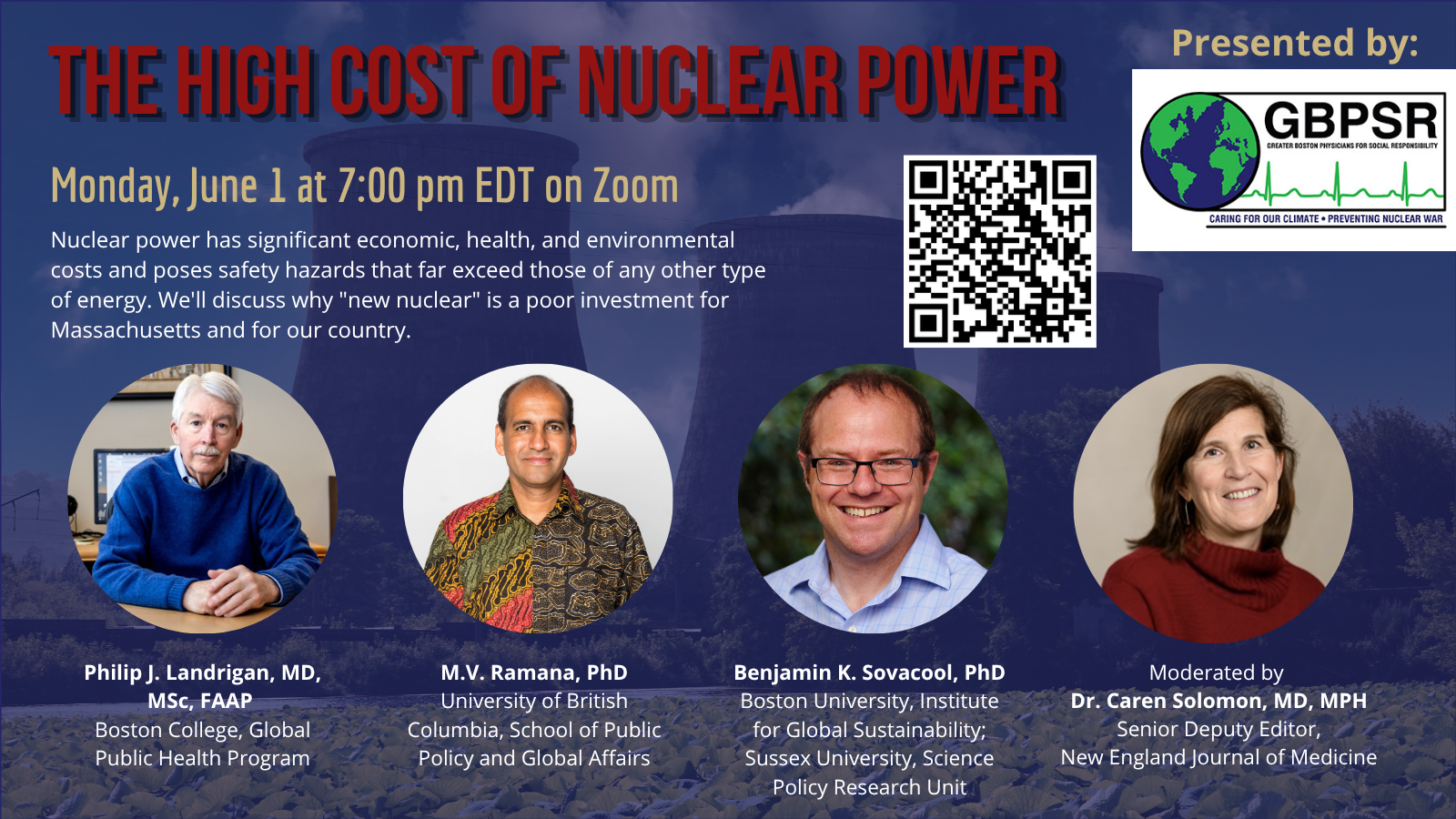
1 June Webinar – The High Cost of Nuclear Power – Register


of the week– Nuclear Reactor Information Task Force
To see nuclear-related stories in greater depth and intensity – go to https://nuclearinformation.wordpress.com
-
Archives
- May 2026 (243)
- April 2026 (356)
- March 2026 (251)
- February 2026 (268)
- January 2026 (308)
- December 2025 (358)
- November 2025 (359)
- October 2025 (376)
- September 2025 (257)
- August 2025 (319)
- July 2025 (230)
- June 2025 (348)
-
Categories
- 1
- 1 NUCLEAR ISSUES
- business and costs
- climate change
- culture and arts
- ENERGY
- environment
- health
- history
- indigenous issues
- Legal
- marketing of nuclear
- media
- opposition to nuclear
- PERSONAL STORIES
- politics
- politics international
- Religion and ethics
- safety
- secrets,lies and civil liberties
- spinbuster
- technology
- Uranium
- wastes
- weapons and war
- Women
- 2 WORLD
- ACTION
- AFRICA
- Atrocities
- AUSTRALIA
- Christina's notes
- Christina's themes
- culture and arts
- Events
- Fuk 2022
- Fuk 2023
- Fukushima 2017
- Fukushima 2018
- fukushima 2019
- Fukushima 2020
- Fukushima 2021
- general
- global warming
- Humour (God we need it)
- Nuclear
- RARE EARTHS
- Reference
- resources – print
- Resources -audiovicual
- Weekly Newsletter
- World
- World Nuclear
- YouTube
-
RSS
Entries RSS
Comments RSS
 nuclear-news