How French nuclear output has declined faster in France than Germany

French decline may be caused by having to ‘load follow’ renewables
David Toke, Aug 09, 2024, https://davidtoke.substack.com/p/how-french-nuclear-output-has-declined
Whatever one thinks of the German decision to phase-out nuclear power, a really strange thing is that the French are coordinating an unintentional phase-out of nuclear energy. At the same time as Germany has been running down its nuclear production. Much attention has focussed on criticising German policy, but much less on criticising what is a continuing failure of French energy policy.
For sure French non-fossil energy production is still much higher than most countries, but this lead is seriously declining. The proportion of non-fossil electricity production is now little higher than a country such as non-nuclear Denmark which has built up its renewables from virtually nothing in recent times. Talk of building half a dozen more French nuclear plant is – just talk.
Plans for new nuclear plant have been bullish for decades- the term ‘nuclear renaissance’ has been doled out for 20 years. However, in practice, little gets built. On the other hand France is failing to develop its renewable energy industry at anything like a good enough speed to make up for the decline in nuclear production. You can see the comparison of nuclear decline in France and Germany in the graph below [on original], which takes its data from the Energy Institute ‘s Statistical Review of World Energy, see HERE
As can be seen in the graph, from 2011 French nuclear production declined by 104 TWh, whilst in Germany it declined by 101 TWh. Yet it has been the decline in German nuclear production (following the decision to phase out nuclear in 2011) that has been much more of a long-term talking point.
Certainly, the dominant message in the press in the UK, spread by politicians from Labour and Conservatives, is that the failure to stop the decline in nuclear production which has also occurred in the UK is because of political failure. But this story ought to be wearing thin, after so many years of so-called nuclear renaissance and its promotion. Might it just have something to do with the failing nature of the technology itself? This seems obvious to independent observers, but it does not detract from our leaders’ desire to throw immense sums after technology that takes almost forever to deliver.

I discuss these issues in my recently published book Energy Revolutions, Profiteering versus Democracy’ (Pluto Press) (see HERE). But a few salient points can be made here to attempt to explain the decline in nuclear power in France. One can hypothesise a couple of reasons why French nuclear production may be declining. One factor may well simply be that the French nuclear industry did a bad job and built a lot of sub-standard power plant.
There is another possibility which may be adding to the problems caused by the first suggested reason. The French nuclear power stations may be accelerating their own demise because of the technical damage caused by the balancing role they are being forced to play in the French power market. Nuclear power plant in France have been forced to ‘load-follow’ ie, often reduce their output, because of variations in solar and wind power that is generated across the continental electricity system. #
The continental electricity interconnectors use AC transmission equipment which means that France cannot just disconnect when there is too much electricity coming into the French system. French power plant have to power down, and since nuclear forms such a dominant part of French generation, the nuclear power power plant has to regularly ramp up and down.
There are relatively few publicly available discussions of the possibilities for reactor damage in such load-following activities. Such discussions as they are, seem to be side-shows to ascertaining whether load following by nuclear reactors is possible, rather than the long-term damage involved. But there are some pointers in the discussions that are available.
One academic thesis commented, on a simulation based on a Swedish reactor, that: ‘The mechanisms for the damages are for example erosion-corrosion, fatigue, vibrations and wear. In the reactor core, there are also limitations for the rate of how quickly the power decrease and increase can be performed and how low the power can be reduced before problems with xenon poisoning and PCI occur……………….An increased usage of the pumps and valves was shown, which will give an added risk of wear and tear’ (Bjurenfolk, 220, 9 see HERE) . A study published by the Nuclear Energy Agency for the OECD commented: ‘Load cycling leads to variation in the coolant temperature, and thus in the temperatures of different components (see Figure 3.3 and Figure 3.4). These periodic temperature variations lead to cyclic changes in the mechanical load in some parts of the equipment, and could induce localised structural damage (fatigue) of these elements if the temperature gradients are large.’ OECD/NEA 2011, 41, see HERE
Of course in the UK no such problems of damage due to load-following will ever occur for the simple reason that in the UK nuclear power has a privileged position. Despite increasing international interconnection, the interconnection is through DC transmission systems which offer much greater control over imports. Nuclear power plants are allowed to generate as much as they can, and it is renewable energy that has to power down in cases where there are grid constraints or an excess of supply compared to demand.
In the case of Hinkley C, when it eventually comes online, the contracts given to EDF encourage it to carry on generating, not load follow. In the UK it is windfarms that bear political blame for compensation paid to them for lost production when they have to switch off (very often to protect nuclear production). This has been documented by 100percentrenewableuk in the case of Scotland, see HERE.
However, turning back to France, the French Government’s recent press releases on building future nuclear power obscure the fact that it has taken around two decades to build one plant. Meanwhile, the amount of solar and wind power production added in France since 2011 is rather less than the decline in nuclear production. To cap it all EDF has called for subsidies for solar pv to be reviewed (see HERE).
Yes, solar pv may be inconvenient for nuclear power, but it does seem that unless France develops renewables, including solar pv, much more quickly than has been done since 2011, the French electricity system will (at recent rates of nuclear decline) gradually collapse.
Certainly, the dominant message in the press in the UK, spread by politicians from Labour and Conservatives, is that the failure to stop the decline in nuclear production which has also occurred in the UK is because of political failure. But this story ought to be wearing thin, after so many years of so-called nuclear renaissance and its promotion. Might it just have something to do with the failing nature of the technology itself? This seems obvious to independent observers, but it does not detract from our leaders’ desire to throw immense sums after technology that takes almost forever to deliver.
I discuss these issues in my recently published book Energy Revolutions, Profiteering versus Democracy’ (Pluto Press) (see HERE). But a few salient points can be made here to attempt to explain the decline in nuclear power in France. One can hypothesise a couple of reasons why French nuclear production may be declining. One factor may well simply be that the French nuclear industry did a bad job and built a lot of sub-standard power plant.
There is another possibility which may be adding to the problems caused by the first suggested reason. The French nuclear power stations may be accelerating their own demise because of the technical damage caused by the balancing role they are being forced to play in the French power market. Nuclear power plant in France have been forced to ‘load-follow’ ie, often reduce their output, because of variations in solar and wind power that is generated across the continental electricity system. #
The continental electricity interconnectors use AC transmission equipment which means that France cannot just disconnect when there is too much electricity coming into the French system. French power plant have to power down, and since nuclear forms such a dominant part of French generation, the nuclear power power plant has to regularly ramp up and down.
There are relatively few publicly available discussions of the possibilities for reactor damage in such load-following activities. Such discussions as they are, seem to be side-shows to ascertaining whether load following by nuclear reactors is possible, rather than the long-term damage involved. But there are some pointers in the discussions that are available.
One academic thesis commented, on a simulation based on a Swedish reactor, that: ‘The mechanisms for the damages are for example erosion-corrosion, fatigue, vibrations and wear. In the reactor core, there are also limitations for the rate of how quickly the power decrease and increase can be performed and how low the power can be reduced before problems with xenon poisoning and PCI occur……………….An increased usage of the pumps and valves was shown, which will give an added risk of wear and tear’ (Bjurenfolk, 220, 9 see HERE) . A study published by the Nuclear Energy Agency for the OECD commented: ‘Load cycling leads to variation in the coolant temperature, and thus in the temperatures of different components (see Figure 3.3 and Figure 3.4). These periodic temperature variations lead to cyclic changes in the mechanical load in some parts of the equipment, and could induce localised structural damage (fatigue) of these elements if the temperature gradients are large.’ OECD/NEA 2011, 41, see HERE
Of course in the UK no such problems of damage due to load-following will ever occur for the simple reason that in the UK nuclear power has a privileged position. Despite increasing international interconnection, the interconnection is through DC transmission systems which offer much greater control over imports. Nuclear power plants are allowed to generate as much as they can, and it is renewable energy that has to power down in cases where there are grid constraints or an excess of supply compared to demand
As can be seen in the graph, from 2011 French nuclear production declined by 104 TWh, whilst in Germany it declined by 101 TWh. Yet it has been the decline in German nuclear production (following the decision to phase out nuclear in 2011) that has been much more of a long-term talking point.
Certainly, the dominant message in the press in the UK, spread by politicians from Labour and Conservatives, is that the failure to stop the decline in nuclear production which has also occurred in the UK is because of political failure. But this story ought to be wearing thin, after so many years of so-called nuclear renaissance and its promotion. Might it just have something to do with the failing nature of the technology itself? This seems obvious to independent observers, but it does not detract from our leaders’ desire to throw immense sums after technology that takes almost forever to deliver.
I discuss these issues in my recently published book Energy Revolutions, Profiteering versus Democracy’ (Pluto Press) (see HERE). But a few salient points can be made here to attempt to explain the decline in nuclear power in France. One can hypothesise a couple of reasons why French nuclear production may be declining. One factor may well simply be that the French nuclear industry did a bad job and built a lot of sub-standard power plant.
There is another possibility which may be adding to the problems caused by the first suggested reason. The French nuclear power stations may be accelerating their own demise because of the technical damage caused by the balancing role they are being forced to play in the French power market. Nuclear power plant in France have been forced to ‘load-follow’ ie, often reduce their output, because of variations in solar and wind power that is generated across the continental electricity system. #
The continental electricity interconnectors use AC transmission equipment which means that France cannot just disconnect when there is too much electricity coming into the French system. French power plant have to power down, and since nuclear forms such a dominant part of French generation, the nuclear power power plant has to regularly ramp up and down.
There are relatively few publicly available discussions of the possibilities for reactor damage in such load-following activities. Such discussions as they are, seem to be side-shows to ascertaining whether load following by nuclear reactors is possible, rather than the long-term damage involved. But there are some pointers in the discussions that are available.
One academic thesis commented, on a simulation based on a Swedish reactor, that: ‘The mechanisms for the damages are for example erosion-corrosion, fatigue, vibrations and wear. In the reactor core, there are also limitations for the rate of how quickly the power decrease and increase can be performed and how low the power can be reduced before problems with xenon poisoning and PCI occur……………….An increased usage of the pumps and valves was shown, which will give an added risk of wear and tear’ (Bjurenfolk, 220, 9 see HERE) . A study published by the Nuclear Energy Agency for the OECD commented: ‘Load cycling leads to variation in the coolant temperature, and thus in the temperatures of different components (see Figure 3.3 and Figure 3.4). These periodic temperature variations lead to cyclic changes in the mechanical load in some parts of the equipment, and could induce localised structural damage (fatigue) of these elements if the temperature gradients are large.’ OECD/NEA 2011, 41, see HERE
Of course in the UK no such problems of damage due to load-following will ever occur for the simple reason that in the UK nuclear power has a privileged position. Despite increasing international interconnection, the interconnection is through DC transmission systems which offer much greater control over imports. Nuclear power plants are allowed to generate as much as they can, and it is renewable energy that has to power down in cases where there are grid constraints or an excess of supply compared to demand.
In the case of Hinkley C, when it eventually comes online, the contracts given to EDF encourage it to carry on generating, not load follow. In the UK it is windfarms that bear political blame for compensation paid to them for lost production when they have to switch off (very often to protect nuclear production). This has been documented by 100percentrenewableuk in the case of Scotland, see HERE.
However, turning back to France, the French Government’s recent press releases on building future nuclear power obscure the fact that it has taken around two decades to build one plant. Meanwhile, the amount of solar and wind power production added in France since 2011 is rather less than the decline in nuclear production. To cap it all EDF has called for subsidies for solar pv to be reviewed (see HERE).
Yes, solar pv may be inconvenient for nuclear power, but it does seem that unless France develops renewables, including solar pv, much more quickly than has been done since 2011, the French electricity system will (at recent rates of nuclear decline) gradually collapse.
EDF extends heat-related warning cuts at 3 nuclear plants
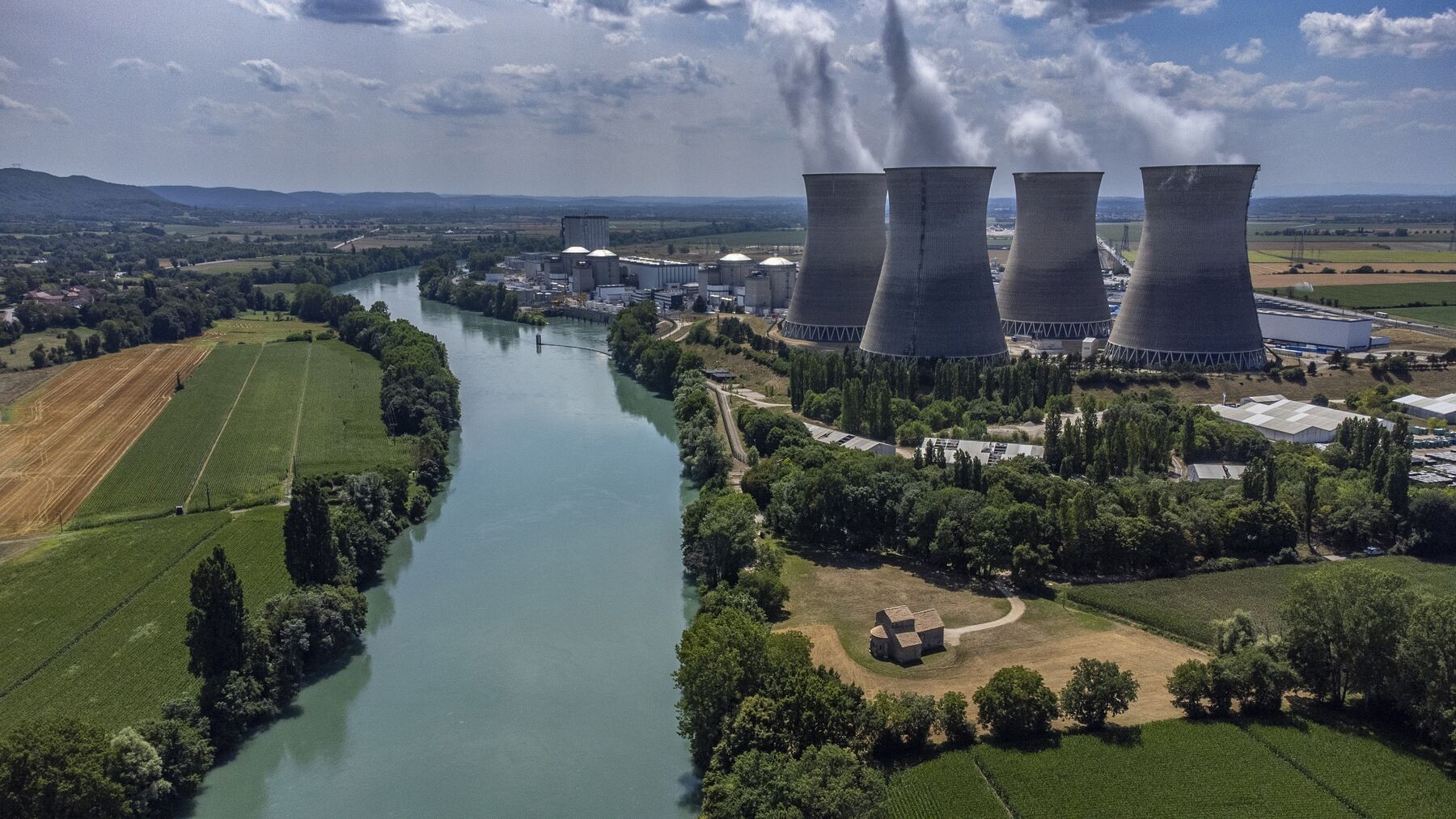
(Montel) French utility EDF has extended by two days a warning of power output curbs at three nuclear power plants – totalling 10 GW – along the river Rhone in southeastern France from tomorrow until Friday next week due to high temperatures.
Reporting by: Muriel Boselli, 08 Aug 2024, https://montelnews.com/news/f1e0a4b4-61b8-4d45-8027-d549192b910e/edf-warns-of-heat-related-cuts-at-3-nuclear-plants-10-gw
EDF could curb output at 3.6 GW Tricastin, 3.6 GW Bugey and 2.6 GW St Alban, the state-owned utility said on Thursday.
Weather service Meteo France has forecast temperatures to intensify in southeast France over the next few days, with peaks reaching 35C.
At some power plants, EDF uses river water to cool reactors. However, it could reduce output if river water temperatures or levels are too warm or too low.
Separately, EDF has extended a capacity cut warning at its 2.6 GW Golfech nuclear power plant in southwest France by three days to 17 August, due to warm temperatures.
France Warns of Nuclear Power Cuts as Heat Triggers Water Curbs
Bloomberg, By Lars Paulsson, August 8, 2024
Electricite de France SA will likely curtail production at nuclear reactors starting this weekend as hot weather restricts the amount of water that can be discharged into the Rhone River.
EDF uses water to cool its reactors before releasing it into the river, and overheating the waterway can threaten fish and other wildlife. Temperatures across much of western Europe are forecast to climb……………. (Subscribers only) https://www.bloomberg.com/news/articles/2024-08-08/france-warns-of-nuclear-power-cuts-as-heat-triggers-water-curbs?embedded-checkout=true
Greasing Palms: The Thales Blueprint for Corruption
July 30, 2024, by: Dr Binoy Kampmark, https://theaimn.com/greasing-palms-the-thales-blueprint-for-corruption/
It is a point verging on the trite: an arms corporation suspected of engaging in corrupt practices, spoiling dignitaries and officials and undermining the body politic. But one such corporation is France’s Thales defence group, which saw raids on their offices in France, the Netherlands and Spain on June 26 and June 28. The prosecutors are keen to pursue charges ranging from standard corruption and attempts to influence foreign officials to instances of criminal association and money laundering.
It is clear in this that even the French republic, despite having a narcotics grade addiction to the international arms industry, thought that Thales might have gone just that bit far. Some 65 investigators from the Nanterre-based office responsible for battling corruption, financial and fiscal offences have been thrown into the operation. A further twelve magistrates from the National Financial Prosecutor’s Office (PNF), with the assistance of the European agency Eurojust, aided by Dutch and Spanish officials, have all been involved in this sprawling enterprise.
The police raids arise from two separate investigations. The first, starting at the end of 2016, involved suspicions of corruption pertaining to a foreign official, criminal association and money laundering. The topics of interest: the sale of submarines to Brazil, along with the construction of a naval base.
The second commenced in June 2023, with claims of suspected corruption and influence peddling, criminal conspiracy and money laundering connected with the supply of military and civilian equipment to overseas clients.
Giving little by way of details, a spokesperson for Thales insisted that the corporation “strictly complies with national and international regulations.” It had “developed and implemented a global compliance program that meets with the highest industry standards.” That, it may well turn out, is precisely the problem.
The company propaganda on such compliance with national and international regulations is plentiful and fabulously cynical. After a time perusing such material, one forgets that this is a defence outfit much dedicated to sowing the seeds of death, a far from benign purpose. Group Secretary and General Counsel Isabelle Simon, for instance, is quoted as saying that the company, over the course of two decades “has developed a robust policy on ethics, integrity and compliance, which are the foundations of our social responsibility and the key to building a world we can all trust.”
The anti-corruption policy, so it is claimed, is also “regularly reviewed and updated to reflect increasingly strict international rules and requirements on corruption and influence peddling,” a point “further strengthened by Thales’s progress towards ISO 37001 certification.”
Typical of the guff surrounding modern organisational behaviour, the company wonks assume that workshops and training sessions are the way to go when inspiring a spirit of compliance. The more sessions you run, and the more do you do, the more enlightened you become. In boasting about its “zero tolerance on corruption,” we are told that 11,270 “training sessions on corruption and influence peddling were delivered in 2019-2020.”
Other features are also mentioned to ward off any suspicions, among them a code of conduct intended to stomp on any corrupt practices, a “corruption and influence peddling risk map,” a disciplinary system, an anti-bribery management system and an internal whistleblowing program.
Thales also got what it wanted, effectively bypassing, with the blessing of the defence department, a competitive tender process. This took place despite a 2017 offer from the global munitions company, NIOA, and the ANAO’s own recommendation to pursue an appropriate tender option. All in all, the audit found that “Defence’s management of probity was not effective and there was evidence of unethical conduct.”
This is putting it mildly, given that Thales had not only been involved in drafting the criteria for the request for tender (RTF) documents (some 28 workshops were held for that purpose between October 2018 and August 2019), but did so deficiently. In October 2019, this very point was made by the Defence Department, which noted no fewer than 199 “non-compliances” by the company against the RTF.
Apart from giving officialdom their time in the sun of oversight and regulation, chastening investigations into corruption do little to alter the spoliation that arises from the defence industry. Defence contractors are regularly feted by government authorities, often with the connivance of the revolving door. Yesterday’s officials are today’s arms sales consultants. The defence sector, notably for such countries as France, is simply too lucrative and important to be cleansed of its unscrupulousness. Even as these investigations are taking place to ruffle Thales, the Brazilian military establishment, by way of example, has happily continued doing business with the French weapons giant.
In February last year, the defence group trumpeted securing a contract with the Brazilian Airspace Control Department (DECEA) for the supply and installation of ADS-B ground surveillance stations to improve the safety of commercial civil aviation. The effort is not negligible: 66 stations to be installed in over 20 Brazilian states.
On June 17, the company announced the acquisition by the Brazilian Air Force of the Ground Master 200 Multi-mission All-in-one (GM 200 MM/A) tactical air surveillance radars. With much bluster, the announcement goes on to describe such radars as giving the user “superior situational awareness for air surveillance, as well as ground-based air defence (GBAD) operations up to Mid-Range Air-Defence (MRAD).” Some gloating follows: “The contract signed with the FAB consolidates Thales’ position as a leader in the radar market in Brazil.” One can only wonder how many palms were greased, and local regulations breached, for that to happen.
Controversy in France about future energy policy
Electricite de France SA Chief Executive Officer Luc Remont urged French
policymakers to review subsidies for solar power, saying the measures add
too much generation to the grid and undermine the nuclear giant’s
finances as electricity demand remains subdued.
The comments will fuel controversy among nuclear and renewable opponents as EDF seeks financial backing from the government for the construction of six new atomic plants,
which may cost €67.4 billion.
However, the lack of a clear parliamentary
majority that emerged from legislative elections raises questions about
France’s future energy policy, including support for nuclear projects in
the near term.
FFinancial Post 26th July 2024
https://financialpost.com/pmn/business-pmn/edf-chief-says-french-solar-power-subsidies-need-scrutiny
French nuclear giant ORANO slips into the red following Niger-French breakup
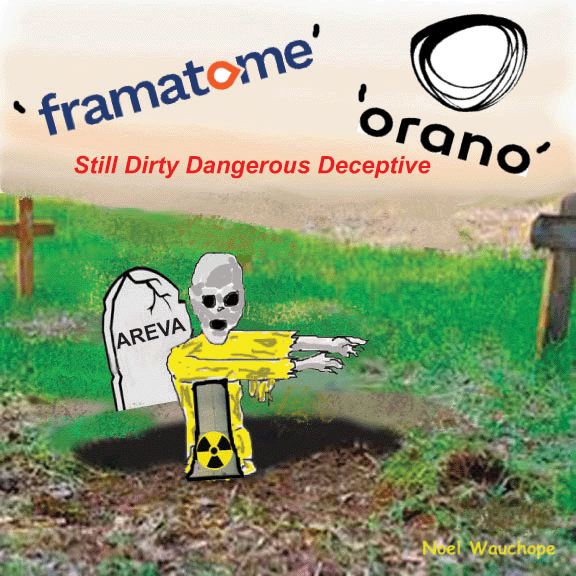
French nuclear giant Orano ended the first half of the year with a loss of €133 million, weighed down by difficulties in its mining activities in Niger due to a “highly degraded” political context since a military regime came to power a year ago.
Radio Free Europe: 29/07/2024 –
At the end of June 2024, the group noted “the deteriorated situation affecting mining operations in Niger,” Orano’s chief financial officer, David Claverie, said in a statement.
The coup d’état in Niger on 26 July last year led to a halt in imports of critical materials necessary for uranium exploitation in Orano’s Somaïr mine, such as soda ash, carbonate, nitrates and sulphur.
And although uranium extraction continued in the first quarter of 2024 “after several months of early maintenance,” Somaïr’s sales were unable to resume “due to a lack of logistics solutions approved by the Niger authorities”.
The blockage led the mine into “financial difficulty … weighing on its ability to continue its operations”, the statement read.
In late June, Niger decided to withdraw the licence of Imouraren SA, a company jointly operated by Orano, Niger Mining and Korea Electric Power, and which ran the Somaïr mine.
The situation could eventually lead to “insolvency in the short to medium term, in the coming months”, Claverie said……………………………… https://www.rfi.fr/en/international/20240729-french-nuclear-giant-slips-into-the-red-following-niger-french-breakup
Two legal actions against the hasty commissioning of Flamanville nuclear reactor
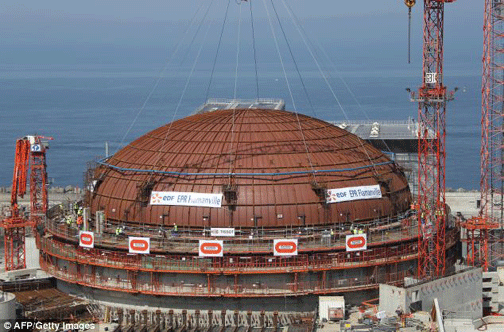
Flamanville EPR, still at the heart of scandals, is heading towards a hasty start,
Sortir du Nucleaire, CRIIRAD, CRILAN, Global Chance, Robin des Bois, and the “Exit from Nuclear Power” Network,23 July 24
On May 7, 2024, we denounced the decision to commission the Flamanville EPR. Today, we are raising the alarm through two legal actions about this hasty commissioning while questions remain unanswered. We are filing an appeal with the Council of State against this commissioning decision, and a complaint against X in order to shed full light on the irregularities noted by the Nuclear Safety Authority on parts of the EPR.
We are filing an appeal against the hasty commissioning of the EPR to the detriment of safety requirements
On 7 May 2024, the Nuclear Safety Authority (ASN) gave its approval for the Flamanville EPR to be commissioned, i.e. for it to receive its first fuel load. A decision taken above all to avoid the legal consequences of yet another postponement. Indeed, the commissioning of the Flamanville EPR has already been postponed by decree twice in the past , in 2017 and 2020 , because the facility was not ready to start up.
One might have thought that these two postponements would provide EDF with a comfortable margin to ensure that its installation could start up safely in 2024. However,
despite the additional time granted to the operator, it has not managed to commission the Flamanville EPR within the allotted time:
The nuclear reactor should have been commissioned before April 10, 2024, according to the creation authorization decree. It finally took place almost a month later, on May 7, 2024. Problem: the commissioning deadlines exist to protect the population and the environment from a project that has become too old. It was
the ASN itself that indicated in an opinion that these deadlines aim to
“avoid the commissioning of an installation whose environment would no longer be compatible with its operation and/or not to allow the creation authorization to continue for an installation whose operator would not be able to complete construction” .
The deadline for examining the commissioning application, which can last one or two years if the file is complex, was also not respected. …………………………………………
We are filing a complaint to shed light on the irregularities noted on certain parts of the EPR
This decision to put it into service is even more surprising in light of the revelations of the ASN, which, during its 2024 press wishes, revealed new problems of counterfeiting, falsification and suspicion of fraud (CFS) . [ 1 ]
These cases, according to the ASN, are distinguished by the significant scope of materials potentially affected, as well as by the potentially significant consequences for the safety of the reactors . The Nuclear Safety Authority has therefore reported these facts to the courts and has since refused to give us further information under cover of the confidentiality of the investigation [ 2 ] .
It was an
article from Reporterre that allowed us to obtain more information on this affair and learned that these cases concerned, among others, two companies producing materials intended for the EPR reactor in Flamanville. The article states that
“it was during the examination of the EPR commissioning authorization [that the ASN] allegedly noted irregularities in certificates of conformity, particularly for valves, pipes, etc.”
At this point, with the elements we have, we can ask ourselves:
- Have components that do not comply with essential safety requirements been placed on the market?
- Were false documents drawn up and used to cover up these defects?
- Did EDF properly monitor its suppliers to prevent the installation of non-compliant parts on its EPR?
We demand answers to these questions………………………………………………………………….more https://www.sortirdunucleaire.org/L-EPR-de-Flamanville-toujours-au-coeur-de
EDF looks towards future projects after flagging tough second half
French energy giant EDF aims to meet its schedule for future nuclear
reactor projects, its CEO said on Friday, with final tests ahead of the
start-up of its newest French reactor imminent after years of delays. The
group earlier reported a jump in first-half profit on higher electricity
production, but said regional market prices had fallen and warned core
earnings in the second half would decline year-on-year.
In Britain, EDF is continuing talks with the newly elected Labour government over its Hinkley
Point C and Sizewell C nuclear projects, Remont told reporters, adding it
is “a bit early” to give a date for a final investment decision on
Sizewell.
Reuters 26th July 2024
France’s EDF faces fresh setback after losing Czech nuclear bid
French state power giant EDF lost a bid to build at least two new nuclear
reactors in the Czech Republic on Wednesday, a major blow to Europe’s only
nuclear power plant builder at a critical time for the company. The
project, won instead by Korea’s KHNP, would have been the first contract
for EDF since Hinkley Point in Great Britain in 2016, and a vote of
confidence after being dogged by delays and soaring costs on projects at
home and abroad.
Reuters 17th July 2024
EDF pulls out of competition to build mini-nuclear reactors in Britain

Sat, 13th July 2024, https://www.lse.co.uk/news/edf-pulls-out-of-competition-to-build-mini-nuclear-reactors-in-britain-yipcxoiuz1s67eu.html
Alliance News) – Paris-based energy firm EDF has withdrawn from a competition to construct mini-nuclear reactors in Britain, the company said on Tuesday.
EDF was one of six firms shortlisted in October last year for government support to deliver a new wave of nuclear reactors to provide cheaper and cleaner energy.
Two designs for small modular reactors (SMRs) from those submitted by GE-Hitachi, Holtec Britain, NuScale Power Corp, Rolls-Royce Holdings PLC and Westinghouse Electric Corp will be chosen by the end of the year.
The Conservative government which lost last week’s general election set up the competition as part of its aim to derive up to a quarter of all UK electricity from nuclear power by mid-century…………..
Labour, which won the election, has promised to extend the lifetime of existing nuclear plants, including the much-delayed and over-budget Hinkley Point C in southwest England.
EDF said in January that project could be delayed by four years, and cost as much as GBP8 billion more than planned.
It had been due to become operational in June 2027 but that has now been pushed back to between 2029 and 2031, it added.
Labour also made developing SMRs part of its election pitch to the country, saying nuclear would help Britain achieve energy security and its aims of decarbonising the power grid by 2030.
source: AFP
EDF’s Nuward U-turn shows risk of betting on Small Nuclear Reactors – analysts
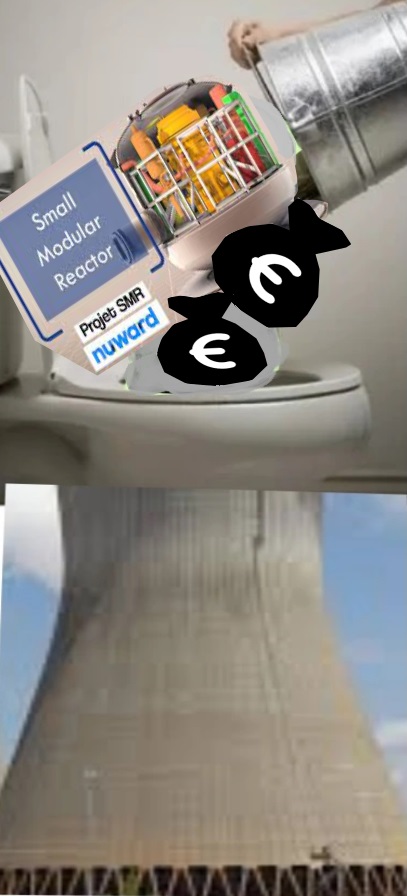
(Montel) French utility EDF’s decision to ditch the design of its Nuward small modular reactor (SMR)in France shows the risk of expecting too much of the nuclear technology – with delays to the project expected, analysts told Montel.
too many technical uncertainties, analysts said.
(Montel) French utility EDF’s decision to ditch the design of its Nuward small modular reactor (SMR)in France shows the risk of expecting too much of the nuclear technology – with delays to the project expected, analysts told Montel.
Montel News, by: Muriel Boselli, Sophie Tetrel , 03 Jul 2024
“SMRs must remain a possibility for keeping a nuclear fleet in the long term but they cannot be the pillar of a reliable electricity strategy at this stage,” said Nicolas Goldberg of Colombus Consulting. “Hence the need for electric renewables, which should not be overlooked.”
France is relying on SMRs as part of a broader plan to spur its nuclear power industry and lower carbon emissions.
In 2022, president Emmanuel Macron announced plans to invest EUR 1bn by 2030 in the development of small modular reactors, with EUR 500m going to Nuward.
Technical difficulties
EDF confirmed media reports on Tuesday that it was scrapping its SMR design due to technical difficulties. The company wanted to “move towards a design built exclusively from proven technological building blocks”, a spokeswoman told Montel.
The market had been sceptical about the project as there were too many technical uncertainties, analysts said.
“This announcement allows us to be a little less involved in utopian and rhetorical discussions about nuclear power and to return to something much more technical, which brings us back to the limits of SMRs at the moment,” said Franck Gbaguidi, an analyst at Eurasia Group…………………………..
Safety adaptation
Ditching the design meant EDF would have to adapt the safety plan it submitted to France’s ASN nuclear safety authority last July, an ASN spokeswoman said.
The Nuward project has been in development since 2019, managed by a consortium of companies including EDF, Naval Group, TechnicAtome, the French Alternative Energies and Atomic Energy Commission (CEA), Framatome and Tractebel. Construction was scheduled to start in 2030
The Nuward project has been in development since 2019, managed by a consortium of companies including EDF, Naval Group, TechnicAtome, the French Alternative Energies and Atomic Energy Commission (CEA), Framatome and Tractebel. Construction was scheduled to start in 2030.
France is currently developing 11 SMR projects and the nuclear development has been backed by right and far-right political parties. In April, the start-up Jimmy said it had submitted a request to the ecology ministry for authorisation of a pair of 170 MW capacity SMRs it hopes to build in France after the European Commission approved EUR 300m in state aid for the project.
In December last year, the company said it would stick with its SMR plans in Europe despite American firm NuScale Power scrapping its plan to build SMRs in the US. https://montelnews.com/news/2edd2bd8-fa29-4629-95f9-c876c1e4e6ce/edfs-nuward-u-turn-shows-risk-of-betting-on-smrs-analysts
The commissioning of the Flamanville EPR, nuclear reactor is proving difficult
The commissioning of the Flamanville EPR, decided by the ASN on 7 May
2024, is proving difficult. This is not surprising when we remember the
many problems that this reactor has accumulated since the start of its
construction.
As Global Chance has repeatedly pointed out, there is a great
risk of seeing political imperatives take precedence over scientific rigour
and safety culture. The way in which information on commissioning is being
disseminated is worrying and does not in any way meet the conditions
stipulated by the ASN in its decision to authorise commissioning.
The next step, namely the search for criticality and the first divergence, is
crucial. Hasty implementation could prove problematic for the integrity of
the reactor and would put local populations at risk. This note is to be
updated regularly depending on the situation and the availability of
information relating to the EPR start-up operations.
Global Chance 4th July 2024
https://global-chance.org/Laborieuse-mise-en-service-de-l-EPR-de-Flamanville
French nuclear giant scraps SMR plans due to soaring costs, will start over.
Another Small Modular Nuclear Reactor project goes down the toilet
This time it’s that great nuclear poster boy France that is facing the humiliation and embarrassment of wasting billions on “New Nuclear”
Last time it was the USA with the NuScale fiasco
Giles Parkinson Jul 2, 2024, https://reneweconomy.com.au/french-nuclear-giant-scraps-smr-plans-due-to-soaring-costs-will-start-over/
The French nuclear giant EdF, the government owned company that manages the country’s vast fleet of nuclear power stations, has reportedly scrapped its plans to develop a new design for small nuclear reactors because of fears of soaring costs.
EdF, which is now fully government owned after facing potential bankruptcy due to delays and massive cost over-runs at its latest generation large scale nuclear plants, had reportedly been working on a new design for SMRs for the last four years.
The French investigative outlet L’Informé reported on Monday that EdF had scrapped its new internal SMR design – dubbed Nuward – because of engineering problems and cost overruns. It cited company sources as saying EdF would now partner with other companies to use “simpler” technologies in an attempt to avoid delays and budget overruns.
Reuters confirmed the development, citing an email from a company spokesman that confirmed the program had been abandoned after the basic design had been completed.
“The reorientation consists of developing a design built exclusively from proven technological bricks. It will offer better conditions for success by facilitating technical feasibility,” an EDF spokesperson told Reuters via email.
Continue readingFrance’s Orano loses operating licence at major uranium mine in Niger.
Niger has removed the mining permit of French nuclear fuel producer Orano
at one of the world’s biggest uranium mines, the company said Thursday,
highlighting tensions between France and the African country’s ruling
junta.
RFI 21st June 2024
EDF Warns of ‘Huge’ Contract Losses If Convicted in Paris Criminal Trial
- EDF lawyer says probity conviction may affect Czech, UK deals
- Ex-EDF CEO also tried alongside consultants including Messier
At the heart of the trial is EDF’s former boss, Henri Proglio, who is suspected of
having set up the system to hire the consultants.
Electricite de France SA legal team warned at a Paris trial that the utility could end up losing
“huge contracts” abroad if convicted in a case over accusations it
favoured several consultants by awarding them advisory deals without
putting them up for tender.
The favouritism court case that began on
Tuesday centres on awards worth more than €20 million ($21.7 million)
given to 44 consultants, including the firm set up by former Vivendi SE
boss Jean-Marie Messier.
Bloomberg 21st May 2024
1 This Month
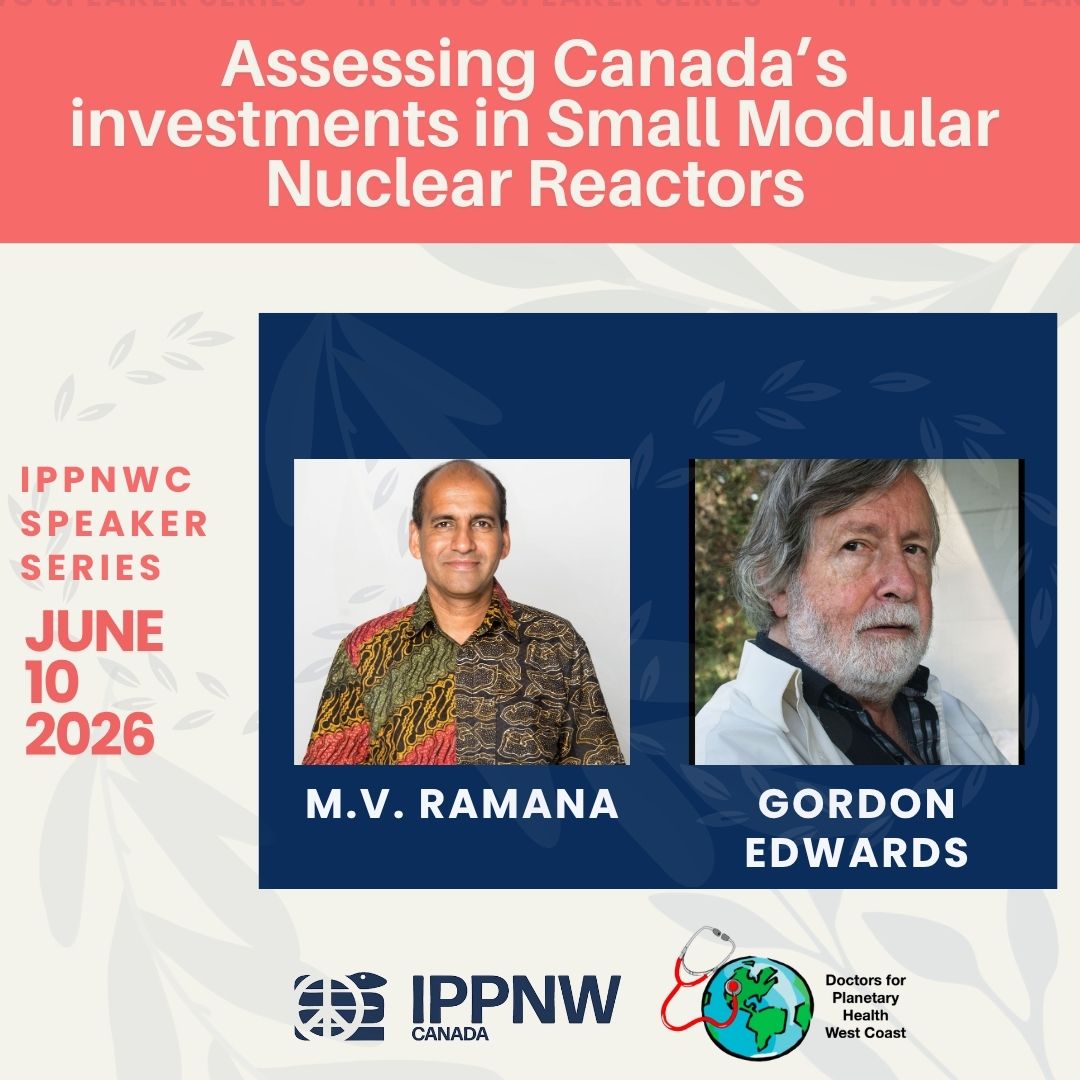
10 June – Assessing Canada’s Investments in Small Modular Nuclear Reactors – https://zoom.us/meeting/register/IiqHA5feRhaEBycOLNTJlA#/registration


Cuba Is Not a Failed State – It Is a Besieged State
PETITION: “Global Appeal to Endorse Palestinian Right of Return of Refugees”
To see nuclear-related stories in greater depth and intensity – go to https://nuclearinformation.wordpress.com
-
Archives
- June 2026 (89)
- May 2026 (306)
- April 2026 (356)
- March 2026 (251)
- February 2026 (268)
- January 2026 (308)
- December 2025 (358)
- November 2025 (359)
- October 2025 (376)
- September 2025 (257)
- August 2025 (319)
- July 2025 (230)
-
Categories
- 1
- 1 NUCLEAR ISSUES
- business and costs
- climate change
- culture and arts
- ENERGY
- environment
- health
- history
- indigenous issues
- Legal
- marketing of nuclear
- media
- opposition to nuclear
- PERSONAL STORIES
- politics
- politics international
- Religion and ethics
- safety
- secrets,lies and civil liberties
- spinbuster
- technology
- Uranium
- wastes
- weapons and war
- Women
- 2 WORLD
- ACTION
- AFRICA
- Atrocities
- AUSTRALIA
- Christina's notes
- Christina's themes
- culture and arts
- Events
- Fuk 2022
- Fuk 2023
- Fukushima 2017
- Fukushima 2018
- fukushima 2019
- Fukushima 2020
- Fukushima 2021
- general
- global warming
- Humour (God we need it)
- Nuclear
- RARE EARTHS
- Reference
- resources – print
- Resources -audiovicual
- Weekly Newsletter
- World
- World Nuclear
- YouTube
-
RSS
Entries RSS
Comments RSS
 nuclear-news