Warming sea water affecting cooling systems in Finland’s nuclear power station

 Warm sea water in Finland reduces power from Loviisa nuclear plant https://www.reuters.com/article/us-finland-nuclear-fortum-oyj/warm-sea-water-in-finland-reduces-power-from-loviisa-nuclear-plant-idUSKBN1KF2COLefteris Karagiannopoulos 26 July 18 OSLO (Reuters) – Finland’s Loviisa power plant, consisting of two reactors with a combined capacity of 1 gigawatt, had to reduce power by 170 megawatts on Wednesday as the sea water that is used to cool the reactors had become too warm, operator Fortum said.
Because of the very warm temperatures the Nordic region is currently experiencing, the sea water that is collected to cool the Loviisa reactors is warmer and the water released is also warmer, at 32 degrees Celsius on Wednesday.
Releasing hot water back to the sea after cooling the reactors could be a hazard and if it exceeds 34 degrees Fortum said the reactors must be shut down due to regulations.
“We decreased power by 170 megawatts for a bit less than two hours. The sea water that cools the reactors was at 24 degrees, which is warmer than usual,” Fortum’s chief of operations in the plant, Timo Eurasto, told Reuters.
Such a rare occurrence may happen again in the next days because of the unusually warm temperatures, he said, adding that there was no danger to people, the plant, or the environment.
“High sea water temperature may indeed reduce the efficiency of the cooling systems of the plant. This is compensated by reducing or shutting down the reactor power,” said Nina Lahtinen, nuclear safety section head at Finland’s regulator STUK.
In Germany traders warned last week that higher temperatures in August may create cooling issues for the country’s reactors, with E.ON subsidiary PreussenElektra cutting output slightly from two units.
Sweden’s nuclear energy regulator SSM, told Reuters on Tuesday that power production at the Forsmark nuclear plant has also been reduced “by a few percentage points” due to cooling issues.
Last time Fortum had to reduce power in its reactors due to warmer-than-usual cooling water was seven years ago, said Loviisa plant’s Eurasto.
Unusually warm and dry weather in the Nordics led temperatures to record highs this summer, affecting water levels at the reservoirs that feed Norway and Sweden with hydropower, causing prices to spike as a result.
Finland’s nuclear waste dump will still be in the trial stage for years
 Nucnet 25th June 2018, A full-scale in-situ system test for spent nuclear fuel disposal is
expected to begin this week at Posiva’s planned final deep geologic
disposal facility at Olkiluoto, Finland. Posiva’s owner Teollisuuden
Voima Oyj (TVO) said the test will be the first of its kind and means that
Posiva is making progress towards the operational test phase of its final
disposal system and technology.
According to TVO, the test will last for
several years. It aims to prove that the prototype processes for geological
storage at Posiva’s repository are “all working concepts”. The test
has been in preparation since December 2017, TVO said. The processes
include placing fuel assemblies packed in copper-steel canisters inside
holes drilled in the bedrock tunnels. This is followed by backfilling the
tunnels with bentonite clay and sealing them with a cast plug. Two test
canisters will be equipped with thermal resistors simulating the residual
temperature of spent nuclear fuel, TVO said. A TVO official said the
temperature and pressure in the canisters, test holes and the surrounding
bedrock, and the behaviour of the backfill of the tunnels, will be
monitored by some 500 sensors over several years.
https://www.nucnet.org/all-the-news/2018/06/25/finland-s-posiva-to-begin-world-s-first-in-situ-system-test-at-final-repository-site
New problem is troubling Finland’s Olkiluoto 3 nuclear project
 Tekniik & Talous 14th May 2018 , [Machine Translation] New problems have arisen in TVO’s hot tests at
Olkiluoto 3. The connection line of the main pipework of the plant, the reactor cooling circuit, vibrates more than allowed. The problem is reported by the supervising authority Stuk in its recent monitoring report.
The problem has emerged in hot tests where the reactor and turbine plant systems are heated by the heat generated by the main circulation pumps to the correct operating temperatures. Heat tests ensure that the facility is safe to charge nuclear fuel. Before that, the body still needs a government license. According to Stuk, the reason for the vibration is still under way. Stuk explains the following. In Stucco’s Executive Director Petteri Tiippana, the problem is not negligible.
https://www.tekniikkatalous.fi/tekniikka/energia/olkiluoto-3-n-tarkein-putkisto-varahtelee-liikaa-stukin-mukaan-korjaaminen-on-mittava-tyo-6724597
Finland’s nuclear power plant’s price tag – at least $11 billion
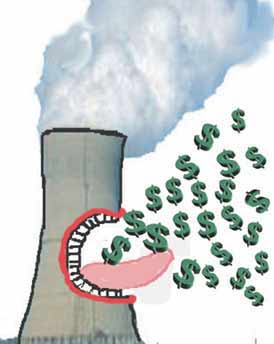 Costlier Than Pyramids: Finnish NPP Becomes World’s Second-Priciest Building, Sputnik News
EUROPE 19.03.2018
The Finnish Olkiluoto-3 nuclear reactor has been touted as the “flagship of European nuclear energy,” but has taken more than a decade to complete and cost the Nordic nation an arm and a leg.
When completed, the third reactor at Finland’s Olkiluoto nuclear power plant will have the distinction of being the world’s second most expensive building, higher than that of a number of luxury hotels, sports arenas, skyscrapers and even pyramids, Finnish national broadcaster Yle reported.
With a breathtaking price tag of €8.5 billion ($11 billion), Olkiluoto-3 is expected to be finished in 2019, 14 years after the start of the construction. For the sake of comparison, the Cheops Pyramid, the largest of the pyramids at Giza, took about 20 years to build. However, construction of the 4,500-year-old pyramid turned to be far more efficient, as it was built over roughly the same period of time and without access to modern technology. Also, its cost in today’s money has been estimated at only €4 billion ($4.9), half the Olkiluoto price tag.
To offer a more modern building for comparison, New York’s replacement One World Trade Center cost an estimated $3.8 billion to build. …….https://sputniknews.com/europe/201803191062679754-finland-npp-price/
Latest in the AREVA nuclear soap opera: Areva to pay Finland’s TVO 450 mln euros
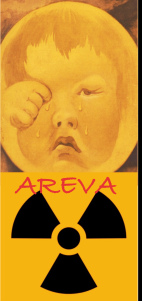 Le Monde 10th March 2018, [Machine Translation] EPR: epilogue of the Finnish soap opera Areva. The nuclear group will pay hundreds of millions of euros in penalties for the
delay of ten years in the Olkiluoto reactor project.
http://www.lemonde.fr/economie/article/2018/03/10/epr-areva-en-passe-de-solder-son-lourd-contentieux-finlandais-avec-tvo_5268784_3234.html
Areva to pay Finland’s TVO 450 mln euros over nuclear reactor dispute https://www.reuters.com/article/tvo-areva-olkiluoto-settlement/areva-to-pay-finlands-tvo-450-mln-euros-over-nuclear-reactor-dispute-idUSL8N1QT0N1 Reuters Staff HELSINKI, March 11 (Reuters) – Finnish utility Teollisuuden Voima (TVO) said on Sunday it had agreed a settlement with French nuclear company Areva and Germany’s Siemens in the long-running dispute over cost overruns and delays on their EPR nuclear reactor project.
Areva-Siemens will pay TVO compensation of 450 million euros ($553.73 million), the Finnish company said in a statement.
TVO and Areva-Siemens were claiming billions of euros from each other due to the delays in the Olkiluoto 3 reactor project in southwest Finland. Its start was postponed last year to May 2019 – a decade later than planned.
$1 = 0.8127 euros Reporting by Tuomas Forsell
Norway and Finland find tiny amounts of recently released radioactive particles in the air
 Barents Observer 26th Feb 2018. Finland’s Radiation and Nuclear Safety Authority (STUK) says tiny amounts
of radioactive iodine-131 were measured in the air Kotka, east of Helsinki
in late January. The same isotope was then measured again last week north
to Kajaani. The levels were very low, ranging from 0,7 to 1,6
micro-becquerel per cubic meter air, STUK says in a news release
From where the radioactivity is coming is still unknown. Radioactive iodine-131
has a half-life of only eight days so the measurements are proof of a
rather recent release.
The source could be a nuclear reactor, a facility
producing isotopes for medical purposes or by releases from a nuclear
weapons related test. Norway’s Radiation Protection Authority (NRPA) on
Monday confirms detection of radioactive iodine also at several of the
country’s air-measurement stations.
https://thebarentsobserver.com/en/ecology/2018/02/traces-radioactive-iodine-air
Russia’s pension funds for elderly – used to pay for building Finland’s nuclear power plant
 “Finland’s Pyhäjoki nuclear plant takes our pension money” While four million elderly Russians live below the poverty line, the country’s pension fund pays for Rosatom-backed nuclear plant in northern-Finland. «Deeply unfair,» says Oleg Bodrov from the closed town of Sosnovy Bor near St. Petersburg. Barents Observer By Thomas Nilsen, January 29, 2018
Nuclear power plants must be able to withstand fires caused by aircraft impacts
https://www.sciencedaily.com/releases/2018/01/180116123750.htm
- Date:
- January 16, 2018
- Source:
- VTT Technical Research Centre of Finland
- Summary:
- Researches examined the transport, evaporation and combustion of liquids in large-scale fire incidents.
In his dissertation, Topi Sikanen, a Master of Science (Technology) and Research Scientist at VTT, examined the transport, evaporation and combustion of liquids in large-scale fire incidents. He developed practical models which will help to predict the consequences for nuclear power plants of fires caused by aircraft impacts.
Analyses of airliner impacts became mandatory after terrorists deliberately crashed two aircraft into the World Trade Center twin towers in New York in 2001.
Nuclear power plants must continuously improve their safety standards. A modern nuclear power plant, for example, must withstand fires caused by aircraft crashing into it. In his dissertation, Topi Sikanen developed methods of modelling unusual and major accidents. The practical outcome of the dissertation was a number of tested, applicable models which help to predict the consequences of fires at nuclear power plants
Sikanen applied the computational tools of fluid dynamics to the fire safety analyses he presented in his three-part dissertation. The first part of the dissertation concerns the conveyance of liquid discharged from fuel tanks in connection with aircraft impacts. In the second part, Sikanen modelled liquid pool fires, the evaporation of liquid, and the heat transfer. In the last part, Sikanen applied the methods that he had developed to the analysis of the impact of aircraft crashing into a nuclear power plant.
The results of the safety and fire safety analyses presented in this dissertation, which falls under construction technology, can be used by the designers and implementers of nuclear power plants and other large buildings.
The troubled and exorbitantly expensive history of the EPR nuclear reactor.
Romandie 9th Jan 2018, [Machine translation] The EPR, the flagship of the French nuclear industry
with many setbacks. Paris – The EPR, to be launched for the first time in China in about six months, is a third-generation nuclear reactor designed to offer improved power and safety, but whose yards have accumulated setbacks in France and elsewhere. Finland.
Launched in 1992, this technology, touted as the flagship of the French nuclear industry, was co-developed by the French company Areva and German Siemens, within their joint venture Areva NP, which Siemens has since withdrawn. EDF has just taken control of this activity as part of the reorganization of the French nuclear industry orchestrated by the State.
The first project was launched in Olkiluoto (Finland) in 2005, on behalf of the TVO electrician, with Areva and Siemens directly prime contractors. But the setbacks and budget slippages have accumulated. TVO lamented an umpteenth delay in the commissioning of the EPR in October, which is now scheduled for May 2019. It was initially scheduled for 2009.
There is a dispute between TVO and Areva and Siemens, with each party blaming the delays on the other.
claiming billions in compensation. The case is under arbitration.
The second EPR, which has been under construction since 2007 in Flamanville (western France) has also accumulated setbacks, mainly due to anomalies discovered on the composition of the steel cover and bottom of the tank. The Nuclear Safety Authority (ASN) requires that the tank cover be replaced before the end of 2024. EDF, prime contractor, has postponed the commissioning of the reactor several times. The electrician plans to start the Flamanville EPR at the end of 2018, for commercial commissioning in
2019, when the initial schedule was for 2012.
Its cost has meanwhile more than tripled to 10.5 billion euros. Two other EPRs are under construction in Taishan (China), with a joint venture owned 51% by the Chinese state power company CGN, 30% by EDF and, since 2012, 19% by the electrical utility of
Guangdong province.
https://www.romandie.com/news/878943.rom
Owners and suppliers of Finland’s Olkiluoto 3 nuclear reactor – locked in dispute over delayed project
 Reuters 14th Nov 2017, Pohjolan Voima Oy (PVO), the largest shareholder in Finland’s
long-delayed Olkiluoto 3 nuclear reactor, could make additional
compensation claims against suppliers Areva and Siemens following a recent
setback, PVO said on Tuesday.
The start of regular power production at
Olkiluoto 3 – Finland’s largest reactor – was last month postponed by
another five months to May 2019. “It (further compensation) has been
briefly discussed (within PVO). I don’t want to enter further this topic
as it is an issue for (reactor operator) Teollisuuden Voima (TVO) to
decide,” PVO CEO Lauri Virkkunen, told Reuters.
The owners and supplier are locked in a dispute over the plant’s delays at the International
Chamber of Commerce, where TVO is claiming 2.6 billion euros ($3.06
billion) from the Areva-led consortium, which has filed a counter-claim of
3.6 billion euros….
Areva-Siemens and the Finnish electricity company TVO blame each other for delays in nuclear build
L’Usine Nouvelle 27th Oct 2017[Machine translation] Areva in the quagmire of the Finnish EPR. A further
delay in commissioning the Olkiluoto EPR in Finland is further complicating
the task of Areva SA, the new entity dedicated mainly to the end of the
project.
At this rate, the EPR Flamanville (Channel) will be put into
service before that of Olkiluoto in Finland. On October 9th, the
Areva-Siemens consortium informed the Finnish electrician Teollisuuden
Voima Oyj (TVO) that he was still cutting back the connection to the
reactor network in May 2019. It was initially planned for 2009!
And the penultimate postponement fixed the end of the test period at the end of
2018. After ten years of overtaking and 5 billion euros of additional cost,
the consortium Areva-Siemens and the Finnish electricity company TVO accuse
each other of the delay. The first claims 3.5 billion euros in compensation
to TVO, which continues for 2.6 billion.
https://www.usinenouvelle.com/article/areva-dans-le-bourbier-de-l-epr-finlandais.N604108
Still more delay in Finland’s Olkiluoto-3 nuclear power plant
French-backed Finnish nuclear plant delayed again https://www.ft.com/content/99922334-acc8-11e7-aab9-abaa44b1e130 High-profile power station likely to start production more than a decade late
OCTOBER 9, 2017 by Richard Milne, Nordic Correspondent A high-profile French-backed nuclear power plant in Finland has been delayed yet again, meaning it is likely to start production more than a decade late. Western Europe’s first new nuclear power station for more than two decades will now start production in May 2019 rather than at the end of 2018 as previously announced, according to the Finnish consortium behind the Olkiluoto-3 plant.
Using a similar European pressurised reactor to the one envisaged for the UK’s controversial Hinkley Point plant, the Finnish project — led by French reactor manufacturer Areva — has been regularly beset by delays and huge cost overruns. Olkiluoto-3 was originally meant to start production in spring 2009 and cost €3.2bn but the last price estimate was almost three times as high. “We are very disappointed by this additional delay. There is still substantial work to be accomplished in the project and it is essential that all the necessary technical, human and financial resources are allocated to the project,” said Jouni Silvennoinen, head of the Olkiluoto-3 project at operator TVO.
TVO is particularly concerned about the reorganisation of the French nuclear industry under which utility EDF has taken over the lead role for the development of Hinkley Point. The Finnish nuclear plant operator is worried that France will prioritise another much-delayed project locally in Flamanville over Olkiluoto. “The restructuring of the French nuclear industry must not compromise [that enough resources be directed to Olkiluoto],” Mr Silvennoinen said. TVO took the unusual step last month of complaining to the European Commission that French state aid for Areva was not enough.
Abandoned radioactive generators and other nuclear junk sunk in oceans by Russia
Feisty mayor in Russia’s Far East wants his nuclear trash collected http://bellona.org/news/nuclear-issues/2017-09-feisty-mayor-in-russia-far-east-wants-his-nuclear-trash-collected
While lighthouses run on atomic batteries in Russia have become rare, especially along the coasts of the Baltic and Barents Seas, they still have their adherents in the country’s Far East. by Charles Digges charles@bellona.no While lighthouses run on atomic batteries in Russia have become rare, especially along the coasts of the Baltic and Barents Seas, they still have their adherents in the country’s Far East.
A group of radioactivity tracking sleuths on Sakhalin Island in the Pacific say they have hunted down an abandoned generator that ran on strontium-90 sunk off the shores of one of its premier beach resorts.
But that, they say, is just the tip of the iceberg: The discovery lies in the middle of a radioactive graveyard that includes no fewer than 38 sunken vessels containing nuclear waste, and two nuclear warheads that went down when a Soviet bomber crashed near the island’s southern tip in 1976.
Though the Russian Ministry of Defense recently began acknowledging the lost bomber, tracing the origins of the other nuclear cast offs is not so easy.
But at least, says Nikolai Sidirov, mayor of the coastal town of Makarov on Sakhalin’s Bay of Patience, his town knows what this new discovery is – and they want it raised from the depths with the rest of the glowing junk.
Speaking to Novaya Izvestiya, a popular tabloid that morphed out of the official Soviet-era mouthpiece Izvestiya, Sidirov said satellite photos tracking the location of the crashed bomber have turned up something else lurking under the waves: An RTG.
That’s short for Radioisotope Thermoelectric Generator, a small radioactive energy source that for decades powered thousands of Soviet lighthouses and other navigational beacons along Russia’s Baltic, Arctic and Pacific coasts.
After the fall of the Soviet Union and the crash of the Russian economy, officials lost track of many of the RTGs as bureaucracies collapsed and records went missing. Thieves pillaged them for their valuable metal, exposing their strontium innards. Hikers and shepherds, drawn to their atomic heat, would stagger out of the woods sick with radiation poisoning.
Around Murmansk and on the Pacific coast, frightful reports about strontium elements turning up on beaches proliferated in local media. Some newly independent Soviet republics telegraphed anxieties about their inherited RTGs back to Moscow – along with requests to come take them away.
And then there was the biggest fear of all: What if strontium 90 from these virtually unguarded, remotely radiological sources ended up in the hands of terrorists who wanted to make a dirty bomb?
So far, that hasn’t happened – anybody trying to make off with a strontium battery would likely end up very ill or dead. But when three woodsmen in the former Soviet Republic of Georgia turned up in a hospital with radiation burns and caught the attention of the International Atomic Energy Agency, the dangers of orphaned Soviet RTGs were finally on everyone’s mind.
A colossal effort spearheaded by the Norwegian government entirely rid the coasts of the Barents, Kara and White Seas of more than 180 RTGs. By infusing €20 million into the push, Norway helped Russia replace the strontium 90 batteries on these lighthouses and beacons with solar power over a six year period ending in 2015.
In all, Rosatom, Russia’s state nuclear corporation, says it has decommission more than 1000 RTGs throughout the country, adding that it has mostly eliminated the hazard of these stray radioactive sources from its coastlines.
But some areas have not been so lucky, at least according to the mayor of Makarov out on Sakhalin Island, six times zones east of Moscow. Sidirov, a feisty campaigner who had been publicly heckling the capital about the nuclear trash in the seas near his town for years, says divers have located the RTG, and that he now has the coordinates of where it lies. He told Novaya Izvestiya he will pass on the RTGs location to what he calls “competent authorities” lest it end up in scheming hands.
How the RTG, which lies in 14 meters of water, came to be there is still anyone’s guess. The Russian Navy sent a statement to the newspaper insisting that all RTGs under the purview of the Pacific Fleet have been hunted down and destroyed.
But Russia’s environmental oversight agency confirmed that there were numerous radioactive foundlings in the oceans off Sakhalin Island, though they didn’t identify Sidirov’s RTG specifically.
It certainly wouldn’t be the first time someone screwed up with an RTG in the area, however. Twenty years ago, in 1997, a helicopter from Russia’s Emergency Services Ministry accidentally dropped a strontium-powered RTG into Sakhalin’s waters. It was later retrieved by the navy.
So far, Rosatom has remained mum on the veracity of Sidirov’s claim about the RTG. But since the history of the downed bomber and the other hazards in his area has been confirmed, there’s every reason to believe him about the RTG. And he wants it gone.
“The ecological authorities and the military, they’re being very stubborn about coming to collect it,” Sidorov told Novaya Izvestiya. “It’s there job to collect it – if they’re ever interested, I’ll be here to show them exactly where it is.”
Finland’s TVO wins partial ruling in nuclear reactor dispute with Areva
, Reuters 19 Jul 17
* Final decision seen coming in early 2018 (Adds comments, detail)
By Jussi Rosendahl and Benjamin Mallet HELSINKI/PARIS, July 20 – Finnish utility Teollisuuden Voima (TVO) said on Thursday it had received another favourable partial decision from the International Chamber of Commerce (ICC) in its long-running dispute with nuclear reactor supplier Areva.
The companies are claiming billions of euros from each other due to years of delays and cost overruns on the Olkiluoto 3 EPR reactor project in southwest Finland.
The new partial ruling addressed preparation, review, submittal, and approval of design and licensing documents on the project…..
The cost of Olkiluoto 3 was initially estimated at 3.2 billion euros ($3.7 billion), but Areva in 2012 estimated the overall cost at closer to 8.5 billion euros……http://www.reuters.com/article/tvo-areva-arbitration-idUSL5N1KB1V4
Delay for Finland’s Fennovoima nuclear project
Fennovoima nuclear project faces delays over safety clearance, building permit yle uutiset , 19 May 17, The Finnish Radiation and Nuclear Safety Authority STUK will not deliver a safety assessment and related building permit for the Fennovoima nuclear project slated for Pyhäjoki in northwest Finland this year. According to the daily Kaleva, the nuclear watchdog has said that the evaluation and permit will be delayed by one year to the end of 2018.
Finland’s nuclear safety watchdog STUK will not provide a safety assessment and building permit this year for the Fennovoima nuclear power plant to be built by Russian state-owned nuclear contractor Rosatom in northwest Finland, reports the daily Kaleva. Rosatom also owns 34 percent of the venture.
Finland’s Ministry of Economic Affairs originally hoped that STUK would be able to provide the clearances this year. However the authority now says that it won’t be able to deliver them before the end of 2018. It noted that completing the safety assessment depends on factors such as Fennovoima’s ability to update information about the project’s delivery timetable. STUK’s ability to furnish the approvals will also depend on the adequacy and comprehensiveness of the information provided……..
Investor haemorrhage
Meanwhile on Wednesday, the Helsinki city council launched moves to disconnect Vantaa Energy – in which it owns 40 percent of shares — from the Fennovoima nuclear power plant. However, Vantaa Energy chief executive Pertti Laukkanen said that the city of Vantaa, which owns the remaining 60 percent of the power company, is not likely to support selling off its holdings in the project.
A number of other Finnish investors have also bailed on the project over the years. The German-based power behemoth E.ON as well as duopolist retailer S Group both shed their stake in the project in 2012. Later in 2013, 15 members of the power consortium Voimaosakeyhtiö SF pulled out of the venture, while a subsidiary of the other duopolist retailer K Group left in 2014. Meanwhile local dairy giant Valio exited in 2015 during a rocky period caused by losses over western sanctions applied against Russia, one of its main markets.
Financing controversy
The Fennovoima nuclear power plant has faced a rocky road since it received a decision-in-principle for construction during the administration of ex-PM Matti Vanhanen back in 2010. The contentious project also saw the departure of the Green Party from Alexander Stubb’s coalition government in 2014, when it decided to proceed with the proposed plant.
The project also stirred up controversy over financing arrangements when a murky Croatian firm – later found to be a front for Russian investors — emerged as a backer to help Fennovoima make up the 60-percent domestic- EU ownership required by the Finnish government. There was also speculation that state energy giant Fortum had been pressured to come forward as an investor following initial resistance to the project.
The project has faced opposition from environmentalists in Finland and Sweden and has also come under intense scrutiny over concerns about Finland’s energy dependence on Russia. http://yle.fi/uutiset/osasto/news/daily_fennovoima_nuclear_project_faces_delays_over_safety_clearance_building_permit/9622096
1 This Month
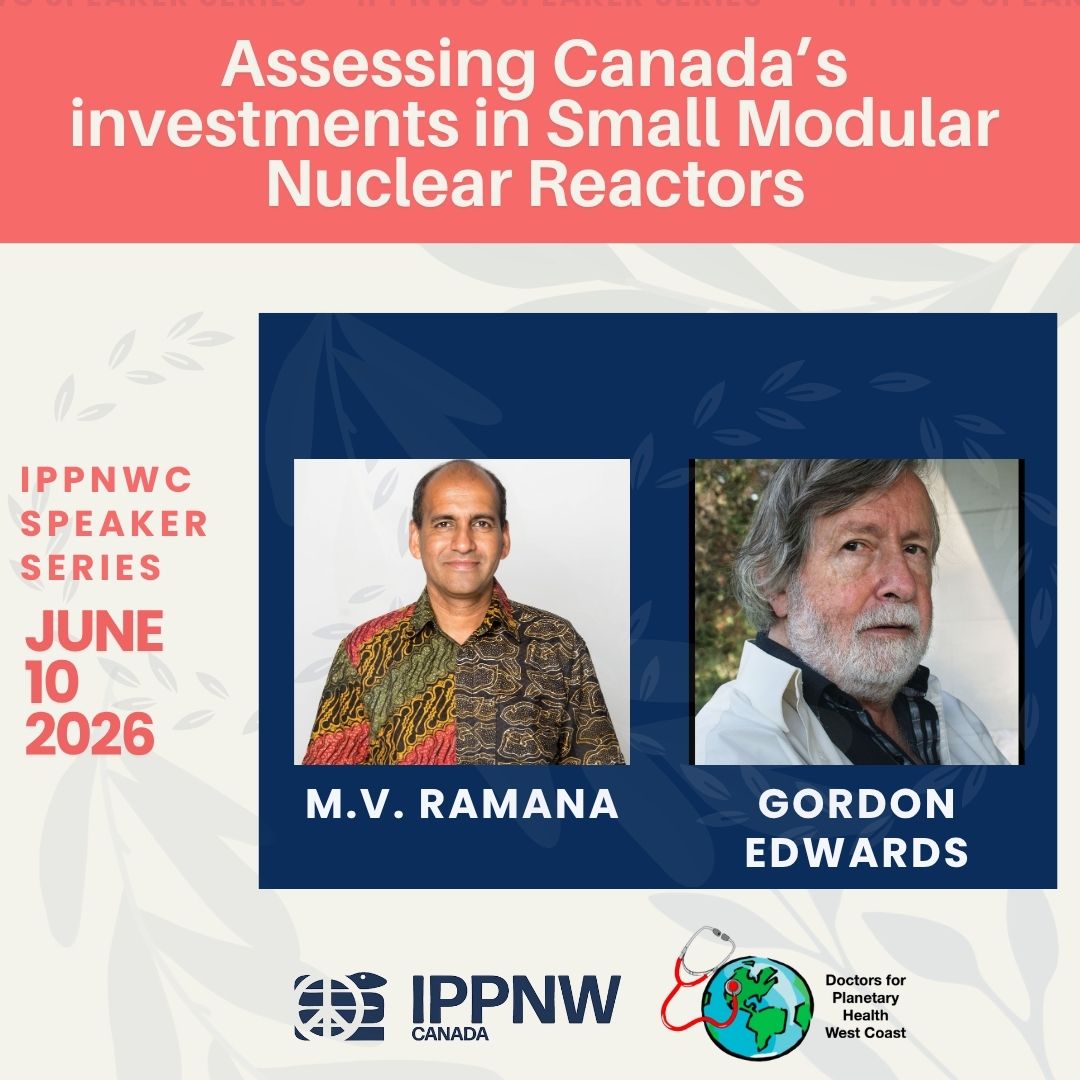
10 June – Assessing Canada’s Investments in Small Modular Nuclear Reactors – https://zoom.us/meeting/register/IiqHA5feRhaEBycOLNTJlA#/registration


Cuba Is Not a Failed State – It Is a Besieged State
PETITION: “Global Appeal to Endorse Palestinian Right of Return of Refugees”
To see nuclear-related stories in greater depth and intensity – go to https://nuclearinformation.wordpress.com
-
Archives
- June 2026 (89)
- May 2026 (306)
- April 2026 (356)
- March 2026 (251)
- February 2026 (268)
- January 2026 (308)
- December 2025 (358)
- November 2025 (359)
- October 2025 (376)
- September 2025 (257)
- August 2025 (319)
- July 2025 (230)
-
Categories
- 1
- 1 NUCLEAR ISSUES
- business and costs
- climate change
- culture and arts
- ENERGY
- environment
- health
- history
- indigenous issues
- Legal
- marketing of nuclear
- media
- opposition to nuclear
- PERSONAL STORIES
- politics
- politics international
- Religion and ethics
- safety
- secrets,lies and civil liberties
- spinbuster
- technology
- Uranium
- wastes
- weapons and war
- Women
- 2 WORLD
- ACTION
- AFRICA
- Atrocities
- AUSTRALIA
- Christina's notes
- Christina's themes
- culture and arts
- Events
- Fuk 2022
- Fuk 2023
- Fukushima 2017
- Fukushima 2018
- fukushima 2019
- Fukushima 2020
- Fukushima 2021
- general
- global warming
- Humour (God we need it)
- Nuclear
- RARE EARTHS
- Reference
- resources – print
- Resources -audiovicual
- Weekly Newsletter
- World
- World Nuclear
- YouTube
-
RSS
Entries RSS
Comments RSS
 nuclear-news