South Korea’s government dismissed rumours about North Korean leader Kim Jong Un being gravely ill
 North Korean leader Kim Jong-un health rumours dismissed by South Korean intelligence, ABC News, 27 Apr 20, South Korea’s Government has dismissed rumours that North Korean leader Kim Jong-un is in a fragile condition, as speculation about his health intensifies amid the North’s silence on his whereabouts.
Unification Minister Kim Yeon-chul told a closed-door forum in Seoul that South Korea had “enough intelligence to confidently say that there are no unusual developments” in rival North Korea that would back up speculation about Mr Kim’s health, his ministry said.
The minister did not reveal what specific intelligence led to that conclusion, but stressed that it was reached after a thorough analysis.
His comments are a reiteration of earlier South Korean statements that Mr Kim appeared to be handling state affairs normally and that no unusual activities had been detected in North Korea.
Those comments, however, failed to dispel the rumours about Mr Kim, partly because past outside intelligence reports on developments in North Korea have sometimes turned out to be wrong. …..
As the absolute leader of a country with a nuclear weapons program, Mr Kim’s health is a matter of intense interest both regionally and globally.
If something were to happen to him, it could lead to instability in North Korea. Mr Kim hasn’t publicly anointed a successor, and that has prompted questions about who would take control of North Korea if he is gravely ill or dies…..
serious unrest could occur if a power struggle erupts between those supporting the Kim dynasty and those who want non-Kim rule…….. https://www.abc.net.au/news/2020-04-28/kim-jong-un-health-rumours-south-korea-intelligence/12191504
The Carbon Brief Profile: South Korea
 COUNTRY PROFILES 6 April 2020 The Carbon Brief Profile: South Korea, 6 Apr 20,
As part of its series on how key emitters are responding to climate change, Carbon Brief looks at South Korea’s attempts to balance its high-emitting industries with its “green”aspirations.
the nation has drawn criticism for not always matching its green-growth rhetoric with action. Proposed phaseouts of coal and nuclear have been prompted primarily by concerns about air pollution and safety,as opposed to climate.
With an election approaching, many environmental groups joined together to call for more action from the major parties, which they claimed have prepared virtually “no countermeasures” against climate change.
In March, a group of Korean youth activists sued the government over its climate framework, which they deemed insufficient to meet the nation’s Paris Agreement targets.
According to a 2019 study by the Pew Research Centre, South Koreans place climate change highest in their list of potential national threats…….. Recent polling suggests 77% of voters would vote for political parties promising to respond to the threat of climate change in the general election……
This year, nations are expected – though not strictly required – under the Paris Agreement to come forward with updated plans that scale up the ambition of their original target. South Korea has yet to indicate whether it intends to meet this expectation. …….
Finally, South Korea is home to the Green Climate Fund (GCF), a UN body based in the “international business district” of Songdo, near the north-western city of Incheon. The fund is the main mechanism set up for mobilising $100bn every year “by 2020” from richer countries to finance climate mitigation and adaptation in the developing world…….
‘Green growth’ policies
In keeping with South Korea’s rapid industrialisation over the past few decades, the nation’s approach to climate and energy is best summarised by the principle of “green growth”.
Upon the inauguration of President Lee Myung-bak in 2008, he made it clear his overarching philosophy would be based on clean-energy technologies and environmentally friendly development in order to fuel long-term economic growth. In a speech at the time, he said:
“If we make up our minds before others and take action, we will be able to lead green growth and take the initiative in creating a new civilisation.”
This was reflected in the flagship Framework Act on Low Carbon, Green Growth (pdf), which was passed in 2009 and provided the legislative framework for emissions targets and renewable energy expansion, as well as the basis for a carbon trading system.
A five-year plan implemented the same year saw South Korea commit 2% of its GDP through to 2013 to invest in the green economy, which included investing in renewable energy, smart grids and green homes.
According to the World Bank, this focus on green investment is partly credited with the nation’s early recovery from the global financial crisis…….
there are concerns that this system still does not make it attractive enough for private entities to invest in renewables, with insufficient subsidies for solar and wind while coal is still being incentivised .
Another issue with the current Korean system concerns the electricity grid, with renewable energy facilities facing delays in being connected due to inadequate substations.
The government-owned KEPCO controls the grid and has a monopoly on electricity generation. The International Energy Agency (IEA) has identified restructuring of KEPCO as a key recommendation for energy reform.
There are also concerns in South Korea that expanding renewable capacity only benefits foreign companies that already dominate these markets. Earlier this year, the Ministry of Trade, Industry and Energy issued a press release reassuring people that reports of Chinese companies dominating the Korean solar market were “not true”.
Despite all these issues, the SFOC has identified the “biggest problem” facing renewable expansion as conflicts arising with local communities, when trying to construct new renewable facilities in their vicinity.
Conservatives politicians and news outlets, often with a pro-nuclear slant, have been blamed for “tarnishing” the reputation of renewables by stating that solar projects in particular are the cause of “environmental destruction”. According to SFOC:
“As a result, there is an increasing number of local governments autonomously establishing ordinances and rules restricting the sites for solar PV and wind power.”
Nuclear
Around a quarter of South Korea’s electricity comes from its 24 nuclear reactors, placing it “among the world’s most prominent nuclear energy countries”, according to the World Nuclear Association. Its nuclear power output is the fifth largest in the world…….
However, the nation has been shaken by two events that have, ultimately, left the future of South Korea’s
First came the Fukushima nuclear disaster in 2011. Most reactors in South Korea are located close nuclear energy looking highly uncertain.together, often near major population centres, and the accident in neighbouring Japan galvanised anti-nuclear movements across the country who feared a similar event closer to home.
The impact of the disaster on South Korea is reflected in the country’s NDC, which states:
“Given the decreased level of public acceptance following the Fukushima accident, there are now limits to the extent that Korea can make use of nuclear energy, one of the major mitigation measures available to it.”
Next, the industry was hit by a major scandal in which 100 people were indicted for corruption after fake safety certificates were issued at nuclear facilities.
This “mafia-style behaviour”, as one government official put it, led to several reactors being shut down so that cabling could be replaced after it emerged it had received certification through the corrupt operation.
The culmination of this was President Moon and his Democratic Party coming to power in 2017 with a pledge to phase out nuclear energy in South Korea.
While new reactors are still being constructed, Moon said they would not extend the operation of ageing reactors which will be decommissioned in the 2020s and 2030s. This is in line with “deliberative polling” conducted by the government to give a sense of the Korean population’s views on nuclear energy.
Analysis by SFOC found that South Korean public financial institutions have provided around $17bn (£13.7bn) of financial support for coal-power projects since 2008, around half of which was for schemes overseas.The group concludes that without this “easily available financing…such proliferation of coal-fired power plants would not have been possible”.
Another report by Carbon Tracker questions the economic viability of South Korean coal power, identifying the country as having “the highest stranded asset risk in the world” due to market structures which effectively guarantee high returns for coal.
It concludes that South Korea “risks losing the low-carbon technology race” by remaining committed to coal. A newer report from the thinktank says it is already cheaper to invest in new renewables than build new coal in South Korea and it will be cheaper to invest in new renewables than to operate existing coal in 2022. ………
https://www.carbonbrief.org/the-carbon-brief-profile-south-korea
South Korea taking measures to ensure that its Olympic team gets radiation-free food
 South Korea team to bring radiation detectors to Tokyo Olympics over ‘contamination fears’, Independent 4 Dec 19,
Committee claim food may be compromised despite lifting of Fukushima-related restrictions, Ju-min Park,
Japan has posted data to show the country is safe from Fukushima radiation and many countries have lifted Fukushima-related food restrictions.
The Korea Sports & Olympic Committee (Ksoc) plans to ship red pepper paste, a key ingredient in Korean dishes, and other foods, and check for radiation in meat and vegetables that can only be sourced locally due to stringent quarantine rules, a Ksoc meals plan report shows.
Apparently, ingredients and food will be transported from South Korea as much as possible, possibly including canned food,” Shin Dong-keun, a ruling Democratic Party member of the parliamentary sports committee who was recently briefed by Ksoc, told Reuters in an interview.
“For this Olympic games, food is our team’s main focus so they can provide safe meals for the athletes to erase radiation worries, as opposed to in the past, food was meant to play the supplementary role of helping with their morale.”
Ksoc plans to arrange local Korean restaurants to prepare meals for baseball and softball players competing in Fukushima, as shipping boxed lunches from Tokyo is not feasible, it said in the “2020 Tokyo Summer Olympics Meals Support Centre Plan”.
“These Korean restaurants should only handle food confirmed as radiation free.”…….
Radiation Hot Spots
Greenpeace said on Wednesday that radiation hot spots have been found at the J-Village sports facility in Fukushima where the Tokyo 2020 Olympic torch relay will begin.
South Korea has stepped up demands for a Japanese response to concerns food produced in the Fukushima area and nearby sea could be contaminated by radiation from the Fukushima plant…….
The official said South Korea was preparing a separate meals plan due to concerns from the public and politicians over food safety, unlike the United States and Australia whose athletes will mainly eat food provided by the host country, Japan. ……
The South Korean Olympic committee plan to purchase radiation detecting equipment by February and station an inspector at its own cafeteria in Tokyo during the games to check contamination levels, according to the Ksoc report.
The budget for the Tokyo Olympics meals service is earmarked at 1.7 billion won (£1.2bn), which includes twice the amount of money for buying and shipping ingredients than previous games, according to the committee. https://www.independent.co.uk/news/world/asia/tokyo-2020-olympics-south-korea-radiation-fukushima-nuclear-disaster-a9232291.html
South Korea’s safety concerns about Fukushima water release
 South Korea Nuclear Regulator Wants Information on Radioactive Fukushima Water Release, By Reuters, 20 Nov. SEOUL — Japan’s reluctance to disclose information about the release of radioactive water from its damaged Fukushima nuclear plant is hampering neighboring countries’ efforts to minimize the impact, the head of South Korea’s nuclear safety agency said on Wednesday.
Since the 2011 earthquake and tsunami caused a meltdown at some of the reactors the Fukushima plant, owner Tokyo Electric Power Co (Tepco) has been storing radioactive water in tanks at the site from the cooling pipes used to keep the fuel cores from melting. The utility will run out of space for the water in 2022.
Japan has not yet decided how to deal with the contaminated water, but its environment minister said in September that radioactive water would have to be released from the site into the Pacific Ocean.
“We have been raising Japan’s radioactive water issue to the international community to minimize the impact … but as Japan hasn’t disclosed any specific plan and process we would need more details to run simulations and study,” Uhm Jae-sik, chairman of the Nuclear Safety and Security Commission, told Reuters.
In addition to the Fukushima crisis, safety concerns about nuclear energy have increased in South Korea following a 2012 scandal over the supply of faulty reactors parts with forged documents, prompting a series of shutdowns of nuclear reactors.
South Korea, the world’s fifth-largest user of nuclear power, targets a long-term phase out of atomic power to allay public concerns.
“Regardless of the government’s energy policy change, our primary goal is ensuring the safety of nuclear power,” Uhm said.
South Korea operates 25 nuclear reactors, which generate about a third of the country’s total electricity. Of the 25 reactors, 10 are offline for maintenance, according to the website of Korea Hydro & Nuclear Power.
(Reporting By Jane Chung; Editing by Christian Schmollinger) https://www.nytimes.com/reuters/2019/11/20/world/asia/20reuters-southkorea-nuclear.html
Dispute between Japan and South Korea, over radiation levels in Fukushima food exports
|
Japan embassy in Seoul posts radiation data amid escalating row, Straits Times TOKYO (REUTERS) 29 Sept 19, – Japan’s embassy in South Korea has begun posting data on its website to show there is little difference in radiation levels between the two countries, in its latest retort in a diplomatic and trade row rooted in wartime history.South Korea said last month that it will double the radiation testing of some Japanese food exports due to potential contamination from the tsunami-damaged Fukushima nuclear plant.
The embassy said the radiation reading in Seoul as of last Friday (Sept 27) was 0.12 microsieverts per hour, around the same as 0.135 in Fukushima City, and higher than Tokyo’s 0.036. It will update the data every day the embassy is open, it said……. https://www.straitstimes.com/asia/east-asia/japan-embassy-in-seoul-posts-radiation-data-amid-escalating-row |
|
Exasperation in South Korea as US-North Korea nuclear talks are failing
US-North Korea nuclear talks are sputtering. South Korea is furious. “The US position has been really harmful,” said a senior adviser to South Korean President Moon Jae-in. Vox, By Alex Ward@AlexWardVoxalex.ward@vox.com Sep 23, 2019, SEOUL — The Trump administration likes to say that all is going well with its effort to rid North Korea of its nuclear weapons. As long as Pyongyang doesn’t test long-range missiles or the bomb, negotiations remain mostly on track, President Donald Trump consistently claims.
But one country is clearly bristling at America’s management of the North Korea problem: South Korea.
That became immediately clear during my trip to Seoul this week, just days before South Korean President Moon Jae-in plans to meet with Trump at the United Nations. After chats with multiple government officials and experts, the sense in the capital is that the US proceeded with its own North Korea agenda without much thought for its staunch ally’s positions.
“We’re not at the negotiating table,” a top South Korean official told me on the condition of anonymity. “That bothers me.”
That’s not only making it harder for Washington to strike a nuclear deal with Pyongyang, these people say, but could also potentially doom Moon’s top project: improving inter-Korean ties……… https://www.vox.com/2019/9/23/20875380/south-korea-north-korea-usa-nuclear-negotiations-moon-unga
South Korea might make own food arrangements for Fukushima Olympic events
South Korea concerned over food safety at Olympics with events slated for Fukushima
Talks to take place over food provision at Tokyo Games
Fukushima to host baseball and softball games next year, Guardian Justin McCurry in Tokyo, Thu 22 Aug 2019 South Korea is considering making its own arrangements to feed its athletes at next year’s Tokyo Olympics, citing concerns over the safety of food from Fukushima, media reports said.
South Korean call for import ban on processed foods from Fukushima
Lawmaker calls for import ban on processed foods from Fukushima http://www.koreatimes.co.kr/www/nation/2019/08/356_274166.html South Korea should restrict imports of processed foods from Japan’s Fukushima region as radiation has been found in shipments, an opposition lawmaker said Monday.
South Korea banned all seafood imports from eight Japanese prefectures near Fukushima in 2013 on concerns over their radiation levels in the wake of the 2011 Fukushima nuclear power plant meltdown. But no import restrictions have been put on processed foods from the areas.
Citing data from the Ministry of Food and Drug Safety, Rep. Kim Kwang-soo of the minor opposition Party for Democracy and Peace said radiation has been discovered in 16.8 tons of processed foods imported from the eight prefectures, or 35 shipments, over the past five years.
The figures were 10 tons (11 shipments) in 2014, 0.1 ton (six) in 2015, one ton (six) in 2016, 0.3 ton (four) in 2017, 0.4 ton (six) in 2018 and 5 tons (two) for the first half of this year.
South Korea imported 29,985 tons of processed foods from the Japanese prefectures between 2014 and June this year. Imports, which came to 3,803 tons in 2014, increased to 7,259 tons last year. In the January-June period of this year, imports reached 3,338 tons.
“It is urgent for the government to take necessary action against processed foods from the eight Japanese areas since they pose a serious risk to public health,” the lawmaker said.
In response to a complaint from Tokyo, the WTO ruled in April this year that Seoul’s measures do not amount to unfair trade restrictions or arbitrary discrimination.
Meanwhile, the Ministry of Food and Drug Safety said it sees no problem with imports of processed foods from the eight Japanese prefectures because the Japanese government submits inspection certificates and thorough checks are conducted at local quarantine offices. (Yonhap)
Breast cancer: a personal story – connection with nuclear radiation is never explored.
 contributed by Kitty 6 July 19 My Boobs Were Busy Breastfeeding My Newborn. Then They Turned On Me.”
The lady worked in South Korea. There are 22 beatup old Nuclear Reactors in South Korea, spewing Tritium and other radionuclides into the small country. Not to mention Fukushima. These factors are never considered, when they write articles like about cancer like this. It is anethema to the Nuclear Security State. The story is tragic. The lady’s ongoing tragedy is not fully explored. A toddler, chemo-therapy while pregnant, advanced inflammatory breast cancer. The story is white-wahsed according to the ongoing ignoraing of Nuclear pollution and cancer, in nuclear countries.
Excerpts from
My Boobs Were Busy Breastfeeding My Newborn. Then They Turned On Me.
m.huffpost.com/us/entry/us_5d1cd4f3e4b0f312567db790
“i was relieved to be able to dismiss my lumps, since I had a very active 2-year-old who I was trying to potty train, an intense full-time job, and was living abroad in Seoul, South Korea, with no family or close friends around other than my husband.”
LATER
Two days later I received a call. The biopsy results were in. It was a metastatic adenocarcinoma. “We think it originated from your breast,” the radiologist said.
“Excuse me,” I asked. “Did you just tell me that I have cancer?” He asked me to come in for a mammogram, but provided no other information. I went into a tailspin. ”
“After receiving my mammogram, the scans came up immediately. I could clearly see a mass in my right breast. This was not a clogged duct. It was breast cancer. How did this happen to me? I wondered. I thought I had done all the right things!”(blaming herself)
AS IF DOING ALL THE RIGHT THINGS MAKES ANY DIFFERENCE NOW THAT 1 IN 8 WOMEN DEVELOP BREAST CANCER
The holistic doctor said the cancer was from having a root canal as a child or, maybe the guilt of having been adopted.
The allopathic doctors, blamed her lactation while pregnant, for the cancer and not catching it. Always blame the victims. Never look at the most carcinogenic substances in the universe that are so abundance in HYPER-NUCLEARIZED industrial states like South Korea, Japan, Russia, France The USA , where there are dozens of radionuclide leaking, reactors in each country.
Allegations that a former employee has leaked nuclear information from South Korean firm to UAE and other countries
|
Korea’s nuclear reactor technologies allegedly leaked to UAE, US By Shin Ji-hye, Jun 18, 2019 – The South Korean government is reportedly looking into allegations of leaks of key nuclear reactor technologies to other countries. According to multiple local news reports Tuesday, the Nuclear Safety and Security Commission and the National Intelligence Service are verifying the authenticity of a tipoff delivered to the NSSC through a nuclear safety ombudsman system.
Based on the tipoff, one retiree from state-run nuclear operator Korea Hydro & Nuclear Power has allegedly leaked “critical” nuclear reactor technologies to the US and the United Arab Emirates. The retiree had reportedly moved to the UAE’s Nawah Energy Company in 2015. He is alleged to have provided blueprints, production technologies and detailed documents of an APR-1400, an advanced pressurized water nuclear reactor designed by the Korea Electric Power Corp., according to the reports. ….http://www.koreaherald.com/view.php?ud=20190618000628 |
|
Risky incident at South Korean nuclear reactor
hours when it should have been shut down manually at once.
was holding the control rods, which regulate the reactor’s output, at the
time. A continuing increase in output could have led to a thermal runaway,
potentially causing the reactor to explode.
Despite World Trade Association ruling, Japan still asks S. Korea to lift ban on Fukushima seafood
Japan asks S. Korea to lift Fukushima seafood ban despite WTO ruling April 23, 2019 (Mainichi Japan) TOKYO(Kyodo) — Japan on Tuesday urged South Korea to lift import restrictions on Japanese seafood introduced in the wake of the 2011 Fukushima nuclear disaster, even after the World Trade Organization ruled in favor of Seoul over the issue……
Seoul imposed a ban on some types of seafood products from eight prefectures, including Aomori, Fukushima, and Chiba, in the wake of the 2011 reactor core meltdowns at the Fukushima Daiichi nuclear power plant triggered by a powerful earthquake and tsunami.
It expanded the ban in September 2013 to include all seafood products from the eight prefectures, and added a requirement that Japanese companies attach safety certificates when any traces of radiation are found in seafood from other regions.
In August 2015, Tokyo filed a complaint with the WTO against the restrictions, which it considers unfair discrimination, and an initial ruling by a dispute settlement panel sided with Japan. South Korea appealed the decision, however, and the WTO’s appellate body, the highest judicial entity of its dispute ettlement mechanism, ultimately ruled in Seoul’s favor on April 11…….. https://mainichi.jp/english/articles/20190423/p2g/00m/0na/059000c
50 countries ban Japanese seafoods from Fukushima region, South Korea will maintain the ban
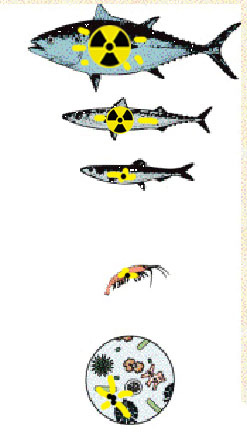 Seoul Welcomes WTO’s Ruling on Fukushima Seafood Ban SEOUL, Apr. 12 (Korea Bizwire) — South Korea on Friday welcomed the World Trade Organization’s decision to rule in favor of Seoul’s import restrictions on Japanese seafood in the wake of the 2011 Fukushima nuclear disaster and said it would keep the ban in place going forward.The WTO appellate body overturned several points of the 2018 verdict earlier in the day, saying the Seoul government’s measures are not unfair trade restrictions and do not fall into the category of arbitrary discrimination.
The appellate body, however, sided with Japan on one point, saying that Seoul has not provided enough information to Tokyo in terms of the import ban measures.
“The government has been making all-out efforts to follow the principle of making the health and safety of the people a priority, and the government highly appraises the WTO’s decision,” the Ministry of Trade, Investment and Energy said in a statement.
The South Korean government said it hopes that there would be no further trade dispute with Japan.
In 2015, Japan officially lodged a complaint at the WTO to challenge South Korea’s import bans and additional testing requirements on fish caught after 2013. Tokyo argued that radioactive levels of its fishery product were lower than those from a number of other nations.
The WTO’s dispute settlement body ruled in favor of Japan in February 2018.
South Korea has been placing import restrictions on 28 kinds of fish caught from eight prefectures near Fukushima since the nuclear power plant accident.
The South Korean government said it will keep the existing import ban on all seafood from the eight prefectures. All Japanese seafood companies will be required to hand in safety certificates when any traces of radiation are found, it added.
About 50 countries have maintained bans on imports since the nuclear disaster, but Japan has complained to the WTO about only one country — South Korea.
“Currently, 19 more countries have implemented an import ban (on Japanese seafood) at different levels,” said Yoon Chang-yul, the head of the social policy coordination office under the Office for Government Policy Coordination……..http://koreabizwire.com/seoul-welcomes-wtos-ruling-on-fukushima-seafood-ban/135802
Trump and South Korea’s Moon Jae-in meet, as USA-North Korea stalemate continues
 Trump, South Korea’s Moon look for way to curb North Korea nuclear weapons, Syracuse.co, By The Associated Press,12 Apr 19, WASHINGTON (AP) — President Donald Trump’s meeting with South Korean President Moon Jae-in comes amid uncertainty over whether the leader of North Korea is considering backing out of nuclear negotiations or restarting nuclear and missile tests.
Trump, in his first meeting with Moon since the unsuccessful U.S. summit with Kim in Hanoi, said the U.S. wants to keep economic sanctions in place to pressure Kim to denuclearize. But Trump said he retains good relations with Kim and didn’t rule out a third summit or taking steps to ease food or other shortages in the repressive nation.
“We want sanctions to remain in place,” Trump said Thursday at the White House. “I think that sanctions right now are at a level that’s a fair level.”
Moon, for his part, has called for an easing of sanctions, including those holding back joint economic projects between North and South Korea. But he didn’t speak to the sanctions issue as he and Trump spoke with reporters at the start of their talks.
……… Negotiations on Pyongyang’s nuclear program appear to be stalled, and there is uncertainty over whether Kim is considering backing out of talks or restarting nuclear and missile tests. The Korean Central News Agency on Thursday said that at a party meeting on Wednesday, Kim stressed “self-reliance” in his country to “deal a telling blow to the hostile forces” that “go with bloodshot eyes miscalculating that sanctions can bring” North Korea “to its knees.”
Moon said it’s important to maintain the “momentum of dialogue” and express a positive outlook to the international community that a “third U.S.-North Korea summit” will be held.
…….. Trump walked away from making a deal with Kim at their meeting in late February. Trump said Kim was asking for sanctions relief without wanting to fully dismantle all his nuclear weapons programs. There is ongoing debate over whether harsh sanctions can pressure Kim to denuclearize or will keep him away from the negotiating table.
……… North Korea’s Deputy Foreign Minister Choe Son Hui said last month that Kim would soon make clear his post-Hanoi position. She said her country might pull out of the nuclear negotiations with the United States, citing a lack of corresponding steps to some disarmament measures North Korea took last year. She also hinted that Kim was considering whether to continue the talks and his moratorium on nuclear and missile tests. https://www.syracuse.com/politics/2019/04/trump-south-koreas-moon-look-for-way-to-curb-north-korea-nuclear-weapons.html
Limits to South Korean President Moon’s ability to negotiate US-N. Korea nuclear deal
 Moon’s inter-Korean agenda is collateral damage of US-N. Korea nuclear impasse By KIM GAMEL | STARS AND STRIPES, March 24, 2019
SEOUL, South Korea – North Korea had a clear message for the South last week – it’s us or the United States.
The North’s decision to pull out of a recently established liaison office near the border on Friday cast a spotlight on the limits facing President Moon Jae-in’s signature policy of engaging with the communist state within the confines of U.S.-led efforts to denuclearize the divided peninsula.
It also underscored concerns that Moon has reached an endpoint in his ability to play mediator after the collapse of the second summit last month between President Donald Trump and North Korean leader Kim Jong Un.
Instead, North Korea has stepped up efforts to divide the longtime allies by pressuring the South to follow through with an ambitious agenda of inter-Korean projects that have been stalled by international sanctions…..
The two Koreas opened the liaison office in the border town of Kaesong in September to facilitate a slew of economic and cultural exchanges in accordance with agreements between Moon and Kim, who held three summits of their own last year.
That was followed by a series of high-profile events, including a groundbreaking ceremony for a planned project to modernize North Korea’s railways and roads and eventually connect them with the South. But U.S.-led sanctions prevented the effort from going further……..
Moon, who took office in May 2017 promising to pursue peace with the North, has vowed to continue working to get Pyongyang and Washington back to the table.
But experts said the impasse in nuclear talks between Washington and Pyongyang has left him little room to maneuver…………..https://www.stripes.com/news/moon-s-inter-korean-agenda-is-collateral-damage-of-us-n-korea-nuclear-impasse-1.574106
1 This Month
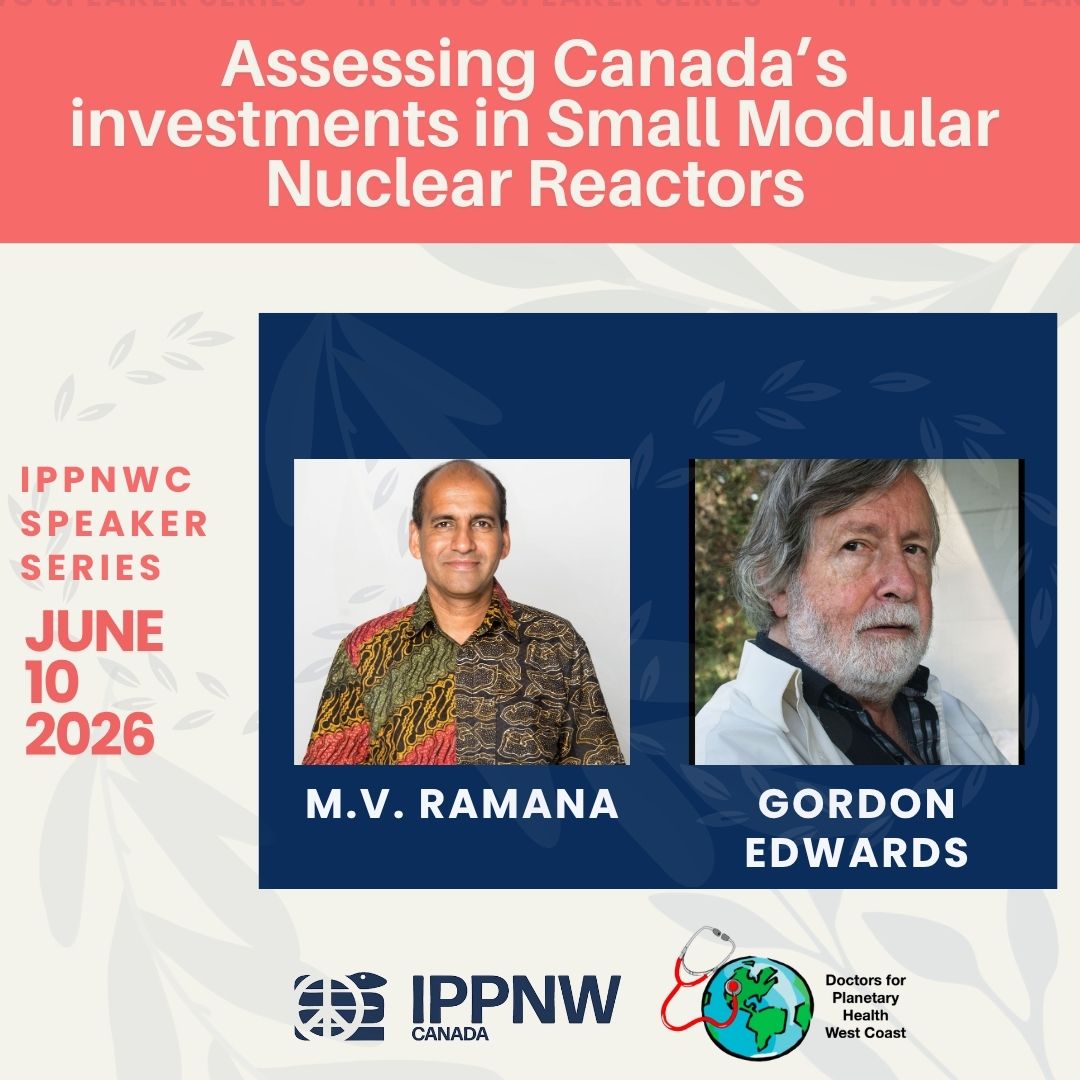
10 June – Assessing Canada’s Investments in Small Modular Nuclear Reactors – https://zoom.us/meeting/register/IiqHA5feRhaEBycOLNTJlA#/registration


Cuba Is Not a Failed State – It Is a Besieged State
PETITION: “Global Appeal to Endorse Palestinian Right of Return of Refugees”
To see nuclear-related stories in greater depth and intensity – go to https://nuclearinformation.wordpress.com
-
Archives
- June 2026 (89)
- May 2026 (306)
- April 2026 (356)
- March 2026 (251)
- February 2026 (268)
- January 2026 (308)
- December 2025 (358)
- November 2025 (359)
- October 2025 (376)
- September 2025 (257)
- August 2025 (319)
- July 2025 (230)
-
Categories
- 1
- 1 NUCLEAR ISSUES
- business and costs
- climate change
- culture and arts
- ENERGY
- environment
- health
- history
- indigenous issues
- Legal
- marketing of nuclear
- media
- opposition to nuclear
- PERSONAL STORIES
- politics
- politics international
- Religion and ethics
- safety
- secrets,lies and civil liberties
- spinbuster
- technology
- Uranium
- wastes
- weapons and war
- Women
- 2 WORLD
- ACTION
- AFRICA
- Atrocities
- AUSTRALIA
- Christina's notes
- Christina's themes
- culture and arts
- Events
- Fuk 2022
- Fuk 2023
- Fukushima 2017
- Fukushima 2018
- fukushima 2019
- Fukushima 2020
- Fukushima 2021
- general
- global warming
- Humour (God we need it)
- Nuclear
- RARE EARTHS
- Reference
- resources – print
- Resources -audiovicual
- Weekly Newsletter
- World
- World Nuclear
- YouTube
-
RSS
Entries RSS
Comments RSS
 nuclear-news