Questions about S.Korea-USA ‘ironclad’ commitment lead to impossible nuke solution
Korea Joong Ang Daily, BY MICHAEL LEE [lee.junhyuk@joongang.co.kr] 23Apr 23
“………… The Korea-U.S. alliance now stands at a crossroads as it marks its 70th anniversary………
South Korean politicians have made headlines in recent months by calling for an independent nuclear deterrent in a shift that experts say is driven by questions about the reliability of Washington’s “ironclad” commitment to defend Seoul.
These politicians include President Yoon Suk Yeol and Seoul Mayor Oh Se-hoon, who have publicly mused in recent months about the need for South Korea to bolster its security by means of developing an independent nuclear deterrent or persuading the United States to re-deploy tactical nuclear weapons on the peninsula that were withdrawn in 1991…………………….
To signal its commitment to defending Seoul, Washington has upped the frequency of U.S. strategic assets on rotation around the peninsula, especially as the North conducted a record 95 missile launches last year and announced the frontline deployment of tactical nuclear weapons and a new preemptive nuclear strike doctrine in April and September.
Seoul’s lack of say in how nuclear weapons would be used
But the United States has thus far ruled out re-deploying tactical nuclear weapons to the peninsula or setting up a nuclear sharing framework with South Korea similar to the one in place in some NATO states, such as Germany and Turkey, which participate in storing and planning the use of U.S. nuclear weapons in the absence of their own deterrent.
U.S. President Joe Biden in January shot down suggestions by Yoon that the two countries are planning joint nuclear weapons exercises, leaving South Korea without a codified say in the key question of how U.S. nuclear weapons could be employed in its defense.
It remains to be seen if decision-making on the use of nuclear weapons in a potential inter-Korean conflict will stay entirely in the hands of Washington.
According to a South Korean government official who spoke on condition of anonymity to the JoongAng Ilbo on March 27, “joint planning on how the U.S. extended deterrence and the nuclear umbrella will be maintained in potential scenarios involving an armed conflict” is on the agenda of Yoon’s summit with Biden later this month.
South Koreans worry about future U.S. administrations……………………………….
Failure of diplomacy with Pyongyang…………………………………………
International deadlock…………………………………….
Differing views of the role of the alliance regarding China
But all the experts agreed that the real test of Seoul’s alliance with Washington would come in the event of an armed conflict between the United States and China.
…………..Kim agreed that the prospect of a U.S.-China conflict over Taiwan was looming, if less publicly discussed, source of insecurity in Seoul’s alliance with Washington……… more https://koreajoongangdaily.joins.com/2023/04/24/national/defense/Korea-KoreaUS-alliance-nuclear-deterrence/20230424173040597.html
S.Korea’s Yoon to meet Biden as doubts grow over nuclear umbrella
By Hyonhee Shin, SEOUL, April 24 (Reuters) – South Korean President Yoon Suk Yeol set off on Monday for the for the United States and a summit with President Joe Biden at a time of rare questioning in South Korea of an alliance that has guaranteed its security for decades.
………….. as North Korea races ahead with the development of nuclear weapons and missiles to carry them, there are growing questions in South Korea about the relying on “extended deterrence”, in essence the American nuclear umbrella, and calls, even from some senior members of Yoon’s party, for South Korea to develop its own nuclear weapons.
A recent poll by the Asan Institute for Policy Studies showed that more than 54% of respondents believed the U.S. would not risk its safety to protect its Asian ally.
More than 64% supported South Korea developing its own nuclear weapons, with about 33% opposed.
Yoon has been pushing to boost South Korea’s say in operating the U.S. extended deterrence but exactly what that might entail has not been spelt out…………… https://www.reuters.com/world/skoreas-yoon-meet-biden-doubts-grow-over-nuclear-umbrella-2023-04-24/
The (South) Korean Nuclear Threat
13 APR 2023, By Dr Jeffrey Robertson, Australian Institute of International Affairs
South Korea is in the midst of a debate to secure nuclear weapons and few outside realise the seriousness and level of the debate. Few inside realise the question is much bigger than just South Korea, with great implications for the region, including Australia.
Debate on securing an independent nuclear weapons capacity once sat on the fringe of mainstream politics in Seoul. The extreme left and right, ex-military, religionists, and mavericks seeking attention were its champions. This is no longer the case. Today it is widely accepted, even common. Polls taken over the last year put public support in the 70-80 percent range. Securing nuclear weapons is now mainstream, viable, and if trends continue, even likely.
What makes South Korea want nuclear weapons? There’s a ready response from those pushing the agenda. North Korea’s missile and nuclear tests, Russia’s invasion of Ukraine, and concerns regarding a rising China. Each can readily be used to justify the pursuit of nuclear weapons. Yet, each are just squalls on the surface of the sea. Underneath, more powerful currents are pushing the pursuit of nuclear weapons: national pride, the desire to be more independent, and a healthy dose of domestic political opportunism.
National pride is a core contributor to the decision to pursue nuclear weapons. For both Koreas, there’s a keen sense of historical injustice marked by invasions from all sides, including occupation, and division. For South Koreans, there’s also a competitive streak that stretches from the individual to the national desire to be number one. There’s even speculation that the U.S. would be willing to allow Seoul to secure nuclear weapons in order for it to play a larger role in balancing China, placing South Korea at a new level of partnership with Washington. Among many, securing a nuclear weapons capacity provokes a certain element of national pride: more than just a middle power – a member of the nuclear weapons club.
The desire to be more independent is also an important contributing factor……………………………..
Domestic political opportunism is the icing on the cake…………………………… The current president, Yoon Suk-yeol, has made remarks supporting the acquisition of nuclear weapons, and the Mayor of Seoul – a position that is a stepping stone to the presidency – has also stated his support. Nuclear weapons will see multiple candidates jump on the bandwagon in the lead-up to the April 2024 legislative elections, and likely more than one candidate in the 2027 presidential elections.
Proliferation, from France to North Korea, is a story of national pride, independence, and political opportunism. South Korea is no different.
t is likely the consequences of this momentous decision to pursue an independent nuclear weapons capacity have not been fully thought through. ………………………………..
n the 1960s, Australia made the decision to forego nuclear weapons in the context of a global diplomatic and strategic understanding that proliferation could be controlled. Since that time, debates about Australia securing nuclear weapons have arisen, but they’ve never been mainstream. Debates in recent years have been more brain-storming and speculation than serious policy-specific programming. A South Korean decision to pursue nuclear weapons would substantially transform strategic outlooks across the region and lead to a more serious debate in Australia. The current nuclear submarine debate would look like a Sunday School picnic.
Jeffrey Robertson is an Associate Professor of Diplomatic Studies at Yonsei University and a Visiting Fellow at the Asia Institute, University of Melbourne. He researches the diplomatic practice and foreign policy of middle powers with a focus on the Korean Peninsula. He writes and updates research at https://junotane.com and on Twitter @junotane. https://www.internationalaffairs.org.au/australianoutlook/the-south-korean-nuclear-threat/
After leak of secret documents, South Korea to raise spying allegations with U.S.
https://www.washingtontimes.com/news/2023/apr/9/after-leak-secret-documents-south-korea-raise-spyi/
Leaked papers reportedly show that U.S. gathered signals intelligence from Seoul, a close all
South Korean officials said Sunday they will “come up with our response accordingly” after revelations that the U.S. reportedly spied on its close ally and gathered signals intelligence related to South Korea‘s internal debate over weapons sales to the U.S., and Seoul‘s fears that those weapons would ultimately end up in Ukraine.
Officials in Seoul said they’ll raise the alleged spying — which came to light as part of a major leak of sensitive documents over the weekend — with their U.S. counterparts.
For both countries, the timing is delicate. South Korean President Yoon Suk Yeol is scheduled to visit Washington and join President Biden for a state dinner at the White House on April 26.
We will review precedents and instances involving other countries, and come up with our response accordingly,” a South Korean presidential official said Sunday after being asked about the revelations, according to the country’s Yonhap News Agency.
The New York Times first reported the leak Friday.
South Korea to keep Fukushima seafood ban despite thaw with Japan
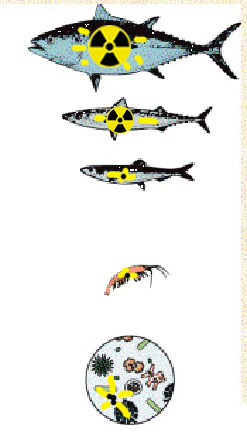
Aljazeera, 30 Mar 23
President Yoon Seok-yeol’s administration says ‘health and safety’ top priority despite improving Seoul-Tokyo ties.
South Korea has ruled out lifting a ban on Japanese seafood imports from the area around the Fukushima nuclear plant despite warming relations between Seoul and Tokyo.
“
“Seafood imports from near the tsunami-stricken plant will “never come into” South Korea due to health concerns related to leaked radiation, the administration of President Yoon Seok-yeol said on Thursday.
With regard to the import of Japanese seafood products, the government’s stance remains unchanged that the health and safety of the people are the top priority,” the presidential office said in a statement, South Korea’s Yonhap News Agency reported.
South Korea has banned Japanese seafood imports from eight prefectures, including Fukushima, since 2013 due to fears of radiation contamination from the meltdown of the plant following an earthquake and tsunami.
…………………………………………….. Apart from South Korea, mainland China and Hong Kong continue to block imports of food from the region, including all dairy products and fruits and vegetables. https://www.aljazeera.com/economy/2023/3/30/south-korea-to-keep-fukushima-seafood-ban-despite-thaw-with-japan
Sung-Hee Choi reports on U.S.-NATO military expansion in South Korea.
https://www.youtube.com/watch?v=ibHJHBi69CA&t=263s
Struggle continues in Gangjeong village on Jeju Island opposing U.S. Navy operations at the new naval base
Global Network Advisory Board member Sung-Hee Choi reports on the latest developments in South Korea as Washington expands military operations throughout the Asia-Pacific region.
‘We are a target’, she says.
This aggressive military expansion, labeled the ‘Asia Pivot’ by former Secretary of State Hillary Clinton, is creating major tensions in the region as the US prepares for war with China, North Korea and Russia.
During the interview Sung-Hee talks about the US Navy destroyer USS Rafael Peralta (DDG-115) that recently ported at the Navy base in Gangjeong village on Jeju. She shares a short video of a protest held at the base as the destroyer crew members were bussed to a hotel outside of the village.
The DDG 115 was built in Bath, Maine and during the ‘Christening’ of the warship in 2015 several members of the peace community from across the state were arrested for non-violently blocking the streets and entrances surrounding the shipyard as the public was invited to attend the ceremony. (Regular peace vigils are held at Bath Iron Works in Maine where these destroyers are built. Currently there are seven more under construction.)
There has long been a connection between Maine and the activists in Gangjeong village. Over the years eight Maine-based activists (as well as hundreds of other international peaceniks) traveled to the village to join protests against the Navy base construction that was forced on South Korea by Washington.
In another part of the interview Sung-Hee reports on recent (and on-going) US-NATO war games aimed at North Korea. She shares a second short video of protests in Seoul opposing these war games.
Near the end of the interview Sung-Hee talks about how the US Space Force has assigned personnel to South Korea and is drawing their nation into the larger US program of militarizing space.
South Korea coming for a slice of Africa’s emerging nuclear power market
As African countries firm up their nuclear power ambitions, South Korea’s Korea Hydro & Nuclear Power (KHNP), a subsidiary of state-owned Korea Electric Power Corporation is coming for a share of the continent’s emerging market.…… (Subscribers only) https://www.theafricareport.com/293984/south-korea-coming-for-a-slice-of-africas-emerging-nuclear-power-market/
Seoul aims to use strengthened US ties to expand nuclear plant exports
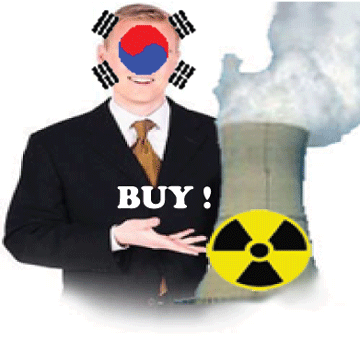
The Yoon Suk Yeol administration has scrapped the former Moon Jae-in administration’s nuclear phase-out policy based on the view that nuclear power is essential for the long-term sustainability of South Korea’s economy and its nuclear power industry
Settlement between Westinghouse and KEPCO is necessary for Washington-Seoul to expand alliance into nuclear energy
Korea Times, By Kim Yoo-chul 26 Feb 23,
Unlike the previous Moon Jae-in administration, President Yoon Suk Yeol and his foreign affairs team are clearly aiming to grow South Korea into a pivotal state given Seoul’s competitive standing to increase interoperability among a range of partners, specifically in the Indo-Pacific region.
This policy drive is backed by his administration’s concerted backing of Washington’s various protectionist industrial policies and regional security agenda items.
South Korea’s support of the Inflation Reduction Act (IRA), CHIPS and Science Act, the country’s participation in a U.S.-initiated Indo-Pacific Economic Framework (IPEF) and Chip 4 alliance are the examples signifying Seoul’s shift toward U.S. policies………………………….
Seoul’s backing of [U.S. President Joe] Biden’s signature industrial and regional security policies illustrates the fact that the country is prepared to withstand any economic and political costs by raising its profile as an advocate of major policy initiatives outlined and being managed by the U.S.’ partners and its like-minded allies,” a senior government official said in a telephone interview, adding that the majority of his comments do not necessarily reflect the official policy or position of South Korea.
Despite Seoul maintaining strategic cooperation with Beijing given its heavy reliance on the Chinese market _ China is the largest trading partner of South Korea _ and China’s huge political influence on North Korea, the Yoon administration’s apparent shift in position favoring the Biden administration’s moves to revive U.S. manufacturing, has so far been successful……………………………………..
Now, as the Biden administration has set its sights on boosting U.S. energy independence, the Yoon administration is hoping to expand its alliance with Washington into nuclear energy, in addition to batteries and chips, security analysts and company officials said.
SMRs emerge as option, legal troubles
The prime goal of the Inflation Reduction Act (IRA) is aimed at addressing rising inflation. However, the IRA also includes several tax incentives for clean energy technologies including advanced small modular reactors (SMRs). This means the IRA will possibly become a game changer for Washington’s participation in the new energy economy……………………
the IRA will have profound effects on South Korean nuclear energy and reactor companies, because they are in a better position to become one of the top beneficiaries of the act,” a trade ministry official said by telephone.
The Yoon Suk Yeol administration has scrapped the former Moon Jae-in administration’s nuclear phase-out policy based on the view that nuclear power is essential for the long-term sustainability of South Korea’s economy and its nuclear power industry. There are hopes that Yoon might reach a consensus with his U.S. counterpart on the sidelines of the Korean leader’s scheduled state-visit to the White House in late April to expand the Washington-Seoul alliance in the area of SMRs, industry sources told The Korea Times………….
U.S.-based Westinghouse and KEPCO, alongside KEPCO’s subsidiary Korea Hydro & Nuclear Power (KHNP), are involved in negotiations over their legal dispute after the U.S. company filed a lawsuit against KHNP in a U.S. federal court to block it from selling reactors to Poland. KEPCO and its subsidiary, KHNP, have been accused of infringing on Westinghouse’s intellectual property rights and Washington’s nuclear export controls.
“Reaching a settlement is highly likely before Yoon’s visit to the U.S. Westinghouse and KEPCO, along with KHNP, have until March 17 this year to address their legal issues. As nuclear technologies have also become a security issue, all parties involved in the legal dispute will have to find a compromise under the principle of reciprocity that won’t hurt national interests,” said Seok Kwang-hoon, a senior analyst at Energy Transition Korea. Westinghouse officials were not immediately available for comment.
“Westinghouse itself has no question about the significance of its commercial partnership with South Korea given the country’s supply chains for future AP1000 nuclear reactors. That means if the ongoing settlement negotiations fail, then this will impact Seoul’s efforts to win reactor deals from Poland and the Czech Republic, the countries categorized as South Korea’s target markets. It’s a plausible idea for South Korean companies to acquire Westinghouse’s property rights,” said Kim Sang-tae, a professor of nuclear engineering at Hanyang University in Seoul. https://www.koreatimes.co.kr/www/tech/2023/02/419_346075.html
North Korea test-fires four missiles to show ability to launch nuclear attack
Guardian, 24 Feb 23,
Strategic cruise missiles hit a target after travelling 2,000km, says state media, to demonstrate ‘war posture’ of nuclear force.
North Korea test-fired four strategic cruise missiles during a drill designed to demonstrate its ability to conduct a nuclear counterattack against hostile forces, its state media said.
The exercise on Thursday involved an apparently operational strategic cruise missile unit of the Korean people’s army, which fired the four Hwasal-2 missiles in the area of Kim Chaek city, North Hamgyong province, towards the sea off the east coast of the Korean peninsula, the news agency KCNA said. Other units conducted firepower training at hardened sites without live firing.
The four strategic cruise missiles hit a preset target after travelling the “2,000km-long [1,243-mile] elliptical and eight-shaped flight orbits for 10,208 seconds to 10,224 seconds”, the English-language report said.
The drill demonstrated “the war posture of the DPRK nuclear combat force bolstering up in every way its deadly nuclear counterattack capability against the hostile forces”, KCNA said…………………………. more https://www.theguardian.com/world/2023/feb/24/north-korea-test-fires-four-missiles-to-show-ability-to-launch-nuclear-attack
South Korea’s Nuclear Flirtations Highlight the Growing Risks of Allied Proliferation
Carnegie Endowment, ERIC BREWER, TOBY DALTON, FEBRUARY 13, 2023
South Korean President Yoon Suk-yeol’s January comments about his country possibly acquiring nuclear weapons adds to the mounting nuclear dangers in Asia. Though he subsequently walked back his statement, the underlying motives and risks remain that South Korea could one day decide to go nuclear.
Yoon’s nuclear threat also fueled a debate among security experts in Washington about how to respond. Many nonproliferation analysts highlighted the rarity of national leaders making public allusions to acquiring nuclear weapons and argued that the United States needs to remind South Korea of its commitments not to do so. Others highlighted the dangers of a rising tide of “nuclear populism” that is driving South Korea’s nuclear discourse. Conversely, some analysts argued that there is little the United States can do to prevent an inevitable South Korean weapon and that it is better to reduce U.S. extended deterrence commitments in conflicts that exceed vital U.S. interests. A few go even further and suggest that Washington should welcome or even facilitate a nuclear-armed Seoul.
This debate indicates a very unsettled dynamic that American and other policymakers cannot wish away or ignore. Yoon’s comments may simply be the leading edge of a trend in nuclear flirtations by U.S. allies and partners.
Since the dawn of the nuclear age, the United States has sought to stem the spread of nuclear weapons to adversaries and allies alike. This policy aims partly to preserve the U.S. nuclear advantage and to reduce the potential that nuclear weapons are used, which many experts judge increases if more states acquire them. Over the past few decades, the major proliferation fear has been about rogue actors: North Korea, Iraq, Iran, Syria, or potentially terrorist groups. The United States and the international community developed a policy tool kit to address these threats, including sanctions, technology denial, and even cyber and military attacks on nuclear facilities. Today, however, an increasing proliferation risk comes from U.S. allies and partners worried about their security and the credibility of U.S. commitments to their defense…………………………………….more https://carnegieendowment.org/publications/89015?utm_source=rss&utm_medium=rss
South Korea to sell 40 trilion won ($32.55 billion) nuclear power plant to Turkey.
South Korea has conveyed its preliminary proposal to Turkiye for
constructing a major nuclear power plant in Turkiye, local Turkish media
reports. According to the report, Korea Electric Power Corp. (KEPCO)
presented the proposal regarding the construction of four reactors capable
of providing 1,400 megawatts (MW) of electricity in the northern province
of Sinop. The project is forecast to be worth about 40 trillion won ($32.55
billion).
Middle East Monitor 2nd Feb 2023
The Disastrous Downsides of South Korea Building Nuclear Weapons
38 North BY: SIEGFRIED S. HECKER, JANUARY 20, 2023
Is South Korea Willing to Lose Its World-leading Nuclear Power Program to Build the Bomb?
In a wide-ranging interview on January 11, South Korean President Yoon Suk-yeol warned Pyongyang that if North Korea’s nuclear threat continues to advance, South Korea would consider building nuclear weapons of its own or ask the United States to redeploy them on the Korean Peninsula. Although President Yoon walked back these comments at the World Economic Forum in Davos, they were published in the South Korean press and reinforced by some Republic of Korea (ROK) defense analysts. Cheon Seong-whun said, “President Yoon’s comment could turn out to be a watershed moment in the history of South Korea’s national security.”
A South Korean decision to build its own bomb could, indeed, be a watershed. Threatening Pyongyang does little besides give it a stronger justification to enhance its own nuclear arsenal. I believe that such a move would trigger a tsunami that would wipe out Seoul’s remarkable economic miracle and destroy the soft power it has established around the world……………………….
The National Burden of a Nuclear Arsenal
Whereas President Yoon’s comment, “…we can have our own nuclear weapons pretty quickly, given our scientific and technological capabilities” is true, it doesn’t come close to capturing the national redirection, expense, and immense burden that Seoul would have to shoulder to field not just one bomb, but a nuclear arsenal to counter Pyongyang’s.
It is true that with its advanced technological capabilities, South Korea could probably build the bomb quickly. But a few bombs don’t make a nuclear deterrent, particularly if Seoul will have to go it alone. And let’s be clear, if Seoul were to go down this path, Washington could, and likely would, withdraw its nuclear umbrella. Building a nuclear arsenal to counter Pyongyang’s would require a major national redirection of its economy and diplomacy that would negatively affect nearly all facets of South Korean life for decades.
For nearly fifty years, South Korea has pursued a civilian nuclear energy program. It wisely focused on the middle of the fuel cycle—that is, reactor fuel fabrication, reactor construction and operation, and electricity production. It has built neither enrichment nor reprocessing facilities. Consequently, South Korea has no inventory of bomb-grade plutonium or uranium currently stockpiled. To build nuclear weapons, it would have to repurpose some of its civilian reactors to produce the plutonium bomb fuel (combined with using its laboratory-scale pyroprocessing facilities to extract plutonium) or construct a centrifuge facility to make highly enriched uranium. Either path would take at least two years to produce enough bomb fuel for even a few bombs. In the longer term, an effective nuclear deterrent would require new, dedicated nuclear weapons facilities, requiring substantial time and financial commitments.
The next step in building a bomb is weaponization—that is, designing, building and testing the nuclear devices. South Korea could surely master all scientific and engineering challenges of building a bomb—as it has demonstrated so convincingly in mastering civilian nuclear power generation. Some of the purely military aspects could be accomplished in concert with its conventional military technical complex. But to prove the design and fabrication, there would need to be nuclear testing, but where? Neighboring countries—China and Japan—would certainly object strongly, and there would undoubtedly be strong domestic opposition to tests from every South Korean province.
The nuclear warheads will also have to be integrated into delivery vehicles—such as ballistic missiles, cruise missiles, submarine-launched missiles or bombers. South Korea has all the basic building blocks, but it would still have substantial work to do to integrate the nuclear warheads into the delivery systems. Moreover, these requirements will continue to evolve as North Korea upgrades its offensive and defensive capabilities. The assembly, disassembly and fielding of nuclear devices pose serious safety and security risks and would have to be learned without help or advice from current nuclear powers. Seoul will also have to develop a command-and-control structure that is more stringent than anything it has done so far for its conventional military.
Another consequence of building a nuclear arsenal is that it will compete for resources—financial, personnel, and technical—with the South’s conventional military…………………………………………………………………………
Seoul Would Deal a Serious Blow to the Nonproliferation Regime
South Korea would be the first democratic country to withdraw from the NPT, dealing a blow to decades of US leadership in preventing nuclear proliferation. As serious as the North Korean nuclear threat is, I believe Washington would have no choice but to condemn and counter the South’s decision to build the bomb. The nonproliferation regime is a complex fabric of treaties, agreements, assurances, practices, and international organizations. North Korea’s bomb and Iran’s pursuit of the bomb have already stressed the regime. The negative impacts of Russia’s invasion of Ukraine are playing out now. South Korea should not join these countries in undermining the regime……………………………………………………………
Shooting Itself in the Foot
South Korea’s decision to build the bomb will be widely condemned…………………………..
The irony is that an indigenous nuclear arsenal will make South Korea less secure. It is likely to draw an escalatory response from the North, and Seoul may then have to face that threat on its own. ………………………………. more https://www.38north.org/2023/01/the-disastrous-downsides-of-south-korea-building-nuclear-weapons/
The US has a new nuclear proliferation problem: South Korea
The US has a new nuclear proliferation problem: South Korea. Last week,
Seoul officially put its nuclear option on the table, for the first time
since 1991. South Korean President Yoon Suk-yeol declared the country would
consider building its own arsenal of nuclear weapons if the threat it faces
from nuclear-armed North Korea continues to grow. It will.
Bulletin of Atomic Scientists 19th Jan 2023
South Korea keen to market nuclear technology to United Arab Emirates, and missile technology, too.

South Korea president, in UAE, backs return to nuclear power
MRO, ABU DHABI, United Arab Emirates (AP) 16 Jan 23, – South Korean President Yoon Suk Yeol said on Monday that his nation’s efforts to be carbon neutral by 2050 would rely in part on returning to nuclear power, even though his predecessor had tried to move away from atomic power.
Yoon’s comments at a summit in the United Arab Emirates, made in front of the country’s leader, Sheikh Mohammed bin Zayed Al Nahyan, served to underline Seoul’s commitment to nuclear power as it works to finish the Arabian Peninsula’s first atomic power plant. That could see South Korea in line for lucrative maintenance contracts and future projects in the UAE, which Seoul has grown closer to over recent years.
Yoon’s predecessor, President Moon Jae-in, sought to move South Korea away from nuclear power amid safety and graft scandals and Japan’s 2011 Fukushima nuclear disaster………..
Yoon traveled later Monday to the Barakah nuclear power plant in Abu Dhabi’s far western desert near Saudi Arabia with Sheikh Mohammed before a planned business summit back in the capital.
On his arrival back, Yoon told the summit that, using the Barakah plant as an example, he hoped the Emirates and South Korea could expand this “new model of cooperation” to include nuclear fuel, small reactors and other joint advances to third countries…….
Yoon’s embrace of nuclear power also provides a guarantee of sorts that South Korea remains invested in servicing the Barakah plant. France, also home to nuclear power plants and another Emirati business and military ally, has sought contracts here as well.
Already, Yoon’s four-day trip the UAE has seen a promise from Sheikh Mohammed to invest some $30 billion in the country. Heavyweight business leaders from Hyundai, Samsung and other companies also are taking part in the state visit.
On Sunday, Yoon also visited South Korean special forces stationed in the United Arab Emirates, a murky deployment that grew out of Seoul’s deal over the nuclear power plant. The Akh unit is comprised of some 150 troops………..
Already, the Emiratis have paid $3.5 billion for the Cheongung II, or “Heaven’s Bow,” surface-to-air missile system from South Korea …. https://www.mromagazine.com/2023/01/16/south-korea-president-in-uae-backs-return-to-nuclear-power/
Team Korea to bolster exports of nuclear energy systems
Korea Times, By Lee Kyung-min, 13 Jan 23,
State-run energy companies and private firms in the nuclear energy industry will join hands to advance exports of the stable and affordable power generation systems, the energy ministry said following a meeting attended by officials from the sector, Friday.
The Korea-developed APR1400, a nuclear reactor with a capacity of 1,400 megawatts, is increasingly recognized by its industry peers for its cost, quality and technological advantages.
Communication channels will be strengthened with the Czech Republic, the Philippines, the United Kingdom, and Turkey, to win orders to build nuclear reactors there. Also fortified will be government assistance to foster industries related to nuclear power generation equipment manufacturing, as well as facility safety and maintenance.
Second Vice Minister of Trade, Industry and Energy Park Il-jun presided over the meeting attended by members of Team Korea, a task force established to facilitate the export of the country’s nuclear reactors, at InterContinental Seoul COEX, southern Seoul.
In attendance were Korea Power Corp. (KEPCO) and its power subsidiary Korea Hydro & Nuclear Power (KHNP) as well as KEPCO affiliates…………….. https://www.koreatimes.co.kr/www/tech/2023/01/419_343553.html
1 This Month
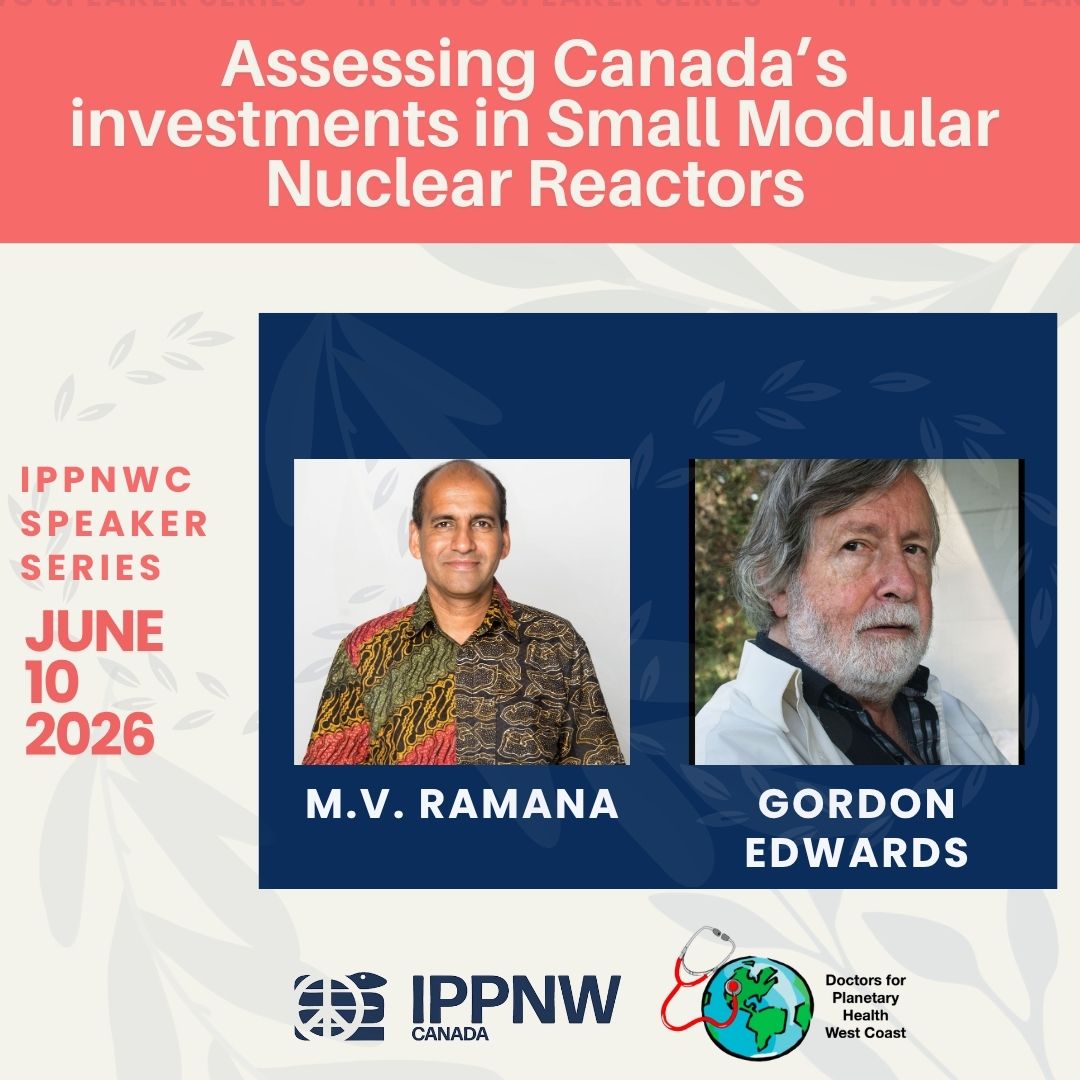
10 June – Assessing Canada’s Investments in Small Modular Nuclear Reactors – https://zoom.us/meeting/register/IiqHA5feRhaEBycOLNTJlA#/registration


Cuba Is Not a Failed State – It Is a Besieged State
PETITION: “Global Appeal to Endorse Palestinian Right of Return of Refugees”
To see nuclear-related stories in greater depth and intensity – go to https://nuclearinformation.wordpress.com
-
Archives
- June 2026 (89)
- May 2026 (306)
- April 2026 (356)
- March 2026 (251)
- February 2026 (268)
- January 2026 (308)
- December 2025 (358)
- November 2025 (359)
- October 2025 (376)
- September 2025 (257)
- August 2025 (319)
- July 2025 (230)
-
Categories
- 1
- 1 NUCLEAR ISSUES
- business and costs
- climate change
- culture and arts
- ENERGY
- environment
- health
- history
- indigenous issues
- Legal
- marketing of nuclear
- media
- opposition to nuclear
- PERSONAL STORIES
- politics
- politics international
- Religion and ethics
- safety
- secrets,lies and civil liberties
- spinbuster
- technology
- Uranium
- wastes
- weapons and war
- Women
- 2 WORLD
- ACTION
- AFRICA
- Atrocities
- AUSTRALIA
- Christina's notes
- Christina's themes
- culture and arts
- Events
- Fuk 2022
- Fuk 2023
- Fukushima 2017
- Fukushima 2018
- fukushima 2019
- Fukushima 2020
- Fukushima 2021
- general
- global warming
- Humour (God we need it)
- Nuclear
- RARE EARTHS
- Reference
- resources – print
- Resources -audiovicual
- Weekly Newsletter
- World
- World Nuclear
- YouTube
-
RSS
Entries RSS
Comments RSS
 nuclear-news