US Plans for China Blockade Continue Taking Shape

Brian Berletic. https://sovereignista.com/ November 11, 2025
What was once a theoretical discussion in U.S. military journals about blockading China’s oil supply is now steadily turning into a tangible, multi-layered strategy aimed at containing Beijing and preserving American global dominance.
In 2018, the US Naval War College Review published a paper titled, “A Maritime Oil Blockade Against China—Tactically Tempting But Strategically Flawed.” It was only one of many over the preceding years discussing the details of implementing a maritime blockade as part of a larger encirclement and containment strategy of China.
At first glance the paper looks like US policy thinking considered, then moved past the idea of blockading China. Instead, the paper merely listed a number of obstacles impeding such a strategy in 2018—obstacles that would need to be removed if such a strategy were to be viable in the near or intermediate future—and obstacles US policymakers have been removing ever since.
More contemporary papers published, including those among the pages of the US Naval Institute (here and here), have updated and refined not just an emerging strategy to theoretically confront and contain China, but a plan of action taking tangible shape.
Cold War Continuity of Agenda
Throughout the Cold War and ever since its conclusion, the US’ singular foreign policy objective has been to maintain American hegemony over the globe established at the end of the World Wars. A 1992 New York Times article titled “U.S. Strategy Plan Calls for Insuring no Rivals Develop” made it clear the US would actively prevent the emergence of any nation or groups of nations from contesting American primacy worldwide.
In recent years this has included preventing the reemergence of Russia as well as the rise of China. It also involves surrounding both nations with arcs of chaos and/or confrontation—either through the destruction of neighboring countries through political subversion, or the capture of these nations by the US and their transformation into battering rams to be used against both nations.
Ukraine is an extreme example of this policy in action. The US is also transforming both the Philippines and the Chinese island province of Taiwan into similar proxies vis-à-vis China.
Beyond this, the US seeks to prevent the majority of nations currently outside US dominion from joining with and contributing to the multipolar world order proposed by nations like Russia and China.
This strategy of coercion, destabilization, political capture, proxy war, and outright war has been used to target both Russia and China directly, their neighbors, and a growing list of nations far beyond their near abroad.
The US is demonstrating a clear, unwavering commitment to a multi-layered strategy of containment, coercion, and confrontation designed not just to prepare for conflict, but to make that conflict both inevitable and successful for the singular goal of maintaining global American hegemony
Strengths and Weaknesses of American Primacy
Enabling this strategy is America’s global-spanning military presence facilitated by its “alliance network.” This network of obedient client regimes both hosts US military forces and serves as an extension of US military, economic, and increasingly military-industrial power. US “allies” often pursue US geopolitical objectives at their own expense.
Again, an explicit example of this is Ukraine, which is locked in a proxy war with Russia, threatening its own self-preservation as a means of—as US policymakers described in a 2019 RAND Corporation paper—“extending Russia.”
While conflicts like that unfolding in Ukraine or the US-backed military build-up in the Philippines or on Taiwan has exposed a critical weakness of the United States—its lagging military industrial capacity vis-à-vis either Russia or China, let alone both nations—the US has demonstrated the ability to compensate through geopolitical agility the multipolar world is struggling to address.
This includes the ability of the US to mire a targeted nation in conflict in one location while moving resources across its global-spanning military-logistical networks toward pressure points in other locations, overextending the targeted nation and achieving success in at least one of the multiple pressure points targeted. The US successfully did this through its proxy war against Russia in Ukraine, which tied Russia up sufficiently for the US to finally succeed in the overthrow of the Syrian government, where Russian forces had previously thwarted US-sponsored proxy war and regime change.
It also includes the ability of the US to target partner or potential partner nations of Russia and China through economic, political, or even military means in ways Russia and China are unable to defend against—including through political subversion facilitated through America’s near monopoly over global information space.
These advantages the US still possesses also make potential maritime blockades very difficult for Russia and China to defend against.
Russian Energy Shipments as a Beta Test for Blockading China
France recently announced seizing a ship accused of being part of Russia’s “ghost” or “shadow” fleet—ships refusing to heed unilateral sanctions placed by the US and its client states on Russian energy shipments.
This was just one of several first steps toward what may materialize into a wider and more aggressive interdiction or blockade of Russian energy shipments. This may also be a beta test for implementing a long-desired maritime blockade on China…………………
Setting the Stage for a Blockade of China Has Already Begun
The 2018 US Naval War College Review paper lays out the realities of a potential blockade against China in 2018, noting the various opportunities and risks associated with such a strategy…………………………………………………………………………………………..
Since the paper was published, the US has pursued both continued preparations for a maritime blockade of China itself, as well as build up a number of regional proxies to wage war against China, as the US wages proxy war against Russia in Ukraine and, increasingly, through the rest of Europe……………………………………………………………………..
To understand Washington’s strategy toward China, one should not look to the political rhetoric of “retreat” or “homeland defense” in the Western Hemisphere, but rather to the tangible actions taking place across the Asia-Pacific and beyond—the meticulous encirclement of China’s periphery, the sustained attacks on its critical overland energy and trade links (BRI/CPEC), the calculated incapacitation of Russia as a potential energy supplier, and the establishment of local proxy forces (the Philippines, Japan, separatists on Taiwan) prepared to wage war.
Far from an abstract or “flawed” concept relegated to think-tank papers, the maritime oil blockade—or wider general blockade against China—is being incrementally prepared in real-time. By systematically removing the very obstacles noted in the 2018 Naval War College Review paper, the US is demonstrating a clear, unwavering commitment to a multi-layered strategy of containment, coercion, and confrontation designed not just to prepare for conflict, but to make that conflict both inevitable and successful for the singular goal of maintaining global American hegemony. https://sovereignista.com/2025/11/11/us-plans-for-china-blockade-continue-taking-shape/
Nuclear Tests and Their Legacy of Harms in Asia-Pacific
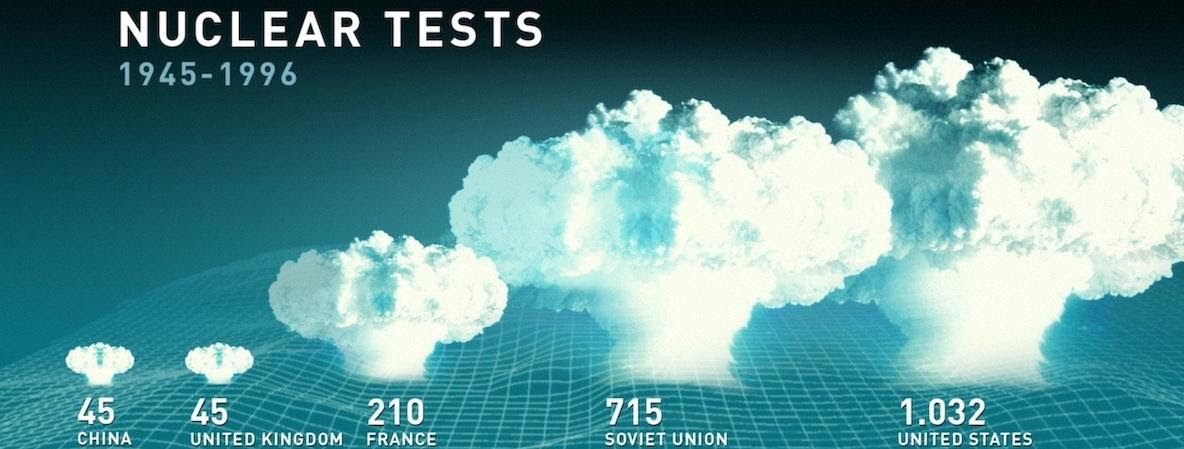
Far from being mere experiments, the detonations of nuclear weapons during such tests are best understood as a global catastrophe
Nuclear “tests” are best conceptualized as environmental disasters with consequences that are still felt today, particularly in Oceania and Central Asia.
By Maxime Polleri, November 05, 2025, https://thediplomat.com/2025/11/nuclear-tests-and-their-legacy-of-harms-in-asia-pacific/
Recently, U.S. President Donald Trump made headlines when he told the Pentagon to resume testing of U.S. nuclear weapons, citing his concerns that countries like China or Russia had supposedly conducted secret underground nuclear weapons tests and that the United States was falling behind. While the president’s post created much controversy around the nature of such tests, the U.S. energy secretary later explained that Trump’s planned tests would not include any actual nuclear explosions, but would encompass “system tests” to verify the state of American nuclear arsenals.
While the fact that the United States does not plan to detonate nuclear weapons is reassuring, the country, as well as China and Russia, have a long history of experimenting with real nuclear weapons to measure the performance of their devastating arsenals. Throughout the 20th century, nuclear testing has taken different forms, such as aboveground nuclear weapon tests, underwater tests, and underground tests. The 1963 Partial Test Ban Treaty prohibited atmospheric, outer space and underwater tests, while some nation states later declared moratoria on underground tests.
Nowadays, nuclear “tests” are done via computers or laboratory scale experiments and do not include actual explosions. However, understanding former nuclear experiments as “tests” is highly misleading, since each atomic and thermonuclear explosion throughout the 20th century released a tremendous quantity of long-lasting radioactive pollutants. Nuclear “tests” are best conceptualized as environmental disasters with long-lasting consequences that are still felt nowadays, particularly in Oceania, as well as Central Asia.
n the early 1950s, the United States began to test numerous nuclear weapons at the Nevada Test Site, releasing large quantities of radioactive fallout that afflicted its own population. People exposed to such fallout became known as “downwinders” and faced a plethora of health problems. Aware of the danger of bombing themselves, many nation states began to “export” nuclear testing to colonial areas, where vulnerable local populations faced the burden of contamination. Testing nuclear weapons in such locations was often a strategic choice, since many of the indigenous local population were already invisible from the public scrutiny or did not have the means to speak back to the dominant power that controlled their territories.
For instance, in March 1954, the U.S. tested a thermonuclear weapon, Castle Bravo, in the Bikini Atoll of the Marshall Islands, an archipelago in Micronesia that was turned into U.S. military bases after World War II. The nuclear fallout heavily impacted residents of the atolls, who were later forced to evacuate their beloved home. In fact, the scope of the fallout was so powerful that a Japanese fishing boat, the Daigo Fukuryū Maru, was contaminated by the test, resulting in cases of acute radiation syndrome for the fishing crew and the death of its radioman.
Much like the United States, France also conducted atmospheric and underwater tests in French Polynesia, resulting in the contamination of many atolls, like Moruroa. Nuclear tests in the Asia-Pacific region created a tremendous legacy of harms, which included the destruction of coral reefs and the death of marine ecosystems, but also forced displacements, contamination of the food chain, destruction of the social fabric, and health issues.
A similar pattern of exporting nuclear tests to vulnerable populations was also apparent in Central and East Asia. For instance, the Soviets repeatedly tested their nuclear weapons in the Semipalatinsk Test Site, a region that was historically dominated by ethnic Kazakhs. Nowadays, as anthropologist Magdalena Stawkowski highlights, Kazakhstan has inherited the remnants of one of the world’s most contaminated landscapes, dealing with contested health issues, precarious economy and marginalization.
Moreover, the People’s Republic of China has historically tested its nuclear weapons in the region of Lop Nur, leading Uyghurs, a Muslim minority ethnic group of northwestern China, to voice concerns about the long-term impact of residual radiation. In many of these instances, issues of national security – such as the health and well-being of local populations – were sacrificed for issues of international security.
Ironically, in each of these cases, humans tested nuclear weapons to prepare for a war that never came – globally contaminating ourselves in the process.
Far from being mere experiments, the detonations of nuclear weapons during such tests are best understood as a global catastrophe. And while a moratorium on nuclear testing ought to be applauded, many people are still grappling with the legacy of past nuclear tests.
The recent movie “A House of Dynamite” has brought up fresh fears of a nuclear war, as well as numerous discussions surrounding nuclear deterrence theories and mutually assured destruction. Instead of focusing our time, energy, and resources on hypothetical strikes that happen in science fiction or game theory, we should delve deeper into the poisoned heritages of the real explosions that occurred in the 20th century and prompt efforts to revitalize communities that are still suffering from its harm.
China denies nuclear testing, calls on US to maintain moratorium
US president claims China, Russia have carried out secret nuclear weapon tests as he seeks to justify return to testing.
Aljazeera, By Adam Hancock and News Agencies, 3 Nov 2025
China has denied it has been secretly testing nuclear weapons, refuting a claim from United States President Donald Trump.
Chinese Foreign Ministry spokeswoman Mao Ning insisted on Monday that Beijing has not broken the informal moratorium that has persisted for decades on the testing of nuclear arms.
Trump claimed on Sunday that, as well as China, Russia, North Korea and Pakistan are all engaged in secret underground testing. He made the comments as he pushes for the US to resume tests.
China has “abided by its commitment to suspend nuclear testing”, Mao said in response to questions regarding Trump’s allegation.
“As a responsible nuclear-weapon state, China is committed to peaceful development, follows a policy of ‘no first use’ of nuclear weapons and a nuclear strategy that focuses on self-defence, and adheres to its nuclear testing moratorium,” she said.
She also said that Beijing calls on the US to uphold the moratorium on nuclear testing, following Trump’s surprise announcement on Thursday that he had ordered the Department of Defense to “immediately” resume tests.
China hopes the US will “take concrete actions to safeguard the international nuclear disarmament and non-proliferation regime and maintain global strategic balance and stability”, Mao continued.
‘The only country that doesn’t test’
Trump made the claims about secret nuclear tests, without offering evidence, in a television interview with CBS.
“Russia’s testing, and China’s testing, but they don’t talk about it,” he said.
“I don’t want to be the only country that doesn’t test,” he continued, adding North Korea and Pakistan to the list of nations allegedly testing arsenals.
The US has not set off a nuclear explosion since 1992. No country other than North Korea is known to have conducted a nuclear detonation for decades. Russia and China report they have not carried out such tests since 1990 and 1996, respectively…………………..https://www.aljazeera.com/news/2025/11/3/china-denies-nuclear-testing-calls-on-us-to-maintain-moratorium
Trump’s bet on US nuclear buildout ropes in Japan

By TIMOTHY CAMA . 10/31/2025
President Donald Trump is eager for the United States to build large nuclear reactors again — with Japanese money.
Administration officials are pulling every lever they can. They’re using trade deals, pulling the China card, and even elbowing into the boardroom of the largest U.S.-based reactor maker: Westinghouse Energy.
“The world is wanting to go and
embrace nuclear power,” Energy Secretary Chris Wright said last week.
“And guess who’s building their reactors? The Russians or the Chinese.”
The president and his loquacious Commerce secretary, Howard Lutnick,
unveiled two agreements during their trip to Asia this week that, at least
on paper, would lead to a nuclear buildout in the United States and could
boost U.S. reactor sales overseas. — One is a $550 billion investment
package folded into a U.S.-Japan trade deal. Under that, Japan will help
finance $80 billion worth of U.S. nuclear projects. — Under a second
deal, the Trump administration and Pennsylvania-based Westinghouse
effectively became business partners this week.
If government investment
leads to profits at Westinghouse, the deal opens the door to American
taxpayers getting a large equity stake in the company.
Politico 31st Oct 2025, https://www.politico.com/newsletters/power-switch/2025/10/31/trumps-bet-on-us-nuclear-buildout-ropes-in-japan-00631233
Some 890 tons of Tepco nuclear fuel kept at Aomori reprocessing plant

Aomori – Nov 1, 2025,
https://www.japantimes.co.jp/news/2025/11/01/japan/tepco-nuclear-fuel-aomori-plant/
Some 890 tons of spent nuclear fuel from Tokyo Electric Power Company Holdings are being stored at Japan Nuclear Fuel’s reprocessing plant under construction in Aomori Prefecture — the first time a specific amount of nuclear fuel at the plant from an individual company has been confirmed.
Also kept at the nuclear fuel reprocessing plant in the village of Rokkasho are about 180 tons of fuel from Japan Atomic Power.
Both numbers were included in the Aomori Prefectural Government’s answer dated Oct. 7 to a questionnaire from a civic organization in the prefecture. The prefecture’s answer was based on explanations from Tepco and Japan Atomic Power
The plant keeps a total of 2,968 tons of used nuclear fuel.
The plant, planned to be completed in fiscal 2026, will start to extract plutonium from used nuclear fuel once it becomes operational.
Under the principle of the peaceful use of plutonium, the Japanese government has a policy of not possessing the radioactive material unless there are specific purposes for it such as use for uranium-plutonium mixed oxide (MOX) fuel, because it can be used to make nuclear weapons.
With none of the nuclear reactors at Tepco and Japan Atomic Power having restarted and neither companies having clear plans to start so-called pluthermal power generation using MOX fuel, there are concerns that a situation may occur in which Japan possesses plutonium without specific purposes.
In the prefecture’s answer to the questionnaire, Tepco said that it “plans to implement pluthermal power generation at one of its reactors based on a policy that it will consume plutonium definitely.”
The firm also said it assumes that some plutonium will be supplied to a nuclear plant of Electric Power Development, better known as J-Power, which is now being constructed in the town of Oma, Aomori Prefecture. The Oma plant is expected to use MOX fuel at all reactors.
“There is no change in our policy to use our plutonium with our responsibility,” Japan Atomic Power said.
Contacted by reporters, Tepco offered the same explanation as that given to the Aomori government.
Meanwhile, Japan Atomic Power said that it plans to conduct pluthermal power generation at the Tsuruga nuclear power station’s No. 2 reactor in Fukui Prefecture and at the Tokai nuclear plant in Ibaraki Prefecture, although when this would start has yet to be decided.
Japan’s seismic history and the Westinghouse deal.
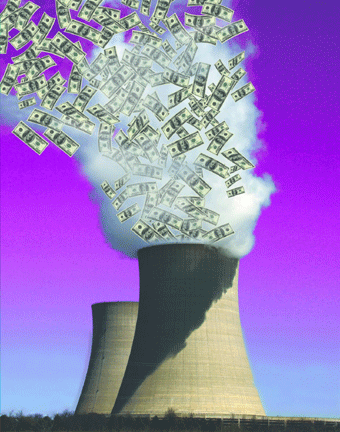
Letter to Ft.com : It almost feels impolite to point out some simple facts regarding your story “Westinghouse and US government strike $80bn nuclear reactor deal”. We are celebrating what Donald Trump hails as its “great friendship” between US and Japan, in addition to the election of our
first female prime minister, and an $80bn nuclear reactor deal — struck
by Washington and funded by Tokyo — all under the bright banner of what
appears to be a new era for our two countries.
Yet the simple fact remains,
whether we like it or not, that Japan is one of the most seismically active
countries in the world, which makes operating nuclear power plants far
riskier there than in the US.
The major nuclear players in both countries
— Westinghouse and Tokyo Electric Power (Tepco) — have faced bankruptcy or financial collapse. All publicly available, reliable data shows that solar power is significantly cheaper than new nuclear energy. Both our
countries’ leaders have issued similarly nationalistic statements on green
energy — President Trump even signed executive orders on “Unleashing
American Energy”, implicitly pointing to a common foe, namely China.
Warren Buffett once wrote that “more money has been stolen with the point
of a pen than at the point of a gun”. These nuclear power plant projects
will consume billions of dollars over the coming decades — long after
today’s leaders have left office. Future generations are being made the
“collateral” for decisions taken today.
FT 31st Oct 2025, https://www.ft.com/content/77769193-1cb0-4d8e-807a-e57936617de9
Donald Trump’s nuclear testing order sparks pushback from Russia, China and the UN.
SBS World News, 31 Oct 25
Trump said the Pentagon will immediately resume testing the US nuclear arsenal on an “equal basis” with other nuclear powers.
United States President Donald Trump has landed back in the US after a surprise directive to begin nuclear weapons testing that has raised the spectre of renewed superpower tensions.
Trump announced the order on social media, just as he was entering a summit with Chinese leader Xi Jinping in South Korea on Thursday.
It came days after Russia declared it had tested nuclear-capable, nuclear-powered cruise missiles and sea drones.
The blunt statement from Trump, who boasts frequently about being a “peace” president, left much unanswered.
Chiefly, it was unclear whether he meant testing weapons systems or actually conducting test explosions — something the US has not done since 1992.
“Because of other countries’ testing programs, I have instructed the Department of War to start testing our Nuclear Weapons on an equal basis,” Trump said in a post on his Truth Social platform.
Trump also said that the US has more nuclear weapons than any other country and that he had achieved this in his first term as president.
The Stockholm International Peace Research Institute said in its latest annual report that Russia possesses 5,489 nuclear warheads, compared to 5,177 for the United States and 600 for China.
In his post, Trump said — minutes ahead of his meeting with Xi — that China was expected to “be even within 5 years”, without substantiating the claim.
China, Russia express concerns
In response to Trump’s announcement, Chinese foreign ministry spokesperson Guo Jiakun urged the US to “earnestly abide” by a global nuclear testing ban.
Russia questioned whether Trump was well-informed about its activities.
“President Trump mentioned in his statement that other countries are engaged in testing nuclear weapons. Until now, we didn’t know that anyone was testing,” Kremlin spokesman Dmitry Peskov told reporters.
Russia’s recent weapons drills “cannot in any way be interpreted as a nuclear test”, Peskov said. “We hope that the information was conveyed correctly to President Trump.”
Peskov then implied that Russia would conduct its own live warhead tests if Trump did it first.
“If someone departs from the moratorium, Russia will act accordingly,” Peskov said.
Russian President Vladimir Putin has repeatedly said that if any country tests a nuclear weapon, then Russia will do so too.
Both countries observe a de facto moratorium on testing nuclear warheads, though Russia and the United States do regularly run military drills involving nuclear-capable systems.
The US has been a signatory since 1996 to the Comprehensive Nuclear-Test-Ban Treaty, which bans all atomic test explosions, whether for military or civilian purposes.
United Nations secretary-general António Guterres said through his deputy spokesman that “nuclear testing can never be permitted under any circumstances”………………………………………… https://www.sbs.com.au/news/article/trump-nuclear-testing-order-pushback/a21zghnl1
Donald Trump says South Korea can build nuclear-powered submarines in US
Donald Trump has said he has given South Korea permission to build
nuclear-powered submarines in Philadelphia, in an announcement that could rattle China as the US president prepares to meet Xi Jinping. “South
Korea will be building its Nuclear Powered Submarine in the Philadelphia
Shipyards, right here in the good ol’ U.S.A.,” Trump wrote on the Truth
Social platform on Thursday during his visit to the US ally and ahead of a
summit with President Xi. Trump said the US-South Korea military alliance
was “stronger than ever” so he had “given them approval to build a
Nuclear Powered Submarine”.
FT 30th Oct 2025,
https://www.ft.com/content/a6ee6741-5a66-41b1-80b6-5e01e4a823a5
US President Donald Trump says South Korea has approval to build nuclear-powered submarine
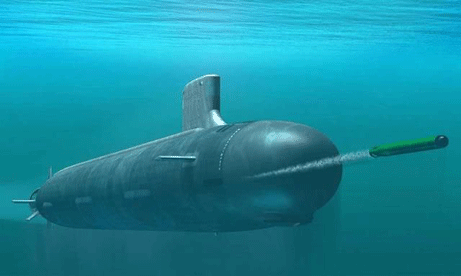
30 Oct 25, https://www.abc.net.au/news/2025-10-30/south-korea-permission-to-build-nuclear-submarines/105951210
In short:
Korea has been given permission by Donald Trump to build a nuclear powered submarine.
The permission is a dramatic move that would admit South Korea to a small group of nations that possess this type of vessel.
The US president met with leader on his ongoing tour of Asia.
US President Donald Trump says he has given South Korea approval to build a nuclear-powered submarine, a dramatic move that would admit Seoul to a small club of nations possessing such vessels.
Mr Trump, who has been meeting with South Korean President Lee Jae Myung and other regional leaders during his visit, also said Seoul had agreed to buy vast quantities of US oil and gas.
The submarine will be built in a Philadelphia shipyard, where South Korean firms have increased investment, Mr Trump wrote on social media.
Mr Trump and Mr Lee finalised details of a fraught trade deal at a summit in South Korea on Wednesday.
Mr Lee had also been seeking US permission for South Korea to reprocess nuclear fuel.
Nuclear restrictions easing?
Seoul is barred from reprocessing without US consent, under a pact between the countries.
“I have given them approval to build a nuclear-powered submarine, rather than the old-fashioned and far less nimble, diesel-powered submarines that they have now,” Mr Trump wrote on his Truth Social platform.
South Korea’s Industry Ministry said its officials had not been involved in any detailed discussions about building the submarines in Philadelphia.
While South Korea has a sophisticated shipbuilding industry, Mr Trump did not spell out where the propulsion technology would come from for a nuclear-powered submarine, which only a handful of countries possess.
The US has been working with Australia and Britain on a project for Australia to acquire nuclear-powered submarines, involving technology transfers from the United States.
The US has so far only shared that technology with Britain, back in the 1950s.
Mr Lee said when he met Mr Trump on Wednesday that allowing South Korea to build several nuclear-powered submarines equipped with conventional weapons would significantly reduce the burden on the US military.
He also asked for Mr Trump’s support to make substantial progress on South Korea being allowed to reprocess spent nuclear fuel, or on uranium enrichment.
This is not allowed under the nuclear agreement between the two countries, even though South Korea possesses nuclear reactors to generate power.
Approval raises questions
Mr Lee’s predecessors had wanted to build nuclear-powered submarines, but the US had opposed this idea for decades.
Daryl Kimball, executive director of the Washington-based Arms Control Association, said the issue of South Korea acquiring such submarines “raises all sorts of questions.”
“As with the AUKUS deal, (South Korea) is probably looking for nuclear propulsion services suitable for subs, including the fuel, from the US,” he said.
Mr Kimball said such submarines usually involved the use of highly-enriched uranium and would “require a very complex new regime of safeguards” by the International Atomic Energy Agency, which has a key role in implementing the Treaty on the Non-Proliferation of Nuclear Weapons (NPT).
“It remains technically and militarily unnecessary for South Korea to acquire the technology to extract weapons-usable plutonium from spent fuel or to acquire uranium enrichment capabilities, which can also be used to produce nuclear weapons,” he said.
“If the United States seeks to prevent the proliferation of nuclear weapons worldwide, the Trump administration should resist such overtures from allies as strongly as it works to deny adversary access to these dual-use technologies.”
Jenny Town, who heads 38 North, a Korea-focused research group in Washington, said it was inevitable that South Korean demands for US cooperation on nuclear issues would grow, given recent allegations about Russian technical cooperation to help nuclear-armed North Korea make progress towards acquiring nuclear-powered submarines.
Kim Dong-yup, a North Korea studies professor at Kyungnam University, said the Lee-Trump summit had formalised a “transaction scheme of security guarantees and economic contributions” for maintaining the extended deterrence and alliance in exchange for South Korea’s increased defence spending and nuclear-powered subs and US investments.
“In the end, this South Korea-US summit can be summarised in one word: the commercialisation of the alliance and the commodification of peace,” he said.
“The problem is that the balance of that deal was to maximise American interests rather than the autonomy of the Korean Peninsula.”
How North Korea outsmarts US intelligence agencies—and what they should do to adapt

Bulletin, By Lauren Cho | October 27, 2025
In the summer of 2017, the United States learned a humbling lesson. For years, American intelligence agencies had assessed that North Korea would need several more years—until 2020 or even 2022—before it could field a missile capable of striking the continental United States. Then, on July 4, Pyongyang launched an intercontinental ballistic missile that reached deep space and re-entered at high velocity.
By that September, North Korea had detonated a hydrogen bomb more than 15 times stronger than the weapon that destroyed Hiroshima. The Central Intelligence Agency and its sister agencies had anticipated that this day would eventually come. But their inability to predict the rapid pace of advancement remains one of the starkest intelligence failures of recent decades. It was not simply a matter of bad luck or faulty technical analysis. It was the result of two forces that intersect again and again in the history of US assessments of North Korea’s nuclear program: Pyongyang’s deliberate use of strategic deception, and the institutional inertia of the US intelligence community.
From the first suspicions of a clandestine weapons program in the 1980s through the collapse of the 1994 Agreed Framework, the inconclusive Six-Party Talks, and the dramatic summits of 2018–2019, a familiar cycle has emerged: Washington enters negotiations determined to halt or roll back North Korea’s program. North Korea agrees on paper but continues developing weapons in secret, denying violations and then unveiling new capabilities with a missile test or nuclear detonation. The agreement collapses, and Washington returns to the negotiating table with hopes of restoring momentum toward denuclearization.
Each turn of this cycle reveals a recurring blind spot. American analysts focus on observable indicators and static assumptions, while North Korea manipulates visual evidence and creates ambiguity to gain time.
Defining intelligence. To the public and political leaders, any unpleasant surprise is an intelligence failure. Scholars define it more precisely. Richard K. Betts, an American political scientist who is one of the leading thinkers on this issue, has argued that failures are not rare anomalies but inevitable outcomes of systemic, cognitive, and organizational barriers. Intelligence agencies must operate under conditions of uncertainty and ambiguous evidence. The greater the ambiguity, the greater the influence of preexisting beliefs.
In the case of North Korea, ambiguity is not simply an accident involving limited information. It is a condition carefully constructed by the regime.
Strategic deception—deliberate manipulation of information to influence an adversary’s perceptions—has become a central component of North Korea’s nuclear armament strategy. American intelligence agencies have repeatedly struggled to adapt to this strategy, because they are weighed down by bureaucratic norms that prize continuity over change and reactivity over anticipation.
Strategic deception is most effective when the target already wants to believe a certain narrative……………………………………………………………………………………………………………………………………………………………………..
Rethinking US intelligence on North Korea. What, then, is to be done? Absolute accuracy in intelligence is unattainable, but incremental improvement is possible. The patterns seen in previous US-North Korean relations suggest several possible reforms. First, intelligence organizations must build for adaptability, not stability. They must prioritize agility, encourage analysts to test assumptions, reward dissenting perspectives, and treat ambiguity as a strategic variable. Rather than forcing ambiguous evidence into existing frameworks, agencies must recognize that adversaries actively manipulate ambiguity.
Also, analysts need more than satellite imagery and signals intercepts. They need linguistic, cultural, and psychological expertise to decode the narratives that adversaries craft. Deception is a cognitive process, not just a technical one. Countering it requires cognitive tools. Intelligence that is accurate but ignored is still a failure.
Finally, agencies must improve communication with policy makers, making uncertainty clear and resisting the urge to present false precision. The goal is not to eliminate ambiguity but to help decision makers understand it and prepare for multiple scenarios……………………………. https://thebulletin.org/2025/10/how-north-korea-outsmarts-us-intelligence-agencies-and-what-they-should-do-to-adapt/?utm_source=ActiveCampaign&utm_medium=email&utm_content=How%20North%20Korea%20outsmarts%20US%20intelligence&utm_campaign=20251024%20Monday%20Newsletter%20%28Copy%29
Three workers at nuclear fuel reprocessing plant possibly exposed to internal radiation

AOMORI – https://www.japantimes.co.jp/news/2025/10/29/japan/society/nuclear-plant-internal-exposure/
Three workers may have suffered internal radiation exposure while working in a spent nuclear fuel reprocessing plant in Rokkasho, Aomori Prefecture, Japan Nuclear Fuel has said.
The men in their 20s to 40s are employees of a partner company sent to work in a controlled area of the plant, according to an announcement by Japan Nuclear Fuel on Monday.
Radiation was detected inside the nasal cavity of one of the three, who is in his 40s, prompting the company to check whether all three had been internally exposed.
None of them has reported any change in their health condition so far, Japan Nuclear Fuel said.
According to the company, the three were working to replace filters that remove radioactive materials from gas emitted from a tank, in a building used for denitration of uranium-plutonium mixed solution, when radiation levels rose at around 11:10 a.m. Friday.
After they left the area, as instructed, contamination was found on the outer surface of the filters of their protective masks.
When contamination is detected, workers are typically instructed to cover air intake filters with tape to prevent further contamination and replace the filter while holding their breath.
However, two of the three breathed without filters for up to three minutes, according to Japan Nuclear Fuel. It is not clear when that occurred.
The company is still investigating why the two men breathed without filters. It is also analyzing urine and stool samples from the three workers to determine whether internal radiation exposure occurred, and investigating the cause of the increase in radiation levels.
Stabilizing the U.S.-China Rivalry.

| RAND think tank, famous for its influential policy papers which have shaped US-Russian relations, has released an eye-opening call for a change of course on China. This comes by way of the latest Trump-China escalations which, it appears, have greatly worried insiders of the ‘deep state’ system; enough so that for once they have begun swallowing their pride and envisioning a calmer, more placating approach toward China so as not to upset the global status quo too much. |
Michael J. Mazarr, Amanda Kerrigan, Benjamin Lenain, Oct 14, 2025, https://www.rand.org/pubs/research_reports/RRA4107-1.html?utm_source=substack&utm_medium=email
The geopolitical rivalry between the United States and China embodies risks of outright military conflict, economic warfare, and political subversion, as well as the danger that tensions between the world’s two leading powers will destroy the potential for achieving a global consensus on such issues as climate and artificial intelligence. Moderating this rivalry therefore emerges as a critical goal, both for the United States and China and for the wider world.
The authors of this report propose that, even in the context of intense competition, it might be possible to find limited mechanisms of stabilization across several specific issue areas. They offer specific recommendations both for general stabilization of the rivalry and for three issue areas: Taiwan, the South China Sea, and competition in science and technology.
Key Findings
Several broad principles can guide efforts to stabilize intense rivalries
- Each side accepts that some degree of modus vivendi must necessarily be part of the relationship.
- Each side accepts the essential political legitimacy of the other.
- In specific issue areas, especially those disputed by the two sides, each side works to develop sets of shared rules, norms, institutions, and other tools that create lasting conditions of a stable modus vivendi within that domain over a specific period (such as three to five years).
- Each side practices restraint in the development of capabilities explicitly designed to undermine the deterrent and defensive capabilities of the other in ways that would create an existential risk to its homeland.
Each side accepts some essential list of characteristics of a shared vision of organizing principles for world politics that can provide at least a baseline for an agreed status quo.- There are mechanisms and institutions in place — from long-term personal ties to physical communication links to agreed norms and rules of engagement for crises and risky situations — that help provide a moderating or return-to-stable-equilibrium function.
Recommendations
Six broad-based initiatives can help moderate the intensity of the U.S.-China rivalry
- Clarify U.S. objectives in the rivalry with language that explicitly rejects absolute versions of victory and accepts the legitimacy of the Chinese Communist Party.
- Reestablish several trusted lines of communication between senior officials.
- Improve crisis-management practices, links, and agreements between the two sides.
- Seek specific new agreements — a combination of formal public accords and private understandings — to limit the U.S.-China cyber competition.
Declare mutual acceptance of strategic nuclear deterrence and a willingness to forswear technologies and doctrines that would place the other side’s nuclear deterrent at risk.- Seek modest cooperative ventures on issues of shared interest or humanitarian concern.
More-specific strategies should guide efforts to stabilize the issues of Taiwan, the South China Sea, and competition in science and technology
- Stabilizing the Taiwan issue should focus on creating the maximum incentive for Beijing to pursue gradual approaches toward unification.
- For the South China Sea, combine deterrence of military escalation with intensified multilateral and bilateral diplomacy to create a medium-term route to a peaceful solution as the default international process and expectation.
- In the U.S.-China science and technology rivalry, manage the worst aspects of emerging technologies for mutual security and the condition of the rivalry, and step back from the most extreme versions of efforts to undermine the other side’s progress.
Japan Weighs Nuclear-Powered Submarines Amid Regional Tensions
Rojoef Manuel. The Defense Post, October 10, 2025
Japan is considering developing nuclear-powered submarines after a state-backed panel formally recommended research into “next-generation propulsion” systems for the Japan Maritime Self-Defense Force (JMSDF).
Submitted to the Ministry of Defense last September, the proposal marks the first time an official advisory group has opened the door to studying nuclear propulsion, signaling a potential departure from Japan’s long-standing policy limiting military use of nuclear energy, Army Recognition reported……………………………………………………………………………………
Legal, Political Barriers Remain
Despite the new strategy, Japan’s postwar laws still make such development difficult. The Atomic Energy Basic Act restricts nuclear technology to peaceful uses, while Japan’s “Three Non-Nuclear Principles” forbid manufacturing, acquiring, or receiving nuclear weapons.
Chief Cabinet Secretary Yoshimasa Hayashi also reiterated last year that the East Asian government has “no plans to possess nuclear submarines” under its current law……………………………………………………………. https://thedefensepost.com/2025/10/10/japan-nuclear-submarines/
Nuclear victims hold global forum in Hiroshima
Oct 7, 2025, HIROSHIMA – https://www.japantimes.co.jp/news/2025/10/07/japan/nuclear-victims-forum-hiroshima/
Victims of atomic bombings and nuclear tests gathered in Hiroshima to discuss eliminating nuclear damage, 80 years after the atomic bombings of the city of Hiroshima and Nagasaki during World War II.
The global forum, hosted by two antinuclear organizations over two days through Monday, adopted a declaration stating that nuclear weapons and human beings cannot coexist and demanding that no further nuclear damage be caused on Earth. The event was held for the first time in 10 years.
On Sunday, hibakusha atomic bomb survivors from Hiroshima and South Korea shared their experiences, and participants debated on the issue of uranium mining. A social activist from Jaduguda in eastern India, where the country’s first uranium mine is located, explained regional divisions and health problems among residents, arguing that the chain of nuclear violence starts from uranium mining and that it is always the socially vulnerable who pay the price.
On Monday, participants discussed the U.S. hydrogen bomb tests at Bikini Atoll in the Marshall Islands and the nuclear accident at the Fukushima No. 1 nuclear power plant.
The forum also adopted a declaration calling for giving compensation and rights to nuclear victims, including access to accurate information and participation in policy decision-making processes.
For Haecho and the global citizens aboard the humanitarian flotillas’ safe return and for a Free Palestine!
Oct. 4th, 2025, From the Edges, Gangjeong Mission Station, Association of Gangjeong Villagers Against Jeju Naval Base, Gangjeong Peace Network, The Frontiers, People Making Jeju a Demilitarized Peace Island, St. Francis Peace Center, Civic Exercise Gathering, Jeju Green Party, Inter-Island Solidarity for Peace of the Sea, Hot Pink Dolphins
(Translated by Curry) https://savejejunow.org/for-haecho-and-the-global-citizens-aboard-the-humanitarian-flotillas-safe-return-and-for-a-free-palestine/
It has been over a week since Gangjeong peace activist Haecho set sail as a volunteer aboard the humanitarian flotilla ‘Thousand Madleens to Gaza’ bound for Gaza. The flotilla is expected to reach Gaza’s territorial waters within a week.
We earnestly pray that Haecho, who courageously joined this arduous journey, reaches the Gaza coast, delivers relief supplies like milk powder and food to the starving people, and returns safely. We also strongly demand that the United States and Israel immediately and unconditionally cease the massacre of Palestinians. We strongly urge the South Korean government to take all necessary measures to protect its citizen participating in the humanitarian flotilla.
Since October 7, 2023, Israel’s invasion, massacres, and systematic starvation policy have resulted in the death of approximately 67,000 Palestinians. According to a UN report, one in three people go hungry all day, and one in five households suffer from extreme food shortages. The majority of victims are women, children, and the elderly. The deaths of non-human beings living on Palestinian land and sea cannot be properly documented or quantified.
In July 2024, the International Court of Justice concluded that Israel’s long-term occupation, settlement, and annexation policies in Palestine violate international law. However, the United States has vetoed six UN resolutions calling for a ceasefire in the Gaza Strip. In late September, Trump and Netanyahu presented a ‘Gaza peace plan’ that did not explicitly mention the establishment of a Palestinian state as demanded by the international community. This peace plan effectively demands the unconditional surrender of Hamas, which in fact governs the Gaza Strip, and amounts to nothing less than a deceptive plan for the United States and Israel to permanently dominate Palestine.
The South Korean government remains among the 35 countries out of 193 that have yet to recognize Palestine as a state, despite 158 nations having done so. The South Korean Navy also faced condemnation for inviting Israeli naval commanders to the maritime weapons exhibition held in Busan this past May. Furthermore, Dana Petroleum, wholly owned by the Korean public corporation Korea National Oil Corporation (KNOC), secured exploration rights for gas fields in Palestinian waters illegally sold by Israel. Meanwhile, war weapons companies like Hanwha Systems, Hanwha Aerospace, and Korea Aerospace Industries (KAI) have formed partnerships with Israeli arms firms, complicit in Israel’s massacre of Palestinians. Hanwha Systems is constructing a space center in the Jeju mid-mountain area. Satellites produced there are likely to be used for military purposes, potentially becoming tools for further massacres. Samsung mobile phones distributed in the Middle East and North Africa, including Palestine, came pre-installed with Israeli spyware, victimizing masses of users. HD Hyundai excavators are used to demolish Palestinian homes and build illegal Jewish settlements. The recent proposal by the Korean National Assembly for a ‘Resolution Urging Israel to Halt the Massacre in the Gaza Strip’ at least lessens the shame for those living in a country that has stood with the perpetrator of genocide.
The ‘Thousand Madleens’ humanitarian flotilla (11 ships) and the ‘Sumud Flotilla’ (42 ships) bound for Gaza have carried hundreds of beautiful citizens from over 50 nations who set sail to stop the unrelenting slaughter and starvation, to turn fear into hope. Our friend Haecho is proudly one of them. In a letter before departure, Haecho wrote, “When I embrace my fear, and approach it with different attitudes, I learn that when we feel fear we can also experience a will toward beauty or hope.” This learning and awareness came from sailing the waters of Jeju Island and East Asia, meeting people along the way. “I carry this precious learning and support with me to Gaza,” she stated. She also shares that while participating in the ‘Grand March for Life and Peace’ in Jeju and the ‘Birds and People’s March’ on the mainland, she felt “On the road and on the sea, I feel my body becoming a conduit connecting here and there, me and you, past and future.” She believes that “through solidarity with the people of Jeju, Saemangeum, Okinawa, Taiwan, Hong Kong, Palestine, and countless others, we can break through the blockade imposed by capital and military might.” Having visited Gangjeong as a teen, Haecho, now in her twenties, participated in the 2023 Gong Pyeong Hae (共平海) voyage connecting Taiwan, Okinawa and Jeju, the 2024 voyage of the Golden Rule ship—a symbol of the anti-nuclear movement—and the planned 2025 Jeju-DMZ voyage. Gangjeong and Jeju were her training grounds for peace activism.
On the afternoon of October 3rd, Korean time, news broke that all 42 vessels of the Global Sumud Flotilla, including the Mikeno ship near the Gaza coast, had been attacked and seized by Israel. The ‘Thousand Madleens’ flotilla, to which Haecho belongs, is also expected to face raids and seizures, causing grave concern. Citizens worldwide are watching Gaza. Climate activist Greta Thunberg appealed for greater solidarity among citizens, saying, “Be human!” Upon hearing news of the attack on the Sumud flotilla, countless people took to the streets in protest across the globe—in Germany, France, Greece, Tunisia, Turkey, Italy, Argentina, Mexico, and elsewhere. Workers in Genoa, who had already blocked weapons shipments bound for Israel, sealed off railways and train stations. Spain, which had sent its own warship to protect the Gaza humanitarian flotilla, recalled its Israeli diplomat. The Colombian government ordered the expulsion of Israeli diplomats and terminated its free trade agreement with Israel. Turkish prosecutors stated their intent to investigate whether Israel violated international law by arresting over 20 Turkish citizens, specifically regarding deprivation of liberty and seizure of means of transport. The Malaysian Prime Minister held talks with foreign leaders, requesting support for the immediate release of Malaysian activists and firmly demanding an end to Israel’s atrocities and plunder against Palestine. Given the peril faced by its own citizen, one cannot help but compare and closely watch the South Korean government’s future response.
We stand with the countless global citizens who support the humanitarian flotillas to Gaza and demand an end to the U.S. and Israeli occupation and massacre of Palestine. We strongly demand the following from the South Korean government and corporations, the United States, and Israel:
One. Israel must lift the blockade on the Gaza Strip and immediately cease the seizure of civilian vessels! Ensure the safety of the international citizens who were aboard the hijacked humanitarian flotilla and release them all immediately and unconditionally!
One. Israel must guarantee that all relief supplies reach the people of Gaza, who are suffering extreme hardship due to prolonged massacres and starvation policies!
One. The South Korean government and National Assembly must take all measures to protect their citizen aboard the humanitarian flotilla and strongly protest Israel’s violations of international law and human rights abuses!
One. The South Korean government must recognize Palestine as an independent state and cease all cooperation with Israel, a criminal state that thoroughly disregards international law!
One. Korean government agencies and corporations such as Hanwha, Samsung, KAI, HD Hyundai, and Korea National Oil Corporation must immediately cease all cooperation with the Israeli government and companies which are complicit in the massacre of Palestinians!
One. The United States and Israel must withdraw their deceptive Gaza peace plan and cease all aggression and massacres!
Liberation of Gaza is liberation for all!
Liberation of Palestine is liberation for all!
Free Free Palestine!
1 This Month
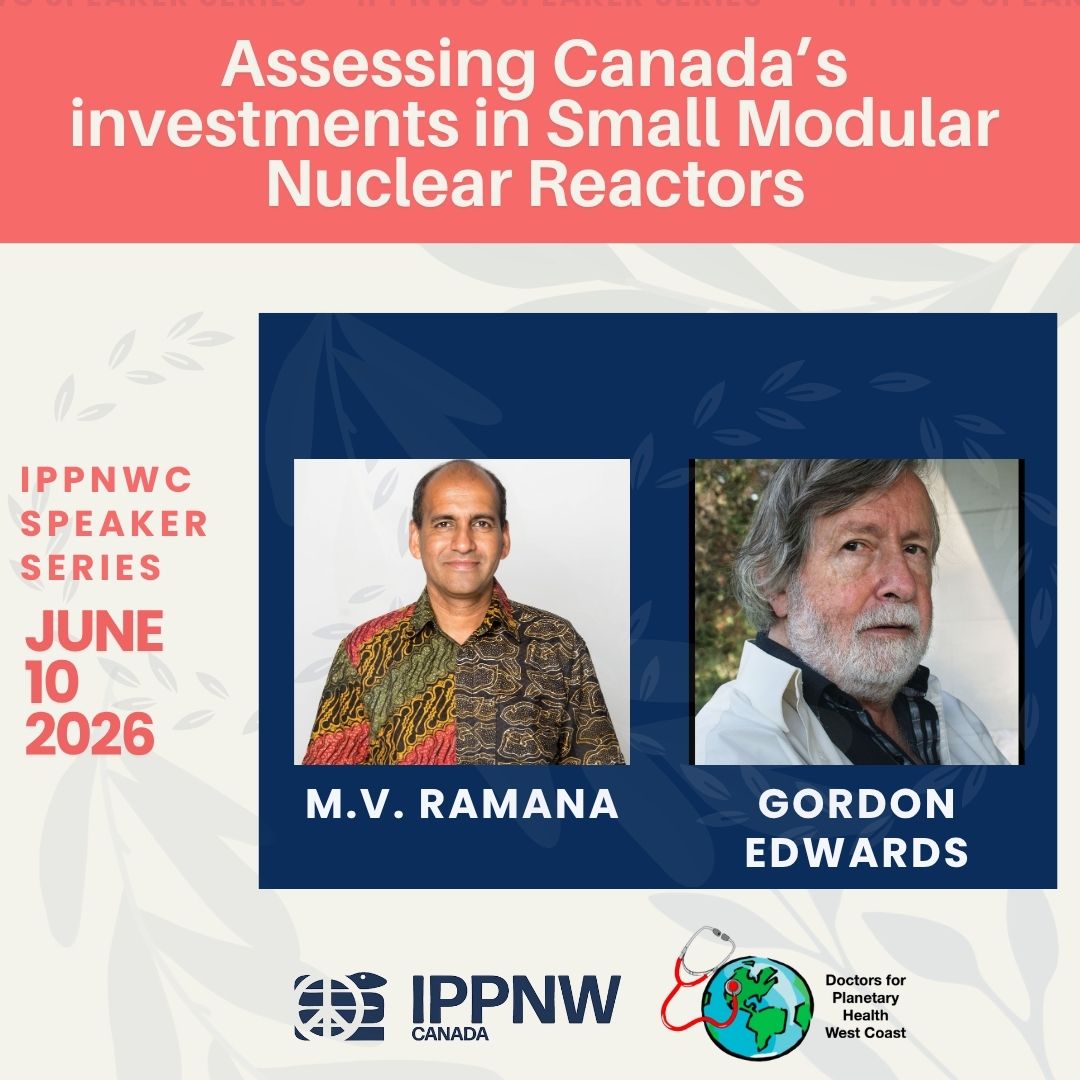
10 June – Assessing Canada’s Investments in Small Modular Nuclear Reactors – https://zoom.us/meeting/register/IiqHA5feRhaEBycOLNTJlA#/registration


Cuba Is Not a Failed State – It Is a Besieged State
PETITION: “Global Appeal to Endorse Palestinian Right of Return of Refugees”
To see nuclear-related stories in greater depth and intensity – go to https://nuclearinformation.wordpress.com
-
Archives
- June 2026 (89)
- May 2026 (306)
- April 2026 (356)
- March 2026 (251)
- February 2026 (268)
- January 2026 (308)
- December 2025 (358)
- November 2025 (359)
- October 2025 (376)
- September 2025 (257)
- August 2025 (319)
- July 2025 (230)
-
Categories
- 1
- 1 NUCLEAR ISSUES
- business and costs
- climate change
- culture and arts
- ENERGY
- environment
- health
- history
- indigenous issues
- Legal
- marketing of nuclear
- media
- opposition to nuclear
- PERSONAL STORIES
- politics
- politics international
- Religion and ethics
- safety
- secrets,lies and civil liberties
- spinbuster
- technology
- Uranium
- wastes
- weapons and war
- Women
- 2 WORLD
- ACTION
- AFRICA
- Atrocities
- AUSTRALIA
- Christina's notes
- Christina's themes
- culture and arts
- Events
- Fuk 2022
- Fuk 2023
- Fukushima 2017
- Fukushima 2018
- fukushima 2019
- Fukushima 2020
- Fukushima 2021
- general
- global warming
- Humour (God we need it)
- Nuclear
- RARE EARTHS
- Reference
- resources – print
- Resources -audiovicual
- Weekly Newsletter
- World
- World Nuclear
- YouTube
-
RSS
Entries RSS
Comments RSS
 nuclear-news