US to Own Nuclear Reactors Stemming From Japan’s $550 Billion Pledge.
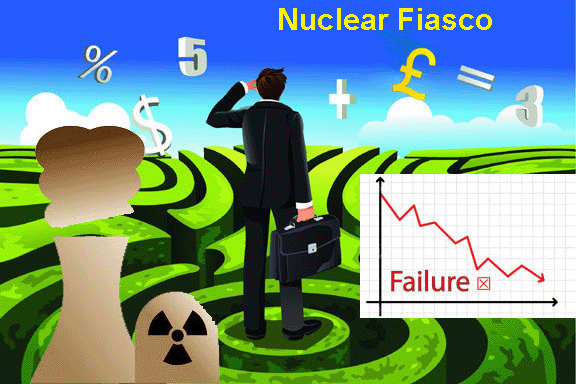
The US government plans to buy and own as many as 10 new, large nuclear reactors that could be paid for using Japan’s $550 billion funding
pledge, part of a push to meet surging demand for electricity. The new
details of the unusual arrangement were outlined Wednesday by Carl Coe, the Energy Department’s chief of staff, about the non-binding commitment made by Japan in October to fund $550 billion in US projects, including as much as $80 billion for the construction of new reactors made by Westinghouse Electric Co.
Bloomberg 19th Nov 2025,
https://www.bloomberg.com/news/articles/2025-11-19/us-to-own-reactors-stemming-from-japan-s-550-billion-pledge
Japan edges towards hosting nuclear weapons
The Strategist, 18 Nov 2025, Rajeswari Pillai Rajagopalan
It looks like Japan will finally cast aside its ban on hosting nuclear weapons—specifically, those of the United States.
Moving towards action she called for last year, Prime Minister Sanae Takaichi is reviewing the three principles that have kept Japan at arm’s length from nuclear weapons since 1967. The ban is the third of those principles, the other two holding that Japan must neither own nor produce nuclear weapons.
Japan is responding to what it perceives as worsening security dynamics in the region, surrounded as it is by three nuclear powers—China, Russia and North Korea—all of which are engaging in aggressive behaviour.
A 14 November Kyodo news report citing government sources noted that any changes in the three principles would constitute a major shift in Japan’s security policy in line with the ‘tough security environment.’ According to the report, the Japanese government sees the ban on placement of nuclear weapons within its territory as ‘weakening the effectiveness of the nuclear deterrence provided by its ally, the United States.’ This is particularly relevant as US considers developing a nuclear-armed sea-launched cruise missile, known as SLCM-N, to strengthened deterrence against China.
Japan’s third nuclear principle was a non-issue after the end of the Cold War, when the US withdrew its tactical nuclear weapons. But Tokyo may need to re-think its position if Washington seeks to field SLCM-Ns………………………..
Any shift in Japan’s non-nuclear principles could invite reactions from the region. China has already responded to news of Japan’s review. Chinese Ministry of Foreign Affairs spokesperson Lin Jian said on 14 November that China remained ‘seriously concerned over Japan’s military and security moves recently …. The Sanae Takaichi administration has been making ambiguous statements about the three non-nuclear principles and implying the possibility of quitting the principles.’ The spokesperson added that China was also concerned about the claims by senior Japanese officials that Japan ‘has not ruled out the possibility of possessing nuclear submarines.’……..https://www.aspistrategist.org.au/japan-edges-towards-hosting-nuclear-weapons/
Trump’s bet on US nuclear buildout ropes in Japan

By TIMOTHY CAMA . 10/31/2025
President Donald Trump is eager for the United States to build large nuclear reactors again — with Japanese money.
Administration officials are pulling every lever they can. They’re using trade deals, pulling the China card, and even elbowing into the boardroom of the largest U.S.-based reactor maker: Westinghouse Energy.
“The world is wanting to go and
embrace nuclear power,” Energy Secretary Chris Wright said last week.
“And guess who’s building their reactors? The Russians or the Chinese.”
The president and his loquacious Commerce secretary, Howard Lutnick,
unveiled two agreements during their trip to Asia this week that, at least
on paper, would lead to a nuclear buildout in the United States and could
boost U.S. reactor sales overseas. — One is a $550 billion investment
package folded into a U.S.-Japan trade deal. Under that, Japan will help
finance $80 billion worth of U.S. nuclear projects. — Under a second
deal, the Trump administration and Pennsylvania-based Westinghouse
effectively became business partners this week.
If government investment
leads to profits at Westinghouse, the deal opens the door to American
taxpayers getting a large equity stake in the company.
Politico 31st Oct 2025, https://www.politico.com/newsletters/power-switch/2025/10/31/trumps-bet-on-us-nuclear-buildout-ropes-in-japan-00631233
Some 890 tons of Tepco nuclear fuel kept at Aomori reprocessing plant

Aomori – Nov 1, 2025,
https://www.japantimes.co.jp/news/2025/11/01/japan/tepco-nuclear-fuel-aomori-plant/
Some 890 tons of spent nuclear fuel from Tokyo Electric Power Company Holdings are being stored at Japan Nuclear Fuel’s reprocessing plant under construction in Aomori Prefecture — the first time a specific amount of nuclear fuel at the plant from an individual company has been confirmed.
Also kept at the nuclear fuel reprocessing plant in the village of Rokkasho are about 180 tons of fuel from Japan Atomic Power.
Both numbers were included in the Aomori Prefectural Government’s answer dated Oct. 7 to a questionnaire from a civic organization in the prefecture. The prefecture’s answer was based on explanations from Tepco and Japan Atomic Power
The plant keeps a total of 2,968 tons of used nuclear fuel.
The plant, planned to be completed in fiscal 2026, will start to extract plutonium from used nuclear fuel once it becomes operational.
Under the principle of the peaceful use of plutonium, the Japanese government has a policy of not possessing the radioactive material unless there are specific purposes for it such as use for uranium-plutonium mixed oxide (MOX) fuel, because it can be used to make nuclear weapons.
With none of the nuclear reactors at Tepco and Japan Atomic Power having restarted and neither companies having clear plans to start so-called pluthermal power generation using MOX fuel, there are concerns that a situation may occur in which Japan possesses plutonium without specific purposes.
In the prefecture’s answer to the questionnaire, Tepco said that it “plans to implement pluthermal power generation at one of its reactors based on a policy that it will consume plutonium definitely.”
The firm also said it assumes that some plutonium will be supplied to a nuclear plant of Electric Power Development, better known as J-Power, which is now being constructed in the town of Oma, Aomori Prefecture. The Oma plant is expected to use MOX fuel at all reactors.
“There is no change in our policy to use our plutonium with our responsibility,” Japan Atomic Power said.
Contacted by reporters, Tepco offered the same explanation as that given to the Aomori government.
Meanwhile, Japan Atomic Power said that it plans to conduct pluthermal power generation at the Tsuruga nuclear power station’s No. 2 reactor in Fukui Prefecture and at the Tokai nuclear plant in Ibaraki Prefecture, although when this would start has yet to be decided.
Japan’s seismic history and the Westinghouse deal.
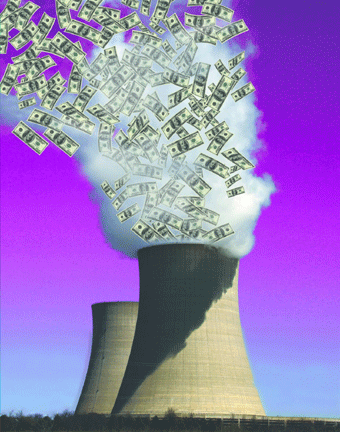
Letter to Ft.com : It almost feels impolite to point out some simple facts regarding your story “Westinghouse and US government strike $80bn nuclear reactor deal”. We are celebrating what Donald Trump hails as its “great friendship” between US and Japan, in addition to the election of our
first female prime minister, and an $80bn nuclear reactor deal — struck
by Washington and funded by Tokyo — all under the bright banner of what
appears to be a new era for our two countries.
Yet the simple fact remains,
whether we like it or not, that Japan is one of the most seismically active
countries in the world, which makes operating nuclear power plants far
riskier there than in the US.
The major nuclear players in both countries
— Westinghouse and Tokyo Electric Power (Tepco) — have faced bankruptcy or financial collapse. All publicly available, reliable data shows that solar power is significantly cheaper than new nuclear energy. Both our
countries’ leaders have issued similarly nationalistic statements on green
energy — President Trump even signed executive orders on “Unleashing
American Energy”, implicitly pointing to a common foe, namely China.
Warren Buffett once wrote that “more money has been stolen with the point
of a pen than at the point of a gun”. These nuclear power plant projects
will consume billions of dollars over the coming decades — long after
today’s leaders have left office. Future generations are being made the
“collateral” for decisions taken today.
FT 31st Oct 2025, https://www.ft.com/content/77769193-1cb0-4d8e-807a-e57936617de9
Three workers at nuclear fuel reprocessing plant possibly exposed to internal radiation

AOMORI – https://www.japantimes.co.jp/news/2025/10/29/japan/society/nuclear-plant-internal-exposure/
Three workers may have suffered internal radiation exposure while working in a spent nuclear fuel reprocessing plant in Rokkasho, Aomori Prefecture, Japan Nuclear Fuel has said.
The men in their 20s to 40s are employees of a partner company sent to work in a controlled area of the plant, according to an announcement by Japan Nuclear Fuel on Monday.
Radiation was detected inside the nasal cavity of one of the three, who is in his 40s, prompting the company to check whether all three had been internally exposed.
None of them has reported any change in their health condition so far, Japan Nuclear Fuel said.
According to the company, the three were working to replace filters that remove radioactive materials from gas emitted from a tank, in a building used for denitration of uranium-plutonium mixed solution, when radiation levels rose at around 11:10 a.m. Friday.
After they left the area, as instructed, contamination was found on the outer surface of the filters of their protective masks.
When contamination is detected, workers are typically instructed to cover air intake filters with tape to prevent further contamination and replace the filter while holding their breath.
However, two of the three breathed without filters for up to three minutes, according to Japan Nuclear Fuel. It is not clear when that occurred.
The company is still investigating why the two men breathed without filters. It is also analyzing urine and stool samples from the three workers to determine whether internal radiation exposure occurred, and investigating the cause of the increase in radiation levels.
Japan Weighs Nuclear-Powered Submarines Amid Regional Tensions
Rojoef Manuel. The Defense Post, October 10, 2025
Japan is considering developing nuclear-powered submarines after a state-backed panel formally recommended research into “next-generation propulsion” systems for the Japan Maritime Self-Defense Force (JMSDF).
Submitted to the Ministry of Defense last September, the proposal marks the first time an official advisory group has opened the door to studying nuclear propulsion, signaling a potential departure from Japan’s long-standing policy limiting military use of nuclear energy, Army Recognition reported……………………………………………………………………………………
Legal, Political Barriers Remain
Despite the new strategy, Japan’s postwar laws still make such development difficult. The Atomic Energy Basic Act restricts nuclear technology to peaceful uses, while Japan’s “Three Non-Nuclear Principles” forbid manufacturing, acquiring, or receiving nuclear weapons.
Chief Cabinet Secretary Yoshimasa Hayashi also reiterated last year that the East Asian government has “no plans to possess nuclear submarines” under its current law……………………………………………………………. https://thedefensepost.com/2025/10/10/japan-nuclear-submarines/
Nuclear victims hold global forum in Hiroshima
Oct 7, 2025, HIROSHIMA – https://www.japantimes.co.jp/news/2025/10/07/japan/nuclear-victims-forum-hiroshima/
Victims of atomic bombings and nuclear tests gathered in Hiroshima to discuss eliminating nuclear damage, 80 years after the atomic bombings of the city of Hiroshima and Nagasaki during World War II.
The global forum, hosted by two antinuclear organizations over two days through Monday, adopted a declaration stating that nuclear weapons and human beings cannot coexist and demanding that no further nuclear damage be caused on Earth. The event was held for the first time in 10 years.
On Sunday, hibakusha atomic bomb survivors from Hiroshima and South Korea shared their experiences, and participants debated on the issue of uranium mining. A social activist from Jaduguda in eastern India, where the country’s first uranium mine is located, explained regional divisions and health problems among residents, arguing that the chain of nuclear violence starts from uranium mining and that it is always the socially vulnerable who pay the price.
On Monday, participants discussed the U.S. hydrogen bomb tests at Bikini Atoll in the Marshall Islands and the nuclear accident at the Fukushima No. 1 nuclear power plant.
The forum also adopted a declaration calling for giving compensation and rights to nuclear victims, including access to accurate information and participation in policy decision-making processes.
Leah McGrath Goodman, Tony Blair and issues on torture (with added radiation)


Published by arclight2011- date 15 Sep 2012 -nuclear-news.net
[…]
Accusations: Despite the mockery of the film Borat, leaked U.S. cables suggest the country was undemocratic and used torture in detention
Other dignitaries at the meeting included former Italian Prime Minister and ex-EU Commission President
Romano Prodi. Mr Mittal’s employees in Kazakhstan have accused him of ‘slave labour’ conditions after a series of coal mining accidents between 2004 and 2007 which led to 91 deaths.
[…]
Last week a senior adviser to the Kazakh president said that Mr Blair had opened an office in the capital.Presidential adviser Yermukhamet Yertysbayev said: ‘A large working group is here and, to my knowledge, it has already opened Tony Blair’s permanent office in Astana.’
It was reported last week that Mr Blair had secured an £8 million deal to clean up the image of Kazakhstan.
[…]
Mr Blair also visited Kazakhstan in 2008, and in 2003 Lord Levy went there to help UK firms win contracts.
[…]
Max Keiser talks to investigative journalist and author, Leah McGrath Goodman about her being banned from the UK for reporting on the Jersey sex and murder scandal. They discuss the $5 billion per square mile in laundered money that means Jersey rises, while Switzerland sinks.
http://www.youtube.com/watch?v=gA_aVZrR5NI&feature=player_detailpage#t=749s
And as well as protecting the guilty child sex/torturers/murderers of the island of Jersey I believe that they are also protecting the tax dodgers from any association.. its just good PR!
FORMER Prime Minister Tony Blair was reportedly involved in helping to keep alive the world’s biggest takeover by Jersey-incorporated commodities trader Glencore of mining company Xstrata.
11/September/2012
[…]
Mr Blair was said to have attended a meeting at Claridge’s Hotel in London towards the end of last week which led to the Qatari Sovereign wealth fund supporting a final revised bid from Glencore for its shareholding. Continue reading
Fukushima recovery plagued with setbacks

Perhaps the most significant stumbling block, acknowledged by Tepco on July 29, is the “unprecedented” technical complexity of locating, contacting, removing, and containerizing 880 tonnes of highly radioactive melted reactor fuel still smoldering at the bottom of the three devastated reactors.
In 14 years’ time, engineers managed to design, build, test, and rebuild a one-of-a-kind robot that removed less than one-gram of the waste fuel from reactor No. 2 last year. That November “breakthrough” was three years behind schedule, “and some experts estimate that the decommissioning work could take more than a century,” CBS News and Mainichi Japan reported.
Melted fuel, radioactive soil and a struggling fishing industry are some of the lingering legacies of the Fukushima nuclear disaster, writes John LaForge
Japan is one of the most earthquake-prone areas in the world, and the regular quakes raise traumatic memories of the March 11, 2011, record-breaker that left 19,000 dead and smashed the six-reactor Fukushima-Daiichi site. This summer, a magnitude 5.5 quake struck just off Japan’s southeast Tokara coast on July 3; a mag. 4.2 quake hit east of Iwaki, in Fukushima Prefecture July 12; and a mag. 4.1 quake shook the same area July 25.
In late July, a mighty 8.8-magnitude quake struck Avacha Bay in Russia’s Far East, triggering tsunami warnings and evacuations across the entire Pacific Rim. The U.S. Geological Survey said the earthquake was one of the strongest ever recorded.
The owner/operator of the wrecked reactor complex, Tokyo Electric Power Co., evacuated its entire staff of 4,000 in response to warnings of a possible nine-foot tsunami, after first halting its pumping of radioactive wastewater into the Pacific.
Elsewhere in Japan, over 1.9 million people were urged to evacuate the eastern seaboard, and a 4-foot tsunami wave did strike north of Fukushima at Iwate Prefecture, some 1,090 miles from Avacha Bay, site of the major Russian earthquake.
China partially lifts ban on Japanese seafood imports
China “conditionally resumed” the importation of Japanese seafood products on June 30 ⸺ except from the 10 prefectures closest to the Fukushima disaster site ⸺ after conducting water sample inspections off the coast of the site. Beijing had banned all such imports from Japan as a protest and precaution, following the 2023 start of deliberately discharging large volumes of radioactively contaminated cooling water into the Pacific Ocean.
The 2023 ban was imposed to “comprehensively prevent the food safety risks of radioactive contamination caused by the discharge of nuclear wastewater from Fukushima into the sea,” China’s General Administration of Customs said then. Shocked by Japan’s action, Beijing’s Foreign Ministry added that the discharge was an “extremely selfish and irresponsible act,” which would “push the risks onto the whole world (and) pass on the pain to future generations of human beings,” the Agence France-Presse reported.
Chinese customs officials said June 30 the seafood import ban would continue for ten prefectures, namely Fukushima and its nine closest neighboring states. Products from other regions will need health certificates, radioactive substance detection qualification certificates, and production area certificates issued by the Japanese government for Chinese customs declarations, the government said.
Relatedly, Hong Kong announced that it will maintain its ban on Japanese seafood, sea salt, and seaweed imports from the same ten prefectures still targeted by mainland China ⎯ Fukushima, Gunma, Tochigi, Ibaraki, Miyagi, Niigata, Nagano, Saitama, Tokyo, and Chiba ⎯ citing ongoing concerns about the risks associated with the discharge of radioactive wastewater.
Tepco Lost $6 Billion as Meltdown Recovery Falters
Tokyo Electric Power Co. Holdings corporation (Tepco) lost $5.8 billion (903 billion yen) between April and June this year as the owner and operator of the triple reactor meltdown at Fukushima became overrun with the costs of inventing, designing, building, and testing robotic machines with which to remotely extract the ferociously radioactive melted reactor fuel from deep inside the earth-quake and tsunami-wrecked reactors.
There are a total of over 880 metric tonnes of “corium” or melted and rubblized uranium and plutonium fuel in three reactors that Tepco claims it will extract. Nikkei-Asia reported August 1 that Tepco says it has $4.7 billion “earmarked for future demolition work” (700 billion yen), which doesn’t even cover this spring’s one-quarter loss. Tepco has said that its preparations for the extraction are “expected to take 12 to 15 years.”
The quarterly financial loss makes a mockery of announced plans by the government and TEPCO to fully complete decommissioning of the rubbished reactors by 2051.
Two out of 14-to-20-million tonnes of radioactive soil buried on PM’s office grounds, in “safety” parody
In a surreal display of political slapstick on July 19th, the office of Japan’s Prime Minister Shigeru Ishiba buried on his office’s garden grounds two cubic meters of radioactive soil scraped up during Fukushima clean-up operations (in which some 14-to-20 million cubic meters of topsoil and debris were collected) ⎯ “to show it is safe to reuse.”
Nippon Television reported that “The radioactive cesium concentration in the soil being buried is 6,400 Becquerels per kilogram” (Bq/kg). “Becquerels” are a standard measuring unit of radioactivity. The 6,400 is below the legally permitted limit of 8,000 Bq/Kg.
The radiation emitted by the soil originates from cesium-137, which was released in large amounts by Fukushima’s melting and exploding reactors and subsequently fell to the ground as fallout. Cesium fallout continues to contaminate vast areas of forest and farmland in the region.
The millions of tons of collected soil now in storage are being tested and sorted to identify material with cesium at 8,000 Bq/Kg or less. Several million tons of it may then be used as fill in construction projects, road-building, and railway embankments all around Japan. Asphalt, farm soil, “or layers of other materials should be used to seal in the radioactivity,” Akira Asakawa, an Environment Ministry official with the soil project, told the Agence France-Presse.
The PM’s demonstration plot is the first “reuse” of the poisoned waste, while experiments elsewhere have been halted due to public protest. The PM’s contaminated dirt was covered up with about eight inches of normal soil to provide some radiation shielding.
Any radiation exposure is unsafe, but adverse effects like radiation sickness, immune disorders, or cancers caused by contact with the radioactive soil would take years or decades to appear, owing to the latency period between radiation exposure and the onset of induced health problems. The joke seems to be that since Prime Minister Ishiba hasn’t dropped dead after walking by, low-dose exposure must be harmless.
Readers may remember a very similar high-level comedy sketch performed by former President Barack Obama, who traveled to Flint, Michigan in May 2016. Drinking water supplies there had been contaminated with lead and to calm the public uproar, Obama sat before the cameras and theatrically downed a glass of water. The straight-faced routine was proof positive and rock-solid confirmation beyond a doubt that Flint’s tap water was safe to drink. Bottom’s up!
Fukushima Disaster Response to Last Eons
Countless dilemmas and setbacks have plagued the now 14-year-long emergency response to the triple reactor meltdown and widespread radiation releases that began on March 11, 2011, at Fukushima on Japan’s northeast coast.
Perhaps the most significant stumbling block, acknowledged by Tepco on July 29, is the “unprecedented” technical complexity of locating, contacting, removing, and containerizing 880 tonnes of highly radioactive melted reactor fuel still smoldering at the bottom of the three devastated reactors.
Unprecedented is the key word here, since the industry has never before had to contain such a large mass of wasted and unapproachable radioactivity. All the work of dealing with the wasted fuel must be done robotically and remotely, since the waste’s fierce radioactivity kills living things that come near. Just planning and preparing to remove the “corium” material will take at least another 12 years.
Toyoshi Fuketa, head of a regulatory body overseeing the site, said at a press conference earlier that “The difficulty of retrieving the first handful of debris has become apparent,” the Kyodo News agency reported.
In 14 years’ time, engineers managed to design, build, test, and rebuild a one-of-a-kind robot that removed less than one-gram of the waste fuel from reactor No. 2 last year. That November “breakthrough” was three years behind schedule, “and some experts estimate that the decommissioning work could take more than a century,” CBS News and Mainichi Japan reported.
The torturously slow process has made Tepco’s early prediction of complete cleanup by 2051 (40 years’ time) appear to have been made up for PR reasons.
Tepco said July 29 that it would need another 12 to 15 years’ worth of preparation ⎯ until 2040 ⎯ “before starting the full-scale removal of melted fuel” at the No. 3 reactor. Tepco earlier claimed that “full-scale” extraction would begin four years ago, in 2021 according to the daily Asahi Shimbun August 1.
Of an estimated 880 tons of debris, only 0.9 grams have been recovered to date. With one million grams in a tonne, Tepco has only 879 million-plus grams to go, and “A simple calculation based on the time since the accident suggests the removal process could take another 13.6 billion years to complete,” the Asahi Shimbun smirked.
China’s reactor report card omits embarrassing emission info’
China issues annual reports on its extensive nuclear power operations known as “China Nuclear Energy.” The 2024 edition, its latest, made headlines by omitting for the first time information on the routine radioactive gases and liquids released from its operating reactors.
Kyodo News reported that the omission may be a way to avoid accusations of hypocrisy, as China has strenuously condemned Japan’s discharge of radioactively contaminated wastewater into the Pacific. At the same time China’s domestic reactors in 2022 reportedly “released wastewater containing tritium at levels up to nine times higher than the annual discharge limit” set by Japan’s discharge authorities. ###
John LaForge is a Co-director of Nukewatch, a peace and environmental justice group in Wisconsin, and edits its newsletter. This article first appeared on Counterpunch.
Japan shocks the world — Solar panels as strong as 20 nuclear reactors unveiled.
by Beatriz T., September 6, 2025.EcoNews,
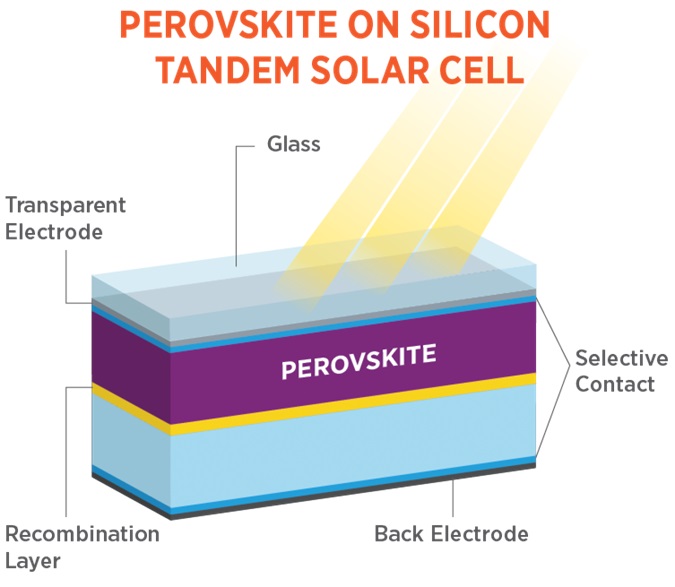
Imagine a country with limited space, a large population, and an urgent need for clean energy. That’s Japan, a nation that, since the Fukushima disaster in 2011, has been burdened with rethinking its entire energy system. This is because the catastrophe not only shook confidence in nuclear energy but also accelerated the race for sustainable and safe alternatives. More than a decade later, Japan surprises the world again with revolutionary perovskite solar cells, a light, thin, and flexible material that can be installed in places unimaginable until recently, like windows, walls, and even car roofs.
There are several important advantages
of these cells, and some of these are: Superior efficiency; application
flexibility; strategic security; export potential. Japanese companies like
Sekisui Chemical are already investing heavily in research (and other
companies are investing in the first typhoon turbine).
Internationally, Swedish company Exeger has successfully applied flexible panels to consumer products like headphones and keyboards, demonstrating that the future may be closer than we imagine. The dilemma lies in Japan seeking not only clean energy but also economic security. Essentially, the question remains: invest billions in a still-immature technology or risk losing its global leadership once again?
For a country dependent on energy imports and
vulnerable to international crises, investing in perovskites is both a
necessity and a strategic move. The country’s plan is clear: by 2040,
Japan aims to generate 20 gigawatts of power with perovskites, the
equivalent of 20 nuclear power plants.
Achieving this goal will not only be
a technological victory but a historic milestone in the global energy
transition. Essentially, this advancement could transform Japan into an
exporter of energy technology, offering the world a more efficient
alternative that’s less dependent on large areas. For densely populated
countries like South Korea, Singapore, or even parts of Europe, the
Japanese experience could serve as a model.
Eco News 6th Sept 2025,
https://www.ecoticias.com/en/japan-shocks-the-world-solar-panels/19817/
Japan exploring whether AI could help inspect its nuclear power plants.
Japan’s Nuclear Regulation Authority has requested extra funds to
experiment with AI-powered nuclear plant inspectors. Japanese media report
that the authority wants to explore AI inspection because many nuclear
plants operated by Japanese energy companies are already old and will
likely need more oversight as they continue operating. Decommissioning
those plants will also create a need for extra supervision. The regulator
reportedly said it doesn’t have sufficient staff to handle the
inspections needed for extended operations and decommissioning of old
plants.
The Register 28th Aug 2025, https://www.theregister.com/2025/08/28/japan_ai_for_nuclear_inspectiona/
Wastewater release from Fukushima nuclear plant enters third year.

By Ian Stark, Aug. 25 (UPI) —
The Japanese utility that keeps the nuclear fuel inside the damaged Fukushima plant cool reports its release of treated wastewater has entered its third year.
The Tokyo Electric Power Company announced Monday that it has completed its third discharge of Advanced Liquid Processing System treated water into the sea on Monday…………………
According to TEPCO, the ALPS is designed to remove 62 types of radioactive materials from the affected sea and dilute the water to lower the tritium levels. The water is considered “treated” to distinguish it from water yet to be decontaminated…………………………..
Around 70 tons of radioactive wastewater is produced daily at the plant, which cools the nuclear fuel that melted inside the reactor buildings at the Fukushima nuclear power plant. As of the first week of August, around 102,000 tons of treated water have been released. https://www.upi.com/Top_News/World-News/2025/08/25/Japan-Fukushima-nuclear-wastewater-TEPCO-radioactive/9871756140747/
Fukushima nuclear plant decommissioning seen overrunning estimate
Fukushima nuclear plant decommissioning seen overrunning estimate. $35bn
already committed, with debris removal price ‘difficult’ to guess. The
amount spent or budgeted so far to decommission the Fukushima Daiichi
nuclear power plant has reached 5.2 trillion yen ($35.4 billion), it was
learned Friday, making it highly likely that the grand total will exceed
the government’s estimate of 8 trillion yen.
Nikkei Asian Review 22nd Aug 2025, https://asia.nikkei.com/business/energy/fukushima-nuclear-plant-decommissioning-seen-overrunning-estimate
Vonnegut on Nagasaki: “The most racist, nastiest act by this country, after human slavery”
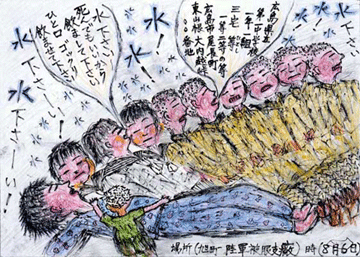
““The rights and wrongs of Hiroshima are debatable,” Telford Taylor, the chief prosecutor at Nuremberg, once said, “but I have never heard a plausible justification of Nagasaki” — which he labeled a war crime.”
Author: John LaForge, August 7, 2014, https://www.peacevoice.info/2014/08/06/vonnegut-on-nagasaki-the-most-racist-nastiest-act-by-this-country-after-human-slavery/
For the full article:
Vonnegut on Nagasaki: “The most racist, nastiest act by this country, after human slavery”
877 Words
“The rights and wrongs of Hiroshima are debatable,” Telford Taylor, the chief prosecutor at Nuremberg, once said, “but I have never heard a plausible justification of Nagasaki” — which he labeled a war crime.
In his 2011 book Atomic Cover-Up, Greg Mitchell says, “If Hiroshima suggests how cheap life had become in the atomic age, Nagasaki shows that it could be judged to have no value whatsoever.” Mitchell notes that the US writer Dwight MacDonald cited in 1945 America’s “decline to barbarism” for dropping “half-understood poisons” on a civilian population. The New York Herald Tribune editorialized there was “no satisfaction in the thought that an American air crew had produced what must without doubt be the greatest simultaneous slaughter in the whole history of mankind.”
Mitchell reports that the novelist Kurt Vonnegut, Jr. — who experienced the firebombing of Dresden first hand and described it in Slaughterhouse Five — said, “The most racist, nastiest act by this country, after human slavery, was the bombing of Nagasaki.”
On Aug. 17, 1945, David Lawrence, the conservative columnist and editor of US News, put it this way: “Last week we destroyed hundreds of thousands of civilians in Japanese cities with the new atomic bomb. …we shall not soon purge ourselves of the feeling of guilt. …we…did not hesitate to employ the most destructive weapon of all times indiscriminately against men, women and children. … Surely we cannot be proud of what we have done. If we state our inner thoughts honestly, we are ashamed of it.”
If shame is the natural response to Hiroshima, how is one to respond to Nagasaki, especially in view of all the declassified government papers on the subject? According to Dr. Joseph Gerson’s With Hiroshima Eye, some 74,000 were killed instantly at Nagasaki, another 75,000 were injured and 120,000 were poisoned.
If Hiroshima was unnecessary, how to justify Nagasaki?
The saving of thousands of US lives is held up as the official justification for the two atomic bombings. Leaving aside the ethical and legal question of slaughtering civilians to protect soldiers, what can be made of the Nagasaki bomb if Hiroshima’s incineration was not necessary?
The most amazingly under-reported statement in this context is that of Truman’s Secretary of State James Byrnes, quoted on the front page of the August 29, 1945 New York Times with the headline, “Japan Beaten Before Atom Bomb, Byrnes Says, Citing Peace Bids.” Byrnes cited what he called “proof that the Japanese knew that they were beaten before the first atomic bomb was dropped on Hiroshima.”
On Sept. 20, 1945, Gen. Curtis LeMay, the famous bombing commander, told a press conference, “The war would have been over in two weeks without the Russians entering and without the atomic bomb. The atomic bomb had nothing to do with the end of the war at all.”
According to Robert Lifton’s and Greg Mitchel’s Hiroshima in America: 50 Years of Denial (1995), only weeks after August 6 and 9, President Truman himself publicly declared that the bomb “did not win the war.”
The US Strategic Bombing Survey, conducted by Paul Nitze less than a year after the atom bombings, concluded that “certainly prior to 31 December 1945, and in all probability prior to 1 November 1945, Japan would have surrendered even if the atomic bombs had not been dropped, even if Russia had not entered the war, and ever if no invasion had been planned or contemplated.”
Likewise, the Intelligence Group of the US War Department’s Military Intelligence Division conducted a study from January to April 1946 and declared that the bombs had not been needed to end the war, according to reports Gar Alperovitz in his massive The Decision to Drop the Atomic Bomb. The IG said it is “almost a certainty that the Japanese would have capitulated upon the entry of Russia into the war.”
Russia did so, Aug. 8, 1945, and as Ward Wilson reports in his Five Myths about Nuclear Weapons, six hours after news of Russia’s invasion of Sakhalin Island reached Tokyo — and before Nagasaki was bombed — the Supreme Council met to discuss unconditional surrender.
Experiments with hell fire?
Nagasaki was attacked with a bomb made of plutonium, named after Pluto, god of the underworld earlier known as Hades, in what some believe to have been a ghastly trial. The most toxic substance known to science, developed for mass destruction, plutonium is so lethal it contaminates everything nearby forever, every isotope a little bit of hell fire.
According to Atomic Cover-Up, Hitoshi Motoshima, mayor of Nagasaki from 1979 to 1995, said, “The reason for Nagasaki was to experiment with the plutonium bomb.” Mitchell notes that “hard evidence to support this ‘experiment’ as the major reason for the bombing remains sketchy.” But according to a wire service report in Newsweek, Aug. 20, 1945, by a journalist traveling with the president aboard the USS Augusta, Truman reportedly announced to his shipmates, “The experiment has been an overwhelming success.”
US investigators visiting Hiroshima Sept. 8, 1945 met with Japan’s leading radiation expert, Professor Masao Tsuzuki. One was given a 1926 paper on Tsuzuki’s famous radiation experiments on rabbits. “Ah, but the Americans, they are wonderful,” Tsuzuki told the group. “It has remained for them to conduct the human experiment!”
~~~~~~~~~~~~~~~
John LaForge is a Co-director of Nukewatch, a nuclear watchdog and environmental justice group in Wisconsin, edits its quarterly newsletter, and writes for PeaceVoice.
1 This Month
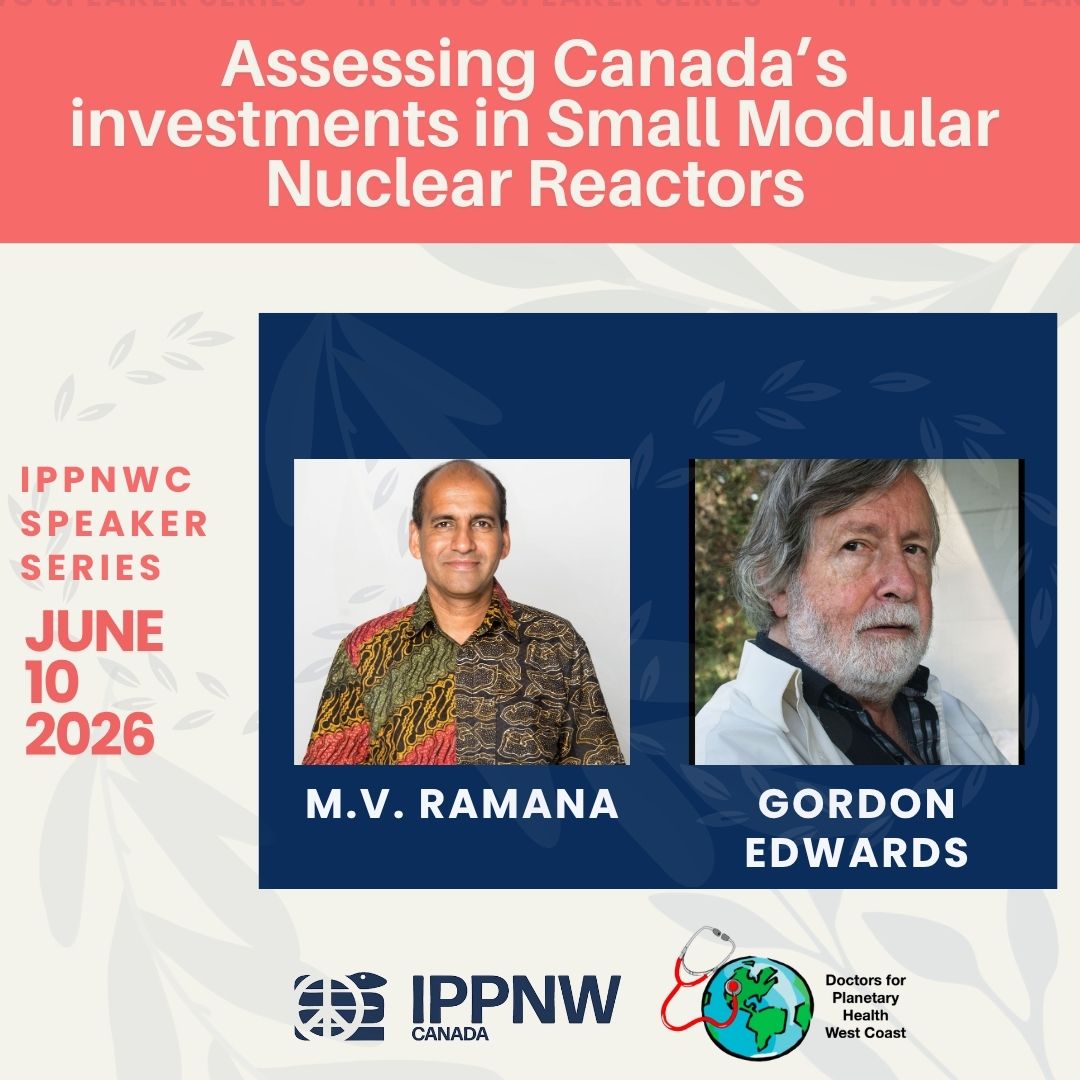
10 June – Assessing Canada’s Investments in Small Modular Nuclear Reactors – https://zoom.us/meeting/register/IiqHA5feRhaEBycOLNTJlA#/registration


Cuba Is Not a Failed State – It Is a Besieged State
PETITION: “Global Appeal to Endorse Palestinian Right of Return of Refugees”
To see nuclear-related stories in greater depth and intensity – go to https://nuclearinformation.wordpress.com
-
Archives
- June 2026 (89)
- May 2026 (306)
- April 2026 (356)
- March 2026 (251)
- February 2026 (268)
- January 2026 (308)
- December 2025 (358)
- November 2025 (359)
- October 2025 (376)
- September 2025 (257)
- August 2025 (319)
- July 2025 (230)
-
Categories
- 1
- 1 NUCLEAR ISSUES
- business and costs
- climate change
- culture and arts
- ENERGY
- environment
- health
- history
- indigenous issues
- Legal
- marketing of nuclear
- media
- opposition to nuclear
- PERSONAL STORIES
- politics
- politics international
- Religion and ethics
- safety
- secrets,lies and civil liberties
- spinbuster
- technology
- Uranium
- wastes
- weapons and war
- Women
- 2 WORLD
- ACTION
- AFRICA
- Atrocities
- AUSTRALIA
- Christina's notes
- Christina's themes
- culture and arts
- Events
- Fuk 2022
- Fuk 2023
- Fukushima 2017
- Fukushima 2018
- fukushima 2019
- Fukushima 2020
- Fukushima 2021
- general
- global warming
- Humour (God we need it)
- Nuclear
- RARE EARTHS
- Reference
- resources – print
- Resources -audiovicual
- Weekly Newsletter
- World
- World Nuclear
- YouTube
-
RSS
Entries RSS
Comments RSS
 nuclear-news