Integral Fast Nuclear Reactor’s serious problems
Another Take on Pandora’s Promise EARTH ISLAND JOURNAL BY GAR SMITH – JUNE 28, 2013“…….Problems with the IFR Looking beyond the ballyhoo, there are significant concerns about IFRs that Pandora’s Promise fails to address. To date, no breeder reactor has been commercially viable. Arjun Makhijani, president of the Maryland-based Institute for Energy and Environmental Research, shares David McKay’s concern about the 250-plus metric tons of excess plutonium moldering away in storage sites around the world. Makhijani, however, believes the idea that “sodium cooled-fast neutron reactors [could] be built to denature the plutonium reveals a technological optimism that is disconnected from the facts.” While some IFRs “have indeed operated well,” Makhijani notes, “roughly $100 billion have been spent worldwide to try and commercialize these reactors – to no avail.”
Fueled by a uranium-plutonium alloy, IFRs can produce (“breed”) more plutonium than they burn. But this plutonium can be used to produce nuclear weapons, which poses serious diversion and proliferation risks. Also, IFRs are cooled by molten sodium, not water. Sodium can explode when it comes in contact with water and, when exposed to air, sodium ignites and burns furiously. Sodium-cooled reactors are prone to coolant leaks. Fast reactor accidents have occurred in France, Japan, Scotland, at the Fermi 1 reactor in Michigan, and twice at a Simi Valley reactor site in southern California.
Several competing nuclear power designs are cited in Pandora’s Promise, but they receive little screen time. There is a brief mention of Liquid Fluoride Thorium reactors, a Traveling Wave Reactor (Bill Gates’ pet project), and the government’s support for “mini-nukes” that could be installed underground and fired up to power urban skyscrapers. How practical and safe are they? Pandora’s Promise provides few answers. There is no in-depth analysis of the pros and cons of any of these alternatives….. . http://www.earthisland.org/journal/index.php/elist/eListRead/another_take_on_pandoras_promise
Legal case over US government’s uranium mining ban near Grand Canyon
British Uranium Firm Sues U.S. for $132 Million Over Grand Canyon Mining Ban http://www.grandcanyontrust.org/news/2013/06/british-uranium-firm-sues-u-s-for-132-million-over-grand-canyon-mining-ban/ June 25, 2013 by gctrust WASHINGTON D.C.— On June 21st, British uranium firm VANE Minerals sued the United States in Washington’s U.S. Court of Claims over the Department of the Interior’s January 2012 decision to protect 1 million acres of public lands around Grand Canyon National Park from new uranium mining. VANE’s suit, which claims that uranium mining in Grand Canyon’s watershed “would have no adverse impacts,” seeks up to $132 million from U.S. taxpayers. This is VANE’s second attempt to bring such a suit against the U.S.
UK’s Minstry of Defence caused radioactive beach
Dalgety Bay radiation: Sepa says MoD was responsible for contamination, BBC News 28 Jue 13Diggers have excavated sections of the beach The Ministry of Defence has been found solely responsible for radioactive contamination at Dalgety Bay in Fife.
It follows an investigation by the Scottish Environment Protection Agency (Sepa) into the history of the contamination at the beach.
Its report said the MoD had routinely incinerated and disposed of aircraft dials in the bay before the town was developed.
The dials had been illuminated by paint containing radium-226.
The aircraft had been stationed at the nearby HMS Merlin airfield, which was commissioned in 1939 as a Royal Naval Aircraft Repair Yard and decommissioned in 1959 before being sold off through the 1960s……..
“Contamination on the foreshore at Dalgety Bay is the result of erosion of deposited material and subsequent re-working and re-deposition of contaminated marine sediments resulting from coastal erosion, a process which is considered to be a normal part of life.”
Significant amounts of material remain buried on the coast and continue to erode through coastal processes and re-contaminate the foreshore areas, the report added.
It concluded that Sepa considered the MoD to be the sole “appropriate person” for the contamination…….
The local MP and former prime minister, Gordon Brown, said the MoD was “merely delaying the inevitable” and had a “moral duty” to clean up the site.
“Having been named as the polluter, the Ministry of Defence must now agree to fund the clean-up of the area to remove the contaminated substances from the Dalgety Bay beach, and the work must start immediately,” he said……. The local MP and former prime minister, Gordon Brown, said the MoD was “merely delaying the inevitable” and had a “moral duty” to clean up the site.
“Having been named as the polluter, the Ministry of Defence must now agree to fund the clean-up of the area to remove the contaminated substances from the Dalgety Bay beach, and the work must start immediately,” he said.http://www.bbc.co.uk/news/uk-scotland-edinburgh-east-fife-23098001
USA Senators votes obey their campaign donors

 Senators’ Positions on Climate Change Reflect Their Donors’ Wishes ENN. 28 June 13 Earlier this week, President Obama followed up on the promise he made in his State of the Union Address, to take action on climate change even if Congress wouldn’t. Specifically, he said, “if Congress won’t act soon to protect future generations, I will.
Why would Congress be so recalcitrant on an issue of such vital importance as taking action to minimize (it’s too late to avoid) the impact of a crisis that could threaten the existence of civilization as we know it? A recent analysis performed by MapLight suggests the root of much of the underlying motivation for our elected officials is money. While this isn’t terribly surprising, it is stunningly disappointing to see how lacking in character those men and women we have elected to lead us appear to be — trading the broad interests of future generations for their own very narrow, self-serving interest in raising money to enable them to remain in jobs that, it would appear, they are morally unqualified to serve in.
Looking specifically at campaign contributions given to senators, Maplight found the following campaign contribution levels from industries whose short-term financial interests would benefit from no action being taken on climate change during the period from January 1, 2009—December 31, 2012, as well as from those who would stand to benefit from action being taken. (Source: Open Secrets)
The two tables show the name of the industry or interest and the amount contributed to senators…….
A number of bills have been submitted since 2007, mostly by Democrats attempting to deal with greenhouse gas (GHG) emissions, and these have either died in committee or been filibustered to death if they actually made it onto the floor.
So it should not be a surprise to learn that most of these financial contributions went to Republicans. That is certainly true if we look at oil & gas donors, which gave an average of $60,000 last year to Republican members of the House and Senate versus $10,000 given to Democrats. Total contributions last year, including individuals, PAC and soft money topped $65 million, more than doubling from 2010.
Coal mining interests gave out $17 million, almost all of it to Republicans, except for Joe Manchin of West Virginia, who received $222k, about the same as his Republican counterpart.
Electric utilities made contributions of $23 million to elected officials, alongside a whopping $140 million in overall lobbying (about the same as oil & gas). This was more evenly divided across party lines, with Republicans receiving roughly $14 million and Democrats $9 million.
The president has vowed to use executive authority, primarily through the EPA, to address carbon emissions, largely by limiting the allowable emissions from coal plants, which the Republicans will undoubtedly fight, either through the courts or through additional legislation. As President Obama preemptively pointed out in his speech, opponents always claim that this type of regulation will be bad for business and every time they have been wrong. The critics’ focus tends to be on the very short term changes that need to be made, rather than on the ultimate result of a cleaner, safer society being served by more efficient companies. Too often, as Ramez Naam points out in his excellent book, The Infinite Resource, the role that innovation plays is commonly underestimated.Continue Reading at Triple Pundit
The way forward for India’s energy development
India’s Coal Reliance And Global Warming Hypocrisy By Dr EAS Sarma & Shankar Sharma 28 June, 2013 Countercurrents.org“……..The way forward India is endowed with a vast potential in renewable energy sources. The ‘expert group on low carbon strategies for inclusive growth’ states that “solar power is one of the critical technology options for India’s long term energy security. Several parts of India are endowed with good solar radiation and deploying solar even on 1 percent of the land area could result in over 500,000 MW of solar power.”
Assuming an average of 1,000 Sq. ft of roof surface area for each of 30% of the houses in the country, the total potential for installing SPV systems on such a total surface can be about 1,000,000 MW @ 1 kW per 100 Sq. ft of roof surface. If even 10% of roof top surfaces in each of the other categories of building are considered for this purpose, the potential is enormous; running to millions of MW. Such a policy can transform our power sector scenario with minimum impacts on the land, water and the general environment.
Other renewable energy sources such as wind and bio-mass too have huge potential, and are much more suitable to Indian way of life than the conventional energy sources.
In this background the statements such as that by Dr. Pauchari’s advocating for more coal power capacity addition can serve only to defend a corrupt sector and its coal gate scandals. We, in India, need to take a much more holistic view of the energy needs of the people vis-à-vis all-round welfare of communities. We should build new clean energy sources regardless of what the West does because it’s the cheapest, cleanest, and best solution for our people. It’s time our ‘leaders’ focused on India’s clean energy future and dropped support for a corrupt dirty coal sector.
Dr EAS Sarma is Former Union Power Secretary
Shankar Sharma is a Power Policy Analyst http://www.countercurrents.org/sharma280613.htm
Fukushima News 6/28/13: Tepco to Shareholders-Fuku You; Hanford Plutonium In Unusual Places
Published on 28 Jun 2013
Shareholders reject anti-nuclear power proposals
Nine Japanese utilities that own nuclear power plants held their shareholders’ meetings on Wednesday. Groups opposed to nuclear power asked shareholders to reject atomic energy.
Executives from all the utilities said that suspending operations at their nuclear plants has had a major impact on their businesses. This is due to an increase in fuel costs for running thermal power plants.
Four of the 9 companies, including Shikoku Electric and Kansai Electric, are preparing to restart their 6 nuclear plants.
At the Tokyo Electric Power Company meeting, a group of about 450 shareholders who are opposed to nuclear energy submitted a list of 9 proposals.
Offshore wind power generation starts in Kyushu
A major offshore wind turbine has started operating on a test basis off Japan’s southwest coast.
The turbine is 83 meters wide and stands 1.4 kilometers off the city of Kitakyushu.
It generates 5,500 megawatts of electricity annually, enough to supply 1,500 households for a year.
The turbine began rolling slowly as officials pushed the start button in Thursday’s ceremony. The project is a joint effort between the New Energy and Industrial Technology Development Organization, or NEDO, and Electric Power Development Company, also known as J-POWER.
http://enenews.com/workers-at-u-s-nuc…
http://enenews.com/something-did-not-…
[Tritium overflow] Tritium detected from 11 locations in the sea, average 340,000 Bq/m3
Posted by Mochizuki on June 28th, 2013
[Express] “After 311, extremely radioactive debris removed by major construction companies, not Tepco or plant maker”
Posted by Mochizuki on June 28th, 2013
ENERGY OFFICIALS ARE DIVIDED OVER NUCLEAR AGENCY’S FUTURE
Russian prosecutors respond to small town mayor – further answers may be unwelcome
“There is definitely evidence that on certain days, in certain meteorological conditions, that such [pollution] excesses have occurred,”
….According to studies by the Norwegian Institute for Air Research, the Sør-Varanger area is the country’s hardest hit by the KMMC’s pollution. Some 100,000 tons of sulfur dioxide and heavy metal emissions cross the Norwegian border yearly from the smelting plants……
http://www.bellona.org/articles/articles_2013/prosecutors_respond

Prosecutors in Russia’s Far North Murmansk Region, dogged by media reports of pollution and the legal threats of a vociferous small town Norwegian mayor whose region is getting the worst of it, were finally compelled this week to announce they were already investigating contaminating emissions as part of “planned” inspections.
The Murmansk Region prosecutors’ office earlier this week released the information that it was in the middle of conducting a planned inspection of the Kola Mining and Metallurgical Combine (KMMC) – a daughter company of Norilsk Nikel – to make sure it was in compliance with Russian pollution regulations.
The prosecutors’ announcements concerning their inspections to local papers followed directly on reports by Bellona, and other Norwegian and Russian media, that Cecilie Hansen, mayor of the northerly Norwegian municipality of Sør-Varanger intended to bring a police investigation into the emissions of sulfur dioxide and heavy metals from the KMMC’s smelting facilities, which have been billowing into northern Norway for decades.
A spokesman for the prosecutor’s office Thursday told Bellona that they “were not able to not react to the reports in the media.”
The ongoing routine inspections of the KMMC and other Kola Peninsula industries’ compliance with environmental norms in the Murmansk region does not, however, mean that pollution reduction measures satisfying Norwegian complaints will be undertaken.
Loan guarantee for Hinkley Point C
When pushed to give an indication of the level of strike price EDF was seeking, Mr de Rivaz told us that the figure of £140/MWh was “rubbish”, but would not comment on the figure of £100/MWh
Jean-Paul Chanteguet, is reported to have stated that the revised build cost of Flamanville is expected to deliver a price for electricity at 74/MWh. It will be important to establish whether this is directly comparable to the UK context in relation to the ongoing negotiations for the strike price for Hinkley Point C.
28 June 2013
http://www.world-nuclear-news.org/NN-Loan_guarantee_for_Hinkley_Point_C-280613ST.html
The UK government has announced that EDF Energy’s proposed Hinkley Point C nuclear power plant is eligible for a multi-billion pound loan guarantee.

In a speech to Parliament on 27 June, chief secretary to the Treasury Danny Alexander outlined the government’s infrastructure plan, which includes measures aimed at enabling up to £110 billion ($167 billion) of private sector investment in electricity infrastructure by 2020. The plan includes the extension of the UK guarantees scheme by two years to December 2016. A guarantee under this scheme is expected to help EDF Energy to secure financing for its Hinkley Point C project at a lower rate than would be possible without government backing.
EDF Energy is planning to build two Areva EPR reactors at Hinkley Point. Planning consent for the estimated £14 billion ($21 billion) project was announced earlier this year, but EDF Energy is still locked in negotiations with the government over terms of the so-called contracts for difference (CfDs). These are intended to set a long-term price of electricity generation from low-carbon sources.
A key element of a CfD is the strike price- the price that generators receive for electricity. Should the market price be below the strike price, then generators are paid the difference; should the market price exceed the strike price, then generators must pay back the difference.
While the terms of the CfD strike price for the Hinkley Point C project are not yet finalised, the government has now announced the draft strike prices for renewable projects. These range from initial rates of £100 ($152) per megawatt hour (MWh) for onshore wind to £305 ($464) per MWh for tidal stream and wave technologies. The strike price for offshore wind would initially be £155 ($236) per MWh, dropping to £135 ($205) per MWh by 2019. The renewable CfDs would run for fifteen years and be linked to inflation.
The energy policies announced this week would result in £60 billion ($91 billion) worth of investment in new nuclear plants by 2030, according to energy and climate change secretary Ed Davey. CfDs form a core component of the government’s strategy to bring forward investment in affordable low-carbon electricity generation – including renewables, carbon capture and storage and new nuclear,he said.
Researched and written
by World Nuclear News
UK spells out draft strike prices
The contract for difference (CfD) draft strike price for onshore wind will fall only modestly in 2018-19, to £95/MWh; for offshore wind the price will fall more sharply, to £135/MWh.
The government believes that CfD strike prices at these levels will deliver up to 16GW of offshore wind and 12GW of onshore wind by 2020.
Large-scale PV will receive £110/MWh in 2018/19, a level the government feels could deliver up to 3.2GW of capacity by the end of the decade. The government’s goal of 22GW of PV by 2020 is largely centred on…. (subscription)
http://www.rechargenews.com/wind/article1331059.ece
Building New Nuclear: the challenges ahead – Energy and Climate Change
Prepared 4 March 2013
At the most recent estimate, the price for each reactor at Hinkley Point C was expected to be £7 billion.[47] In the current economic climate, finding such large sums of money is difficult.
[…]
Radioactive Beef found in Grocery Store in Japan
27 June 2013
CODEX and food safety? The hidden world of radioactive food!
Published by nuclear-news.net
By Arclight2011
19 May 2013
The Japanese limits are based on the assumption that 50% of nationally distributed foods are contaminated
[…]
There is no new scientific information that supports the need of a new risk assessment.

https://nuclear-news.net/2013/05/19/codex-and-food-safety-the-hidden-world-of-radioactive-food/
South africa -1.6 million people living with dangerous radioactive contamination of food air and water!
“Only around eight shacks, with about 35 families, were moved from this site,” says the community leader, pointing to a yellow outcrop of mine sludge, where Professor Chris Busby, a world expert in uranium, in December found radiation levels inside a shack 15 times higher than regulatory limits. “
“Do NOT come to Fukushima and do NOT eat the food products!” – Support evacuation instead!
Published on 4 May 2013
http://www.yonaoshi311.com
Iitate radioactive Hot spot / 飯舘村 /Zone contaminée de Iitate
EN
We are on a road approximately 40km north-west of Fukushima Dai Ichi power plant near Iitate. The village is now a famous Hot spot with high levels of radioactivity.
Fear and loathing in USA over nuclear wastes
Stored fuel requires guards and other continuing expenses, which are significant if there is no reactor nearby. Those expenses eventually fall on federal taxpayers because the Energy Department has defaulted on contracts it signed in the 1980s to begin accepting the wastes for burial in 1998. As a result, financial penalties the federal government must pay to the nuclear utilities for failing to dispose of the waste now amount to hundreds of millions of dollars a year.
 Quarrels Continue Over Permanent Repository for Nuclear Waste http://www.nytimes.com/2013/06/28/business/energy-environment/quarrels-continue-over-permanent-repository-for-nuclear-waste.html?_r=0 By MATTHEW L. WALD June 27, 2013 WASHINGTON — As more nuclear reactors across the country are closed, the problem of what to do with their waste is becoming more urgent, government officials and private experts said at a conference here this week.
To address the problem, a bipartisan group of four senators introduced a bill on Thursday that would provide for temporary, centralized storage, even as House leaders remained focused on trying to revive plans for the Yucca Mountain nuclear waste repository that the Obama administration has declared dead.
Nuclear waste is accumulating in steel and concrete storage casks at reactor sites around the country. But the casks — sealed boxes of many tons — cannot be sent to any repository because they are not compatible, said Jeff Williams, director of the Energy Department’s Nuclear Fuel Storage and Transportation Planning Project.
In addition, a growing number of the sites no longer have an operating reactor or the associated fuel-handling equipment, so they have no way to move the highly radioactive fuel to another storage package.
Experts say the amount of orphaned nuclear waste is mounting. Nuclear utilities have announced the retirement of an additional four reactors so far this year, which leaves three more sites without an operating reactor. Before that development, the Energy Department counted nine such sites, with about 2,800 tons of fuel in 248 casks and was hoping to establish a pilot-scale interim storage plant for that fuel. Continue reading
America’s nuclear industry disintegrating
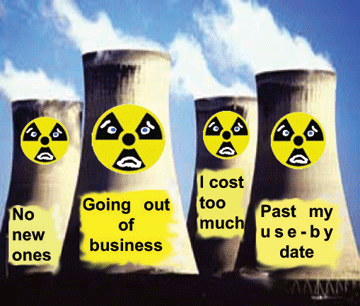 Activists See U.S. Nuclear Industry Starting to Crumble By Matthew Charles Cardinale ATLANTA, Georgia, Jun 27 2013 (IPS) –
“……According to Glenn Carroll, coordinator of Nuclear Watch South, a grassroots organisation that raises awareness about nuclear issues, the four closures bring the total number of nuclear reactors in the United States down to an even hundred, from 104 at the beginning of the year and 114 at the industry’s peak.
— Glenn Carroll
“There haven’t been any new reactors built in over 30 years. A small number of them are under construction, and none of them are going well,” Carroll told IPS. “They’re expensive…and meanwhile, solar and wind are…garnering small wins every day.”
“[The nuclear industry] is crumbling under its own weight,” Carroll said
A gradual deterioration
Just a few years ago, dozens of proposals for possible new nuclear reactors existed. Today, two nuclear projects in Georgia and South Carolina are the only ones still going forward, Carroll noted.
“If there are four reactors being built instead of 44, your economy of scale has just evaporated,” Carroll pointed out, adding that Georgia would be “strapping itself” to rising costs for parts for the plant.
“They’re going to be essentially hand-crafted. No company is going to be set up to create these parts,” she said.
Carroll predicted that other reactors would soon be slated for closure, including those at Vermont Yankee in Vernon, Vermont and at Indian Point in Buchanan, New York. In both cases, state governments have sought to shut down the plants.
Meanwhile, billionaire investor Warren Buffett has completely divested from the nuclear industry. Earlier this month, one company owned by Buffett, MidAmerican Energy, has abandoned a proposal to open a new nuclear facility in Iowa.http://www.ipsnews.net/2013/06/activists-see-u-s-nuclear-industry-starting-to-crumble/
Chernobyl’s Children

Seattle TV: Children now sicker than ever from Chernobyl disaster — Contamination to go on for centuries to come — Many with heart and digestive problems http://enenews.com/seattle-tv-children-are-now-sicker-than-ever-from-chernobyl-disaster-contamination-to-go-on-for-centuries-to-come-many-with-heart-and-digestive-problems-video(VIDEO)Title: Local program helps children receive treatment years after Chernobyl
Source: KING 5 News
Author: MITCH PITTMAN
Date: June 25, 2013 a
h/t moxnews
For most of us, the 1986 Chernobyl nuclear disaster is history. But the reality is its effects linger for thousands still living around the site, which will be contaminated for centuries to come.
Two decades ago, a program was started locally to help those in Belarus receive treatment, and now Hope for Chernobyl’s Child is continuing that mission in Renton.
[…] organizers say children now are sicker than ever from Chernobyl’s lasting effects.
Transcript Excerpts
Many have heart and digestive problems and they’ll be treated by doctors who donate their time
Now over the years the Hope for Chernobyl’s Child program has helped over 350 kids and organizers say they’re sicker now than ever and they’re still looking for more doctors to help provide care
Watch the broadcast here
£10bn financial guarantee for Britain’s new nuclear power plants

 Nuclear power gets £10bn financial guarantee boost guardian.co.uk, 28 June 2013 Patrick Wintour and Phillip Inman Ministers respond to warnings that UK is on brink of power blackouts with support for French generator EDF to build Hinkley Point nuclear power plant
The government has responded to warnings that Britain is on the brink of power blackouts by announcing £10bn in financial guarantees to thenuclear power industry – a concession aimed at paving the way for the building of the first new reactor in the country for a generation.
The support for French generator EDF, which is in negotiations to build the Hinkley Point nuclear power station, was announced by the Treasury chief secretary, Danny Alexander, as the centrepiece of a £100bn package of infrastructure investment covering 2015-20, including new roads, schools and affordable homes.
Michael Fallon, the energy minister, insisted the substantial guarantees represented a commercial loan, not a subsidy, saying: “This is big-scale financing, not available in the markets.” …
EDF had already prepared the site next to the two existing stations, but would not commit to the project unless the government guaranteed a minimum price for the electricity the new reactor would produce……. http://www.guardian.co.uk/environment/2013/jun/27/nuclear-power-10billion-financial-guarantee
Man made greenhouse emissions caused Australia’s hottest summer
Manmade Emissions Led to the Heat Wave That Baked Australia Motherboard, By Jason Koebler, 27 June 13 Scientists are 90 percent sure this year’s Australian heat wave couldn’t have happened without manmade influence. Photo: CIA
Surprise, surprise: The record-breaking heat wave that plagued Australia earlier this year with temperatures that reached up to 121 degrees was almost certainly caused by humans, according to a new study.
The study, published in Geophysical Research Letters by scientists at the University of Melbourne and Australia’s ARC Centre of Excellence for Climate Systems Science, highlights how humans have heightened drought effects on the continent. According to the authors, “human contribution to the increased odds of Australian summer extremes like 2013 was substantial, while natural climate variations alone, including El Niño Southern Oscillation, are unlikely to explain the record temperature.”

The so-called “angry summer” was easily the hottest on record, with temperatures hitting more than 27 degrees above average in some parts of the country during the first week of January. When it was happening, meteorologists with the Australian government said that though “Australia has always experienced heat waves … the event affecting much of inland Australia has definitely not been typical.”…..”The model experiments also show that these types of extreme Australian summers will become more severe and more frequent in the future, with further global warming,” she said. ”Extreme summers occur 8 times more frequently in the climate model simulations that include human influences, such as greenhouse gases, compared to the climate model simulations with only natural climate variations.” http://motherboard.vice.com/blog/manmade-emissions-led-to-the-heat-wave-that-baked-australia-1#ixzz2XZtGQ5uR
Much more powerful solar cells on the way
 Solar Cells That Could Produce More Power Than Uranium http://www.energymatters.com.au/index.php?main_page=news_article&article_id=3814 27 June 13 New research from the Massachusetts Institute of Technology into graphene, one of the thinnest and most conductive photovoltaic materials in existence, could lead to the production of highly efficient solar panels that, weight-for-weight, could be capable of producing more energy than reactor-grade uranium.
In a paper published in the journal Nano Letters, MIT scientists describe the stacking of two atom-thick nanomaterials, graphene and molybdenum disulfide, to create a one-nanometre (billionth of a metre) thick solar cell capable of converting sunlight to energy at two percent efficiency.
Lead author of the research, Jeffrey Grossman, the Carl Richard Soderberg Associate Professor of Power Engineering at MIT, says while this is a very low number compared to conventional photovoltaic efficiencies, the solar cell is so thin that pound-for-pound the new material produces up to 1,000 times more power than current solar technology. Continue reading
1 This Month
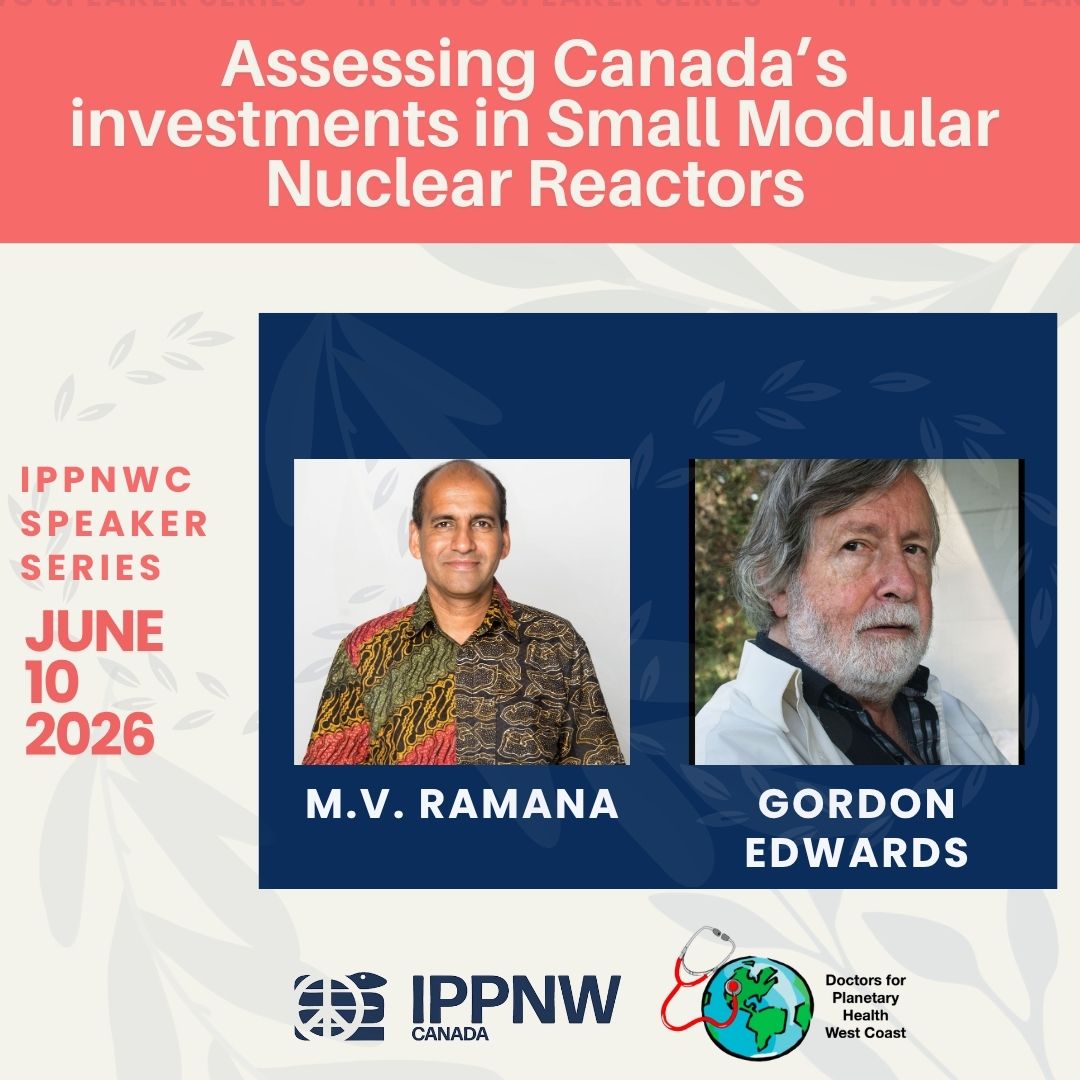
10 June – Assessing Canada’s Investments in Small Modular Nuclear Reactors – https://zoom.us/meeting/register/IiqHA5feRhaEBycOLNTJlA#/registration

Cuba Is Not a Failed State – It Is a Besieged State
PETITION: “Global Appeal to Endorse Palestinian Right of Return of Refugees”
To see nuclear-related stories in greater depth and intensity – go to https://nuclearinformation.wordpress.com
-
Archives
- June 2026 (89)
- May 2026 (306)
- April 2026 (356)
- March 2026 (251)
- February 2026 (268)
- January 2026 (308)
- December 2025 (358)
- November 2025 (359)
- October 2025 (376)
- September 2025 (257)
- August 2025 (319)
- July 2025 (230)
-
Categories
- 1
- 1 NUCLEAR ISSUES
- business and costs
- climate change
- culture and arts
- ENERGY
- environment
- health
- history
- indigenous issues
- Legal
- marketing of nuclear
- media
- opposition to nuclear
- PERSONAL STORIES
- politics
- politics international
- Religion and ethics
- safety
- secrets,lies and civil liberties
- spinbuster
- technology
- Uranium
- wastes
- weapons and war
- Women
- 2 WORLD
- ACTION
- AFRICA
- Atrocities
- AUSTRALIA
- Christina's notes
- Christina's themes
- culture and arts
- Events
- Fuk 2022
- Fuk 2023
- Fukushima 2017
- Fukushima 2018
- fukushima 2019
- Fukushima 2020
- Fukushima 2021
- general
- global warming
- Humour (God we need it)
- Nuclear
- RARE EARTHS
- Reference
- resources – print
- Resources -audiovicual
- Weekly Newsletter
- World
- World Nuclear
- YouTube
-
RSS
Entries RSS
Comments RSS
 nuclear-news