Downplaying cesium risks from Fukushima
 AUDIO Japan and IAEA “grossly downplaying” Fukushima cesium releases — Chernobyl-like levels leaked from plant http://enenews.com/japan-and-iaea-grossly-downplaying-fukushima-cesium-releases-audio
Title: Can’t Win? Change the Rules!
Source: Fairewinds Energy Education
Date: April 24, 2013
[…] On today’s podcast, Arnie and Helen discuss the associated health risks of various types of radioactive releases, how regulators and the nuclear industry are downplaying those releases, and the current state of the Fukushima clean up. “The recovery of the site will go nowhere as long as Tokyo Electric is in charge,” says Arnie.
At 8:00 in
Arnie Gundersen, Fairewinds Chief Engineer: I think the cesium concentration is going to be comparable to what was released at Chernobyl […]
I think the IAEA and the Japanese are grossly downplaying cesium releases.
Full show here
International Atomic Energy Agency not facing up to the facts on Fukushima
 IAEA Gives Little Insight To Fukushima Disaster Cleanup http://www.simplyinfo.org/?p=10267 April 24th, 2013 The IAEA visited the Fukushima Daiichi disaster site after multiple failures ended up in the news. They made very few comments from the trip and reaffirmed they think TEPCO can handle the disaster.
 What they did mention:
- It will take more than 40 years to clean up the disaster
- Technology still needs to be created to deal with the task of removing the melted fuel
- Problems and failures at the plant will continue to be an issue
- TEPCO should replace temporary systems with something more permanent and safer
- Contaminated water is expected to seep outside the plant after “decades”
The Japanese government is still intent on sending everyone back to the area as soon as possible.
Sources:
Apparently uncontrolled continual leakage of Fukushima radiation into the ocean
 Fukushima’s Catastrophic Aftermath: The Dangers of Worldwide Nuclear Radiation, Global Research, By Stephen Lendman 28 April 13,“……..In early April, around 120 tons of contaminated water leaked from Fukushima’s No. 1′s underground storage tank. It contained an estimated 710 billion becquerels of radioactivity.
Water around the affected tank is highly radioactive. It’s about 800 meters from the Pacific. Government and Tokyo Electric (Tepco) claimed it won’t likely reach it. Numerous previous reports suggest otherwise.
Tepco general manager Masayuki Ono said “(w)e cannot deny the fact that our faith in the underwater tanks is being lost.”
In November 2012, Nature.com headlined “Ocean still suffering from Fukushima fallout,” saying:
“Radioactivity is persisting in the ocean waters close to Japan’s ruined nuclear power plant at Fukushima Daiichi.”
New data show high contamination levels. “The Fukushima disaster caused by far the largest discharge of radioactivity into the ocean ever seen.”
Radiation levels aren’t dropping. “The implications are serious for the fishing industry.”………http://www.globalresearch.ca/fukushimas-catastrophic-aftermath-the-dangers-of-worldwide-nuclear-radiation/5333138
How the American military-industrial-political racket works
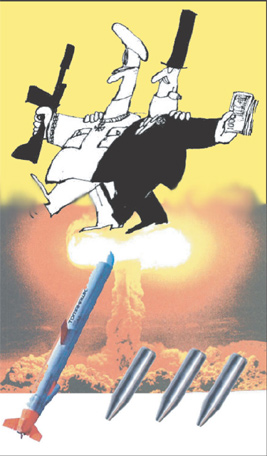 “It’s what in Washington we call an iron triangle,” ” you have an alliance between the private sector, the defence contractors, the executive branch, in this case the Pentagon, and the legislative branch.”Everyone benefits from expensive procurement projects – the Pentagon gets weapons, defence companies get to make profits, and politicians get re-elected by funding armaments that generate jobs for constituents and campaign contributions from defence companies.
The result… is a defence budget “that is packed to the gills with weapons we don’t need, with weapons that are underestimated in their future costs”.
America’s War Games How the Obama administration is redefining the US military’s strategic priorities with far-reaching consequences, Aljazeera, 27 April 13 The United States’ military expenditures today account for about 40 percent of the world total. In 2012, the US spent some $682bn on its military – an amount more than what was spent by the next 13 countries combined.
Now that the war in Iraq is over and the withdrawal of US troops from Afghanistan will be complete in 2014, the stage might therefore appear to be set for a decrease in US defence spending. Even in Washington DC, many have argued that the defence budget can be cut substantially and the resulting “peace dividend” could be diverted to more pressing domestic concerns, such as dealing with the nation’s continuing economic problems.However, a battle to ward off cuts to the Pentagon’s budget has begun and the way things are going, it seems likely that the US will have the smallest drawdown or reduction of the military budget after a period of conflict since World War II – in comparative terms, smaller than after Vietnam, Korea and the end of the Cold War. Continue reading
17,000 tons of radioactive rice still stored in Fukushima prefecture
 “It would bedifficult to find an option other than disposal.”
Fukushima’s ‘contaminated’ rice still in storage two years, Asahi
Shimbun, April 25, 2013 By TETSUYA KASAI/ Staff Writer
FUKUSHIMA–-Officials are still struggling to dispose of some 17,000
tons of contaminated rice produced in Fukushima Prefecture after the
nuclear disaster there two years ago. Most of the rice, called
“kakurimai” (rice separated for disposal), was produced in 2011.
The central government wants to incinerate the rice, but disposal
facility operators have been reluctant to do so for fear that harmful
rumors could start circulating if they handle contaminated material. Continue reading
The leader in fighting climate change is China

 China leading in fight against climate change, argues report http://www.businessgreen.com/bg/news/2264526/china-leading-in-fight-against-climate-change-argues-report 29 Apr 2013 As United Nations leaders today gather in Bonn to again discuss global efforts to tackle climate change, a new report has revealed that while China remains the world’s largest greenhouse gas emitter it is also taking some of the most ambitious strides to curb environmental impacts.
The Australian government’s independent advisor, the Climate Commission, has today launched a report showing how global action to tackle carbon emissions progressed during the last nine months.Analysis by Australian government’s Climate Commission warns other countries from using Chinese emissions as an excuse for inaction
The report shows that in 2012 China reduced the carbon intensity of its economy more than expected and almost halved the rate of growth for electricity demand. China remains heavily dependent on coal and other fossil fuels, making it the world’s largest emitter of greenhouse gas emissions, but the report found that the rate of growth in coal use has flatlined.
Last year, China also cemented its position as a renewable energy powerhouse, expanding solar power capacity by 75 per cent, and investing more that $65bn in clean energy – 20 per cent more than in 2011 and far more than any other nation.
The report predicts China could see its emissions peak sooner than expected if investment continues to accelerate, driven by new initiatives such as the planned carbon markets that are due to launch from June in a number of cities.
The CC’s chief commissioner, Professor Tim Flannery, said the report showed other countries such as Australia could no longer use China’s vast carbon footprint as an excuse for inaction on climate change.
“China is vulnerable to a changing climate, but they are also motivated by reducing their air and water pollution and wanting to position themselves as the world’s renewable energy leader,” he said in a statement.
“Whatever the reason, the results speak for themselves. China is quickly moving to the top of the leader board on climate change.”
The report also noted that 98 countries have now committed to limit their greenhouse gas emissions, and that there are now 35 national emissions trading schemes in place around the world.
However, the report also warns that despite increased investment in clean technologies and the development of more ambitious climate policies, emissions continue to rise around the world, showing more action is needed to address the risk of rising temperatures.
 COMMENT DEADLINE: May 14, 2013
Email your comment today: comments-southwestern-cibola@fs.fed.us
Please Help Stop Uranium Mining on Sacred Mt. Taylor http://my.firedoglake.com/wendydavis/2013/04/27/please-help-stop-uranium-mining-on-sacred-mt-taylor/ By: wendydavis April 27, 2013 To the Navajo (Diné), Mt. Taylor in northern New Mexico is the southernmost of the four mountains that describe the cardinal points of their ancestral sacred lands, Dinétah, the others being the San Francisco Peaks, Blanca Peak, and Mt. Hesperus, the highest peak we see out our bedroom door as we greet the new day. To the Navajo, the volcanic mountain is known as Tsoodzil, or Turquoise Mountain, and in their cosmology, is home to holy people Black God, Turquoise Boy, and Turquoise Girl.
To many Southwest tribes, but especially the Zuni, Hopi, Acoma and Laguna, Mt. Taylor is also sacred, and used for ceremonial purposes, including gathering medicinal plants, planting payos, or prayer sticks…and more.
In 2009, the mountain was given awarded Permanent Traditional Cultural Property Designation by the New Mexico Cultural Properties Review Committee.
This week, the Cibola National Forest Service (CNFS) issued a draft environmental impact statement (DEIS) for a uranium mine that violates its own Forest Management Plan and current standards of historic and cultural preservation. The Cibola Forest Circus folks are calling their crushing, ruinous deviation a “Project-Specific Forest Plan Amendment.” Yes, quite specific. Here’s the deal:
Roca Honda Resources, a partnership with Strathmore Minerals in Canada, and Sumitomo of Japan, is intending to mine 2.6 million pounds of uranium ore per year at an average depth of around 2500 feet. ……
If you’d be willing to take a couple minutes to register your objections to the plan, this page has talking points, but in addition, they’re asking allies for three things:
1.) Urge the Forest Service to deny Roca Honda’s Plan of Operations
2.) Urge the Forest Service to choose the “No Action” Alternative for the DEIS
3.) Urge the Forest Service to reissue a new DEIS because the current one is inadequate
They’ve chosen to go with bureaucrat-speak rather than the ‘WTH are you talking about, ya great idjits? No Nukes, No Way!…that I might actually prefer. But feel free to comment as you will…
My guess is that Forest Circus will end up okaying the ‘scaled down version of the plan’ based on my many encounters with similar ‘choices’. The compromise one is the one they probably know they’ll approve, but the ‘scaled down version’ wouldn’t look much different than the radical approval one. If you choose to register your objections to the plan, thank you in advance.
COMMENT DEADLINE: May 14, 2013
Email your comment today: comments-southwestern-cibola@fs.fed.us
Letters can be mailed to:
TRAVIS G. MOSELEY
Acting Forest Supervisor,
Cibola National Forest and Grasslands,
2113 Osuna Rd. NE,
Albuquerque, NM 87113
or by fax to 505-346-3901
Questioning the wisdom of Netanyahu’s nuclear brinkmanship
 Analysis – Israeli credibility on line over Iran nuclear challenge, The West, By Crispian Balmer and Dan Williams, 29 April 13 JERUSALEM (Reuters) – Israel risks a loss of credibility over both its “red line” for Iran’s nuclear programme and its threat of military action, and its room for unilateral manoeuvre is shrinking.
After years of veiled warnings that Israel might strike the Islamic Republic, Prime Minister Benjamin Netanyahu laid out an ultimatum at the United Nations last September.
Iran, he said, must not amass enough uranium at 20 percent fissile purity to fuel one bomb if enriched further. To ram the point home, he drew a red line across a cartoon bomb, guaranteeing him front page headlines around the world.
However, a respected Israeli ex-spymaster says Iran has skilfully circumvented the challenge. Other influential voices say the time has passed when Israel can hit out at Iran alone, leaving it dependent on U.S. decision-makers……
some officials have also questioned the wisdom of Netanyahu’s red line, arguing that such brinkmanship can generate unwelcome ambiguity -….. Tehran denies there is any military component to its nuclear activities, saying it is focused only on civilian energy needs. It charges that Israel, widely believed to have the Middle East’s only nuclear arsenal, is the greater regional threat.
Keeping in step with Netanyahu, Israeli defence and military officials issued clear warnings this month that Israel was still prepared to go it alone against Iran, once more beating the drums of war after months of relative quiet……
But there is increasing scepticism within diplomatic circles about the viability of such an option. Envoys doubt that the Israeli military could now make much of a dent on Iran’s far-flung, well-fortified nuclear installations……. http://au.news.yahoo.com/thewest/a/-/world/16914529/analysis-israeli-credibility-on-line-over-iran-nuclear-challenge/
India racing ahead with nuclear weaponry
The elite nuclear race, Khaleej Times, Eric S. Margolis (America Angle) / 28 April 2013 While the United States beats the war drums over North Korea and Iran’s long-ranged nuclear armed missiles –which they don’t even possess – Washington remains curiously silent about the arrival of the world’s newest member of the big nuke club – India. Continue reading
The fallacy of assuming that weapons manufacture creates jobs
America’s War Games How the Obama administration is redefining the US military’s strategic priorities with far-reaching consequences, Aljazeera, 27 April 13 “……. William Hartung, from the Center for International Policy says that Pentagon contractors have “for years used the jobs argument to revive weapons systems that have been cancelled. To push for things that even the Pentagon itself has not wanted.” For months, a study has been circulating in Washington, underwritten by the Aerospace Industries Association, a major defence industry trade group. It claims that a million jobs would be lost as a result of sequestration cuts to defence spending.
Hartung, who has analysed the study, says it exaggerates the potential job loss number by a factor of three, and that many of those jobs will be replaced. He points out that spending on education, health care, and infrastructure “can create 1.5 to 2 times as many jobs. So the economy would be much better off spending on things other than the Pentagon.”
Several recent reports examining ways to cut Pentagon spending call for changes in the US nuclear weapons posture. They claim that it would produce hundreds of billions of dollars of savings in coming decades, and the Obama administration is reportedly considering nuclear weapons cuts. But they will be difficult to achieve.
“People are still mired in Cold War thinking and they feel like the more nuclear weapons we have the better,” Hartung says. “And in addition to that the nuclear weapons industry has some of the biggest strongest companies in the military industrial complex.”
Lockheed Martin builds submarines, launches ballistic missiles, and runs the nuclear weapons laboratories; General Dynamics builds nuclear subs; and Northrop Grumman, Boeing and Lockheed Martin are all hoping to build the next nuclear bomber……http://www.aljazeera.com/programmes/peopleandpower/2013/04/2013424113558268754.html
Effect of global rise in ionising radiation
Fukushima’s Catastrophic Aftermath: The Dangers of Worldwide Nuclear Radiation, Global Research, By Stephen Lendman 28 April 13, “……Admiral Hyman Rickover (1900 – 1986) was the father of America’s nuclear navy. In January 1982, he told a congressional committee that until a few billion years ago, “it was impossible to have any life on earth.”
“There was so much radiation on earth you couldn’t have any life, fish or anything.” Gradually the amount subsided. “Now, we are creating something which nature tried to destroy to make life possible.”
“Every time you produce radiation, (a) horrible force” is unleashed. “In some cases (it’s) for billions of years, and I think the human race is going to wreck itself.”
“I am talking about humanity. The most important thing we could do is start having an international meeting where we first outlaw nuclear weapons to start off with. Then we outlaw nuclear reactors, too.”
“The lesson for history is when a war starts, every nation will ultimately use whatever weapons are available. That is the lesson learned time and again.” ”
“Therefore, we must expect, if another war, a serious war breaks out, we will use nuclear energy in some form. We will probably destroy ourselves.” Widespread contamination acts in slow motion…..
The problem of radioactive debris from fracking
Fracking debris considered too radioactive even for waste site
RT.com : April 26, 2013 A truck carrying drill cuttings from a fracking site set off a radiation alarm at a landfill in Pennsylvania. Emitting gamma radiation ten times higher than the permitted level, the waste was rejected by the landfill.
After the alarm went off, the MAX Environmental Technologies truck was immediately quarantined and sent back to the Marcellus Shale fracking site it had come from in Greene County, Va. The 159-acre Pennsylvania landfill site accepts residual and hazardous waste, but the cuttings were too radioactive for the site to safely dispose.
The Pennsylvania landfill, located in South Huntingdon, rejects waste that emits more than 10 microerm per hour of radiation. The fracking materials were found to emit 96 microerm per hour of Radium 226 – a rate that is 84 times higher than the Environmental Protection Agency’s air-pollution standard and ten times higher than the landfill’s permitted level, Forbes reports.
Exposure to the materials taken from the fracking site can have serious health consequences, including the risk of developing cancer. The high level of radiation emitted by the materials serves as alarming news for environmentalists and residents located near hydraulic fracturing sites across the US.
“Long-term exposure to radium increases the risk of developing several diseases,” the EPA writes. “Inhaled or ingested radium increases the risk of developing such diseases as lymphoma, bone cancer and diseases that affect the formation of blood, such as leukemia and aplastic anemia… External exposure to radium’s gamma radiation increases the risk of cancer to varying degrees in all tissues and organs.”
The drill cuttings have been sent back to the well pad where they were extracted. The production company, Rice Energy, must now apply to have the waste discarded at other landfill sites that accept materials with higher levels of radiation…… http://rt.com/usa/fracking-debris-radiation-pennsylvania-461/
War with China- a prospect welcomed by USA’s military industrial complex
 America’s War Games, How the Obama administration is redefining the US military’s strategic priorities with far-reaching consequences, Aljazeera, 27 April 13 ”……….. Concerns about China were reflected in the Obama administration’s announcement last year that it is re-positioning US military resources to the Asia-Pacific region after the wars in Iraq and Afghanistan. It is estimated that China spends about one-fifth to one-quarter as much on its military as the US. Spinney and others see warnings about China and the administration’s so-called Asia-Pacific “pivot” as a way to bolster defence spending in the face of pressure for cuts.”We need a threat,” Spinney Chuck Spinney, who worked as an analyst in the US secretary of defence’s office for 26 yearssays, “Al-Qaeda has sort of run out of strength and we have to have a new threat to justify continued spending.” Spinney believes that there is little chance of a peace dividend after the wars in Iraq and Afghanistan. “We are going to pivot to Asia and increase the defence budget,” he says.
There are signs he could be right.
This month, President Obama released a 2014 federal budget proposal that called for $526.6bn in funding for the department of defense. It was widely expected that the defence total would be at least $50bn less.
The White House and the Pentagon chose to ignore the statutory requirement for a $50bn reduction mandated by sequestration. They apparently hope that sequestration can be overturned, and defence budget cuts already agreed to, reversed. Instead of laying the groundwork for a peace dividend by putting the Pentagon on a glide path to smaller budgets, the administration’s proposal projects increases in America’s base defence budget over the next five years. http://www.aljazeera.com/programmes/peopleandpower/2013/04/2013424113558268754.html
Safe and clean – solar-powered mosquito traps
Solar Power Helps In The Battle Against Malaria http://www.energymatters.com.au/index.php?main_page=news_article&article_id=3711 29 April 13, The Netherland’s Wageningen University is leading a project to install 4,000 solar powered mosquito traps on the Kenyan island of Rusinga. Continue reading
Iran again calls for world nuclear disarmament
| Iran reiterates call for total nuclear disarmament http://www.tehrantimes.com/politics/107215-iran-reiterates-call-for-total-nuclear-disarmament- 28 April 13, TEHRAN– Iranian Ambassador to the United Nations Mohammad Khazaee reiterated Iran’s call for total nuclear disarmament at a meeting with the current president of the UN General Assembly, Vuk Jeremic, in New York, Iranian media reported on Sunday.
During the meeting, Khazaee emphasized the importance of the high-level meeting of the General Assembly on nuclear disarmament, scheduled to be held on September 26, and expressed the readiness of Iran, which holds the rotating presidency of the Non-Aligned Movement, to assist in the running of the conference.
The Iranian ambassador also called on UN officials to take the measures necessary to encourage the participation of heads of states in the conference.
Representatives from Egypt, Venezuela, Indonesia, Cuba, and a number of experts were meeting.
|
1 This Month
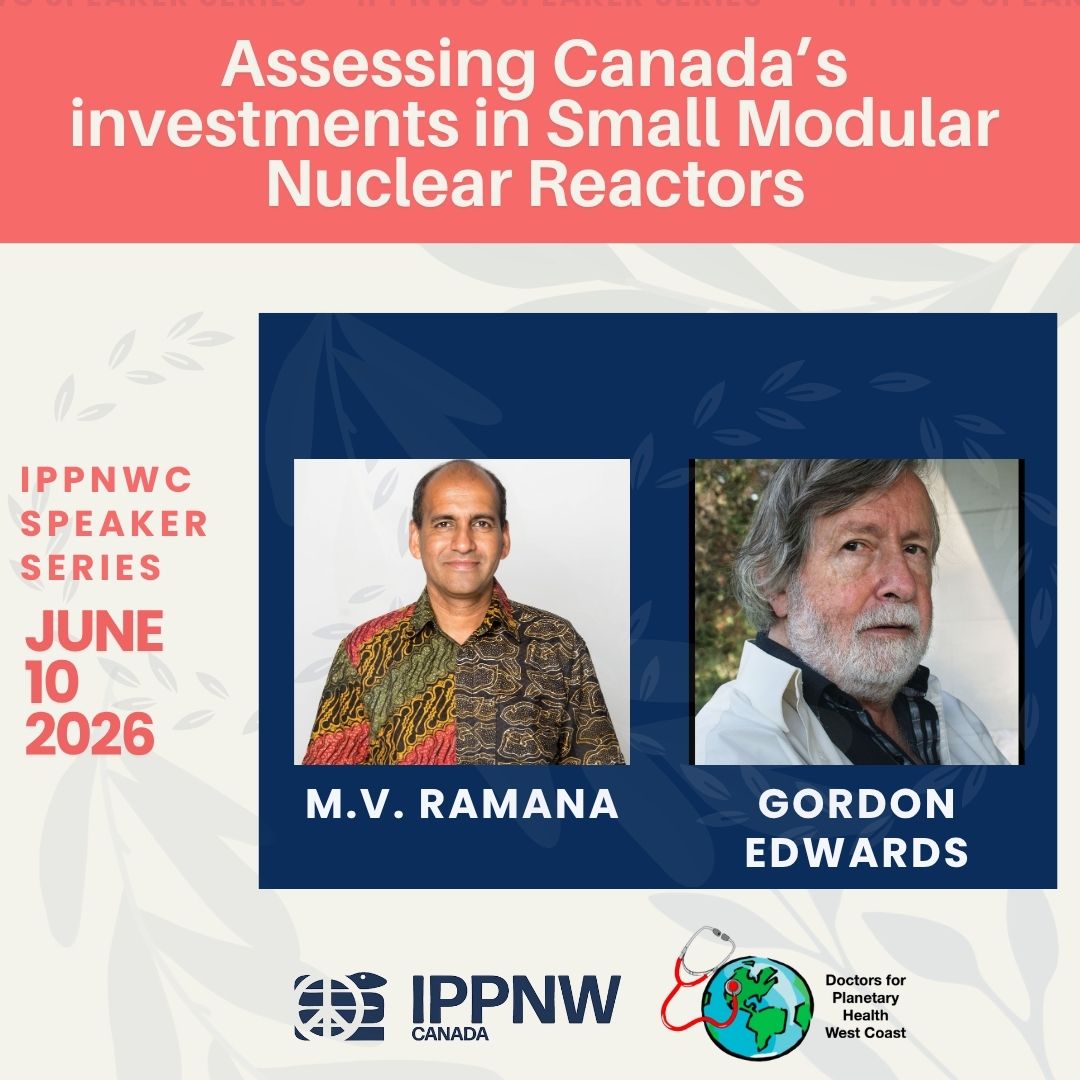
10 June – Assessing Canada’s Investments in Small Modular Nuclear Reactors – https://zoom.us/meeting/register/IiqHA5feRhaEBycOLNTJlA#/registration

Cuba Is Not a Failed State – It Is a Besieged State
PETITION: “Global Appeal to Endorse Palestinian Right of Return of Refugees”
To see nuclear-related stories in greater depth and intensity – go to https://nuclearinformation.wordpress.com
-
Archives
- June 2026 (89)
- May 2026 (306)
- April 2026 (356)
- March 2026 (251)
- February 2026 (268)
- January 2026 (308)
- December 2025 (358)
- November 2025 (359)
- October 2025 (376)
- September 2025 (257)
- August 2025 (319)
- July 2025 (230)
-
Categories
- 1
- 1 NUCLEAR ISSUES
- business and costs
- climate change
- culture and arts
- ENERGY
- environment
- health
- history
- indigenous issues
- Legal
- marketing of nuclear
- media
- opposition to nuclear
- PERSONAL STORIES
- politics
- politics international
- Religion and ethics
- safety
- secrets,lies and civil liberties
- spinbuster
- technology
- Uranium
- wastes
- weapons and war
- Women
- 2 WORLD
- ACTION
- AFRICA
- Atrocities
- AUSTRALIA
- Christina's notes
- Christina's themes
- culture and arts
- Events
- Fuk 2022
- Fuk 2023
- Fukushima 2017
- Fukushima 2018
- fukushima 2019
- Fukushima 2020
- Fukushima 2021
- general
- global warming
- Humour (God we need it)
- Nuclear
- RARE EARTHS
- Reference
- resources – print
- Resources -audiovicual
- Weekly Newsletter
- World
- World Nuclear
- YouTube
-
RSS
Entries RSS
Comments RSS
 nuclear-news