Rocky Flats development raises dangers of ionising radiation
Judith Mohling: Rocky Flats development risks exposure to nuclear radiation http://www.dailycamera.com/letters/ci_22620349/judith-mohling-rocky-flats-development-risks-exposure-nuclear 02/20/2013 Dr. Daniel A. Kinderlehrer illuminated many reasons for the current myriad of mental and physical illnesses in the United States (Guest commentary, Feb. 10). However, his excellent guest commentary and description of the “toxic chemical soup” we are all living in left out at least one major toxin: nuclear radiation. Continue reading
AUDIOS: nuclear whistleblowers
 AUDIOS: Nuclear Whisteblowers: Arnie Gundersen with special guest David Lochbaum… plus more Hanford troubles (AUDIO) http://enenews.com/nuclear-whisteblowers-arnie-gundersen-with-special-guest-david-lochbaum-plus-more-hanford-troubles-audio
Tri-CityHerald, Feb. 19, 2013: Donna Busche accused contractor Bechtel National and subcontractor URS Energy and Construction of working to fire her in retaliation for raising safety issues concerning the operation of the $12.3 billion vitrification plant — charges the company denies.
KLCC Eugene Oregon NPR, Feb. 18, 2013: Donna Busche, is the manager of environmental and nuclear safety for URS. That’s another top contractor on the waste treatment plant project. This month she filed a whistleblower lawsuit against Bechtel and her own company. She’s especially concerned about the plant’s complicated pre-treatment facility. Donna Busche: “I think there are serious issues with the quality, throughout the design and fabrication of that plant. When you have quality indeterminate and safety indeterminate, in the nuclear business, those must be addressed – with unwavering commitment to do the right thing. So I do not believe we have a safety basis for the pretreatment facility.”
Listen to the program here
Fairewinds Energy Education , Feb. 17, 2013: Are Whistleblowers Being Protected By The NRC? Not Really! […] Fairewinds Chief Engineer Arnie Gundersen and special guest David Lochbaum, the Director of Nuclear Safety for the Union of Concerned Scientists, compare experiences about how nuclear whistleblowers are NOT protected by the Nuclear Regulatory Commission if they bring safety concerns forward. They will also discuss examples citing instances of the NRC failing to support the legitimate concerns of whistleblowers in the nuclear industry, including inside the NRC itself.
Uranium Film Festival an eye- opener for Indian audiences
Eye-opening films http://www.thehindubusinessline.com/on-campus/eyeopening-films/article4427616.ece ANKITA CHAUDHURI, 17 Feb 13
Congenital deformities in newborns, genetic mutation, infertility, high rate of early mortality, cancer and other diseases are tell-tale signs of nuclear contamination.
A three-day film festival dedicated to independent films on nuclear power and the whole fuel chain questioned the value of human life and brings to fore the “callousness of authorities who ignore its dangerous impact”.
The aim was to spread awareness through cinema on issues such as uranium mining, nuclear power plants, nuclear medicine, nuclear waste, atomic bombs and radioactive hazards.
There are 19 nuclear reactors in India which generate 4,560 MW, with four more such plants being constructed. As India is becoming technologically advanced, the use of nuclear power for generating electricity is fast gaining momentum.
The festival sought to address the flipside of nuclear energy production and consumption. The probability of a nuclear accident may be very low but is not zero. Continue reading
UK nuclear submarine leaked radiation in Scottish waters
Radiation leak on nuclear sub off Scots coast Express UK , February 17, 2013 BRITAIN’S?nuclear?fleet?suffered?a?dangerous setback after a submarine was docked for emergency repairs following a radiation leak off Scotland. By: Marco Giannangeli HMS Tireless was taking part in a training exercise for new officers off the west coast 10 days ago when a problem developed in its ageing 30-year-old reactor system. Continue reading
The number of nuclear warheads based on submarines will no longer go down, it starts to rise again.

Russia today started mooring tests of the third Borey-class ballistic submarine “Vladimir Monomakh”.
Vladimir Monomakh will be the third and last Project 955 boat that is armed with 16 Bulava ballistic missiles. The fourth and subsequent boats will be Project 955A vessels with 20 missiles.
As BarentsObserver reported, the first submarine of the class, “Yury Dolgoruky”, was taken into service on January 10 after twelve years of construction. The second vessel of the class, “Aleksandr Nevsky” is currently undertaking sea trials and is due to enter service later this year. The fourth sub, “Knyaz Vladimir”, is under construction.
Sevmash shipyard in Severodvinsk reports that sea trials of “Vladimir Monomakh” will start this summer.
As previously reported by BarentsObserver, the inclusion of the “Yuri Dolgorukii” in the Northern Fleet marks a shift in Russia’s nuclear forces. The number of nuclear warheads based on submarines will no longer go down, it starts to rise again.

he fourth-generation missile submarine “Vladimir Monomakh” has started mooring tests. (Photo: Sevmash)
Vladimir Monomakh will be the third and last Project 955 boat that is armed with 16 Bulava ballistic missiles. The fourth and subsequent boats will be Project 955A vessels with 20 missiles.
As BarentsObserver reported, the first submarine of the class, “Yury Dolgoruky”, was taken into service on January 10 after twelve years of construction. The second vessel of the class, “Aleksandr Nevsky” is currently undertaking sea trials and is due to enter service later this year. The fourth sub, “Knyaz Vladimir”, is under construction.
Sevmash shipyard in Severodvinsk reports that sea trials of “Vladimir Monomakh” will start this summer.
As previously reported by BarentsObserver, the inclusion of the “Yuri Dolgorukii” in the Northern Fleet marks a shift in Russia’s nuclear forces. The number of nuclear warheads based on submarines will no longer go down, it starts to rise again.
http://barentsobserver.com/en/security/2013/01/third-borey-class-sub-starts-mooring-tests-18-01
Catastrophic spiral in Mali and Trident UK doesnt work!!
Published on Feb 17, 2013
President Obama may be talking about guns at the State of the Union address but he is not talking about the US Department of Justice kill list memo.
We talk to a member of Women of Africa, Alice Ukoko, about another military intervention by NATO countries in Africa. These and much more are all reviewed in this edition of Double Standards with Afshin Rattansi.
Watch this video on our Website: http://www.presstv.com/Program/289391…
Follow our Facebook on: https://www.facebook.com/presstvchannel
Follow our Twitter on: http://twitter.com/presstv
Follow our Tumblr on: http://presstvchannel.tumblr.com
Mox fuel for reactors in the UK, Europe and the Middle East could be built at Springfields Fuels facility – North England!

“When the economy recovers such that it becomes easier for investors to secure finance for major infrastructure projects, the opportunities for nuclear new build and the chance to maintain and service these reactors will open up.
“Whatever decisions we make at the moment, we have to think long-term, 15 to 20 years from now.”
Highly-skilled jobs to stay for next 60 years?
By David Coates
Published on Wednesday 20 February 2013 08:17
Highly-skilled jobs will remain at a Lancashire nuclear fuel factory for at least the next 60 years, according to an industry leader.
Mike Tynan, chief executive of Westinghouse UK, said its Springfields Fuels facility at Salwick, near Preston, would continue to build fuel for the country’s power stations for the next decade as it bids to secure a deal to build part of the new fleet of reactors.
He said he was “extremely confident” Westinghouse would build its AP1000 reactor in the UK with a site close to Sellafield in Cumbria the most likely location for the next development.
The boss, whose business has its head office at Matrix Park on Buckshaw Village, near Leyland, said the company remained committed to the facility which employs hundreds of workers.
He said: “Springfields has been making the country’s nuclear fuel for 60 years and I am confident it will continue to do so for the next 60 years.
“When the economy recovers such that it becomes easier for investors to secure finance for major infrastructure projects, the opportunities for nuclear new build and the chance to maintain and service these reactors will open up.
“Whatever decisions we make at the moment, we have to think long-term, 15 to 20 years from now.”
Westinghouse is also looking to build to build the AP1000 in Europe, with opportunities in the Czech Republic and Poland, and in the Middle East.
The company has confirmed any fuel for reactors in the UK, Europe and the Middle East could be built at Springfields.
Mr Tynan said NuGen, the European consortium which has an option to build a reactor the Moorside site, next to Sellafield, had backed Westinghouse’s bid to secure the green light from regulators for the AP1000 through the Generic Design Assessment process.
He said: “We have a long-term relationship with GDF and Iberdrola (the utility giants which own the NuGen consortium) and we would very much welcome our involvement at Moorside.
The chief executive added there had been no discussions around developing the sites at Heysham, near Morecambe, Bradwell in Essex and Hartlepool in County Durham, which are earmarked for new reactors.
http://www.lep.co.uk/news/business/highly-skilled-jobs-to-stay-for-next-60-years-1-5428408
http://www.sourcewatch.org/index.php/British_Nuclear_Fuels_plc_%28BNFL%29
Terminal problems with the electric car! No nuclear future? except the UK?
“….The UK Government has pledged to cover 75 per cent of the cost of thousands of new electric car charge points at people’s homes, on the streets, at railway stations and on the public sector estate.
Funding for the scheme comes from the Government’s £400 million commitment to increase the uptake of ultra-low emission vehicles and is available until April 2015…..”19 February 2013 By Edward Gen
“… According to the WSJ Environmental Capitol blog, Lux Research, a research and consulting firm that specializes in providing strategic analysis related to emerging technologies, believes high battery price, low oil prices, and low demand for new cars could limit the growth of hybrid electric cars.…”
Making Coal Car Batteries: The CO2 Impact

Posted on Jun 16, 2011
A London group with the comically oxymoronic name of Low Carbon Vehicle Partnership has been busy disproving its own sponsored premise. Turns out that manufacturing a battery for a typical “electric” car puts 3.8 tons of carbon dioxide into the atmosphere. That’s two-thirds of the carbon emitted in the manufacturing of a complete medium-sized gasoline car.
What additional carbon dioxide would be emitted in the process of scrapping or recycling millions of “electric” car batteries every year? As the LCVP admits, that remains one of our “gaps in understanding.”
The inescapable fact is that no automobile will ever be “low carbon.” Merely making these rolling piles of metal and plastic and lithium is inherently energy- and carbon-intensive.
DbC will say it again: Cars-first transportation was and is a capitalist pipe-dream.
Is a nuclear-powered car in our future?
September 1, 2011

Stevens hasn’t set a date on when his prototype will be completed, but whether this technology will ever see the light of day is a valid question. Judging from his past online posts in forums and news sites, he’s been touting this system for years despite his claim that auto manufacturers could have it working in vehicles within two years. And even if Stevens manages to pull off a thorium-powered car, it’s likely to raise safety concerns.
http://reviews.cnet.com/8301-13746_7-20100035-48/is-a-nuclear-powered-car-in-our-future/
Nuclear power undermines electric cars’ green image
Updated 2012-03-25
“….The government is trying to restart dozens of nuclear power plants for the first time since the Fukushimi disaster last year that resulted from the March earthquake and tsunami. Nuclear power now has a terrible image problem because of the fire and radiation leaks at the plant.
Since electric cars run on juice from the nuclear power plants, owners are having trouble trying to replace the green halo that they thought they could proudly wear before the disaster, the Associated Press reports, via Bloomberg BusinessWeek. In Japan, just as in the U.S., electric cars were being seen as important symbols of a green future. Nissan’s Leaf electric, among others, is made in Japan where it is sold in addition to being shipped to the U.S.
Electric cars have the same problem in the U.S., but it is generally overlooked. Much of the electricity in the U.S. is made from coal, oil or nuclear generation……”
“…..In Japan, electric car drivers are already feeling the heat. With nuclear likely to remain a major source of power, “then the green image of the electric car will get bashed to bits, maybe to the extent it will be irreparable,” Ryuichi Kino, who has written books on nuclear power and hybrid technology, is quoted as saying by the AP….”
Why we will never have nuclear powered cars
January 4th, 2013

For one thing, the regulatory hurdles to getting a nuclear reactor into an automobile are likely to be insurmountable. All nuclear power reactors must conform to strict safety and security guidelines.
Depleted Uranium in Afghanistan – Alex Newman
“..Camil said the U.S. should bear all costs and that those who ordered the use of DU during the “organized murder called war” should be tried as war criminals….”
“…The use of DU continues in Iraq today and something must be done, before there is more “collateral damage” (army jargon for civilian casualties including women and children) and before more of our troops die or become ill. Barber said that there are 150 troops with DU shrapnel inside them already….”
Alex Newman

Dear Editor,
The U.S. military has been using depleted uranium in Afghanistan and Iraq in violation of International Law for years. According to David Barber, a researcher at the University of Florida who has studied the effects of DU for the military for 5 years, the use of DU poses many serious threats to the health our troops, civilians in these regions, future generations and to the environment. I ask you to please read my article and if possible, to publish it. Most people have never heard of depleted uranium, and regardless of one`s political affiliation or stance on the war, the use of DU should stop. Please help me to inform your readers.
Thank you for your time.
Sincerely,
Alex Newman
The depleted uranium being used by the American military has nasty side effects on people and the environment, and the government is not taking any serious action to stop its use despite all the available information. Depleted uranium is useful to the army because of its extraordinary density, said David Barber of the Center for Environmental and Human Toxicology at the University of Florida. Barber has been studying the effects of DU for five years in a study funded by the U.S. military.
DU was first used by the Israeli military against Arabs and has since been adopted by the U.S. Scott Camil, a Vietnam veteran who is still active in defending the rights of veterans, is also familiar with DU.
Activists: Halt Keystone Pipeline!
breakingtheset
Published on Feb 19, 2013
Breaking the Set producer Ameera David covers the unprecedented keystone pipeline and climate change rally this past weekend in the nation’s capital.
LIKE Breaking The Set @ http://fb.me/BreakingTheSet
FOLLOW Ameera David@ http://twitter.com/AmeeraDavid
FOLLOW Abby Martin @ http://twitter.com/AbbyMartin
Bulgaria economy at point of no return: Over reliance on nuclear and coal? No sustainables
What we are seeing time and again is governments when they run businesses, they have too much inefficiency, they have too many layers, we’ve never seen a model of a governemnt running a business as efficient as a corporate sponsor. It’s sad and I feel sorry for these people I mean their bills have gone up tremendously.

Image source : http://www.bellona.org/articles/articles_2012/belen_referendum
The comment comes as several thousand people took to the streets across Bulgaria on Tuesday to protest against the right-wing government of Prime Minister Boyko Borisov.
Earlier on Monday, Bulgaria’s unpopular finance minister, Simeon Djankov, was removed from office after protests over high electricity bills snowballed into anti-government demonstrations.
“We’ve lived through communism and remember the personality cult towards (the dictator) Todor Zhivkov. But what we have now surpasses it — it’s Boyko for breakfast, Boyko for lunch, Boyko for dinner, while people don’t have anything to eat. We’re fed up,” a protester was quoted as saying.
Press TV has conducted an interview with economic expert Roland Amore to further discuss the issue. What follows is an approximate transcription of the interview.
Press TV: Many thanks for joining us here on Press TV sir. Now looking at the government’s plan for privatization of many public sector services specifically with regards to utilities it’s quite clear that the public is not happy with this move. What do you think the government can do now?
Amore: Well, you know the government, first of all thank you for having me on. The government has limited options, you’ve got to remember when they renationalize or if they renationalize basically in providing these services at a much cheaper price they don’t have the ability to do so. From a balance sheet or a revenue statement it’s really a subside.
What you see across Europe, you see it in Spain, you see it in Germany, you see it in Greece is decades of massive-state spending, has brought them to the point where they can no longer afford it.
I mean if Bulgaria wants to renationalize its utilities and subsidize the utility rate that puts an economic strain on them. Most of the European Union they’re at the last bit of financial recourses that they have. They have to look at other solutions. It’s either that or the countries themselves will go bankrupt.
It’s an unfortunate circumstance that has come to this but it’s the result of decades, not years but decades of massive-state spending which was done with good intentions. The problem is it defied good economics. It’s unfortunate but that’s what occurred.
Eutelsat’s boss continues war on media freedom ! Target Iran!

Image source : No free media with military censorship
19 Febuary 2013
Press TV
Eutelsat’s secretary Edoudardo Silverio has written a letter to Nilesat authorities, demanding them to stop broadcasting Iranian channels, including Press TV.
“We hereby officially request again that you discontinue the broadcast of these IRIB [Islamic Republic of Iran Broadcasting] channels within 48 hours of your receipt of this letter,” read the letter dated February 18.
The letter came in response to Nilesat’s refusal to pull the plug on Press TV.
In December 2012, a US intelligence analyst said the French-based satellite provider Eutelsat SA is a company whose agenda has been long dictated to it by Israeli extremist groups.
“Eutelsat is a person, not a company. Eutelsat says it is European, but it is actually Israeli. French sounding ‘Michel de Rosen’, an Israeli citizen, runs Eutelsat company with Israeli stockholders; a company long dictated to by extremist groups within Israel, the militant ultra-nationalists of the Likudist regime of [Israeli Prime Minister Benjamin] Netanyahu,” Gordon Duff told Press TV at that time.
Eutelsat SA ordered media services company, Arqiva, on October 15, 2012, to stop the broadcast of several Iranian satellite channels, including Press TV.
The company’s only press release stated that the decision was based on reinforced European Union Council sanctions and a confirmation by France’s broadcasting authority, but an EU spokesperson told Press TV that the sanctions contain no such orders.
KA/SS/SL
http://www.presstv.ir/detail/2013/02/19/289796/no-letup-in-eutelsat-war-on-free-media/
NJ Can’t Oversee Nuclear Materials, DC Circ. Again Rules
By Daniel Wilson Law360, New York (February 19, 2013, 6:30 PM ET) —

The D.C. Circuit on Tuesday invalidated for the second time a U.S. Nuclear Regulatory Commission decision transferring radioactive materials oversight for New Jersey-based sites to the state, saying the agency had failed to show it had properly exercised its transfer authority.
In a 2-1 decision, the three-judge panel vacated the NRC’s decision to transfer radioactive materials oversight for sites within New Jersey to the state, ruling the agency had not clearly shown which rules control the decommissioning of nuclear facilities in the state and related disposal…
Subscription or free trial for more (copy and paste a section of text to check for open version)
Between a rock and a hard place: How will US nuclear power compete with cheap shale gas?
So, where do you spend the money – on costly upgrades to reactors that cannot be guaranteed as sound, or on cheap gas, which cannot be guaranteed to be climate friendly unless combined with extensive deployment of carbon capture and storage technology?
Image source : Nuclear, oil, gas or coal? Pick your energy poison (3/21/2011 USA Today)
http://www.bellona.org/articles/articles_2013/nuclear%20and%20fracking
19/02-2013
A recent decision by US giant Duke Energy to shutter instead of repair the Crystal River nuclear plant in Florida could signal the shutdown of other older reactors as low shale gas prices undercut the cost of atomic energy plants, making investment in their upkeep bad economics
Several energy analysts postulate many more aged reactors could follow, unable to compete with cheaper natural gas installations.
But the environmental questions this entails are many: How will spreading shale gas recovery affect the environment? Where will orphaned US coal supplies go?
“What we are experiencing is that the coal mining industry is ramping up exports to Europe and even Asia,” said Bellona advisor Svend Søyland. “Several new export terminals are on the drawing board.”
From the touchy nuclear angle, can the US Government afford a raft of reactor decommissionings? And where will the 64,500 tons of spent nuclear fuel the US has already accrued be stored long-term – a question no country on earth has been able to answer?
Environmentally, many will enthusiastically greet nuclear shutdowns, despite the unresolved challenge of a permanent repository for nuclear waste.
But that enthusiasm is somewhat dampened when the booming shale gas industry is the alternative. The methane leaks at these gas sources are not yet properly assessed and the oil and gas industry thus far have been allowed to operate them with weak regulation decided on a state by state basis.
These methane leaks could outweigh the climate benefit of naural gas. Methane is a very potent greenhouse gas that is far more effective than CO2 at trapping heat. The same mass of methane would trap 72 times more heat than carbon dioxide over 20 years.
Shale gas a transitional energy source at best
“The US shale gas revolution on one hand is good because it replaces coal power and old nuclear plants,” said Nils Bøhmer, Bellona’s general manager and nuclear physicist. “But it should also put a big emphasis onmethane emissions associated with the production of Shale Gas.”
Bøhmer said Germany was managing a total phase out by 2022 of nuclear power by concentrating on the development of renewable energy sources.
“Shale gas cannot be an end goal in itself,” said Bøhmer. “The US must focus on the development of renewable energy lest it find itself far behind the rest of the world should shale gas demand spike, making it a no longer economically viable alternative.”
Bellona Advisor Keither Whiriskey added that, “Rapidly increasing demand for shale gas will quickly erode present cost advantage.”
Repair costs versus gas plant construction
Japan, Kazakhstan to work on building nuclear plants and defrauding voters??
Earlier this month, Japanese automobile firm Toyota announced it would launch a factory to produce SUVs in northern Kazakhstan.

Tuesday, February 19, 2013 –
Japan Atomic Power Co. signed on Monday an agreement with a Kazakh nuclear research facility to develop nuclear plants in the Central Asian state.

The Japanese firm reached the agreement with the National Nuclear Center, a research facility under state-operated nuclear firm Kazatomprom, Kaznex Invest reported Monday.
Kazakhstan, the world’s top exporter of nuclear fuel uranium, had been negotiating with Russian nuclear firm Rosatom to build Kazakhstan’s first nuclear plant.
As late as June 2012, Rosatom chief Sergei Kiriyenko said that the Russian nuclear agency was still waiting on Kazakhstan to choose a site for the nuclear site.

Image source : Kazakhstan’s ‘dirty’ election keeps Nursultan Nazarbayev in seat of power
see also,

According to the new agreement signed with Japan, the two countries will work together to build and launch nuclear plants and train personnel.
Japan also signed an agreement to enter a joint project to develop the Kokten-Kol deposit for tungsten and molybdenum.
“Talks on an investment accord between Japan and Kazakhstan saw a substantive agreement,” the Japanese foreign ministry said in a statement on Monday.
“Kazakhstan has abundant reserves of rare metals, rare earths, oil and natural gas, and Japanese companies have shown strong interest in advancing into the country.”
Earlier this month, Japanese automobile firm Toyota announced it would launch a factory to produce SUVs in northern Kazakhstan.
1 This Month
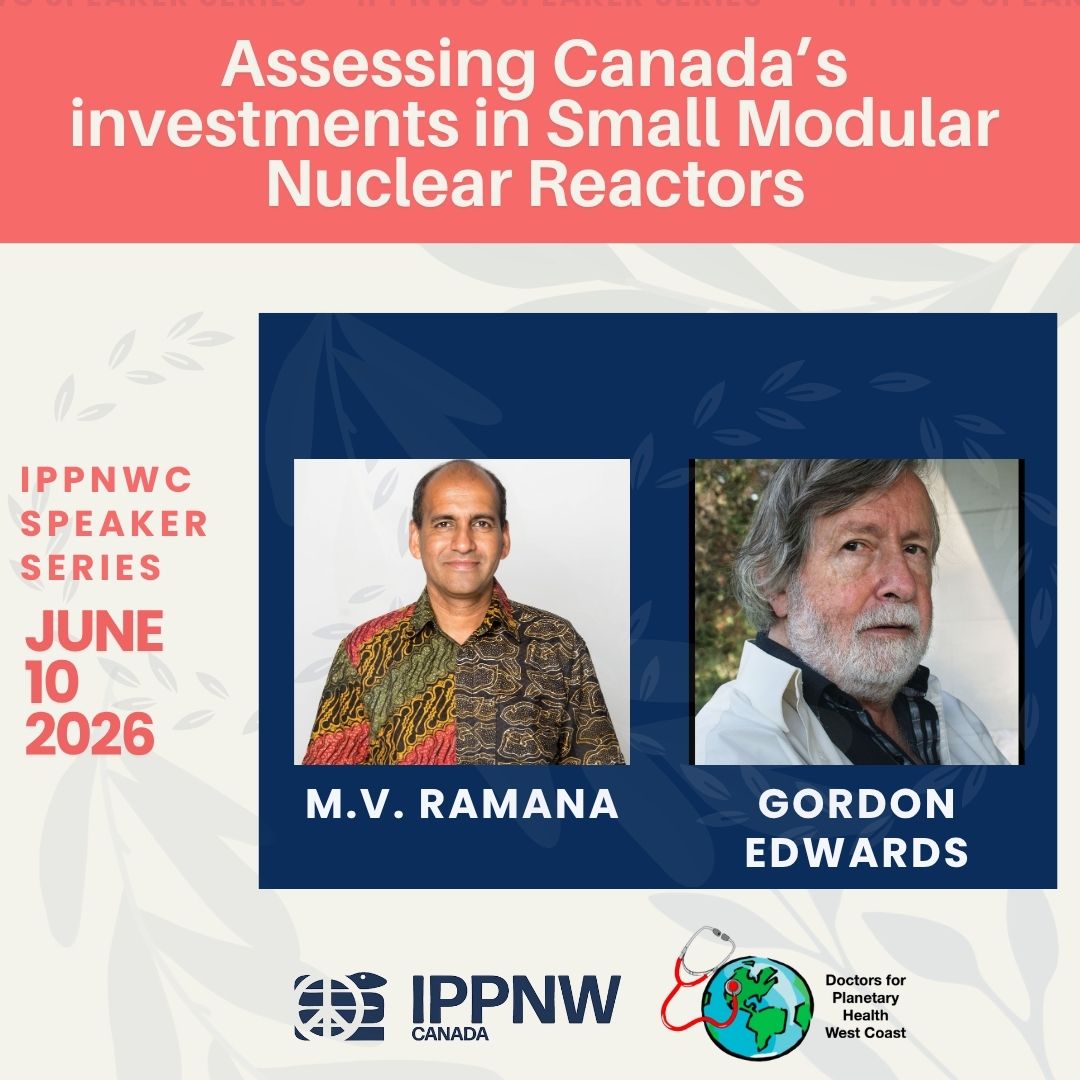
10 June – Assessing Canada’s Investments in Small Modular Nuclear Reactors – https://zoom.us/meeting/register/IiqHA5feRhaEBycOLNTJlA#/registration


Cuba Is Not a Failed State – It Is a Besieged State
PETITION: “Global Appeal to Endorse Palestinian Right of Return of Refugees”
To see nuclear-related stories in greater depth and intensity – go to https://nuclearinformation.wordpress.com
-
Archives
- June 2026 (89)
- May 2026 (306)
- April 2026 (356)
- March 2026 (251)
- February 2026 (268)
- January 2026 (308)
- December 2025 (358)
- November 2025 (359)
- October 2025 (376)
- September 2025 (257)
- August 2025 (319)
- July 2025 (230)
-
Categories
- 1
- 1 NUCLEAR ISSUES
- business and costs
- climate change
- culture and arts
- ENERGY
- environment
- health
- history
- indigenous issues
- Legal
- marketing of nuclear
- media
- opposition to nuclear
- PERSONAL STORIES
- politics
- politics international
- Religion and ethics
- safety
- secrets,lies and civil liberties
- spinbuster
- technology
- Uranium
- wastes
- weapons and war
- Women
- 2 WORLD
- ACTION
- AFRICA
- Atrocities
- AUSTRALIA
- Christina's notes
- Christina's themes
- culture and arts
- Events
- Fuk 2022
- Fuk 2023
- Fukushima 2017
- Fukushima 2018
- fukushima 2019
- Fukushima 2020
- Fukushima 2021
- general
- global warming
- Humour (God we need it)
- Nuclear
- RARE EARTHS
- Reference
- resources – print
- Resources -audiovicual
- Weekly Newsletter
- World
- World Nuclear
- YouTube
-
RSS
Entries RSS
Comments RSS
 nuclear-news