New Nuclear Waste Confidence Decision” (NWCD) designed to let nuclear power continue?
the fact that their best scenario now projects a repository to be ready by about 2050 is a story in itself.
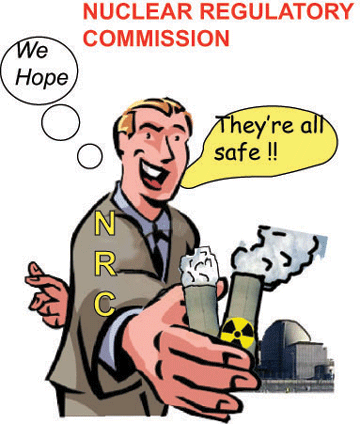 Seventy Years of Nuclear Fission, Thousands of Centuries of Nuclear Waste ,25 January 2013 By Gregg Levine, Truthout “…….Confidence Game
Two months after the Appeals Court found fault with the NRC’s imaginary waste mitigation scenario, the agency announced it would suspend the issuing of new reactor operating licenses, license renewals and construction licenses until the agency could craft a new plan for dealing with the nation’s growing spent nuclear fuel crisis. In drafting its new nuclear “Waste Confidence Decision” (NWCD) – the methodology used to assess the hazards of nuclear waste storage – the Commission said it would evaluate all possible options for resolving the issue.
At first, the NRC said this could include both generic and site-specific actions (remember, the court criticized the NRC’s generic appraisals of pool safety), but as the prescribed process now progresses, it appears any new rule will be designed to give the agency, and so, the industry, as much wiggle room as possible. Continue reading
Explosion at Iran’s Fordo uranium enrichment site. Is this report true?
 So far, I have not been able to find corroborating information on this. Please check out the comments below this item – some good points to alert us to the possibility that this is a hoax. And note the video below the blogs – reminder of the effect of the radio program “War of the Worlds” – which panicked people many decades ago. – C.M.
Report: Explosion Destroys Key Iran Nuclear Site http://www.tabletmag.com/scroll/122646/report-explosion-destroys-key-iran-nuclear-site A source is reporting much of the underground Fordo site has been hit By Adam Chandler|January 25, 2013 A few major sites that linked to WND story have removed it. I take that as a pretty good indication that this story cannot be confirmed.
According to World News Daily, a massive explosion is said to have destroyed most of Iran’s nuclear facility at Fordo.
An explosion deep within Iran’s Fordow nuclear facility has destroyed much of the installation and trapped about 240 personnel deep underground, according to a former intelligence officer of the Islamic regime.
The previously secret nuclear site has become a center for Iran’s nuclear activity because of the 2,700 centrifuges enriching uranium to the 20-percent level. A further enrichment to weapons grade would take only weeks, experts say.
The explosion is said to have taken place on Monday. The nuclear site is a high profile target given that it’s completely underground and recently reached nuclear capacity. Just earlier today, it was reported that the Iran could quadruple enrichment at the Fordo site.
While I am extremely skeptical of this report’s veracity until I hear more, this is potentially a massive development. More to come.
Indecision is a bore. Will San Onofre nuclear plant ever run again?
 Decision on sickly San Onofre nuclear power plant delayed http://www.scpr.org/blogs/news/2013/01/25/12206/decision-on-sickly-san-onofre-nuclear-power-plant/
AP | January 25th, 2013 It’s going to take a little longer to learn if California’s troubled San Onofre nuclear power plant will start again.
Federal regulators Friday pushed back their timetable to make a decision on Southern California Edison’s proposal to restart the Unit 2 reactor and run it at reduced power.
Nuclear Regulatory Commission officials said earlier that a ruling could come in March.
But the NRC has delayed that decision until at least late April or May.
The plant between San Diego and Los Angeles hasn’t produced electricity since a tiny radiation leak in January last year led to the discovery of excessive wear on hundreds of steam generator tubes that carry radioactive water.
Edison predicts running at low power will stop tube damage.
Environmentalists say the plant cannot run safely.
Running nuclear power plant – 45 times more costly than coal, and gas is even cheaper
while fuel costs [for nuclear power] are low, maintenance costs for enhanced
safeguards are rising.
UBS UBSN.VX -0.98% analyst Julien Dumoulin-Smith estimates fixed costs
per kilowatt of capacity at a nuclear plant are perhaps five times
those for a comparably sized coal plant.
Smaller nuclear plants, with less output over which to spread fixed
costs, suffer most.
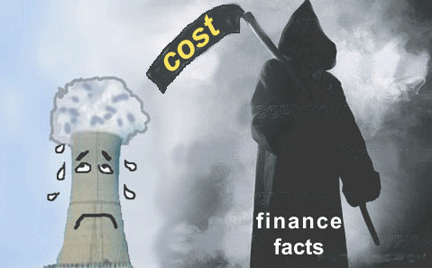
Gas Suffocates Nuclear Power
http://online.wsj.com/article/SB10001424127887323854904578263952157252768.html
Natural gas is poison for coal. But its toxicity also extends to
nuclear power. 25 Jan 13, Low gas prices have made it cheaper to run
gas-fired power plants more often and, because these plants often set
the wholesale electricity price, reduced power prices overall. Add on
tightening emissions standards, and coal plants have suffered, with
many expected to close.
But nuclear power stations haven’t escaped. Cheap electricity due to
weak gas prices hurts their profits, too. Continue reading
Dangers of nuclear spent fuel cooling ponds, and of dry cask storage
 Seventy Years of Nuclear Fission, Thousands of Centuries of Nuclear Waste ,25 January 2013 By Gregg Levine, Truthout “…….Everyone Out of the Pool
As disasters as far afield as the 2011 Tohoku earthquake and last October’s Hurricane Sandy have demonstrated, the storage of spent nuclear fuel in pools requires steady supplies of power and cool water. Any problem that prevents the active circulation of liquid through the spent fuel pools – be it a loss of electricity, the failure of a back-up pump, the clogging of a valve or a leak in the system – means the temperature in the pools will start to rise. If the cooling circuit is out long enough, the water in the pools will start to boil. If the water level dips (due to boiling or a leak) enough to expose hot fuel rods to the air, the metal cladding on the rods will start to burn, in turn heating the fuel even more, resulting in plumes of smoke carrying radioactive isotopes into the atmosphere.
And because these spent fuel pools are so full – containing as much as five times more fuel than they were originally designed to hold, and at densities that come close to those in reactor cores – they both heat stagnant water more quickly and reach volatile temperatures faster when exposed to air. Continue reading
10 big reasons to reject nuclear energy
 Reject Nuclear Power Here’s Why, Dissident Voice, by Jim McCluskey / January 25th, 2013 Citizens do not want nuclear power.1 They know it is both far too dangerous and far too expensive. Politicians want nuclear power because they know it puts Power in their hands. This is exactly paralleled by politicians embracing nuclear weapons. They think it gives them power and this is what they want above all else. Citizens do not want nuclear weapons because they know they are insanely dangerous and what they want is to live without the threat of sudden and complete annihilation hanging over them and their children at all times. As we will see there is a close relationship between the weapons and the power in every sense of the word.
Politicians have different agendas to the people on these issues. The remedy is for us to wise up, get organised and then instruct them to do what we want — or join the job market.
The main objections to nuclear power are outlined below under the following headings:
- Nuclear power stations are prohibitively dangerous
- Nuclear power stations are prohibitively expensive
- Nuclear power stations use the same technology as that required to manufacture nuclear weapons
- The resulting nuclear waste will be dangerous for thousands of years
- Plant and waste deposit storage are vulnerable to terrorist attack
- Nuclear power stations epitomise the centralisation of power
- Poor countries are made dependent on rich ones
- These plants draw funds away from the development of sustainable energy
- The uranium fuel will become increasingly scarce
- The support of nuclear power by government results from special pleading lobbying by the industry
These aspects are briefly expanded upon below.
Nuclear power stations are prohibitively dangerous…..
The support of nuclear power by government results from special pleading lobbying by the industry
The adoption of nuclear power is favoured by the government but in a referendum would be rejected by citizens as being too dangerous and too expensive. A major reason that government favours this form seems to be due to vast amounts of money and effort being put into lobbying by the power companies. Their profits are huge so they have the funds for lobbying whereas the NGOs and citizens at large who are against nuclear power and have overwhelming arguments do not make the same impact because they lack the funds for effective lobbying.
This is one tendency which we are trying to help counter by this article! http://dissidentvoice.org/2013/01/reject-nuclear-power/
Over 5 months, radiation in Fukushima soil nearly doubled
TV: Radiation levels nearly doubled in Fukushima soil sample over 5-month period (VIDEO) http://enenews.com/watch-radiation-levels-doubled-fukushima-soil-sample-5-month-period-video
Title: ReUpload. Full Version Upload was Rejected !!! 音声入りが上がりません
Source: guardianofmiyagi
Date: Jan 24, 2013
Riverside soil samples from same location in Aizu, Fukushima (~100 kilometers west of Fukushima Daiichi)
December 2011: 8,790 becquerels per kilogram of cesium 134 & 137
April 2012: 17,000 becquerels per kilogram of cesium 134 & 137
Watch the video here
USA’s EPA gave miners more than 1,500 permits to pollute deep aquifers
In a parched world, Mexico City is sending a message: Deep, unknown potential sources of drinking water matter, and the U.S. pollutes them at its peril.
Message from Mexico: The US is Polluting Water it May Someday Need to Drink, World News Curator , January 25, 2013 By OryanWNC. By Abrahm Lustgarten from ProPublica Mexico City plans to draw drinking water from a mile-deep aquifer, according to a report in the Los Angeles Times. The Mexican effort challenges a key tenet of U.S. clean water policy: that water far underground can be intentionally polluted because it will never be used.
U.S. environmental regulators have long assumed that reservoirs located thousands of feet underground will be too expensive to tap. So even as population increases, temperatures rise, and traditional water supplies dry up, American scientists and policy-makers often exempt these deep aquifers from clean water protections and allow energy and mining companies to inject pollutants directly into them.
As ProPublica has reported in an ongoing investigation about America’s management of its underground water, the U.S. Environmental Protection Agency has issued more than 1,500 permits for companies to pollute such aquifers in some of the driest regions. Frequently, the reason was that the water lies too deep to be worth protecting. Continue reading
Atoms for Peace, Problems Forever
 leaves America today with what amounts to over five dozen nominally temporary repositories for high-level radioactive waste – and no defined plan to change that situation anytime soon.
Seventy Years of Nuclear Fission, Thousands of Centuries of Nuclear Waste ,25 January 2013 By Gregg Levine, Truthout “……The Manhattan Project’s goal was a bomb, but soon after the end of the war, scientists, politicians, the military and private industry looked for ways to harness the power of the atom for civilian use, or, perhaps more to the point, for commercial profit. Fifteen years to the day after CP-1 achieved criticality, President Dwight Eisenhower threw a ceremonial switch to start the reactor at Shippingport, Pennsylvania, which was billed as the first full-scale nuclear power plant built expressly for civilian electrical generation.
Shippingport was, in reality, little more than a submarine engine on blocks, but the nuclear industry and its acolytes will say that it was the beginning of billions of kilowatts of power, promoted (without a hint of irony) as “clean, safe and too cheap to meter.” It was also, however, the beginning of what is now a weightier legacy: 72,000 tons of nuclear waste.
Atoms for Peace, Problems Forever
News of Fermi’s initial success was communicated by physicist Arthur Compton to the head of the National Defense Research Committee, James Conant, with artistically coded flair:
Compton: The Italian navigator has landed in the New World.
Conant: How were the natives?
Compton: Very friendly.
But soon after that initial success, CP-1 was disassembled and reassembled a short drive away, in Red Gate Woods. The optimism of the physicists notwithstanding, it was thought best to continue the experiments with better radiation shielding – and slightly removed from the center of a heavily populated campus. The move was perhaps the first necessitated by the uneasy relationship between fissile material and the health and safety of those around it, but if it was understood as a broader cautionary tale, no one let that get in the way of “progress.” Continue reading
Farmers worried about nuclear waste dumping near Great Lakes
Plan for nuclear waste storage should be met with caution, says farmers union president http://huron.bulletnewscanada.ca/2013/01/25/plan-for-nuclear-waste-storage-should-be-met-with-caution-says-farmers-union-president/
CENTRAL HURON – The idea of storing high-level nuclear waste in Central Huron should be met with caution, says a local farmers union president.
“The decision to put all of Canada’s high level radioactive reactor fuel waste under some of Canada’s best farm land and beside the Great Lakes is one that should be considered very cautiously” said Tony McQuail, who is the president of the Huron National Farmers Union (NFU) Local 335.In co-operation with the Huron District of the Christian Farmers Federation of Ontario, Huron NFU has scheduled an information session on Saturday, Feb. 9 at 2 p.m. at the Regional Equine and Agricultural Centre of Huron, which is located in Clinton. It expects to have information on both the benefits and risks of storing the country high-level nuclear waste. Continue reading
“Death River” Over 30μSv/h, Over 400,000 Bq/Kg of Radioactive Cesium
Published on Jan 25, 2013
Duration 2.37 mins
|
Discharge: 67.3 m³/s
Length: 239 km
|

Fukushima decontamination company is dumping radioactive mud from decontamination to Abukuma river

Basin area is 5,400km2. More than 1,389,000 people use the water, runs for 239 km.
@chummiboy
於保清見
福島県民の目撃・「福島を流れる阿武隈川に夜どんどん車が向かっていて一体何を しているのかと思ったら除染作業で出た大量の汚染土を阿武隈川に捨てている。それを見て、その阿 武隈川の水を飲まないといけない生活はもうできないとゾッとして、福島には居られないと思い移住してきた。」Source
<Translate>
A Fukushima citizen watched lots of trucks go to Abukuma river at night. They came to the river to dump tones of the radioactive mud made from decontamination. He was terrified to think he has to drink the water from the river, decided to evacuate Fukushima.
<End>
Fukushima decontamination company is dumping radioactive mud from decontamination to Abukuma river
Koriyama- Toshio Yanagihara Speaks at UN Human Rights Council -“Save the children NOW!”
30 October 2012
Published on Jan 25, 2013
Duration 13.58 mins
Fukushima Collective Evacuation Trial is a citizen’s collective lawsuit demanding the local government of Koriyama City, Fukushima to evacuate the children to the areas under 1mS/y of background radioactive dose.
If the case of the children in Koriyama is approved by the court, other authorities of the high radiation areas will have to embrace this standard and ensure children the unconditional support for the evacuation.
The Fukushima Collective Evacuation Trial
http://fukushima-evacuation-e.blogspot.jp/
World Network for Saving Children from Radiation
http://www.save-children-from-radiation.org/
USA-Hagel walks back from anti-nuclear positions in his “flip flops”
“…The Global Zero nuclear pledge Hagel signed, however, states, “We, the undersigned, believe that to protect our children, our grandchildren and our civilization from the threat of nuclear catastrophe, we must eliminate all nuclear weapons globally.”….”
BY: Bill Gertz
January 25, 2013 4:48 pm
Sen. Chuck Hagel backed down this week from previously held positions on nuclear arms cuts during meetings with senators who are considering his nomination to be defense secretary in an apparent effort to sway those concerned about his liberal anti-nuclear views.
Hagel has told senators he is no longer a staunch supporter of the nuclear weapons views of retired Marine Corps Gen. James Cartwright, who authored an anti-nuclear weapons report sponsored by the international disarmament group Global Zero.
“Hagel has thrown Cartwright under the bus about the Global Zero [report] in his meetings with senators,” said a congressional aide familiar with the closed-door sessions.
An administration official working with Hagel on the confirmation disputed the notion the former senator is changing his views during the meetings.
“He is answering questions and clarifying his long-held beliefs…about our nuclear arsenal,” the official said.
The official said Hagel believes that as long as there are nuclear threats the United States needs a safe, strong and ready nuclear arsenal and supports keeping all legs of the nuclear triad – land-based and sea-based missiles and bombers.
The former Republican senator from Nebraska has come under fire from national security specialists in the Senate and outside government who are concerned he would adopt radical anti-nuclear policies as defense secretary.
Hagel took part in a six-member Global Zero Nuclear Policy Commission headed by Cartwright that called for cutting United States nuclear warheads to 900 strategic weapons by 2022, with 450 deployed and the rest in storage.
Sen. Bob Corker (R., Tenn.) raised the issue of Hagel’s support for the Global Zero nuclear cuts during the nomination hearing Thursday of Sen. John Kerry (D., Mass.) to be secretary of state.
“[Hagel] was part of a group called Global Zero, and for those of us who care deeply about our nuclear arsenal and modernization and that type of thing, some of the things that were authored in this report candidly are just concerning,” Corker said.
Corker, new ranking Republican on the Senate Foreign Relations Committee, said that if Hagel is confirmed for defense secretary, the traditional balance between the State Department, which favors arms control, and the Pentagon, which supports the weapons, “is not going to be there.”
Corker said the Obama administration’s promised nuclear modernization that was a key to gaining Republican support for ratifying the 2010 New STARTarms treaty with Russia “is not occurring.”
Kerry defended Hagel as “mainstream” even as he challenged those who, like Hagel, have advocated for the complete elimination of nuclear arms. “I believe in deterrence, and I find it very hard to think how you can get down to that number [zero] in today’s world,” Kerry said.
Kerry said the complete elimination of nuclear arms is “aspirational, but it’s not something that could happen in today’s world and nor could any leader today sit here or in any other chair and promote to you the notion that we ought to be cutting down our deterrent level below an adequate level to maintain deterrence.”
Kerry said Hagel is “realistic” about arms cuts and does not believe the former senator would go to the Pentagon and eliminate all nuclear weapons if he is confirmed as defense secretary. “It’s worth aspiring to, but we’ll be lucky if we get there in however many centuries the way we’re going,” he said.
The Pentagon, in its lobbying effort to win confirmation, recently published a list of “myths” about Hagel, including the claim that “Hagel would weaken our nuclear deterrent.”
The report says Hagel believes the United States and “mankind” should “work towards a world free of nuclear weapons—a goal that is squarely in line with the vision President Obama.”
However, it stated that Hagel has always believed that as long as nuclear threats exist “the United States must maintain a strong and ready nuclear arsenal.”
Earthquake Friday near Flamanville Nuclear and EDF ramp up UK nuclear shelf lifes
“…The French Flamanville project is years behind schedule and billions of euros over budget at 8.5 billion euros….”
Distance from Flamanville Nuclear Power Plant 11.07 km
Distance from La Hague Reprosessing 21.43 km
Magnitude 3
Depth 2 Km
EDIS number EQ-20130125-301017-FRA
Friday, January 25, 2013 at 15:38 in the afternoon at epicenter
http://hisz.rsoe.hu/alertmap/site/index.php?pageid=seism_index&rid=301017
EDF eyes 10-year extension for UK nuclear plant
Fri, 25th Jan 2013 16:35
By Karolin Schaps
LONDON, Jan 25 (Reuters) – French utility EDF could run its Dungeness B
 plant in south-east England for another 10 years beyond its current shutdown date in 2018, the company’s UK chief executive said.
The commercial decision to run nuclear plants beyond current decommissioning dates are in the hands of their operators, while Britain’s nuclear regulator reviews the plants’ safety on a regular basis and has the power to order the shutdown of a plant if it deems it not safely operated.
Last month EDF, the UK’s biggest nuclear power operator, said it expected an average 7-year lifetime extension across its UK nuclear fleet, but it now sees a longer extension of its 1,040 megawatt (MW) Dungeness B power plant, according to an update sent to employees by chief executive Vincent de Rivaz, and seen by Reuters.
‘Our judgement, at this stage, is that there is the potential for a 10 year extension to the life of Dungeness B,’ he said, adding that a decision on the extension was planned by the end of 2014.
EDF, which operates eight of Britain’s nine nuclear power stations, last month announced a 7-year lifetime extension at its Hinkley Point B and Hunterston B nuclear plants to 2023.
EDF, whose UK operations contributed about 13 percent of its turnover in the first nine months of 2012, plans to build four new nuclear plants in Britain, with the first expected to open at Hinkley Point in Somerset.
Nuclear dispute with Iran must be resolved peacefully: IAEA chief
During a meeting with Israeli President Shimon Peres at the World Economic Forum in Switzerland on Thursday, Amano said the Vienna-based UN body has intensified “dialogue” with Iran.
Iran and the IAEA wrapped up two days of talks in the Iranian capital Tehran on January 17-18. The IAEA has announced that the next round of talks with Tehran will be held in the Iranian capital on February 13.
According to a statement released by the IAEA on Friday, Amano “made clear the Agency’s commitment to dialogue, and the need to resolve issues with Iran through diplomatic means.”
The comments come after Israeli Prime Minister Benjamin Netanyahu once again threatened Iran over its nuclear energy program in an election victory speech on January 23.
The United States, Israel and some of their allies have repeatedly accused Iran of pursuing non-civilian objectives in its nuclear energy program.
Iran has categorically rejected the allegation, arguing that as a committed signatory to the Non-Proliferation Treaty (NPT) and a member of the IAEA, it is entitled to develop and acquire nuclear technology for peaceful purposes.
“Amano also stressed the importance of a successfulconference on a Middle East free of nuclear and other weapons of mass destruction,” the IAEA statement added.
Israel, the only possessor of nuclear weapons in the Middle East, is widely known to have between 200 and 400 nuclear warheads.
The Israeli regime rejects all the regulatory international nuclear agreements — the NPT in particular — and refuses to allow its nuclear facilities to come under international regulatory inspections.
MP/HMV/SS
http://www.presstv.ir/detail/2013/01/25/285515/iran-ncase-must-be-resolved-peacefully/
1 This Month
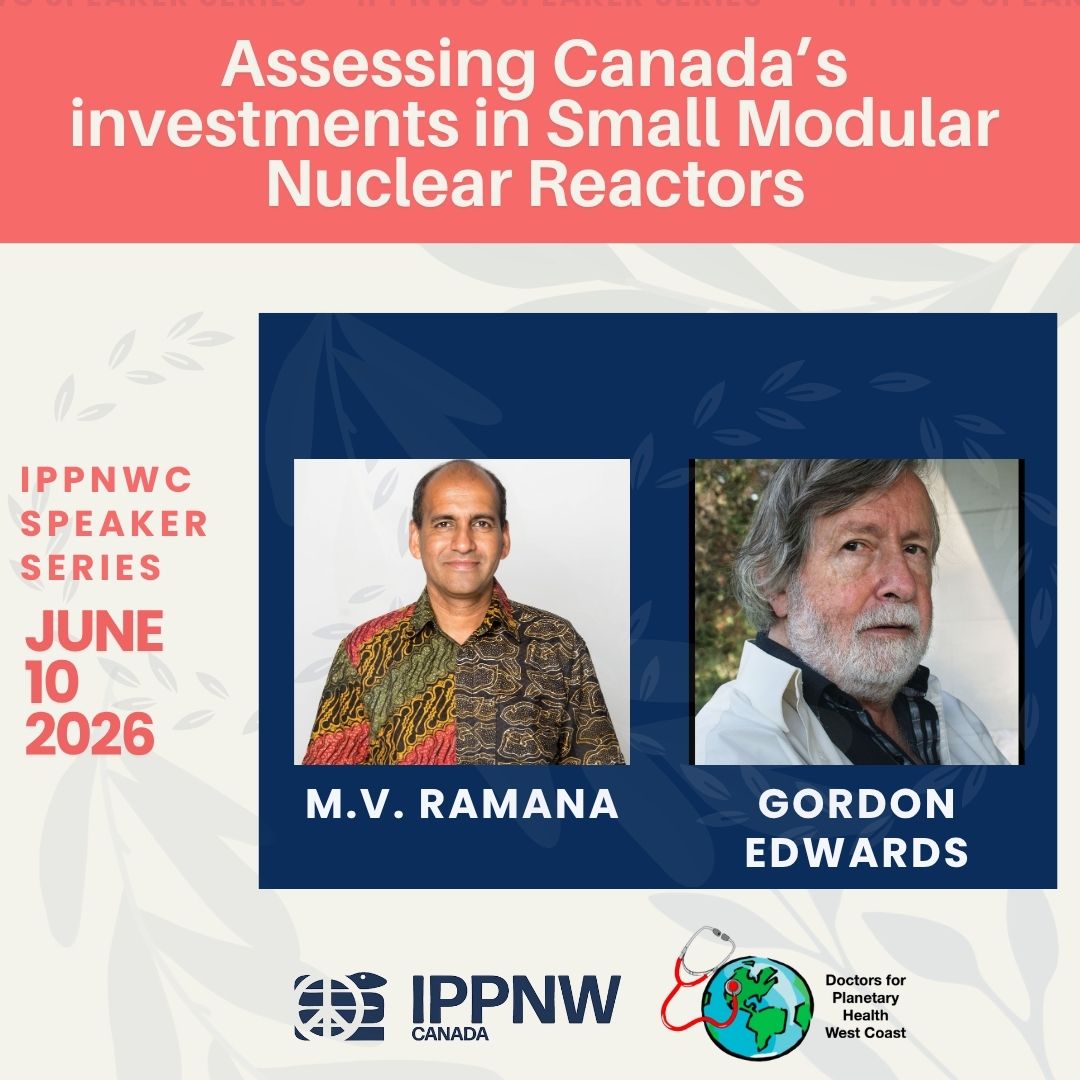
10 June – Assessing Canada’s Investments in Small Modular Nuclear Reactors – https://zoom.us/meeting/register/IiqHA5feRhaEBycOLNTJlA#/registration


Cuba Is Not a Failed State – It Is a Besieged State
PETITION: “Global Appeal to Endorse Palestinian Right of Return of Refugees”
To see nuclear-related stories in greater depth and intensity – go to https://nuclearinformation.wordpress.com
-
Archives
- June 2026 (89)
- May 2026 (306)
- April 2026 (356)
- March 2026 (251)
- February 2026 (268)
- January 2026 (308)
- December 2025 (358)
- November 2025 (359)
- October 2025 (376)
- September 2025 (257)
- August 2025 (319)
- July 2025 (230)
-
Categories
- 1
- 1 NUCLEAR ISSUES
- business and costs
- climate change
- culture and arts
- ENERGY
- environment
- health
- history
- indigenous issues
- Legal
- marketing of nuclear
- media
- opposition to nuclear
- PERSONAL STORIES
- politics
- politics international
- Religion and ethics
- safety
- secrets,lies and civil liberties
- spinbuster
- technology
- Uranium
- wastes
- weapons and war
- Women
- 2 WORLD
- ACTION
- AFRICA
- Atrocities
- AUSTRALIA
- Christina's notes
- Christina's themes
- culture and arts
- Events
- Fuk 2022
- Fuk 2023
- Fukushima 2017
- Fukushima 2018
- fukushima 2019
- Fukushima 2020
- Fukushima 2021
- general
- global warming
- Humour (God we need it)
- Nuclear
- RARE EARTHS
- Reference
- resources – print
- Resources -audiovicual
- Weekly Newsletter
- World
- World Nuclear
- YouTube
-
RSS
Entries RSS
Comments RSS
 nuclear-news