France slams media blackout on Mali war -PressTV
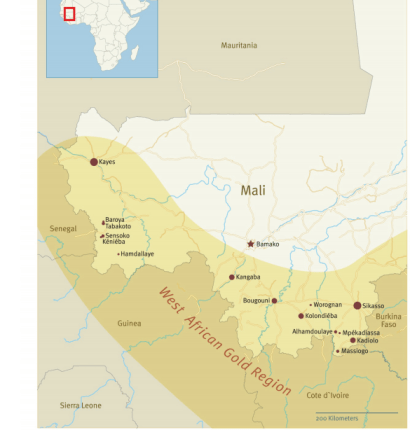
On January 11, France launched the war under the pretext of halting the advance of fighters in Mali. However, as Paris has stepped up its ground offensive and aerial strikes in Mali few images of the conflict have come out of the African country.
French networks TF1 and France Televisions have also sent several teams to Bamako, but a media blackout on images of the clashes has confined all journalists to the city.
This comes as French Defense Minister Jean-Yves Le Drian has said the number of French troops on the ground in the West African country could top the initially-planned number of 2,500.
“Two thousand five hundred is what was initially announced, maybe that will be exceeded,” Le Drian said in a Saturday television interview.
Also on Sunday, Le Drian announced that Paris’ goal in the African country “is the total reconquest of Mali,” adding, “We will not leave any pockets” of resistance.
Meanwhile, the United Nations refugee agency, UNHCR, said it was preparing for around 700,000 people to flee the violence in Mali.
The United States, Canada, Britain, Belgium, Germany, and Denmark have already said they would support the French war against Mali.
The Economic Community of West African States (ECOWAS) has also pledged to support the French war by sending 5,800 soldiers to Mali.
Some analysts believe that Malian abandoned naturalresources, including gold and uranium reserves, could be one of the reasons behind French war on the country.
http://www.presstv.ir/detail/2013/01/21/284689/france-slams-media-blackout-on-mali-war/
In the West’s grab for resources, it’s convenient to blame Al Qaeda
RT: Africa has plenty of untapped natural resources. Which countries appear most interested in securing and possibly expanding their interests there? And how could those interests clash?
NC: Very possibly, because I think obviously France from Mr. Hollande’s point of view – their economy is in a very bad state in France – and I think that he is hoping that a successful intervention in Mali would boost his popularity ratings back home. So, it’s a uranium issue and how France needs uranium there. And Mali is a big producer of uranium.
the west wants resources, the west wants to get control of resources in this region
‘Al-Qaeda threat used by NATO as smoke screen for re-colonization of Northern Africa’, RT 21 Jan 13,
The UK is providing logistical air assistance, while the United States is providing surveillance and other intelligence help. Continue reading
Corporations circle around for lucrative nuclear waste cleanup
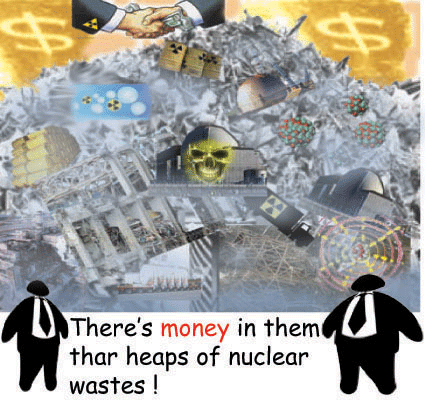 UK firms to bid for Japan’s nuclear clean-up
http://www.independent.co.uk/news/business/news/uk-firms-to-bid-for-japans-nuclear-cleanup-8458524.html
MARK LEFTLY, 20 JANUARY 2013 British engineers Amec, Babcock
International, and Atkins are believed to be circling nuclear
decommissioning work estimated to be worth at least $5bn (£3.2bn) in
Japan as a result of the Fukushima disaster.
The new Japanese government is thought to be preparing decommissioning
contracts that will include Fukushima’s Daiichi plant, which was
overwhelmed by a tsunami in 2011, and other reactors in seismically
endangered areas.
A nuclear source said bids could be invited for the clean-up work
before the end of the year, with British groups in a strong position
due to all the decommissioning work that has been undertaken in the
UK.
US-owned Energy Solutions will also be interested.
“This is a huge opportunity,” claimed the source. “Japan should start
making some real progress on decommissioning now.”
USA: In 2012 49% of new energy capacity was renewable
 Nearly half of new U.S. power capacity in 2012 was renewable — mostly wind Grist, By Philip Bump, 18 Jan 13 As predicted, almost half of the new power-generating capacity installed in the United States last year was renewable.
 The Federal Energy Regulatory Commission recently released its December update on the nation’s energy infrastructure [PDF]. When we last checked on the data, it suggested that some 46 percent of new capacity — January through October — was renewable. Well, that ratio improved over the last two months of the year. Ultimately, 49.1 percent of new capacity was renewable….. http://grist.org/news/nearly-half-of-new-u-s-power-capacity-in-2012-was-renewable-mostly-wind/#.UPoHA3lLia4.twitter
Swiss referendum might bring earlier shutdown for nuclear power
 Swiss to vote on new proposal for phase out
http://www.world-nuclear-news.org/NP-Swiss_to_vote_on_phase_out_initiative-1801134.html
18 January 2013
 A Green-led initiative to phase out the use of nuclear energy in
Switzerland by 2029 has secured enough support for a national
referendum on the issue to be held. A date for the vote has yet to be
announced. Continue reading
Blood tests, with no radiation hazard, may replace mammograms
 Mammogram problems A recent study in the British Medical Journal suggested mammograms may actually increase the risk of breast cancer in young women with a mutated BRCA1 or BRCA2 gene due to the radiation exposure. False positives (where the test incorrectly shows breast cancer) and false negatives (where it fails to detect breast cancer) are also not uncommon
Blood tests may replace mammograms Telegraph (Sydney) Leanne Hudson January 19, 2013
SCIENTISTS are investigating a more accurate, less invasive test for breast cancer. Baring your breasts in front of strangers and having your flesh uncomfortably pressed between two pieces of plastic – a procedure commonly known as a mammogram – is the standard test for breast cancer In future, all you may need to do is have a simple blood test. Continue reading
Virginia uranium might well not be profitable, after all
 “The industry needs prices at $75 or $80 a pound for future mine production to be profitable.” Thus, the uranium market has a long way to go before the 119 million pound tract around Coles Hill Farm east of Chatham, said to be the largest in the U.S., can actually be profitable to mine.
This is a fact that Virginia Uranium hasn’t really advertised..
The Wobbly World of Global Uranium Prices, Bacon’s Rebellion,
January 19, 2013 by Peter Galuszka
Highly controversial plans to mine and mill a rich tract of uranium in Pittsylvania County are before the General Assembly. Plenty of studies, lobbyists and scads of money are being thrown about on both sides of the argument.
Yet a brief story on page B7 in today’s Wall Street Journal deals with a topic that may be the truly decisive factor in the project…… Continue reading
Existence of nuclear weapons poses an increasing danger
 “There are no right hands for wrong weapons,”
UN chief Ban Ki-moon warns nuclear weapons, terrorists a rising threat, Santa Cruz Sentinel, Monterey: Ban Ki-moon says disarmament efforts off track
Secretary-General Ban Ki-moon told a crowd of about 200 invitation-only guests at the Monterey Institute of International Studies that nuclear disarmament progress “is off track.”
“Delay comes with a much higher price tag,” he said. “The longer we delay, the greater the risk that these weapons will be used … and even terrorists may acquire these nuclear bombs.” Continue reading
Japanese professors remind public of the story of hibakusha
 The next few years will be crucial in collecting oral
histories from hibakusha. I feel a sense of responsibility as the last
generation that can learn directly from the victims.
INTERVIEW: Scholars call for greater cooperation between Hiroshima,
Nagasaki in anti-nuclear push January 20, 2013 THE ASAHI SHIMBUN
Two scholars who have spent their careers collating first-hand
accounts of atomic victims from Hiroshima and Nagasaki and using those
experiences to push for nuclear disarmament sat down with The Asahi
Shimbun to talk about their research into the 1945 attacks.
Taeko Kiriya, 32, is an assistant professor at the Hiroshima Peace
Institute of Hiroshima City University while Keiko Nakamura, 40, is an
associate professor at the Research Center for Nuclear Weapons
Abolition (RECNA) at Nagasaki University.
Excerpts of the interviews follow:…… Continue reading
Japan’s govt confirms cases of badly done nuclear decontamination work
CROOKED CLEANUP: Government confirms 5 cases of shoddy decontamination
work January 18, 2013 THE ASAHI SHIMBUN
The Environment Ministry on Jan. 18 said that there have been five
cases of shoddy decontamination work around the crippled Fukushima No.
1 nuclear power plant and has punished the general contractors
involved in the cleanup effort.
In the five instances, three general contractors were ordered to take
corrective actions, the ministry said on Jan. 18 in its report on the
investigation into the central government-commissioned work, following
reports of the suspected such dumping of potentially radioactive
debris. Two other contractors were given guidance on following proper
procedures.
The ministry also announced that countermeasures would be taken for
preventing illegal dumping in the future….
http://ajw.asahi.com/article/0311disaster/fukushima/AJ201301180075
Removing uranium from water – Kansas residents willing to pay for this
Kansas communities pay to rid water of uranium, Enquirer Herald, 20 Jan 13, The Associated Press KANSAS CITY, Mo. — Residents across Kansas have safer drinking water thanks to steps their communities have taken to rid the water of harmful elements such as uranium and arsenic. But those residents also are facing considerable hikes in water bills to pay for the improvements.
Lakin residents are paying water rates about 10 times higher than they had before the city began construction on a $6.5 million water treatment plant to eliminate naturally-occurring uranium from the drinking water.
Rates are up about three times in Clay Center, where the city has built a $10-million treatment plant also to deal with uranium, which can occur in some aquifers….. http://www.enquirerherald.com/2013/01/20/2276642/kansas-communities-pay-to-rid.html
World Nuclear Electricity Generation Down 5 Percent Since 2006 and Canada issues
SUNDAY, JANUARY 20, 2013

completely (two at Bruce and one at Clarington) and
Russian nuclear icebreaker traversing Norwegian waters, worrying Bellona
The Russian nuclear icebreaker, the Rossiya, has left the Murmansk-based icebreaker port of Atomflot on Tuesday en route to the St. Petersburg area on what is likely to be its last voyage of Russia’s forth-oldest ship of this type.

Charles Digges, 17/01-2013

The icebreaker will likely be taken out of service because it has surpassed its intended useful lifespan.
As of 11:00 Central European time Thursday, the Rossiya was located 200 kilometers east southeast of the Northern Norwegian city of Bodø travelling at 17 knots, according to the Norwegian Coastal Administration (NCA).
Nils Bøhmer, Bellona’s general manager and nuclear physicist expressed concern that the Rossiya would be completing the some 5000 kilometer along Norway’s 100,000 kilometer-long coastline as it steams to the Gulf of Finland where it will be deployed until April to help with commercial ship navigation in icy conditions, he said.
He said the potential for accidents aboard the vessel such as fires or reactor trouble were heightened because of its age. The vessel put to sea in 1985.
Bøhmer said NCA officials were notified on Christmas that the Rossiya would be sailing along its coast, but – as has happened in the past to the chagrin of Norwegian authorities – officials were given no specific dates for the voyage.
The ship’s route will take it from Russia’s far north port of Atomflot, along Norway’s western coast, through the narrow Øresund between Sweden and Denmark to the Gulf of Finland, the Barents Observer news portal reported.
The Rossiya has experienced no major radiological or other technical problems during its service period, and has even been used to shuttle tourists to the North Pole.
But other icebreaker mishaps over the past several years nonetheless give Bøhmer pause.
“The age of such vessels, the wear on reactors, andexamples of other mishaps aboard ships of Russia’s nuclear icebreaker fleet are a cause for concern to Norway’s public and the population of those countries the Rossiya will also pass,” he said.
Fire kills two aboard Vaygach
A recent example was a fire aboard Russia’s Vaygachnuclear powered icebreaker, which killed two in December 2011.
The Vaygach, which had departed from Dudinka 2,800 kilometers northeast of Moscow, was breaking the way for the freight carrier Kapitan Danilkin along the Yenisei river that runs north through Siberia when the blaze broke out.
Though the fire left the Vaygach’s reactor untouched, it burned for three hours at the mouth of the Yenisei were it spills into the Kara Sea.
A third man suffered burns and smoke inhalation, but theVaygach eventually returned to Atomflot under its own steam. The Vaygach put to sea in 1990.
In another 2011 incident, this one in May, the Russian nuclear icebreaker Taimyr was forced to return to port when tiny cracks in the first cooling circuit of the ship’s reactor were found to be leaking large quantities of cooling water.
Coolant leak hobbles Taimyr at sea
A bloggers critique of corporate resource stripping in Africa
“People don’t seem to like the way Glencore does business and they do not agree with what they do, especially in Africa. “[Glencore] is cheating other people, taking things out of the ground and not paying [much in taxes in the countries in which it operates] and selling it at a lot of profit.”
“Tony Hayward is not only the President and CEO of Genel Energy, he is also the Senior Independent Director at Glencore International Plc.”

Published on Jan 17, 2013
The artist taxi driver
A response to Jon Snow on reporting civilian deaths in Mali
Some crowd sourced, free and critical thoughts without corporate censorship bias
A conversation amongst bloggers…
….I was just looking at the March 26th London Energy Symposium on your site and noticed that Tony Hayward is one of the speakers. I thought i’d take a little look at his new company Genel Energy and it seems he’s doing some very interesting stuff.
Earlier this month, Genel Energy started exporting crude oil by truck directly into Turkey from its Taq Taq oil field in Iraqi Kurdistan, after official exports from the region were halted until the federal authorities pay the 350 billion dinars ($300 million) dues owed to international companies working in the Kurdish area.
Fukushima Nuclear Crisis Update for January 15th to January 17th, 2013 -Greenpeace
“…In addition, utilities used advertising budgets—also covered by utility fees paid for by consumers—on expensive dinners and drinks for media executives. They sponsored television shows and bought advertising in publications run by Prime Minister Abe’s Liberal Democratic Party (LDP), which currently holds control of the Lower House of the Diet. Spending doubled after the Chernobyl nuclear disaster in 1986, when many began to seriously question nuclear power’s safety. “It is easy to see that by spending a large sum on ads, utilities tried to keep a close eye on media organizations’ negative reporting on nuclear power plants,” noted Hiroyoshi Sunakawa, an associate professor of media theory at Rikkyo University. Tatsuo Hatta, a visiting professor of economics at Gakushuin University, agreed: “With advertising money, media organizations became dependent on utilities for revenue and found it hard to criticize nuclear power.”….”
Here’s the latest of our news bulletins from the ongoing crisis at Japan’s Fukushima Daiichi nuclear power plant.
Blogpost by Christine McCann – January 18, 2013
Decontamination Scandal
A major decontamination scandal continues to unfold in Fukushima Prefecture, prompting the Environment Ministry to conduct its own investigation into shoddy practices after a series of articles in the Asahi Shimbun revealed photographic, video, and audio evidence of contracted workers blatantly disregarding Ministry rules regarding appropriate disposal of radioactive materials and other decontamination procedures. After the articles first began to appear in Asahi on January 4, Ministry officials asked four construction firms contracted to do the decontamination to conduct their own investigations into the charges, which included illegally dumping radioactive materials into rivers, streams, and forested areas. However, the construction company officials only admitted the three infractions, including allowing contaminated water from high-pressure sprayers to flow intogutters and washing boots and other equipment covered in radioactive mud in rivers and ditches. They blatantly denied the other allegations, despite a mountain of evidence to the contrary.
Asahi reporters uncovered 14 instances of wrongdoing, and approximately 30 whistleblowers who had worked at the decontamination sites contacted the Ministry after being ordered to improperly dispose of the debris. In one instance, reporters took a series of 27 photographs of a Kajima Corporation supervisor kicking radioactive leaves into a river. Kajima officials continue to insist that the incident didn’t happen, instead saying that he was trying to recover a rake that had slid down an embankment into the river. However, none of the pictures showed a rake, and the embankment near the river was covered with roots, branches, and other foliage, making it difficult or impossible for the rake to slide down the hill. In another instance, a report said that contractors did not use pressurized sprayers to clean roofs, when Asahi photographs clearly show that they were used, a violation of Environment Ministry decontamination policies.
Some workers have blamed lack of training and the prospect of a nearly impossible task with no clear-cut goals for the poor work practices. One worker mused, “Theories and experience in the field are different. It’s something no one has experienced before. No one knows how it should be done, exactly.” He added, “Those overseeing us from the contracting company or government offices nag at us to work safely, but they don’t give us any specific instructions,” noting that some workers in his crew did not even wear protective footwear when working in highly radioactive areas.
In addition, problems have surfaced in Fukushima City, which is not one of the central government’s 11 officially designated “special decontamination areas”, but has received government funding for cleanup. Although the prefectural government told Environment Ministry officials that it would use zeolite-filled sandbags to filter radioactive materials out of water contaminated by the cleaning process, it failed to do so, instead allowing the water produced by pressurized sprayers to flow into gutters. Ministry guidelines say that houses are supposed to be decontaminated by wiping, not spraying, and when spraying is used, radioactive water should be collected. Officials blamed the failure on lack of temporary storage space for the contaminated sandbags. In Fukushima City, although 90,000 homes have been certified radioactive, only 4,000 have been decontaminated almost two years after the nuclear disaster first began to unfold.
Nuclear Politics in Japan
1 This Month
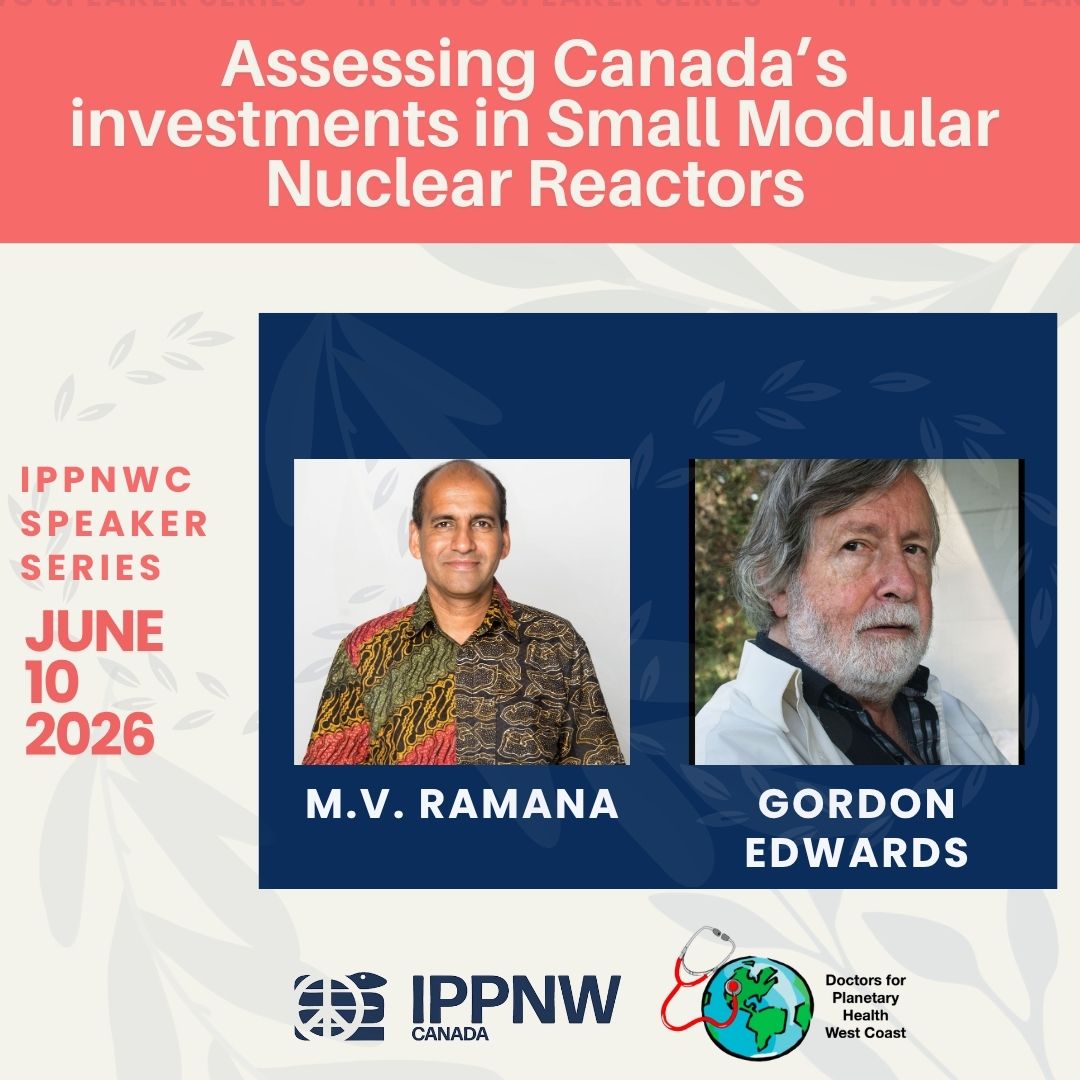
10 June – Assessing Canada’s Investments in Small Modular Nuclear Reactors – https://zoom.us/meeting/register/IiqHA5feRhaEBycOLNTJlA#/registration


Cuba Is Not a Failed State – It Is a Besieged State
PETITION: “Global Appeal to Endorse Palestinian Right of Return of Refugees”
To see nuclear-related stories in greater depth and intensity – go to https://nuclearinformation.wordpress.com
-
Archives
- June 2026 (89)
- May 2026 (306)
- April 2026 (356)
- March 2026 (251)
- February 2026 (268)
- January 2026 (308)
- December 2025 (358)
- November 2025 (359)
- October 2025 (376)
- September 2025 (257)
- August 2025 (319)
- July 2025 (230)
-
Categories
- 1
- 1 NUCLEAR ISSUES
- business and costs
- climate change
- culture and arts
- ENERGY
- environment
- health
- history
- indigenous issues
- Legal
- marketing of nuclear
- media
- opposition to nuclear
- PERSONAL STORIES
- politics
- politics international
- Religion and ethics
- safety
- secrets,lies and civil liberties
- spinbuster
- technology
- Uranium
- wastes
- weapons and war
- Women
- 2 WORLD
- ACTION
- AFRICA
- Atrocities
- AUSTRALIA
- Christina's notes
- Christina's themes
- culture and arts
- Events
- Fuk 2022
- Fuk 2023
- Fukushima 2017
- Fukushima 2018
- fukushima 2019
- Fukushima 2020
- Fukushima 2021
- general
- global warming
- Humour (God we need it)
- Nuclear
- RARE EARTHS
- Reference
- resources – print
- Resources -audiovicual
- Weekly Newsletter
- World
- World Nuclear
- YouTube
-
RSS
Entries RSS
Comments RSS
 nuclear-news