High level nuclear waste will not be stored in Utah
Plan to store high-level nuclear waste in UT dead
Seattle Pi December 23, 2012
SALT LAKE CITY (AP) — Top elected officials in Utah are hailing the
official death of a plan to store the nation’s high-level nuclear
waste in Tooele County.
U.S. Sen. Orrin Hatch, a vocal opponent of the plan, told The Salt
Lake Tribune (http://bit.ly/TcRfSO ) he’s grateful that a consortium
of utility companies has abandoned the effort once and for all.
Private Fuel Storage has asked the Nuclear Regulatory Agency to end
its license for a 100-acre area for radioactive waste containers on
the Skull Valley Goshute Reservation…….
http://www.seattlepi.com/news/science/article/Plan-to-store-high-level-nuclear-waste-in-UT-dead-4142213.php#ixzz2FzvdA2sE
www.nuclear-news.net
Depleted uranium brings illness to Gulf war veterans
“A 2002 study at the University of Bremen in northern Germany found that chromosomal changes had occurred in Gulf war veterans who had come into contact with uranium ammunition.”
the very weapons that soldiers depend upon to bring them victory are sowing death for themselves and others long after the fighting is finished.
Depleted Uranium Receives More Attention , The Daily Bell
December 21, 2012“…….Jawad al-Ali has worked as a cancer specialist at the Sadr Teaching Hospital (formerly the Saddam Hospital), housed in a sinister-looking building in Basra, since 1991. He remembers the period after the first Gulf war over Kuwait. “It isn’t just that the number of cancer cases suddenly increased. We also had double and triple cancers, that is, patients with tumors on both kidneys and in the stomach. And there were also familial clusters, that is, entire families that were affected.” He is convinced that this relates to the use of uranium ammunition. “There is a connection between cancer and radiation. Sometimes it takes 10 or 20 years before the consequences manifest themselves.”
Uranium ammunition comes with cores of “depleted,” (weakly radioactive) uranium, which has a high density, allowing it to pierce the armor of enemy combat vehicles, especially tanks.
People inhale the fine dust from exploded munitions, especially near tanks. Continue reading
What future for USA’s nuclear weapons complex?
Whither the nuclear weapons complex
ABQ Journal By John Fleck , Dec 23, 2012
In addition to its effort to force continued work on a new plutonium
lab building at Los Alamos, which I wrote about last week, the FY2013
congressional defense authorization bill has some potentially
far-reaching language regarding future governance of the US nuclear
weapons complex. The language, sponsored by Sen. Tom Udall, D-NM and
others, would create an advisory panel to review the question of how
the federal government should go about managing its unwieldy nuclear
weapons complex, which includes Sandia and Los Alamos labs here in New
Mexico.
In the latest Bulletin of the Atomic Scientists, former Department of
Energy official Bob Alvarez looks at one widely discussed option:
ending the historical approach of having the weapons program managed
by a civilian agency (the DOE) and moving it under Pentagon
control:…… http://www.abqjournal.com/main/2012/12/23/blogs/nm-science/whither-the-nuclear-weapons-complex.html
Verdi man recalls ‘Operation Crossroads’ nuclear tests of
1946 and ‘unsinkable’ USS Nevada, Guy Clifton: RGJ.com, 23 Dec 12“…..Larson was a
19-year-old sailor assigned to the carrier USS Independence. In July
1946, he was part of the crew that sailed the Independence to Bikini
Atoll in the south Pacific, where it and other aged naval vessels —
including the USS Nevada — were targets in Operations Crossroads, a
series of tests conducted by the U.S. to investigate the effect of
nuclear weapons on naval ships. Continue reading
Putin’s India Visit and Varied Agendas
Monday, December 24th, 2012 | by IANS
By Rohit Bansal
 Exactly a year ago, a news-break by IANS rocked the Indian parliament about an imminent legal ban on the Bhagvad Gita, Hinduism’s revered text and philosophical treatise, in Russia, forcing Moscow’s intervention. The crisis blew over and the International Society for Krishna Consciousness (Iskcon), the official name of the Hare Krishna Movement, continued to exercise the right to distribute the Gita’s Russian translation.
A year later, a bigger crisis looms. A cocktail of religious idiosyncrasy and byzantine municipal laws is leading to Iskcon’s eviction from its only temple in Moscow Jan 15.
The socio-religious group with following across the world, including top business leaders of Indian origin, has now invoked Prime Minister Manmohan Singh to take the matter up when President Valdimir Putin visits New Delhi for the 13th India-Russia Annual Summit Monday.
Putin, on his part, has a woe list of his own, ranging from Russian telecom major Sistema’s $3.2-billion investment in India that is stuck in litigation and the stalled nuclear plant in Kudankulam.
In a letter addressed to Pulok Chatterji, Principal Secretary to the Indian Prime Minister, and backed by dozens of legal documents and translations, Iskcon has urged that their plight be heard, the imminent destruction of the temple on Jan 15 is red-flagged and the Russians told in clear terms that eviction from the makeshift premises – an iron shack constructed after the main temple was razed in 2004 – would be unacceptable to India.
A chilling video of devotees of Lord Krishna braving the minus-18-degree Moscow temperatures, a few still pictures and a petition have also been shared with Chatterji and other interlocutors, including External Affairs Minister Salman Khurshid.
Contaminated Foods Found In Aizumisato Fukushima
December 24th, 2012
http://www.simplyinfo.org/?p=8754
The good news first, most of the routine garden produce like tomatoes, apples and cabbage showed with no detectable radiation. AizuMisato sits in the further west region of Fukushima.

Where the radiation contamination was showing up frequently was in soybeans, autumn buckwheat, shiitake mushrooms grown indoors and a variety of wild vegetables and mushrooms.
Autumn Buckwheat that showed contaminated ranged from .29 to 14.58 bq/kg
Soybean that showed contaminated ranged from 5.55 to 21.16 bq/kg
Koshiabura was the highest reading on the list at 166.3 bq/kg
The entire list in English: Aizu Misato – emergency monitoring inspection on agricultural products2012
Original page in Japanese: http://www.town.aizumisato.fukushima.jp/11,11191,124.html
Resident to Mayor on NHK: Fukushima plant spewed across Japan, don’t you dare make promises about safety — I don’t want to listen anymore, you’re wasting my time (VIDEO)
http://enenews.com/resident-mayor-plant-spewed-invisible-across-japan-dont-dare-make-promises
Published: December 23rd, 2012 at 1:13 pm ET
By ENENews
Title: Coming Home; A Mayor’s Quest to Revive a Fukushima Village
Source: NHK Documentary
Author: MissingSky101
Date: Dec 22, 2012
Kawauchi Mayor Yuko Endo: Well we will make sure decontamination is safe every step of the way. Even when it rains, I promise you nothing will seep out.
Resident: I don’t believe in promises. Mr. Mayor you can’t promise me anything. We agreed to the nuclear plant after Tepco promised it would be safe. Look at what happened. Not even 40 years after it was built, the plant spewed out something invisible across Japan. Don’t you dare make promises.
Endo: Well safety will be our top priority while we proceed with the work to be sure the nuclear accident…
Resident: Enough already. I don’t want to listen anymore. You’re wasting my time.
Book review The cost of going nuclear
Reviewed by Bina Shah
A collection of essays, Confronting the Bomb: Pakistani and Indian Scientists Speak Out, edited by Pervez Hoodbhoy focuses on the ramifications — political, historical, and moral — of the nuclear bomb in India and Pakistan. Essays by dissident Indians and Pakistani scientists outline how, while the rest of the world has recognised both the futility and fatality of the nuclear arms race, the politicians, generals, and oligarchs of India and Pakistan have yet to realise that amassing bombs in the region can only lead to disaster, not military triumph. Hoodbhoy recognises the controversial nature of such a project, as he warns his readers in the introduction that “this will not be a popular book,” but it is an absolutely necessary one.
In the prologue to the book, John Polyani, who won the Nobel Prize in Chemistry in 1986, delivers the unequivocal message in his preface that nuclear bombs are a man-made plague on the earth; while Hoodbhoy in his introduction describes how Pakistan acquired the bomb for deterrence but continues to milk it like a cash cow, threatening Western countries that if they don’t continue to bail Pakistan out financially, our weapons could “go missing” and that would be a much higher price to pay.
The strength in the book played out many times is not just Hoodbhoy’s technical expertise of the physics that go into making a bomb, but his knowledge of the military mindset and psychology vis a vis the bomb. He’s also well-placed to expound on the historical and political backdrop to the bomb: he discusses the effects of wide-ranging topics such as economic sanctions, the ‘war on terror’ and the killing of Osama bin Laden on Pakistan’s sense of self-image as a nuclear power, with rival India breathing down its neck next door.
Beware the nuclear village as it readies to rear-end docile Japan again
“Where does this leave us, with a new government dedicated to restarting most, if not all, of the country’s reactors?It leaves us with a sense of helplessness and despair, that our welfare and safety are thought insignificant in comparison with the greed of the powerful interests that tightly control this country’s failing economy.”
If you remember the Pinto, dear reader, then you may be as old as the hills — or at least as old as I am.
No, I am not referring to the horse that the Cisco Kid rode, a feisty pinto named Diablo. I’m talking about a small car that Ford began marketing in 1970. The Pinto takes the Grand Citrus Prize for being “the lemon of that decade.”
But it wasn’t a lemon by accident, though the accidents it caused led to injury and death. During the process of manufacture, Ford engineers knew that the positioning of the fuel tank behind the rear axle meant it could explode in a rear-end collision. But instead of protecting it for a mere $11 per vehicle, Ford decided to “pass on” the fault to the unsuspecting consumer.
I bring up this crass example of corporate negligence as a metaphor for what the nuclear industry has done to all of us in this country since the 1950s. By employing manipulated criteria for the construction of power plants in or near zones with active fault systems — and ensuring those criteria were rubber-stamped by sycophantic scholars in their pay — the captains of the nuclear industry managed to lure the entire populace into dependence on a horrendously dangerous and ultimately costly enterprise. But in light of the ongoing nuclear disaster that began in March 2011, we can no longer say we are unsuspecting as the industry prepares to numb us once again with shoddy excuses for safety.
The case in point now is the Tsuruga nuclear power plant in Fukui Prefecture. Tsuruga is a lovely town on the Sea of Japan coast; and in prewar days it was a port of call for Russian ships from Vladivostok.
Early this month, a five-member team of fault-system experts was sent to the plant by the Nuclear Regulation Authority (NRA), an administrative body of the Cabinet. They went to determine the extent of the active faults surrounding and running under the plant. No reactor is permitted to operate in a plant situated above an active fault; and yet, Japan Atomic Power Co., the plant owners, are anxious to get the two existing reactors into operation and two others under construction completed.
This is despite the fact that one of the existing reactors is the oldest in operation in this country. The Tsuruga No. 1 reactor was commissioned on March 14, 1970. Actually, I remember that clearly, as it was the same day that the World Exposition, known as Expo, opened its doors in Osaka. It was a red-letter day for nuclear power, seeing as some of the power for Expo was provided by the No. 1 reactor. Now, though, what we have is a nuclear reactor built to specifications from half a century ago.
French cuts could delay new nuclear power plants in Britain -MOS
By TOM MCGHIE,
MAIL ON SUNDAY SENIOR FINANCIAL CORRESPONDENT
PUBLISHED: 14:43, 23 December 2012
Britain’s multi-billion pound nuclear building programme could face long delays because of cutbacks at EDF Energy’s parent company in France.
For more than a year, EDF has said that it plans to spend £14 billion on two reactors at a new plant at Hinkley Point, Somerset.
But the company has still not confirmed it will go ahead with the work and it now has revised the decision to ‘the earliest possible date’.
Confirmation is not expected until March at the earliest, if at all. Delays had been caused by issues negotiating agreement with the British Government over price guarantees. But now the parent company, which is state-owned, is under pressure from the French government to cut costs.
Details will be made known when the group releases its full-year earnings in February.
EDF chief financial officer Thomas Piquemal said the firm would prioritise French investment in the year ahead, raising the possibility of a delay in its nuclear projects in Britain.
He said: ‘It’s still too early to decide on the British plans, as all the conditions for the investment aren’t met.
A Government spokesman said: ‘The final decision is a matter for the company and the Government is happy to work to its timetable.’
Meanwhile, EDF’s partner on the programme, Centrica, which owns British Gas, is unlikely to go ahead with any investment.
EDF is still in talks with Chinese nuclear firms to take part in its programme.
India -Kundankulam nuclear plant protesters to see more solidarity this new year
Dec 23, 2012, 07.38PM IST TNN [ Chinmayi Shalya ]
Times of India

CHENNAI: It will be a new year’s eve celebrated not just differently, but also meaningfully. A group of people from across the country will be reaching Idinthakarai in Kudankulamto celebrate New year with the villagers fighting against the nuclear power plant. Three days of conversations with the inhabitants of costal hamlets, dance, music, poetry and films will start from December 30 and will usher in the new year.
“Whatever the debate be around nuclear power, the people’s resistance and their unrelenting spirit ought to be celebrated- for their collective capacity to continue their peaceful struggle. Let all of us who believe in the struggle of the Kudankulam people come together to assert our freedoms, reclaim democracy, and celebrate the spirit of resistance,” stated an invite sent out collectively by various protest groups.
The Kundankulam nuclear plant project has been facing protests from the villages, even as the government has been indifferent to their voices. “The idea behind going to Kundankulam is to show that we are with the villagers and support their cause. It’s a show of solidarity,” said a Delhi-based student who is planning to go there. “It is also a unique and more fulfilling way to usher in the new year. People should stand for other’s causes so that authorities have no option but to take note and change things,” he added.
25 Nuclear Power Plants Could Be Replaced By Geothermal In Japan
December 22, 2012 Jake Richardson
Stefan Larus Stefansson, Iceland’s ambassador to Japan, recently gave a lecture in Tokyo about the very high geothermal potential in Japan. He said that if Japan were to invest in fully realizing its geothermal potential, the country could replace 25 nuclear reactors.
He used his home country as an example of geothermal success because about two-thirds of the country’s energy comes from this renewable, stable source. Japan has the world’s third-highest geothermal potential but has not been pursuing its development nearly as much as it could be.
Ironically, it was the nation’s focus on nuclear power that caused this lack of attention for geothermal development. It isn’t as if Japan is missing the technical knowledge required for geothermal installations either. They actually make the turbines Iceland uses for its geothermal plants. As a percentage of total power, developing countries like Kenya and El Salvador have more geothermal power than Japan.
UK ‘subsidising nuclear power unlawfully’
royanthony moore | Sunday, January 22nd, 2012
They say financial rules for nuclear operators include subsidies that have not been approved by the commission.
These include capping of liability for accidents, which they say at least halves the cost of nuclear electricity.
The government says it is confident that policies do not provide subsidies.
The complaint, by the Energy Fair group, also says that the UK’s carbon floor price and feed-in tarriffs amount to state aid for the nuclear industry.
State coffers would also have to meet cost overruns on nuclear waste disposal, they argue.
Dorte Fouquet of the German legal firm BBH, who drew up the complaint, said that EU energy policy was based on having an open market with a level playing field.
“The commission has repeatedly underlined that distortion of the market is to a large extent caused by subsidies to the incumbents in the energy sector,” she said.
“This complaint aims to shed some light on the recent shift in the energy policy of the United Kingdom where strong signals point to yet another set of subsidies to the nuclear power plant operators.”
Last year, a committee of UK MPs also said that the government was subsidising nuclear power, despite promises that it would not.
It sees the construction of about eight new reactors within a decade as essential for meeting climate change and energy security goals.
Nuclear power plant flood risk: Sandy was just a warm-up
Published: Sunday, December 23, 2012
By Heather Rogers
Digital First Media
Montgomery Media
As Hurricane Sandy approached the East Coast late last October, more than a dozen nuclear power plants from North Carolina stretching up to New England were in its wide-ranging path. On Oct. 29, the night that the eye of the storm made landfall near Atlantic City, New Jersey, five nuclear plants were forced to either reduce power or make emergency shutdowns.
The most serious event was at the Oyster Creek Generating Station located in Lacey Township, near Barnegat Bay, New Jersey, about 40 miles north of Atlantic City. Amid 75-mile-per-hour winds, power to the region was knocked out, including at the Oyster Creek plant, just before 7 p.m. The plant’s backup diesel generators kicked on to keep its crucial cooling equipment functioning. Nevertheless, by 9 p.m. the plant’s pumps were facing another danger: rising floodwaters. Nuclear Regulatory Commission (NRC) spokesperson Neil Sheehan said that Sandy brought a surge of 7.4 feet to Oyster Creek. The plant is obligated to prepare for the consequences of flooding at 8.5 feet, he said, and, at 9.0 or 9.5 feet — Sheehan wasn’t sure — the plant’s pump motors would begin to be flooded.
The storm surge led the plant to declare an “Alert” — the second step in the NRC’s four-tiered emergency action system.
David Tillman, spokesperson for Exelon, the utility company that owns Oyster Creek, would not answer specific questions about the evening Sandy hit the plant (such as the height to which the water level rose, the height of the pump motors, or the actions taken by the plant in response to the alert). Characteristically for the industry, he insisted that everything worked perfectly and that there were no problems.
The buffer that existed this time may be of little comfort in the future. For all the damage it caused, Sandy was only a Category 1 hurricane — Hurricane Katrina, by comparison, was a Category 3. Given the challenges even Sandy brought to the Northeast’s nuclear power plants, Remapping Debate decided to investigate the extent to which these facilities are prepared to deal with the flood risks widely expected to increase as a result of global warming.
What would be the consequences were a nuclear power plant to flood?
To grasp what a flood at a coastal nuclear power plant such as Oyster Creek would mean, Dave Lochbaum, director of the Nuclear Safety Project at the Union for Concerned Scientists, told Remapping Debate it is worth reflecting on Japan’s Fukushima Dai-Ichi nuclear power plant disaster in 2011. First, the plant — which ran on General Electric Mark I reactors, the same design as at Oyster Creek and 22 other nuclear plants in the U.S. — lost outside power due to the earthquake. Its backupgenerators switched on, and “the plant weathered [the earthquake] pretty well,” Lochbaum said. But then the floodwaters arrived, exceeding the facility’s sea wall. “That plant wasn’t unaware of the flooding potential, but the magnitude of the challenge they faced was just more than they could handle,” he said. Because the backup generators and pumps were flooded, there was no means by which to keep the reactors and spent fuel pools cooled.
Engineers Warn: Two US Nuclear Plants May Cause New Fukushima
Written by Ajorlo
Saturday, 22 December 2012
Senator Joe Lieberman is the current chairman of the Senate Committee on Homeland Security & Government Affairs, but will retire in 2013. Two nuclear engineers have asked him to spend his last days in Congress investigating the threats posed by two nuclear power facilities.
Paul Blanch, a retired nuclear engineer who used to work at the Indian Point nuclear facility in Buchanan, N.Y., and Lawrence Criscione, a risk engineer at the Nuclear Regulatory Commission (NRC) headquarters, sent a letter to the senator, warning that a Fukushima-like meltdown is in America’s future if no action is taken to improve the facilities at Indian Point and Oconee.
The engineers claim that the gas lines leading to the facilities, as well as nearby dams, are vulnerable to sabotage. Engineering failures or natural phenomena like earthquakes or floods can also cause a meltdown.
1 This Month
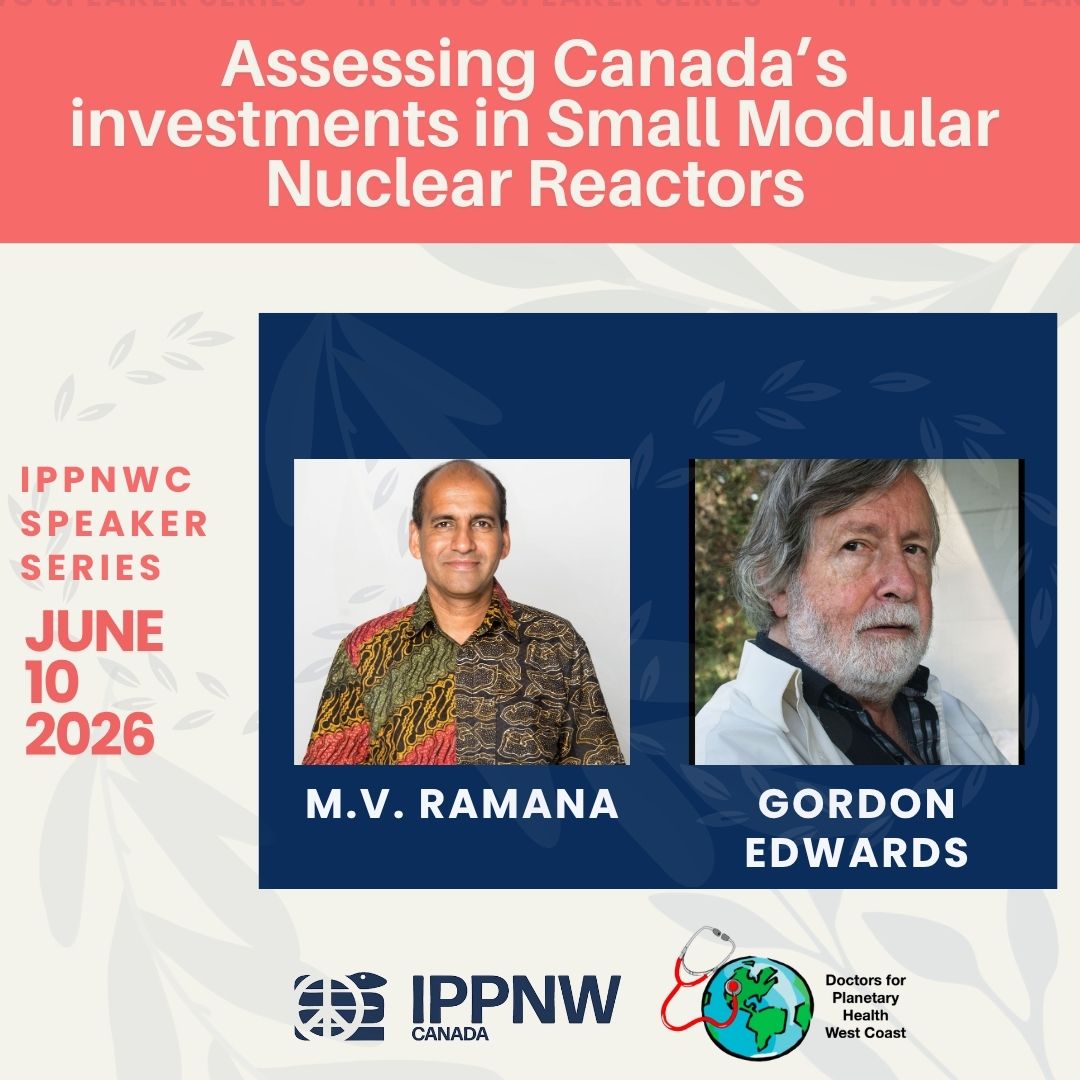
10 June – Assessing Canada’s Investments in Small Modular Nuclear Reactors – https://zoom.us/meeting/register/IiqHA5feRhaEBycOLNTJlA#/registration


Cuba Is Not a Failed State – It Is a Besieged State
PETITION: “Global Appeal to Endorse Palestinian Right of Return of Refugees”
To see nuclear-related stories in greater depth and intensity – go to https://nuclearinformation.wordpress.com
-
Archives
- June 2026 (89)
- May 2026 (306)
- April 2026 (356)
- March 2026 (251)
- February 2026 (268)
- January 2026 (308)
- December 2025 (358)
- November 2025 (359)
- October 2025 (376)
- September 2025 (257)
- August 2025 (319)
- July 2025 (230)
-
Categories
- 1
- 1 NUCLEAR ISSUES
- business and costs
- climate change
- culture and arts
- ENERGY
- environment
- health
- history
- indigenous issues
- Legal
- marketing of nuclear
- media
- opposition to nuclear
- PERSONAL STORIES
- politics
- politics international
- Religion and ethics
- safety
- secrets,lies and civil liberties
- spinbuster
- technology
- Uranium
- wastes
- weapons and war
- Women
- 2 WORLD
- ACTION
- AFRICA
- Atrocities
- AUSTRALIA
- Christina's notes
- Christina's themes
- culture and arts
- Events
- Fuk 2022
- Fuk 2023
- Fukushima 2017
- Fukushima 2018
- fukushima 2019
- Fukushima 2020
- Fukushima 2021
- general
- global warming
- Humour (God we need it)
- Nuclear
- RARE EARTHS
- Reference
- resources – print
- Resources -audiovicual
- Weekly Newsletter
- World
- World Nuclear
- YouTube
-
RSS
Entries RSS
Comments RSS
 nuclear-news