Fukushima cleanup:high pressure hoses just spread nuclear radiation
 CNN: Experts call Japan cleanup effort meaningless — An endless task that’s simply spreading around radiation (VIDEO) http://enenews.com/cnn-experts-call-japan-cleanup-effort-meaningless-an-endless-task-thats-simply-spreading-around-radiation-video
 December 23rd, 2012
Source: CNN
Author: Alex Zolbert
Date: December 23, 2012
Description: It’s an endless task cleaning the nuclear fallout at Japan’s Fukushima plant
At 2:30 in
Some question if this cleanup is really worth it.
Critics, including some academics in Japan, experts on radiation and nuclear energy, call efforts like these meaningless. Using high pressure hoses spreads the radiation.
Watch the video here
Problems, $900 lawsuits – Vogtle Nuclear Plant now years away
The delays and cost pressures have created friction between the
construction partners and utility companies that will serve as the
plant’s owners, escalating into a series of lawsuits totaling more
than $900 million.
New Nuclear Plant Hits Some Snags, WSJ, By REBECCA SMITH, 23 Dec 12
The first newly licensed nuclear-power plant to be built in the U.S.
in decades, the Vogtle project in Georgia, has run into construction
problems and may be falling years behind schedule, according to an
engineering expert advising the state. Continue reading
Community owned solar farm – a model for investment
With over 59 million renters, more than 96 million poorly sited properties and 148 million people for whom cost is a barrier to acquiring a solar power system, community owned solar farms are likely to spring up right across the USA in the years ahead.
Colorado’s 500kW Community-Owned Solar Farm http://www.energymatters.com.au/index.php?main_page=news_article&article_id=3528 25 Dec 12
Clean Energy Collective (CEC) recently held a Grand Opening ceremony for its Colorado Springs Community-Owned Solar Farm.
With a 500 kW capacity and consisting of 2,210 solar panels, the facility currently generates enough to power 100 homes.
Based on a community ownership model, investors are able to participate for as little as $565; Continue reading
Probe into EDF – China deal to develop a new type of nuclear reactor
EDF declines comment on China nuclear probe report PARIS http://uk.reuters.com/article/2012/12/25/uk-edf-china-nuclear-idUKBRE8BO03K20121225 by Lionel
Laurent and Gerard Bon Dec 25, 2012
Electricite de France (EDF.PA) on Tuesday declined to
comment on a report of a probe into its recent partnership with a
Chinese utility to develop a new type of nuclear reactor.
Several French news websites cited a forthcoming article in satirical
weekly Le Canard Enchaine, due to appear on Wednesday, as saying that
French finance-ministry inspectors had begun an inquiry into the terms
of the China agreement.
“We have no reaction,” a spokeswoman for EDF said, adding she had not
seen the forthcoming article. The French finance ministry was
unavailable for comment.EDF had said in November that the agreement
with China Guangdong Nuclear Power Corporation Holding GDNCP.UL was to
develop a concept for a 1,000-MW reactor. This would be cheaper and
smaller than the 1,600-MW EPR reactor blamed for the loss of a
landmark project in Abu Dhabi in 2009.
With Japan’s new government, nuclear energy may be back
http://www.startribune.com/business/184510891.html?refer=y
December 23, 2012
Liberal Democratic Party’s big win may give nuclear industry a
reprieve.In the two days after the election the shares of Tokyo
Electric (TEPCO), the owner of the Fukushima Daiichi nuclear power
plant, surged by 56 percent. Investors bet that the new government
would allow Japan’s reactors, almost all of which have been idle since
being struck by an earthquake in 2011, to restart.
That may be wishful thinking. Abe may want to steer clear of the
sensitive nuclear issue until upper-house elections in mid-2013. If
so, a time frame agreed with TEPCO’s 77 banks for restarting the first
of its seven Kashiwazaki-Kariwa reactors in Niigata prefecture may be
missed.
TEPCO says each stalled reactor costs it $1.2 billion in lost profit each year.
Furthermore, the nuclear industry now has an independent watchdog, the
Nuclear Regulation Authority, which is showing teeth. Its
investigators have so far issued seismic warnings against two nuclear
power plants, which may lead to their permanent mothballing.
By law, even an LDP government should be unable to boss the watchdog around.
Yet a share-price rally may still be warranted. TEPCO’s share price is
barely a tenth of what it was before the disaster.
That reflects a genuine fear that the company may go bust. Surely,
investors mutter, the LDP remains chummy enough with Japan’s nuclear
utilities not to let any of them collapse into bankruptcy?
Radiation danger in recycling of radioactive products
U.S. officials and metal experts say evidence is mounting that radioactive metal from abroad is increasingly — and intentionally — being sent to the United States, sometimes decades after the contaminated material was first detected and returned to its source.
Some experts say the United States bears some blame for the infiltration of tainted metal and products. Even though there is little debate that radiation-laced material is unwelcome, neither Congress nor federal agencies have established a “safe” level of contamination, despite two decades of wrestling with the issue
Recycled radioactive metal contaminates consumer products: “It’s your worst nightmare,” Engineering Evil, October 20, 2012
2009 report posted for filing Distributed by Scripps Howard News Service, http://www.scrippsnews.com “……The global dimension of the recycling of radiation problem is large, and growing, experts say. Continue reading
USA’s anti-missile system in Europe creating greater enemies
Nuclear Shield: What Is USA Afraid Of?
Market Leader, 25 December More and more experts forecast that Russia and China will eventually unite against the USA. If the USA keeps deploying its anti-missile systems in Europe, it may get a union of its most powerful adversaries. Continue reading
Now we are in a second, more dangerous, nuclear weapons age
Living dangerously in a second nuclear age
Constitution Daily, 25 DEc 12,
By Paul Bracken
Many academic conferences and government panels have been convened
this year to recall the 50th anniversary of the Cuban missile crisis
of 1962. This was the most dangerous crisis of the Cold War, and it’s
surely worth studying for this reason.But the Cuban Missile Crisis
gets too much attention. Focusing on any single crisis distorts the
central problem of the Cold War for the United States. The Cold War
was a long-term competition, stretching over five decades……
Presidents Richard Nixon, Gerald Ford, and Jimmy Carter built their
foreign policies around détente. But in the 1980s this was followed by
the Ronald Reagan build-up, nuclear threats by both sides, accidents
like the shooting down of Korean Airliner 007, and serious nuclear
mishaps inside the Soviet command and control system.
Today we are in a second nuclear age. Continue reading
Okinawa a refuge for Fukushima evacuees fleeing radiation
 risks are several times higher for children and even higher for
fetuses, and may not appear for years.
 Japanese flee Fukushima in fear of nuclear radiation, Mail and Guardian,
22 DEC 2012 – YURI KAGEYAMA, Okinawa is about as far away as one
can get from Fukushima without leaving Japan, and that is why Minaho
Kubota is here.Petrified of the radiation spewing from the Fukushima
Dai-ichi nuclear plant that went into multiple meltdowns last year,
Kubota grabbed her children, left her sceptical husband and moved to
the small southwestern island.
More than 1 000 people from the disaster zone have done the same
thing. “I thought I would lose my mind,” Kubota told The Associated
Press in a recent interview.
“I felt I would have no answer for my children if, after they grew up,
they ever asked me, ‘Mama, why didn’t you leave?'” Continue reading
High rates of birth defects in Iraq, where depleted uranium was used
 in Iraq, and Afghanistan, too, the idea of sicknesses related to depleted uranium does not seem in much doubt, from what we can tell. In Iraq, as we have reported many times, doctors are even advising women in certain areas not to have children because the chances of birth defects are so great
Depleted Uranium Receives More Attention , The Daily Bell
December 21, 2012
Mystery in Iraq – Are US Munitions to Blame for Basra Birth Defects? … The World Health Organization (WHO) is currently assembling a report on DU ammunition. It will reflect the current state of research on the issue, but it will hardly provide any new insights. With the help of the University of Greifswald, a cancer registry has been developed for the Basra region and will serve as the basis for all future study. Still, even as further research is needed, if only for the children’s sake, it will come too late for many. The guns have been silent in Iraq for years, but in Basra and Fallujah the number of birth defects and cancer cases is on the rise. Locals believe that American uranium-tipped munitions are to blame and some researchers think they might be right. – Der Spiegel
Dominant Social Theme: US munitions are harmless except to the bad guys.
Free-Market Analysis: The WHO (see above) is finally getting around to seeing if depleted uranium weapons used by NATO and the US are responsible for the many birth defects in Iraq. From what we can tell, the outcome will be a preordained “no.”
US officials, military or otherwise, have already ruled out the idea that depleted uranium dust could possibly be responsible for these birth defects or for US ailments that are much in dispute – having to do with immune deficiencies, etc. Continue reading
Doubts on uranium market’s future add to environment fears in Virginia
Charles Ebinger, the director of the energy security initiative at the Brookings Institution, a research center in Washington. thinks, though, that the United States is moving away from nuclear energy as cheap natural gas and flat electricity demand make nuclear power less competitive. That makes it tougher to argue in favor of the mine, said Ebinger, who’s a supporter of nuclear energy
 Proposed Coles Hill uranium mine: Buried treasure or hidden threat? By Sean Cockerham and John Murawski | McClatchy Newspapers
CHATHAM, Va. 23 Dec 12, — “….. pitting neighbor against neighbor and North Carolinians against Virginians. North Carolina is only about 20 miles from the proposed uranium mine and residents, public officials and lawmakers there worry that a catastrophic release of radioactive waste could poison Kerr Lake, the drinking water source for more than 118,000 North Carolinians, as well as contaminate the fishing- and recreation-rich Roanoke River as far east as Pamlico Sound.
“My concern is the catastrophic impact it could have on North Carolina’s water, and it could be major,” said state Rep. Mitch Gillespie, a McDowell County Republican. “This is brand new for North Carolina.” Continue reading
Official data now estimates Chernobyl death toll at 1.5 million
Death toll estimate from Chernobyl now around 1.5 Million -Expert (VIDEO) http://enenews.com/expert-death-toll-estimate-chernobyl-around-15-million-people-video
December 22nd, 2012
Title: Pr A.Yablokov and Pr C.Busby on Fukushima victim estimations
Uploaded by: radioactivebsr
Date: April 6-8, 2011
Description: Interview by an unidentified Austrian radio reporter
h/t Nuclear_Problem
Prof. Alexey Yablokow, PhD, Centre for Russian Environmental Policy, N. K. Koltzoff Institute of Developmental Biology, Russian Academy of Sciences:
9,000 additional deaths from cancer, nothing more – This is official data from so called Chernobyl Forum, by International Atomic Energy Agency and World Health Organization. […]
And when I calculate this, of course it’s not precise. But level of death toll was more than 1 million. If you not only for 15 years, but for 25 years, maybe to close one and a half million – than 9,000 deaths which I mentioned before.
Human caused climate change is pretty clear – except to Americans
Only in the United States, among industrial nations, is the reality of
global warming or its causes questioned by large segments of the
population.
 2012 was a tough year for planet Columbus Dispatch 23 Dec 12This year
has brought plenty of concern to nature appreciators, those who
realize that, as nature goes, so eventually goes humankind:
Devastating storms erupted last spring in the wake of a mild winter,
drought and heat baked the land throughout the spring and summer, and
an epic November blow assaulted population centers. Weather-related
deaths reached 349 in the United States. The repair bill, the federal
government reported, will be the second-highest since 1980, behind
2005, a year that spawned four mainland hurricanes, including Katrina.
The upper Great Lakes and the Mississippi River have had news-making
low-water problems in the wake of widespread drought more intense than
anything seen since the 1930s.
The year is expected to go down as the warmest or second-warmest since
data has been recorded. The warmest occurred in 2008. Continue reading
Coles Hill uranium decision depends on Virginia legislature
Virginia alone can’t approve the mine. The Nuclear Regulatory Commission, a federal agency, also would have to sign off on it. The agency would do an environmental impact statement that might take more than two years.
When asked, Larry Camper, the head of environmental protection for the Nuclear Regulatory Commission, said he wasn’t aware of his agency ever fully rejecting such an application. So the mine’s fate might rest entirely on whether Virginia lifts its moratorium on uranium mining.
Proposed Coles Hill uranium mine: Buried treasure or hidden threat? By Sean Cockerham and John Murawski | McClatchy Newspapers
CHATHAM, Va. 23 Dec 12NORTH CAROLINA PROTESTS
Opposition in North Carolina has spread from towns near the potentially affected areas to the state capital. Eighteen towns, counties and economic groups have passed resolutions in opposition, including Henderson, Creedmoor and the Roanoke River Mayors Association. Continue reading
Keep the ban on uranium mining in Virginia
Feeling The Heat On Uranium Mining In Virginia Jessie Thomas-Blate, Coordinator, Most Endangered Rivers December 21, 2012 Uranium mining is a hot topic right now in Virginia. You might remember that American Rivers listed the Roanoke River as one of America’s Most Endangered Rivers® of 2011 due to a proposed uranium mine. Since that time, the Virginia legislature has been talking about whether or not to lift a 30-year ban on uranium mining in Virginia.
Recently, the Virginia Pilot’s Editorial Board issued a clear and concise summary of recent activity with this issue. Their ultimate conclusion is key— that the local taxpayers will ultimately have to shoulder the burden of maintaining the radioactive waste from this mine in perpetuity. Thirty years or so of mine production is not worth thousands of years of radioactive waste maintenance. The Roanoke Times Editorial Board agrees.……
The fight is not over.
- If you are a resident of Virginia, tell your legislator that you care too much about the Roanoke River and the water it supplies to thousands of area residents to allow the ban on uranium mining to be lifted! Also, you can sign this petition from Keep The Ban to retain the momentum on this important issue.
If you would like to have more information before forming your own opinion on this issue, Keep The Ban has compiled a list of scientific studies to examine the issue of uranium mining in Virginia. http://www.americanrivers.org/newsroom/blog/jblate-20121221-feeling-the-heat-on-uranium-mining-in-virginia.html
1 This Month
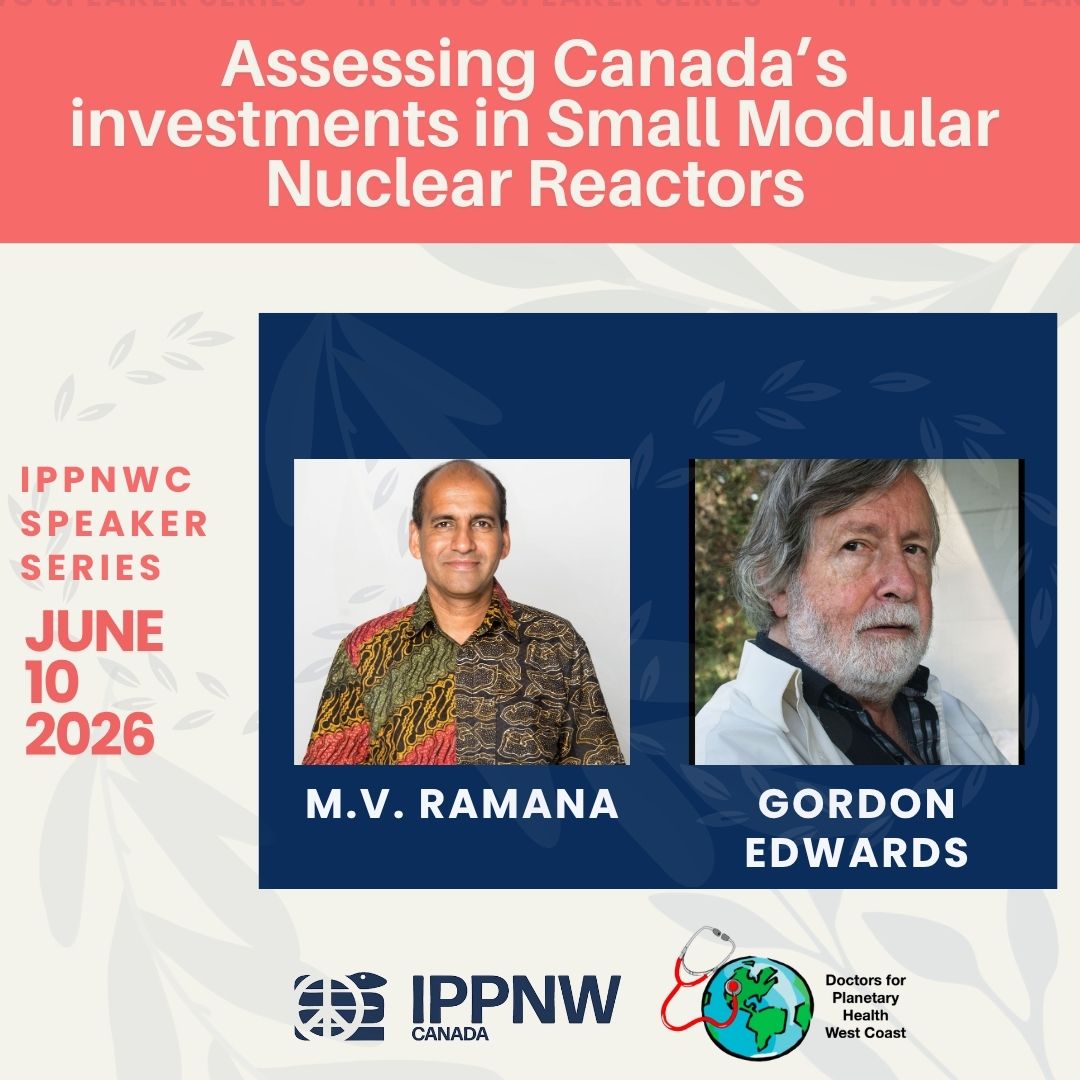
10 June – Assessing Canada’s Investments in Small Modular Nuclear Reactors – https://zoom.us/meeting/register/IiqHA5feRhaEBycOLNTJlA#/registration


Cuba Is Not a Failed State – It Is a Besieged State
PETITION: “Global Appeal to Endorse Palestinian Right of Return of Refugees”
To see nuclear-related stories in greater depth and intensity – go to https://nuclearinformation.wordpress.com
-
Archives
- June 2026 (89)
- May 2026 (306)
- April 2026 (356)
- March 2026 (251)
- February 2026 (268)
- January 2026 (308)
- December 2025 (358)
- November 2025 (359)
- October 2025 (376)
- September 2025 (257)
- August 2025 (319)
- July 2025 (230)
-
Categories
- 1
- 1 NUCLEAR ISSUES
- business and costs
- climate change
- culture and arts
- ENERGY
- environment
- health
- history
- indigenous issues
- Legal
- marketing of nuclear
- media
- opposition to nuclear
- PERSONAL STORIES
- politics
- politics international
- Religion and ethics
- safety
- secrets,lies and civil liberties
- spinbuster
- technology
- Uranium
- wastes
- weapons and war
- Women
- 2 WORLD
- ACTION
- AFRICA
- Atrocities
- AUSTRALIA
- Christina's notes
- Christina's themes
- culture and arts
- Events
- Fuk 2022
- Fuk 2023
- Fukushima 2017
- Fukushima 2018
- fukushima 2019
- Fukushima 2020
- Fukushima 2021
- general
- global warming
- Humour (God we need it)
- Nuclear
- RARE EARTHS
- Reference
- resources – print
- Resources -audiovicual
- Weekly Newsletter
- World
- World Nuclear
- YouTube
-
RSS
Entries RSS
Comments RSS
 nuclear-news