Underhand planning by Indian Government to dump nuclear wastes in Kolar Gold Mnes
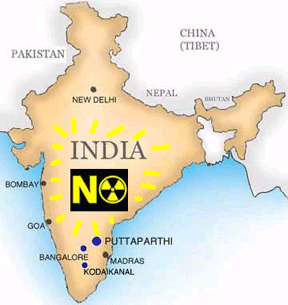 Kolar should not become nuclear dumpyard: Activists
http://www.newstrackindia.com/newsdetails/2012/11/23/379–Kolar-should-not-become-nuclear-dumpyard-Activists-, Chennai, Nov 23 (IANS) People’s Movement Against Nuclear Energy (PMANE) Friday said dumping spent nuclear fuel in Kolar gold mines could lead to disastrous health consequences.
“When all the national roads transport deadly nuclear cargo to Kolar (Kolar gold mines), millions and millions of our people in Karnataka, Andhra (Pradesh) and Tamil Nadu will be exposed to all kinds of threats and dangers. Nuclear waste management is much more expensive and dangerous than nuclear power plants and even most developed
countries such as the United States and Germany are not able to handle the waste effectively,” PMANE said in a statement.
“The Indian government should not go against the anti?nuclear trend of the world to promote the interests of the United States, Russia and France and expose the people of our country to nuclear dangers in Kudankulam, or Kolar or anywhere else,” the statement said. According to the PMANE, the Department of Atomic Energy (DAE) had not shared any basic information on storing the spent fuel of Kudankulam Nuclear Power Project (KNPP) at Kolar in Karnataka.
“The ad?hoc nature of the DAE’s decision?making and the short shrift given to science and public opinion are so glaring and, in fact, very disturbing,” PMANE said.
At Kolar Gold Fields, first cyanide dumps made people sick – now nuclear wastes
 Locals petrified of nuclear radiation in Karnataka http://timesofindia.indiatimes.com/city/bangalore/Locals-petrified-of-nuclear-radiation-in-Karnataka/articleshow/17331215.cms? By K RANGANATH, TNN | Nov 23, 2012 Having put their misfortunes behind them, residents of Kolar Gold Fields are now staring at the proposition of nuclear radiation in their neighbourhood.
The Union government’s unforeseen decision to dump nuclear waste in the now-defunct gold mines has come as a bolt from the blue. “We’ve had enough. Just as we thought it’s all over, this is a rude shock for us. Why does this country treat us like second-class citizens?” asked senior advocate P Raghavan, reflecting the town’s anger.
For residents, the downslide started with the closure of the Bharat Gold Mines Limited (BGML) in April 2000. The once buzzing township , given the name of ‘Little England’ , largely because of the presence of many Anglo-Indians , turned completely lifeless.
The township, with its population of 1.2 lakh, which till then depended on BGML for survival, found it hard to adapt to the harsh new reality.
The closure affected every aspect of life and the physical environment too. The local economy shrunk, and people started migrating to neighbouring cities in search of jobs. Former workers say they had no alternative means of earning a livelihood.
But this was just the beginning. The deadly silicosis disease struck the town, making the people’s lives even more miserable. The gold mining process at KGF generated about 32 million tonnes of tailings called cyanide dumps. Years of inhaling the gold dust aggravated the silicosis ailment among the former workers and their families living close to the site.
Since 2005, the disease, it is said, killed over 100 people in this town, the highest incidence reported in the state.
With their own lives a shambles, workers hoped their children, armed with an education they themselves did not get, would build new lives. They now see that dream being shattered, under the threat of nuclear waste dumping.
Fukushima had 3 nuclear meltdowns
Michio Kaku: 3 meltdowns in Fukushima, but uranium actually totally liquified… 1st time in history — “Reactor actually melted totally” (VIDEO) http://enenews.com/michio-kaku-3-meltdowns-fukushima-uranium-actually-totally-liquified-1st-time-history-reactor-actually-melted-totally-video November 22nd, 2012
Coast to Coast AM with George Noory, November 20, 2012: Previously Kaku has stated that one Fukushima reactor had “liquified Professor Michio Kaku, City College of New York:
We had three simultaneous core meltdowns in Fukushima, but the uranium actually liquified — liquified — we’ve never seen a totally liquified core before.
First time in history.
But the Fukushima reactor actually melted totally.
Michio Kaku: American theoretical physicist, the Henry Semat Professor of Theoretical Physics in the City College of New York of City University of New York, a co-founder of string field theory […] Kaku graduated summa cum laude from Harvard University in 1968 and was first in his physics class. He attended the Berkeley Radiation Laboratory at the University of California, Berkeley and received a Ph.D. in 1972.
Listen to the broadcast here
Desperate uranium mining companies squabble as price falls
Did rivals try to scupper BHP’s uranium sale to Cameco?Mining.com, Frik Els | November 23, 2012 The West Australian reports rumours have been circulating in the state’s mining community that Rio Tinto (NYSE:RIO) and Paladin Energy
(TSX:PDN) attempted to sabotage BHP Billiton’s (LON:BHP) $448 million sale of uranium property Yeelirrie to Canada’s Cameco (TSX:CCO)….. The paper said Rio denied the rumours while none of the other parties commented, and that the deal is likely to be OK’d in any event.
Spot uranium prices have been drifting towards the $40 per pound level this year – well below the $66.50 prior to Fukushima disaster in Japan and down from historic high levels above $130 in 2007.
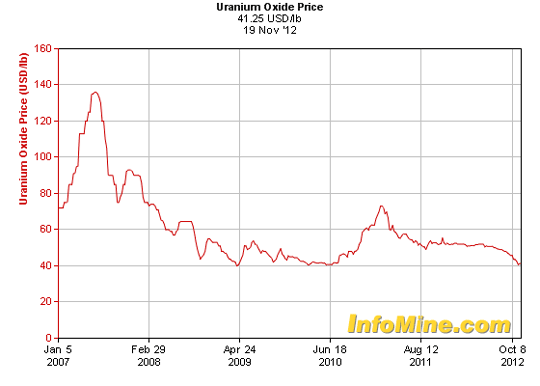
Last year nuclear power consumption declined 4.3%, the largest drop-off on record, said BP in its annual study of global energy use. Japan cut back nuclear power by 44.3%, and Germany reduced nuclear consumption by 23.2%.
http://www.mining.com/did-rivals-try-to-scupper-bhps-uranium-sale-to-cameco-87504/
UK govt pretends that nuclear power and “clean coal” are “RENEWABLE” energy
 UPDATE 1-UK energy deal triples renewable subsidy by 2020,
* Increase to 7.6 bln stg a year in real terms
* To spur 40 bln stg of private investment, create jobs
* Renewables to provide 30 pct of energy mix by 2020
By Oleg Vukmanovic and Karolin Schaps LONDON, Nov 23 (Reuters) – British government support for low-carbon electricity generation will triple by 2020 after the energy and finance ministries reached a deal to end months of wrangling over costly reforms.
The move is expected to boost the share of renewables in Britain’s energy mix to 30 percent by 2020, outpacing European Union targets of 20 percent, while creating tens of thousands of new jobs. Under the agreed Levy Control Framework, spending on renewable power generation will increase to 7.6 billion pounds ($12.12 billion) a year in real terms by 2020, from the current 2.35 billion pounds, to reduce dependence on gas.
The renewable spending plans will be funded through further rises in household energy bills which are increasingly unaffordable for many consumers….
The spending increase will also help to support new nuclear power and the commercial use of untested carbon capture and storage technologies, the government said…..
Still time for a diplomacy solution to nuclear power problem in Ira
 Window for nuclear diplomacy on Iran is now open but not for
 long, guardian UK Julian Borger, 23 Nov 12 IAEA inspectors say Iran may soon speed up its uranium enrichment, making the search for a deal even more urgent Having delivered its latest quarterly report on Iran’s nuclear programme to its board, the nuclear safeguards department of the International Atomic Energy Agency (IAEA) gave a technical briefing on Wednesday to an audience of ambassadors in Vienna about the same material but with some pictures to make the whole thing clearer. At such briefings, ambassadors can also ask questions to sound out the head of safeguards, Herman Nackaerts, on his impressions.
On this occasion, the main message western ambassadors came away with was that Iran appears to be just days away from starting feeding uranium hexafluoride gas into four new cascades of centrifuges at its underground enrichment site at Fordow. Continue reading
Cumbrian angst over nuclear waste disposal plan
 HUNDREDS TURN OUT TO MARYPORT NUCLEAR DUMP
  MEETING http://www.timesandstar.co.uk/news/politics/hundreds-turn-out-to-maryport-nuclear-dump-meeting-1.1016584?referrerPath=/tsnewsfeed117079, 23 November 2012 People in West Cumbria have 10 weeks to influence a key decision on whether the area should look to host an underground nuclear waste dump.
That was the message from Aspatria councillor Bill Finlay at a public meeting attended by more than 250 people on Wednesday. The meeting at Maryport’s Wave Centre was organised by campaign group Solway Plain Against Nuclear Dump (Spand).
It heard from geologists Professor David Smythe and Professor Stuart Haszeldine about the potential consequences of building an underground repository. Continue reading
Anti nuclear protestors arrested at Hinkley Point, UK
Arrests after anti-nuclear protest at Hinkley Point ITV, 23 Nov 2012 Four people have been arrested after protesters blockaded access to the nuclear site at Hinkley Point in
Bridgwater this morning
Ten protesters paraded a banner saying “Nuclear Power – not worth the risk” and attempted to block access to staff to prevent further ground clearance work at the site.
If EDF, the energy company behind the plan, gets the go ahead to build it, the plant could be open by 2020.
We want the destruction of land at the proposed Hinkley C site to stop. EDF still don’t have planning permission for the new nuclear plant, the governments energy policy is in tatters. With Centrica pulling out and the long awaited Electricity Reform Act delayed, there is not even enough investment to finish the project. If the tories fix the electricity price for nuclear so that the project can go ahead it will leave a radioactive waste dump here for hundreds of years. – ZOE SMITH, PROTESTER….
http://www.itv.com/news/westcountry/2012-11-23/arrests-after-anti-nuclear-protest-at-hinkley-point/
Call for General Electric to remove uranium processing facility from populated area
“The question is, is this the right kind of operation that should be in the middle of people’s backyards?”
 Councillor asks uranium plant to shut down Facility on Lansdowne has been quietly processing nuclear fuel for decades Toronto NOW, 23 Nov 12 By BEN SPURR Amid mounting concerns from his west downtown community, a city councillor is asking controversial uranium plant on Lansdowne Ave. to pack up and move out of his ward.
More mistakes found in Japan’s nuclear regulator’s radiation forecasts
Yet again, data errors discovered in radiation forecast maps, Asahi Shimbun By JIN NISHIKAWA/ Staff Writer, 24 Nov 12 Additional errors were found on the Nuclear Regulation Authority’s maps forecasting the spread of radioactive substances from a serious nuclear accident, but the industry watchdog said these mistakes would not affect evacuation plans. Continue reading
Canadian province shuts down nuclear reactor similar to Wolseong in Korea
Posted on : Nov.20,2012
Greenpeace Campaigner says Korean reactors’ lifespans should only be extended after proper processes
By Lee Keun-young, science correspondent

“The Quebec Provincial government recently decided that the nuclear reactor Gentilly-2, the same type as Korea’s Wolseong #1, would be shutdown due to safety concerns and the huge cost of extending its term of service. South Korea needs to follow Quebec’s lead and adopt such a process of discussion in which the extension of operations is approved only after calculating the costs and making public the relevant information.”
Greenpeace Canada nuclear campaigner Shawn Patrick Stensil, 39, advised as much in a video press conference held on Nov. 19 by South Korean NGO Common Action for a Non-Nuclear Society and Greenpeace Korea. He mentioned the case of Point Lepreau, a single nuclear power plant whose original lifespan was extended. The original estimation of the plant’s facilities improvement costs was CDN$800 million in 2002, but the cost ballooned to CDN$1.1 billion won in 2005 and CDN$2.5 billion won in 2010.
UK -Grassroots action shows new nuclear won’t be a pushover
Posted by Richardg – 23 November 2012

This morning, as the Energy Bill was making headlines, ten people were setting up a non-violent blockade of Hinkley Point nuclear power station. It’s a sure sign that building new reactors will be an uphill struggle.
The first new nuclear power station in the UK for decades is supposed to be built in Hinkley Point, on the West Somerset coast. As often happens when you’re dealing with the nuclear industry, plans have gone somewhat awry.
Local people are furious, because they don’t believe the government or EDF, who want to build the reactor, are listening to them.
Some are worried about hundreds of lorries trundling past their front door. Others worry about the nuclear waste that would be stored on-site for decades. Many would just rather the money being spent propping up the nuclear industry were spent on affordable, sustainable renewable power.
The protest today finished when four people were arrested, but it’s unlikely to be the last protest of this nature. It’s hard enough building a nuclear reactor on time and on budget – and it’s much, much harder when local people are determined to stop you.
Toshiba nuclear robot can’t make it through demo!

(Credit: Toshiba)
Japan is again trying to field some more robots to work at the heavily damaged Fukushima Daiichi nuclear plant, but this walker from Toshiba froze during a press demo.
Tetrapod is a quadruped designed to withstand high levels of radiation, but it couldn’t seem to take the glare of cameras.
The wireless remote-controlled machine recalls Boston Dynamics’ BigDog robots, with legs than can tackle uneven terrain. It can carry up to 44 pounds of equipment and has an onboard camera and dosimeter.
It’s designed to survey the plant’s highly radioactive buildings and debris, and can apparently withstand a 100 millisievert environment for a year.
As seen in the vid below, it has a folding arm that can deploy a second, smaller robot with a camera to image tight spots and key equipment.
RELATED STORIES
http://www.isstek.com/toshiba-nuclear-robot-cant-make-it-through-demo/
Ghana to have nuclear energy in 15 years
“The Chinese are interested in a cooperation with Russia on uranium production in third countries. “It is possible, we have mentioned African countries, in particular”, Rosatom head Sergei Kiriyenko announced. (RIA Novosti Aug. 30, 2010)”
[…]
“The acting Director of Ghana Atomic Energy Commission
(GAEC), Dr B.J.B. Nyarko, has said that the country stands the chance of striking uranium deposits in commercial quantities since there is an association between gold and uranium. He explained that a study of gold tailings at the Nuclear Research Reactor at Kwabenya revealed traces of uranium in pits in gold-mining areas in the country. Dr Nyarko said the research, carried out by GAEC, was not on a large scale and that a major prospecting and exploration was needed to establish the link. (MJFM Apr. 22, 2008)”
[…]
11/24/2012

Ghana will start to generate electricity from nuclear energy in 15 years, or 10 years if things go smoothly, a Ghanaian nuclear power program coordinator has said.

Expertise preparation for the country’s nuclear power program, from installation to maintenance, is underway, said Robert Sogbadjie, the national coordinator of the Ghana Nuclear Power Program Organization (GNPPO).
Ghana has decided to go nuclear for electricity generation because after acceding to the Kyoto protocol on global warming, it can only develop a limited number of thermal plants, he said in an interview with Xinhua here on Friday.
Talks on Middle East nuclear free zone cancelled
Arshad Mohammed, Reuters
Saturday, 24 November 2012
The State Department announced that the mid-December conference on creating a zone free of weapons of mass destruction, or WMD, would not occur and did not make clear when, or whether, it would take place.
Earlier this month, diplomats told Reuters that the talks were likely to be postponed, rather than canceled outright.
“As a co-sponsor of the proposed conference … the United States regrets to announce that the conference cannot be convened because of present conditions in the Middle East and the fact that states in the region have not reached agreement on acceptable conditions for a conference,” State Department spokeswoman Victoria Nuland said in a statement.
Nuland said that “a deep conceptual gap persists in the region” on how to handle regional security and arms control, adding that “outside states cannot impose a process on the region any more than they can dictate an outcome.”
The plan for a meeting to lay the groundwork for the possible creation of a WMD-free Middle East was agreed to at a May 2010 conference of 189 parties to the 1970 nuclear Non-Proliferation Treaty, or NPT.
The United States, feared the conference, which was to be held in Finland, could be used as a forum to bash Israel, a concern likely to have increased after eight days of fierce Israeli-Palestinian fighting that ended with a ceasefire on Wednesday.
1 This Month
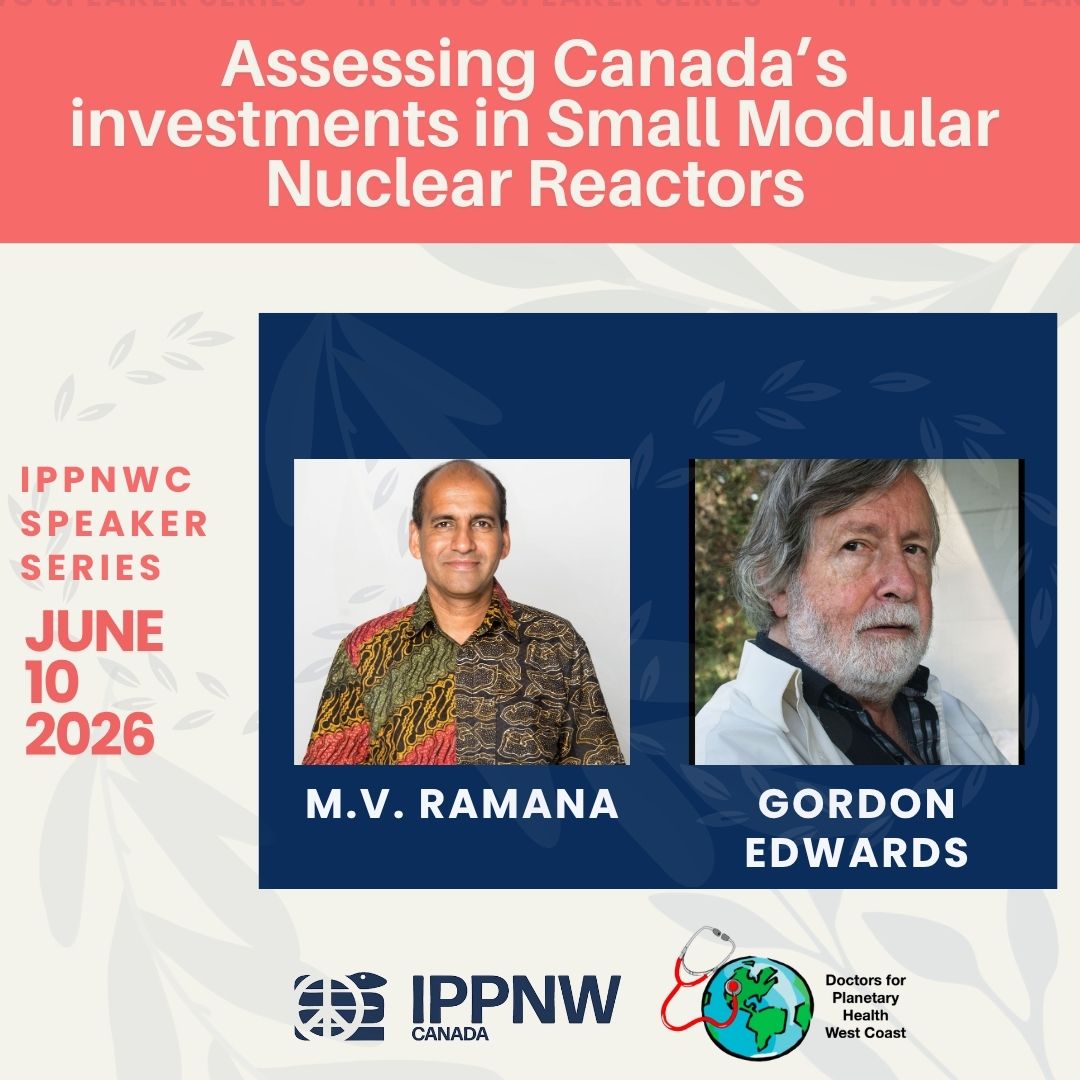
10 June – Assessing Canada’s Investments in Small Modular Nuclear Reactors – https://zoom.us/meeting/register/IiqHA5feRhaEBycOLNTJlA#/registration

Cuba Is Not a Failed State – It Is a Besieged State
PETITION: “Global Appeal to Endorse Palestinian Right of Return of Refugees”
To see nuclear-related stories in greater depth and intensity – go to https://nuclearinformation.wordpress.com
-
Archives
- June 2026 (89)
- May 2026 (306)
- April 2026 (356)
- March 2026 (251)
- February 2026 (268)
- January 2026 (308)
- December 2025 (358)
- November 2025 (359)
- October 2025 (376)
- September 2025 (257)
- August 2025 (319)
- July 2025 (230)
-
Categories
- 1
- 1 NUCLEAR ISSUES
- business and costs
- climate change
- culture and arts
- ENERGY
- environment
- health
- history
- indigenous issues
- Legal
- marketing of nuclear
- media
- opposition to nuclear
- PERSONAL STORIES
- politics
- politics international
- Religion and ethics
- safety
- secrets,lies and civil liberties
- spinbuster
- technology
- Uranium
- wastes
- weapons and war
- Women
- 2 WORLD
- ACTION
- AFRICA
- Atrocities
- AUSTRALIA
- Christina's notes
- Christina's themes
- culture and arts
- Events
- Fuk 2022
- Fuk 2023
- Fukushima 2017
- Fukushima 2018
- fukushima 2019
- Fukushima 2020
- Fukushima 2021
- general
- global warming
- Humour (God we need it)
- Nuclear
- RARE EARTHS
- Reference
- resources – print
- Resources -audiovicual
- Weekly Newsletter
- World
- World Nuclear
- YouTube
-
RSS
Entries RSS
Comments RSS
 nuclear-news