NHK: International nuclear experts turning attention to Onagawa nuke plant — Intensity of 3/11 quake exceeded maximum limit (VIDEO) http://enenews.com/nhk-nuclear-experts-turning-attention-to-onagawa-nuclear-plant-intensity-of-311-quake-exceeded-maximum-limit-video July 26th, 2012
By ENENews Title: IAEA to assess quake resistance at Onagawa plant Source: NHK World
Data at some nuclear plants in northern and eastern Japan show that the intensity of the quake exceeded the maximum level assumed by the plants’ designers.
Officials from the IAEA and foreign experts will visit the Onagawa nuclear plant in Miyagi Prefecture on Monday for an on-site assessment.
Japan’s Nuclear and Industrial Safety Agency says the team will enter the plant’s No.1 through No.3 reactors to examine piping and the cooling system. They will also check the condition of the nuclear fuel pools.
But this is the first time since last year’s disaster that it will assess quake resistance at a nuclear plant in Japan.
Bulgarian opposition demands vote on nuclear plans SOFIA, July 27 Jul 27, 2012 (Reuters) – Bulgaria’s opposition Socialists on Friday demanded a referendum to challenge the government’s decision to abandon construction of a nuclear power plant, an increasingly divisive issue in the run up to next year’s parliamentary election.
The Socialists submitted more than 770,000 signatures to parliament
calling for the referendum – well above the half million they need to
force a plebiscite.
But analysts said the government would likely resist efforts to revive
a national debate on the fate of the planned Russian-built 2,000
megawatt Belene plant.
The centre-right cabinet cancelled the project in March saying it was
too costly and had failed to attract serious interest from Western
investors.
But the Socialists have argued the country had already sunk too much
money into the project to abandon it. “We do not want important issues
like this – (whether) to develop nuclear energy in Bulgaria or not –
to be decided behind closed doors,” Socialist Party leader Sergei
Stanishev said after lodging the signatures in the parliament……
http://www.reuters.com/article/2012/07/27/bulgaria-nuclear-idUSL6E8IR9BU20120727
The sorry state of Japanese democracy
AS IF NOTHING HAPPENED, JAPAN GOES NUCLEAR AGAIN LE MONDE 27 JULY 12 Although 80 percent of the population would like to see the end of nuclear power in Japan, electrical companies are gradually reopening their plants. “………The nuclear lobby makes a comeback
According to polls, 80 percent of Japanese people would like a quick closure of all nuclear power plants, a demand that is starting to be made heard by citizens. Regardless of the opposition, the nuclear lobby is currently claiming back the approval of an indecisive and weakened government, and closing in on the conservative opposition following the recent departure of around 50 of its members. This political crisis marks the demise of the first change in government in half a century, when the Democratic Party came to power in 2009, says political scientist Jiro Yamaguchi. Inexperience, clumsiness, procrastination, and a confused and ill-advised management were the causes of the catastrophe on March 11 2011: in three years, the Democratic Party has lost all credit and disappointed many. Continue reading
Learning Fukushima’s lessons http://www.greenpeace.org/international/en/news/Blogs/nuclear-reaction/learning-fukushimas-lessons/blog/41579/ by Justin McKeating – July 27, 2012 A series of startling investigative reports into the Fukushima disaster have made it clear the crisis was both human-made and could have been avoided.
The question is, will the Japanese government and the wider world take heed?
A report released earlier this week from Japan’s Investigation Committee on the Accident at the Fukushima Nuclear Power Stations was especially scathing in its findings. Continue reading
Fukushima casual workers got 4 times as much radiation as employees
Radiation doses 4 times larger for ‘outside workers’ at nuclear plants , Asahi Shimbun, July 26, 2012 By TOSHIHIRO OKUYAMA/ Staff Writer Nuclear plant workers not employed by the operating utilities were exposed to nearly four times the radiation doses received by utility employees, indicating that “outside workers” are often assigned the dangerous tasks, statistics showed....subscription only .
http://ajw.asahi.com/article/0311disaster/fukushima/AJ201207260071
Nuclear Regulatory Commission to refuse licensing for Calvert Cliffs nuclear reactor
Experts: NRC Licensing Board Expected Friday To Strike Down Calvert
Cliffs Nuclear Reactor Project, Market Watch, WASHINGTON, July 26, 2012 — End to Former “Flagships” of Sputtering U.S. “Nuclear Renaissance”: Foreign Ownership Rules to Block Licensing of Calvert Cliffs 3 in MD, Nine Mile Point 3 in NY, and South Texas Project. Continue reading
Japan government names radiation physicist as new atomic regulator head By Tetsushi Kajimoto TOKYO | Thu Jul 26, 2012 (Reuters) – Japan’s government on Thursday nominated Shunichi Tanaka, an expert in radiation physics, to head a new safety regulator,… But it is uncertain whether confidence can be restored with public feeling running high against the “nuclear village” –
– industry officials, politicians and utility operators seen as failing to avert the
disaster…..
The government hopes that the new safety body, to be launched in September, will instill more confidence than two current regulatory bodies, both heavily criticized for their cozy ties with the power industry.
Tanaka, 67, a former deputy head of the Cabinet Office’s Atomic Energy Commission, was nominated for the new safety watchdog along with four other candidates….. Critics see some nominees, including Tanaka, as closely linked to the “nuclear village”. ….
http://in.reuters.com/article/2012/07/26/us-japan-nuclear-watchdog-idINBRE86P0LH20120726
Centrica Says Needs Price Clarity Before Making Nuclear Decision, Bloomberg By Josephine Forster and Kari Lundgren – Jul 25, 2012 Centrica Plc (CNA), the biggest supplier of gas and electricity to British households, said it needs more clarity on power prices before
deciding to participate in building new nuclear reactors in Britain. Continue reading
Suspicious geological faults http://www.japantimes.co.jp/text/ed20120727a1.html 27 July 12, The trade and industry ministry’s Nuclear and Industrial Safety Agency (NISA) on July 18 ordered Kansai Electric Power Co. (Kepco) and Hokuriku Electric Power Co. to carry out geological surveys, including boring, at the Oi nuclear power plant in Fukui Prefecture and the
Shika nuclear power plant in Ishikawa Prefecture, respectively.
This is because of suspicions having been raised that fault crushing belts running through the Oi plant site and a fault running through the Shika plant site are active faults. Continue reading
Nuclear showdown in Delhi’s neighbourhood Rediff, 26 July 12, July 26, 2012 Gopal Krishna “………. The three levels of conflict of interest that have been identified in
the EIA process for nuclear facilities are relevant for the EIA report of the proposed atomic power plant in Fatehabad.
First, the EIA is prepared by consultants who are retained to work on behalf of, and by implication act in the interests of, their client — the nuclear organization proposing the project.
Second, the organization that has been tasked with preparing the EIA to support its proposal for a project is the same which will benefit from the project.
The third conflict of interest is that the regulatory agency Atomic Energy Regulatory Authority is itself regulated by the nuclear power promoters, the Atomic Energy Commission, which is under the direct charge of Prime Minister Manmohan Singh.
The EIA report reveals that the water requirement for the project will be met from Fatehabad branch of the Bhakra canal. Unlike sea as a source of water in the case of Fukushima, in Fatehabad, canal water is the only source for water….” http://www.rediff.com/news/slide-show/slide-show-1-nuclear-showdown-in-delhi-s-neighbourhood-fatehabad/20120726.htm
Runaway costs of USA’s unnecessary B61 nuclear bomb project
 The escalating cost of the B61 LEP adds to NNSA’s abysmal record of underestimating costs of nuclear weapons programs. It follows enormous budget overruns of the National Ignition Facility (NIF) at Lawrence Livermore National Laboratory in California,….
the U.S. should phase out its remaining non-strategic nuclear weapons, delay and redesign the B61 LEP, and focus its resources on maintaining the strategic nuclear weapons and
conventional forces that are actually needed
B61-12: NNSA’s Gold-Plated Nuclear Bomb Project, FAS Strategic Security Blog, . By Hans M. Kristensen, 26 July 12 Escalating cost estimates for the B61 Life- Extension Program threaten to make the new B61-12 bomb the most expensive ever.
The disclosure during yesterday’s Senate Appropriations Subcommittee hearing that the cost of the B61 Life Extension Program (LEP) is significantly greater that even the most recent cost overruns calls into question the ability of the National Nuclear Security Administration (NNSA) to manage the program and should call into question the B61 LEP itself. Continue reading
Failure of Mixed Oxide Fuel (MOX) reprocessing projects
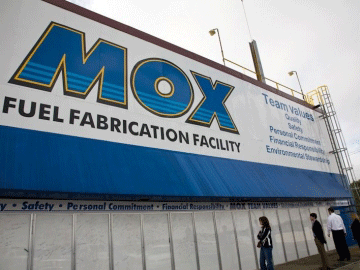 The government would be crazy to consider building another MOX plant. MOX cannot be recycled.”….
The Bomb Plant: A MOX White Elephant?, DC Bureau By Joseph Trento, on October 20th, 2011 The National Nuclear Security Administration may have a $10 billion taxpayer-financed white elephant on its hands based on Britain’s experience with a similar plant that has been shuttered after a decade of failed operations.
NNSA is building a French-designed plant to convert plutonium warheads into mixed oxide (MOX) reactor fuel at the Department of Energy’s Savannah River Site near Aiken, South Carolina. The United States’ MOX Fuel Fabrication Facility is over budget – already double the estimated costs – behind schedule and still has no commercial customers for the fuel. But the DOE is pushing ahead with construction at a time when international nuclear utilities are shuttering their failed MOX programs. Continue reading
Nuclear reprocessing is not the answer to the nuclear waste problem
“No currently available or reasonably foreseeable reactor and fuel cycle technology developments — including advances in reprocess and recycle technologies — have the potential to fundamentally alter the waste management challenge this nation confronts over at least the next several decades, if not longer,’’ the report said…..
A Long, Long Road to Recycling Nuclear Fuel, NYT, By MATTHEW L. WALD, 15 Nov 11, The question of what to do with spent nuclear fuel from civilian power reactors has stirred renewed interest in reprocessing — that is, chopping up the fuel, retrieving materials that can power a reactor and possibly recovering the most troublesome waste products so they can be broken up in the reactor into easier-to-handle elements.
But the Energy Department, which is supposed to is evaluate different ways that the used fuel could be recycled, has a long way to go, according to the Government Accountability Office. In a report released on Wednesday, the auditors noted that the Department of Energy had listed a huge number of potential ways to do the job and classified the methods according to the degree of promise that each held. Still, the department’s evaluation does not indicate the state
of technical progress for the many technologies that would be needed, the report said. Continue reading
Japanese experts say nuclear reprocessing is not viable
Fast-breeder said realistic no more, Japan Times, 25 Feb 12, Kyodo A panel of experts reviewing the nuclear fuel cycle policy in light of the Fukushima crisis has agreed that while a fast-breeder reactor has advantages, from a technology viewpoint it can’t be considered a realistic option for the next 20 to 30 years. The nuclear fuel policy involves reprocessing spent fuel to produce plutonium that can be reused to produce electricity.
The subcommittee of the Japan Atomic Energy Commission said in a draft document summarizing its discussions that two viable options during the next few decades would be to not reprocess spent nuclear fuel, and to recycle plutonium-uranium mixed oxide fuel, or MOX fuel.
The former option is called the “once-through” cycle, in which uranium fuel is used in nuclear reactors just one time and disposed of by burying it in the ground. In the latter option, MOX fuel is manufactured from plutonium recovered from spent nuclear fuel and used in ordinary reactors. Continue reading
Japan’s massive nuclear waste problem, and reprocessing is a failed solution
The amount of spent fuel stored at power stations has continued to surge, standing at around 14,200 tons across 17 facilities as of last September, including the wrecked Fukushima No. 1 nuclear plant.
Japan Nuclear Fuel Ltd.’s storage facilities are already almost full and contained a total of 2,800 tons as of February, while several power stations are expected to reach maximum capacity over the next three years if their currently idled reactors are restarted, industry
sources said.
Policy of recycling all spent nuclear fuel may be axed, Japan Times, 22 June 12, Kyodo, Jiji The Japan Atomic Energy Commission has proposed both reprocessing and directly disposing of spent nuclear fuel if Japan’s atomic energy reliance is cut to 15 percent, a departure from the current policy of total reprocessing…
.. The changed tack comes as massive amounts of spent fuel are accumulating at nuclear plants nationwide and as decades-long efforts to activate reprocessing facilities remain mired in technical difficulties, sources said. Continue reading
1 This Month
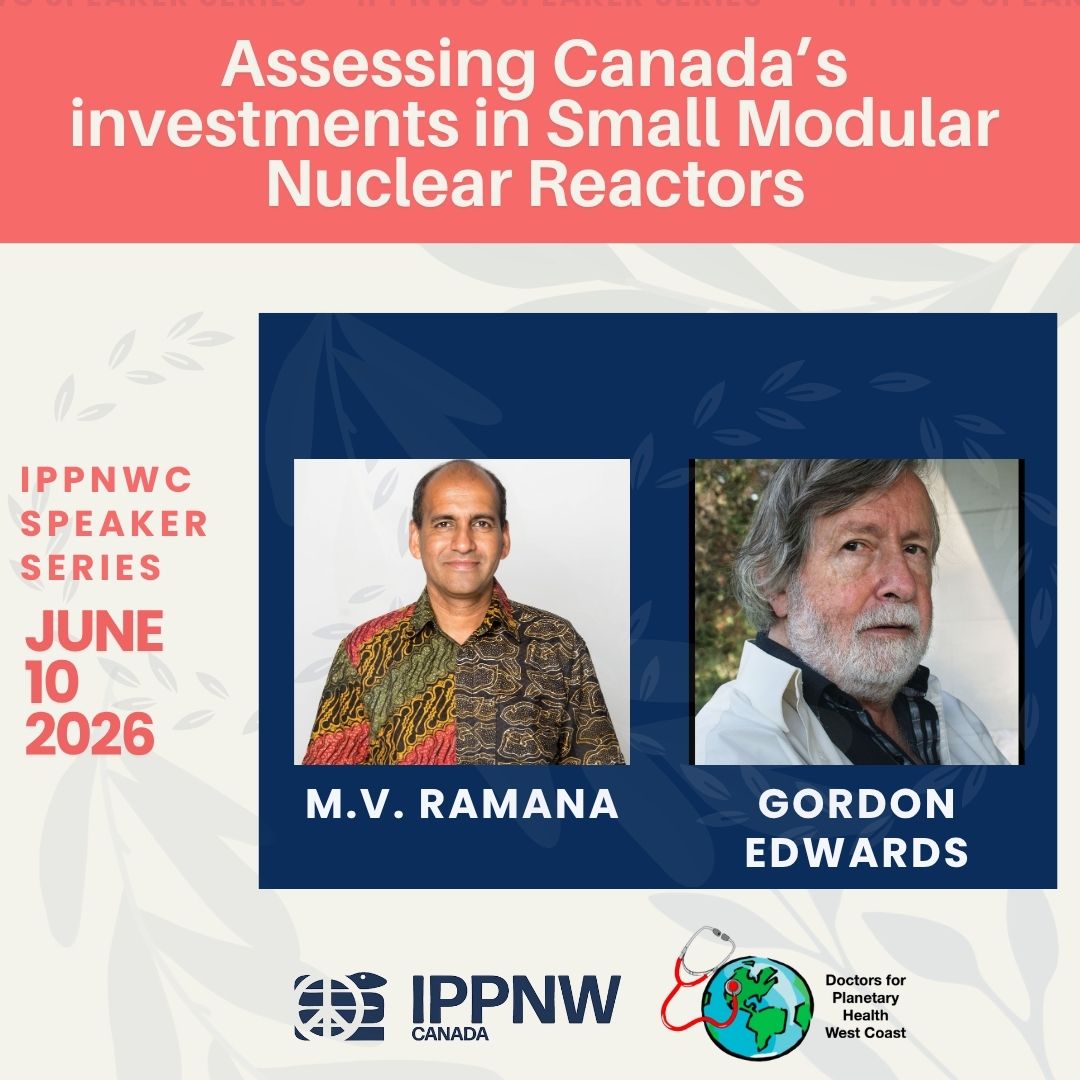
10 June – Assessing Canada’s Investments in Small Modular Nuclear Reactors – https://zoom.us/meeting/register/IiqHA5feRhaEBycOLNTJlA#/registration


Cuba Is Not a Failed State – It Is a Besieged State
PETITION: “Global Appeal to Endorse Palestinian Right of Return of Refugees”
To see nuclear-related stories in greater depth and intensity – go to https://nuclearinformation.wordpress.com
-
Archives
- June 2026 (89)
- May 2026 (306)
- April 2026 (356)
- March 2026 (251)
- February 2026 (268)
- January 2026 (308)
- December 2025 (358)
- November 2025 (359)
- October 2025 (376)
- September 2025 (257)
- August 2025 (319)
- July 2025 (230)
-
Categories
- 1
- 1 NUCLEAR ISSUES
- business and costs
- climate change
- culture and arts
- ENERGY
- environment
- health
- history
- indigenous issues
- Legal
- marketing of nuclear
- media
- opposition to nuclear
- PERSONAL STORIES
- politics
- politics international
- Religion and ethics
- safety
- secrets,lies and civil liberties
- spinbuster
- technology
- Uranium
- wastes
- weapons and war
- Women
- 2 WORLD
- ACTION
- AFRICA
- Atrocities
- AUSTRALIA
- Christina's notes
- Christina's themes
- culture and arts
- Events
- Fuk 2022
- Fuk 2023
- Fukushima 2017
- Fukushima 2018
- fukushima 2019
- Fukushima 2020
- Fukushima 2021
- general
- global warming
- Humour (God we need it)
- Nuclear
- RARE EARTHS
- Reference
- resources – print
- Resources -audiovicual
- Weekly Newsletter
- World
- World Nuclear
- YouTube
-
RSS
Entries RSS
Comments RSS
 nuclear-news