Opposition to privatisation of UK’s nuclear weapons management
Faslane and Coulport nuclear weapons maintenance to be privatised – Polaris?
For Argyll.com July 28, 2012 “….Privatisation of maintenance of nuclear weapons – no new notion The privatisation of security which produced the inglorious G4S failure, undermined public confidence in the organisation of the ongoing 2012 Olympic Games in London. One would therefore have expected some gesture of consultation with the Scottish government and the Scottish people on any plan to privatise the maintenance of nuclear weapons here. Continue reading
Japan’s nuclear power utilities paid candidates for regulatory body
Candidates for nuclear regulatory commission paid by power utilities, Asahi Shimbun July 27, 2012 By SATOSHI OTANI Two of the five prospective commissioners of a new nuclear regulatory commission received payments from operators of nuclear power plants but likely did not violate guidelines intended to ensure neutrality, The Asahi Shimbun has learned.. . subsribers only http://ajw.asahi.com/article/0311disaster/fukushima/AJ201207270093
Australia finding that 3 big uranium mining projects are not economically viable
 Uranium prices halt Sandy Desert project, BY: BARRY
  FITZGERALD The Australian July 29, THE most likely of Australia’s next big uranium mine developments – the Kintyre project in Western Australia’s Great Sandy desert – has fallen victim to sluggish demand and prices for the nuclear fuel, and WA’s “hot” construction market for resource projects.
Project operator and 70 per cent owner, Canada’s Cameco, has revealed that the economics of the project are “challenging” in that a development would not be profitable at current uranium prices. Prices are 34 per cent below where they need to be for a viable project.
The sluggish demand backdrop has implications for BHP Billiton which must find a home for the additional uranium it will produce with the planned $30 billion expansion of its Olympic Dam copper/uranium/gold mine in South Australia’s outback.
The expansion would see uranium output at Olympic Dam grow massively from 9.6 million pounds a year to 40.6 million pounds a year – 17 per cent of forecast global mine output in 2020.
But the Weekend Australian revealed that BHP plans to defer a decision on the project for two years.
Sluggish uranium demand has already reported to have led to BHP becoming disinterested in moving towards developing its Yeelirrie uranium deposit in WA.
Cameco chief executive Tim Gitzel told analysts that Cameco was “not going to develop Kintyre at any cost Continue reading
UK hastening plan to bury radioactive waste
 Govt fast-tracks nuclear dumps despite warnings, The Independent/London, 29 July 12 The burial of radioactive nuclear waste is to be fast-tracked by the government despite warnings about the risks.
Ministers have revealed an “enduring ambition” for Britain’s first burial of waste from nuclear power stations to happen as early as 2029, instead of 2040 as originally planned, The Independent on Sunday revealed. Continue reading
Sound and fury, but not science, behind UK’s anti wind energy lobby
But ‘the biggest threat to our valued landscapes is climate change. Onshore wind is the cheapest source of low-carbon power, and restricting its development would jeopardise our firm commitment to offer value for money to the consumer, as well as green energy.
Bashing wind, Environmental Rsearch, 28 July 12 A new report from the Campaign to Protect Rural England (CPRE) says on-land wind projects can threaten the ‘beauty and tranquility of much-loved landscapes.’… Continue reading
Medical experts concerned about medical and dental radiation
How many imaging scans are too many? By Ben Sutherly, The Columbus Dispatch Sunday July 29, 2012 Cumulative radiation exposure has been shown to cause cancer. And thathas the pediatric-care community more carefully weighing whether the benefits of medical imaging justify the radiation risk in children.Children are far more sensitive to radiation than adults. And they might receive too great a dose if their smaller body size isn’t factored into the scanning process, according to the National Cancer Institute.The Alliance for Radiation Safety in Pediatric Imaging was formed five years ago after a group of pediatric radiologists noted
that some hospitals used adult-size doses of radiation on children, said Dr. Marilyn Goske, the alliance’s chairwoman and a radiologist at Cincinnati Children’s Hospital Medical Center.“If you can get the picture using a lower dose and still make a diagnosis, that would be
best,” Goske said. Continue reading
Uranium-mining meetings questioned By: REX SPRINGSTON | Richmond Times-Dispatch July 28, 2012 RICHMOND, Va. — Some environmentalists say the public was not adequately notified of six meetings scheduled in August to discuss uranium mining in
Virginia. Continue reading
A medical view on what is really going on in Fukushima
 What Really Happened in Fukushima : A Report From a Medical Care Provider http://fukushimavoice-eng.blogspot.com.au/2012/07/what-really-happened-in-fukushima.html?spref=tw Part 1, December 21, 2011

I am a medical care provider. At my workplace we began taking care of patients from the evacuation zone from Fukushima Daiichi nuclear power plant in the evening of March 11, 2011.
The president of the hospital where I am employed says people live longer when irradiated and Fukushima people now will be healthier because of radiation hormesis. There is no argument allowed. Since this statement comes from a physician, many people believe this in Fukushima.
Those who were contemplating on evacuating from Fukushima are now in a mental state that is not even conducive to thinking about it any longer. This was becoming obvious beginning in April or May, 2011, and it might have been a coping mechanism for mass psychology and dangers. However, it is entirely different now. I feel they are no longer capable of avoiding dangers.
This is what I heard from a clinical laboratory technician at work. Thyroid ultrasound examinations for children, which have already been done in my town and which will be held in other cities from now on, are being performed by Fukushima University Medical School Hospital laboratory technicians who have only done blood tests before. In other words, they are being done by people who have never used ultrasound equipment before.
Technicians are being dispatched from Fukushima University Medical School. For instance, there is a whole body counter car stationed in Kawamata-machi, Date district, where a part of the town is a deliberate evacuation area. There are physicians and clinical laboratory technicians stationed there, and they are all young.
Currently there is ”that” Yamashita stationed at Fukushima University Medical School. After being dismissed as the radiation advisor for Fukushima prefecture, he became a vice president for Fukushima University Medical School. The reason not a single Fukushima physician even mentions medical care for radiation exposure is because of the power of Fukushima University Medical School. Physicians in Fukushima who are not self-sufficient are not allowed to provide medical care for radiation exposure, and those who are self-sufficient left Fukushima.
Yamashita and Fukushima University Medical School are planning on creating a cancer center (already publicized). Minami Tohoku General Hospital in Koriyama-city, which has been introducing Gamma Knife and PET for cancer treatments on a large scale, has not had any say. It is obvious this is because of Fukushima University Medical School.
I have also learned the following from a radiology technician in mid-March, 2011. Test anomalies began to show in Kanto summer of 2011 also. But in mid-March, X-rays for a particular patient began to show white spots. They didn’t show up if the patient was undressed. They didn’t show up in X-rays of other patients who were examined at the hospital. This particular patient was actually not even an evacuee but a resident who lived 45 kilometers from the Fukushima Daiichi nuclear power plant.
The technician initially thought they were dust specks, but they were clearly bright spots. It was determined that clothes hung up to dry outside must have radioactive materials attached to them. This “finding” was reported as such to the hospital president as well as the prefectural office. At the time we had no idea what was going on at Fukushima Daiichi, and it was reported as a proof that “the radioactive materials have reached as far as here,” but it was never publicized.
Inadequate medical screening of Fukushima evacuees, especially children
 Red Cross Team said “We were told by headquarters not to provide medical care for those exposed to radiation” after 3/11 –Hospital Worker July 28th, 2012 By ENENews
Title: What Really Happened in Fukushima A Report From a Medical Care Provider Source: FukushimaVoice
What Really Happened in Fukushima A Report From a Medical Care Provider Part 2, December 22, 2011
Please let me explain about what happened immediately after the earthquake.
On March 11, 2011, we began to have more and more evacuees from Futaba-machi.
 We accepted both inpatients and outpatients without any manual or instruction for medical care for radiation exposure. However, Fukushima University Medical School Hospital only accepted the seriously injured (essentially refusing to accept evacuees) and the Red Cross medical team said “we were told by the headquarters not to provide medical care for those exposed to radiation.”
They stayed for three days, but the Red Cross medical team went to another prefecture without seeing any patients.
More and more evacuees were coming in. There was a talk of making this hospital a screening center in order to provide adequate screening examinations, but it was stopped by Fukushima University Medical School.
By the way, what was called screening examination was contamination examination of body surface by gamma survey meters.
Incidentally there is something important I would like to add. There was a “thyroid examination” of children from Iitate-mura and Kawamata-machi at the end of March, 2011, but it was just like this screening examination. Of course there was nothing abnormal found. The children had taken a shower and changed their clothes beforehand.
Extreme rise in heart attack deaths in Fukushima
 Japanese Writer, Professor: “Extreme increase of mortality caused by cardiac disease” in Fukushima — Death rate “might give the creeps to some people” July 28th, 2012 By ENENews post from Ryuichi Akiba translated by Dissensus Japan:
It’s a report of the investigation on population shift and causes of death of the year before and January and February of this year.
It can provide valuable figure how much the extremely large amount of fallout released from Fukushima Daiichi damaged public health and life.
The “cause specific death rate” deserves careful attention.
The figure might give the creeps to some people.
In fact, the data shows that the number of death increased by 12.5% and the number of death caused by cardiac disease increased by 14.6% after the Fukushima nuclear accident.
What does the extreme increase of mortality caused by cardiac disease mean?
Dr.Yury Bandazhevsky of Belarus examined the people exposed to radiation and the people who had died of Chernobyl and clinically identified the association between Cesium radiation and cardiac disease.
We can’t either determine or deny the morbidity and mortality increased only because of radiation released from Fukushima Daiichi.
We need to pay attention to the next months’ vital statistics to figure this out.
What is needed most is clinical or epidemiologic study; statistic or report by independent doctors and researchers. We need many Bandazhevskys to save the children of Japan and all over the world.
The Health, Labor and Welfare Ministry yesterday released its monthly vital statistics of February 2012: http://www.mhlw.go.jp/toukei/saikin/hw/jinkou/geppo/m2012/02.html
- The number of death was up 12.5 percent (=12695 people) compared to the same month of the year before
- The number of death caused by Malignant Neoplasm was up 7.7%(=2066 people) from the same month of the year before
- The number caused by cardiac disease was up 14.6% (=2585 people)
Climate change – summer heat damaging production of nuclear power
 “Heat is the main issue, because if the river is getting warmer the water going into the plant is warmer and makes it harder to cool,” David McIntyre, an NRC spokesman, said……
As long as the heat persists, Saunders of Gelber & Associates expects nuclear supply to stay low while demand continues to climb.
Heat Sends U.S. Nuclear Power Production To 9-Year Low  Bloomberg, By Christine Harvey – Jul 26, 2012 Nuclear-power production in the U.S. is at the lowest seasonal levels in nine years as drought and heat force reactors from Ohio to Vermont to slow output.
Generation for the 104 plants in the U.S. fell 0.4 percent from yesterday to 94,171 megawatts, or 93 percent of capacity, the lowest level for this time of year since 2003, according to reports from the U.S. Nuclear Regulatory Commission and data compiled by Bloomberg. The total is down 2.6 percent from the five-year average for today of 96,725 megawatts. We’ve had a fast decay of summer output this month and that corresponds to the high heat and droughts,” Pax Saunders, an analyst at Gelber & Associates in Houston, said. “Plants are not able to operate at the levels they can.”…. Continue reading
Busting the pro nuclear positive spin by TEPCO
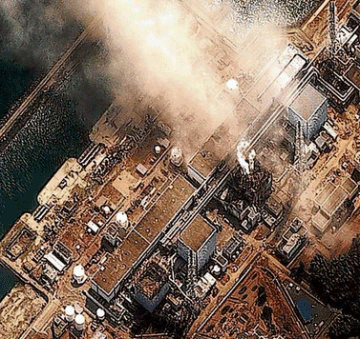 Ex-Fukushima Daiichi Worker: “There are leaks everywhere” — Tepco portraying situation in best possible light http://enenews.com/ex-fukushima-daiichi-worker-there-are-leaks-everywhere-tepco-portraying-situation-in-best-possible-light July 26th, 2012 By ENENews Takahashi Kei, a former cooling system worker at the plant now working as a radiation survey volunteer, said [Tepco’s] executives are portraying the situation in the best possible light.
“There are leaks everywhere, wreckage too. It’s not as simple as they portray,” he said.
TEPCO acknowledges that three reactors at the plant remain full of melted and re-solidified fuel that must be removed and that spent fuel pools elsewhere on the grounds must be kept cool to prevent them from releasing radiation again. It estimates it will take about 40 years to
completely decommission the site.
Hacking into Iran’s nukes with heavy metal music
The latest cyber weapon to rock Iran’s nuclear program? Australia’s AC/DC The Star, July 25, 2012, Bloomberg, DUBAI, UNITED ARAB EMIRATES — Iran’s nuclear facilities have suffered a cyber attack that shut down computers and played music from the rock band AC/DC, the F-Secure Security Labs website says.
A new worm targeted Iran’s nuclear program, closing down the “automation network” at the Natanz and Fordo facilities, the Internet security site reported, citing an email it said was sent by a scientist inside Iran’s Atomic Energy Organization.
The virus also prompted several of the computers on site to play the song “Thunderstruck” by AC/DC at full volume in the middle of the night, according to the e-mail, part of which is published in English on the website……
AC/DC has played “high voltage rock ‘n’ roll” since the band was formed in 1973 in Australia, according to the band’s website. The group’s songs were among the loud music played to detainees at the Guantanamo Bay prison facility in preparation for interrogations, the Associated Press reported in October 2009, citing the National
Security Archive in Washington….. http://www.thestar.com/news/world/article/1231457–the-latest-cyber-weapon-to-rock-iran-s-nuclear-program-australia-s-ac-dc
Fukushima’s children – guinea pigs for the nuclear industry
Fukushima – Local Children Unwitting Guinea Pigs, Scoop, By. John C.K. Daly of Oilprice.com 27 July 2012, Fukushima – Local Children Unwitting (and Unwilling) Radioactive Guinea Pigs Seventeen months after the earthquake and tsunami that destroyed the Tokyo Electric Power Company’s six-reactor complex at its Fukushima Daiichi, discussions continue about the possible effects of the radiation “dusting” the prefecture’s inhabitants received, and their consequences.
Far outside most media coverage, 2012 is shaping up to be the media battleground between the massed proponents of the ongoing ‘safety’ of nuclear power, as opposed to a motley coalition of environmentalists, renegade nuclear scientists and anti-nuclear opponents, largely bereft of media contact.
The 11 March 2011 earthquake and tsunami double punch that effectively destroyed Tokyo Electric Power Company’s power plant complex has effectively become the newest “ground zero” in the debate over nuclear power. Advocates pro and con debate the implications of everything from the amount of damage to the release of radionuclides to the long term health effects on the Japanese population.
The stakes are high – quite aside from Japan’s multi-billion dollar investment in civilian nuclear energy, dating back to the 1960s, there remains the issues of Fukushima’s radioactive debris polluting neighbours.
All sides in the debate are playing for massive stakes, with the Japanese government and the nuclear industry broadly indicating the issue is under control. Accordingly, every issue from the amount of radiation released to the long term health consequences of the Fukushima disaster are subject to acrimonious debate.
That said, there is an involuntary irradiated “test” Fukushima group monitored since March 2011 displaying disturbing health abnormalities that may ultimately decide the debate, should the global media report it, forcing governments to debate its consequences. – the children of Fukushima Continue reading
What ionising radiation does to your body
 Long-term exposure to ionising radiation, even at doses too low to produce any symptoms of radiation sickness, can induce genetic mutations and cancer. This is the biggest risk facing survivors of the Fukushima disaster
Giz Explains: What Nuclear Radiation Does To Your Body http://www.gizmodo.com.au/2012/07/giz-explains-what-nuclear-radiation-does-to-your-body/ Say some maniacal world leader finally hits the big red button. Or maybe a terrorist takes out the local nuclear reactor. You survive the initial attack, and you’re left to endure a world poisoned by nuclear radiation. How’s that gonna feel?
Measure The Dosage When nuclear reactions get going, they spit out particles with enough energy to rip electrons off of atoms or molecules. The altered bonds produce ion pairs that are extremely chemically reactive. This is known as ionising radiation, and it’s where the problems start.
There are many types of ionising radiation. Continue reading
1 This Month
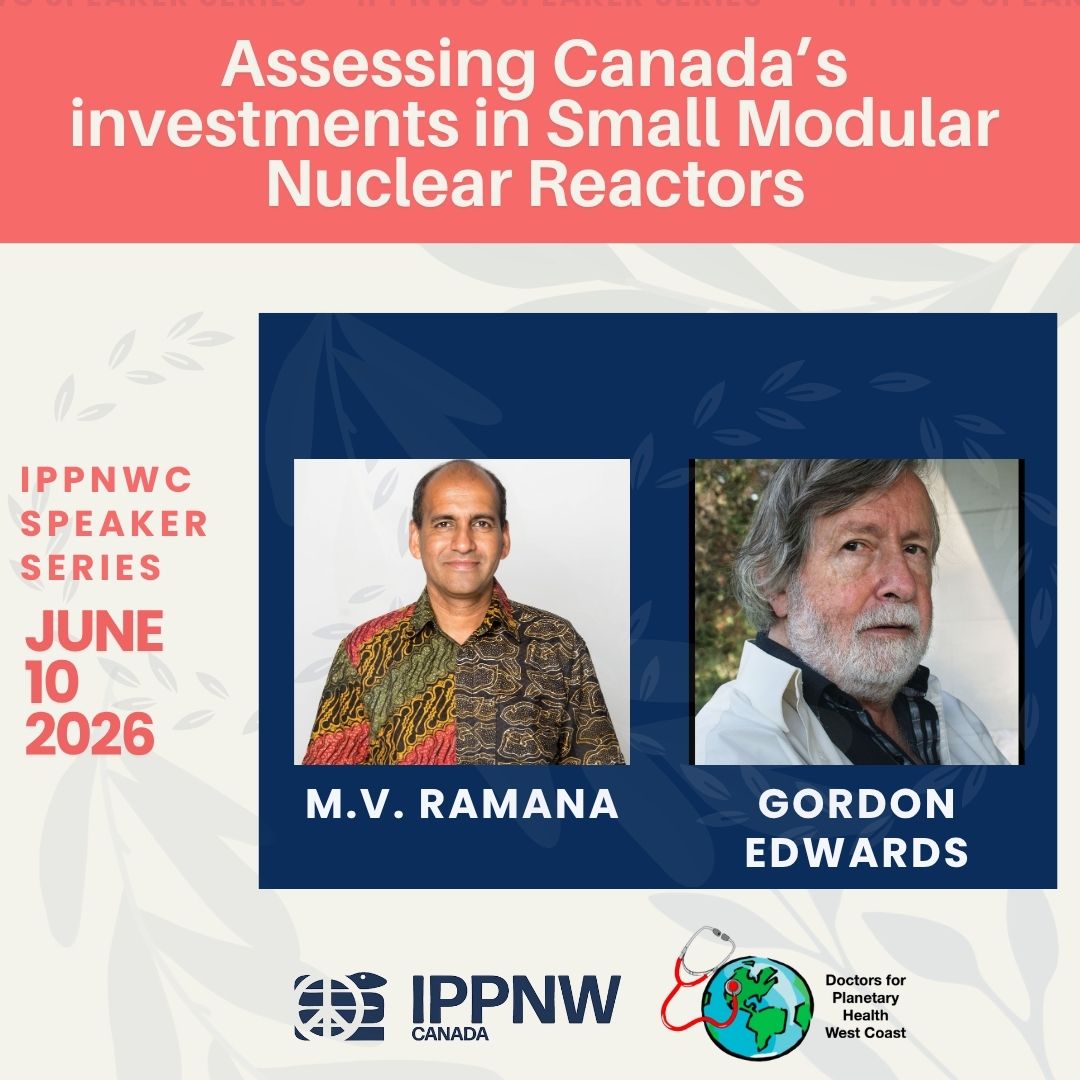
10 June – Assessing Canada’s Investments in Small Modular Nuclear Reactors – https://zoom.us/meeting/register/IiqHA5feRhaEBycOLNTJlA#/registration


Cuba Is Not a Failed State – It Is a Besieged State
PETITION: “Global Appeal to Endorse Palestinian Right of Return of Refugees”
To see nuclear-related stories in greater depth and intensity – go to https://nuclearinformation.wordpress.com
-
Archives
- June 2026 (89)
- May 2026 (306)
- April 2026 (356)
- March 2026 (251)
- February 2026 (268)
- January 2026 (308)
- December 2025 (358)
- November 2025 (359)
- October 2025 (376)
- September 2025 (257)
- August 2025 (319)
- July 2025 (230)
-
Categories
- 1
- 1 NUCLEAR ISSUES
- business and costs
- climate change
- culture and arts
- ENERGY
- environment
- health
- history
- indigenous issues
- Legal
- marketing of nuclear
- media
- opposition to nuclear
- PERSONAL STORIES
- politics
- politics international
- Religion and ethics
- safety
- secrets,lies and civil liberties
- spinbuster
- technology
- Uranium
- wastes
- weapons and war
- Women
- 2 WORLD
- ACTION
- AFRICA
- Atrocities
- AUSTRALIA
- Christina's notes
- Christina's themes
- culture and arts
- Events
- Fuk 2022
- Fuk 2023
- Fukushima 2017
- Fukushima 2018
- fukushima 2019
- Fukushima 2020
- Fukushima 2021
- general
- global warming
- Humour (God we need it)
- Nuclear
- RARE EARTHS
- Reference
- resources – print
- Resources -audiovicual
- Weekly Newsletter
- World
- World Nuclear
- YouTube
-
RSS
Entries RSS
Comments RSS
 nuclear-news