The way to win over climate sceptics
How to convince climate sceptics to be pro-environment, New Scientist, 17 June 2012 by Michael Slezak, Climate change might eventually cause millions of deaths and all kinds of natural disasters. But don’t tell that to a climate-change sceptic if you want them to do anything about it.
Instead, focus on how mitigation efforts can help people become more warm and caring towards others or how it can promote economic and technological development. That’s the advice psychologists give after confirming the strategy in an experiment. Continue reading
Rapid growth of solar power in USA
 In January, Macon’s Felton Homes public housing complex replaced 10 percent of its energy demand with renewable energy, using a combination of solar panels and solar hot water heaters.
Falling prices are making solar energy an economical energy choice for U.S. homeowners and businesses.
U.S. solar installations grow 85 percent in first quarter,http://www.macon.com/2012/06/17/2063556/us-solar-installations-grows-85.html, June 17, 2012 By EHREN GOOSSENS — Bloomberg News Developers installed 85 percent more solar panels in the United States in the first quarter than a year earlier, led by strong growth in commercial projects and demand, according to the Solar Energy Industries Association. Continue reading
Opposition to Japan’s nuclear power restart, from 73 Japanese Mayors
n Saturday, thousands of demonstrators in Tokyo and other cities and towns voiced their criticism of the prime minister’s declaration that the Ohi plant is safe.
Earlier this month, about 1,300 people from Fukushima Prefecture filed a criminal complaint against Tokyo Electric Power Co. Chairman Tsunehisa Katsumata and 32 other… accusing them of professional negligence resulting in death and injury.
Japanese Mayors Protest Restart of Nuclear Power Plant, TOKYO, Japan, June 17, 2012 (ENS) – A group of Japanese local government elected officials is protesting the decision of Prime Minister Yoshihiko Noda’s government to restart a nuclear power plant…
… Under the banner Mayors for a Nuclear Power Free Japan, the group of 73 serving and retired mayors held a news conference Sunday to protest the plan to put the Ohi plant back online. Continue reading
Concern about “complex” nuclear waste at a former western Pennsylvania nuclear waste dump

 Security upped at former Pa. nuclear waste dump, TimesOnline, Jun 17, 2012. Guards from the federal Department of Homeland Security are patrolling a former western Pennsylvania nuclear waste dump as officials rethink their cleanup plans after finding what they called more “complex” nuclear material than expected.
The Pittsburgh Tribune-Review ( http://bit.ly/LwlpaH) says neither the Army Corps of Engineers, which is managing the cleanup, nor the Nuclear Regulatory Commission would say exactly what material was found at the Armstrong County site….
The dump along Route 66 was used to store nuclear and chemical waste from the former Nuclear Materials and Equipment Corp. in Apollo and Parks townships from about
1960 to the early 1970s. http://www.timesonline.com/news/state/security-upped-at-former-pa-nuclear-waste-dump/article_1e038332-6fd1-5569-aad2-2c9f4d5d1e8e.html
AREVA nuclear power company is in trouble
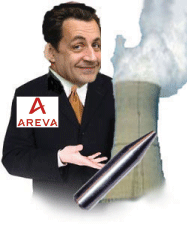 This renaissance is just a fairy tale, THE HINDU, 15 June 12, “…….In India, In Kalpakkam, , the Prototype Fast Breeder Reactor was slotted to contribute to the grid in March 2012. In 2005, Baldev Raj, Director of the Indira Gandhi Centre for Atomic Research, Kalpakkam, boasted that the 500 MW unit will be completed in 2010, 18 months before schedule.
Till date, there is no sign of this happening. The Kudankulam plant, which is now 23 years old since conception, lost only eight months due to protestors. In Jaitapur too, the government has more to worry about than local protestors.
Areva, the technology supplier, is in trouble. Last year, it announced losses of €1.6 billion, and the sacking of 1,200 workers in Germany. Last June, it decided to suspend production at a Virginia reactor component plant due to declining market prospects. Its expansion plans in France, the United Kingdom, and the U.S. may never materialise. Areva expected to sell 50 nuclear reactors this decade. It has not received a single order since 2007.
Now, with a socialist president at the helm in France, Areva’s future looks even more uncertain. French President François Hollande had promised voters a reduction in nuclear dependence from 75 to 50 per cent, and shutdown of an aging reactor in Fessenheim. Whether or not he carries through with these promises, it appears certain that no new
plants will be built or planned during his term.
Both conservative-led Germany and socialist France will make up the shortfall from the
nuclear phase-out, by investing in renewables for electricity and new jobs. In replacing nuclear with renewables, these nations are declaring that despite its carbon dividend, nuclear is too risky — financially, politically and environmentally — to pursue.
http://www.thehindu.com/opinion/op-ed/article3528968.ece

Solar street lights for Indian city
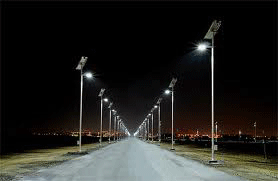
 Solar power for streets, Deccan Chromicle, June 16, 2012 By Kiran Tom Sajan | Smitha T he city’s roads will be soon dotted with solar and wind energy powered street lights. The city corporation is in talks with a private agency for installing street lights using solar and wind energy.
To begin with, plans are afoot to install energy-efficient lights on the Edappally railway overbridge (RoB) and on Chathiyath Road….. The corporation has adopted a policy in favour of energy saving and measures like installing solar street lights will be taken for energy conservation, the mayor added.
According to experts, wind could be a potential energy source that could be used to power even homes and businesses. Earlier, the civic body has decided to install energy-efficient street lights on selected stretches of the roads in the city. It has invited tenders for installing energy saving LED lights along the MG Road and Marine Drive.
The ministry of new and renewable energy has recently included the city in its ‘solar city’ programme, which aims at promoting the use of renewable energy in urban
areas.http://www.deccanchronicle.com/channels/cities/kochi/solar-power-streets-028
Storage of solar energy at home
In a test building, they were able to increase “own consumption” – solar power used directly within the household without being exported to the grid
 Home Solar Power Storage — Another Option Clean Technica, JUNE 15, 2012 BY ZACHARY SHAHAN In addition to the home storage option recently announced by Panasonic, below is another story about a some storage option that could greatly benefit those with cheap solar power on their rooftops in Germany (and some other locations). This is a full repost from the awesome site Renewables Continue reading
Extremely high radiation found by robots, above Fukushima Reactor No.2
 High Radiation Detected On Floor Above Crippled Fukushima Reactor http://www.rttnews.com/1907046/high-radiation-detected-on-floor-above-crippled-fukushima- 6/15/2012 (RTTNews) – Extremely high level of radiation has been detected on a floor just above the No.2 reactor at the crippled Fukushima nuclear power plant in Japan, the plant operator said on Thursday The Tokyo Electric Power Company (Tepco) said a reading of 880 millisieverts per hour of radiation was detected on the fifth floor, which is 4.5 meters above the reactor containment vessel. The reading was taken by a robotwhich the company deployed in the reactor building on Wednesday.
Tepco suspects that radioactive substances leaked from the No.2 reactor moved through the location. It could not find the exact route the radioactive substances moved even after analyzing the images taken by the robot, Japanese media reported.
The No.2 reactor is believed to have released the largest amount of radioactive substances during the Fukushima nuclear accident caused by the disastrous earthquake and the massive tsunami it unleashed on Japan’s north-east on March 11, 2011. But the overall route they took has not been determined. Residents in 20 kilometer radius of the stricken plant had been evacuated following the accident, the second biggest after Chernobil.
Tepco needs to find and repair the damaged parts of the reactor to recover melted nuclear fuel before starting to decommission the reactor. But it says high radiation often stops workers from entering the building.
Chief temple priest of Fukui Prefecture speaks out against nuclear reactor restarts
 The myth about the safety of nuclear energy did not collapse with the Fukushima accident. It had already collapsed when nuclear plants were forced on isolated villages in various parts of Japan because there was the understanding that those plants were dangerous facilities that could not be built close to major urban centers.
 Tetsuen Nakajima: Japan must thoroughly re-examine nuclear energy policy THE ASAHI SHIMBUN 16 June 12, When I was a student, I was only interested in literature and the arts. Then in 1963, a friend took me to a peace march against nuclear weapons.
There I met a hibakusha who had been exposed to radiation after the dropping of the atomic bomb on Hiroshima. Continue reading
Strangely, India’s govt is ignoring the worldwide rethink about nuclear power
Unpredictable financial implications associated with constructing, running, decommissioning plants and handling nuclear risks are causing a rethink on nuclear energy worldwide. But these developments seem to slip by India without so much as causing a ripple…..
This renaissance is just a fairy tale, THE HINDU, 15 June 12, NITYANAND JAYARAMAN The unpredictable financial implications of constructing, running, decommissioning plants and handling risks are causing a global rethink on nuclear energy
For a professed proponent of liberalisation and free trade, Prime Minister Manmohan Singh’s penchant for a technology that cannot float without subsidies is telling. Nuclear power’s unfavourable economics are not lost on Dr. Singh. Continue reading
Time for a historic change – for RESPECT, in Iran nuclear talks
There has been a long, dark history of missed opportunities between Iran and the US in regards to this. In 2003, Tehran offered Washington a deal over issues ranging from security to its nuclear programme – Dick Cheney notoriously responded by saying that “we don’t talk to evil”.


 Respect is crucial in nuclear talks with Iran http://www.guardian.co.uk commentisfree/2012/jun/15/respect-nuclear-talks-iran-p5 At P5+1 talks in Moscow, all sides must learn from past mistakes and recognise that fair exchange should be central to dialogue Hossein Mousavian and Mohammad Ali Shabani guardian.co.uk, 15 June 2012 After a decade, we are nearing an endgame on Iran’s nuclear file. The initial positive atmosphere during Tehran’s talks with the P5+1 (the five members of the UN security council plus Germany) in Istanbul in April had been lost by the next round of talks in Baghdad, in May.
In Istanbul all the players seemed to understand that the most important issue was trust – not the number of centrifuges in the Islamic republic’s possession. This was displayed through the announcement of EU foreign policy chief, Catherine Ashton, that negotiations would be held on the basis of the nuclear non-proliferation treaty (NPT, which recognises Iran’s right to enrich uranium for peaceful purposes). Such mutual respect must be the basis of any dialogue, and future agreement. Continue reading
“Mentally ill”, “seditious” – govt labels for India’s anti nuclear protestors!
NIMHANS psychiatrists, to their shame, are striving to help people ”understand the  importance of the nuclear power plant.” They treat opposition to nuclear power as a disorder like schizophrenia, paranoia, or craving for victimhood.
Demonising anti-nuclear protests, The Daily Star, Praful Bidwai, 15 June 12, So monumen-tally arrogant is India’s nuclear establishment that it brazenly brands its critics insane and in need of psychiatric treatment. It has asked the state-run National Institute of Mental Health and Neuro-Sciences (NIMHANS) to “counsel” the tens of thousands protesting against the Koodankulam nuclear power station in Tamil Nadu that it’s perfectly safe.
This marks a new offensive to impose nuclear power upon people who have resisted Koodankulam’s Russian-made reactors since 1988. After Fukushima, the presumption that fears about nuclear hazards are irrational betrays delusional insensitivity.
The police have filed 107 First Information Reports against an incredible 55,795 people in Koodankulam, charging 6,800 of them with ”sedition” and “waging war.” This sets a new record in harassment of popular protests anywhere. Leave alone sedition, there hasn’t been one violent incident during the seven-months-long Koodankulam protests. Continue reading
Renewable energy pledge of the small Pacific island nations
Pacific pledge to switch to renewable energy, June 15, 2012 http://www.abc.net.au/news/2012-06-15/pacific-ministers-commit-to-renewable-energy/4006638 Pacific Island nations have pledged to dump diesel and similar fuels they use to produce energy and replace them with renewable power sources.
Tuvalu, Tokelau and Cook Islands’ leaders outlined their renewable energy targets this week. The Deputy Prime Minister of Tuvalu, Kausa Natano has told Pacific Beat the implementation of renewable energy schemes in small island states is very important. ”I think everyone’s supported the idea of energy efficiency as it will save a lot of funds from their budgets and could be used for other social developments in respective countries,” he said.
“We had some donor partners – Denmark, Norway, the United Kingdom – that actually also made the commitment to support these small island states as they move forward to try and support the transformation of their societies.”
He says donor partners – Denmark, Norway and the United Kingdom – have committed to support the small island states in their transformation.
The “Nuclear Renaissance” – dead in the water
 This renaissance is just a fairy tale, THE HINDU, 15 June 12, NITYANAND JAYARAMAN”.….Germany and Switzerland have decided to phase out nuclear power,
despite their substantial dependence on it. Israel abandoned its year-old civilian nuclear programme after Fukushima. Belgium revived a pre-Fukushima decision to phase out nuclear power, using the Japanese disaster as a reminder. Italy and Kuwait gave up their nuclear debut by abandoning plans for 10 and four plants respectively. Mexico dropped plans for constructing 10 plants. All of Japan’s 54 reactors are now closed, and plans for 14 new reactors killed. Continue reading
Cyberweapons usher in the new arms race
 Atomic scientists compare cyberwar to development of nuclear bomb Cyberbombs are the new atom bombs. Fox News, 15 June 12, The Bulletin of the Atomic Scientists warned Friday that the race to build and deploy cyberweapons — secret programs only recently discovered by security researchers, the extent of which is not yet fully known — closely resembles the race to build the first nuclear weapons.
“The parallels with the invention and first use of atomic bombs on Hiroshima and Nagasaki are eerie,” wrote Kennette Benedict  , the Bulletin’s executive director. The Bulletin of the Atomic Scientists was established in 1945 by scientists, engineers, and other experts who had created the atomic bomb as part of the Manhattan Project.
Its scientists also keep track of the doomsday clock, which warns of nuclear annihilation. Continue reading
1 This Month
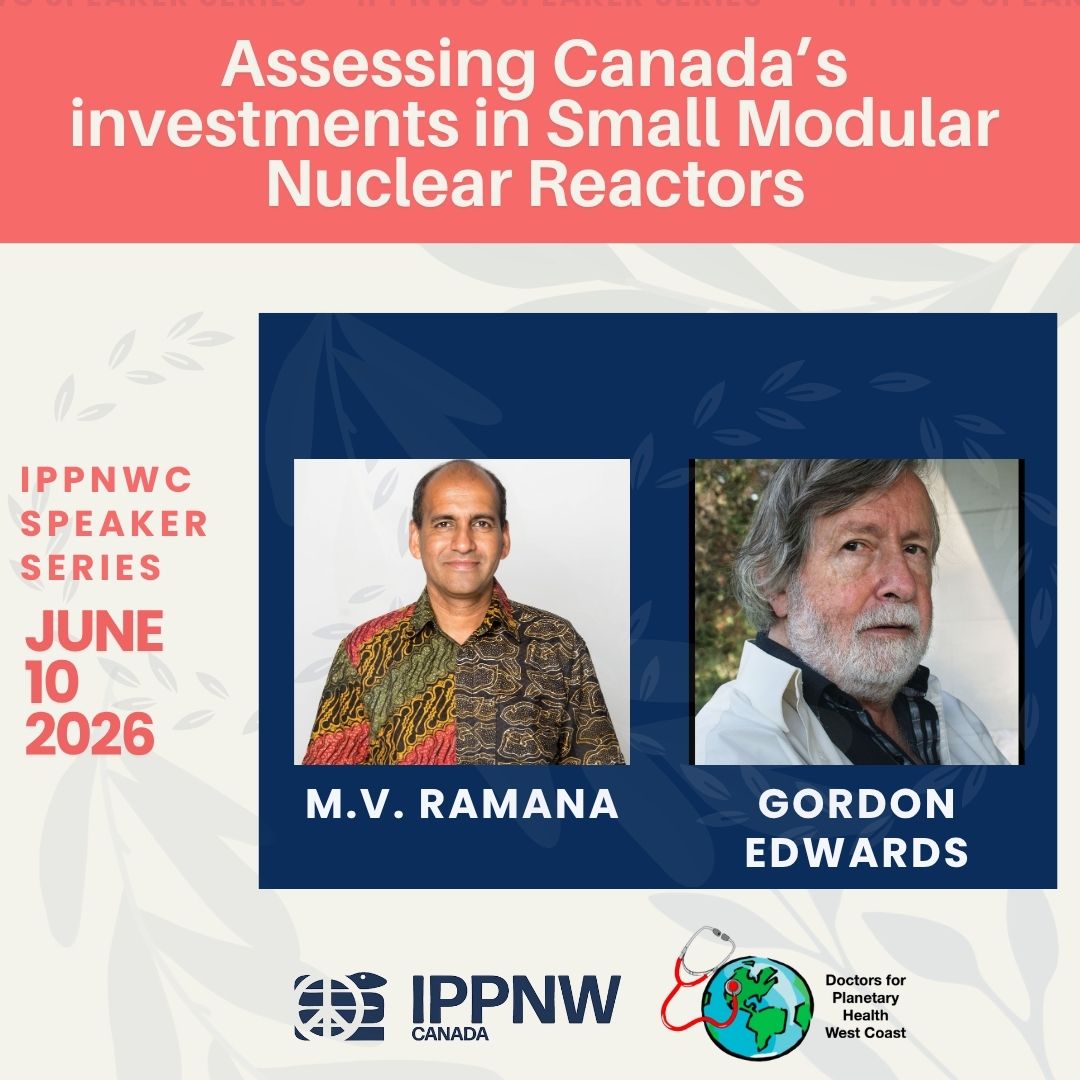
10 June – Assessing Canada’s Investments in Small Modular Nuclear Reactors – https://zoom.us/meeting/register/IiqHA5feRhaEBycOLNTJlA#/registration


Cuba Is Not a Failed State – It Is a Besieged State
PETITION: “Global Appeal to Endorse Palestinian Right of Return of Refugees”
To see nuclear-related stories in greater depth and intensity – go to https://nuclearinformation.wordpress.com
-
Archives
- June 2026 (89)
- May 2026 (306)
- April 2026 (356)
- March 2026 (251)
- February 2026 (268)
- January 2026 (308)
- December 2025 (358)
- November 2025 (359)
- October 2025 (376)
- September 2025 (257)
- August 2025 (319)
- July 2025 (230)
-
Categories
- 1
- 1 NUCLEAR ISSUES
- business and costs
- climate change
- culture and arts
- ENERGY
- environment
- health
- history
- indigenous issues
- Legal
- marketing of nuclear
- media
- opposition to nuclear
- PERSONAL STORIES
- politics
- politics international
- Religion and ethics
- safety
- secrets,lies and civil liberties
- spinbuster
- technology
- Uranium
- wastes
- weapons and war
- Women
- 2 WORLD
- ACTION
- AFRICA
- Atrocities
- AUSTRALIA
- Christina's notes
- Christina's themes
- culture and arts
- Events
- Fuk 2022
- Fuk 2023
- Fukushima 2017
- Fukushima 2018
- fukushima 2019
- Fukushima 2020
- Fukushima 2021
- general
- global warming
- Humour (God we need it)
- Nuclear
- RARE EARTHS
- Reference
- resources – print
- Resources -audiovicual
- Weekly Newsletter
- World
- World Nuclear
- YouTube
-
RSS
Entries RSS
Comments RSS
 nuclear-news