Nuclear power plants – very vulnerable to terrorism, and to human error
The destruction of a nuclear power plant has the potential to cause much more harm to a country than any other energy facilities.
Russia’s Dangerous Nuclear Legacy – Analysis Eurasia Review, By: Richard Rousseau June 18, 2012“……Of all known sources of energy, nuclear energy entails the highest destructive potential. In the age of terrorism, nuclear power plants are possible prime and high-profile targets for terrorist and transnational criminal groups.
The nuclear threat poses a very specific problem for the world, whether it is the acquisition of
plutonium and highly enriched uranium, acts of sabotage or attempted sabotage at a nuclear facility, or the intensive use of radioactive materials for the fabrication of “dirty” bombs. Continue reading
Design flaws cause safety problems in San Onofre nuclear reactors
An environmental group, Friends of the Earth, has claimed Edison misled the NRC about the changes that it has identified as the likely culprit in excessive tube wear. The federal agency previously disputed that charge, but Collins said that’s under review as part of the
investigation. The group on Monday filed a petition asking the NRC to keep the plant offline until the company amends its license to reflect the design changes……
The NRC has said there is no timetable to restart the reactors.
Feds: Design led to nuke plant woes, Fuel Fix June 18, 2012 by Associated Press CAPISTRANO BEACH, Calif. — After months of investigation, federal regulators have determined that design flaws appear to be the cause of excessive wear in tubing that carries radioactive water through California’s troubled San Onofre nuclear power plant, a top federal regulator said. Continue reading
Progress in Iran nuclear talks, but slight and slow
Some headway in Iran nuclear talks, SMH, Benedikt von Imhoff, Farshid Motahari and Albert Otti June 20, 2012, Iran and six world powers have finally begun making headway on Tehran’s nuclear program in talks in Moscow, but a wide divide remains between the two sides, EU foreign policy chief Catherine Ashton says. Continue reading
Majority of Japanese oppose restart of 2 Oi nuclear reactors
Opinion polls consistently show more than half of Japanese are opposed to nuclear power,
In the communities surrounding Oi, only 38% of residents support the restart of the reactors, the NHK survey found…..
Nuclear-Restart Plans Divide Japan Tokyo Aims to Get Economy Back on Track, but Local Leaders, Some Residents Oppose Atomic Power, WSJ. By MITSURU OBE And CHESTER DAWSON, June 17, 2012, TOKYO—Japan ordered a pair of reactors back online for the first time since last year’s nuclear accident, but the chaos and confusion surrounding the decision highlight how unready the country may still be to restart its atomic-energy engine….
.. the restart decision comes a month ahead of deliberations over a new energy plan, which could call for scrapping nuclear power for good. And the restarts would come a few months before the setup of a new Japanese nuclear regulator, which will craft new safety guidelines and is expected to take a harder line on vetting reactors. Continue reading
International protest at decision to restart 2 Japanese nuclear reactors
Oi decision draws international outcry http://www.japantimes.co.jp/text/nn20120617a4.html#.T9-KwxfZ7D8 Reactor restarts hit by protests from Europe, America, Asia By ERIC JOHNSTON, OSAKA — The decision to restart two reactors at the Oi nuclear plant has sparked international concern, with antinuclear activists and politicians in many countries sending letters of protest and holding rallies outside Japanese embassies and consulates over the past week. Politicians from green parties in Australia and Europe, as well as doctors, activists, and labor unions, have all formally opposed the restart, citing the Fukushima disaster. Continue reading
USA, Iran developed “Flame” computer virus against Iran’s nuclear program
Flame malware developed by US, Israel to slow Iranian nuclear efforts http://www.slashgear.com/flame-malware-developed-by-us-israel-to-slow-iranian-nuclear-efforts-19234747/ Rue Liu, Jun 19th 2012 It turns out that the massive Flame malware attack last month was a sophisticated computer virus developed by the US and Israel in an effort to sabotage Iran’s nuclear program. Citing unnamed Western officials with knowledge of the effort, the Washington Post reported that the attack involved the National Security Agency, the CIA, and Israel’s military as well as the use of the infamous Stuxnet virus. The Flame virus was first discovered last month when Iran detected a series of cyber attacks on its oil industry. Although the attacks were allegedly carried out by Israel alone, the software used was developed in collaboration with the US, adopting much of the same code as the Stuxnet virus.
The virus is said to be the most sophisticated malware discovered to date. Masquerading as a routine Microsoft software, Flame was able to replicate itself across even highly secure networks, control everyday computer functions, send back secret information, log keystrokes, control computer cameras and microphones, take screen shots, and even extract geolocation data from images. Story Timeline…… http://www.slashgear.com/flame-malware-developed-by-us-israel-to-slow-iranian-nuclear-efforts-19234747/
6.5 million petition against restarting Japan’s nuclear reactors
On Friday, Japan’s Nobel literature prize laureate Kenzaburo Oe visited the prime minister’s office and handed the signatures of 6.5 million opposed to the continued use of nuclear reactors.
Japan orders nuclear restart amid protests, Business Recorder, 16 JUNE 2012 TOKYO: Japan ordered nuclear reactors back online on Saturday, defying public sentiment against atomic power following last year’s meltdowns at Fukushima sparked by a huge quake-tsunami disaster. Continue reading
Russia can’t afford new nuclear plants, and can’t afford to shut down old ones
The decommissioning of nuclear plants after exhausting their resources will put an enormous strain on Russian state budget. Largely for this reason, Rosatom is making every effort to prolong their operational life, knowing quite well that there will be economic shockwaves in the industry should nuclear units be closed.
Russia’s Dangerous Nuclear Legacy – Analysis Eurasia Review, By: Richard Rousseau June 18, 2012“…….The safety of nuclear reactors is primarily provided through the increased number of sophisticated security systems and physical barriers that limit or contain potential radiation leaks. These systems consist of a combination of natural and artificial barriers that work in tandem and complement each other in assuring the required
long-term isolation of the waste by preventing or limiting the movement of radioactive substances from the infrastructure of the repository to the biosphere.
However, in essence this has made nuclear plants increasingly more complex systems, which in turn drives up their construction and operation costs, while it is still impossible to achieve a 100 percent safety level. Continue reading
public Interest petition against Jaitapur nuclear plant withdrawn, for now.
PIL against Jaitapur plant withdrawn http://www.hindustantimes.com/India news/Mumbai/PIL-against-Jaitapur-plant-withdrawn/Article1-873162.aspx
HT Correspondent, Hindustan Times Mumbai, June 16, 2012 Noting that petitioners should do in-depth research before filing petitions regarding the cause and effect of projects, the Bombay high court on Friday permitted an activist to withdraw his petition against the proposed Jaitapur nuclear plant. The court was hearing a public interest litigation (PIL) filed by Hemant Patil, activist and president of Rashtriya Brashtachar Virodhi Janshakti, raising concern over the safety of the proposed Jaitapur nuclear power plant project initiated by the Nuclear Power Corporation of India along with French company Areva.
The petitioner urged the court to appoint an independent commission and a court commissioner to investigate the impact of the project and its effect on nearby villagers, animals and agriculture. “One should do an in-depth study of the issue before raising objections,” a division bench of justice DD Sinha and justice VK Tahilramani noted.
National Academy of Sciences’ report indicates “keep uranium mining ban in Virginia”
Here are just three of the report’s key findings:
» “Extreme natural events (e.g., hurricanes, earthquakes, intense rainfall events, drought) have the potential to lead to the release of contaminants if facilities are not designed and constructed to withstand such an event, or fail to perform as designed.”
» “The decay products of uranium provide a constant source of radiation in uranium tailings for thousands of years, substantially outlasting the current U.S. regulations for oversight of processing facility tailings.”
 » “Because almost all uranium mining and processing to date has taken place in parts of the United States that have a negative water balance (dry climates with low rainfall) federal agencies have limited experience applying laws and regulations in positive water balance (wet climates with medium to high rainfall) situations.”
All the credible science says, ‘Keep the ban’ Go Dan River, By: Robert G. Burnley | GoDanRiver June 17, 2012 I began my career as a water quality scientist in Virginia 40 years ago — six years before uranium deposits were discovered beneath farmland in Pittsylvania County. Since shortly after that discovery, Virginia law has banned uranium mining.
It is my firm belief, based on review of the highly anticipated National Academy of Sciences’ report released last December, that the ban needs to remain in place. Continue reading
UK nuclear test veterans take their legal battle to European Court of Human Rights.
Right to the top: Britain’s nuclear test veterans take battle for justice to Europe
http://www.mirror.co.uk/news/uk-news/british-nuclear-test-victims-to-take-887711
Victims of Britain’s nuclear tests are to take their fight for justice to the European Court of Human Rights.
More than 1,000 veterans of the atomic bomb tests carried out in the South Pacific in the 1950s are to ask judges in Strasbourg to rule on their demand for a trial accusing the Ministry of Defence of exposing them to radiation.
The veterans and their families claim they have since suffered from a catalogue of rare medical conditions, as well as miscarriages and birth defects, but courts here have banned hearings into most of their cases.
But now, as Prime Minister David Cameron comes under repeated fire for ignoring the terms of the Military Covenant which pledges to look after our servicemen, the vets are asking Europe to intervene. Continue reading
Scotland rejects Trident nuclear submarine plans
Scotland says no to nuclear weapons http://www.snp.org/media centre/news/2012/jun/scotland-says-no-nuclear-weapons 17/06/2012 The SNP has criticised the UK Government for its plans to spend £1 billion on a contract renewing the UK’s nuclear-armed submarines for Faslane, despite Scottish public opinion consistently being against Trident. Continue reading
Trident nuclear submarine program a political minefield for UK’s coalition govt
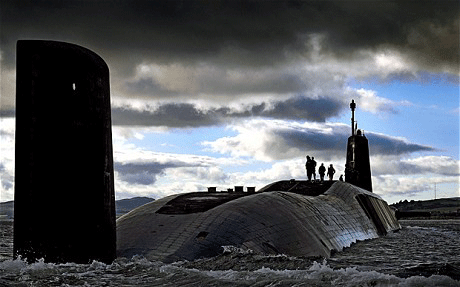 Coalition faces split over Trident nuclear replacement As defence secretary confirms £1bn contract for plant, Lib Dems confirm campaign for alternative to Tory plans for 2016 Nicholas Watt, chief political correspondent guardian.co.uk, 17 June 2012 A replacement for Britain’s Trident nuclear deterrent will become highly contentious at the next general election after the Liberal Democrats confirmed that they will campaign for an alternative and the SNP rejected the presence of “weapons of mass destruction in our waters”. Continue reading
Potential disaster at Hanford reservation’s nuclear power plant
Sadly, we have a similarly designed GE Boiling Water Reactor (BWR) with the same potentially disastrous arrangement of spent fuel storage at the Columbia Generating Station (CGS) — formerly known as the WPPSS 2 nuclear power plant — on the Hanford reservation on the Columbia River.
In view of the lessons learned from Fukushima Dai-ichi, it is unfortunate that the Nuclear Regulatory Commission has approved an extension of the CGS license for another 20 years. … A serious accident at the CGS nuclear power plant could provoke a double disaster because it would probably compromise cleanup of nuclear and toxic wastes at the site.
Shut down the Northwest’s only nuclear power plant, Oregon Live, , June 17, 2012 By John Howieson The Fukushima nuclear power accidents, resulting from the earthquake and tsunami that struck the northeast coast of Japan on March 11, 2011, have brought home to people around the world the perilous nature of nuclear energy. If a country as advanced as Japan cannot adequately regulate its nuclear industry to run its reactors safely, then we cannot assume anyone else is capable of it. ……
Recently, a wall of the spent fuel pool located over the Fukushima Dai-ichi number 4 reactor has revealed a bulge increasing the concern about its stability. Failure of this structure or of the precarious water supply cooling the spent fuel threatens a disastrous further release of radioactivity — an even greater amount than was released last year. Continue reading
State of Massachusetts appeals to revoke license extension for Pilgrim nuclear plant
 an appeals court ruled that the agency failed to fully evaluate risks associated with its regulations on the storage of spent nuclear fuel
The NRC in May granted a 20-year license extension to the Pilgrim plant, located in Plymouth. In its filing with the U.S. Court of Appeals in Boston, the state seeks to vacate the license renewal and require the commission to prepare an environmental impact statement.
NRC License of Nuclear Plant Challenged by Massachusetts, Bloomberg News By David McLaughlin June 19, 2012 Massachusetts, in an appeal of a Nuclear Regulatory Commission decision to relicense Entergy Corp. (ETR) (ETR)’s Pilgrim nuclear power station, asked to have the extension for the facility 40 miles south of Boston canceled pending further review.
The state seeks to require the commission to take steps to ensure the safety of the plant and the residents of the surrounding communities, Massachusetts Attorney General Martha Coakley said yesterday in a statement.
“The NRC, over our objections, chose to relicense Pilgrim without fully considering the important safety issues raised in the aftermath of the Fukushima accident,” she said, referring to the nuclear disaster last year in Japan. Continue reading
1 This Month
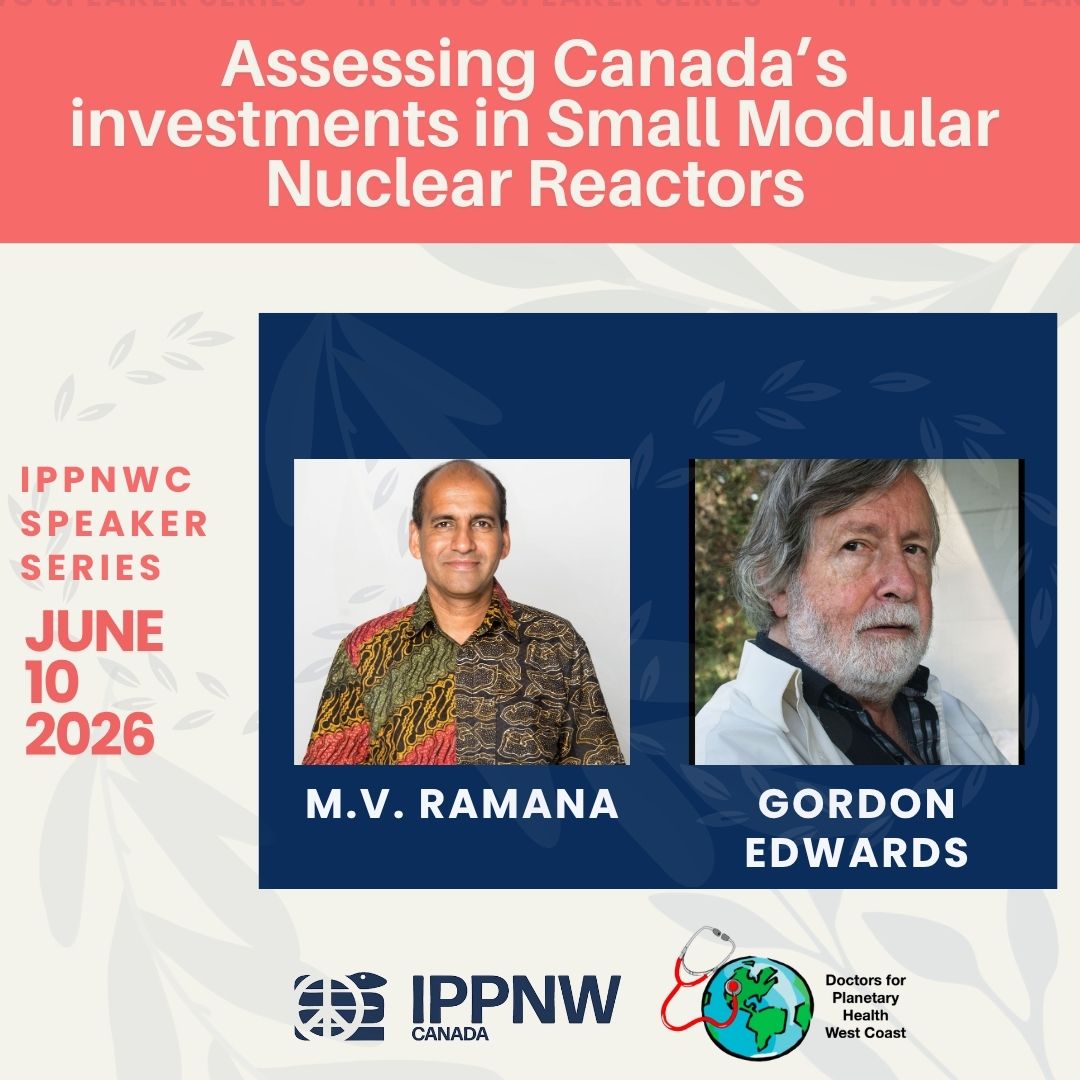
10 June – Assessing Canada’s Investments in Small Modular Nuclear Reactors – https://zoom.us/meeting/register/IiqHA5feRhaEBycOLNTJlA#/registration


Cuba Is Not a Failed State – It Is a Besieged State
PETITION: “Global Appeal to Endorse Palestinian Right of Return of Refugees”
To see nuclear-related stories in greater depth and intensity – go to https://nuclearinformation.wordpress.com
-
Archives
- June 2026 (89)
- May 2026 (306)
- April 2026 (356)
- March 2026 (251)
- February 2026 (268)
- January 2026 (308)
- December 2025 (358)
- November 2025 (359)
- October 2025 (376)
- September 2025 (257)
- August 2025 (319)
- July 2025 (230)
-
Categories
- 1
- 1 NUCLEAR ISSUES
- business and costs
- climate change
- culture and arts
- ENERGY
- environment
- health
- history
- indigenous issues
- Legal
- marketing of nuclear
- media
- opposition to nuclear
- PERSONAL STORIES
- politics
- politics international
- Religion and ethics
- safety
- secrets,lies and civil liberties
- spinbuster
- technology
- Uranium
- wastes
- weapons and war
- Women
- 2 WORLD
- ACTION
- AFRICA
- Atrocities
- AUSTRALIA
- Christina's notes
- Christina's themes
- culture and arts
- Events
- Fuk 2022
- Fuk 2023
- Fukushima 2017
- Fukushima 2018
- fukushima 2019
- Fukushima 2020
- Fukushima 2021
- general
- global warming
- Humour (God we need it)
- Nuclear
- RARE EARTHS
- Reference
- resources – print
- Resources -audiovicual
- Weekly Newsletter
- World
- World Nuclear
- YouTube
-
RSS
Entries RSS
Comments RSS
 nuclear-news