In Malawi, Namibia, Niger workers making trouble for uranium mining companies
Conflicts with unions and management may have even larger impacts in the future,
Uranium Miners in Africa Facing Labor Disputes, Business Insider, Resource Investing News | May 16, 2012, Uranium mining companies are operating in difficult environments in many jurisdictions, facing challenges ranging from regulatory compliance,
environmental delays, rising costs, and labor relations. Over the last year, the labor challenges seem to have become more accentuated for African uranium mining companies, with several companies having reporting strikes. Continue reading
Decentralised solar energy for use by USA soldiers
U.S. Army tests renewable energy systems for soldiers in the field GizMag, By Antonio Pasolini, May 16, 2012 In a bid to mitigate the risks associated with fuel transportation and to make soldiers’ work less technically complex, U.S. military scientists have started to test microgrids that would provide clean energy to soldiers in the field. Continue reading
NATO in rather a mess, as USA escalates its nuclear weaponry
Four main issues: Afghanistan, Nuclear Weapons, Russia, Burden-sharing…..
2. Nato-Russian relations and Missile Defence. Nato’s relations with Moscow are bedevilled by US plans to base anti-missile missiles in Romania and Poland. Vladimir Putin, recently re-elected as Russia’s president who has declined an invitation to attend the Chicago summit, claims the missile defence system could be used against Russian intercontinental ballistic missiles aimed at the US. Continue reading
Kodak’s secret nuclear reactor
Now, to the small matter of Kodak’s nuclear reactor. Wait. Nuclear WHAT? The Telegraph, news.com.au May 16, 2012 Kodak had weapons-grade uranium in New York basement Company used nuclear reactor for quality testing Reactor destroyed in 2006 IS this how Kodak gets rid of red-eye?
In a startling development it’s been revealed that a New York Kodak facility secretly housed, oh, we don’t know, ONLY A NUCLEAR REACTOR. Kodak has gone bankrupt, but in its halcyon days made cameras and brought dreams to life with Kodak moments.
Little did we know the company also had the power to obliterate entire cities. Gizmodo.com reports that in the basement of Kodak’s New York property lay 3.5 pounds of enriched uranium. Which means they had enough to build an atomic bomb.
No-one knew about it – not cops, firies, New York officials – except for a few top Kodak execs and White House types. “It’s such an odd situation because private companies just don’t have this material,” said Miles Pomper from Washington’s centre for Nonproliferation Studies. Apparently Kodak acquired the reactor in 1974 to check for impurities and other assorted testing. It was dismantled in 2006.
Disagreements mar the progress of the Nuclear Non Proliferation Treaty (NPT)
The smooth conduct of the meeting masked the disturbing nuclear discord lurking underneath. Remedial action is needed if the NPT is to retain its authority and continue to deliver the security benefits it has for over 40 years.
Undercurrent of discord at nuclear treaty talks. The Star.com, 16 May 12 The problems of the international nuclear order are frequent subjects of our daily news, yet scant attention is given to the central treaty that governs this sphere of global activity. With 189 signatories, the Nuclear Non-proliferation Treaty (NPT) ) is the world’s most widely subscribed to international security agreement and contains the only legally binding commitment by states to nuclear disarmament and non-proliferation. Continue reading
Walmart’s considerable solar energy achievement
And The Solar Lights All Went On In Massachusetts* (Walmarts) Renewable Energy News 16 MAY, 2012 | by Energy Matters Various sources are reporting the world’s largest retailer, Walmart, will be partially powering half of its Massachusetts stores with solar energy very soon.
27 of its Massachusetts stores will have solar panel arrays installed by 2014, representing a total capacity of 10 megawatts. Walmart director of energy, David Ozment, said he expects the solar power systems to produce enough electricity to provide 10-15 percent of each store’s energy requirements…. The systems add to Walmart’s already significant on-site renewable energy portfolio. As of last month, the company had 115 rooftop solar arrays in seven countries, collectively generating 71 million kilowatt hours of electricity annually. Continue reading
Denouncing the Doctrine of Discovery as the basis for exploitation of indigenous peoples
Papal bull that granted those European monarchs the right to claim sovereignty over these newly “discovered” lands occupied by non-Christian “barbarous nations.”
the Doctrine of Discovery is the basis for all Indian land law in this country, and it has imposed similar burdens on indigenous peoples all over the world — in Canada, Australia and New Zealand, in Africa, in Latin America and in the island nations of the Caribbean and Oceania.
 Stand for Human Rights for Indigenous Peoples and Renounce the ’Doctrine of Discovery’ HUFFINGTON POST, Tadodaho Sid HillSpiritual Leader, Haudenosaunee (Six Nations/Iroquois Confederacy), 15 May 12,
When the United Nations Permanent Forum on Indigenous Issues convened on May 7th in New York, native peoples around the world turned their eyes to the most important effort to renounce the Doctrine of Discovery, a 15th century Papal bull that has been exploited for five centuries to deny the human rights of hundreds of millions of people who continue to be subject to its power. Continue reading
Challenge to Wyoming uranium mining project
Uranium Mining Environmental Consequences to Be Reviewed in Court, Switchboard, by Geoffrey Fettus, 14 May 12, For decades, uranium has been mined in ways that damage our waters and land, put our communities at risk, and cost taxpayers hundreds of millions of dollars in clean-up costs.
Now, for the first time in years, the environmental community has the chance to make its case before one of the crucial federal regulators on how we can do better. The stakes are high – especially for Western communities and their groundwater.
Last fall, NRDC and our Wyoming colleagues at the Powder River Basin Resources Council (PRBRC) challenged the proposed licensing of a planned uranium mine in Crook County, Wyoming. The mine would use a process known as “in-situ leach” mining. This method combines the mining and milling of uranium into a single step, by leaching uranium and other heavy metals off the surface of uranium-bearing rock in place.
Instead of actually digging up the uranium ore, in other words, this process extracts uranium by injecting water mixed with base solution into the rock formation in an underground aquifer, to dissolve the uranium from its host rock. The uranium-laden water flows into underground production wells and, from there, is pumped to the surface and piped to a centralized facility, which extracts the uranium.

We have written about the regulatory system and its numerous inadequacies . If you are really interested, I encourage you to read it. In brief, the Nuclear Regulatory Commission is the main licensing body for in-situ leach uranium mining. We are challenging that body’s decision to issue a license for the Wyoming mine. Continue reading
Canada’s unreliable and super-expensive nuclear reactors
Pickering nuclear units among the most expensive, least reliable in the world. The Star.com 15 May 12, The economic performance of Ontario Power Generation’s Pickering nuclear stations is among the worst in the world, says a report prepared for the Ontario Energy Board.
Not only is it the most expensive to operate, it lags at the far end of the pack in terms of reliability, with some units shut down almost 40 per cent of the time….. http://www.thestar.com/business/article/1178431–pickering-nuclear-units-among-the-most-expensive-least-reliable-in-the-world?bn=1
UK’s nuclear programme: election of France’s President Hollande increases uncertainty
Now doubt has been cast over the commitment of a joint EDF Energy/Centrica consortium to fulfil its commitment to build two other nuclear reactors at Hinkley Point in Somerset and Sizewell in Suffolk.
 EDF is state-owned and while President Sarkozy had a warm relationship with the nuclear sector, his successor, Francois Hollande does not. During his election campaign, M Hollande pledged to close 24 of France’s 58 reactors and to reduce reliance on atomic power.
French threat to UK energy: François Hollande could close nuclear plants By Oliver Wright, 16 May 2012 http://www.belfasttelegraph.co.uk/news/world-news/french-threat-to-uk-energy-franois-hollande-could-close-nuclear-plants-16159391.html#ixzz1v5yddT1I Belfast Telegraph, “……Britain’s nascent new nuclear programme is in trouble, due to a combination of the economic crisis, the disaster in Fukushima and changing political winds.
Yesterday, giving evidence to Parliament, the Energy Minister Charles Hendry appeared to be unable to guarantee with certainty that any of the five agreed new nuclear power plants would go ahead…… Continue reading
Renewables on the rise, as King Coal dethroned
King coal dethroned, CLIMATE SPECTATOR, Peter Newman & Ray Wills, 15 May 2012 “King coal still reigns” was the headline emblazoned across a full page article in The Weekend Australian on the 28-29 April 2012, by environment editor Graham Lloyd. The article’s subtitle was, “The world is in the grip of a fossil fuel boom that shows no sign of fading.”
Nothing could be further from the truth. The latest data on global investment in new power production shows the dramatic decline in fossil fuel investment, and an astonishing increase in renewables investment. Continue reading
Top USA military man calls for cuts in nuclear warheads
Former Commander of U.S. Nuclear Forces Calls for Large Cut in Warheads, NYT, By THOM SHANKER May 15, 2012 WASHINGTON — Gen. James E. Cartwright, the retired vice chairman of the Joint Chiefs of Staff and a former commander of the United States’ nuclear forces, is adding his voice to those who are calling for a drastic reduction in the number of nuclear warheads below the levels set by agreements with Russia. Continue reading
Increasing costs stall the nuclear ‘renaissance’
Nuclear industry finds new plants are not so cheap REneweconomy, By Giles Parkinson on 15 May 2012 The thin veneer supporting the nuclear industry’s claims of being the lowest-cost clean energy source is being rapidly eroded by a series of cost blow-outs and cancellations in the UK, Europe and the US.
The latest blow to the industry came in the UK, where earthworks for the Hinkley Point nuclear project in Somerset – the first to be built in the country for two decades – have been delayed amid reports of a huge cost blowout. And in the US, the country’s first nuclear plant to be built in three decades has also revealed significant cost over-runs. Continue reading
Japanese govt’s nuclear push with Kazakhstan, and the global nuclear industry web
A complex web of agreements across national borders links many of the biggest players in the nuclear industry.
“Japan hasn’t used the Fukushima disaster as an opportunity to push for renewable energy or energy efficiency,” “Instead, it has used the time since the disaster to push for the restart of nuclear reactors.”
How Long Will Japan’s Nuclear Recess Be? Enter KazakhstanTruth Out , 15 May 2012 By Steve Horn, “……Japan Announces Big Nuclear Deal with Kazakhstan Unmentioned by all but two news outlets was the fact that a day before the announcement, the Japanese government signed a deal with Kazakhstan’s state-owned nuclear giant, KazAtomProm, to begin supplying Japan with more nuclear fuel starting in 2013. Continue reading
Britain’s new nuclear programme in deep trouble
French threat to UK energy: François Hollande could close nuclear plants By Oliver Wright, 16 May 2012 http://www.belfasttelegraph.co.uk/news/world-news/french-threat-to-uk-energy-franois-hollande-could-close-nuclear-plants-16159391.html#ixzz1v5yddT1I
Belfast Telegraph, “……Britain’s nascent new nuclear programme is in trouble, due to a combination of the economic crisis, the disaster in Fukushima and changing political winds.
Yesterday, giving evidence to Parliament, the Energy Minister Charles
Hendry appeared to be unable to guarantee with certainty that any of
the five agreed new nuclear power plants would go ahead…… The
first sign of trouble came in March when the German power companies,
RWE npower and E.ON, announced they were pulling out of their joint
venture to build two of the six planned new nuclear reactors at Wylfa
in North Wales and Oldbury-on-Severn, Gloucestershire. ….
it was not practical to go-ahead with a £15bn investment in the UK.
Now doubt has been cast over the commitment of a joint EDF
Energy/Centrica consortium to fulfil its commitment to build two other
nuclear reactors at Hinkley Point in Somerset and Sizewell in Suffolk.
EDF is state-owned and while President Sarkozy had a warm relationship
with the nuclear sector, his successor, Francois Hollande does not.
During his election campaign, M Hollande pledged to close 24 of
France’s 58 reactors and to reduce reliance on atomic power.
With EDF expected to make a final decision on whether to go ahead with
the UK projects by the end of the year the change of Government could
not have come at a worse time…..
The third nuclear consortium, Nugen, comprises Iberdrola, owner of
Scottish Power, and GDF Suez, the French state-owned gas giant.
Scottish and Southern Energy (SSE) was part of the consortium, but
pulled out in September, citing huge costs. ….
Tim Yeo, Chairman of the House of Commons Energy and Climate Change
Committee puts it: “Nuclear energy is exposed to what happens around
the world.
“The industrial nuclear accident in Japan, a decision taken in
Germany, the change in Government in France – all these three things
have a direct impact on global investment in nuclear in this country.
However good the intention is, we are exposed in a particular way –
unlike with some other energy sources – to what happens in countries
quite a long way away which are outside our control.”
Mr Hendry confirmed yesterday that the British Government has no
objection to allowing the contracts for new nuclear to pass to nuclear
nations such as China, Russia and Japan to keep the programme alive.
He said: “As long as they can satisfy us on the safety and the
security then we are happy to talk to them.”
The handing over of such sensitive technology to China or Russia is
certain to re-ignite concerns.
1 This Month
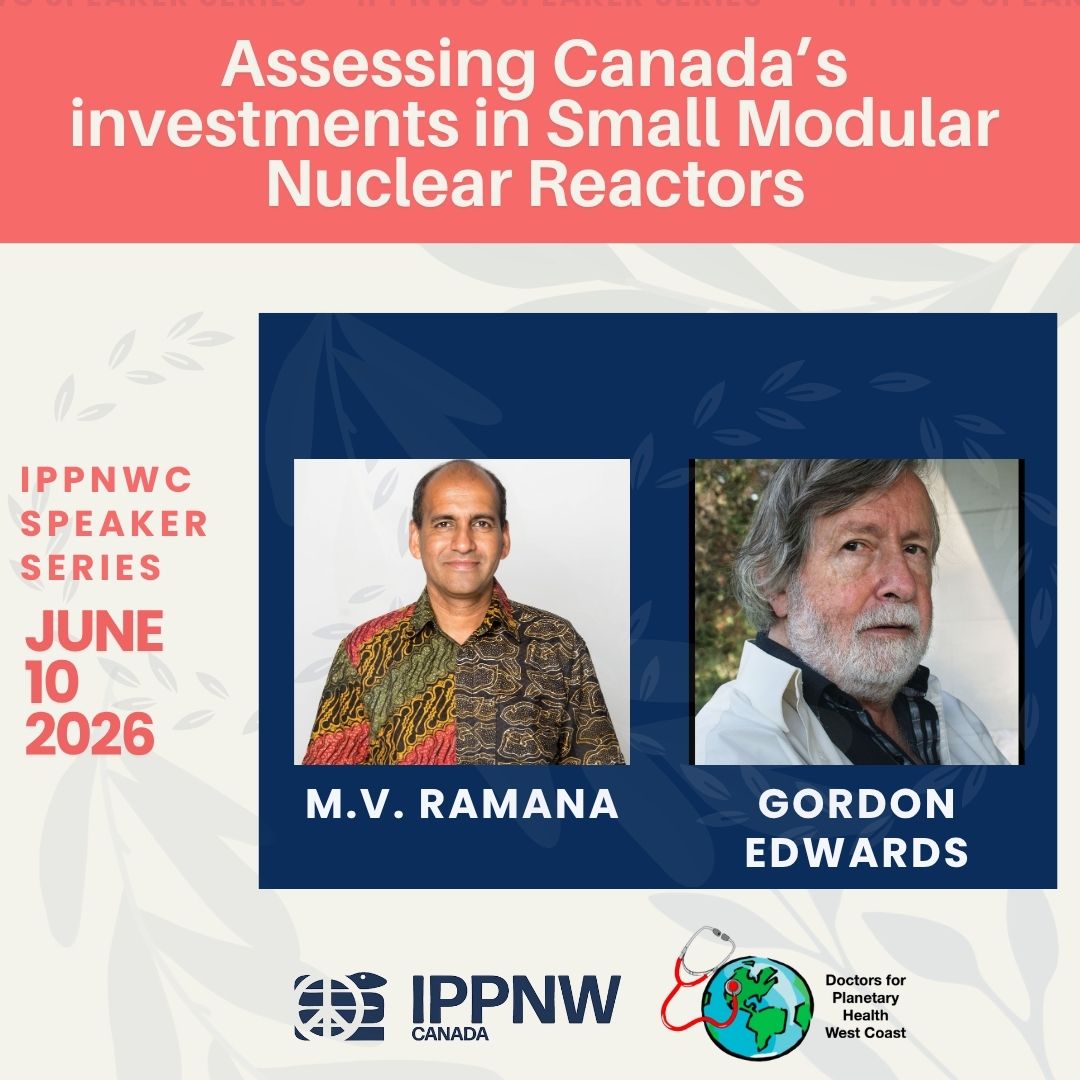
10 June – Assessing Canada’s Investments in Small Modular Nuclear Reactors – https://zoom.us/meeting/register/IiqHA5feRhaEBycOLNTJlA#/registration


Cuba Is Not a Failed State – It Is a Besieged State
PETITION: “Global Appeal to Endorse Palestinian Right of Return of Refugees”
To see nuclear-related stories in greater depth and intensity – go to https://nuclearinformation.wordpress.com
-
Archives
- June 2026 (89)
- May 2026 (306)
- April 2026 (356)
- March 2026 (251)
- February 2026 (268)
- January 2026 (308)
- December 2025 (358)
- November 2025 (359)
- October 2025 (376)
- September 2025 (257)
- August 2025 (319)
- July 2025 (230)
-
Categories
- 1
- 1 NUCLEAR ISSUES
- business and costs
- climate change
- culture and arts
- ENERGY
- environment
- health
- history
- indigenous issues
- Legal
- marketing of nuclear
- media
- opposition to nuclear
- PERSONAL STORIES
- politics
- politics international
- Religion and ethics
- safety
- secrets,lies and civil liberties
- spinbuster
- technology
- Uranium
- wastes
- weapons and war
- Women
- 2 WORLD
- ACTION
- AFRICA
- Atrocities
- AUSTRALIA
- Christina's notes
- Christina's themes
- culture and arts
- Events
- Fuk 2022
- Fuk 2023
- Fukushima 2017
- Fukushima 2018
- fukushima 2019
- Fukushima 2020
- Fukushima 2021
- general
- global warming
- Humour (God we need it)
- Nuclear
- RARE EARTHS
- Reference
- resources – print
- Resources -audiovicual
- Weekly Newsletter
- World
- World Nuclear
- YouTube
-
RSS
Entries RSS
Comments RSS
 nuclear-news