Bi-partisan agreement on USA’s wasteful spending on nuclear weapons
Reducing or redirecting this wasteful spending brings together a bi-partisan medley of leading national security leaders, deficit hawks, and arms control experts……
Nuclear weapons: A bad security investment THE HILL, By Major General Rogere R. Blunt (Ret.), Civil and nuclear engineer – 05/17/12 Most debates in Washington have battle lines that are predictable and largely unmoving. Certainly this is true of most of the budget
battles, which often seem the political equivalent of trench warfare—lots of fighting, but the lines don’t move and little gets done.
There are, however, subjects where bipartisan agreement can emerge. Things get done when members put country over partisanship and assess programs with a more objective cost-benefit analysis and set aside ideological rigidity. The ability to do so should be a litmus test for voters.
America’s nuclear weapons budget is a perfect case in point. A growing consensus has emerged that we should reduce spending on redundant nuclear programs that are hugely expensive, add little or nothing to our defense capabilities, and siphon money away from our troops and more important national security priorities. Continue reading
Military action in Syria could escalate into nuclear war
Russia says action on Syria, Iran may go nuclear By Gleb Bryanski MOSCOW | May 17, 2012 (Reuters) – Russian Prime Minister Dmitry Medvedev warned on Thursday that military action against sovereign states could lead to a regional nuclear war, starkly voicing Moscow’s opposition to Western intervention ahead of a G8 summit at which Syria and Iran will be discussed.
“Hasty military operations in foreign states usually bring radicals to power,” Medvedev, president for four years until Vladimir Putin’s inauguration on May 7, told a conference in St. Petersburg in remarks posted on the government’s website.
“At some point such actions which undermine state sovereignty may lead to a full-scale regional war, even, although I do not want to frighten anyone, with the use of nuclear weapons,” Medvedev said. “Everyone should bear this in mind.”…
http://www.reuters.com/article/2012/05/17/us-g8-russia-idUSBRE84G18M20120517
Southern California planning to manage summer without nuclear energy
California Nuclear Plants May Not Resume by Summer Energy Biz, Wayne Barber | May 16, 2012 A new report released by Friends of the Earth (FOE) says it would be unwise for Southern California Edison (SCE) to run the San Onofre nuclear power plant at reduced power.
The Edison International (NYSE: EIX) subsidiary has indicated that both units of the 2,200-MW nuclear station will probably remain offline this summer and the California Independent System Operator (Cal ISO) has been drafting contingency plans to keep the lights on in Southern California without the nuclear plant…. http://www.energybiz.com/article/12/05/california-nuclear-plants-may-not-resume-summer
New devices to detect ionising radiation
Firms say new gear visually detects radiation hot spots, Japan Times, 18 May 12, A number of companies have started marketing equipment and devices that enable inspectors to visually detect radiation hot spots.
The devices are expected to be a great help to municipalities and construction companies engaged in decontamination work in areas affected by the nuclear crisis at Tokyo Electric Power Co.’s Fukushima No. 1 power plant.
Hitachi Consumer Electronics Co. has developed a camera that can detect gamma rays emitted by radioactive substances 10 or more meters away. The box-shaped device, which weighs 16.8 kg and measures 34 cm in all dimensions, is highly portable, the company says.
It detects three kinds of radioactive material — cesium-134, cesium-137 and iodine-131…..
http://www.japantimes.co.jp/text/nn20120518b1.html
Let’s not forget that old-fashioned danger- ultraviolet radiation to eyes
UV rays can penetrate the internal structures of the eye, causing serious temporary and permanent vision disorders. Short term damage can range from bloodshot or sensitive eyes, to painful conditions like photokeratitis (sunburn of the eye). Meanwhile high doses of UV radiation can lead to long term health issues like cataracts, abnormal eye growths, cancer of the eye and surrounding skin, and macular degeneration.
New Report Outlines UV Danger to Eyes from Missing Sunglasses Market Watch, ALEXANDRIA, Va., May 17, 2012 /PRNewswire via COMTEX/ — More than 55 percent of adults in the United States lose or break their sunglasses every year, according to a new report by The Vision Council. For these and the 27 percent of adults who do not wear
sunglasses, exposure to ultraviolet (UV) radiation could end up costing them a lot more than a new pair of shades.
The report, Finding Your Shades, Protecting Your Vision, outlines the long and short term
effects that can occur as a result of cumulative UV exposure, and the protective measures necessary to prevent them.
UV radiation remains a threat to eye health, yet few understand the
risk and consequences of cumulative UV exposure. The report includes
recent survey findings from The Vision Council that found that 20
percent of people do not feel that their eyes are at risk for sun
exposure and 11 percent do not believe that unprotected exposure to UV
rays causes health problems. The survey also found that many Americans
aren’t protecting their eyes – or their children’s eyes – with proper
use of sunglasses.
UV rays can penetrate the internal structures of the eye, causing serious temporary and permanent vision disorders. Short term damage can range from bloodshot or sensitive eyes, to painful conditions like photokeratitis (sunburn of the eye). Meanwhile high doses of UV radiation can lead to long term health issues like cataracts, abnormal eye growths, cancer of the eye and surrounding skin, and macular degeneration.
“Sunglasses and other UV protective prescription eyewear remain the
best defense against UV damage to vision,” said Paul Michelson, M.D.,
chairperson of the Better Vision Institute. “In my practice, I’ve seen
firsthand the painful and sometimes devastating consequences of
unprotected UV eye exposure, most of which could be prevented by using
UV-blocking sunglasses.”….
http://www.marketwatch.com/story/new-report-outlines-uv-danger-to-eyes-from-missing-sunglasses-2012-05-17
Apple going renewable energy
Apple to power main data centre using renewable energy, Technology Spectator, 18 May 2012 Apple plans to power its main US data center entirely with renewable energy by the end of this year, taking steps to address longstanding environmental concerns about the rapid expansion of high-consuming computer server farms. Continue reading
Kazakhstan’s radioactive disaster continues
Radioactive fallout from nuclear blasts have given Semey and neighboring villages abnormally high rates of cancer and birth defects.
Local oncology centers are screening tens of thousands of patients, trying to detect and treat tumors at early stages. People living in the area are still predisposed to breast and pulmonary cancer.
We are getting more and more disabled infants, each passing day their number increases. Environmental factors work slowly – we can see their effects in 10 or 20 years, in the first, second, third or fourth generation.”
 VIDEO Kazakhstan’s Nuclear Legacy Euro News, 14/04/10 http://www.euronews.com/2010/04/14/kazakhstan-s-nuclear-legacy/ At the elderly care home in Semipalatinsk, we met 85 year old Praskovya. Semipalatinsk, or Semey, is a city 150 kilometers from the main Soviet nuclear weapons test site.
Praskovya is a former warehouse manager who used to work in a small town bordering the restricted area in the 1950s. She witnessed one of the nuclear explosions: “We were curious, so we went outside to watch. When the explosion happened, it looked like a large bowl, with black smoke and flames coming from the bowl. Then it rolled into a ball, and
a smoke column went up, and at the top, the mushroom appeared. And then the soldiers came and made us leave the street, shouting “it’s not allowed, it’s not allowed”. But we already saw everything interesting. And then everyone got health problems. Continue reading
Japan might manage without nuclear power – a boon for gas and renewables investors
There are certain predictions that seem fairly safe if Japan succeeds in weaning itself off nuclear power so quickly. The switch away from nuclear power should be a major boon to natural gas producers around the world.
Certainly the abandonment of nuclear power would be crushing to uranium miners like Cameco; there would be demand for uranium to service existing plants, but the growth story would vanish.
Last and not least, abandoning nuclear power should be a major positive for renewable energy companies.
 THE END OF NUCLEAR POWER: A BOON FOR INVESTORS? The Bull.com.au By Investopedia.com | 14.05.2012 Investors interested in the electrical utility sector and related industries, like mining and engineering, ought to pay a little extra
attention to Japan over the next few months.
With the last operating nuclear plant in Japan going offline for maintenance, Japan will be
operating a nuclear power-free electricity grid this summer. Whether the country gets through the summer without incident or interruption, it seems safe to bet that advocates on either side of the nuclear power debate will be paying close attention…..
This summer will be the real test, as the warm muggy climate of much of Japan puts a strain on the power grid. Last year, the nation made it through by implementing usage limits and asking businesses to shift activity to off-peak hours (weekends and evenings) to reduce peak demand. If similar measures manage to succeed this summer, and residents are not subjected to blackouts or excessive limitations, it may be hard to muster the support to restart those nuclear plants. Activists in other countries could likely point to Japan as proof that nuclear power is not essential. Japan Today, Europe Next? Continue reading
General Electric, Hitachi, Toshiba keep mum as nuclear risks are socialised, and profits privatised
 Fukushima nuclear disaster: who profits and who pays? http://www.greenpeace.org/international/en/news/Blogs/makingwaves/fukushima-who-profits-who-pays/blog/40463/ by Jan Haverkamp – May 16, 2012 Last week, the inevitable finally happened. The company responsible for the Fukushima nuclear disaster, Tokyo Electric Power Company, or TEPCO, has been nationalised. Japan’s trade and industry minister Yukio Edano announced a de facto state take-over of the company with a further injection of $12.5bn, bringing the total of state capital in TEPCO to $33.2bn. Edano has said that: “Without the state funds, (TEPCO) cannot provide a stable supply of electricity and pay for compensation and decommissioning costs”.
The total direct costs of the Fukushima Daiichi catastrophe for TEPCO, including compensation and clean up, are estimated at over $100bn. Many Japanese, however, experience in their daily lives that the damages are considerably higher because most of their claims and losses go uncompensated and most of their suffering goes unrecognised. The nationalisation of TEPCO, together with a legal practice called “channelling of liability” in which all liability related to the Fukushima nuclear disaster has to be channelled to TEPCO, means Japanese taxpayers and ratepayers will foot most of the bill.
An infuriating aspect of this story is that in a recent presentation by General Electric (GE) about its “success” over the past 50 years, there was not a word about the Fukushima disaster and nothing approaching an apology. Yet the Fukushima disaster was affected by well-known problems related to GE’s Mark 1 design, which was used at all four troubled reactors. Furthermore, GE was involved in maintenance throughout the four decades of the plant’s operation and had 44 on site at the time of the accident. Continue reading
Kent County Council opposes nuclear waste bunker plan
 Kent nuclear waste bunker proposal considered BBC News 16 May 12 A bunker used to store nuclear waste from all over the UK could be built in Kent, under a council’s plans. Shepway District Council is examining whether a nuclear disposal facility, where waste is buried underground, could be built at Romney Marsh. The authority said it could bring jobs to the area as Dungeness A and B power stations are phased out.

However, Kent County Council said it would use “every tool in the box” to oppose the scheme. The Romney Marsh Nuclear Research and Disposal Facility would be buried 200m (656ft) to 1,000m (3,280ft) below ground…..
Council leader’s ‘horror’ The leader of Kent County Council, Paul Carter, said his authority
opposed the plan and would push for a county-wide referendum if necessary. “We are totally opposed to initiating any process that even entertains the possibility of building a nuclear waste disposal site anywhere near or around Kent,” he said. “We will do everything possible to oppose this unviable proposal and will use every tool in the box to bring an end to this scheme…. http://www.bbc.co.uk/news/uk-england-kent-18086988
UK govt’s problem – how to make a nuclear subsidy look like ‘not a subsidy’
The coalition government pledged ‘no public subsidy’ for nuclear in its ‘programme for government’ in May 2010.
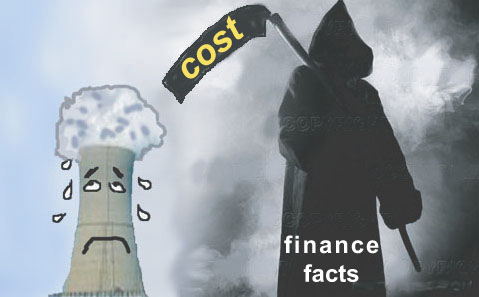 When is support not a subsidy? UK nuclear London South East, Gerard Wynn , LONDON, May 16 – A British government argument that its planned
support for new nuclear power stops short of a subsidy, to satisfy EU regulators and a coalition pledge, only adds to the sense of a policy in trouble.
The planned UK nuclear build programme would be the biggest in the developed world, but is under threat after the exit of two backers. The economics are not helped by delays and cost over-runs at projects elsewhere in Europe and by low wholesale power prices.
The awkwardness of trying to stand by a commitment to ‘no subsidy,’ even while it accepts the technology needs support, risks boxing the government into a corner. Its predicament illustrates how the technology is struggling to maintain a toehold …
Whether the British programme proceeds will depend on cost, including the amount of price support, plus public acceptance of the technology and the government’s ‘no subsidy’ position, Continue reading
Indian Member of Parliament demands scrapping of nuclear power programme
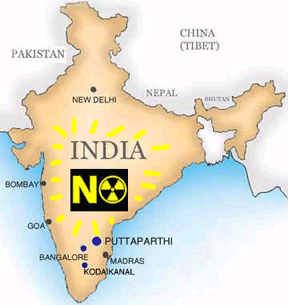 Scrap nuclear power programme, demands Lok Sabha MP Business Standard, Press Trust of India / New Delhi May 17, 2012, An Independent MP today demanded scrapping of the country’s nuclear power programme saying it would have adverse effect on farm production, environment and people.
“I demand that the government should stop the nuclear power programme because it can affect our farm productivity, environment and people,” Tarun Mandal said during Zero Hour. He pointed out that radiation can be spread through water used in the atomic power plants which can badly hit crops, environment and people of the country. Mandal suggested that the government should harness other sources of
energy like hydro-power to meet power demand….. http://www.business-standard.com/generalnews/news/scrap-nuclear-power-programme-demands-lok-sabha-mp/9901/
In 2006 TEPCO knew of the tsunami danger to Fukushima
TEPCO knew 6 years ago about tsunami risk to Fukushima, Japan Daily Press, By Adam Westlake / May 16, 2012 Officials from the Nuclear and Industrial Safety Agency (NISA) said on Tuesday that they, and Tokyo Electric Power Co. (TEPCO), were notified in 2006 of the risks a tsunami posed to the utility’s Fukushima Daiichi nuclear plant.
After the 2004 tsunami that devastated Indonesia, a session was held by NISA and several of Japan’s utility companies to look at the state of the country’s nuclear reactors and
how prepared they were for earthquakes or tsunamis…
.. In August of 2006, their research culminated in a report that showed the utility companies in attendance, which included TEPCO, that the Fukushima facility had a high risk of losing power, and taking on sea water, in the event of a 14 meter (45.9 feet) tsunami. …. http://japandailypress.com/tepco-knew-6-years-ago-about-tsunami-risk-to-fukushima-162237
Engineers and Scientists speak out on nuclear energy
 INES Statement on Nuclear Energy International Network of Engineers and Scientists for Global Responsibility. May 2012 At the INES Council meeting on April 28th, 2012 in Vienna, the following statement was adopted by the INES Council members. “………..CONCLUSION Given the inevitable link to nuclear weapons, the risks involved and the obstacle that nuclear energy proves to be for renewable energy systems, we consider nuclear power incompatible with peaceful, just and lasting, i.e. sustainable development. Thus we demand:
- much greater expansion of research spending on renewable energy
- systems, redirecting current funding of nuclear energy research to this end
- for the remaining nuclear research (for safety in operation, dismantlement and disposal), make independent reviews and public debate mandatory
- enter a transition period of phase out and dismantlement of nuclear plants and development of renewable energy systems and technologies,
- initiate and hold debates with civil society, developing concepts and recommendations, for research and policies improving efficiency and enhancing reductions in energy consumption Unanimously adopted by
$6 billion to renew unnecessary B61 atomic bomb
ACA expert Kimball says it is “tragic that the B61s based in Europe are irrelevant to NATO’s defense.” He says their destructive capability is so massive that it makes their use incredible. “Neither US nor European taxpayers should be asked to waste more money to upgrade the system.”

US Nuclear Weapons Upgrades Experts Report Massive Cost Increase Spiegel Online, By Markus Becker , 16 May 12, The cost of modernizing US nuclear weapons, including those stationed in Germany, has risen sharply, according to estimates. Several independent experts told SPIEGEL ONLINE that the bill for renewing the B61 atomic bomb will rise to $6 billion. The project will also upset Russia, they say.
The B61 is the last remnant of the Cold War in Germany. Continue reading
1 This Month
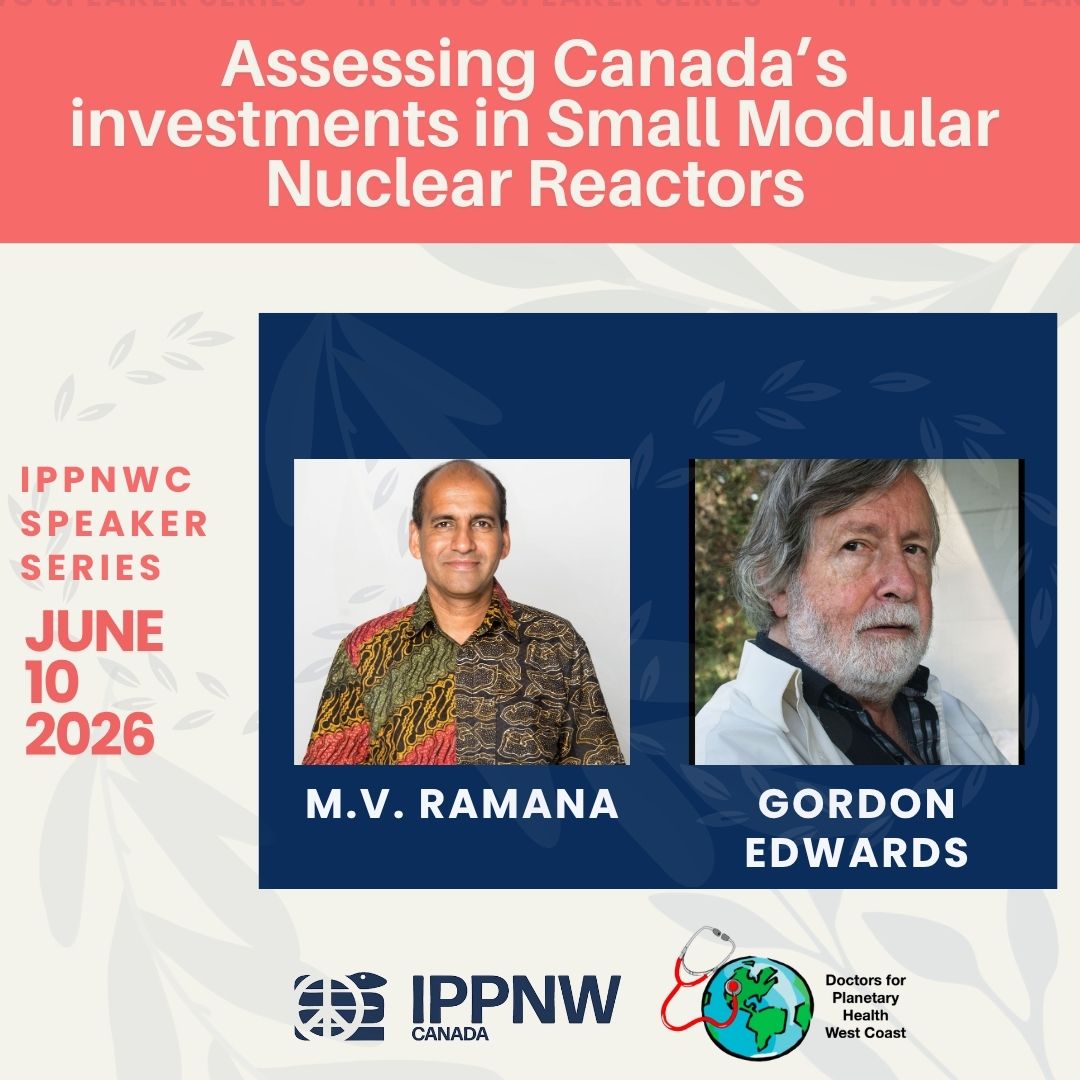
10 June – Assessing Canada’s Investments in Small Modular Nuclear Reactors – https://zoom.us/meeting/register/IiqHA5feRhaEBycOLNTJlA#/registration


Cuba Is Not a Failed State – It Is a Besieged State
PETITION: “Global Appeal to Endorse Palestinian Right of Return of Refugees”
To see nuclear-related stories in greater depth and intensity – go to https://nuclearinformation.wordpress.com
-
Archives
- June 2026 (89)
- May 2026 (306)
- April 2026 (356)
- March 2026 (251)
- February 2026 (268)
- January 2026 (308)
- December 2025 (358)
- November 2025 (359)
- October 2025 (376)
- September 2025 (257)
- August 2025 (319)
- July 2025 (230)
-
Categories
- 1
- 1 NUCLEAR ISSUES
- business and costs
- climate change
- culture and arts
- ENERGY
- environment
- health
- history
- indigenous issues
- Legal
- marketing of nuclear
- media
- opposition to nuclear
- PERSONAL STORIES
- politics
- politics international
- Religion and ethics
- safety
- secrets,lies and civil liberties
- spinbuster
- technology
- Uranium
- wastes
- weapons and war
- Women
- 2 WORLD
- ACTION
- AFRICA
- Atrocities
- AUSTRALIA
- Christina's notes
- Christina's themes
- culture and arts
- Events
- Fuk 2022
- Fuk 2023
- Fukushima 2017
- Fukushima 2018
- fukushima 2019
- Fukushima 2020
- Fukushima 2021
- general
- global warming
- Humour (God we need it)
- Nuclear
- RARE EARTHS
- Reference
- resources – print
- Resources -audiovicual
- Weekly Newsletter
- World
- World Nuclear
- YouTube
-
RSS
Entries RSS
Comments RSS
 nuclear-news