UK weapons spending – $550 million for nuclear submarines
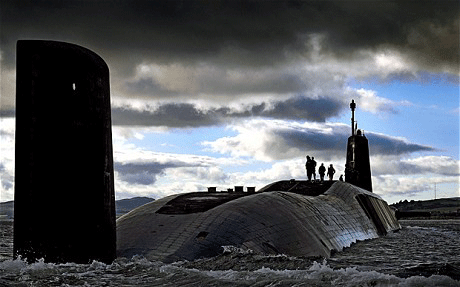 U.K. To Announce $550 Million In Nuclear Submarine Contracts, Bloomberg, By Robert Hutton – May 20, 2012 The U.K. plans to announce this week which British companies will be sharing in 350 million pounds ($550 million) worth of contracts designing its next generation of nuclear-powered submarines…… During the 2010 general election, the Liberal Democrats, the junior partner in Prime Minister David Cameron ’s coalition, called for Trident to be replaced with a cheaper, land-based missile system. The government will argue that it has since brought defense spending under control.
http://www.bloomberg.com/news/2012-05-20/u-k-to-announce-550-million-in-nuclear-submarine-contracts.html
“Show of strength” – UK’s hunter killer nuclear submarine to the Falklands
England sends ‘hunter-killer’ nuclear-powered sub to Falklands, Digital Journal, By Igor I. Solar May 20, 2012 Cape Town – The UK is sending the powerful nuclear submarine “HMS Talent” to the Falkland/Malvinas Islands as a “a show of strength” to Argentina amid a growing diplomatic wrangle over the future of the South Atlantic islands.
The “HMS Talent” (S92) is one of six nuclear-powered Trafalgar Class ‘hunter-killer’ submarines of the Royal Navy. According to the Daily Mail , the submarine “slipped into a port in South Africa last week under a cloak of secrecy” after requesting “a nuclear permission” to dock in Cape Town from May 10 to 30. From Cape Town the sub will depart to the Falklands/Malvinas, in what has been called “a show of strength” planned in London by the Ministry of Defence. http://www.digitaljournal.com/article/325213#ixzz1vXyXr2Vh
Nuclear plant shut down because of jelly-fish like salps
 Salps force California nuclear plant to shut down Lorianna De Giorgio Toronto Star 20 May 12, A swarm of jellyfish-like creatures called salps forced a California nuclear plant to shut down one of its reactors last month after the odd organisms clogged up the plant’s water intake system….
Salps usually live in the open ocean — far from shore. Unlike jellyfish, they don’t sting and aren’t poisonous. But a large influx of them can clog up cooling water intake systems,
which poses a threat to nuclear reactors, say experts…. The Diablo Canyon nuclear power plant in Avila Beach in San Luis Obispo, Calif., temporarily shut down its unit-two reactor April 26 to May 1 because of a large number of salps in the surrounding water. The salps were getting caught in the plant’s travelling screens, clogging the intake structure where ocean water comes into cool the plant.
http://www.thestar.com/news/world/article/1179969–salps-force-california-nuclear-plant-to-shut-down
Uranium mining industry threatened by plan to enrich depleted uranium stockpile
Uranium miners wary of plan to enrich depleted uranium stockpile, By MEAD GRUVER , May 19, 2012 CHEYENNE — The uranium industry and Wyoming’s congresswoman are questioning a determination by Energy Secretary Steven Chu that releasing and enriching up to 9,200 tons of depleted uranium from a federal stockpile won’t roil the uranium market and undermine prices.
The measure endorsed by Senate Minority Leader Mitch McConnell is intended to keep open a Kentucky uranium enrichment facility and preserve 1,200 jobs.
Three such planned releases of federal uranium inventories could undermine uranium prices and cost jobs in their industry, the group Uranium Producers of America says……
Uranium prices have been averaging around $50 a pound since spiking above $130 in 2007. Rep. Cynthia Lummis, R-Wyo. — whose state has more estimated uranium reserves than any other by far, according to the U.S. Energy Information Administration — questioned the department’s view of market certainty in the years ahead…… Up to 9,182 metric tons of depleted uranium — a byproduct of uranium enrichment for nuclear reactors — will be processed into the equivalent of 482 metric tons of low enriched uranium. Also the Department of Energy plans to release up to 2,800 metric tons of uranium per year as part of other projects including cleanup at the Paducah enrichment facility and one in Portsmouth, Ohio. http://trib.com/news/state-and-regional/uranium-miners-wary-of-plan-to-enrich-depleted-uranium-stockpile/article_ffd65d4e-03d2-5122-af1e-67fdc8249142.html#ixzz1vY7Gpt6f
Bomb threat to Kudankulam Nuclear plant
One held in connection with Kudankulam Nuclear plant bomb threat letters DNA, May 20, 2012 One person has been arrested on charges of sending letters stating that bombs would explode inside the controversial Kudankulam Nuclear plant on May 21, police said on Sunday….. Leaders of People’s Movement Against Nuclear Energy, spearheading the stir
against KNPP, had said it has no role in the threat letters. http://www.dnaindia.com/india/report_one-held-in-connection-with-kudankulam-nuclear-plant-bomb-threat-letters_1691454
Low dose radiation and cancer – the Linear No Threshold model holds good
 The public, legislators, and journalists are often at a loss to deal with the charges and counter charges that surface in the debate over low-level radiation exposures. It does not help to listen to industry leaders, nuclear activists, or individual researchers, who, one after another, propound their competing images of the underlying truth.
It is now reasonably clear that protracted exposure does not protect against radiation-induced cancer. Rather, it is the cumulative radiation exposure from all sources that must be examined.
There is no longer a convenient excuse to avoid using the LNT to estimate consequences from real or projected releases of radioactive materials, even when the dose of concern is below 0.1 Sv.
 The scientific jigsaw puzzle: Fitting the pieces of the low-level radiation debate http://bos.sagepub.com/content/68/3/13.full Bulletin of the Atomic Scientists, May/June 2012, Jan Beyea “…..One of the biggest paradoxes in the low-level radiation debate is that an individual risk can be a minor concern, while the societal risk—the total delayed cancers in an exposed population—can be of major concern…..
Deconstructing the debate The debate over radiation risks has many tentacles that extend into the fields of biology, epidemiology, medicine, sociology, and political science. The biggest tentacle penetrates directly into the political sphere, wrapping itself around arguments on energy policy and the consequences of radioactive releases like those at Chernobyl and the Fukushima Daiichi Nuclear Power Station…. Continue reading
USA makes nuclear emergency rules weaker, downplays radiation risk
local officials will no longer be accountable to train for a radiation release.
 U.S. nuclear disaster preparedness relaxed with minimal disclosure Smart Planet, By David Worthington | May 17, 2012, “…. The Nuclear Regulatory Commission (NRC) and the Federal Emergency Management Agency have relaxed requirements for emergency preparedness in the first major revision of emergency planning guidelines since the Three Mile Island incident in 1979.
Revisions were published without any announcement in the Federal Register during the December 2011 holiday season. Continue reading
Japanese industry plans to cope well with a nuclear free summer
 Many big companies in the region have said they can manage with power saving steps, and some experts said voluntary steps would probably suffice to shrink the supply-demand gap given growing awareness of energy saving measures.
Japan seeks 15 pct summer power savings in west, May 18, 2012
* Japan avoids mandatory power use limits for summer
* Critics doubt utilities’ shortage forecasts
By Yoko Kubota TOKYO, May 18 (Reuters) – Japan urged at least 15 percent power cuts in its urban-industrial west this summer from 2010 levels to cope with shortages after all nuclear reactors shut down, but stopped short of the mandatory cuts seen in the east last year. The government said on Friday that it aimed to avoid rolling blackouts in the region – home to many manufacturers including struggling electronics giants Panasonic Corp and Sharp Corp – although it needed to prepare just in case. Last summer, the government imposed mandatory usage cuts of 15 percent on customers of Fukushima plant operator Tokyo Electric Power and Tohoku Electric in the east of the country. Neither will face numerical targets this summer as they are expected to meet demand by firing up thermal plants. Continue reading
Nuclear industry downturn in China
 Chinese nuclear manufacturers are now dealing with overcapacity as the world nuclear industry enters a trough,
China can manufacture 12 nuclear reactors sets annually whereas the industry needs only 40 sets before 2020
 Japan leak sent nuclear industry reeling, 2012-05-19, By Liu Yiyu (China Daily) Japan’s nuclear emergency of last year has left a mark on Chinese nuclear manufacturers, which have since seen billions of yuan worth of orders postponed, a senior industry official said. Continue reading
USA veterans denounce militarism and NATO policies
he wants to let soldiers serving in any of the post- 9/11 conflict zones. “… know that we’re standing by their side and we’re not standing with NATO anymore.
“We don’t agree with the policies that are driving these wars.”
Iraq vets to turn in medals at historic NATO protest, Deborah Dupre Human Rights Examiner, 18 May 12, After requesting a meeting with NATO leaders this week, Iraq Veterans Against the War and Afghanistan Veterans Against the War committee are gearing up to lead this weekend’s historic march on the NATO Summit in Chicago where veterans will symbolically turn in their medals to NATO reps.
“We were awarded these medals for serving in the Global War on Terror, a war based on lies and failed polices,” stated Army Reserve/National Guardsman who is leading the the former troops this weekend, Aaron Hughes….. Continue reading
Political, economic, pressure on Japan to restart nuclear reactors, despite community opposition
How Close Is Japan to Pushing the “On” Button on Reactors? WSJ, By Mitsuru Obe and Phred Dvorak, May 18, 2012, Prime Minister Yoshihiko Noda said Thursday the government’s “close” to a decision on whether to restart two nuclear reactors in western Japan — the first pair in line to switch back on after last year’s terrible accident in Fukushima.
So what’s the controversial decision going to be and where does it stand? JRT expects it’ll be a “yes,” but the pressures against restarting are so great that the order to bring
them back online could be delayed for months — possibly after peak electricity demand in the summer. Here’s our attempt to cut through the obscure, politically charged process….. Continue reading
American negotiators hoping for positive discussions with Iran
Heading Into Talks With Iran, U.S. Sees Hopeful Signs NYT, By MARK LANDLER May 18, 2012 WASHINGTON — American negotiators, heading into a crucial round of talks with Iran over its nuclear program next week in Baghdad, are allowing themselves a rare emotion after more than a decade of fruitless haggling with Tehran: hope. Continue reading
Some progress possible in Iran nuclear talks
this new trip is being seen as a sign that some progress might be possible.
UN nuclear chief to visit Iran for talks BBC News 18 May 12, The head of the UN nuclear watchdog will travel to Iran on Sunday to “discuss issues of mutual interest”. Yukiya Amano of the International Atomic Energy Agency is scheduled to hold meetings with senior officials in Tehran on Monday. Continue reading
Some down to earth reasons why Japan does not need a nuclear restart
is it really worth it? Why are we so afraid of running out of electricity anyway? We have this dependency on electricity as if it were a drug. Makes you wonder what people would do if there was a food shortage. You don’t need air conditioning, lights or TVs to survive. You do need food.
Reasons I don’t buy a nuclear restart Japan Times, 19 May 12, By AMY CHAVEZ I’ve heard many excuses for the nuclear accident that happened as a result of the March 11, 2011 earthquake and tsunami, followed by reasons why we should return to nuclear power. I don’t buy any of them. Continue reading
UK’s 20 Billion pound nuclear weapons rebuild is under review
UK considers downgrading nuclear arsenal and scrapping Moscow By TOM PETERKIN Scotsman, 19 May 2012 ARMED forces minister Nick Harvey is conducting a government review exploring whether Britain could downgrade its nuclear arsenal, it was revealed yesterday.
Mr Harvey’s review will consider whether £20 billion plans to rebuild the Trident-based deterrent at Faslane on the Clyde should be replaced with a cheaper, more flexible nuclear option – but one which lacks the same range and firepower. Continue reading
1 This Month
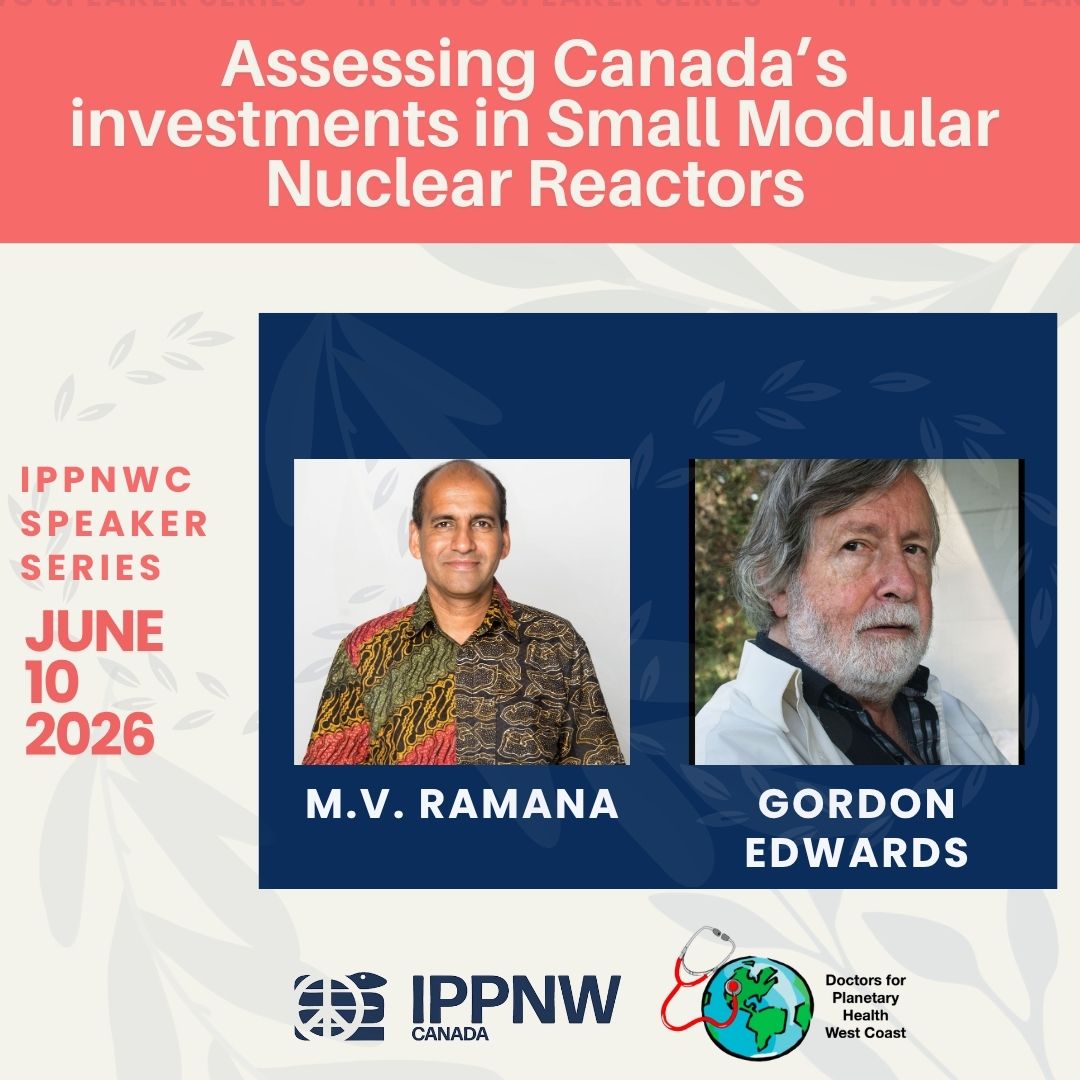
10 June – Assessing Canada’s Investments in Small Modular Nuclear Reactors – https://zoom.us/meeting/register/IiqHA5feRhaEBycOLNTJlA#/registration


Cuba Is Not a Failed State – It Is a Besieged State
PETITION: “Global Appeal to Endorse Palestinian Right of Return of Refugees”
To see nuclear-related stories in greater depth and intensity – go to https://nuclearinformation.wordpress.com
-
Archives
- June 2026 (89)
- May 2026 (306)
- April 2026 (356)
- March 2026 (251)
- February 2026 (268)
- January 2026 (308)
- December 2025 (358)
- November 2025 (359)
- October 2025 (376)
- September 2025 (257)
- August 2025 (319)
- July 2025 (230)
-
Categories
- 1
- 1 NUCLEAR ISSUES
- business and costs
- climate change
- culture and arts
- ENERGY
- environment
- health
- history
- indigenous issues
- Legal
- marketing of nuclear
- media
- opposition to nuclear
- PERSONAL STORIES
- politics
- politics international
- Religion and ethics
- safety
- secrets,lies and civil liberties
- spinbuster
- technology
- Uranium
- wastes
- weapons and war
- Women
- 2 WORLD
- ACTION
- AFRICA
- Atrocities
- AUSTRALIA
- Christina's notes
- Christina's themes
- culture and arts
- Events
- Fuk 2022
- Fuk 2023
- Fukushima 2017
- Fukushima 2018
- fukushima 2019
- Fukushima 2020
- Fukushima 2021
- general
- global warming
- Humour (God we need it)
- Nuclear
- RARE EARTHS
- Reference
- resources – print
- Resources -audiovicual
- Weekly Newsletter
- World
- World Nuclear
- YouTube
-
RSS
Entries RSS
Comments RSS
 nuclear-news