Fukushima cancer toll – years later, especially for nuclear clean-up workers
One group particularly at risk of health harm is the large and growing number of workers required to help control, shut down and clean up the damaged nuclear plants.
On average, the contracted day labourers receive two- to three-times the radiation dose of a regular worker but are not included in utility statistics. And there is no compulsory, centralised system for tracking cumulative radiation exposure or health outcomes of these workers.
Fukushima radiation toll will continue for generations Despite claims that Japan’s Fukushima meltdown caused no deaths, in fact the true health costs of Fukushima’s radiation leaks won’t be known for decades. Independent Australia 18 March 12, Professor Tilman Ruff reports. A year can be a long time in politics. But for the radioactive particles released from Fukushima’s damaged nuclear reactor, a year is just a moment in their life of hundreds or thousands of years.
So, what is the radiological situation at Fukushima one year after the disaster? the extensively damaged plants are still unstable and highly radioactive. This has restricted access and clean-up efforts, which will need to go on for many decades.
Though Japanese authorities declared they’d achieved a “cold shutdown” in December, an arbitrary definition was used: coolant water temperature was less than boiling, pressure inside the reactors was not raised, and the release of radioactive materials from the first layer of containment was below a specified level. But it didn’t mean the nuclear reaction inside the reactors had been stably shut down…. Continue reading
Mapping Fukushima radiation as it moves across the Pacific Ocean
 http://www.straight.com/article-638451/vancouver/fukushima-radiation-moving-seawater-across-pacific-ocean-according-consulting-company Maps show movement of radiation, and of debris across Pacific Fukushima radiation moving in seawater across Pacific Ocean, according to consulting company, Straight.com By Charlie Smith, March 18, 2012 Oceanic radiation from last year’s Fukushima nuclear disaster is approaching northern Hawaii, according to the latest tracking by ASR Limited .
The coastal-management consulting company has created a map that follows the movement of radiation in seawater since the Japanese earthquake on March 11, 2011. ASR Limited suggests radiation is crossing the Pacific Ocean.
Last April, Japanese officials claimed that they had halted the release of radioactive radiation from the crippled nuclear reactors at Fukushima.
On December 5, however, the Los Angeles Times revealed that “45 tons of highly radioactive water” had been released from the plant on the previous weekend.
Greenpeace has also reported finding highly radioactive sea life off the Japanese coast. Meanwhile, ASR Limited has also released a map showing how far the floating island of Japanese debris has travelled since last year’s earthquake.
It’s expected to reach the British Columbia Coast in 2013. A huge amount of debris is headed toward British Columbia.
Japanese kids learn about radiation
“Still, there are many children who think nuclear energy is necessary but that’s probably because their parents or relatives have had nuclear-related jobs,”
Third of Fukushima kids got first radiation lessons from disaster: poll Japan Times, 19 March, Kyodo FUKUSHIMA — About a third of the 225 youngsters who were evacuated from around the Fukushima No. 1 nuclear plant last March but still reside in the prefecture say the disaster made them aware of radiation dangers for the first time, a new survey says. Continue reading
Spain’s Andalusia solar power station produces electricity day and night
Solar power station in Spain works at night Yahoo Finance 19 Mar 12, A unique thermosolar power station in southern Spain can shrug off cloudy days: energy stored when the sun shines lets it produce electricity even during the night.
The Gemasolar station, up and running since last May, stands out in the plains of Andalusia.
From the road between Seville and Cordoba, one can see its central tower lit up like a beacon by 2,600 solar mirrors, each 120 square metres (28,500 square feet), that surround it in an immense 195-hectare (480-acre) circle.
“It is the first station in the world that works 24 hours a day, a solar power station that works day and night!” said Santago Arias, technical director of Torresol Energy, which runs the station. The mechanism is “very easy to explain,” he said: the panels reflect the suns rays on to the tower, transmitting energy at an intensity 1,000 times higher than that of the sun’s rays reaching the earth.
Energy is stored in a vat filled with molten salts at a temperature of more than 500 degrees C (930 F). Those salts are used to produce steam to turn the turbines and produce electricity.
It is the station’s capacity to store energy that makes Gemasolar so different because it allows the plant to transmit power during the night, relying on energy it has accumulated during the day.
“I use that energy as I see fit, and not as the sun dictates,” Arias explained.
As a result, the plant produces 60 percent more energy than a station without storage capacity because it can work 6,400 hours a year compared to 1,200-2,000 hours for other solar power stations, he said.
“The amount of energy we produce a year is equal to the consumption of 30,000 Spanish households,” Arias said, an annual saving of 30,000 tonnes of CO2.
Helped by generous state aid, renewable energies have enjoyed a boom in Spain, the world number two in solar energy and the biggest wind power producer in Europe, ahead of Germany. … http://au.finance.yahoo.com/news/solar-power-station-spain-works-020347254.html
The sanity of cutting $100 billion from USA’s Cold War nuclear arsenal
Try a Little Nuclear Sanity Lawrence S. Wittner, March 19, 2012 On February 8, 2012, Congressman Edward Markey (D-MA) took to the floor of the U.S. House of Representatives to introduce the Smarter Approach to Nuclear Expenditures Act (H.R.
3974).
This SANE Act would cut $100 billion from the U.S. nuclear weapons budget over the next ten years by reducing the current fleet of U.S. nuclear submarines, delaying the purchase of new nuclear submarines, reducing the number of ICBMs, delaying a new bomber
program, and ending the nuclear mission of air bombers.
“America’s nuclear weapons budget is locked in a Cold War time machine,” noted Markey, the senior member of the House Energy and Commerce Committee. “It doesn’t reflect our twenty-first-century security needs. It makes no sense…….Since its introduction, the
SANE Act has picked up significant support. Not surprisingly, it is backed by major peace and disarmament organizations, such as Peace Action, Physicians for Social Responsibility, the Friends Committee on National Legislation, the Nuclear Age Peace Foundation, and the
Ploughshares Foundation. But it has also attracted the support of the National Council of Churches, the Project on Government Oversight, and the Congressional Progressive Caucus. Indeed, the SANE Act now has 45 Congressional co-sponsors…. http://hnn.us/articles/145156.html
Earth Justice and native peoples fight to save Grand Canyon from uranium mining
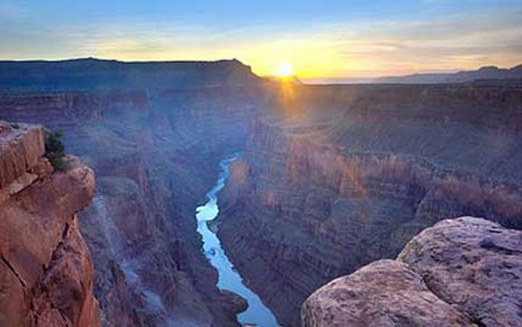 Uranium Industry Attack on Grand Canyon, Earth Justice 17 MARCH 2012, Yet another toxic mining threat “……..The new foes of protecting the Grand Canyon region look a lot like Mr. Cameron. They are uranium miners who’ve staked thousands of claims ringing the national park.
Uranium mining has left a toxic legacy in the area, polluting water that run through the Park, which has prompted the Park Service to warn hikers not to drink the water of certain streams, iincluding Horn Creek . (New mines are supposed to be better and cleaner. But the water pollution threatened by the “modern” flooded mines shows otherwise.)
Interior Secretary Ken Salazar stood up for protecting the lands around the national park, putting a million acres off limits to new mining claims.
The uranium industry, like Mr. Cameron, doesn’t like protecting the Grand Canyon . And like Mr. Cameron, they are attacking not only the Grand Canyon protection measures, but also the Interior Secretary’s authority to protect lands. (Industry claims the Interior Department can’t protect more than 5,000 acres at a time from uranium mining claims.)
This time, Earthjustice and our clients – the Havasupai Tribe , Grand Canyon Trust , Center for Biological Diversity , Sierra Club , and National Parks Conservation Association – will be fighting to protect the Grand Canyon. (We filed legal papers to formally intervene in the first of three industry suits last week.)
If history is going to repeat itself, with miners hoping to degrade wildlife habitat, waters and one of America’s natural wonders for profit, we’ll work to ensure the courts again recognize the Canyon’s majesty and again reject the miner’s attacks. http://earthjustice.org/blog/2012-march/uranium-industry-attack-on-grand-canyon
Radioactive isotopes in ocean plankton, from Fukushiam
follow-up studies will be necessary because the radioactive cesium is likely to have accumulated in fish that eat plankton, the team said
In the latest survey, the team also found cesium-134 — which has a two-year half-life — in plankton at the same levels as cesium-137, whose half-life is three decades.
Cesium found in plankton almost 375 miles from Fukushima nuclear plant, Boston Herald, By The Yomiuri Shimbun http://news.bostonherald.com/news/international/asia_pacific/view/20120318cesium found_in_plankton_almost_375_miles_from_fukushima_nuclear_plant/srvc=home&position=recent,March 18, 2012 – TOKYO — Radioactive cesium believed to have been released during the crisis at the Fukushima No. 1 nuclear power plant in Japan following last year’s major earthquake has been found in plankton about 600 kilometers (nearly 375 miles) east of the facility, according to a Japan-U.S. joint research team. Continue reading
Taxpayer cleaning up many millions of tons of uranium wastes,since company went bankrupt

 Five Million Tons Of Uranium Tailing Disposed, The U.S. Department Of Energy Says They Are A Third Of The Way Done With Their Entire Project To Move All Of The Tailings To Crested Junction KJCT8.com Janelle Ericsson MOAB, UT. — Five million tons of uranium tailings has been removed from an old waste site near the river in Moab. The U.S. Department of Energy says they are a third of the way done with their entire project to move all of the tailings to Crested Junction.
Once they reach their destination they will be put in an engineered cell that will prevent contamination to ground water for a thousand years…
. The UMTRA project was originally started in 2001 when the a corporation went bankrupt. Through legislative actions, the project was given to the Department of Energy to take responsibility of the clean up.
Israel agrees that Iran has not decided to develop nuclear bomb
[includes video] Israel: Iran Nuclear Bomb Construction Not Yet Decided On, Huffington Post,18 Mar 12, JERUSALEM (AP) — Despite saber-rattling from Jerusalem, Israeli officials now agree with the U.S. assessment that Tehran has not yet decided on the actual
construction of a nuclear bomb, according to senior Israeli government and defense figures. Continue reading
3 categories of compensation payments for Japan’s nuclear evacuees
Japanese government panel urges compensation for nuclear evacuees (includes video) http://news.bostonherald.com/news/international/asia_pacific/view/20120318japanese_government_panel_urges_compensation_for_nuclear_evacuees/srvc=home&position=recent By The Yomiuri Shimbun , March 18, 2012 TOKYO – Residents who will be unable to return to areas around the crippled Fukushima No. 1 nuclear power plant for at least five years should be paid 6 million yen (US$71,813) each as compensation for their mental suffering, a Japanese government panel has decided. Continue reading
USA’s nuclear workers – cancer from radiation exposure

Christina Macpherson's websites & blogs
This article appeared today – and I thought – “Well, what’s the use of this- it is 12 years old? Out of date news, and so forth” And then I thought -” Well, what’s happened to nuclear workers since then?” Has it miraculously become a healthy job? Or is it that no-one is now doing research into the health of nuclear workers? And if not, why not? And if research is being done into the health of nuclear workers, what are the results? Is it all just too scary to publish?
 Richard D. Miller, a policy analyst with the union, said the change was remarkable because the Energy Department and its predecessor, the Atomic Energy Commission, had ”spared no resources in seeking to defeat claims” by employees who said they had been made sick by radiation or chemicals.
 higher-than-expected rates of leukemia, cancer of the lung and bladder, vision difficulties and chronic fatigue syndrome, among other health problems.
AFTER DECADES OF DENIAL (as per normal for nuke industry) . http://nuclearhistory.wordpress.com/2012/03/17/after-decades-of-denial-as-per-normal-for-nuke-industry/#comment-5284 …. Paul Langley’s Nuclear History Blog, 17 March 12, New York Times : US Govt Concedes Plutonium Workers Suffered Illness, Death http://query.nytimes.com/gst/fullpage.html?res=9C05E2DE1E3CF93AA15752C0A9669C8B63&pagewanted=all
U.S. ACKNOWLEDGES RADIATION KILLED WEAPONS WORKERS , By MATTHEW L. WALD Published: January 29, 2000 WASHINGTON, Jan. 28— After decades of denials, the government is conceding that since the dawn of the atomic age, workers making nuclear weapons have been exposed to radiation and chemicals that have produced cancer and early death.
The new finding — that the exposure led to higher-than-normal rates of a wide range of cancers among workers at 14 nuclear weapons plants — raises the prospect of compensation to them. Although officials cautioned that any decision on that was a long way off, they said a package could amount to tens of millions of dollars for a group that might well include hundreds of families.
The new conclusion comes from the government’s most comprehensive review of studies of worker health and related raw health data. The review accepts the conclusion of many of those studies, some done under contract for the government, that workers were made sick by their exposure. Continue reading
In UK, 102 business leaders urge government to back renewable energy

 Sir Branson and fellow entrepreneurs ask Cameron to back renewables http://www.eaem.co.uk/news/sir-branson-and-fellow-entrepreneurs-ask-cameron-back-renewables Energy and Envronment Magazine 16 March 2012
Sir Richard Branson is one of 102 top business signatories of an open letter to David Cameron urging him to back wind and other renewable forms of power generation.
“March’s budget provides one of the biggest opportunities to tackle climate change in the UK,” the Virgin tycoon says. “We must ensure it encourages investment rather than creates uncertainty and delays further serious investment in the renewable sector. As a country we need to be better prepared to deal with rising energy prices.”
The so-called ‘102 letter’ is conceived partly as a response to the actions of 101 backbenchers who last month wrote to the Prime Minister attacking wind power, and a call to the Treasury to re-establish a stable investment platform for renewable energy as a driver of the recovery out of the recession.
It is published on the website of the Entrepreneurs’ Organisation (EO), the global network of more than 7,500 business owners in 38 countries.
“Cutting support for green energy is a false economy,” comments Dale Vince, Founder and CEO of Ecotricity, one of Britain’s most successful new energy companies trying to muscle in on the territory controlled by the Big Six.
His angle is energy security. “Britain needs to become energy independent once more, and with the North Sea all but depleted of fossil fuels we need to look to other forms of indigenous energy. We have them in abundance, in the wind the sun and the sea, enough to power our country many times over.
“While Britain remains dependent on global energy markets, our bills can only go one way: upwards.”
His analysis is that the level of current support for green energy sources is relatively small in comparison to that for oil and gas.
In the last 12 months roughly £30 of our household energy bills has been spent on green energy support. Of this, the Renewables Obligation (RO) added just £15.15 to the annual energy bill of the United Kingdom’s 26.3 million households, with onshore wind power adding only £4.68, according to Ofgem’s recently published RO annual report for 2010/11and Ecotricity’s analysis.
The RO is the main support mechanism for encouraging the growth of renewable energy in the UK.
Meanwhile, the rising cost of imported gas added around £120 to energy bills last year, according to Ofgem’s Electricity and Gas Supply Market Report.
“We need to reverse those proportions; it’s an incredible false economy to throw money at energy market speculators while penny pinching over the one thing we can do to solve the problem long term: make our own energy,” concludes Mr Vince.
The letter says that “as entrepreneurs, investors, economists, scientists, engineers, energy providers, community builders and Members of Parliaments, we are increasingly concerned about the lack of clarity around the future of government support for land-based renewables, such as solar, wind and biogas.”

Letter to UK Prime Minister David Cameron on renewable energy
Richard Branson letter to David Cameron on renewable energy http://www.guardian.co.uk/environment/2012/mar/16/renewableenergy-energy
The letter in full from Dale Vince, Juliet Davenport and Caroline Lucas and other signatories backing green power, in response toa recent letter in which 101 Conservative backbenchers rubbished wind power
Dear David Cameron,
As entrepreneurs, investors, economists, scientists, engineers, energyproviders, community builders and Members of Parliament, we are increasingly concerned about the lack of clarity around the future of government support for land based renewables, such as solar, wind and biogas. Continue reading
Britain’s nuclear power industry has always failed, and will continue to fail
The nuclear industry’s history is one of broken promises. Mrs Thatcher pledged 10 new nuclear plants in 1979 – one reactor eventually sent electricity to the grid in 1995.
Britain’s existing fleet of Advanced Gas-cooled Reactors was described by the then Chairman of the Central Electricity Generating Board as the worst civil engineering disaster in our history.
The proto-type fast reactor at Dounreay is now being expensively dismantled, having never worked properly. Nor has the THORP reprocessing plant at Sellafield
 Nuclear power will fail to achieve what George Monbiot wants, Guardian UK 16 Mar 12, Nuclear industry’s broken promises show atomic energy will not help climate efforts, say former directors of Friends of the Earth Deciding on how best to meet the country’s energy needs is difficult. There are no absolutely right answers. But one issue guaranteed to excite personal passions rather than brain cells is nuclear power.
Some solutions are more convincing than others. The best make the most economic, environmental and social sense, based on facts rather than fervent beliefs.
As four former Directors of Friends of the Earth, we wrote to the Prime Minster this week setting out eight major economic and political problems facing a new build nuclear programme in the UK. We have engaged in the nuclear debate for forty years. On the basis of our experience and the evidence, we concluded that the government’s policy will fail…. Continue reading
Nuclear power revival being killed off by cheaper, safer, gas
 Cheap Natural Gas Unplugs U.S. Nuclear-Power Revival, WSJ, BY REBECCA SMITH, 16 March 12, The U.S. nuclear industry seemed to be staging a comeback several years ago, with 15 power companies proposing as many as 29 new reactors. Today, only two projects are moving off the drawing board.
What killed the revival wasn’t last year’s nuclear accident in Japan, nor was it a soft economy that dented demand for electricity. Rather, a shale-gas boom flooded the U.S. market with cheap natural gas, offering utilities a cheaper, less risky alternative to nuclear
technology.
“It’s killed off new coal and now it’s killing off new nuclear,” says David Crane, chief executive of NRG Energy Inc http://online.wsj.com/article/SB10001424052702304459804577281490129153610.html
1 This Month
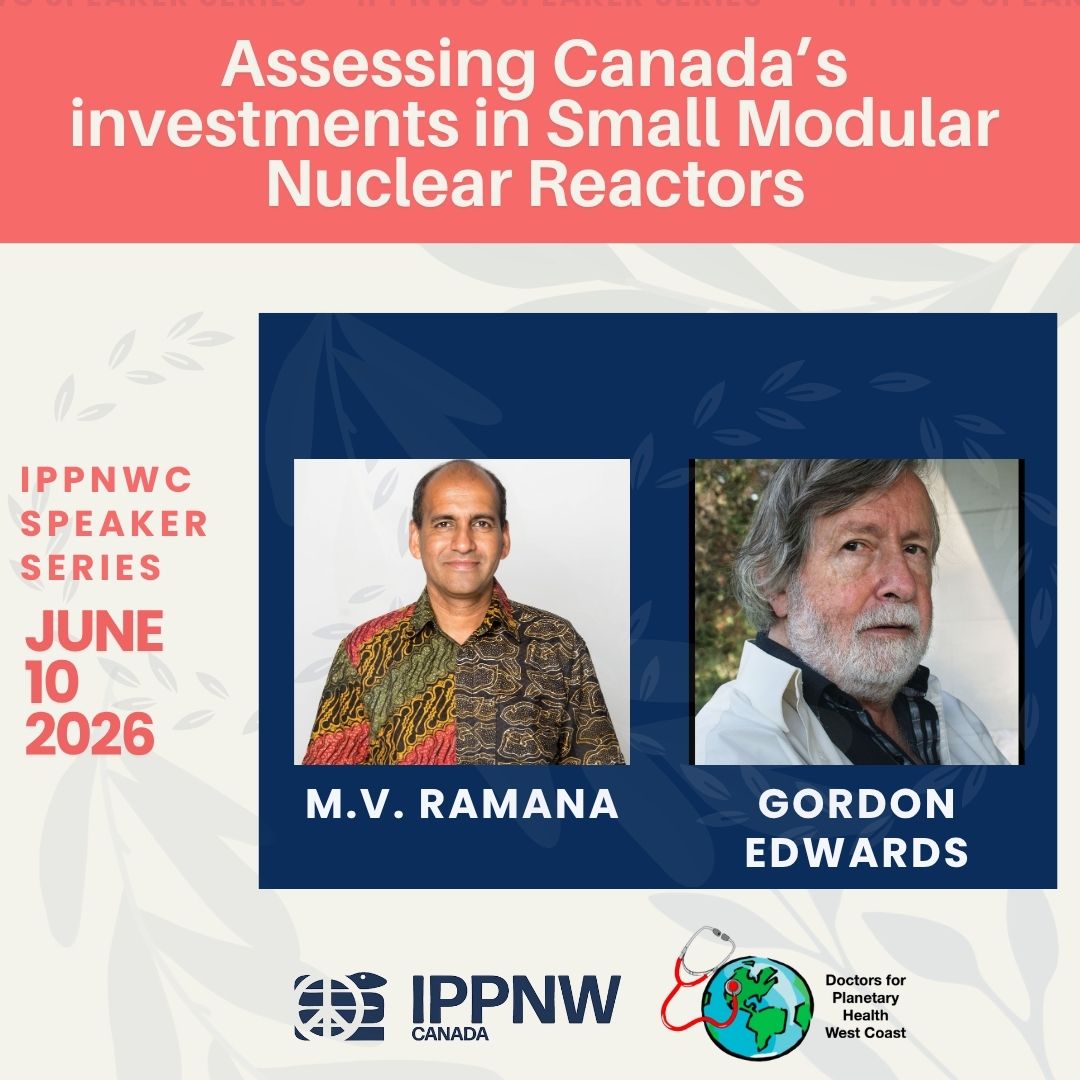
10 June – Assessing Canada’s Investments in Small Modular Nuclear Reactors – https://zoom.us/meeting/register/IiqHA5feRhaEBycOLNTJlA#/registration


Cuba Is Not a Failed State – It Is a Besieged State
PETITION: “Global Appeal to Endorse Palestinian Right of Return of Refugees”
To see nuclear-related stories in greater depth and intensity – go to https://nuclearinformation.wordpress.com
-
Archives
- June 2026 (89)
- May 2026 (306)
- April 2026 (356)
- March 2026 (251)
- February 2026 (268)
- January 2026 (308)
- December 2025 (358)
- November 2025 (359)
- October 2025 (376)
- September 2025 (257)
- August 2025 (319)
- July 2025 (230)
-
Categories
- 1
- 1 NUCLEAR ISSUES
- business and costs
- climate change
- culture and arts
- ENERGY
- environment
- health
- history
- indigenous issues
- Legal
- marketing of nuclear
- media
- opposition to nuclear
- PERSONAL STORIES
- politics
- politics international
- Religion and ethics
- safety
- secrets,lies and civil liberties
- spinbuster
- technology
- Uranium
- wastes
- weapons and war
- Women
- 2 WORLD
- ACTION
- AFRICA
- Atrocities
- AUSTRALIA
- Christina's notes
- Christina's themes
- culture and arts
- Events
- Fuk 2022
- Fuk 2023
- Fukushima 2017
- Fukushima 2018
- fukushima 2019
- Fukushima 2020
- Fukushima 2021
- general
- global warming
- Humour (God we need it)
- Nuclear
- RARE EARTHS
- Reference
- resources – print
- Resources -audiovicual
- Weekly Newsletter
- World
- World Nuclear
- YouTube
-
RSS
Entries RSS
Comments RSS
 nuclear-news