Exposure of Fukushima residents to radiation
 Fukushima residents exposed to up to 23 millisieverts of radiation Mainichi Daily News, 22 Feb 12, FUKUSHIMA (Kyodo) — The Fukushima Prefecture government said Monday that the residents of three municipalities located near the crippled Fukushima Daiichi nuclear power plant are estimated to have been exposed to up to 23 millisieverts of radiation in the four months after the accident triggered by the March 11 earthquake and tsunami.
“As annual radiation exposure of up to 100 millisieverts poses no specific cancer risks, the estimated radiation is unlikely to cause any adverse health effects,” Fukushima Medical University Vice President Shunichi Yamashita told a press conference. “It is important to reduce future radiation exposure as much as possible.”
While the allowable radiation exposure limit is ordinarily set at 1 millisievert per year, the International Commission on Radiological Protection has recommended an emergency limit of 20 to 100 millisieverts……. “The high-level radioactive contamination indicates that humans should not be allowed to live near the car park,” said Kobe University Professor Tomoya Yamauchi, who conducted a radiation test on the soil.
The crisis at the Fukushima Daiichi plant has resulted in heavy concentrations of radioactive substances at various locations in Minamisoma. The civic group said its discovery indicates that a fact-finding survey is urgently required throughout the city. http://mdn.mainichi.jp/mdnnews/news/20120220p2g00m0dm146000c.html
How a nuclear bomb in space could bring devastating cyber war

 Terror bomb detonated in space ‘could cripple Britain’s electronic networks and jeopardise national security’ Daily Mail, By IAN DRURY 22nd February 2012 Rogue states and terror groups could launch nuclear attacks in space to cripple Britain’s electronic networks and jeopardise national security, a report warns today. Continue reading
A dangerous hoax to make money from a false nuclear rumour
 South Korea Police Arrest 6 for Spreading N. Korea Nuclear Accident Rumors Bloomberg, By Saeromi Shin and Sangwon Yoon – Feb 20, 2012 South Korean police arrested six people for spreading false rumors about a North Korean nuclear reactor explosion on Jan. 6 to manipulate the stock market.
The six, including two office workers and a university student, conspired to circulate rumors through instant-messaging that a light-water reactor exploded in North Korea and radiation had leaked, the National Police Agency said in a statement posted on its website today. They made 61 million won ($54,314) in profits from spreading rumors to move financial markets, according to the police. … http://www.bloomberg.com/news/2012-02-21/six-arrested-in-s-korea-over-nuclear-rumors.html
Book exposes the secret nuclear horror of Rocky Flats
her message is searing. She grew up in a small town near Rocky Flats, Colorado, where a secret nuclear weapons plant built over 70,000 plutonium “triggers” for nuclear bombs. Iversen spoke with me this week about her research … “They made Nagasaki bombs in my backyard,” she explains.
cancer rates are telling the tale: they remain elevated in neighborhoods around Rocky Flats 30 years on
profit motives are driving the push to develop lands that, according to scientists, can never be inhabited safely again. …”Rocky Flats happened in my backyard. [This will be] happening in everyone’s backyard.”
From Rocky Flats to Fukushima: this nuclear folly, Naomi Wolf, Guardian UK 21 Feb 12, http://www.guardian.co.uk/commentisfree/cifamerica/2012/feb/21/rocky-flats-fukushima-nuclear-folly?newsfeed=true There’s no such thing as safe and accidents are always covered up. So why let Obama build a whole new generation of reactors?
 In March 2011, novelist Kristen Iversen‘s memoir, Full Body Burden: Growing Up in the Nuclear Shadow of Rocky Flats, was waiting sedately among piles of other manuscripts at various publishing houses. Then,Japan was hit by a tsunami, and the cooling systems of the Fukushimanuclear reactor were overwhelmed, giving the world apocalyptic images of toxic floods and floating cars, of whole provinces made uninhabitable. Continue reading
Giant uranium miner BHP challenged by Aboriginal elder
 ‘Tiny voice’ of elder takes on Olympic Dam BY: SARAH MARTIN, SA POLITICAL REPORTER The Australian February 22, 2012 BHP Billiton’s proposed $20 billion Olympic Dam mine expansion, to create the world’s largest open-cut mine, will be challenged in the Federal Court after an application was lodged by Aboriginal elder Kevin Buzzacott.
Mr Buzzacott, who is known as Uncle Kevin, is being represented by the Adelaide-based Environmental Defenders Office. The office claims the mine expansion has been approved unlawfully under the Environment Protection and Biodiversity Conservation Act by federal  Environment Minister Tony Burke.
Among the claims are that much of the environmental assessment and decision-making was based on plans and studies that have not yet been prepared and that the minister did not properly consider impacts from the above-ground storage of radioactive tailings waste, the export of uranium and on groundwater resources, including the Great Artesian Basin.
Mr Buzzacott, an elder from Arabunna land in South Australia’s remote north, is known for his anti-uranium campaigning, and in 2007 was awarded an Australian Conservation Foundation award recognising his protest work. The EDO filed an application on his behalf in the Federal Court yesterday, saying his “tiny voice” was prepared to take on the giant……
http://www.theaustralian.com.au/national-affairs/state-politics/tiny-voice-of-elder-takes-on-olympic-dam/story-e6frgczx-1226277611443
Australian government’s special laws for the benefit of uranium mining company
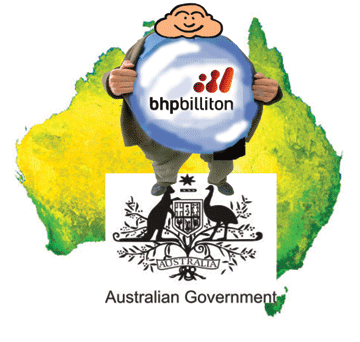 Olympic Dam mine is a dam designed to leak an average of three million litres of liquid radioactive waste a day from the tailings storage facility through decades of mining up to 2050.
The federal and SA governments agreed to surface dumping of the tailings rather than to require best practice disposal into the pit.
Our uranium fuelled Fukushima, David Noonan, The Guardian, 22 Feb 12, Australian uranium fuelled the Fukushima nuclear disaster yet our governments have just approved the world’s largest uranium project in BHP Billiton’s proposed new pen pit mine at Roxby Downs. “We can confirm that Australian obligated nuclear material was at the Fukushima Daiichi site and in each of the reactors – maybe five out of six, or it could have been all of them; almost all of them”.
This frank smoking gun admission by Dr Floyd, the Director-General of the Australian Safeguards and Non-Proliferation Office (ASNO) in the Department of Foreign Affairs and Trade came some seven months after the Fukushima crisis had started to unfold. It is quite likely this Australian uranium came from Roxby Downs in SA.
Denial runs deep in the nuclear industry Continue reading
No agreement between IAEA experts and Iran
U.N. experts leave Iran without nuclear agreement, By the CNN Wire Staff February 22, 2012 Two days of talks with Iran have failed to produce agreement on how to verify that Iran’s nuclear program remains peaceful, the International Atomic Energy Agency announced
Tuesday. Iran also refused to allow a team from the U.N. nuclear watchdog agency to visit its military base at Parchin, southeast of Tehran, during the two-day visit, the IAEA said.
“Intensive efforts were made to reach agreement on a document facilitating the clarification of unresolved issues in connection with Iran’s nuclear program, particularly those relating to possible military dimensions,” an IAEA statement on the visit read. “Unfortunately, agreement was not reached on this document.” The high-level team of experts was on its way back from Iran late Tuesday, the agency said.
There was no immediate comment on its account from Iranian authorities….. http://edition.cnn.com/2012/02/21/world/meast/iran-nuclear/?hpt=wo_c2
Radiation danger in medical whole body CT scans
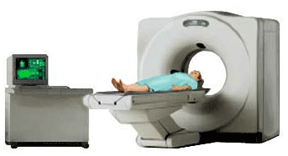 the findings suggest that pan-scanning may be 26 times as likely to harm patients in the long run as to immediately help them in the acute care setting…. the results should serve as warning for the emergency department physician against ordering pan-scans for lower-risk patients
CT Pan-Scans Raise Radiation Dose Without Improving Results, Medscape Today, James Brice, February 21, 2012— An Australian study of emergency department imaging practices has raised radiation safety concerns and new arguments about the clinical benefits of whole-body computed tomography (CT) imaging for the initial emergency department evaluation of critically injured patients. Continue reading
How some uranium mining corporations deceive developing countries
 Mining deals worry industry grouping The Daily Times, 21 February 2012 Isaac Masingati An international mining industry grouping, Intergovernmental Forum on Mining, Minerals, Metals and Sustainable Development (IGF), says it is concerned with contracts between investors and governments especially in developing countries, saying they tend to be skewed in favour the investor.
IGF President Leonard Kalindekafe told the Business Times in Zomba on Friday that there was a concern among members of the grouping that some investors were taking advantage of governments’ lack of expertise to strike deals that bring little profits. ”This is a big concern to the Forum because some bona fide countries are not able to realise full benefits from their minerals,” he said. Continue reading
Continuing radioactive leakage to the ocean from Fukushima nuclear plant
“We’re not over the hump” yet in terms of radioactive contamination of the ocean because of continued leakage from the plant,
Radiation from tsunami disaster detected 400 miles off Japan’s coast, but levels below harmful Washinmgton Post, By Associated Press, February 21 SALT LAKE CITY — Radioactive contamination from the Fukushima power plant disaster has been detected as far as almost 400 miles off Japan in the Pacific Ocean, with water showing readings of up to 1,000 times more than prior levels, scientists reported Tuesday…. Continue reading
Growing number of small decentralised renewable energy projects
Smaller, renewable energy projects setting roots across west central Minnesota It’s hard to miss the development of renewable energy at the University of Minnesota campus in Morris. What can be more difficult to see, but no less significant, is the growing number and variety of smaller renewable energy projects setting roots all around the region. Morris Sun Tribune, By: Tom Cherveny, West Central Tribune WILLMAR, Minn. 21 Feb 12, – It’s hard to miss the development of renewable energy at the University of Minnesota campus in Morris.
There are now two, 1.6-megawatt wind generators towering over the prairie and cranking out enough kilowatts to provide 60 percent of the electrical needs on campus. A heating system utilizing locally harvested biomass produces 25 percent of the thermal energy required on campus, with expectations of meeting 50 percent of needs next year.
What can be more difficult to see, but no less significant, is the growing number and variety of smaller renewable energy projects setting roots all around the region. In recent years 17 different “net metering” projects have been added by customers on the Kandiyohi Power Cooperative’s distribution grid, for example. Using small wind generators or solar photovoltaic panels, customers are producing a portion of their own electricity and selling any excess back to the grid.
Renewable energy systems of all types — from small wind generators to methane digesters — are being installed on farms, homes and businesses throughout southwestern Minnesota. Participants from throughout western Minnesota gathered recently at the Prairie Woods Environmental Learning Center to identify the projects and to help chart the way for more….. http://www.morrissuntribune.com/event/article/id/27223/
The week’s nuke news

Christina Macpherson's websites & blogs
Medical Nuclear reactor not needed to produce top medical isotope . New breast cancers, in certain circumstances promoted by radiation treatment for breast cancer.
Canada refuses asylum to Japanese nuclear refugee
Thorium nuclear reactors not all they’re cracked up to be, especially, uneconomic.
USA. Vermont Attorney General appeals court, in move to retain Vermont’s power to shut down a nuclear reactor. In Georgia, USA Energy Secretary Steven Chu on a mission to sell nuclear power to the public, as USA approves $14 billion expansion of Vogtle nuclear plant. Meanwhile Vogtle’s nuclear waste continues to pile up. Obama putting the brakes on nuclear loan guarantee program.
UK and French leaders get together, to bolster France’s flagging nuclear export industry, by promoting French nukes in Britain. Protestors occupy Hinkley nuclear site.
France – all sorts of spy stuff and dodgy doings going on with AREVA nuclear corporation and its treatment of its former CEO Anne Lauvergeon
Russia to get new nuclear submarines, thanks to money from oil billionaires.
Top medical isotope can be produced without nuclear reactor
 Nuclear medicine has long been touted as a selling point for nuclear power – a kin do healthy fig leaf put over a n unhealthy, toxic industry. – Christina Macpherson
Nuclear Reactors Not Needed to Make the Most Common Medical Isotope, Science Now by Robert F. Service on 20 February 2012, In recent years, hospitals worldwide have been grappling with short supplies of technetium-99 (Tc-99), the most commonly used radioisotope in medical imaging scans. But help may be at hand: A team of Canadian researchers reported today that they’ve made critical progress in developing a stable new supply of the isotope.
Tc-99 is currently produced in nuclear reactors fueled with highly enriched uranium, which has raised concerns that the nuclear fuel could be intercepted by terrorists to make a nuclear weapon. The new setupproduces Tc-99 with a medical cyclotron, thereby eliminating proliferation concerns. But economic and technical considerations may make it more practical for shoring up Tc-99 supplies in Canada than in the United States. Continue reading
Thorium reactors won’t save the nuclear industry

 Nuclear power entrepreneurs push thorium as a fuel, Washington Post, 20 Feb 12, “….. a small group of scientists, entrepreneurs and advocates see the post-Fukushima era as the perfect opportunity to get the United States to consider a proposal they have made with no success for years. What about trying a new fuel, they say, and maybe a new kind of reactor?….. They’re pushing the idea of adapting plants to use thorium as a fuel or replacing them with a completely new kind of reactor called a liquid-fluoride thorium reactor, or LFTR (pronounced “lifter”). The LFTR would use a mixture of molten chemical salts to cool the reactor and to transfer energy from the fission reaction to a turbine..
….‘Small boatloads of fanatics’ Although the idea of thorium power has been around for decades — and some countries are planning to build thorium-powered plants — it has not caught on with the companies that design and build nuclear plants in the United States or with the national research labs charged with investigating future energy sources.
“There are small boatloads of fanatics on thorium that don’t see the downsides,” said Dan Ingersoll, senior project manager for nuclear technology at the Oak Ridge National Laboratory in Tennessee. For one thing, he said, it would be too expensive to replace or convert the nuclear power plants already running in this country: “A thorium-based fuel cycle has some advantages, but it’s not compelling for infrastructure and investments.”
He also pointed out that thorium would still have some radioactive byproducts — just not as much as uranium and not as long-lived — and that there is no ready stockpile of thorium in the United States. It would have to be mined.
Overall, he says the benefits don’t outweigh the huge costs of switching technologies. “I’m looking for something compelling enough to trash billions of dollars of infrastructure that we have already and I don’t see that.”…… most U.S. nuclear energy industry executives are wary of both approaches to thorium, saying that neither utilities nor investors are eager to gamble on an unfamiliar technology….
South Korea’s nuclear program falters, as public opposition increases
 the reactor has had 51 malfunctions since it went online, “due to flaws in machinery and components, including radiation leaks, coolant leaks and reactor shutdowns,”
South Korea to boost nuclear power? SEOUL, Feb. 20 (UPI) — South Korea’s plans to boost nuclear power face increasing resistance from civic and environmental groups, post Fukushima, the Japanese reactor site hit by an earthquake and tsunami last year… Continue reading
1 This Month
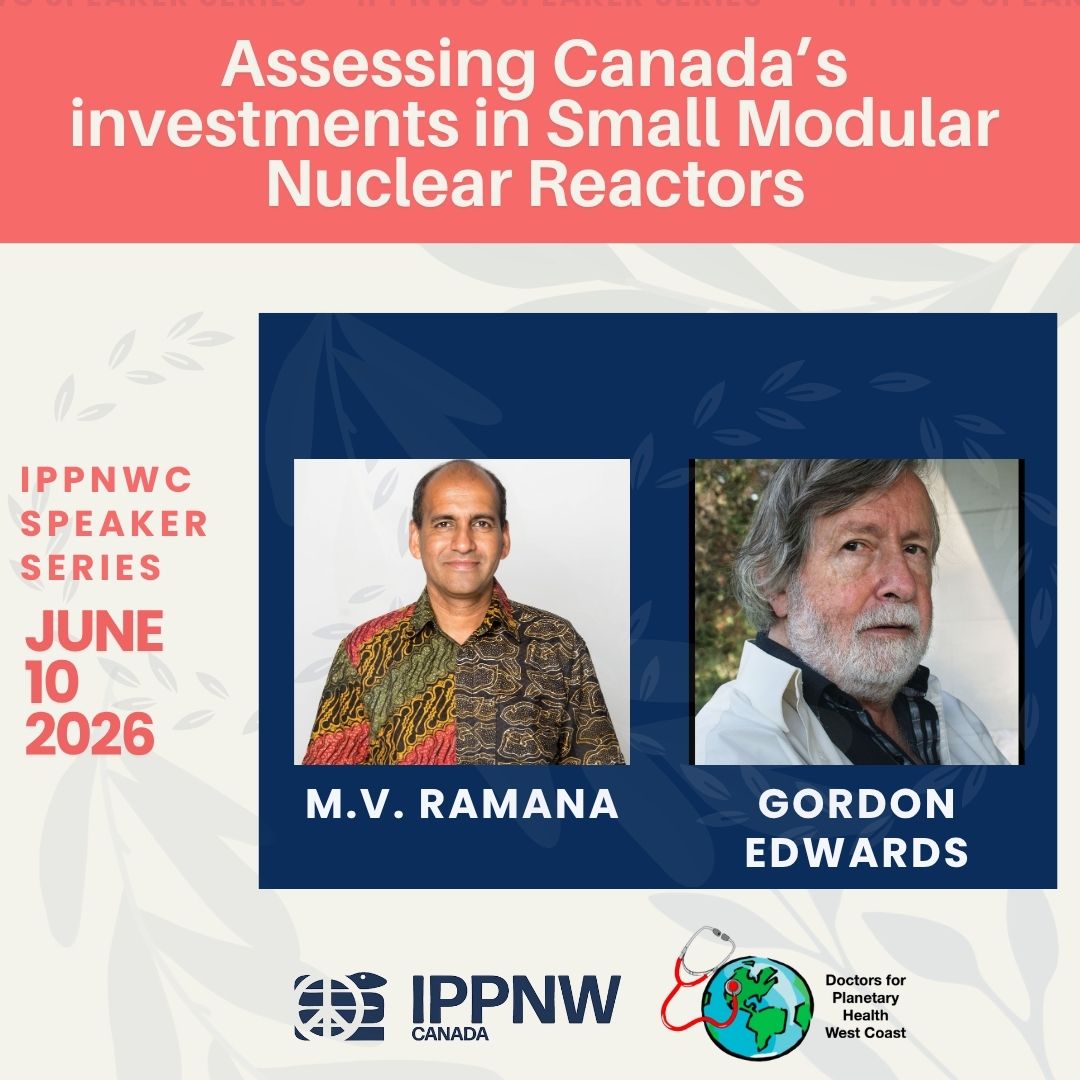
10 June – Assessing Canada’s Investments in Small Modular Nuclear Reactors – https://zoom.us/meeting/register/IiqHA5feRhaEBycOLNTJlA#/registration


Cuba Is Not a Failed State – It Is a Besieged State
PETITION: “Global Appeal to Endorse Palestinian Right of Return of Refugees”
To see nuclear-related stories in greater depth and intensity – go to https://nuclearinformation.wordpress.com
-
Archives
- June 2026 (89)
- May 2026 (306)
- April 2026 (356)
- March 2026 (251)
- February 2026 (268)
- January 2026 (308)
- December 2025 (358)
- November 2025 (359)
- October 2025 (376)
- September 2025 (257)
- August 2025 (319)
- July 2025 (230)
-
Categories
- 1
- 1 NUCLEAR ISSUES
- business and costs
- climate change
- culture and arts
- ENERGY
- environment
- health
- history
- indigenous issues
- Legal
- marketing of nuclear
- media
- opposition to nuclear
- PERSONAL STORIES
- politics
- politics international
- Religion and ethics
- safety
- secrets,lies and civil liberties
- spinbuster
- technology
- Uranium
- wastes
- weapons and war
- Women
- 2 WORLD
- ACTION
- AFRICA
- Atrocities
- AUSTRALIA
- Christina's notes
- Christina's themes
- culture and arts
- Events
- Fuk 2022
- Fuk 2023
- Fukushima 2017
- Fukushima 2018
- fukushima 2019
- Fukushima 2020
- Fukushima 2021
- general
- global warming
- Humour (God we need it)
- Nuclear
- RARE EARTHS
- Reference
- resources – print
- Resources -audiovicual
- Weekly Newsletter
- World
- World Nuclear
- YouTube
-
RSS
Entries RSS
Comments RSS
 nuclear-news