Two big hurdles to USA selling nuclear reactors to India

 US control regime a hurdle in N-deal, Deccan Herald, Kalyan Ray New Delhi, Feb 22, 2012, US export control regime has become a major stumbling block for concluding commercial nuclear agreements under the four-year-old Indo-US civil nuclear agreement signed in 2008 for peaceful uses of nuclear power.
US nuclear suppliers on Wednesday identified their own country’s control regime as the spoil sport for entering into agreements with Indian companies. The most immediate concern for the two US nuclear majors – GE and Westinghouse – is a specific provision in the US export control rules under which they have to  obtain clearance from the US government not only for supplying reactors to NPCIL but also for other Indian companies involved in constructing a nuclear power plant. “The 810 licence in the US export control regime is the most immediate issue,” Aris S Candris, president and chief executive officer of Westinghouse told Deccan Herald. on the sidelines of an international nuclear symposium here.
At the symposium organised by the World Nuclear Association, both Westinghouse and GE flagged 810 licence as the most immediate stumbling block to kick-start nuclear commerce between the two countries, though both admitted that stiff Indian nuclear liability regime posed another big hurdle. India currently plans to purchase two AP-1000 light water reactors from Westinghouse to install in Chhaya Mithi Virdi in Gujarat and two 1000 MW reactors from GE for Kovvada in Andhra Pradesh. However, land acquisition process has not started yet.
Candris said Westinghouse obtained the 810 approval for the Indian operator, Nuclear Power Corporation of India and regulator, Atomic Energy Regulatory Board. But it needed similar clearance for other nuclear industry players like Larsen and Toubro as well as other companies who will be engaged in constructing nuclear power plant….. http://www.deccanherald.com/content/229404/us-control-regime-hurdle-n.html
First Uranium company teeters on the brink of collapse

 What will happen to First Uranium? First Uranium is looking at a distress sale of assets to settle upcoming debts, a move that would have a number of implications for shareholders Christy Filen , 22 Feb 2012 JOHANNESBURG (MINEWEB) –
It is no secret that First Uranium is in a pickle. Releasing a forecast that shows its cash will run out by the end of March will be cold comfort to shareholders and creditors alike…. First Uranium has turned to what is conceivably its only option and that is a distress sale of its assets in an effort to settle upcoming debts….. As if this wasn’t enough First Uranium’s Ezulwini operation is not making the gradeand its Mine Waste Solutions (MWS) is fighting licensing issues with environmentalists and the Department of Mineral Resources. In terms of the results of an impairment exercise of the Ezulwini Mine’s assets, an impairment adjustment of $180m was recognised in the company’s financial statements…. “The Company’s ability to continue as a going concern is dependent upon its ability to bring these proposed transactions to fruition” said First Uranium….. http://www.mineweb.com/mineweb/view/mineweb/en/page34?oid=145826&sn=Detail&pid=102055
Report on a tour of Fukushima
 Into Fukushima’s no-man’s land Calgary Herald, Agence France-Presse February 21, 2012 FUKUSHIMA DAIICHI – Every two minutes on the bus ride through the ghost towns surrounding Japan’s Fukushima Daiichi nuclear plant, a company guide in a white protective suit holds up a display showing the radiation level. And it is rising. Continue reading
Plight, and flight, of Fukushima’s farming communities
anti-nuclear activists and parents who are continuing to lobby for better protection standards for children in Fukushima insist they will not be satisfied until the government takes steps to evacuate the entire younger generation to fully safe areas.
More than 100,000 people, mostly younger people, have left Fukushima to escape radiation contamination. ….The mass migration is bound to affect agriculture production
Trust Deficit – Worst Fallout of Fukushima, By Suvendrini Kakuchi TOKYO, Feb 22, 2012 (IPS) “……..The past few months have seen the government scrambling to regain public trust with food grown in Fukushima and the neighbouring areas by scraping away contaminated top soil from local farms. Continue reading
Okinawa snow event cancelled due to radiation fears
Radiation fears see Okinawa snow event cancelled Asia One News, , Feb 22, 2012 TOKYO – A Japanese city on subtropical Okinawa island was forced to cancel a traditional snow event for kids after parents said the snow shipped from the northeast may be radioactive, officials said Wednesday.
The city of Naha had planned the annual event on Thursday with the Maritime Self-Defence Force’s aircraft group, which carried more than 600 kilograms (1,300 pounds) of snow from northern Aomori prefecture.
But dozens of parents, who have fled from the disaster-hit region to the southern island in fear of radioactive contamination from the crippled Fukushima Daiichi plant, demanded the event be cancelled…… http://www.asiaone.com/News/AsiaOne%2BNews/Asia/Story/A1Story20120222-329496.html
Radiation increasing in environment around Savannah River Nuclear Site
“Many things can cause infant death and low birth weight and so on,” “Radiation may not have caused all these deaths, but it certainly should be taken seriously.”
cesium levels in deer and wild hogs killed at the site have increased in recent years, rather than decreased.

 Environmental group contends SRS radiation hazards are increasing, Augusta Chronicle, By Rob Pavey, Staff Writer, Feb. 22, 2012 Environmental groups unveiled a new analysis Wednesday they contend warrants a re-examination of health impacts associated with Savannah River Site radiation. What we are saying is that you have a suspicious situation that certainly calls for a new inquiry,” said Louis Zeller, executive director of the Blue Ridge Environmental Defense League.
The 75-page report involved a year-long study of data from the U.S. Energy Department, state and federal environmental regulators and health departments in Georgia and South Carolina.
Among the findings were indicators that radiation levels are gradually increasing, rather than decreasing, as other studies have said; and that “radiosensitive” diseases and deaths – including infant and fetal deaths, thyroid and lung cancers and leukemia – exceeded the national average in the five-county area surrounding SRS, where about 2,000 “excess deaths” occurred since 2002. Continue reading
Uranium mining’s radiation dangers continue near Grand Canyon
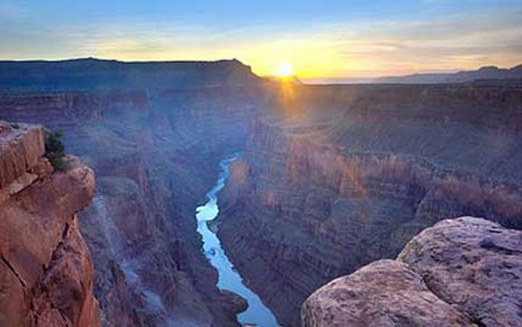
 Risks remain from uranium mining near the Grand Canyon Feb 22, 2012 High Country News By Heather Hansen, Red Lodge Clearing House. “….. There are over 5,000 active uranium claims within those one million acres. The withdrawal goes a long way toward protecting the watersheds, seeps and springs, sacred sites and critical wildlife habitat in the area because the only claims that can now be mined would have had to establish “valid existing rights,” before the 2009 moratorium. Yet even with these protections, the mines with existing rights — the ones allowed to operate despite the moratorium — may still have a significant negative impact on the Grand Canyon environment Continue reading
The economic benefits of renewable energy
Renewable energy has both environmental and business dividends, EPA administrator says at Stockton symposium Feb 22, 2012. Press of Atlantic City, By JOEL LANDAU, Staff Writer | GALLOWAY TOWNSHIP — Renewable energy is not only important for the country’s environmental future but the nation’s economic recovery as well, said U.S. Environmental Protection Agency Administrator Lisa Jackson… Continue reading
Praise from Putin for Soviet’s nuclear spies
Putin praises Cold War moles for stealing U.S. nuclear secrets By Steve Gutterman MOSCOW | Wed Feb 22, 2012 (Reuters) – Vladimir Putin praised Cold War-era scientists on Thursday for stealing U.S. nuclear secrets so that United States would not be the world’s sole atomic power, in comments reflecting his vision of Russia as a counterweight to U.S. power. Continue reading
How the nuclear lobby’s devious marketing distorts “incentives”
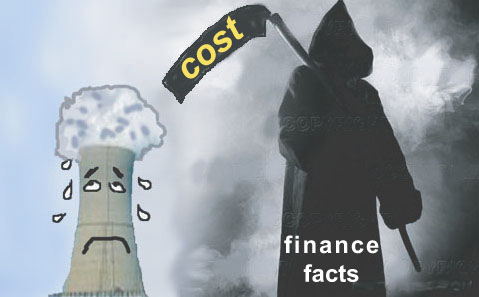 the NRC’s decision on Vogtle was “a non-event” because, he said, “The morning after the license was issued, nobody on Wall Street woke up and said, ‘Hey! Now I’m going to buy in!'” The licensing decision had, he said, “no effect on the economics.”
The Nuclear Industry’s Answer to Its Marketplace Woes, Greentech media Construction Work in Progress (CWIP) financing shifts the risks of nuclear energy to utility ratepayers. HERMAN K. TRABISH: FEBRUARY 22, 2012 “……..An example of incentive distortion is “the sunk-costs argument” now being used by Southern Company for the Vogtle reactors under development in Georgia with CWIP financing. Construction there is reportedly both behind schedule and over budget. Southern Company, Cooper said, is arguing that, with as much as $4 billion in sunk costs, “It’s cheaper to finish this project than to start something else.”
Some nuclear developers, he added, will simply tell regulators that have authorized the spending of billions in ratepayer funds, “If you don’t give me the next $50 million, I’m going to abandon this project.” Continue reading
Caution advised on international action about Iran’s nuclear plans
Russia warns against ‘hasty conclusions’ over Iran NewsDay February 22, 2012
GEORGE JAHN (Associated Press) VIENNA – – Russia said Wednesday the world should not draw “hasty conclusions” over Iran’s most recent rebuff of U.N. attempts to investigate allegations the Islamic Republic hid secret work on atomic arms, but the U.S. and its allies accused Tehran of nuclear defiance. Continue reading
San Clemente residents want independent radiation monitoring of San Onofre nuclear plant
Chaos in information after the Fukushima nuclear accident
Fukushima Disaster Left U.S. NRC Confused, Documents Show Bloomberg, February 22, 2012, “…….More than 3,000 pages of transcripts released yesterday by the NRC show the agency was struggling to assess the severity of Japan’s nuclear disaster, even as it gave the White House a recommendation for U.S. citizens to evacuate within 50 miles (80 kilometers) of the damaged reactors. Continue reading
A Jewish plea for sanity on Iran
The only realistic option is to allow Iran to enrich uranium in return for enhanced oversight and inspection of its nuclear program.
Leaders of Cleveland’s Jewish community urgently need to promote discussion of this best option for Israel and the U.S. before it is too late.

 Allow Iran to enrich uranium, http://www.clevelandjewishnews.com/opinion/op-eds/article_56abe920-5c9b-11e1-88cc-001871e3ce6c.html Cleveland Jewish News, February 17, 2012 Norman Robbins If you’re pro-Israel and want to prevent Iran from building a nuclear weapon, it’s time to leave the U.S./Israeli echo chamber that gives only two ineffective options – more sanctions or war.
First, some background. It is vitally important to distinguish between nuclear “break-out” capability and the actual building of a nuclear weapon. As long as Iran is not attacked, it has many reasons to achieve nuclear capability but not manufacture.
An attack on Iran by nuclear powers such as Israel and the U.S. in the absence of concrete evidence of actual nuclear bomb manufacture would violate international law and be intensely criticized by most of the world. It would legitimize a subsequent crash-program of bomb-making by Iran, as many experts anticipate. Therefore, not making a bomb actually serves Iran as a better deterrent than manufacture, which would cross an obvious “red line.”
In addition, Iran has genuine religious compunctions about building a weapon of mass destruction, as it showed by choosing not to use chemical weapons during the Iran-Iraq war , by Ayatollah Khamenei’s fatwa against nuclear weapons and by Iran’s support of a nuclear-free Middle East. Also, it is inconceivable that Iran would pre-emptively use a nuclear weapon against Israel, when it would kill huge numbers of Palestinians, contaminate Islam’s third-most holy site, enrage the entire Muslim world, and suffer Israel’s terrible retaliation. In fact, three directors of Israel’s intelligence (Ephraim Halevy, Meir Dagan and Tamir Pardo), who should know best, have said that Iran poses no “existential” threat to Israel. Continue reading
India’s peaceful, fasting, anti nuclear protestors face armed police
 Around 500 police personnel were deployed near the road leading to
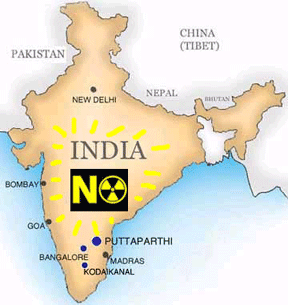 the project site on Monday and commandos have been positioned at the main gate of the KKNPP premises with automatic weapons.
Anti-nuclear protesters embark on 72-hour fast, THE HINDU, 22 Feb 2012 P. SUDHAKAR Even as a two-member International Atomic Energy Agency (IAEA) team is camping at the Kundakulam Nuclear Power Project site for a routine annual review of reactors that fall under IAEA monitoring, anti-nuke protesters have announced a 72-hour-long fast in protest against the State Experts’ Panel convener S. Iniyan’s assertions that the panel members would not meet the protesting villagers.
“The 72-hour long struggle will commence from Monday midnight as Maha Sivaratri falls on this day. Continue reading
1 This Month
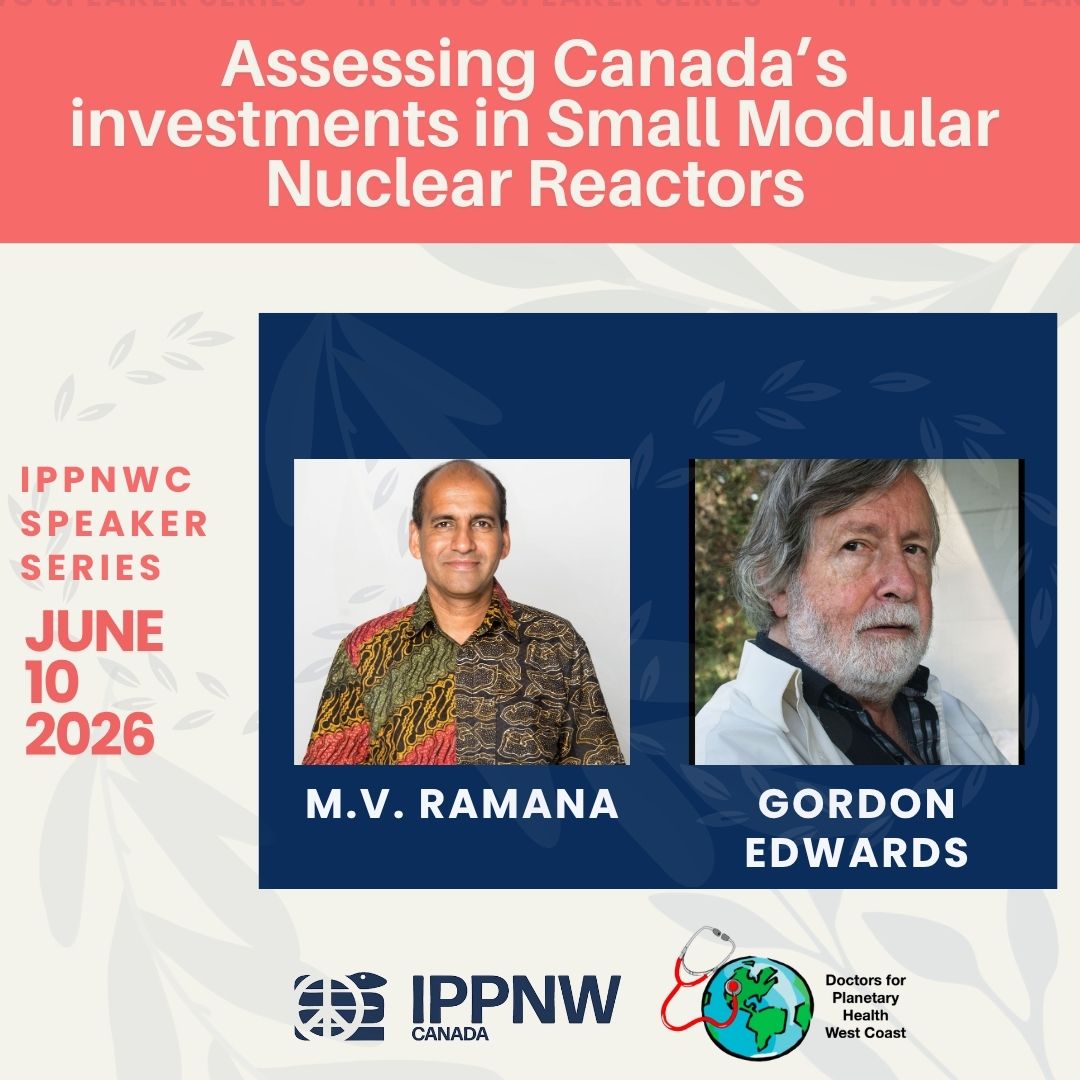
10 June – Assessing Canada’s Investments in Small Modular Nuclear Reactors – https://zoom.us/meeting/register/IiqHA5feRhaEBycOLNTJlA#/registration


Cuba Is Not a Failed State – It Is a Besieged State
PETITION: “Global Appeal to Endorse Palestinian Right of Return of Refugees”
To see nuclear-related stories in greater depth and intensity – go to https://nuclearinformation.wordpress.com
-
Archives
- June 2026 (89)
- May 2026 (306)
- April 2026 (356)
- March 2026 (251)
- February 2026 (268)
- January 2026 (308)
- December 2025 (358)
- November 2025 (359)
- October 2025 (376)
- September 2025 (257)
- August 2025 (319)
- July 2025 (230)
-
Categories
- 1
- 1 NUCLEAR ISSUES
- business and costs
- climate change
- culture and arts
- ENERGY
- environment
- health
- history
- indigenous issues
- Legal
- marketing of nuclear
- media
- opposition to nuclear
- PERSONAL STORIES
- politics
- politics international
- Religion and ethics
- safety
- secrets,lies and civil liberties
- spinbuster
- technology
- Uranium
- wastes
- weapons and war
- Women
- 2 WORLD
- ACTION
- AFRICA
- Atrocities
- AUSTRALIA
- Christina's notes
- Christina's themes
- culture and arts
- Events
- Fuk 2022
- Fuk 2023
- Fukushima 2017
- Fukushima 2018
- fukushima 2019
- Fukushima 2020
- Fukushima 2021
- general
- global warming
- Humour (God we need it)
- Nuclear
- RARE EARTHS
- Reference
- resources – print
- Resources -audiovicual
- Weekly Newsletter
- World
- World Nuclear
- YouTube
-
RSS
Entries RSS
Comments RSS
 nuclear-news