Dick Smith calls the bluff on new nuclear technology scheme
 “I predict that Mr Rossi will delay and delay in producing machines or in getting a proper scientific test done, while behind the scenes more and more people will be investing. “
Dick Smith: “Rossi E-CAT … too fantastic to be true” Forbes, Mark Gibbs, 24 Feb 12, Recently Australian entrepreneur Dick Smith offerred Andrea Rossi $1,000,000 if he could prove that Rossi’s Energy Catalyzer (E-Cat) cold fusion (or Low Energy Nuclear Reaction) system actually works as claimed. Rossi immediately turned down the challenge. Continue reading
Japan’s intractable nuclear waste problem, and recycling is not the answer
Japan’s recycling policy is not only behind schedule, it is very expensive: according to official estimates, it would cost a staggering 19 trillion yen ($245 billion) to re-use waste reprocessed at Rokkasho over 40 years.

 Beyond Fukushima Japan faces deeper nuclear concerns Vancouver Sun, By RISA MAEDA, Reuters February 24, 2012 TOKYO – On a hillside in northern Japan, wind turbines slice through the cold air, mocking efforts at a nearby industrial complex to shore up the future of the demoralised nuclear power industry.
The wind-power farm at Rokkasho has sprung up close to Japan’s first nuclear reprocessing plant, a Lego-like complex of windowless buildings and steel towers, which was supposed to have started up 15 years ago but is only now nearing completion.
Dogged by persistent technical problems, it is designed to recycle spent nuclear fuel and partly address a glaring weakness in Japan’s bid to restore confidence in the industry, shredded last year when a quake and tsunami wrecked the Fukushima Daiichi power station to the south, triggering radioactive leaks and mass evacuations.
But the Rokkasho project is too little, too late, according to critics who say Japan is running so short of nuclear-waste storage that the entire industry risks shutdown within the next two decades unless a solution is found.
“You don’t build a house without a toilet,” said Jitsuro Terashima, president of the Japan Research Institute think tank and member of an expert panel advising the national government on energy policy after the Fukushima disaster…. Continue reading
Call to shut down Switzerland’s old Beznau nuclear plant

 Swiss environmental groups want Beznau nuclear plant shut Google News, (AFP) – 24 Feb 12 GENEVA — Switzerland’s Beznau nuclear plant will soon boast the “dubious record” of being the oldest nuclear plant in the world and should be shut down, a group of environmental organisations said Thursday.
The 15 organisations which include WWF Switzerland, Greenpeace, Fokus Anti-Atom and various chapters of the Green Party, noted that Oldbury in England, inaugurated in 1967, will shut down next week. They said Beznau should also be shut down.
“Many security problems show that Beznau has run its course,” said the organizations in a joint statement about the nuclear plant that began operating in 1969.
They said there are cracks in the mantle of the reactor and in the steel containment shell, something strongly denied by Axpo, the energy company that operates Beznau. “As a precaution the lid of the reactor is to be changed, but there is no crack,” said an Axpo spokeswoman.
Beznau is scheduled for decommissioning in 2019 after 50 years of operation. Last September, the Swiss Parliament approved a nuclear phase-out for the country’s five nuclear reactors, due to be decommissioned by 2034.
http://www.google.com/hostednews/afp/article/ALeqM5iNboOs4ir0vGEj7pkKhu4r6ryvQw?docId=CNG.72ca66ee1a4afc263528e0bb35442cac.1b1
55,000 Osaka residents want plebiscite on nuclear power
 Hashimoto’s opposition a big hurdle in Osaka nuclear plebiscite drive, Japan Times, By ERIC JOHNSTON Staff writer, 24 Feb 12, OSAKA — Efforts by a citizens’ group to hold a plebiscite in Osaka on the future of nuclear power hit a major stumbling block when Mayor Toru Hashimoto formally announced his opposition to the plan this week.
Earlier this month, the group pushing for a plebiscite to allow residents to vote on whether to abolish local atomic power plants submitted a petition with the signatures of more than 55,000 Osaka residents eligible to vote. The total is more than the number required to force the municipal assembly to vote on whether to hold the referendum. Continue reading
Nuclear bombing: find out how your city would fare – with NUKEMAP
Nukemap: Shall we play a game? cnet, by Daniel Terdiman February 23, 2012
Tool shows what would happen if history’s most notorious nuclear weapons were dropped on different cities. It’s scary and sobering–and more than a million people have used it. Want to play god much?

With Nukemap, a new tool that lets anyone test out–on a Google Map–the effects of some of history’s most famous nuclear explosions on cities around the world, you can. Continue reading
Confusing schoolchildren with anti science, climate denialism
Don’t cloud young minds http://www.newscientist.com/article/mg21328533.600-dont-cloud-young-minds.html New Scientist, 22 February 2012 THERE is a strong sense of déjà vu about what is emerging over leaked emails from the Heartland Institute. The US libertarian think tank, which argues that global warming is not primarily caused by humans, intends to develop teaching material that would cast doubt on the scientific consensus on climate change. Its approach is sadly reminiscent of fogging tactics employed by the tobacco industry and creationists

Children should be taught honestly what we know about climate change, as well as what we don’t know and where the uncertainties lie. Yet a plan outlined in documents allegedly from Heartland would build a curriculum around statements such as “whether humans are changing the climate is a major scientific controversy” (see “Climate sceptics may find fertile ground in US schools“). This is to create controversy where none exists.
There simply is no credible scientific alternative to the theory that humans are warming the atmosphere. In 2010, a survey of 1372 climate scientists found that 97 per cent of those who publish most frequently in the field were in no doubt. They agreed with the Intergovernmental Panel on Climate Change that human activity had caused most of Earth’s warming over the second half of the 20th century. By comparison with these scientists, the climate expertise of the small group of contrarians was substantially lower (Proceedings of the National Academy of Sciences, DOI: 10.1073/pnas.1003187107). Continue reading
A smartphone app to measure ionising radition
 DIY Geiger counter smartphone app to measure radiation 23 February 2012 Kat Austen, CultureLab editor In the wake of Japan’s Fukushima disaster, amidst a climate of general mistrust of government radiation data, a number of crowdsourced initiatives for mapping radiation levels sprang up, such as Japan Geigermap, in which radiation readings from citizens are aggregated and displayed online using a web service called pachube.
But most Geiger counters for personal use cost around $200, prohibiting many from measuring radiation for themselves. That’s where non-profit organisation radiation-watch.org has stepped in.
They have devised a way for people to construct their own smartphone-compatible Geiger counter at home. Pocket Geiger uses 8 photodiodes to detect the radiation, aluminium foil to screen alpha and beta particles, and a plastic “Frisk” sweet box for the housing. The total cost is just $46.
Ishigaki started the project in June last year, and with the help of supporting scientists and a team of hackers he has developed the self-assembly Geiger counter and app to allow anyone to measure radiation levels in their home or neighbourhood and upload them to a central server, where they can be visualised on a map.
The project has now grown to over 10,000 users, but due to privacy issues the maps can only be viewed within the radiation-watch.org community.
Continuing to develop the technology, the team have recently launched the Pokega Type2. The first Geiger counter without an internal battery, the Pokega Type2 uses the same technology as its predecessor, except that it uses the smartphone as a source of power.
Costing just $65, the Pokega Type2 was developed with the help of a variety of external organisations, such as Japan’s High Energy Accelerator Research Organization and the Dutch Metrology Institute. http://www.newscientist.com/blogs/onepercent/2012/02/diy-geiger-counter-smartphone.html
Expand public’s right to question nuclear safety, says Nuclear Regulatory Commission chief
 Nuclear Regulatory Commission chief sides with Pilgrim watchdog group, By Christopher Burrell, Enterprise News.com, The Patriot Ledger Feb 23, 2012 In a surprising move to side with critics of the Pilgrim nuclear power plant, the chairman of the Nuclear Regulatory Commission is arguing to expand, not limit, the public’s chance to ask plant-safety questions in light of last year’s Fukushima Dai-ichi disaster in Japan.
The Fukushima nuclear plant has a similar reactor to the one at Pilgrim, which has been trying for six years to win approval from the NRC for a 20-year extension of its operating license. “Given the significance of that accident (at Fukushima) and the potential implications for the safety of our nuclear reactors, we should allow members of the public to obtain hearings on new contentions on emerging information,” NRC Chairman Gregory Jaczko
wrote in a dissenting opinion released Wednesday. Jaczko was the sole dissenter on the five-member commission, which is appointed by the president. Continue reading
Europe’s clean energy firms get together to lobby EU
Progressive energy firms launch new climate alliance EurActve 23 Feb 12, Eight of Europe’s largest energy companies have launched a clean energy alliance with a call for the EU to set legally enforceable targets for 2030 in emissions reductions, renewable energy and energy efficiency.
The informal alliance describes itself as “a loosely-founded coalition of progressive energy companies [that] share the same views on accelerated transformation of the energy system”.
Its members are Acciona (Spain), DONG Energy (Denmark), EDP (Portugal), Eneco (the Netherlands), EWE (Germany), Public Power Corporation (Greece), Sorgenia (Italy) and SSE (UK).
“The lack of binding targets post-2020, an ETS failing to stimulate investment in renewables, and an outdated energy infrastructure, severely threaten to wreck the needed modernisation and decarbonisation of the European energy sector,” the group says in a strongly worded open letter to the European Commission.
“We call on the Commission and the Presidency of the Council to… decide on legal mandates for binding 2030 renewables, CO2, and energy efficiency targets,” the letter continues….
http://www.euractiv.com/climate-environment/progressive-energy-firms-launch-new-climate-alliance-news-511048
Asia and Pacific powering ahead with decentralised renewable eneergy
The Asian Development Bank (ADB), United Nations Economic and Social Commission for Asia and the Pacific (ESCAP) and the United Nations Environment Program (UNEP) released the report “Green Growth, Resources, and Resilience” this week.
 On the road to green economies, Malaya Business Insights, 24 Feb12, Net metering is empowering electric consumers in the Philippines. The scheme is embodied in the Philippines’ Renewable Energy Act of 2008 – considered to be the most comprehensive renewable energy law in Southeast Asia.
It allows electric consumers to sell power to the grid at an approved feed-in tariff and buy power as necessary at the normal retail tariff. The feed-in tariff will provide a guaranteed fixed price for at least 12 years for electricity produced from emerging renewable resources: wind, solar power, ocean, run-of-river hydropower, and biomass.
With net metering, the consumer generates electricity at the point of use, and is able to supply excess electricity generated into the grid, either earning revenue or reducing net payable consumption.
Net metering provides a regulatory basis for distributed and decentralized energy systems and at the same time provides a powerful incentive for end-use efficiency improvements. Net metering can be combined with feed-in-tariffs to promote renewable energy generation in decentralized applications. Continue reading
73,000 square metres of concrete to cover Fukushima seabed radiation
 Tepco to cement Fukushima seabed to stem
  radiation Times Live, Sapa-AFP | 22 February, 2012 The operator of Japan’s tsunami-crippled nuclear plant is to cover a large swathe of seabed near the battered reactors with cement in a bid to halt the spread of radiation, the company said Wednesday.
A clay-cement compound will be laid over 73,000 square metres (785,000 square feet) of the floor of the Pacific in front of the Fukushima Daiichi plant on the nation’s northeast coast, said Tokyo Electric Power Co. (TEPCO).
The area is equivalent to around 10 football pitches. “This is meant to prevent further contamination of the ocean… as sample tests have shown a relatively high concentration of radioactive substances in the sea soil in the bay,” a company spokeswoman said….
Contaminated water from the plant leaked into the sea and radioactive particles concentrated on the seabed. Scientists fear ocean currents could pollute areas further afield.
The cover will be 60 centimetres (24 inches) thick, with 10 centimetres expected to be eaten away by seawater every 50 years, the TEPCO official said. http://www.timeslive.co.za/world/2012/02/22/tepco-to-cement-fukushima-seabed-to-stem-radiation
Anti nuclear protestors will target UK’s Hinkley nuclear site

 EDF’s U.K. Hinkley Nuclear Power Site Faces Protests Next Month February 22, 2012, By Catherine Airlie Feb. 22 (Bloomberg) — Electricite de France SA’s Hinkley Point nuclear power station in southwest England will next month be targeted by protestors against new reactors in the U.K.
The Stop New Nuclear Alliance, a grouping of campaigners who oppose nuclear power stations, plans to blockade the station for 24 hours from about 5 p.m. on March 11, Zoe Smith, a campaigner helping arrange the protest, said by telephone from Bristol today. Protesters will gather at the site from midday, she said.
“We aren’t intending to stop production but we are going to blockade the entrance,” preventing vehicles from entering the site. “We’re planning to surround the power station,” she said. The group is against EDF’s plans to build a new nuclear power station at the site,
next to the current one, which has capacity of 860 megawatts……
http://www.businessweek.com/news/2012-02-22/edf-s-u-k-hinkley-nuclear-power-site-faces-protests-next-month.html
Ratepayers to take all financial risks, nuclear company to take profits!
 “It exposes ratepayers to all the risk.” The nuclear industry’s answer to its post-Fukushima challenges, he said, “is to simply rip out the heart of consumer protection and turn the logic of capital markets on their head.”
His message to policymakers is simple, Cooper said. “This is an investment you would not make with your own money. Therefore, you should not make it with the ratepayers’ money.”
The Nuclear Industry’s Answer to Its Marketplace Woes, Greentech media Construction Work in Progress (CWIP) financing shifts the risks of nuclear energy to utility ratepayers. HERMAN K. TRABISH: FEBRUARY 22, 2012 A sign of the nuclear industry’s difficult situation in the aftermath of Fukushima is a proposal before the Iowa legislature that would allow utility MidAmerican Energy Holdings, a subsidiary of Warren Buffett’s Berkshire Hathaway, to build a new nuclear facility in the state using Construction Work in Progress (CWIP) financing (also called advanced cost recovery).
“Investment in nuclear power is the antithesis of the kind of investments you would want to make under the current uncertain conditions,” explained nuclear industry authority Mark Cooper, a senior fellow for economic analysis at Vermont Law School’s Institute for Energy and the Environment. “They cannot raise the capital to build these plants in normal markets under the normal regulatory structures.”
CWIP would allow the utility to raise the money necessary to build a nuclear power plant by billing ratepayers in advance of and during construction.
“Construction Work in Progress was intended to circumvent the core consumer protection of the regulatory decision-making process,” Cooper explained. “It exposes ratepayers to all the risk.” The nuclear industry’s answer to its post-Fukushima challenges, he said, “is to simply rip out the heart of consumer protection and turn the logic of capital markets on their head.”
The Staff of the Iowa Utilities Board concurred with Cooper. Its recommendations to the legislature followed his arguments in “Nuclear Socialism Comes to the Heartland of America,” his most recent paper on nuclear economics. In it, Cooper found that CWIP could increase average utility bills as much as $70 per month “before any power is generated by the reactors.”
His message to policymakers is simple, Cooper said. “This is an investment you would not make with your own money. Therefore, you should not make it with the ratepayers’ money.”
CWIP exposes ratepayers to all the risks inherent in nuclear energy, Cooper explained. Continue reading
Independent radiation monitoring – call adds to San Onofre’s woes
Both reactors at the Southern California Edison-run plant remain offline. Unit 3 was pulled from service January 31 after a radiation leak, prompting the Nuclear Regulatory Commission last week to call for a reactor inspection. Unit 2 was taken offline for scheduled maintenance and upgrades in January and has required the plugging of some of its steam generator tubes.
On January 27, a contract plant worker fell into a reactor pool and an ammonia leak November 1 forced SCE to issue an NRC-required alert. A “follow-up focused baseline inspection” must now be performed on Unit 3. San Clemente Times – Nuclear Critics Continue Pleas for Independent Radiation Monitors Cancer Studies
Questions on Australian company Lynas’ radioactive wastes plan in Malaysia
 The Lynas Advanced Material project will produce 20,000 tones of radioactive waste, which is 10 times more than the Asian Rare Earth factory in Bukit Merah.
1. Why didn’t Lynas set-up the rare earth plant near its source of extraction in Western Australia as it would have saved a huge amount of money in shipping costs?
2. Why didn’t Lynas obtain an approval from the authorities in Western Australia to set-up the plant?
3. Could the authorities in Western Australia be concerned about the possible radiation leaks, health hazards, birth defects, lead poisoning and other complications?
4. Shouldn’t this in itself raise a red flag with the Malaysian authorities?
 Gov’t fails to learn from Bkt Merah tragedy http://www.freemalaysiatoday.com/2012/02/22/govt-fails-to-learn-from-bkt-merah-tragedy/ Free Malaysia Today February 22, 2012 Is the RM700 million in Lynas investment more important to the government than the lives of its citizens? By Charles Santiago Severe birth defects, eight leukemia cases over five years in a community of 11,000, tears and anguish of the poor people from a largely shoe-making community – these are not news headlines. Neither is it the plot of a movie.
These are the consequences of carelessly allowing the Asian Rare Earth factory to be built in Bukit Merah, Perak in 1982. When Mitsubishi Chemical started operating its rare earth factory, the villagers complained of choking sensation, pungent smell, coughs and colds. The community also saw a sharp rise in the cases of infant deaths, congenital disease, leukemia and lead poisoning. While US$100 million is estimated to be the clean-up cost of the factory and dump site, the largest in the rare earth industry, it has not wiped out the memories and heartache of the villagers who lost their children and loved ones.
But 30 years later, the government has again allowed a rare earth factory to be set-up by Lynas Corporation Ltd in Gebeng, Kuantan. This means the government has waved the green flag with full knowledge of the possible consequences and deadly effects. Continue reading
1 This Month
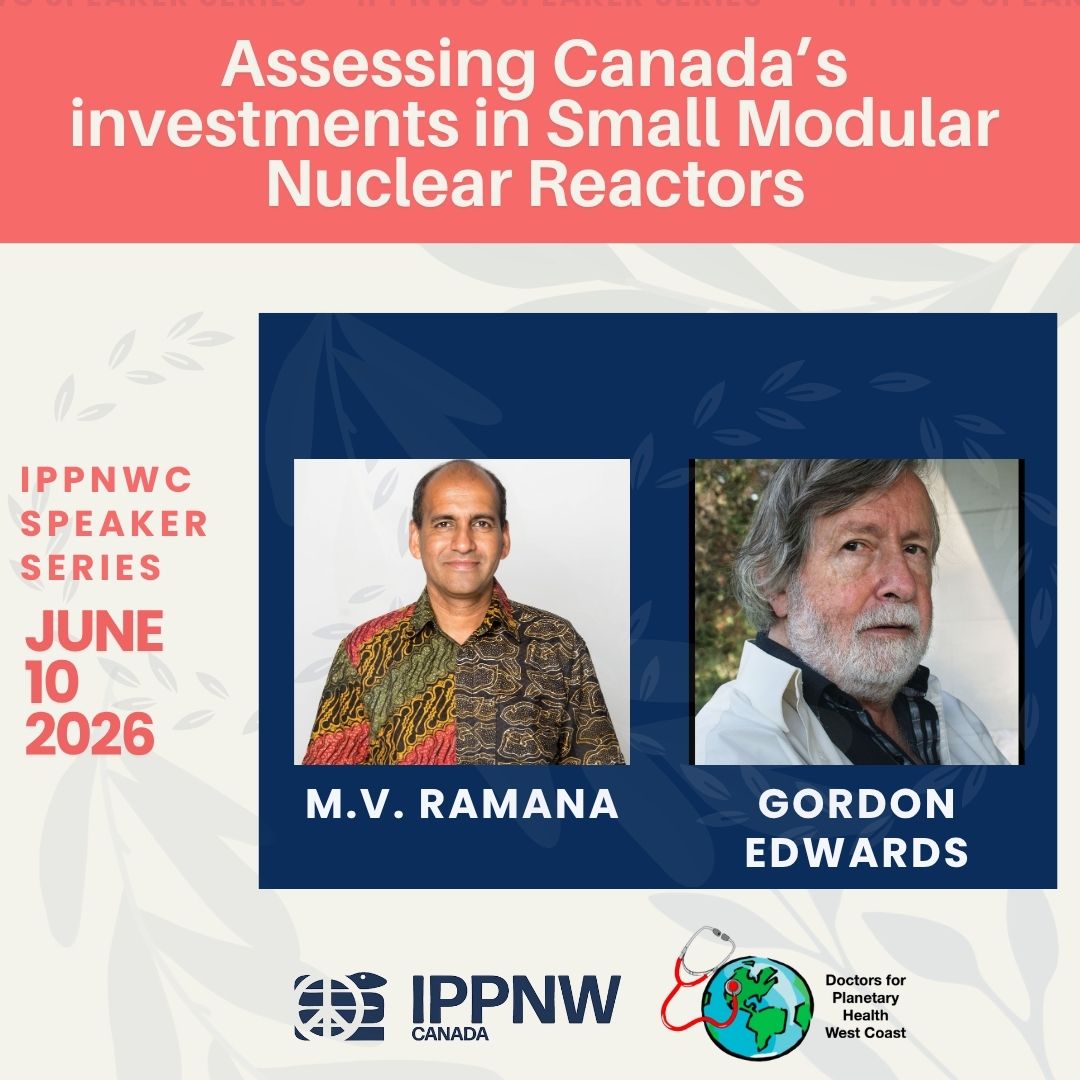
10 June – Assessing Canada’s Investments in Small Modular Nuclear Reactors – https://zoom.us/meeting/register/IiqHA5feRhaEBycOLNTJlA#/registration


Cuba Is Not a Failed State – It Is a Besieged State
PETITION: “Global Appeal to Endorse Palestinian Right of Return of Refugees”
To see nuclear-related stories in greater depth and intensity – go to https://nuclearinformation.wordpress.com
-
Archives
- June 2026 (89)
- May 2026 (306)
- April 2026 (356)
- March 2026 (251)
- February 2026 (268)
- January 2026 (308)
- December 2025 (358)
- November 2025 (359)
- October 2025 (376)
- September 2025 (257)
- August 2025 (319)
- July 2025 (230)
-
Categories
- 1
- 1 NUCLEAR ISSUES
- business and costs
- climate change
- culture and arts
- ENERGY
- environment
- health
- history
- indigenous issues
- Legal
- marketing of nuclear
- media
- opposition to nuclear
- PERSONAL STORIES
- politics
- politics international
- Religion and ethics
- safety
- secrets,lies and civil liberties
- spinbuster
- technology
- Uranium
- wastes
- weapons and war
- Women
- 2 WORLD
- ACTION
- AFRICA
- Atrocities
- AUSTRALIA
- Christina's notes
- Christina's themes
- culture and arts
- Events
- Fuk 2022
- Fuk 2023
- Fukushima 2017
- Fukushima 2018
- fukushima 2019
- Fukushima 2020
- Fukushima 2021
- general
- global warming
- Humour (God we need it)
- Nuclear
- RARE EARTHS
- Reference
- resources – print
- Resources -audiovicual
- Weekly Newsletter
- World
- World Nuclear
- YouTube
-
RSS
Entries RSS
Comments RSS
 nuclear-news