Political and public opposition to Lynas’ rare earths plant for Malaysia
 Opposition leader Anwar Ibrahim said his alliance would seek an emergency motion in Parliament to urge the government to cancel the project. He also pledged the opposition would scrap the plant if it wins national polls expected by June.
Malaysia’s last rare earth refinery by Japan’s Mitsubishi group, in northern Perak state, was closed in 1992 following protests and claims that it caused birth defects and leukemia among residents. It is one of Asia’s largest radioactive waste cleanup sites.

 3,000 Malaysians rally against Australian-built rare earth plant amid radiation fears Washington Post, By Associated Press, February 25 KUALA LUMPUR, Malaysia — Some 3,000 Malaysians staged a protest Sunday against a rare earth refinery being built by Australian miner Lynas over fears of radioactive contamination.
It marked the largest rally against the $230 million plant in eastern Malaysia, and could pose a headache to the government ahead of national elections widely expected this year. Authorities recently granted Lynas a license to operate the first rare earths plant outside China in years. The plant in Pahang state has been the subject of heated protests over health and environmental risks posed by potential leaks of radioactive waste…..
Opposition leader Anwar Ibrahim said his alliance would seek an emergency motion in Parliament to urge the government to cancel the project. He also pledged the opposition would scrap the plant if it wins national polls expected by June. Continue reading
Coming geological extreme events (not good for nuclear reactors)
Climate change may stir geological mayhem  http://www.newscientist.com/blogs/culturelab/2012/02/climate-change-may-stir-geological-mayhem.html New Scientist, 23 February 2012 Fred Pearce, consultant In Waking the Giant: How a changing climate triggers earthquakes, tsunamis, and volcanoes, geologist Bill McGuire warns we may be waking primordial monsters
IN 2006, London geologist Bill McGuire argued in New Scientist that global warming would trigger epidemics of volcanic eruptions, earthquakes and tsunamis. Now he’s written the book. The story is even scarier writ large….. There is now abundant evidence that catastrophic outbursts of geological activity accompanied past periods
of rapid climate change, for instance, when we shifted in and out of ice ages. The stresses and strains of rising and falling sea levels and the creation and loss of ice sheets triggered these outbursts. Climate change, he says, may already be shaking up the Earth anew. Continue reading
India’s nuclear deal for the benefit of foreign commercial interests
 The “foreign hand” argument perhaps applies more to the government than to the people, Sarma said. “Is it not the foreign hand that was responsible for compelling the UPA government to push through the Indo-US nuclear deal to serve the commercial interests of another country more than promoting self-reliance?
 Anti-nuke groups slam PM remarks Deccan Herald, HYDERABAD/CHENNAI, Feb 26, 20012, Ex-secretary rubbishes foreign hand theory Prime Minister Manmohan Singh’s remarks that some foreign NGOs were behind the agitation against the Kudankulam Nuclear Power Project (KNPP) were rubbished by a former energy secretary at the Centre and drew a strong backlash with anti-nuclear groups organising a big rally in Chennai on Sunday.
Singh’s remarks in a TV interview that some US and Scandinavian NGOs obstructed India’s nuclear energy programme in the backdrop of the seven-month long agitation the nuclear power project in Tamil Nadu drew a sharp retort from former Union energy secretary E A S Sarma in Vishakhapatnam. He trashed the Prime Minister’s talk of “foreign hand” and made out a strong case for suspending the works on nuclear plants in the interests of the country’s future and safety. Continue reading
Analysis of the entrenched interests that control Japan’s nuclear industry
Containing Fukushima: Saving Japan From Itself (Part I) Huffington Post, K.T. Hiraoka Student of Japan working in the public sector 02/25/2012 The disaster at Fukushima last year exposed how entrenched interests among key decision-makers have contaminated Japanese society, endangering the long-term prosperity of Japan. These special interests often do what is right for themselves, as opposed to what is in the best interests of the Japanese people.

In this two-part series, discussion on what has transpired over the past twelve months as a result of decisions made related to the Fukushima disaster (Part I) will lead to a look at decision-making during the crisis in subsequent weeks and months that have passed (Part II). As the current decision-making system in Japan increasingly works to the detriment of Japanese society, what is needed instead is a more transparent, honest, and benevolent decision-making system that listens to the wishes of the people and responds to it…. http://www.huffingtonpost.com/kt-hiraoka/fukushima-anniversary_b_1299832.html
Containing Fukushima: Saving Japan From Itself (Part II) Huffington Post, K.T. Hiraoka Student of Japan working in the public sector 02/26/2012 Yesterday, in Part I of this series, we looked at “nakama” decision-making in Japan during the initial days of the Fukushima crisis. In Part II, the discussion continues with more evidence that the current decision-making system in Japan needs reform.
In the weeks and months since the March 2011 disaster, a plethora of examples have come to light confirming that the danger to Japan’s future lies from within. Throughout the peak of the crisis and as a result of the core meltdowns, Japan’s Iron Triangle continued to withhold information about the true nature of the massive radiation exposure in to the air and sea and on to the land throughout Japan. In the months following the huge radiation releases, consistent ‘underestimations’ of both the amount and types of radiation released came to light.
Making matters worse, it was confirmed earlier this year that none of the nuclear task forces in charge of making critical decisions during the crisis bothered to keep either written or verbal records of their meetings, raising questions about true intent. … http://www.huffingtonpost.com/kt-hiraoka/fukushima-anniversary_b_1302306.html
Indian govt uses funding stop to counter NGO anti nuclear protest
 India freezes aid group funds over nuclear protests Business Recorder, FEBRUARY 26, 2012 India said Saturday it had frozen the assets of three non-profit groups it alleges were diverting foreign aid funds to fuel protests against plans to build two atomic power stations.
The country’s move to construct two giant nuclear power stations in the southern state of Tamil Nadu and one in the western state of Maharashtra has been thrown into disarray following the protests by villagers and activists.
A senior officer at the prime minister’s office told AFP that the home ministry had frozen the accounts of three non-government organisations.
Poverty prevents Nigerians from legal wins over mining corporations
 Nigerians ‘too poor to sue over corporate abuse’, News 24 2012-02-22 Geneva – Victims of environmental disasters or other abuses inflicted by corporations in Nigeria are being denied justice as they are too poor or do not know how to seek legal recourse, jurists said on Wednesday.
“Poor rural victims of corporate human rights abuse are usually unaware of their legal rights and don’t have the financial resources to file court process, gather information and evidence, and afford legal services,” said Carlos Lopez, the International Commission of Jurists’ senior legal advisor in a report.
Even though a legal aid scheme exists, it “suffers from chronic underfunding”. “As a result, it fails to help those most in need to access judicial remedies,” added Lopez.
The problem is illustrated by the small numbers of litigations against corporations, despite several instances of serious pollution generated over the decades of oil or mineral extraction. Of the few that make it to court, even fewer manage to obtain rulings in favour of victims, noted the report…….
The UN environment agency had said that decades of extensive oil pollution in the Ogoniland region – which lies in the Niger Delta – may require the world’s biggest ever clean-up. ….
http://www.news24.com/Africa/News/Nigerians-too-poor-to-sue-over-corporate-abuse-20120222
Hasty and secretive nuclear power move in South Africa

 R300bn nuclear tender shouldn’t be sneaked through – DA, Politics web, 26 February 2012 Lance Greyling says nuclear build programme must be properly scrutinised in parliament Nuclear Build Programme must be debated in Parliament In the budget review for 2012, a price tag of R300 billion appears for Eskom’s nuclear fleet build programme. The programme is designed to deliver 9,600MW of nuclear capacity by 2029 and is described as being in the “final stages of consideration before financial proposals can be determined”
This is all rather curious.
The President did not mention the R300 billion nuclear build programme in his State of the Nation Address. The Minister of Finance did not mention it explicitly in his Budget Speech. Now, apparently, it is in its “final stages”.
There has been no debate in Parliament and no opportunity for the public to scrutinise a nuclear programme that could have a very real impact on all of our lives. Not only will it cost nearly a third of our annual budget, but there are serious safety and environmental concerns to consider.
Given that the shadow of Arms Deal corruption continues to darken our democracy, government should be extra careful about the nuclear build programme. It must err on the side of more transparency, not less. For this reason, the DA will table a motion to debate the nuclear build programme in Parliament at the first opportunity.
From a technical point of view, an Environmental Impact Assessment (EIA) and Feasibility study for the programme should be in the public domain before any project of this magnitude is seriously considered. If a specific amount has already been allocated in the budget, the public has a right to see the evidence on which the budgetary allocation was decided…. http://www.politicsweb.co.za/politicsweb/view/politicsweb/en/page71654?oid=282389&sn=Detail&pid=71616
Rare earths plant a national issue as Malaysians increase opposition to it
the cost of decommissioning the plant 60 years later would be five times the cost of building it.
Lynas ‘devil’ waiting at every doorstep, Free Malaysia Today, Stephanie Sta Maria, February 22, 2012 “…..At a press conference organised ahead of Himpunan Hijau 2.0, the nationwide anti-Lynas rally this Sunday, the groups said that the severe repercussions of the Lynas Advanced Materials Plant (LAMP) has made it a national issue. Continue reading
India’s government, not the anti nuclear protestors, is promoting foreign interests
The question, Shankar says, is to address whether or not nuclear plants are safe. “If they are safe, why did the government agree to free the companies of liability for safety of people,” asks Shankar.
The power plant itself is a foreign entity. It is a Russian plant in Koodamkulam. So whose interest would it serve?”…
PM’s statement on foreign hands unites NGOs, divides govt, Ramesh clarifies freeze on BT brinjal done not under influence of NGOs Business Standard, Sreelatha Menon / New Delhi Feb 27, 2012, A finger of suspicion that Manmohan Singh pointed at non-governmental
organisations last week for pushing foreign agendas has united such bodies in the country, while leaving the government itself divided.
The prime minister’s remarks that foreign-funded NGOs were pushing alien agendas to thwart nuclear enterprises and biotechnology research in India have found the most vocal protests and denials coming not just from such not-for-profit organisations, but even from union rural development minister Jairam Ramesh. Ramesh, while responding to the matter, said yesterday that a moratorium he imposed on BT brimjal was not under the influence of NGOs. It was done, after taking into account the views of states, scientific opinion and the community, he added.
The remarks have created a wedge between the government and the civil society, while indicating that the country’s administration is itself split on key issues….. Continue reading
USA’s laughable “Nuclear Waste Confidence Rule”
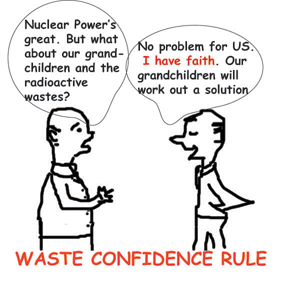 Public comments needed against NRC’s Nuclear Waste Confidence Game , Beyond Nuclear 25 Feb 12, The U.S. Nuclear Regulatory Commission (NRC) has requested public comments on its latest revision to its “Nuclear Waste Confidence Decision.” Please email your comments before March 19th to WCOutreach@nrc.gov in order to head off this latest round of a very dangerous “game being played” by NRC, which is doing the bidding of the nuclear power industry…..
The NRC’s “confidence” that on-site storage for 120 years (60 during reactors operations, 60 after reactor shutdown) is safe and secure would be laughable, if it weren’t so seriously wrong. 120 years is half as long as the United States has been an independent country (1776 to 2012, 236 years). A lot can go wrong in 120 years. NRC’s consideration of 200 to 300 years of on-site storage is even more preposterous. This is not “interim” or “temporary” on-site storage. This is de facto permanent on-site storage, in any common understanding of the term…..
BACKGROUND
First promulgated in 1984, NRC’s “Nuclear Waste Confidence Decision” claimed that by 2007, the U.S. would open one or more repositories for the permanent disposal of irradiated nuclear fuel. In the meantime, NRC expressed its “confidence” that irradiated fuel stored in pools or dry casks on-site would be done so safely and securely. This served as legal cover, carte blanche, for nuclear utilities to generate an unlimited amount of high-level radioactive waste, while blocking concerned citizens and environmental groups intervening in NRC proceedings from challenging new reactor license applications or old reactor license extensions on such grounds as the fact that there is no safe solution to the problem of radioactive waste management.
By 1990, NRC already had to “postpone” its “confidence.” It revised its “Confidence Decision” to now say that by 2025, at least one repository would be opened.
In December 2010, NRC revised its “Nuclear Waste Confidence Decision” yet again, to reflect the reality of the Obama administration’s wise decision to cancel the Yucca Mountain dump. NRC now declared no date certain for the opening of the first repository, but rather stated that on-site storage in pools and/or dry casks was safe for 120 years — 60 years during reactor operations, and 60 years after reactor shutdown. In addition, the five NRC Commissioners ordered their staff to study the potential for on-site storage lasting 200 to 300 years into the future. That explains NRC current request for public comments….
Please submit comments to WCOutreach@nrc.gov. You may also send comments through the U.S mail to: Christine Pineda, Project Manager; Mailstop EBB-2B2; Office of Nuclear Material Safety and Safeguards; U.S. Nuclear Regulatory Commission; Washington, DC 20555-0001 http://www.beyondnuclear.org/radioactive-waste-whatsnew/2012/2/23/public-comments-needed-against-nrcs-nuclear-waste-confidence.html
Japan banking on non-viable reprocessing, because it has nowhere to put nuclear wastes
the government has delegated the task of dealing with waste to the private sector, so there is no central decision-maker
 “Why does the government stick to the very costly recycle policy? That is because if they give it up, they should explain where a final repository will be located,”
 Beyond Fukushima Japan faces deeper nuclear concerns, Vancouver Sun, By RISA MAEDA, Reuters February 24, 2012 TOKYO“…..A DECENT BURIAL With Japan’s recycling efforts running so far behind the required pace
to deal with the waste problem, Japan needs to find another resting place for its waste, away from nuclear power plants, which are typically located on the coast.

But unlike France and the United States, the world’s biggest atomic power generators, Japan does not have much in the way of geologically stable and empty landscapes in which to bury nuclear waste for centuries. Given its population density is 10 times higher than the United States and almost three times higher than France, Japan faces a “not in my backyard” problem like no other big nuclear-power nation. Continue reading
Europe’s costly mess about burying the dead nuclear reactors
Auditors criticise decommissioning of nuclear reactors in Eastern Europe European Energy Review, By Hughes Belin, 24 Feb 12 The European Court of Auditors (ECA), which checks the management of EU money, has published a highly critical report on the management of the EU’s financial assistance for the decommissioning of eight nuclear reactors in Bulgaria (Kozloduy), Lithuania (Ignalina) and Slovakia (Bohunice).
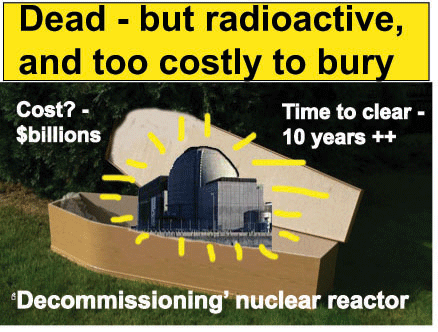
As one “Green” member of the European Parliament puts it, the ECA’s report shows ‘the enormous hidden costs of nuclear energy’. Continue reading
Kuwait scraps nuclear power project
 Kuwait abandons nuclear power option Feb. 23, 2012, KUWAIT CITY, Feb. 23 (UPI) –– Kuwait has decided to abandon civilian nuclear power production…. Kuwait is scrapping plans formulated last July to build four nuclear reactors by 2022.
Officials at the Kuwaiti government at the Kuwait Institute for Scientific Research made the announcement, Kyodo news agency reported Wednesday. Kuwait Institute for Scientific Research scientist Osama al-Sayegh and two colleagues said the Fukushima incident resulted in the public questioning the necessity of building nuclear power plants in oil-rich Kuwait.
There was also the question of where Kuwait would store the radioactive waste generated by the NPPs…… Read more: http://www.upi.com/Business_News/Energy-Resources/2012/02/23/Kuwait-abandons-nuclear-power-option/UPI-63001330021334/#ixzz1nQxkSo5S
Naomi Wolf on the future of nuclear power
Q&A with Naomi Wolf: America’s nuclear future, Guardian UK, 24 Feb 12, After the Fukushima disaster, Germany ditched nuclear power. So why has the US stopped worrying and learned to love nukes?
This week, Naomi wrote about nuclear power, nuclear weapons and nuclear safety, as the Obama administration prepares to go ahead with a new expansion of both a civilian nuclear power program and nuclear weapons-producing facilities.
Is America’s nuclear industry unsafe at any size? How will the US meet emissions targets and move beyond a fossil-fuel energy economy without nuclear power, as some environmental activists have accepted is necessary?
Naomi will be joining commenters for her weekly live webchat here in the discussion thread from 1pm till 2pm EST (6-7pm UK time). Commenting will be switched on then, and the thread will remain open afterwards. http://www.guardian.co.uk/commentisfree/cifamerica/2012/feb/24/qanda-naomi-wolf-americas-nuclear-future?newsfeed=true
At Nuclear Security Summit, japan will raise problem of terrorist attacks on nuclear plants
 Japan to propose backup power sources in event of nuclear terrorism, Mainichi Daily News 25 Feb 12, TOKYO (Kyodo) –– The government intends to propose at a global nuclear security summit next month the creation of backup systems to secure power supplies in the event that electricity sources are lost due to terrorist attacks against nuclear plants, government sources said Thursday.
Japan intends to make the proposal at the Nuclear Security Summit to be held March 26 to 27 in Seoul, and incorporate it in a document to be adopted at the meeting, the sources said.
The government, drawing lessons from the nuclear crisis at the Fukushima Daiichi power plant, will also emphasize the need to map out detailed procedures on how to deal with potential terrorist attacks on nuclear plants, they said…… http://mdn.mainichi.jp/mdnnews/news/20120224p2g00m0dm022000c.html
1 This Month
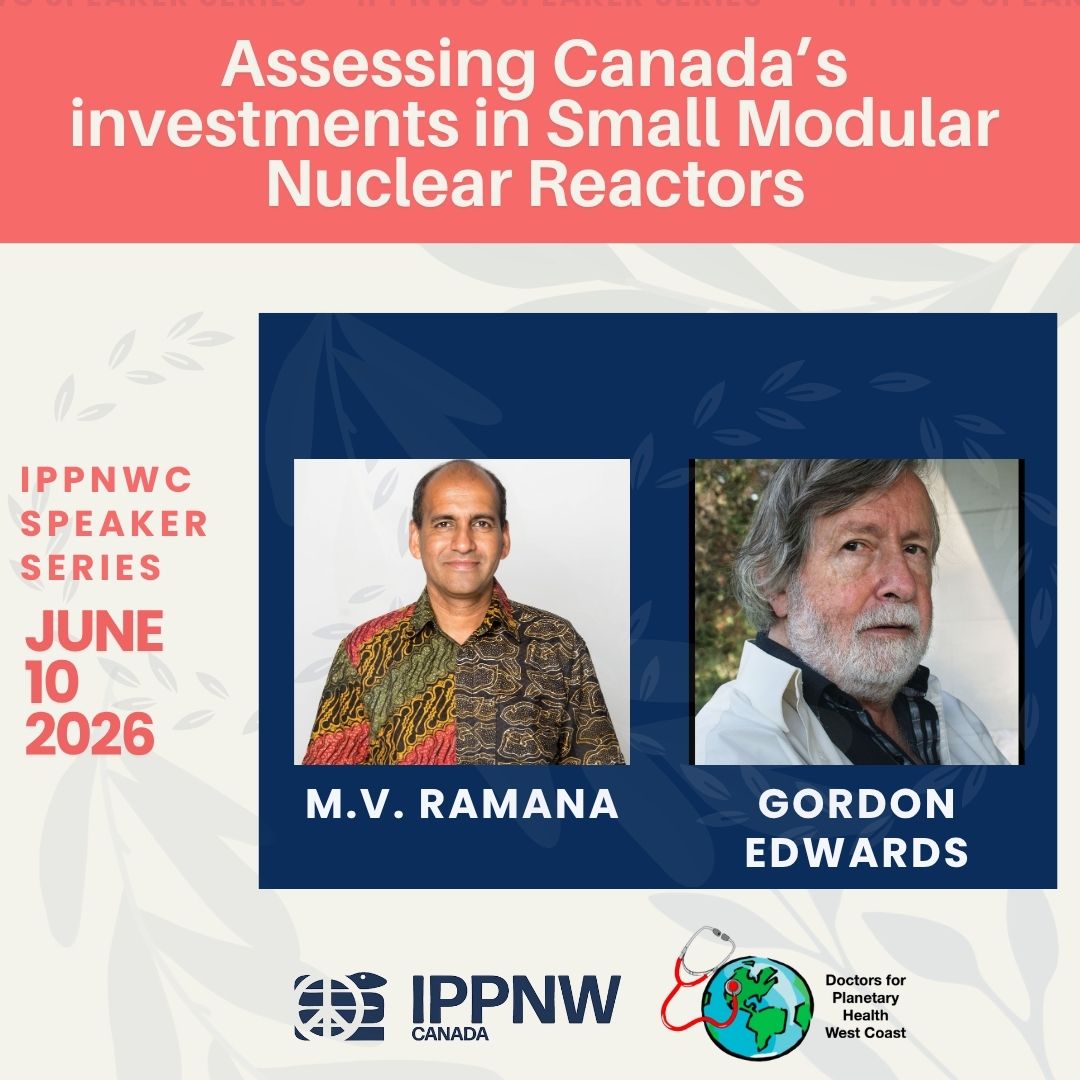
10 June – Assessing Canada’s Investments in Small Modular Nuclear Reactors – https://zoom.us/meeting/register/IiqHA5feRhaEBycOLNTJlA#/registration


Cuba Is Not a Failed State – It Is a Besieged State
PETITION: “Global Appeal to Endorse Palestinian Right of Return of Refugees”
To see nuclear-related stories in greater depth and intensity – go to https://nuclearinformation.wordpress.com
-
Archives
- June 2026 (89)
- May 2026 (306)
- April 2026 (356)
- March 2026 (251)
- February 2026 (268)
- January 2026 (308)
- December 2025 (358)
- November 2025 (359)
- October 2025 (376)
- September 2025 (257)
- August 2025 (319)
- July 2025 (230)
-
Categories
- 1
- 1 NUCLEAR ISSUES
- business and costs
- climate change
- culture and arts
- ENERGY
- environment
- health
- history
- indigenous issues
- Legal
- marketing of nuclear
- media
- opposition to nuclear
- PERSONAL STORIES
- politics
- politics international
- Religion and ethics
- safety
- secrets,lies and civil liberties
- spinbuster
- technology
- Uranium
- wastes
- weapons and war
- Women
- 2 WORLD
- ACTION
- AFRICA
- Atrocities
- AUSTRALIA
- Christina's notes
- Christina's themes
- culture and arts
- Events
- Fuk 2022
- Fuk 2023
- Fukushima 2017
- Fukushima 2018
- fukushima 2019
- Fukushima 2020
- Fukushima 2021
- general
- global warming
- Humour (God we need it)
- Nuclear
- RARE EARTHS
- Reference
- resources – print
- Resources -audiovicual
- Weekly Newsletter
- World
- World Nuclear
- YouTube
-
RSS
Entries RSS
Comments RSS
 nuclear-news