Does USA really need all those expensive nuclear weapons?
Senator Puts U.S. Nuclear Arsenal in Doubt, US News, January 26, 2012 The Democratic chairman of the Senate Armed Services Committee today questioned the value of the nation’s nuclear arsenal, putting in motion efforts to cut the numbers and costs of missiles and bombs that are part of the Pentagon’s “nuclear triad.”
Previewing today’s Pentagon announcement on what weapon systems will be cut, delayed or eliminated in the upcoming budget, Sen. Carl Levin said the nation needs to rethink its nuclear force created during the Cold War.
“The Cold War is over. I just think there’s a way over-reliance and cost that goes into our nuclear weapon system,” he said at a media breakfast hosted by the Christian Science Monitor.
Later, he went further, suggesting that the arsenal is useless. When talking about an arcane Senate procedure, he raised nuclear weapons again. “It’s like the nuclear weapon, it’s totally useless. It can’t be used except to accomplish some other goal, then it’s used, used to deter.”
Levin has questioned the number of nuclear weapons in land-based missile silos, long-range bombers, and submarines before. But his comments are more meaningful now as the Pentagon prepares to cut costs and as it faces even more budget reductions if Congress and the White House can’t come to an agreement on a pending budget deal.
“I’ve always believed that nuclear weapons are way overdone, we have way more than are needed to carry out their mission. Their mission can’t be to use them. They can only be to deter, or to achieve some form of deterrence,” he said …… http://www.usnews.com/news/blogs/washington-whispers/2012/01/26/senator-puts-us-nuclear-arsenal-in-doubt
Member of Parliament warns that uranium mining could be a resource curse for Tanzania
Committee wants to see contracts for uranium , By Sylivester Ernest,The Citizen, Tanzania, 26 Jan 12, Dar es Salaam. A Parliamentary committee yesterday ordered the Ministry of Energy and Minerals to furnish it with contracts it signed with two companies to explore uranium in the country.
According to the chairman of the Parliamentary Committee on Energy and Minerals, Mr January Makamba, the aim was to make sure that the contracts entered between the government and Mantra Resources Ltd (Mantra) of South Africa and Uranex would benefit the country’s economy and environment.
He told reporters after the committee met with officials of the ministry that uranium exploration was a very delicate issue worldwide and his committee wanted to ensure the mineral did not turn out to be a curse for the country.
“We want to make sure that the environment and the country’s security are looked at…uranium is among the most sought after minerals, and we must take precautions,” the Bumbuli MP said.
Records show that the government agreed with Mantra, under the company’s flagship Mkuju River Project, to explore the existence of uranium in southern Tanzania.The firm has confirmed the presence of multiple thick zones of sandstone-hosted uranium mineralisation at shallow wells in the Nyota Prospect.An inferred mineral resource of 35.9 million pounds (U3O8) is estimated for the prospect.
This initial resource estimate is based on drilling that covers only a small part of the total area of prospecting, and a potential exists to substantially grow the resource base with ongoing work. On the other hand, Uranex is working at Bahi area for Dodoma and Manyoni projects with an estimated 6.7 million pounds.Tanzania is believed to have about 53.9 million pounds of uranium oxide deposits. http://thecitizen.co.tz/news/-/19265-committee-wants-to-see-contracts-for-uranium
EDF’s nuclear plans for Britain are fraught with problems
 No easy ride for EDF’s plans for new nuclear, Greenpeace by Richardg – 25 January 2012 Despite the growing shift of support away from nuclear energy in Europe, EDF is stubbornly pushing forward plans to build a new nuclear reactor in the UK, without sufficient consideration for all the relevant risks….. the French state-owned company EDF Energy is trying to build a new nuclear reactor at Hinkley Point in Somerset.
EDF applied for planning permission in late October, less than three weeks after Britain’s nuclear watchdog – the Office of Nuclear Regulation – published a long list of improvementsneeded to protect Britain’s nuclear reactors. Given the scale of the recommendatons in the list, it is not possible for EDF to have incorporated all those improvements into its proposals in just three weeks. Lessons are still being learned following Fukushima (such as ‘don’t delete the minutes of the disaster response meetings’). EDF’s rush to apply for planning permission betrays their cavalier attitude and suggests they can’t have fully considered the implications of the Fukushima disaster.
We are seriously concerned that the flood defences, the emergency response plans and other vital safety features (such as a secure supply of off-site electricity during an emergency) aren’t fit for purpose. There’s a distinctly slap-dash feel to the application: as though EDF were more concerned with keeping the wheels on their nuclear gravy train than with making sure their plans stood up to scrutiny.
We’re not the only ones with concerns about the proposals. EDF’s planning application is also facing fierce opposition from local campaign groups, nuclear experts and Members of Parliament. Local councils have made their own representations, pointing out problems withtraffic levels, waste storage and the impact on tourism.
With 1,200 people registering to comment on their ill-thought out proposals, EDF shouldn’t expect an easy ride. We’ll keep you posted. http://www.greenpeace.org.uk/blog/climate/no-easy-ride-edfs-plans-new-nuclear-20120125
Nuclear fuel could be corroded by seawater
How sea water could corrode nuclear fuel, UC Davis, January 26, 2012, Japan used seawater to cool nuclear fuel at the stricken Fukushima-Daiichi nuclear plant after the tsunami in March 2011 — and that was probably the best action to take at the time, says ProfessorAlexandra Navrotsky of the University of California, Davis.
But Navrotsky and others have since discovered a new way in which seawater can corrode nuclear fuel, forming uranium compounds that could potentially travel long distances, either in solution or as very small particles. The research team published its work Jan. 23 in the
journal Proceedings of the National Academy of Sciences.
“This is a phenomenon that has not been considered before,” said Alexandra Navrotsky, distinguished professor of ceramic, earth and environmental materials chemistry. “We don’t know how much this will increase the rate of corrosion, but it is something that will have to
be considered in future.”….
In the new paper, the researchers show that in the presence of alkali metal ions such as sodium — for example, in seawater — these clusters are stable enough to persist in solution or as small particles even when the oxidizing agent is removed.
In other words, these clusters could form on the surface of a fuel rod exposed to seawater and then be transported away, surviving in the environment for months or years before reverting to more common forms of uranium, without peroxide, and settling to the bottom of the
ocean. There is no data yet on how fast these uranium peroxide clusters will break down in the environment, Navrotsky said… http://www.news.ucdavis.edu/search/news_detail.lasso?id=10131
USA’s Nuclear Regulatory Commission is beholden to the nuclear industry
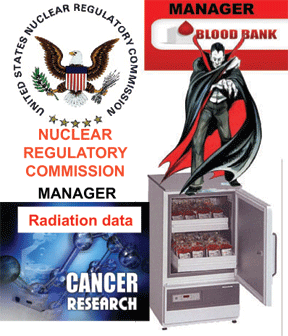 Ninety percent of the NRC’s funding comes from the industry they regulate.
How can you make a container for something that can destroy its container? But the NRC doesn’t see that as insurmountable, even though it is.
The NRC is beholden to no one but the nuclear industry they regulate. Their motto — protecting people and the environment — is criminally hollow.
 Nuclear Power is Clean — as Long as you Ignore ‘Safety’!, Ace Hoffman Salem-News.com, 27 Jan 12, Every American nuclear power plant could be closed down if Americans turned off extra lights and became energy efficient. (CARLSBAD,Calif.) – In the United States, radiation-related “safety” decisions regarding commercial nuclear power plants are handled very
undemocratically.
They are considered to be strictly the purview of the Nuclear Regulatory Commission. State and federal courts, public utilities commissions, state energy commissions, water boards, air
boards, EPA, DOE, and everyone else whose regulatory authority touches on nuclear power will insist that you cannot talk to them about “safety.” You must go to the NRC. Continue reading
Radioactive threats to the Great Lakes
Nuclear worries abound in Great Lakes region. Do solutions?, Medill News, BY RORY KEANE, JAN 26, 2012 “..…The report, titled “Too Close to Home,” cites numerous articles that followed the unfolding disaster at Japan’s Fukushima-Daiichi nuclear power plant and concerns in the U.S., including a series of Associated Press stories dating from summer of 2010.
According to the report, over 10 million Americans in Great Lakes states, excluding Indiana and Minnesota, receive drinking water originating within 12 miles of a nuclear power plant. The AP stories cited focused on radioactive isotopes that could leak into drinking water. Continue reading
Why terrorists would choose nuclear weapons
Nuclear Terrorism: A Rationale Choice For Terrorists? – Analysis by: Eurasia Review, January 26, 2012 By Muhammad Jawad Hashmi“……Why Terrorists Potentially Want To Go Nuclear Nuclear weapon is the most dangerous weapon that mankind has ever made. These weapons are ultimate weapons for ultimate destruction. Terrorists have been struggling for the publicity throughout the time and WMD may sever as an attention-getter stunt. Nuclear terrorism becomes a lucrative option for the terrorist organizations only because of lethality of nuclear weapons. Historically speaking, it has been observed that terrorists have been pursuing weapons which are increasingly lethal. Indeed, the acquisition of any type of nuclear weapon would boost their confidence as well as degree of terrorist-actions. This inclination towards nuclear weapons or material could be well observed in the case of biological and chemical agents which are being used by terrorist groups/individuals in USA and else where. So, based on this premise it can be proposed that the tendency towards the acquisition of WMDs and their usage would increase in near future….
To conclude one must understand that, terrorists are rational actors prevailing in the world. So, it can be assumed that the acquisition of nuclear weapons become more rational for terrorists as it may enhance the vulnerability of states. Similarly, it can be assumed that a terrorist group with nuclear weapon may pose a serious challenge of blackmail. At the same time terrorist organizations might consider that nuclear weapon may create environment of deterrence against their adversaries. Furthermore, it can be assumed that terrorists may use nuclear or radiological weapon to create precedence, so that states may not try to underestimate their capabilities. It may enhance the credibility of threats posed by the non state actors in the up coming era. http://www.eurasiareview.com/26012012-nuclear-terrorism-a-rationale-choice-for-terrorists-analysis/
India enthusisastic about its nuclear weapons development
India flexes nuclear muscle on R-Day Times of India TNN | Jan 27, 2012, “….. on display for the first time in the parade were the nuclear-capable Agni IV intermediate range surface-to-surface ballistic missile and the Hercules C-130-J aircraft recently acquired from the US. …. The crowd got excited as an array of weapons and armaments was rolled out on the Rajpath. The first to come were the mechanized columns led by the T-72 tanks. The SMERCH multiple launch rocket system, Pinaka multi-barrel rocket system, and the Advanced Light Helicopter ‘Dhruv’ came later. Then the Agni-IV missile rolled past, much to the cheer of the crowd. It was successfully flight tested last November and DRDO paraded it on Thursday. It got a thunderous welcome. The missile is nuclear capable and can carry a warhead up to 3,500 km. Also for the first time, the 150-km range Prahaar Tactical Battlefield Support Missile and the Rustom-1 unmanned aerial vehicle were part of the parade and proved to be eye-catchers. …
Nuclear company AREVA sales fell in 2011
 Areva sales slip as mining cushions Fukushima blow Jan 26 (Reuters) – French nuclear group Areva posted a 2.6 percent fall in 2011 sales as strength in its mining unit helped cushion declines in its core reactor businesses as it restructured following the nuclear disaster in Japan.
Revenues at the world’s biggest maker of nuclear reactors, which in December disclosed a massive write-down tied to three of its African mines, reached 8.87 billion euros ($11.67 billion), with the reactors and services unit showing a 3.6 percent drop…. Since the nuclear disaster at Japan’s Fukushima power plant in March, order cancellations have been 464 million euros.
Reactors and services, which designs and builds nuclear reactors and is Areva’s biggest division, saw revenues slide to 3.26 billion euros as fewer engineering studies were undertaken in the United States.
Areva has been grappling with construction delays at two of its new-generation EPR reactors, while the Fukushima crisis has sparked a global debate about the future of nuclear power and led some governments to review their energy mix.
On top of that, Areva, the world’s biggest uranium mining producer, is bogged down by the $2.5 billion acquisition of Canada’s UraMin in 2007 and allegations of spying on the long-serving Lauvergeon.
Despite the dark cloud of Uramin, Areva’s mining unit had the most robust sales growth of any unit aside from its much smaller renewable energy business, which nearly doubled
“The stars are aligning for rooftop solar energy”
 Solar guru receives Australia Day honour , 26 January 2012, Anna Salleh ABC Science, http://www.abc.net.au/science/articles/2012/01/26/3415244.htm Australia needs to look to Germany if it is to realise the potential of solar cell technology, says an expert who is being honoured today. Professor Martin Green of the University of New South Wales has been made a Member of the Order of Australia(AM) for his work on photovoltaics.
“Germany has been the only country that’s had a sensible long-term program in place to promote the use of renewables,” says Green.
Some argue solar cells are not a competitive option for reducing carbon emissions, and are limited by the fact that they don’t generate energy unless the Sun is shining.
But according to Green, the “stars are aligning for conventional roof mounted solar” and it is ripe for a new kick start from governments. Continue reading
Lynas rare earths company still in trouble over radioactive wastes in Malaysi
Locals say market won’t buy Lynas’ recycled waste, Malaysia, By Shannon Teoh, January 26, 2012 KUALA LUMPUR, Jan 26 — Lynas Corp’s plans to recycle waste from its controversial RM2.5 billion rare earth plant in Kuantan into a commercial product will not be accepted by the market, local residents opposed to the refinery said today.
The Stop Lynas Coalition (SLC) and Save Malaysia Stop Lynas (SMSL) groups said in a joint submission to the government that the synthetic gypsum the Australian miner hopes to produces from its waste is the subject of an international safety campaign due to radiation fears. The use of phospho-gypsum plaster-board and plaster cement in buildings as a substitute for natural gypsum may constitute an additional source of radiation exposure to both workers and members of the public,” the document quoted from Internet-based environmental organisation Zero Waste America. Continue reading
Renewable energy soon to be competitive without subsidy
Renewable Generators From Vestas to Suntech Plan Profits Without Subsidy
Bloomberg, By Alex Morales and Jacqueline Simmons – Jan 26, 2012 Renewable energy companies are approaching the point where they can generate electricity at a price competitive with fossil-fuels without subsidies, the biggest wind and solar manufacturers said.
Suntech Power Holdings (STP) Co. Chief Executive Officer Zhengrong Shi said solar will reach parity with fossil fuels on electric grids by 2015. Vestas Wind systems A/S expects its turbines to compete without incentives “in the coming years,” said Peter Brun, head of governmental relations.
“Wind in some cases already is, or can in coming years, be fully cost-competitive with fossil fuels,” Brun said today by e-mail from the World Economic Forum in Davos, Switzerland. “Fossil-fuel prices will continue to rise, and that increases the competitiveness of new technologies. We are preparing the whole industry for getting off the subsidy-need.”…..
No records kept of Japan’s nuclear disaster crisis response!
 “Perhaps there were some goings on that the participants did not feel comfortable being made public,”
 Japan Task Force Kept No Records Of Nuclear Crisis Response, Planet Ark, 25-Jan-12, JAPAN by Yoko Kubota and Shinichi Saoshiro Japan’s energy minister admitted on Tuesday that no records were kept of top level discussions in the critical early days on how to respond to the world’s worst nuclear disaster in 25 years. Continue reading
USA swinging voters want renewable energy and action on climate change
the passages where Obama discussed phasing out subsidies for oil companies and competing with China and Germany for new developments in wind and solar power did particularly well.
63 percent of Americans say there is solid evidence that earth’s average temperature has  been getting warmer over the past few decades,
 SOTU 2012: Renewable Energy Scores High With Swing Voters, International Business Times, By ASHLEY PORTERO: January 25, 2012 Denying the science behind climate change may be in vogue among conservative Republicans this year, but it won’t help the party attract valuable swing votes come the presidential election in November…
.. a focus study of 50 swing voters that was conducted as Obama delivered his speech revealed strongly favorable reactions to those proposals, especially renewable energy, which received one of the most positive responses from the night. Continue reading
UK govt not happy with GE Hitachi’s plan for plutonium waste
the UK stockpile of waste plutonium – the biggest civilian stash in the world
 UK Nuclear Watchdog Toughens Stance On Waste Reuse, Planet Ark 25-Jan-12, BRITAIN by Oleg Vukmanovic Britain’s nuclear watchdog has hardened its stance against a proposal by U.S.-Japan joint venture GE Hitachi to dispose of UK radioactive waste in a plutonium-burning reactor but has not ended talks.
The Nuclear Decommissioning Authority (NDA), which advises the government on how best to manage the UK’s growing plutonium stockpile, is considering a number of options including the fast-reactor design proposed by GE Hitachi in November.
The NDA has repeatedly ruled the multi-billion pound 600 megawatt (MW) reactor out of the running on the grounds that the technology lacks credibility for the purposes of plutonium disposal. Continue reading
1 This Month
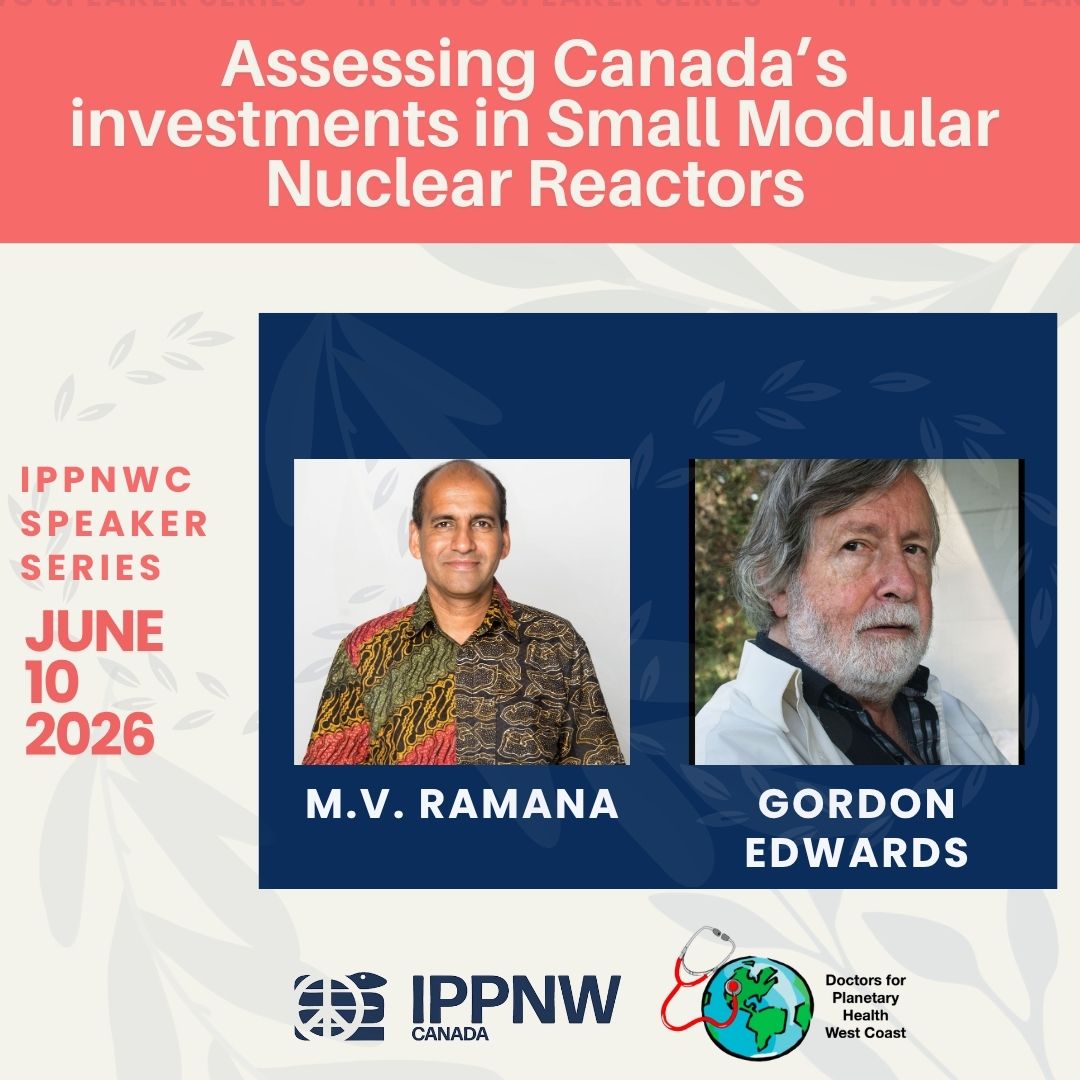
10 June – Assessing Canada’s Investments in Small Modular Nuclear Reactors – https://zoom.us/meeting/register/IiqHA5feRhaEBycOLNTJlA#/registration


Cuba Is Not a Failed State – It Is a Besieged State
PETITION: “Global Appeal to Endorse Palestinian Right of Return of Refugees”
To see nuclear-related stories in greater depth and intensity – go to https://nuclearinformation.wordpress.com
-
Archives
- June 2026 (89)
- May 2026 (306)
- April 2026 (356)
- March 2026 (251)
- February 2026 (268)
- January 2026 (308)
- December 2025 (358)
- November 2025 (359)
- October 2025 (376)
- September 2025 (257)
- August 2025 (319)
- July 2025 (230)
-
Categories
- 1
- 1 NUCLEAR ISSUES
- business and costs
- climate change
- culture and arts
- ENERGY
- environment
- health
- history
- indigenous issues
- Legal
- marketing of nuclear
- media
- opposition to nuclear
- PERSONAL STORIES
- politics
- politics international
- Religion and ethics
- safety
- secrets,lies and civil liberties
- spinbuster
- technology
- Uranium
- wastes
- weapons and war
- Women
- 2 WORLD
- ACTION
- AFRICA
- Atrocities
- AUSTRALIA
- Christina's notes
- Christina's themes
- culture and arts
- Events
- Fuk 2022
- Fuk 2023
- Fukushima 2017
- Fukushima 2018
- fukushima 2019
- Fukushima 2020
- Fukushima 2021
- general
- global warming
- Humour (God we need it)
- Nuclear
- RARE EARTHS
- Reference
- resources – print
- Resources -audiovicual
- Weekly Newsletter
- World
- World Nuclear
- YouTube
-
RSS
Entries RSS
Comments RSS
 nuclear-news