Japan’s nuclear plant stress tests – “flimsy” and unreliable
“I don’t view their evaluation as something that is trustworthy or carries any weight,” “The last time the IAEA inspectors came to Japan, they simply inspected sites and documents and left saying everything was fine. They submitted a flimsy report, and I fear the same will be the case this time.”
 Experts cast doubt on Japan nuclear plant tests, Justin McCurry in Tokyo, guardian.co.uk, 27 January 2012 Japanese government ordered tests on all reactors after Fukushima meltdown, but advisers say they do not prove a plant is safe Advisers to Japan‘s nuclear safety agency have said power plant stress tests do not prove that a nuclear plant is safe, as the country faces the prospect of a summer without a single nuclear reactor in operation. Continue reading
Bombing Iran – not the smartest way to go
Bomb Iran? Yes we can: a US plan that couldn’t possibly go wrong, SMH, Bill Keller January 28, 2012 “…..An attack on Iran is almost certain to unify the Iranian people around the mullahs and provoke the supreme leader to redouble Iran’s nuclear pursuits, only deeper underground this time, and without international inspectors around.
At the Pentagon, you sometimes hear it put this way: Bombing Iran is the best way to guarantee exactly what America is trying to prevent.
http://www.smh.com.au/opinion/politics/bomb-iran-yes-we-can-a-us-plan-that-couldnt-possibly-go-wrong-20120127-1qlqx.html#ixzz1kmwgt4eV
China remains inscrutable on nuclear safety
China denies nuclear accident Telegraph, 27 Jan 12, China has moved swiftly to deny it has become the latest nation to experience a nuclear accident, after claims that it was forced to shut down its newest nuclear reactor last year. By David Eimer in Beijing 27 Jan 2012 A report from Japan’s Atomic Energy Agency said the China Experimental Fast Reactor (CEFR) stopped generating electricity in October following an accident. With Japan already reeling from the meltdown at the Fukushima nuclear plant in March last year, the incident sparked alarm there and in South Korea over the prospect of radiation leaking from the CEFR.
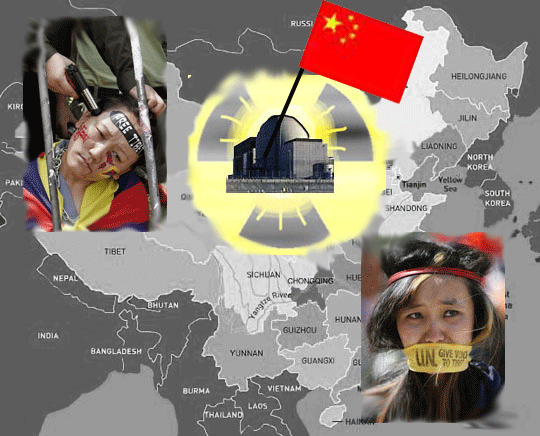
Those fears were intensified by Beijing’s failure to report the accident or release details of what happened, according to a Tokyo newspaper which cited the Japanese Atomic Energy Agency’s investigation. Continue reading
UK’s Dounreay nuclear site still radioactive
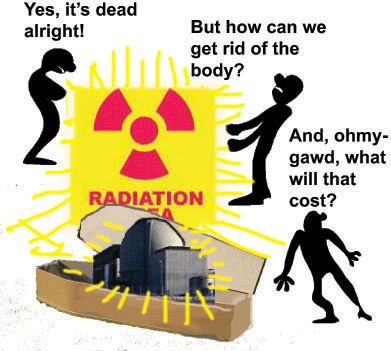 Contamination found at nuclear site, Google News, (UKPA) 27 Jan 12, Traces of radioactive contamination have been found on the shoes of workers demolishing a former nuclear power station. It was detected on around a dozen people on Thursday as they prepared to leave a building which they were preparing for demolition.
Dounreay Site Restoration Limited (DSRL), which is overseeing the decommissioning of the site in Caithness, has launched an investigation.
It said that the building is in a “controlled” area, where contamination is possible, and controls are in place to manage it.
Dounreay’s nuclear reactor was shut down in 1994 and work to decommission the site has been under way since then as part of a £2.6 billion project. It was the only plant in Britain to use liquid metal instead of gas or water in the cooling circuits.
http://www.google.com/hostednews/ukpress/article/ALeqM5gVcbsn-jVhJMOoqqQOYXqz-NAfaA?docId=N0166121327661398947A
Japan can manage summer electricity without nuclear power
Japan says can avoid summer power cuts even if nuclear By Kentaro Hamada TOKYO Jan 27, 2012 (Reuters) – Japan will be able to avoid power cuts this summer even if the nation’s last few nuclear reactors cease operating due to public safety fears after the Fukushima crisis, the government said on Friday….
“We would have to call for conservation of electricity, but there’s an excellent chance (the power lost if all nuclear plants are shut this summer) can be overcome without placing curbs on electricity consumption,” he added.
Area on endangered list, due to possibility of uranium mining
Uranium puts Southside on endangered list GoDanRiver.com January 27, 2012 Southside landed on the Southern Environmental Law Center’s fourth annual Top 10 Endangered Places in the Southeast list because of proposed uranium mining and pressure to lift Virginia’s uranium moratorium.
Many of the areas on SELC’s top 10 list are endangered by pressure to undercut environmental protections and to lower the hurdles for potentially destructive projects, …..
USA’s Nuclear Regulatory Commission – faithful servant of the nuclear industry
 Nuclear Power is Clean — as Long as you Ignore ‘Safety’!, Ace Hoffman Salem-News.com, 27 Jan 12,”……On March 10, 2011, the day before Fukushima, the NRC revealed to the media that Vermont Yankee, a poorly-designed old reactor in America, would be granted a license extension in a few days. After an earthquake and tsunami in Japan the next day, a slew of nearly identical reactors began melting down and exploding before our eyes.
Did the NRC change their minds and delay their decision? NO! Did they want to find out if what went wrong in Japan was applicable to Vermont? NO! The NRC does not lack in hubris, or in skill in manipulating the media to its advantage. Every accident — even Fukushima — is an “opportunity to learn,” and so in their macabre way of thinking, every accident, no matter how severe, can be considered a GOOD thing!
Five politically-appointed commissioners make all the “big” decisions at the NRC, and so just three commissioners constitute a majority. There are about 320 million citizens in America, so in a sense, these three people — who are not elected — control the fate of more than one hundred million Americans each. That’s what we call “democracy”?
And it gets worse: They have very finely-crafted laws to protect their power, such that over the past half century, thousands of local, state, and federal judges, as well as commissioners and other officials at all levels, have all deferred to the NRC, and thus, to these three individuals, whose identities change over time, but whose basic philosophy — “keep the nuclear industry running, ignore the dangers” — remains the same.
In addition to being lobbied constantly, politicians (who pick the commissioners) are given huge campaign contributions by the nuclear industry — hundreds of millions of dollars every decade. Often, campaign contributions are given to BOTH candidates in a close election, so regardless of who wins, the winner is beholden to the nuclear industry.
In Vermont recently, a Federal judge threw out the state’s attempt to get Vermont Yankee Nuclear Power Plant shut down permanently after 40 years of constant leaks, piling waste, and random outages, because the judge was convinced the “real” reason Vermonters want the plant shut down is safety concerns — regardless of the OTHER legal rationalities brought forth by the state’s attorneys, such as: A prior agreement by the utility to shut the plant down if requested by the state; Lies
told repeatedly by the utility to the state’s citizens, and: Overpriced electricity the utility was offering the state.
But sooner or later, it always comes down to “safety”. And as long as the NRC says the plants are safe, everyone else says they’re safe too. http://www.salem-news.com/articles/january262012/nuclear-power-ah.php
In Japan’s towns, nuclear money silences criticism
“After having received money related to the nuclear power plant like a form of drugs, this region’s capability to nurture its economy independently and actively has declined

 Japanese town’s dependence on nuclear plant hushes criticism, By Yoko Kubota, OHI, Japan Jan 26, 2012 (Reuters) – Japan’s nuclear disaster has eroded trust in utilities and shown residents of the rural, mountainous region of Fukui the risk of radiation, but a dependence on atomic plants for jobs and funds means speaking out against them is taboo. Continue reading
$13 billion taxpayer bailout for Japan’s TEPCO nuclear company
 Japan’s stricken nuclear operator set for $13 billion bailout By Kentaro Hamada and Linda Sieg TOKYO Jan 26, 2012 (Reuters) – Japan is set to launch a $13 billion bail-out of the owner of its stricken Fukushima nuclear power plant after the utility dropped resistance to a public fund injection, sources said on Thursday, as the country debates the future of nuclear power.
The injection of 1 trillion yen ($12.8 billion) in public funds into Tokyo Electric Power Co (9501.T) would effectively nationalize the firm, supplier of power to almost 45 million people, in one of the world’s biggest bailouts outside the banking sector………. It is now resigned to the state rescue, but sources familiar with the matter said it was still dragging its feet over the form of bail-out, with the government proposing that the state-backed Nuclear Damage Liability Facilitation Fund take a two-thirds share, which would let Tokyo make the key decisions. Continue reading
Obama’s reckless promotion of nuclear technology will feed the arms race
 the recklessness his administration is showing toward the transfer of civilian nuclear technology is astonishing and will lead us down the path to a world in which many more countries will have the ability to develop military nuclear programs if they so desire.”
Obama’s about face on nuclear non-proliferation, Washington Post, By Jennifer Rubin, 26 Jan 12, The Wall Street Journal reported: The Obama administration, in advanced negotiations on nuclear-cooperation agreements with Jordan and Vietnam, has withdrawn a demand that these countries forgo their rights to produce nuclear fuel, senior U.S. officials said.
The policy shift, adopted after an extensive interagency review, drew criticism from some U.S. lawmakers, who charged that it could ease the spread of sensitive nuclear technologies. . .
Lawmakers and nonproliferation experts also said they fear more lenient nuclear-cooperation agreements with Jordan and Vietnam could undercut the campaign to contain Iran’s nuclear program.
Both the Obama and George W. Bush administration have stressed to Tehran that it doesn’t need to enrich uranium domestically because it can buy nuclear fuel on international markets.
Remember, this entire exercise — to make the world free from nuclear weapons — is somewhat farcical given the efforts by Iran and North Korea to join the club of nuclear-armed nations. But now the Obama administration has made a mockery of its own fanciful policy. Continue reading
AREVA’s nuclear sales losses partly offset by renewable energy profits
 Areva Reports Fall In 2011 Revenue On Nuclear Concerns –Areva reported full year revenue hit by the effects of Fukushima on the nuclear industry – WSJ By Nadya Masidlover 26 Jan 12, PARIS (Dow Jones)–French state-controlled nuclear engineering firm Areva SA Thursday reported 2011 consolidated revenue down 2.6%, as nuclear operations were hit by growing concern on atomic energy following the Fukushima nuclear accident in March 2011.
The company said that revenue fell to EUR8.87 billion from EUR9.1 billion a year earlier, below analysts’ expectations of EUR8.99 billion.
 Areva posted a full-year revenue down 1.2% on a like-for-like basis however revenue in the fourth quarter was stable at EUR2.92 billion, falling 0.5% on a like-for-like basis…. The company said that a decrease in nuclear operations revenue was partly offset by growth in renewable energies business which rose 98.2% to EUR297 million.
USA’s Blue Ribbon Commission has no answer to long term nuclear waste disposal
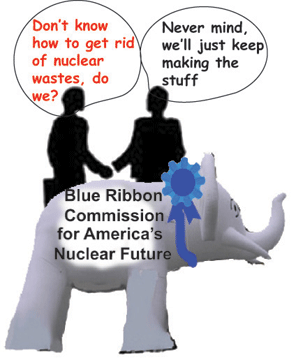 the Union of Concerned Scientists, a nonprofit advocacy group, questioned some of the report’s findings.
“Efforts to site an interim storage facility could distract from the far more important goal of finding a repository site,”
U.S. needs long-term site for nuclear waste: panel By Ayesha Rascoe, WASHINGTON Jan 26, 2012 (Reuters) – The United States must urgently work to find a new central site to house its spent nuclear fuel and probe whether Japan’s nuclear disaster has any safety implications for storage at the country’s plants, a federal panel said on Thursday.
The U.S. government has struggled with how to manage the 65,000 tons of radioactive waste produced by its nuclear reactors over decades and stored throughout the country.. Continue reading
Church leaders head anti nuclear protest in Kudankulam
Kudankulam: Anti-nuclear forum stages protest Tirunelveli: IBN Tamil, Nadu, Live 27 Jan 12, An anti-nuclear forum spearheading the stir against Kudankulam Nuclear Power Plant on Thursday staged a demonstration in a coastal village near the site in protest against moves to get it commissioned.
Organisers of the People’s Movement Against Nuclear Energy said PMANE activists staged the demonstration at Chettikulam after coming in a procession from Perumanalpuram.
Both villages are about five km from the KNPP site.PMANE convenor SP Udayakumar and heads of various churches led the protestors.
The commissioning of the plant was earlier slated in December 2011, but has been delayed after protests by locals, who have been agitating since September last, demanding scrapping of the Indo-Russian project, citing safety concerns following the Fukushima disaster.
The previous three rounds of talks between the Central experts committee and Tamil Nadu Government panel set up to break the impasse over the project, held on November 7, 18 and
December 15 last year failed to make any headway towards commissioning of the first unit as locals were not satisfied with the replies given by the expert group to their queries.
The fourth round meeting between the committee and panel is planned to be held on January
31.http://ibnlive.in.com/news/kudankulam-antinuclear-forum-stages-protest/224546-62-128.html
Film exposes “regulatory capture” of USA’s NRC by the nuclear industry
 Sundance Diary: “The Atomic States of America” Turns the Lens on Nuclear Power ONEARTH, BY BRUCE BARCOTT January 26, 2012 “……. The Atomic States of America, a film based partly upon her memoir, Welcome to Shirley.
McMasters’ book chronicled her childhood growing up in a blue-collar Long Island town next to the Brookhaven National Lab, one of the federal government’s leading nuclear research stations. In the 1990s, news broke (thanks to citizen activists and a local newspaper reporter) that Brookhaven’s three reactors regularly leaked deadly nuclear materials into the local water supply.
McMasters didn’t realize what was going on until college, when a roommate asked her, “Why are you always going home to all these funerals? What’s going on there?” The answer: Cancer, cancer, and more cancer.
Atomic States directors Sheena Joyce and Don Argott, who made the documentary Rock School in 2005, expand on McMasters’ material, looking at other nuclear power plant-adjacent communities and their chillingly similar experiences with radioactive leaks.
“At one of the documentary filmmakers forums over the weekend, we talked about this recurring theme of regulatory capture,” McMasters told me. “Again and again, we’re seeing the corporations that are supposed to be regulated take over the regulatory agency through money and politics.”
Conflict of interest? Just where does the climate denialists’ money come from?
 Bid to out the money behind the voice against climate change, SMH Graham Readfearn January 27, 2012 – A British journalist’s court bid to unmask the financial backers of a group of climate change sceptics is being used to raise questions about how think-tanks are funded in Australia and whether they deserve tax exemptions.
The UK’s Charity Commission, which regulates charities in the UK, is being asked to release a document that would show the start-up funders of the Global Warming Policy Foundation, chaired by former UK chancellor Lord Nigel Lawson.
Launched in November 2009, the foundation has consistently challenged the mainstream scientific view that human emissions of greenhouse gases represent a significant risk to the planet and societies.
Later today, freelance journalist Brendan Montague will appeal to the UK’s Information Rights Tribunal for the release of a bank statement provided to the Charity Commission by Lord Lawson, which Mr Montague believes will identify the source of a $50,000 seed donation.
The case has raised the issue of how think-tanks engaged in public policy debates are funded and whether potential conflicts of interest should be declared. None are required by law to publicly disclose their funders. Continue reading
1 This Month
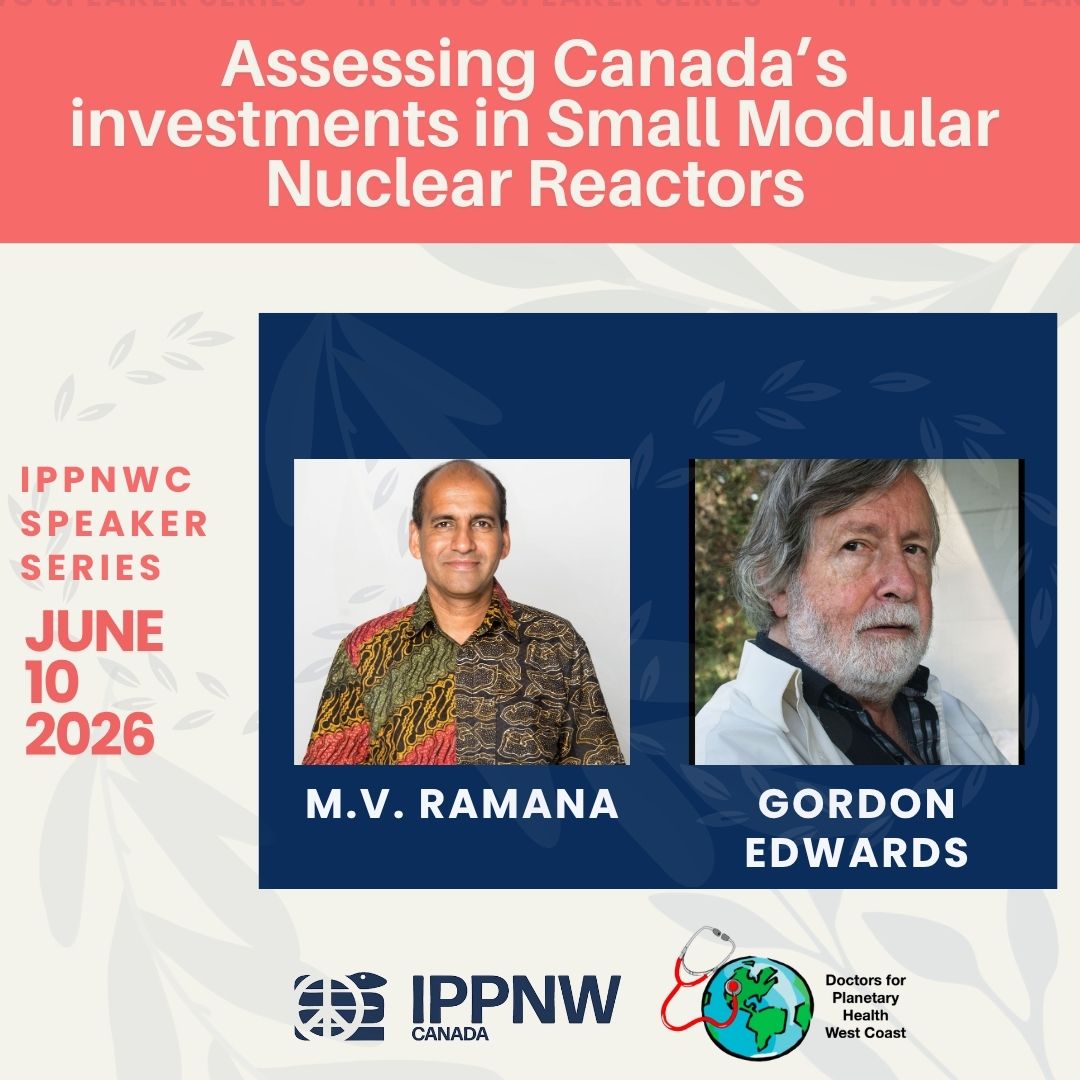
10 June – Assessing Canada’s Investments in Small Modular Nuclear Reactors – https://zoom.us/meeting/register/IiqHA5feRhaEBycOLNTJlA#/registration


Cuba Is Not a Failed State – It Is a Besieged State
PETITION: “Global Appeal to Endorse Palestinian Right of Return of Refugees”
To see nuclear-related stories in greater depth and intensity – go to https://nuclearinformation.wordpress.com
-
Archives
- June 2026 (89)
- May 2026 (306)
- April 2026 (356)
- March 2026 (251)
- February 2026 (268)
- January 2026 (308)
- December 2025 (358)
- November 2025 (359)
- October 2025 (376)
- September 2025 (257)
- August 2025 (319)
- July 2025 (230)
-
Categories
- 1
- 1 NUCLEAR ISSUES
- business and costs
- climate change
- culture and arts
- ENERGY
- environment
- health
- history
- indigenous issues
- Legal
- marketing of nuclear
- media
- opposition to nuclear
- PERSONAL STORIES
- politics
- politics international
- Religion and ethics
- safety
- secrets,lies and civil liberties
- spinbuster
- technology
- Uranium
- wastes
- weapons and war
- Women
- 2 WORLD
- ACTION
- AFRICA
- Atrocities
- AUSTRALIA
- Christina's notes
- Christina's themes
- culture and arts
- Events
- Fuk 2022
- Fuk 2023
- Fukushima 2017
- Fukushima 2018
- fukushima 2019
- Fukushima 2020
- Fukushima 2021
- general
- global warming
- Humour (God we need it)
- Nuclear
- RARE EARTHS
- Reference
- resources – print
- Resources -audiovicual
- Weekly Newsletter
- World
- World Nuclear
- YouTube
-
RSS
Entries RSS
Comments RSS
 nuclear-news