France’s Marcoule nuclear site – doubts on its safety
the priority was to get the job done – to meet the military imperative of fuel production, to irradiate whatever needed irradiating, without much of a thought about how the facilities would eventually be rendered safe. Marcoule is now dealing with the legacy of radioactive waste that created….

 The French nuclear programme does not have a stellar record of transparency…..What the incident implies for the future of the French nuclear programme is not entirely clear….
Marcoule’s long nuclear history, By Richard Black, BBC News 12 September 2011 The Marcoule site is one of the oldest in France, and played a significant role in the development of the French nuclear and thermonuclear deterrents. It opened in 1956 – well after the US began the era of nuclear armaments, at a time when France was among the nations looking to gain their own seat at the nuclear table. Continue reading
World waits for Fukushima nuclear plant to be brought under control
 “The whole world is waiting for Japan to bring the nuclear accident under control,” said Japan’s new prime minister, Yoshihiko Noda, last Thursday when he visited the plant
 6 months into Japan’s cleanup, radiation a major worry, By Craig Dale, CBC News Sep 12, 2011 “……Decontamination The Japanese government is now conducting extensive aerial surveys, from the northeast to the central part of the country, to track the spread of radiation from Fukushima Daiichi. Continue reading
Virginia uranium pays expensive junket to Canada for politicians and officials
 Uranium company flying Va. lawmakers to Canada will spend $3,000 per person, Washington Post, 12 Sept 11, By Anita Kumar The company flying lawmakers and community leaders to Canada this month to see an active uranium mine will spend about $3,000 per person on the trip.
The three-day trip includes a visit to a mine and mill as well as meetings with Canadian officials, including the ministers of energy and natural resources, federal regulators and the Canadian Nuclear Safety Commission, according to an itinerary released Monday in response to a request. Continue reading
Anxiety in city on border of Fukushima’s no-go zone
Japan city on border of nuclear no-go zone fights for survival, By Antoni Slodkowski, Editing by Tomasz Janowski and Jonathan Thatcher, MINAMI SOMA, Japan Sep 11, 2011 (Reuters) – A line dividing the no-go zone around the Fukushima nuclear plant and the area deemed safe from radiation cuts right across this coastal city but the “good” part is starting to look very much like the ghost town on the other side.
Six months after a magnitude 9.0 earthquake unleashed a deadly tsunami that triggered meltdowns and radiation leaks at the Tokyo Electric Power’s complex, Minami Soma, a city just a half an hour’s drive away, struggles to stay alive. Continue reading
Arizona – ignorance and lies about hazards of uranium mining
When asked during the hearing if any of the panel members present were concerned about contamination to the environment, specifically the air and water, or the threat to the health and safety of people, the answer was a resounding and unanimous “no.”
Read that again. Uranium, a known radioactive element, is being presented by the panel as harmless so long as it is not processed.
Uranium mining in Arizona Strip: What would Brigham Young say?, St George Utah.com by Dallas Hyland September 12, 2011 This past week, a public hearing was held in St. George to discuss uranium mining on the Arizona Strip, as reported in St. George News story, Uranium Mining on Arizona Strip Threatened by Federal Government. A panel from the Arizona-Utah Local Economic Coalition and concerned citizens from Arizona and Utah met to discuss and put comments on the record about the Secretary of the Interior’s moratorium on mineral extraction in the region.
The main thrust of the argument against the ban on mining permits from the perspective of the panel was its dramatic impact on local economies dependent on jobs and revenue from mining. Continue reading
Electric cars go well with grids and wind energy
Drive like the wind, R & D, 12 Sept 11, In a new report, researchers at the Department of Energy’s Pacific Northwest National Laboratory show how electric vehicles—increasingly available to consumers in today’s marketplace—could help operators more seamlessly add more renewable energy sources like wind into the Pacific Northwest’s energy grid. Continue reading
Governor of Virginia stacks Energy Commission in interests of polluting industries
 McDonnell stacks the deck, Washington Post , 11 Sept 11, By Peter Galuszka, Stacking the deck to boost business interests seems to be the modus operandi of the administration of Virginia Gov. Robert F. McDonnell.
On Sept. 9, McDonnell announced his picks for the Virginia Coal and Energy Commission. It is an important decision because the commission will have significant influence on whether the General Assembly decides to end a decades’ long ban on uranium mining and go forward with a proposed and highly controversial operation near Chatham in Southside.
McDonnell has appointed a group of seven people with heavy ties to the energy industry. Not one is an environmental or civic activist. Not one has a scientific background. The list:……
McDonnell did not choose anyone from the Sierra Club, National Resources Defense Council, Union of Concerned Scientists or any of the groups that study the impact of fossil fuel on climate change.
Nor did he select anyone from the activist groups in Southside that are concerned that Virginia Uranium’s plan to mine 119 million pounds of toxic uranium might pollute the area and threaten drinking water supplies, including those of Hampton Roads….. http://www.washingtonpost.com/blogs/all-opinions-are-local/post/mcdonnell-stacks-the-deck/2011/03/10/gIQAlkrMNK_blog.html
Japan can shut down all nuclear power by 2012
“With only 11 out of 54 reactors online at the height of summer and little impact to daily life, Japan has already proven that by conserving energy it does not need nuclear power”,
Permanent Nuclear Shutdown in Japan Possible by 2012: Report, September 12, 2011 Tokyo- (PanOrient News) Japan can switch off all nuclear plants permanently by 2012 and still achieve both economic recovery and its CO2 reduction goals, according to a new Greenpeace report.
Released today, the Advanced Energy Revolution report for Japan, shows how energy efficiency and rapid deployment of renewable technology can provide all the power Japan needs. Continue reading
Dangers of earthquakes, floods, to nuclear plants
 NRC staff: Reassess earthquake risk at nuke plants, Fox News, September 12, 201 WASHINGTON – The Nuclear Regulatory Commission should immediately require U.S. nuclear plant operators to re-evaluate whether their facilities can withstand earthquakes and floods, the agency’s staff said.
A staff report made public Monday identified seven steps the NRC should take “without delay” as it responds to the March 11 earthquake and tsunami that crippled a nuclear plant in Japan.
Most prominently, the report recommended immediate reviews of seismic and flooding risks at the nation’s 104 nuclear reactors. Continue reading
Entergy company argues that nuclear safety less important than Atomic Energy Act rules
Local resistance to the plant hardened after leaky pipes seeped radioactive material into the groundwater in 2010. If Vermont succeeds, it would be the first U.S. state to shut a nuclear power plant that had received an extended operating permit from the NRC….
 “The Atomic Energy Act preempts any effort to shutdown Vermont Yankee for reasons of nuclear safety,” Entergy lawyer Kathleen Sullivan said.
Entergy, Vermont battle over nuclear plant’s fate, Sep 12, 2011, Trial to decide fate of 39-yr-old plant By Zach Howard BRATTLEBORO, Vt., Sept 12 (Reuters) – Power company Entergy faced off against the state of Vermont in U.S. court on Monday to fight a landmark effort to force the closure of its aging nuclear power plant. Continue reading
USA nuclear weapons spending contrasts with budget realities
Nuclear Plan Conflicts with New Budget Realities 2012 Nuclear Security Summit in Seoul: Achieving Sustainable Nuclear Security Culture Federation of American Scientists (FAS) By Nickolas Roth, Hans M. Kristensen and Stephen Young
Note: This is the first of four posts analyzing the FY 2012 Stockpile Stewardship Management Plan, each jointly produced by the Federation of American Scientists and Union of Concerned Scientists.
A new nuclear weapons plan from the National Nuclear Security Administration (NNSA), which seeks further increases in spending over the next decade for nuclear weapons and for weapons production and simulation facilities, will face real challenges in the new budget environment. Continue reading
Some Idaho people keen to host nuclear wastes?
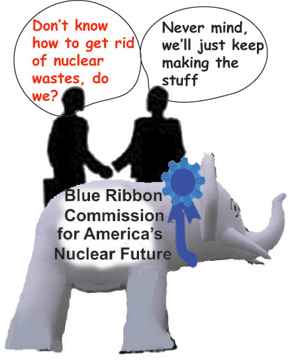 It [Blue Ribbon Copmmission]wants a new organization solely dedicated to waste management with the power and access to the funds to succeed.
It urged the U.S. to continue its leadership in international waste and nonproliferation issues. And it wants to reconsider long term geologic storage options like Yucca Mountain. But it also proposed a stable, long-term program to support research, development and demonstration of advanced reactor and fuel cycle technologies and supporting workforce development, subjects near and dear to people in eastern Idaho around the Idaho National Laboratory……
Idaho groups seek to influence nuclear waste future decisions Voices IdahoStatesman.com by Rocky Barker , 09/12/2011 “……nationally U.S. reactors have generated 65,000 metric tons of spent fuel, of which 75 percent is stored in pools, according to Nuclear Energy Institute data. A spent fuel rod gives off enough radiation to kill people a foot away in a matter of seconds. Continue reading
IAEA’s nuclear safety plan lacks teeth
Ruediger Luedking, Germany’s chief IAEA representative, told the nuclear watchdog’s 35-nation board Monday that the plan “does not fully meet our expectations.”A diplomat from another IAEA member state familiar with the issue says several other EU states as well as Canada and Australia are also critical of the plan’s lack of teeth.
He says Russia, China, India, Pakistan and Argentina were chief opponents of giving the IAEA more authority to police nuclear safety. But the U.S. was also conformable with the lack of enforcement powers.
The diplomat asked for anonymity because his information was confidential http://www.google.com/hostednews/ap/article/ALeqM5itby0To8xFNqpzB2hblJSK9qk97A?docId=4bacc40403324d46929ab5b077266a3d
The psychological fallout from Fukushima’s continuing radiation
Low-level radiation is an invisible threat that breaks DNA strands with results that do not become apparent for years or decades. Though the vast majority of people remain completely unaffected throughout their lives, others develop cancer. Not knowing who will be affected and when is deeply unsettling….
Twenty years after the 1986 reactor explosion in Chernobyl, the World Health Organisation said psychological distress was the largest public health problem unleashed by the accident…
the radiation “creates a slow, creeping, invisible pressure” that can lead to prolonged depression.
 Fukushima disaster: it’s not over yet Six months after the multiple meltdowns at the Fukushima Daiichi nuclear plant, the streets have been cleared but the psychological damage remains “…...Jonathan Watts, guardian.co.uk, Sept 9 11, ”……..Reiko went on to describe how everything had changed in the wake of the nuclear accident in Fukushima the previous month. Daily life felt like science fiction. She always wore a mask and carried an umbrella to protect against black rain. Every conversation was about the state of the reactors. In the supermarket, where she used to shop for fresh produce, she now looked for cooked food – “the older, the safer now”. She expressed fears for her son, anger at the government and deep distrust of the reassuring voices she was hearing in the traditional media. “We are misinformed. We are misinformed,” she repeated. “Our problem is in society. We have to fight against it. And it seems as hard as the fight against those reactors.” Continue reading
UK Prime Minister told by Russia to shut up about Litvinenko radiation murder
 Kremlin tells Cameron to forget radiation killing of dissident ahead of Moscow state visit, Daily Mail, By JAMES CHAPMAN, 12th September 2011 David Cameron was told to forget Britain’s ‘obsession’ with the radiation killing of a dissident Russian in London last night as he arrived for the first visit by a British prime minister to Moscow in six years.
Mr Cameron wants to focus on Anglo-Russian trade ties, but is under pressure to use the trip to press the Kremlin over the killing of Alexander Litvinenko and broader abuses human rights and state-sponsored corruption.
Four former British foreign secretaries — David Miliband, Jack Straw, Margaret Beckett and Sir Malcolm Rifkind — took the unusual step yesterday of issuing a joint statement urging Mr Cameron to stand up to the Russian regime.
Mr Litvinenko was poisoned with radioactive polonium-210 in London five years ago in what is alleged to have been a state-sponsored assassination. He died a lingering death. Ever since, Russia has spurned Britain’s demands to extradite Andrei Lugovoy, the former KGB officer who is the chief suspect in the murder.
Mr Lugovoy, now a member of Russia’s parliament, has claimed he was not involved. Mr Cameron will raise the case during extensive talks in Moscow but officials are making clear that the aim is to try to ‘reset’ relations.
Russian foreign minister Sergei Lavrov, speaking yesterday ahead of Mr Cameron’s arrival, signalled that Russia expects the Prime Minister to abandon the demands for Lugovoy’s extradition. ‘We cannot afford to be guided by politicised and stereotyped approaches inherited from a different era,’ he said. http://www.dailymail.co.uk/news/article-2036288/Kremlin-tells-Cameron-forget-radiation-killing-Alexander-Litvinenko-ahead-Moscow-state-visit.html
1 This Month
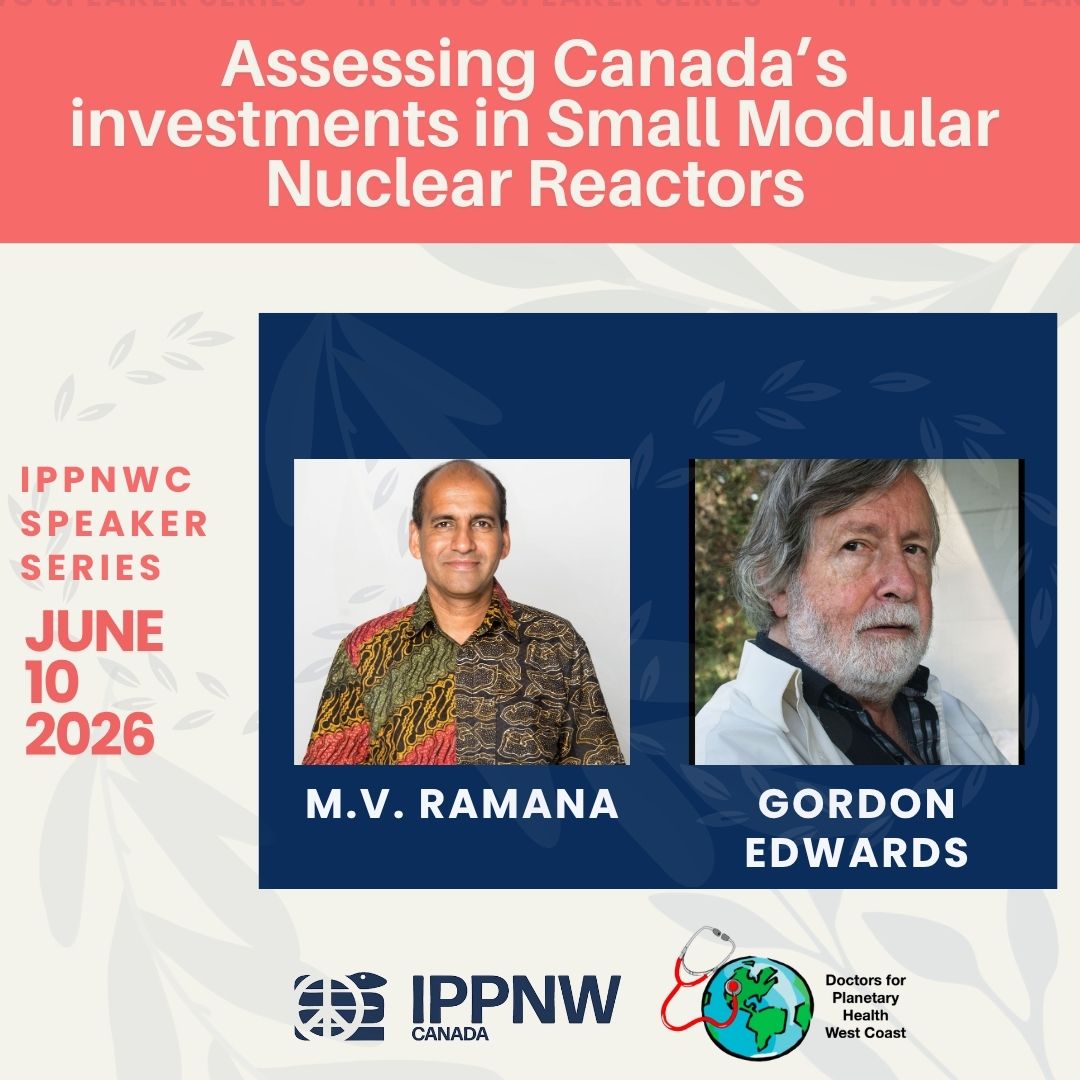
10 June – Assessing Canada’s Investments in Small Modular Nuclear Reactors – https://zoom.us/meeting/register/IiqHA5feRhaEBycOLNTJlA#/registration


Cuba Is Not a Failed State – It Is a Besieged State
PETITION: “Global Appeal to Endorse Palestinian Right of Return of Refugees”
To see nuclear-related stories in greater depth and intensity – go to https://nuclearinformation.wordpress.com
-
Archives
- June 2026 (89)
- May 2026 (306)
- April 2026 (356)
- March 2026 (251)
- February 2026 (268)
- January 2026 (308)
- December 2025 (358)
- November 2025 (359)
- October 2025 (376)
- September 2025 (257)
- August 2025 (319)
- July 2025 (230)
-
Categories
- 1
- 1 NUCLEAR ISSUES
- business and costs
- climate change
- culture and arts
- ENERGY
- environment
- health
- history
- indigenous issues
- Legal
- marketing of nuclear
- media
- opposition to nuclear
- PERSONAL STORIES
- politics
- politics international
- Religion and ethics
- safety
- secrets,lies and civil liberties
- spinbuster
- technology
- Uranium
- wastes
- weapons and war
- Women
- 2 WORLD
- ACTION
- AFRICA
- Atrocities
- AUSTRALIA
- Christina's notes
- Christina's themes
- culture and arts
- Events
- Fuk 2022
- Fuk 2023
- Fukushima 2017
- Fukushima 2018
- fukushima 2019
- Fukushima 2020
- Fukushima 2021
- general
- global warming
- Humour (God we need it)
- Nuclear
- RARE EARTHS
- Reference
- resources – print
- Resources -audiovicual
- Weekly Newsletter
- World
- World Nuclear
- YouTube
-
RSS
Entries RSS
Comments RSS
 nuclear-news