United States Army Going Green
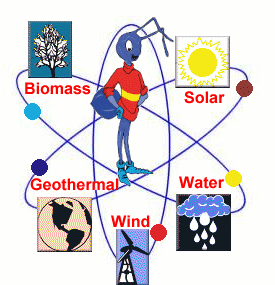 Army to build green-energy capabilities, Fierce Government August 12, 2011 — By Molly Bernhart Walker, The Army plans to launch large-scale renewable and alternative energy projects on Army installations, Army Secretary John McHugh said Aug. 10. The Army predicts it will invest up to $7.1 billion over the next 10 years to meet its energy goals; this will produce 2.1 million megawatt hours of power annually, the service estimated in a statement.
What Army envisions as “an economically viable, large-scale renewable energy infrastructure,” will begin with a task force, McHugh said, to address energy security, escalating fuel prices and compliance with green-government mandates. The Energy Initiatives Office Task Force, which will be part of the Office of the Assistant Secretary of the Army for Installations, Energy and Environment, will be fully operational by Sept. 15, he said……For more:- see the Army press release http://www.fiercegovernment.com/story/army-build-green-energy-capabilities/2011-08-12
The devious path of the nuclear lobby’s money trail

 Nuclear safety: A dangerous veil of secrecy, Aljazeera, Dorothy Parvaz 11 Aug 2011“….…A high-stakes game There’s no denying that there’s a lot of money – and power – riding on the nuclear industry.
The money trail can be tough to follow – Westinghouse, Duke Energy and the Nuclear Energy Institute (a “policy organisation” for the nuclear industry with 350 companies, including TEPCO, on its roster) did not respond to requests for information on funding research and chairs at universities.
But most of the funding for nuclear research does not come directly from the nuclear lobby, said M.V. Ramana, a researcher at Princeton University specialising in the nuclear industry and climate change. Most research is funded by governments, who get donations – from the lobby (via candidates, political parties or otherwise).
The Center for Responsive Politics – a non-partisan, non-profit elections watchdog group – noted that even as many lobbying groups slowed their spending the first quarter of the year, the Nuclear industry “appears to be ratcheting up its lobbying” increasing its multi-million dollar spending.
“In the United States, a lot of the money doesn’t come directly from the nuclear industry, but actually comes from the Department of Energy (DOE). And the DOE has a very close relationship with the industry, and they sort of try to advance the industry’s interest,” said Ramana. Indeed, nuclear engineering falls under the “Major Areas of Research” with the DOE, which also has nuclear weapons under its rubric. The DOE’s 2012 fiscal year budge request to the US Congress for nuclear energy programmes was $755m.
“So those people who get funding from that….it’s not like they (researchers) want to lie, but there’s a certain amount of, shall we say, ideological commitment to nuclear power, as well as a certain amount of self-censorship.” It comes down to worrying how their next application for funding might be viewed, he said…. http://english.aljazeera.net/indepth/features/2011/08/2011877118599802.html
Japan about to approve Renewable Energy Law
Japan Set to Pass Law on Renewable Energy, WSJ By MITSURU OBE 12 Aug 11, TOKYO—Japan’s parliament is set to approve a landmark bill on renewable energy that was championed by Prime Minister Naoto Kan as a way to reduce the nation’s dependence on nuclear power, and which would break the monopoly of the 10 major utilities. Continue reading
Still time to push America’s EPA to protect water from nuclear industry

 TELL THE EPA: PROTECT OUR WATER FROM NUKES AND COAL!, COMMENT PERIOD EXTENDED THROUGH AUGUST 18, 2011 Nuclear Information and Resource Service, Michael Mariotte, 12 Aug 11, Thanks to years of inaction, hundreds of outdated power plants–mostly nuclear and coal–across the country use antiquated cooling water systems that scoop up massive amounts of water from local waterways and trap and crush aquatic life to death in the process. Each year these power plants kill billions of fish from our lakes, streams, and coastal waters.
Decades ago, the Environmental Protection Agency was supposed to come up with new, national requirements to modernize power plant cooling systems and fix this problem. But instead the agency is now caving to industry pressure and has proposed a new cooling water rule that takes a weak stance and punts decision making to the states on a case-by-case basis. This approach hasn’t worked in the past and won’t work now.
Even worse, the Nuclear Energy Institute (NEI) has launched an all-out campaign through its Nuclear Advocacy Network to demand an even weaker approach from EPA. NEI claims that more than 7,000 people already have sent letters to the EPA from its side. We need to counter their efforts, and quickly.
Urge EPA to stand up for our waters and wildlife. You can submit a comment here urging EPA to adopt a strong standard for modernizing power plant cooling systems in its final rule.
Nuclear company ENTERGY must pay up for plant closedown
AUDIO
 http://www.publicbroadcasting.net/wamc/news.newsmain/article/0/0/1839200/WAMC.New.England.News/NRC.Requires.Decommissioning.Payment.by.Vermont.Yankee.Owner NRC Requires Decommissioning Payment by Vermont Yankee Owner, North East Public Radio, Pat Bradley 11 Aug 11, VERNON, VT (WAMC) – Entergy had filed a notice to the Nuclear Regulatory Commission that it planned to cancel a guarantee payment of 40-million dollars to the decommissioning fund for the Vermont Yankee Nuclear Power Plant. In it’s notice, Entergy stated that because the federal agency had extended its license for 20 years, there was no need for the guarantee funds, and sufficient money could be earned on current investments over the 20 year renewal period.
But on Wednesday, Entergy was informed that it must make the payment. The NRC says it would be premature to cancel the payment because the Vernon plant might not be able to operate after next March. In its letter to Entergy, the NRC the decision is “…based on the ongoing civil court case Entergy Nuclear Vermont vs. Schumlin…” New England Coalition Advisor Ray Shadis believes it is the first federal acknowledgement that the plant is on track to shutdown next March…..
http://www.publicbroadcasting.net/wamc/news.newsmain/article/0/0/1839200/WAMC.New.England.News/NRC.Requires.Decommissioning.Payment.by.Vermont.Yankee.Owner
Florida Power and light under scrutiny about planned nuclear costs
 FPL’s $18 Billion Nuclear-Reactor Plans Leak Unanswered Questions Before Florida PSC, FLAGLERLIVE, Jim Saunders, News Service of Florida, 12 Aug 11, The state Public Service Commission on Thursday quickly wrapped up a hearing about Florida Power & Light’s proposal to collect $196 million next year to pay for nuclear-power projects. The commission is scheduled to rule on the request Oct. 24. FPL is seeking to collect the money from customers to help upgrade nuclear plants in St. Lucie and Miami-Dade counties and to take initial steps toward adding two new reactors…..
FPL’s proposal faced a series of attacks from attorneys for consumers and business and environmental groups. In part, they questioned whether FPL will ever build two new nuclear reactors and whether the company increased costs by trying to do an upgrade project quickly.
Also, two of those attorneys told the Florida Public Service Commission that FPL used out-of-date information during a similar 2009 hearing about the upgrade project. Joe McGlothlin, an attorney for the Office of Public Counsel, accused the company of “willful withholding” of information that would have shown higher project costs….
The arguments came on the first of several days of hearings about more than $335 million in nuclear-project costs that FPL and Progress Energy Florida hope to collect from customers next year. The Progress case is expected to start next week, with the company seeking $141 million. All but about $5.6 million of that amount would go toward a plan to add two new reactors in Levy County.
Hoping to encourage more nuclear energy, Florida lawmakers in 2006 allowed utilities to incrementally collect costs from customers rather than waiting until after projects are finished. That has led to the possibility, however, that customers could spend hundreds of millions of dollars on initial costs for nuclear plants that never get built…..
James Whitlock, an attorney for the Southern Alliance for Clean Energy, said utility customers should not have to pay initial costs for the proposed Turkey Point reactors. He said FPL would use the money to try to get a license for the project but that new nuclear plants are not currently feasible.
“If the plant’s never built and never comes online, there won’t be any benefit (to customers),” Whitlock said….http://flaglerlive.com/26580/fpl-nukes-psc
Nuclear reactors’ impact on America’s fresh water supplies
Nuclear Information and Resource Service, Michael Mariotte, 12 Aug 11, America’s aging power plants are not only the nation’s largest air polluters, they also withdraw more water than any other source, causing staggering aquatic impacts. And nuclear reactors are the largest water users of them all.
Power plants’ toll on fisheries rivals, and in some cases exceeds, that of the fishing industry. Fortunately, none of this damage is necessary because modern closed-cycle cooling systems recirculate cooling water, reducing withdrawals and fish kills by about 95 percent. Since 1972, Section 316(b) of the federal Clean Water Act has required power plants to use the Best Technology Available (BTA) to minimize the adverse environmental impacts of cooling water intake structures.
In 2001, EPA issued national regulations identifying closed-cycle cooling as BTA for new power plants. But many older reactors, typically although not exclusively those built more than 30 years ago, still rely on antiquated and damaging once-through cooling systems, which withdraw water directly from its source but do not recycle it. Instead the water is thrown back into its source at far higher temperatures than it was when taken in.
For more information on the environmental devastation caused by once-through cooling at nuclear reactors, see Licensed to Kill, a report published by NIRS and other groups in 2001 and available here.
The rule EPA proposed on April 20, 2011 would be a step backward in our collective efforts to safeguard America’s waters. Basically, EPA has chosen the path of least resistance by caving into industry pressure and punting this issue to state agencies–agencies that too often lack the resources and the ability to stand up to industry on this issue. And if the Nuclear Energy Institute gets its way, things will get even worse. What is needed is a clear rule focused on modernizing power plants by stopping the use of once-through cooling.
Urge EPA to stand up for our waters and wildlife. You can submit a comment here urging EPA to adopt a strong standard for modernizing power plant cooling systems in its final rule.
Secrecy in the the nuclear priesthood of military, industry and academia
 David Biello, the energy and climate editor at Scientific American Online, describes the nuclear industry is a
relatively small, exclusive club.
“The interplay between academia and also the military and industry is very tight……with this exclusivity comes a culture of secrecy – “a nuclear priesthood,” said Biello, which makes it very difficult to parse out a straightforward answer in the very technical and highly politicised field. ….
Nuclear safety: A dangerous veil of secrecy, Aljazeera, Dorothy Parvaz 11 Aug 2011 “…..Kathleen Sullivan, an anti-nuclear specialist and disarmament education consultant with the United Nations Office of Disarmament Affairs, said it’s not surprising that research critical of the nuclear energy and weapons isn’t coming out of universities and departments that participate in nuclear research and development.
“It (the influence) of the nuclear lobby could vary from institution to institution,” said Sullivan. “If you look at the history of nuclear weapons manufacturing in the United States, you can see that a lot of research was influenced perverted, construed in a certain direction.” Continue reading
Sounding the alarm on China’s plans for nuclear technology

 Chinese decision-makers should avoid being overly confident about untried safety technologies. No matter how sound newer-generation nuclear technologies appear, such technologies may never have been sufficiently tested in any part of the world. All newer-generation nuclear technologies still impose significant risks in terms of design experience, construction safety and operational reliability
A warning for China’s nuclear sector, China dialogue, Kevin Jianjun Tu, August 10, 2011 “………The deadly Wenzhou [train] crash highlights the dangers of mega-infrastructure projects moving too far, too fast. Chinese decision-makers should take note, argues Kevin Jianjun Tu…..
Fukushima sounded warning bells with the Chinese government and gave policymakers another chance to reconsider plans for 2020. At a March 16 meeting chaired by premier Wen Jiabao, the State Council decided to call a temporary halt to approval of new nuclear-power plants pending new safety rules, and to adjust mid- and long-term nuclear power plans. This indicated a more cautious national strategy for nuclear power development.
Unfortunately, due to a lack of effective checks and balances on nuclear interest groups, there are signs that the great nuclear leap forward is reemerging. Continue reading
No public access to results of Japan’s tests on radiation and children’s thyroids

 Japan’s nuclear agency hides radiation results, ABC Radio 774, North Asia correspondent Mark Willacy, August 11, 2011 Japan’s nuclear watchdog has denied public access to the results of thyroid check-ups for more than 1,000 Fukushima children exposed to radiation.
Critics have accused Japan’s Nuclear Safety Commission of denying the public accurate information about the crisis. The commission had earlier uploaded the test results of more than 1,000 children who were checked to see if radioactive substances were accumulating in their thyroids.
But it has been revealed that earlier this month the commission removed the data from its website, citing privacy reasons.
But health specialists have slammed the decision, saying the commission fears a negative public reaction to children’s exposure to radiation from the crippled Fukushima plant.http://www.abc.net.au/news/2011-08-11/japan27s-nuclear-watchdog-deletes-radiation-results/2835502/?site=melbourne
Japan’s nuclear regulator to be less cosy with nuclear industry?
Japan takes nuclear safety away from trade ministry, NPR by BILL CHAPPELL 11 AUG 11, Japan is removing its nuclear regulatory agency from the control of its trade ministry, dissolving a relationship that was criticized in the wake of the Fukushima nuclear plant disaster. The new nuclear safety agency will be under the environmental agency, Kyodo News reports.
The move, coming exactly five month after a powerful earthquake and tsunami set off a nuclear crisis in Japan, may help ease criticisms that regulators are too cozy with pro-nuclear interests….http://www.npr.org/blogs/thetwo-way/2011/08/11/139537870/japan-takes-nuclear-safety-agency-away-from-trade-ministry
Full body airport scanners that emit no radiation
 In July, Thruvision’s terahertz-scanning technology was tested at airports in Sydney and Melbourne, Australia, along with millimeter wave scanners from L3. Ron Frye, Thruvision’s Director of International Business Development, reports that the trials ended with positive results
Safer full-body scanners? SF Gate, 11 Aug 11, As controversy simmers surrounding the levels of radiation used in full body scanners, a small company based in the United Kingdom has developed a machine that emits no radiation at all. Continue reading
Australian soldiers to wear portable solar power
 Super slim solar cell a success, The Age, Ben Cubby August 12, 2011 ’A typical solar cell is about 0.2 millimetres thick, which is 200 micrometres thinner than a human hair or a sheet of paper, will soon be used by Australian soldiers on patrol in Afghanistan as a portable power source. The solar cells, invented by researchers at the Australian National University, can be used to cover helmets, tents or clothing and recharge electronic gear such as night vision goggles.
They also have extensive potential in civilian applications, including recharging phones and computers, because a square metre of lightweight solar panel can generate 140 watts of power and yet be rolled up into a ball afterwards. ’A typical solar cell is about 0.2 millimetres thick, which is 200 micrometres – that’s too thick to bend, it would shatter,” the project’s chief investigator, Andrew Blakers, said. ”But these cells are about 45 microns thick, so they are flexible and also about the same efficiency as commercial solar cells. By comparison, really fine quality merino wool is about 18 microns thick.” In practice, many square metres of panel could be unfurled from a box about the same size as a wine cask http://www.theage.com.au/national/super-slim-solar-cell-a-success-20110811-1iot3.html
Legal challenges to Nuclear Regulatory Commission’s approval for new reactor
On Thursday, 26 public interest and environmental groups filed challenges to the NRC safety evaluation report.
NRC clears AP1000 nuclear reactor design; environmental groups balk, Tampa bay.com By Ivan Penn, Aug 11, 2011 A Nuclear Regulatory Commission report cleared the AP1000 reactor Progress Energy plans to use for its new plant, but environmentalists want further public review before the agency gives the unit final approval. Continue reading
Centennial uranium project not likely to go ahead
 Powertech USA President Richard Clement said earlier this year that the Fukushima Daiichi nuclear power plant disaster in Japan shook the uranium market enough to give Powertech pause when considering the future of the Centennial Project.
Powertech writes off millions after uranium mine land deal collapses, Coloradoan.com. 11 Aug 11, Powertech Uranium Corp. has written off $2.3 million it lost when a Centennial Project land deal with two Northern Colorado landowners fell through in June. Continue reading
1 This Month
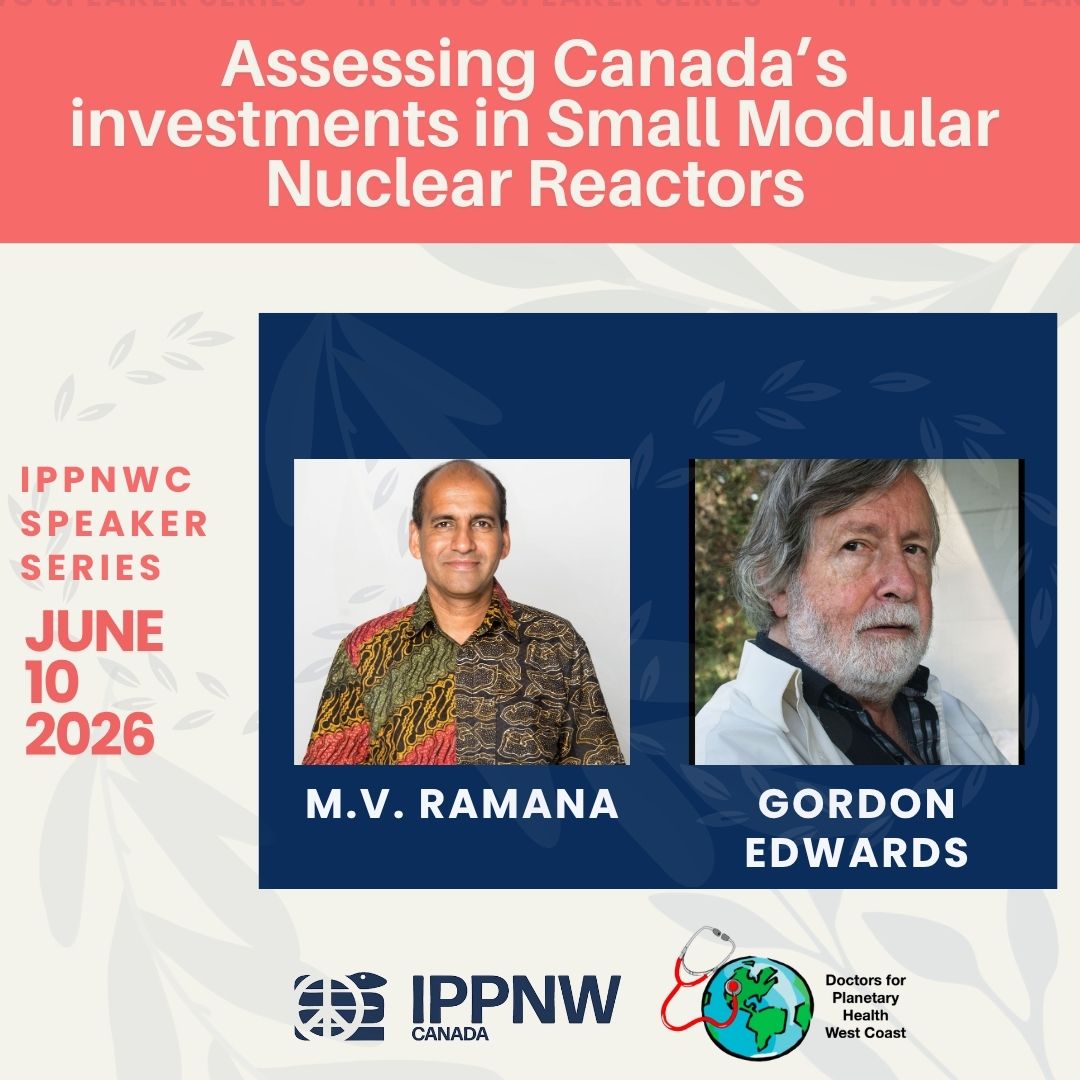
10 June – Assessing Canada’s Investments in Small Modular Nuclear Reactors – https://zoom.us/meeting/register/IiqHA5feRhaEBycOLNTJlA#/registration


Cuba Is Not a Failed State – It Is a Besieged State
PETITION: “Global Appeal to Endorse Palestinian Right of Return of Refugees”
To see nuclear-related stories in greater depth and intensity – go to https://nuclearinformation.wordpress.com
-
Archives
- June 2026 (89)
- May 2026 (306)
- April 2026 (356)
- March 2026 (251)
- February 2026 (268)
- January 2026 (308)
- December 2025 (358)
- November 2025 (359)
- October 2025 (376)
- September 2025 (257)
- August 2025 (319)
- July 2025 (230)
-
Categories
- 1
- 1 NUCLEAR ISSUES
- business and costs
- climate change
- culture and arts
- ENERGY
- environment
- health
- history
- indigenous issues
- Legal
- marketing of nuclear
- media
- opposition to nuclear
- PERSONAL STORIES
- politics
- politics international
- Religion and ethics
- safety
- secrets,lies and civil liberties
- spinbuster
- technology
- Uranium
- wastes
- weapons and war
- Women
- 2 WORLD
- ACTION
- AFRICA
- Atrocities
- AUSTRALIA
- Christina's notes
- Christina's themes
- culture and arts
- Events
- Fuk 2022
- Fuk 2023
- Fukushima 2017
- Fukushima 2018
- fukushima 2019
- Fukushima 2020
- Fukushima 2021
- general
- global warming
- Humour (God we need it)
- Nuclear
- RARE EARTHS
- Reference
- resources – print
- Resources -audiovicual
- Weekly Newsletter
- World
- World Nuclear
- YouTube
-
RSS
Entries RSS
Comments RSS
 nuclear-news