Nuclear industry’s massive costs have been underestimated
Kenichi Oshima, a professor of environmental economics and policy at Ritsumeikan University, has done some calculations and has reached a completely different conclusion….
“If we were to funnel funds earmarked for reprocessing and the nuclear budget, it would be very feasible to get power generation with renewable sources of energy off the ground.”

 Contrary to power company figures, cost of nuclear power generation highest: research Mainichi Daily News, 23 July 11 Utility companies across the country continue to tout the low cost of nuclear energy on their websites. Continue reading
All radioactive beef to be bought by Japanese govt?
 Government may buy all radioactive beef, Asahi.com 23 July 11, The central government is considering buying all beef with levels of radioactive cesium exceeding government standards in an effort to try to address rising consumer concern and falling prices for Japanese beef. Continue reading
Move to keep old Japanese nuclear reactors beyond use by date
UPDATE 3-Japan utilities push to extend life of nuclear plants, Jul 22, 2011
* Chubu says to beef up tsunami defences at Hamaoka by Dec 2012
* Debate intensifies as safety fears square off vs economy worries
By Kaori Kaneko and Osamu Tsukimori, TOKYO, July 22 (Reuters) – Two Japanese utilities moved on Friday to extend the life of reactors at a pair of central coastal nuclear plants, fuelling already fierce debate over energy policy in the wake of the Fukushima radiation crisis.
Doubts on the credibility of Japan’s nuclear regulator
The errors will adversely affect the operations of all nuclear power stations across the country, casting a damper on the planned stress tests from the outset..
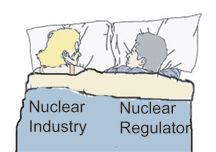 ..Goshi Hosono, state minister for the nuclear crisis, is aiming to separate NISA from its parent body, the Economy, Trade and Industry Ministry, which is promoting nuclear power generation in Japan. However, structural changes alone are insufficient. Whether NISA can function as a nuclear safety regulator will be severely tested.
Errors in nuclear plant data highlight checking system insufficiencies, Mainichi Daily News, By Takuji Nakanishi, Mainichi Shimbun, 23 July 2011 The discovery of errors in data incorporated in a report on the No. 3 reactor at the Genkai Nuclear Power Plant in Saga Prefecture illustrates problems with its operator’s checking system and the government regulator’s ability to examine safety data. Continue reading
The massive costs of disposing of spent nuclear fuel
 Contrary to power company figures, cost of nuclear power generation highest: research, Mainichi daily News, 23 July 11 “……There’s also a problem that’s specific to nuclear energy. As Oshima points out, massive amounts of money are needed to dispose of spent nuclear fuel, Continue reading
USA and Japan want Mongolia as toilet for their nuclear wastes
So for now US, Japan will humbly ask Mongolian people to please let us use your toilet in exchange to their uranium which is said to last for another 80 years only, not for 100,000 years.

MONGOLIA – Our Nuclear Waste Disposal Site? For US and Japan, ALLVOICES, Ulaanbaatar : Mongolia | Jul 21, 2011, BY northernlight Kyodo Japan reported on July 18 that Mongolia-US-Japan drafted the pact for the ‘comprehensive fuel services’ in which Mongolia supplies uranium and nuclear fuel to other countries (such as US and Japan) and receive the nuclear wastes
Nuclear Power Plants are liken to ‘Condos without toilets.’ Continue reading
A nuclear cost chain reaction – explosively expensive
 So, the construction of nuclear is stalling and the costs are rising. Contrast that with renewable energy, where installations are surging, and most of the technologies are coming down in price as they mature and reach scale....
Nuclear power’s real chain reaction: spiralling costs, The Guardian (UK) Damian Carrington, 22 July 11, Time is money, they say, and the new nuclear power plant being built byEDF at Flamanville in France is now at least four years behind time and €2.7bn over budget. EDF blamed the delay on two fatal construction accidents and dealing with safety analyses prompted by the Fukushima disaster. Continue reading
The finish for Japan’s nuclear industry
 Video http://www.presstv.ir/detail/190032.html— Analyst: Japan’s nuclear industry is finished, Michael Penn, Press TV, Tokyo, 20 July 11, At one level, it seems that a fierce political struggle is now developing over the future of nuclear energy in Japan. While the prime minister has outlined a non-nuclear vision for his country, the opposition Liberal Democratic Party is moving toward a political position defending the need for Japan’s nuclear power plants to remain in operation-albeit with stricter safety regulations.
Many big business groups say that keeping nuclear power is the only realistic policy, but others point out that political conditions now make such an idea impractical.
How can Japan run nuclear power plants, Mr. Hosono suggests, if no local communities will have them? …
Another problem that officials point out is that existing nuclear power plants will have to undergo much stricter monitoring of their safety standards, and they will be required to make much greater efforts to assure the government and people that they can continue operating without posing an unbearable public threat.
Some older power plants, under such watchful eyes, could very well fail the strict new safety tests and be closed. http://www.presstv.ir/detail/190032.html—
Corruption in nuclear industry: “Books are being cooked” on Fukushima
 As we have reported in the past, the NRC and the nuclear industry are riddled with corruption on par or above the oil cartels.
Nuclear Whistleblower “Books Are Being Cooked” Fukushima In America Will Happen, Examiner.com 22 July 11, A longtime nuclear whistleblower, as well as a new report from the nuclear watchdog agency, have shed light on some startling flaws at The Watts Bar Nuclear plant in Spring City, Tennessee. Continue reading
Stop shipments of nuclear wastes, say Caribbeans
Caribbean objecting to nuclear waste shipment, Bloomberg, 21 July 11, KINGSTON, JAMAICA, Caribbean officials are calling for an immediate halt to a European shipment of reprocessed nuclear waste that will pass near the islands on its way to Japan. They contend the practice poses a major risk.
Caribbean Community spokesman Leonard Robertson says regional officials have been told by British authorities that the shipment of radioactive waste will be soon. He says they gave no specifics about the vessel for security reasons.
Waste from Japanese nuclear reactors has for years been sent on specially equipped ships to Britain and France for reprocessing, then returned for storage in Japan….http://www.businessweek.com/ap/financialnews/D9OK9ARO0.htm
18 Metre walls to protect Hamaoka nuclear plant from tsunamis
India not giving in to USA pressure to change its Nuclear Liability Law
 “Government cannot tinker with Liability Law”, THE HINDU, SANDEEP DIKSHIT, 22 JULY 11, India feels the civil nuclear logjam with the United States is out of the political realm because it will be difficult for the government to substantially tinker with its Liability Law despite suggestions to this effect by U.S. Secretary of State Hillary Clinton at a press conference here on Tuesday.
Ms. Clinton raised hackles here when she suggested that India get its Liability Law vetted by the International Atomic Energy Agency (IAEA) so that it “fully conforms” to the international Convention on Supplementary Compensation (CSC) for Nuclear Damage.
Washington feels that two provisions in the Indian law have prevented two U.S. companies — GE and Westinghouse — from opening talks on setting up six civil nuclear plants each. The potential business opportunity is estimated at over $ 50 billion, the highest-ever for the two companies outside their home country.
……..we had a problem with her message,” said officials. Ms. Clinton had suggested India approach the IAEA to establish whether its Liability Law was in harmony with the CSC. “This is because the Americans were 100 per cent sure that the IAEA would suggest changes,” they added…..http://www.thehindu.com/news/national/article2282626.ece
Increasing nuclear collaboration by North Korea and Iran?
North Korea and Iran increase collaboration on nuclear missile, report claims, Telegraph UK, 22 July 11 North Korea and Iran are jointly working on weapons programmes designed to build a long-range missile capable of carrying a nuclear warhead, a leading British security think tank has said. Continue reading
1256 cows likely to be radioactive,says Japan’s govt
 Japan’s ‘Major Problem’ With Radioactive Cattle Gets Even Bigger, SF Gate, July 21 (Bloomberg) –– Japan’s government said the number of cattle fed with hay contaminated by radiation has doubled, two days after shipments of beef from cows raised near the wrecked Fukushima nuclear plant were banned.
As of yesterday there were 1,256 potentially contaminated cows from 637 two days earlier, said Kazutoshi Nobuto, a spokesman for the Ministry of Agriculture, Forestry and Fisheries.
“This is a major, major problem,” Goshi Hosono, Japan’s food safety minister, said yesterday at a press conference in the Foreign Correspondents’ Club of Japan. Hosono is also in charge of the response to the Fukushima nuclear disaster…. http://www.sfgate.com/cgi-bin/article.cgi?f=/g/a/2011/07/21/bloomberg1376-LONZP86S972801-3CL2GT5F8SH7TVV2BED2RK9I63.DTL
Nukes in Space – a Recipe for Disaster
an accident in which plutonium is released by a space device as tiny particles falling to Earth maximizes its lethality. A millionth of a gram of plutonium can be a fatal dose. The pathway of greatest concern is the breathing in plutonium particle..
As the NASA Environmental Impact Statement puts it: “Particles smaller than about 5 microns would be transported to and remain in the trachea, bronchi, or deep lung regions.” The plutonium particles “would continuously irradiate lung tissue.”
“A small fraction would be transported over time directly to the blood or to lymph nodes and then to the blood,” it continues. Once plutonium “has entered the blood via ingestion or inhalation, it would circulate and be deposited primarily in the liver and skeletal system.” Also, says the document, some of the plutonium would migrate to the testes or ovaries.
 What Could Truly End the Space Program: A Nuclear Disaster Overhead , OpED News, By Karl Grossman 21 July 11, Between November 25 and December 15 NASA plans to launch for use on Mars a rover fueled with 10.6 pounds of plutonium, more plutonium than ever used on a rover. Continue reading
1 This Month
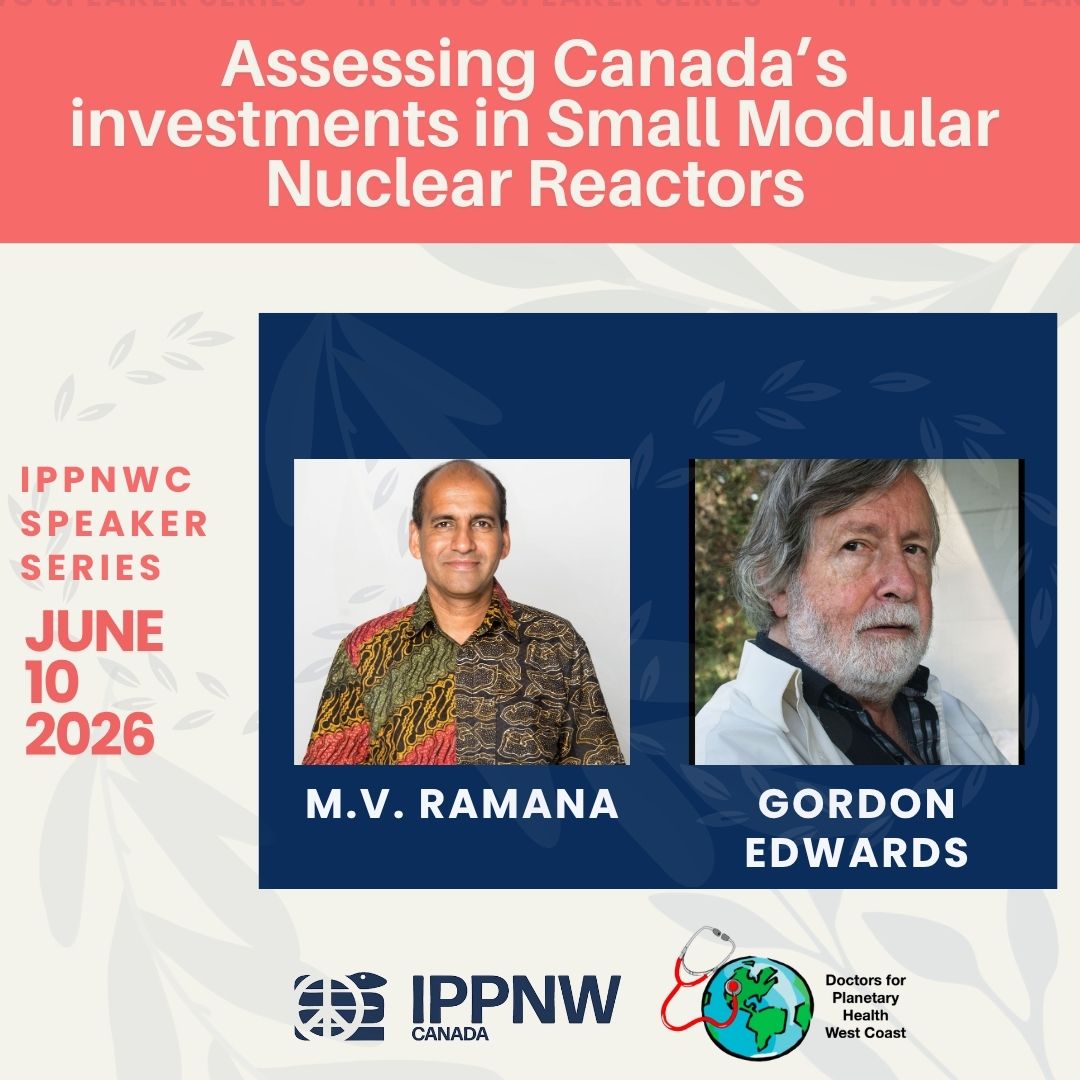
10 June – Assessing Canada’s Investments in Small Modular Nuclear Reactors – https://zoom.us/meeting/register/IiqHA5feRhaEBycOLNTJlA#/registration


Cuba Is Not a Failed State – It Is a Besieged State
PETITION: “Global Appeal to Endorse Palestinian Right of Return of Refugees”
To see nuclear-related stories in greater depth and intensity – go to https://nuclearinformation.wordpress.com
-
Archives
- June 2026 (89)
- May 2026 (306)
- April 2026 (356)
- March 2026 (251)
- February 2026 (268)
- January 2026 (308)
- December 2025 (358)
- November 2025 (359)
- October 2025 (376)
- September 2025 (257)
- August 2025 (319)
- July 2025 (230)
-
Categories
- 1
- 1 NUCLEAR ISSUES
- business and costs
- climate change
- culture and arts
- ENERGY
- environment
- health
- history
- indigenous issues
- Legal
- marketing of nuclear
- media
- opposition to nuclear
- PERSONAL STORIES
- politics
- politics international
- Religion and ethics
- safety
- secrets,lies and civil liberties
- spinbuster
- technology
- Uranium
- wastes
- weapons and war
- Women
- 2 WORLD
- ACTION
- AFRICA
- Atrocities
- AUSTRALIA
- Christina's notes
- Christina's themes
- culture and arts
- Events
- Fuk 2022
- Fuk 2023
- Fukushima 2017
- Fukushima 2018
- fukushima 2019
- Fukushima 2020
- Fukushima 2021
- general
- global warming
- Humour (God we need it)
- Nuclear
- RARE EARTHS
- Reference
- resources – print
- Resources -audiovicual
- Weekly Newsletter
- World
- World Nuclear
- YouTube
-
RSS
Entries RSS
Comments RSS
 nuclear-news