India’s Jaitapur nuclear ambitions up against the people’s opposition
Regardless of their passionate convictions, the locals haven’t been given a choice in the matter, as the land acquired for the site was forcibly done so. Residents were offered money for their seized property, but many refused to be reimbursed as a form of protest. The government offered 1.5 million rupees ($33,000) per hectare (2.5 acres) and has seized over 2,300 acres, but roughly only 150 of the 2,000+ landowners accepted the money…….
 India’s Nuclear Power Future: Tensions Rise As Plans Commence, Green Answers, By Elizabeth Barris , 07/28/2011 Jaitapur is one of India’s most productive agricultural ports, renowned for Alphonso mangoes, cashews, and its abundant fishing industry. Although many homes lack electricity, life is good for villagers, who thrive on fruit and fish exports. But this way of life is threatened by the Indian government’s plans to build the world’s largest nuclear power plant on forcibly-acquired farmland. The people of Jaitapur are not happy about this at all, and since Japan’s Fukushima Daiichi disaster, tensions are running higher than ever. Continue reading
Uranium mining danger to wondrous ecology of Grand Canyon
some in Congress want to make pork of public lands by handing the Grand Canyon’s watershed over to the uranium industry. Their rider would foreclose any possibility that these 1 million acres — acres that belong to the public and are cherished for their beauty and ecological importance — get the protection they deserve…..
Grand Canyon: Iconic Landscape, Unprecedented Threat, Huffington Post, Kieran Suckling,: 7/28/11, Few places inspire like the Grand Canyon. Not only is it a geological wonder, it’s also one of the most biologically diverse national parks in the United States — home to more than 1,000 species of plants, 76 species of mammals, 299 bird species, 41 reptiles and amphibians and 16 species of fish.
That’s why it’s so astonishing that some members of Congress would put this world-famous icon in jeopardy.
As early as today, the U.S. House of Representatives will vote on a budget rider that would halt years of work to protect the Grand Canyon and the surrounding area from dangerous uranium mining. The budget rider would prohibit the Department of the Interior from enacting a ban on new mining claims — and mining on the vast majority of existing claims — across 1 million acres of public land that form Grand Canyon National Park’s watershed.
If the rider passes, the iconic wildlands around Grand Canyon would be dramatically transformed. Roads and mines would be built. Wildlife habitat would be destroyed. The risk of pollution in streams, creeks, seeps and springs would skyrocket. The place that millions consider a national treasure could become a radioactive industrial zone.
Hydrologists warn that more mining would further pollute and deplete aquifers feeding Grand Canyon’s springs and creeks — pollution that would be impossible to clean up…….
Unfortunately, pollution from past uranium mining already plagues springs, creeks and soil in and around Grand Canyon National Park.
http://www.huffingtonpost.com/kieran-suckling/grand-canyon-uranium-mining_b_912582.html
Dissension in the Nuclear Regulatory Commission over regulatory changes
USA now has the option to turn away from nuclear energy
the options are many. By simply eliminating the energy wasted by inefficient houses lacking proper insulation, by upgrading our appliances and taking other common sense efficiency measures, the country could cut its energy needs in half…….
the country passed a historic milestone recently in which for the first time the cost of electricity per kilowatt generated by solar cells dropped below the cost of nuclear energy. And that is by the industry’s own measures.
Specter of nuclear waste dump returns to WNC, Macon County News, , 28 July 2011 by Christopher Carpenter “…….Nukes: Who needs ’em? According to Olson, the country has reached a crossroad and has several big decisions to make. “Do we build more reactors? Do we shut down the ones we have? Do we keep the waste where it has been produced and where it has been kept for decades? Or do we start moving it around?” Continue reading
Nuclear company moves to ensure that consumers cop their building cost overruns
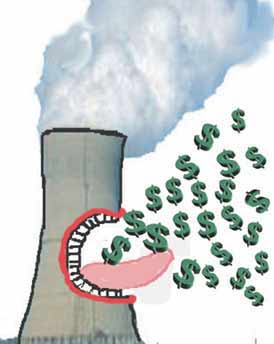 Consumer, not Georgia Power, would be on hook for potential Vogtle overruns, By Kristi E. Swartz , The Atlanta Journal-Constitution, 28 July 11, At an energy committee meeting in their downtown Atlanta chambers, Public Service Commission members said they would support only a July 18 deal reached between Georgia Power and the PSC’s advocacy staff, one that removed a recommendation calling for Georgia Power’s profits to be reduced should the costs to build two nuclear reactors at Plant Vogtle exceed budget by $300 million. Additional costs, with PSC approval, would show up in customers’ monthly utility bills.
A consumer watchdog group on Thursday continued to press for an agreement that would make Georgia Power — and not consumers — pay for any major cost overruns at its Plant Vogtle nuclear expansion project, but Georgia utility regulators remained resistant. ….
Commissioner Tim Echols was more pointed, saying approval for such a plan would “chill the construction of nuclear plants in the United States.”
Attorney Clare McGuire for Georgia Watch argued that consumers would be left with no protection against bill increases should the project go beyond its budget. “Georgia Power doesn’t want to be held to costs beyond its control,” McGuire said. “The ratepayers have no choice.”….http://www.ajc.com/business/consumer-not-georgia-power-1055562.html
—
British energy company pulling back from nuclear energy investment
Centrica says nuclear ‘no done deal’ as reveals £1bn profits, Centrica, the owner of British Gas, has scaled back its investment in new nuclear power, describing its plans to invest in the UK’s first two stations with EDF as “no done deal”…..Telegraph UK 28 July 11“………concerns have been growing about the risks of new nuclear power in the UK since EDF revealed that its flagship plant in Flamanville, north-west France, has suffered two fatal accidents this year and seen costs double to €6bn (£5.3bn). This means it will begin operating six years after the original start date. The nuclear meltdown at Fukushima in Japan will also to increase safety costs.
“EDF had advised us that Flamanville was having problems,” said Sam Laidlaw, chief executive of Centrica. “The reality is that post the news about Flamanville and Fukushima we are clearly going to have some changes. People have been focusing a little more on the optionality since then. It’s by no means a done deal. …..http://www.telegraph.co.uk/finance/newsbysector/energy/8669145/Centrica-says-nuclear-no-done-deal-as-reveals-1bn-profits.html
The human cost of Fukushima cleanup – high radiation to 1600 workers
 Fukushima workers to be exposed to high radiation, 774 ABC Radio Melbourne, Mark Willacy, 28 JULY 11, The Japanese government has estimated 1,600 nuclear workers will be exposed to high levels of radiation while battling to stabilise the crippled Fukushima nuclear power plant.
The estimate is contained in a newly released Japanese government document, which includes concerns about the safety of dozens of other nuclear reactors.
It warned that with so many nuclear workers at Fukushima exposed to such high doses of radiation, they may not be able to work at other plants in the coming months.
The government has raised the radiation exposure limit so workers can remain at the Fukushima site. It says the workers will be subject to more than 50 millisieverts of radiation, which is defined as a high level. http://www.abc.net.au/news/2011-07-28/fukushima-nuclear-workers-radiation/2813460/?site=melbourne
The radiation danger in seafoods
even at those low quantities the radioactive elements may pose a danger when concentrated in seafood,…..fish have been known to accumulate as much as 100 times the amount of pollutants in the environment,
Japan Scientists Say Sea Radiation Tests May Miss Seafood Threat, SF Gate,July 26 (Bloomberg) –– Japan’s government has to release more data from ocean radiation tests to accurately assess the contamination threat to seafood, according to a statement by the Oceanographic Society of Japan. Continue reading
Cancer in nuclear workers even though radiation exposure was low
The current guidelines for workers’ compensation due to radiation exposure only certify leukemia among various types of cancer. In these cases compensation is granted only when an applicant is exposed to more than 5 millisieverts of radiation a year

 Nuclear plant workers developed cancer despite lower radiation exposure than legal limit, Mainichi Daily News, Japan) July 27, 2011 Of 10 nuclear power plant workers who have developed cancer and received workers’ compensation in the past, nine had been exposed to less than 100 millisieverts of radiation, it has been learned. Continue reading
Always a most dangerous nuclear plant – Fukushima
 SPECIAL REPORT-Fukushima long ranked Japan’s most hazardous nuclear plant One of 5 worst nuclear plants in world for exposure to radiation
* Tepco prioritised cost-savings over radiation standard
* Tepco says old plants like Fukushima have high radiation
* Foreign workers used to avoid exposing staff to high radiation
* Improvements made at Fukushima before disaster hit
By Chisa Fujioka and Kevin Krolicki, TOKYO, July 26 (Reuters) – Japan’s Fukushima Daiichi nuclear plant ranked as one of the most dangerous in the world for radiation exposure years before it was destroyed by the meltdowns and explosions that followed the March 11 earthquake. For five years to 2008, the Fukushima plant was rated the most hazardous nuclear facility in Japan for worker exposure to radiation and one of the five worst nuclear plants in the world on that basis. The next rankings, compiled as a three-year average, are due this year. Reuters uncovered these rankings, privately tracked by Fukushima’s operator Tokyo Electric Power, in a review of documents and presentations made at nuclear safety conferences over the past seven years…..
As Japan debates its future energy policy after the worst nuclear accident since Chernobyl, a Reuters review of the long-troubled record at Fukushima shows how hard it has been to keep the country’s oldest reactors running in the best of times. It also shows how Japan’s nuclear establishment sold nuclear power to the public as a relatively cheap energy source in part by putting cost-containment ahead of radiation safety over the past several decades. …..http://www.reuters.com/article/2011/07/26/idUSL3E7IE3Z920110726—
How Air Force Officers are taught that nuclear bombing is OK with God
 the intent of quoting Bible passages was to make officers feel “comfortable” about launching nuclear weapons and signing a legal document stating they had “no moral qualms” about “turning the key” if ordered to do so.
‘Jesus loves nukes’ Bruce Ross’s Blog 27 July 11. “…….Former Air Force Capt. Damon Bosetti, 27, who attended missile officer training in 2006 and was stationed at Malmstrom Air Force Base in Great Falls, Montana, said he and his colleagues used to call the religious section of the ethics training the “Jesus loves nukes speech.” Continue reading
Fears of Tennessee becoming global radioactive waste dump
 Some worry Tennessee town may be world nuclear waste dump, By Tim Ghianni, NASHVILLE, Tenn | Wed Jul 27, 2011, (Reuters) – A new contract to process 1,000 tons of nuclear waste from Germany has environmental activists concerned that the town of Oak Ridge, Tennessee could become a prime destination for the world’s nuclear trash.
The city in east Tennessee was founded by scientists who were developing the atomic bomb during World War II. It continues to be a center for the nuclear industry.
It has processed nuclear waste for decades, including some from Britain and Canada. But the large German contract, its first from continental Europe, marks a significant expansion and has raised eyebrows.
Safer said that even people who are in favor of nuclear power should question importing foreign nuclear waste to a state which he said puts “very little scrutiny” on the industry.
“With current regulatory conditions, there is nothing stopping really great quantities of radioactive waste materials from coming from all over the world to be processed in Tennessee,” says Don Safer, chairman of the board of the Tennessee Environmental Council, said on Tuesday……http://www.reuters.com/article/2011/07/27/us-nuclear-tennessee-idUSTRE76Q6Q020110727
USA Republicans want to cut nuclear weapons spending
Republican Revolution on Nuclear Weapons? Huffington Post, Joel Rubin: 7/25/1, Will Republicans, during these debt-ceiling negotiations, do the unthinkable and support cutting defense spending to avoid raising taxes on the uber-wealthy? The answer is yes, as it should be, and there is an answer to their angst.
The answer is that we should dramatically reduce the nuclear weapons budget. Doing so will do no harm to our national defense. But don’t take my word for it. Take Senator Tom Coburn’s (R-Okla.). His proposal this week to lop off $9 trillion from the national debt over the next decade would halve the total number of nuclear warheads in our combined active and reserve stockpiles from about 5,000 to nearly 2,500.
This would save nearly $80 billion over the next decade. Compare that to our biggest potential threat, China, who has 175 warheads, and the Coburn vision still leaves us with 14 times more warheads…….http://www.huffingtonpost.com/joel-rubin/republican-revolution-nuclear-weapons_b_907533.html
Tanzania: poor protection from ionising radiation
| Atomic energy body’s radiation fears |
| 27 July 2011 23:00 |
|
By Zephania Ubwani, The Citizen Bureau Chief, Arusha. The Tanzania Atomic Energy Commission (TAEC) has raised a red flag over lack of effective protection infrastructure in areas such as industries, mines and other work places where radiation technology is used.
The commission says lack of effective radiation protection infrastructure poses occupational risks to workers through exposure to ionising radiation.The commission’s acting director general, Mr Firmin Banzi, says although Tanzania had seen increased use of nuclear technology such as atomic energy, many facilities that were operating throughout the country lacked effective radiation control. This, according to him, exposed workers and members of the public to harm resulting from the use of ionising radiation sources such as industrial radiography and irradiators as well as other nuclear gauges…..http://thecitizen.co.tz/news/-/13215-atomic-energy-bodys-radiation-fears |
Three months later, flood problems keep nuclear reactor closed
The nuclear plant has been shut down for nearly three months. According to the NRC it won’t be allowed back on-line until it passes several rigorous safety inspections.
OPPD: Duration of 2011 Flood “Unprecedented in Nuclear Industry”, Missouri News Horizon, by Joe Jordan, 27 July 1 1, Officials with the Nuclear Regulatory Commission(NRC) and the Omaha Public Power District (OPPD) met in Omaha today, as the NRC continues to examine OPPD’s flood safety plans at the Fort Calhoun Station.
In the midst of record flooding on the Missouri River, the NRC’s Kriss Kennedy says, “It’s not clear what we’re going to see when the waters recede.” Kennedy added, “There’s a potential long-term impact on the equipment.” Continue reading
1 This Month
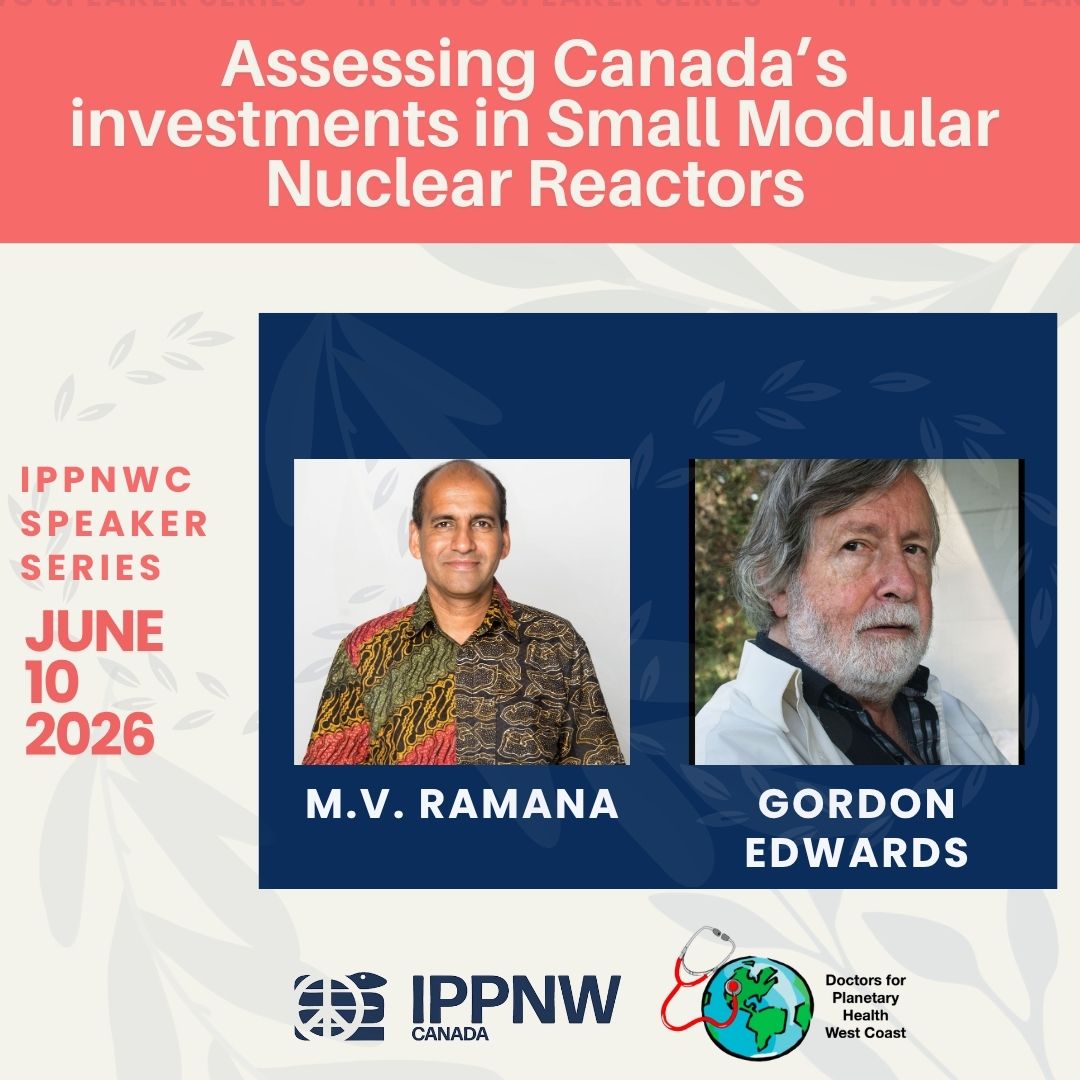
10 June – Assessing Canada’s Investments in Small Modular Nuclear Reactors – https://zoom.us/meeting/register/IiqHA5feRhaEBycOLNTJlA#/registration


Cuba Is Not a Failed State – It Is a Besieged State
PETITION: “Global Appeal to Endorse Palestinian Right of Return of Refugees”
To see nuclear-related stories in greater depth and intensity – go to https://nuclearinformation.wordpress.com
-
Archives
- June 2026 (89)
- May 2026 (306)
- April 2026 (356)
- March 2026 (251)
- February 2026 (268)
- January 2026 (308)
- December 2025 (358)
- November 2025 (359)
- October 2025 (376)
- September 2025 (257)
- August 2025 (319)
- July 2025 (230)
-
Categories
- 1
- 1 NUCLEAR ISSUES
- business and costs
- climate change
- culture and arts
- ENERGY
- environment
- health
- history
- indigenous issues
- Legal
- marketing of nuclear
- media
- opposition to nuclear
- PERSONAL STORIES
- politics
- politics international
- Religion and ethics
- safety
- secrets,lies and civil liberties
- spinbuster
- technology
- Uranium
- wastes
- weapons and war
- Women
- 2 WORLD
- ACTION
- AFRICA
- Atrocities
- AUSTRALIA
- Christina's notes
- Christina's themes
- culture and arts
- Events
- Fuk 2022
- Fuk 2023
- Fukushima 2017
- Fukushima 2018
- fukushima 2019
- Fukushima 2020
- Fukushima 2021
- general
- global warming
- Humour (God we need it)
- Nuclear
- RARE EARTHS
- Reference
- resources – print
- Resources -audiovicual
- Weekly Newsletter
- World
- World Nuclear
- YouTube
-
RSS
Entries RSS
Comments RSS
 nuclear-news