USA nuclear regulators undermining public safety?
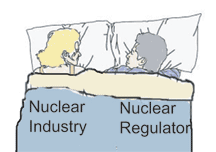 Are federal regulators undermining safety at nuclear reactors? America Blog, by Chris in Paris on 6/20/2011 Federal regulators have been working closely with the nuclear power industry to keep the nation’s aging reactors operating within safety standards by repeatedly weakening those standards, or simply failing to enforce them, an investigation by The Associated Press has found.
The result? Rising fears that these accommodations by the NRC are significantly undermining safety — and inching the reactors closer to an accident that could harm the public and jeopardize the future of nuclear power in the United States…
IAEA likely to rubber stamp Australian company’s plan for dumping radioactive waste in Malaysia
 “How can we monitor daily? The risks of human error are too high,” she said, pointing out that the half-life of thorium was 14 billion years…..Fuziah promised that if the report from the panel, which includes members of the IAEA, was as she anticipated, she will continue to bring the issue to a higher level and exert pressure on authorities.
No confidence in Lynas safety review’, Free Malaysia Today Tashny Sukumaran, June 20, 2011, The IAEA report on the Lynas Corp is bound to be slanted and the human factor will not be taken into account, says Kuantan MP Fuziah Salleh. KUALA LUMPUR: Kuantan MP Fuziah Salleh is already second guessing the International Atomic Energy Agency’s (IAEA) report on the Lynas Corp’s rare earth refinery in Gebeng, Pahang.
She said she has no confidence in the independent panel’s safety review of the RM300 million Lynas Corp rare earth refinery . “I can imagine the outcome will contain acknowledgement of safety concerns, but also on how this refinery can be made safe,” said Fuziah. Continue reading
Giant cover for No 1 nuclear reactor to stop Fukushima radiation to atmosphere
 N-bldg cover to be built, unbuilt, rebuilt, The Yomiuri Shimbun, 21 June 11 IWAKI, Fukushima–-Work to assemble parts of a giant cover for the No. 1 nuclear reactor building at Tokyo Electric Power Co.’s Fukushima No. 1 nuclear power plant is proceeding at a fever pitch at Onahama Port in Iwaki, Fukushima Prefecture.
The giant cover is designed to prevent most radioactive substances from dispersing into the atmosphere from the No. 1 reactor, which was damaged by a hydrogen explosion on March 12.
It will enclose an area of 42 meters by 47 meters and will stand 54 meters high.
To limit workers’ exposure to radiation and shorten the construction period, 62 parts, including pillars, beams and polyester-sheeted panels, are being assembled at the port into a unified structure. After it is confirmed that the parts fit together properly, the cover will be disassembled and transported to the nuclear power plant by ship.
On-site assembly of the components is scheduled to start next Monday. TEPCO plans to complete the work in late September. Final construction of the cover will be carried out by two giant cranes, which will be remote-controlled.A traditional Japanese insertion-only joint method, which does not employ welding or bolts for joining materials, is being used to assemble the cover… http://www.yomiuri.co.jp/dy/national/T110620004790.htm
At last, Grand Canyon to be protected from uranium mining
The moratorium will “reverse a century-long history of damage to the Grand Canyon from uranium mining,”
OBAMA ADMINISTRATION TO BAN URANIUM MINING AT GRAND CANYON, FORBES, OSHA GRAY DAVIDSON Standing at the south rim of the Grand Canyon this morning, Secretary of the Interior Ken Salazar announced that the Obama administration will enact a 20-year ban on new uranium mining in the last remaining unprotected lands surrounding the place President Theodore Roosevelt called “the one great sight which every American should see.”
Mining companies had filed thousands of claims in recent years, but it is unlikely that any of the 3,500 mining claims in the area will receive federal permits when the 20-year ban goes into effect. In March, Arizona’s Department of Environmental Quality (ADEQ) issued permits to three uranium mines on the land – provoking an outcry by native peoples, hunters, hikers, tourism groups and environmental organizations. Continue reading
Radiation – the big safety hazard for nuclear reactors themselves

 Radiation bombards reactors, make them brittle, Google News By JEFF DONN, AP National Writer –20 June 11 No aging problem has been more vexing or dangerous in nuclear power plants than the tendency of reactors to grow brittle. This stubborn problem threatens the main radiation barrier at the plants: the garage-size steel vessels that cradle tons of radioactive fuel.
In certain emergencies, these vessels would flood with cooling water. If the vessel walls are too brittle, they could shatter and spew their radioactive contents into the environment. Continue reading
Unnecessary radiation – too many CT scans in USA hospitals
 Hospitals Nationwide Unnecessarily Perform Double CT Scans, -California Heath Line – June 20, 2011Hundreds of hospitals nationwide routinely perform two chest CT scans on a single patient, needlessly exposing them to double doses of radiation and driving up costs, according to a review of Medicare data, the New York Times reports (Bogdanich/Craven McGinty, New York Times, 6/17).
Unnecessary Testing Patients who receive a double CT scan undergo a contrast and a noncontrast CT scan in succession (Appleby/Rau, Kaiser Health News/Washington Post, 6/18). Although most radiologists say nearly all chest issues can be accurately diagnosed with only one scan, 2008 Medicare data show that some hospitals performed double scans on chest patients more than 80% of the time. According to the Times, a single CT chest scan exposes a patient to 350 times the radiation of a standard chest X-ray (New York Times, 6/17).
Specifically, Medicare data show that 76,781 chest patients, or 5.4%, received double CT scans in 2008. While most hospitals administered them sparingly—a median of 2% of Medicare patients received two scans—618 hospitals performed double scans on at least 10% of Medicare chest patients, and 94 of those hospitals performed double scans on at least 50% of Medicare chest patients (Kaiser Health News/Washington Post, 6/18).
Experts note that double scanning also is common for privately insured patients (New York Times, 6/17). Although the number of overall non-Medicare patients who receive double scans is unknown, HealthPartners, a not-for-profit Minnesota HMO, reports that 7% of its chest patients received double scans in 2010 (Kaiser Health News/Washington Post, 6/18)….http://www.californiahealthline.org/articles/2011/6/20/hospitals-nationwide-unnecessarily-perform-double-ct-scans.aspx
Low dose of radiation causes cataracts
 Eye lens is more vulnerable to radiation: new studies IBN LIVE PTI | Jun 20,2011 There are three main forms of cataract; nuclear, cortical, and posterior sub-capsular (PSC). Among these, PSC is the least common and is associated with exposure to radiation. Till recently, scientists believed that cataract was formed only after the lens received a typical radiation dose, called the threshold dose, of 2Gy for a single dose, and 5 Gy when the exposure occurred in a protracted way. Not any more. Recent studies appear to show that formation of radiation induced cataracts at much lower doses than the current standards. ICRP now considers that the threshold dose for cataract is 0.5Gy. The present ICRP recommendations must serve as a wake-up call for interventional cardiology and radiology professionals, Parthasarathy said. Cataract analysis of 8,607 Chernobyl clean-up workers 12 and 14 years after exposure indicated that posterior sub-capsular or cortical cataracts appeared in 25 per cent of the participants…http://ibnlive.in.com/generalnewsfeed/news/eye-lens-is-more-vulnerable-to-radiation-new-studies/731307.html
Japan experimenting with incineration of radioactive rubble
Environment Ministry to approve incineration of rubble contaminated with radiation, (Mainichi Japan) June 20, 2011 The Environment Ministry has decided to approve the proposed incineration of rubble contaminated with radiation from the tsunami-hit Fukushima nuclear power plant at existing incineration facilities equipped with exhaust gas filters and absorption devices, officials said.
It made the decision after discussing how to safely dispose of rubble contaminated with radiation from the crippled Fukushima No. 1 Nuclear Power Plant.
No law currently provides for ways to dispose of waste contaminated with radiation from a crippled nuclear power plant. After consultations between ministries and agencies concerned, the government decided to apply the Waste Disposal and Public Cleaning Law to the disposal of radioactive rubble.
The ministry had initially urged local governments not to move radioactive rubble out of temporary storage sites. However, it will explain its decision to local governments concerned and ask them to resume their disposal of contaminated rubble as early as the end of this month……….
The government will also try to form a consensus among Fukushima residents about its plan to build final disposal sites for radioactive waste in the prefecture….http://mdn.mainichi.jp/mdnnews/news/20110620p2a00m0na017000c.html
New uranium mining on Grand Canyon stopped for 20 years
20-year ban planned on new Grand Canyon uranium mining, LA Times 20 June 11By Neela Banerjee, The Obama administration announces the proposed ban for 1 million acres of land bordering the Grand Canyon, an area where uranium mining claims have spiked 2,000% in the last seven years.
Mining claims around the Grand Canyon are among the thousands filed by companies along the borders of numerous national parks and wilderness areas.Critics say an outmoded 1872 law is driving the increase in claims in such sensitive places. The law allows corporations to stake out rights to federal lands for mining without a competitive bid and to extract resources without paying royalties.
The ban would strengthen a moratorium on new mining claims and activity, which the administration placed on Grand Canyon border lands two years ago in response to the jump in uranium stakes.Interior Department officials said the agency initially would extend the current moratorium another six months, until December, in order to complete the steps necessary to establish the 20-year ban. Mines currently in operation would not be affected.
Environmentalists, some lawmakers and water utilities serving metropolitan areas in the southwest, including Los Angeles, said the decision would protect the critical Colorado River watershed from possible contamination from uranium mining and would prevent the Grand Canyon panorama from being gradually industrialized…….http://www.latimes.com/news/nationworld/nation/sc-dc-0621-grand-canyon-20110620,0,1196854.story
Nuclear emergency on Missouri
Federal Water Tap, June 20: Flood Effects, Nuclear Power, Dam Removal. CIRCLE OF BLUE, 20 JUNE 2011 Nuclear Emergency on the Missouri Because of snowmelt and record releases from dams managed by the Army Corps of Engineers, the Missouri River has surrounded two nuclear power plants in Nebraska, creating atomic islands on the floodplain. In addition to traditional safety measures, water-filled polyethylene berms are being used as a line of defense to keep the river from inundating the facilities.On Sunday morning, the Cooper plant, 70 miles south of Omaha, filed a “notification of unusual event” with the federal Nuclear Regulatory Commission. It is the lowest of four emergency classifications used by the NRC. The other plant, at Fort Calhoun, submitted such a notice two weeks ago. It has been shut down since April for refueling and won’t be restarted until the flood waters subside. The Omaha World-Herald has more details.
Nuclear Decommissioning
The Nuclear Regulatory Commission has proposed new regulations to guide the decommissioning process. The NRC is clarifying the language used in its statutes to make explicit that residual radioactivity in soil and groundwater should be accounted for in company records. These radioactivity surveys will be used to evaluate decommissioning costs. http://www.circleofblue.org/waternews/2011/federal-water-tap/federal-water-tap-june-20-flood-effects-nuclear-power-dam-removal/
Nuclear Suppliers Group restricting sales of atomic technology
Export Group Could Restrict Key Atomic Tech Sales. Global Security Network June 20, 2011 The 46-nation Nuclear Suppliers Group has acted to prohibit its members from furnishing nuclear fuel enrichment and reprocessing systems to countries outside the Nuclear Nonproliferation Treaty, the Deccan Chronicle reported on Monday (see GSN, May 27).
The initiative prompted apprehension from India, which in 2008 received a waiver allowing it to import sensitive material and technology even as a nuclear-armed state that has not joined the treaty……http://www.globalsecuritynewswire.org/gsn/nw_20110620_7198.php
Nuclear power getting dearer, renewables cheaper – Germany is right
Germany is right to opt out of nuclear The rejection of nuclear power is a result not of German angst but of economic thinking. We must invest in renewable energy, Ulrich Beck, guardian.co.uk, 20 June 2011 Ultimately, the rejection of nuclear is not a result of German angst but of economic thinking. In the long run, nuclear power will become more expensive, while renewable energy will become cheaper. But the key point is that those who continue to leave all options open will not invest. Continue reading
Israel’s nuclear weapons – a threat to Middle East peace?
Israel: An Impediment To A Nuclear-Free Middle East,By Kourosh Ziabari ,The Public Record,Jun 20th, 2011 “……–According to the Federation of American Scientists, Israel now possesses up to 200 nuclear warheads and since it is not a signatory to the Nuclear Non-proliferation Treaty (NPT), it cannot be held accountable over its military nuclear program. ….Since Israel started the development of nuclear weapons in early 1950s, it adopted a so-called policy of “deliberate ambiguity” and concealed its nuclear activities under this counterfeit label to enjoy immunity and avoid responsibility over its nuclear program, meaning that it neither confirms nor denies the possession of nuclear weapons, while even the U.S.-based scientific and research organizations have admitted that it has a perilous nuclear arsenal which is potentially able to evaporate the whole Middle East in a matter of seconds. Continue reading
French government rejecting poll showing unpopularity of nuclear power
French Industry Minister Rejects Poll Backing Nuclear Withdrawal Bloomberg, By Tara Patel June 11 French Industry Minister Eric Besson rejected the findings of an opinion poll that called for the gradual phasing-out of the country’s 58 nuclear reactors…..Fifty-one percent of respondents in an Ifop survey commissioned by the European Green party published March 21 said France’s reactors, along with its nuclear energy policy, should be phased out in the next 25 years. Just 19 percent wanted a more rapid pullout.
France, which depends on nuclear power for about three quarters of its electricity, should “progressively” exit from atomic energy, according to 60 percent of respondents to a Viavoice opinion poll published in today’s Liberation newspaper. Thirty-five percent are against the change, the newspaper said……http://www.bloomberg.com/news/2011-06-20/french-industry-minister-rejects-poll-backing-nuclear-withdrawal.html
Tokyo residents fearful, as radiation ‘hot spots’ confirmed, far from Fukushima
Some city, ward, town and village governments in the Tokyo metropolitan area have started doing their own radiation checks. An increasing number of citizens also are apparently checking radiation levels themselves…..
 Precise response needed to quell ‘hot spot’ concerns,The Yomiuri Shimbun,18 June 11 As the crisis at the Fukushima No. 1 nuclear power plant continues to unfold, high radiation readings have been confirmed in several isolated areas outside evacuation zones. Residents in these areas are feeling increasingly anxious about their radiation exposure.The government must quickly expand the scope of radiation measurements to grasp the actual condition on the ground and take steps to remedy the problem.”Hot spots” with high levels of radiation also were detected after the 1986 Chernobyl nuclear meltdown in the former Soviet Union. Some were several thousand kilometers from the Chernobyl plant. Continue reading
1 This Month
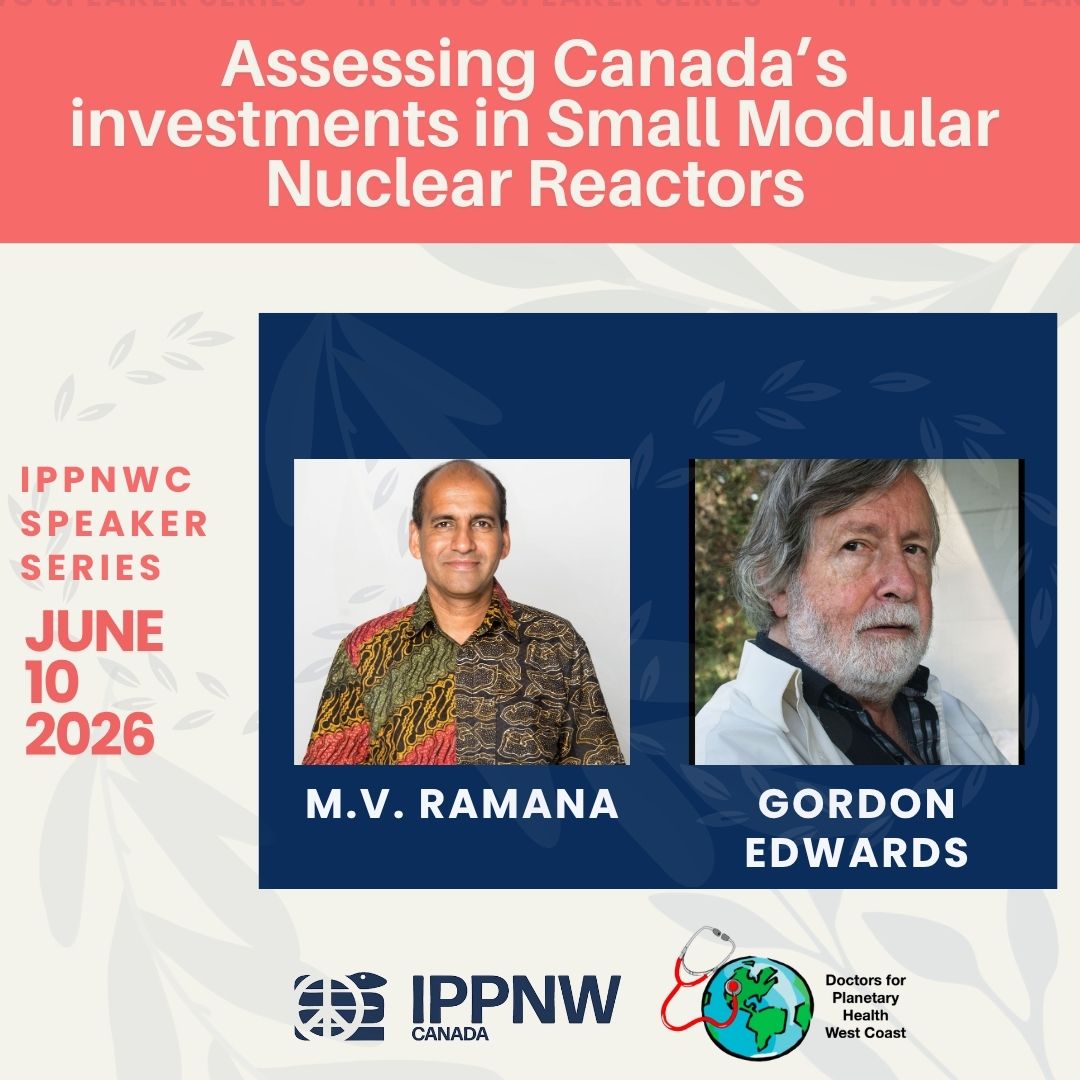
10 June – Assessing Canada’s Investments in Small Modular Nuclear Reactors – https://zoom.us/meeting/register/IiqHA5feRhaEBycOLNTJlA#/registration


Cuba Is Not a Failed State – It Is a Besieged State
PETITION: “Global Appeal to Endorse Palestinian Right of Return of Refugees”
To see nuclear-related stories in greater depth and intensity – go to https://nuclearinformation.wordpress.com
-
Archives
- June 2026 (88)
- May 2026 (306)
- April 2026 (356)
- March 2026 (251)
- February 2026 (268)
- January 2026 (308)
- December 2025 (358)
- November 2025 (359)
- October 2025 (376)
- September 2025 (257)
- August 2025 (319)
- July 2025 (230)
-
Categories
- 1
- 1 NUCLEAR ISSUES
- business and costs
- climate change
- culture and arts
- ENERGY
- environment
- health
- history
- indigenous issues
- Legal
- marketing of nuclear
- media
- opposition to nuclear
- PERSONAL STORIES
- politics
- politics international
- Religion and ethics
- safety
- secrets,lies and civil liberties
- spinbuster
- technology
- Uranium
- wastes
- weapons and war
- Women
- 2 WORLD
- ACTION
- AFRICA
- Atrocities
- AUSTRALIA
- Christina's notes
- Christina's themes
- culture and arts
- Events
- Fuk 2022
- Fuk 2023
- Fukushima 2017
- Fukushima 2018
- fukushima 2019
- Fukushima 2020
- Fukushima 2021
- general
- global warming
- Humour (God we need it)
- Nuclear
- RARE EARTHS
- Reference
- resources – print
- Resources -audiovicual
- Weekly Newsletter
- World
- World Nuclear
- YouTube
-
RSS
Entries RSS
Comments RSS
 nuclear-news