Electromagnetic radiation, as well as ionising radiation, may be harmful

Christina Macpherson's websites & blogs
Once again, I am reluctant to get involved in a new area, not really related at all to nuclear power. We KNOW that ionising radiation causes cell damage, cancer, and birth deormities.
Electromagnetic radiation is different. We don’t KNOW that it’s harmful. But – it might be.
New Studies Reveal Stunning Evidence That Cell Phone Radiation Damages DNA, Brain and Sperm Newswise24 May 11 — Cell phones are a ubiquitous part of our lives. New independent studies offer stunning proof that confirms findings from the Council of Europe—pulsed digital signals from cell phones disrupt DNA, impair brain function and lower sperm count. Continue reading
UK plan to dump nuclear waste in sea

 Hinkley Point nuclear waste sea disposal plan Nuclear waste is currently stored in vaults at Hinkley Point, BBC News, 23 May 2011 Plans being developed to deal with nuclear waste at Hinkley Point A in west Somerset will see radioactive gas and liquid released into the sea.The power station began decommissioning in 2001 and is working on a system to put “intermediate” waste in vats of acid to reduce it down.
Magnox, the company that manages the site, said there would be no risk to public health or the environment.
But a nuclear expert questioned the controls in place at Hinkley Point……John Large, a nuclear consultant who has worked with power companies and Greenpeace, said: “If you look at the history and the development of the British nuclear industry, and look at the calamity that was caused by radioactive discharges around Sellafield, if the past practice is a sign I don’t think sufficient guards and controls will be in place at this station.”
Before this process can start, it needs to be approved by the Environment Agency and the Office for Nuclear Regulation, and the company will have to apply for planning permission for a new building….http://www.bbc.co.uk/news/uk-england-somerset-13501260
Doubts on safety of South Asian nuclear facilities
In a webcast lecture made available late Friday, Scott D Sagan said that if developed countries with competent civilian controls can make errors it was safe to assume that countries with “less vigorous civilian controls, less professionalised militaries” will behave in dangerous ways.
According to Sagan, a professor of political science at Stanford University, some states that have nuclear weapons don’t see them as a deterrent but as a shield behind which they can take more aggressive action…..http://tribune.com.pk/story/174148/south-asian-nuclear-safety-in-fallible-hands-us-expert/
Nuclear power and unstable Middle east regimes
Nuclear Power and Unstable Regimes Council on Foreign Relations, Jonathon Pearl 23 May 11, “………However, many of the same regimes that have signed some form of nuclear agreement with a foreign supplier (eg, Egypt, Libya, Tunisia, and Bahrain) have already been toppled or face serious domestic threats to regime survival. Other states in the region such as Jordan and Saudi Arabia, which are relatively more stable, have witnessed their share of domestic protests and are increasingly concerned about their future. Continue reading
Massive radioactive wastes for Malaysia, from Australian company Lynas
- the space for underground wastes storage cells is very limited due to the groundwater being extremely close to the surface;
- the ground is susceptible to subsidence as it is a former peat swamp area;
Lynas plant rushed ahead before radiation study malaysiaKini 23 May 11SM Mohamed Idris, president of Consumers Association of Penang and Sahabat Alam Malaysia
— The Lynas plant in Kuantan is unravelling into a nightmare. The lanthamide concentrates (rare earths) from Australia that Lynas will import into Malaysia contain thorium AND uranium, which suggests the processing in Kuantan will produce massive amount of radioactive wastes. Continue reading
Warning to patients on medical radiation
 exposure to radiation from a single diagnostic medical procedure is thought to produce little or no risk to the patient.
However, repeated exposure to ionizing radiation is becoming more common, particularly in acute medical settings such as hospitals
Health-care radiation: How big a problem? The Durango Herald, Dr. Matthew A. Clark, 24 May 11, With advancing medical technologies, health-care decisions are becoming more and more confusing for the general public. Patients need to take a proactive role in informing themselves about their health care……the effect of radiation exposure from diagnostic medical procedures on long-term health. With the increase in use of these procedures, including CAT scan and fluoroscopy, there has been a significant increase in exposure of Americans to ionizing radiation. Ionizing radiation is the kind of radiation that can damage the body’s cells…. Continue reading
Costly necessity to buy higher land for nuclear reactors
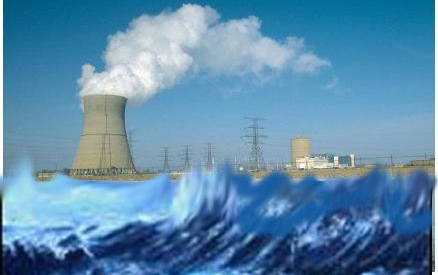 OECD Says Nuclear Land Costs to Rise by Up to 10% Post-Fukushima Bloomberg By Lars Paulsson – May 23, 2011 The cost of buying land to build nuclear reactors may increase by as much as 10 percent because the earthquake and tsunami in Japan on March 11 will force developers to buy in safer areas, according to the Organization for Economic Cooperation and Development’s Nuclear Energy Agency.
Luis Echavarri, the agency’s director general, spoke on May 17 by phone from Paris.
On nuclear land costs: “I think the cost associated to the location could increase. You need locations better protected against earthquakes, tsunamis and floods. You will have to build plants at higher elevation than the sea and river levels. I think we are talking of something between 5 and 10 percent, but that is very significant.”..
Germany managing well teh transition away from nuclear power
Germany copes without bulk of nuclear power, By Vera Ecket and Muriel Boselli, FRANKFURT, May 23 (Reuters) – Germany is coping without about three quarters of its nuclear power capacity by burning more climate-warming coal, reaping the rewards of renewables investments, and importing more French atomic energy. Continue reading
Westinghouse nuclear reactor design flaws
NRC puts hold on Westinghouse reactor approval, Charlotte Business Journal – by John Downey May 23, 2011 The U.S. Nuclear Regulatory Commission has put a hold on the certification of Westinghouse’s AP1000 nuclear reactor after discovering mistakes in some of Westinghouse’s calculations about its reactor shield building…….The NRC announced its decision Friday. Anti-nuclear groups praised the announcement, saying it represented a major setback for the nuclear industry that raised doubts about construction of any AP1000s.
“This unsafe reactor design had been the cornerstone of efforts to build new nuclear reactors in the United States,” Tom Clements, an anti-nuclear campaigner for S.C. Friends of the Earth, says in a prepared statement. “The fact that the Nuclear Regulatory Commission, which often operates as an industry lap dog, is voicing concerns is a sign of just how serious these design flaws are.”…
US NRC had to admit safety problems with new Westinghouse nuclear reactor
Another nail in the coffin for the “nuclear renaissance” Greenpeace by Jarred Cobb – May 23, 2011 The Nuclear Regulatory Commission (NRC) released a statement on Friday about the new Westinghouse AP1000 nuclear reactor. In the grand tradition of breaking bad news on a Friday, the NRC was trying to bury a significant blow to the so-called “nuclear renaissance.” After a review of the Toshiba-designed reactor, the NRC found: “more problems regarding the AP1000’s shield building, as well as the peak accident pressures expected within containment.” Continue reading
Continuing catastrophe of Fukushima threatens Japan’s future
it is the continuing nuclear catastrophe at Fukushima, just 200 kilometres north of Tokyo, that really threatens Japan’s future.
The ‘myth of safety’ in Japan’s nuclear plants THE NATIONAL POST , Peter Goodspeed: 21 May 11“……….The world’s third-largest economy has suffered nearly US$400-billion in damage and been thrust into recession. Japanese manufacturers have been staggered by power shortages and breaks in their supply chains, and are not expected to return to business as usual before the fall. Continue reading
Nuclear risks with unstable Pakistan
Pakistan is the nuclear Somalia…–By: Sumantra Maitra 05/23/11 The Examiner Pakistani Talibans last night attacked a heavily secured Air Force base in Karachi, Pakistan at approximately 2 AM. Around 15-20 heavily armed terrorists, with rocket propelled granades, shoulder fired missile launchers, and assault rifles, attacked the Air Force base PNS Mehran, which also houses the Pakistani Navy air group, right at the heart of the commercial capital of Pakistan raises question on the failing state. Continue reading
Japanese rice contaminated with plutonium
|
Media Silent About Plutonium Contamination of Japanese Rice, Global Tech, 23 May 11
|
|
The Japanese Business Press reported on May 14 that a rice field more than 50 kilometers away from the Fukushima nuclear plant has tested for high levels of deadly plutonium. A “certain food manufacturing company” conducted the independent test that reported data different from data the Japanese government released, according to a translation of the news article
The corporate media outside of Japan did not mention the test or the increased radiation affecting the staple crop. Since the start of the disaster, the corporate media has parroted statements from TEPCO and the Japanese government in its coverage of the worst nuclear catastrophe since Chernobyl. In addition, the corporate media has all but ignored extremely high levels of nuclear radioactive contamination recently detected in Japan. “The latest joint US and Japan survey shows extremely high levels of nuclear radioactive contamination, with radiation levels higher than Chernobyl evacuation limits, now span over 800 kilometers in Japan,” writes Alexander Higgins
The total area contaminated with radiation from the Fukushima No. 1 nuclear power plant is estimated at about 800 square kilometers, or about 40 percent the size of Tokyo, according to a radiation map created by the science ministry and U.S. Department of Energy,” reports Asahi. “The report uses the same level of contamination (555,000 becquerels or higher of cesium-137) that was used to issue compulsory evacuation orders in the Chernobyl nuclear accident in 1986.” It is not likely the corporate media missed the news. Asahi has alliances with the International Herald Tribune, which is owned by the New York Times. According to the map about 800 square kilometers are contaminated with accumulated cesium-137 of 600,000 becquerels or higher per square mete
|
More radiation leakage from Fukushima nuclear power plant
 Japan reports more radiation leakage TOKYO, May 22 (UPI) –– At least 250 tons of radioactive water spilled into the Pacific Ocean from Japan’s earthquake-damaged Fukushima nuclear power plant, officials said.
The Tokyo Electric Power Co. said the radiated water leaked for 41 hours beginning May 10 from the No. 3 reactor at the site, where four of six reactors were damaged in the magnitude-9 earthquake and ensuing tsunami, Kyodo News reported. At a Sunday news conference in Tokyo, utility spokesman Junichi Matsumoto told reporters Tepco has drafted plans to install a water-circulation system to cool the spent-fuel pools at the plant by the end of July, The Wall Street Journal reported.
Since the disaster, officials have scrambled to prevent the radioactive cores from overheating and releasing catastrophic radiation clouds. As of Sunday, part of the stop-gap measures still involved the use of fire hoses to pump water into the reactors, the Journal said. Matsumoto acknowledged radioactive vapor can still be seen “depending on the weather and wind direction of the day,” the Journal said……Japan reports more radiation leakage – UPI.com
Staggering financial costs of Fukushima continue to rise
 it is clear that holes not only exist in the reactors at Fukushima but also in plans to bring the crisis under control……the issue of who is left holding the bag for the many costs associated with decontamination of the plant and surrounding facilities as well as rebuilding the dozens of communities wiped out by the tsunami. The amounts are staggering. Bank of America Corp.’s Merrill Lynch estimates TEPCO may face claims of 11 trillion yen ($136 billion).
Report From Tokyo: Left Holding the Bag,H UFFINGTON POST, David Wagner, 23 May, 11, Each week that passes here brings new revelations about the unstable nature of the nuclear facility at Fukushima as a result of the earthquake and tsunami on March 11th. Most recently, it has been confirmed by Tokyo Electric Power (TEPCO) that units #1, #2 and #3 at the Daiichi Fukushima plant all have substantial contaminated water in the basements of each reactor building, reinforcing the suspicion that the containment vessels are damaged as they are not holding the water. This creates additional challenges for TEPCO as it tries to set up a continuous cooling system that will eliminate the threat of radiation leaks into the environment. Continue reading
1 This Month
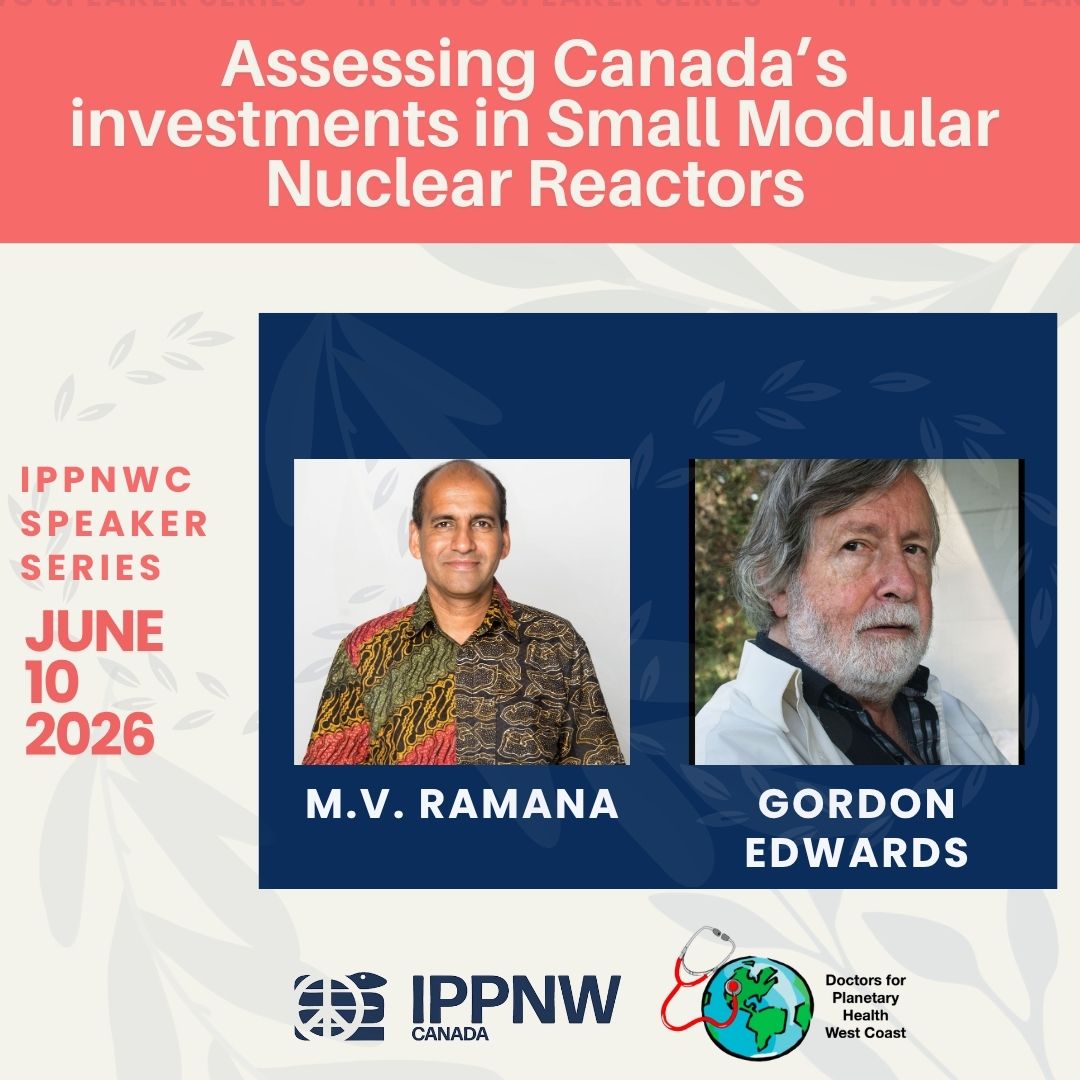
10 June – Assessing Canada’s Investments in Small Modular Nuclear Reactors – https://zoom.us/meeting/register/IiqHA5feRhaEBycOLNTJlA#/registration


Cuba Is Not a Failed State – It Is a Besieged State
PETITION: “Global Appeal to Endorse Palestinian Right of Return of Refugees”
To see nuclear-related stories in greater depth and intensity – go to https://nuclearinformation.wordpress.com
-
Archives
- June 2026 (89)
- May 2026 (306)
- April 2026 (356)
- March 2026 (251)
- February 2026 (268)
- January 2026 (308)
- December 2025 (358)
- November 2025 (359)
- October 2025 (376)
- September 2025 (257)
- August 2025 (319)
- July 2025 (230)
-
Categories
- 1
- 1 NUCLEAR ISSUES
- business and costs
- climate change
- culture and arts
- ENERGY
- environment
- health
- history
- indigenous issues
- Legal
- marketing of nuclear
- media
- opposition to nuclear
- PERSONAL STORIES
- politics
- politics international
- Religion and ethics
- safety
- secrets,lies and civil liberties
- spinbuster
- technology
- Uranium
- wastes
- weapons and war
- Women
- 2 WORLD
- ACTION
- AFRICA
- Atrocities
- AUSTRALIA
- Christina's notes
- Christina's themes
- culture and arts
- Events
- Fuk 2022
- Fuk 2023
- Fukushima 2017
- Fukushima 2018
- fukushima 2019
- Fukushima 2020
- Fukushima 2021
- general
- global warming
- Humour (God we need it)
- Nuclear
- RARE EARTHS
- Reference
- resources – print
- Resources -audiovicual
- Weekly Newsletter
- World
- World Nuclear
- YouTube
-
RSS
Entries RSS
Comments RSS
 nuclear-news