Excess radiation exposure to woman at Fukushima
Woman at Fukushima Nuclear Plant Received Excess Level of Radiation, Forbes, Apr. 27 2011 – A woman working at the crippled Fukushima Daiichi nuclear plant (FDI) was exposed to radiation three times higher than the legal limit, according to a statement today by the plant operators.
The woman worked at FDI for 11 days in March, according to the Tokyo Electric Power Company (TEPCO), after the March 11th crisis began. TEPCO didn’t say why it waited a month to make the news public.
The woman was exposed to 17.55 millisieverts of radiation. The legal exposure limit for female nuclear plant workers in Japan is 5 millisieverts over 3 months…….TEPCO minimized the incident, saying that, “we have confirmed by a medical diagnosis that there is no impact on her health.”
Such a statement can be misleading. Only extremely high doses of radiation have an immediate impact on a person’s health. The primary threat to nuclear workers is the long-term prospect of developing cancer from lower levels of radiation…..http://blogs.forbes.com/oshadavidson/2011/04/27/woman-at-fukushima-nuclear-plant-received-excess-level-of-radiation/
How the nuclear establishment distorts radiation surveys
One problem is that the survey only calculates mortality ratios, ignoring people who might have cancer but are still alive at the time of the survey. Such obvious methodological bias is frequent in this sort of surveys. In France and other countries, another bias is the tendency to ignore contract workers, though they receive the highest cumulative radioactive doses. Therefore, it is difficult to resist the conclusion that the very goal of these epidemiological surveys is to minimize the risks of nuclear radiation and encourage the nuclear industry’s business as usual.
Dying for TEPCO?Fukushima’s Nuclear Contract Workers, TheAsiaPacific Journal , Paul Jobin 28 April 11, “…..What is the objective of epidemiological surveys?An epidemiological survey published in March, just before the catastrophe, was based on a huge cohort of 212,000 persons recorded between 1990 and 1999, out of the total of 277,000 who had worked in nuclear plants. The survey found a significant mortality ratio for only one type of leukemia and judged that other forms of cancer among this population could not be attributed to their exposure to radiation at nuclear plants. Continue reading
Government and nuclear industry intertwined in Japan
 nuclear industry officials, bureaucrats, politicians and scientists — have prospered by rewarding one another with construction projects, lucrative positions, and political, financial and regulatory support. ……Japan would make the sale of nuclear reactors and technology the central component of a long-term export strategy to energy-hungry developing nations. A new company, the International Nuclear Energy Development of Japan, was created to do just that. Its shareholders were made up of the country’s nine main nuclear plant operators, three manufacturers of nuclear reactors and the government itself.
Safety Left Out in Japan’s ‘Nuclear  Power Village, Culture of Complicity Tied to Stricken Nuclear Plant, New York Times, By NORIMITSU ONISHI and KEN BELSON, April 26, 2011 “……..Revolving Door In Japan, the web of connections between the nuclear industry and government officials is now popularly referred to as the “nuclear power village.” The expression connotes the nontransparent, collusive interests that underlie the establishment’s push to increase nuclear power despite the discovery of active fault lines under plants, new projections about the size of tsunamis and a long history of cover-ups of safety problems. Continue reading
Fukushima will eventually be many times worse than Chernobyl
 Chernobyl is over. Fukushima hasn’t really begun. Chernobyl released a huge radioactive cloud when it blew up. Fukushima will exceed the Chernobyl release in a year no matter what else happens…..Fukushima will be many times worse than Chernobyl and will continue for, possibly, hundreds of years.
Fukushima Could Be Worse — And It Will Be, April 25,  2011, Hawaii News Daily, By Tom Burnett “.. F-Daiichi is releasing 154 teraBecquerels of radionuclide particulate matter a day. Almost all of the reports repeat the statement that Fukushima has (so-far) released only about 10% of the radiation Chernobyl released. No problem. Well, they say, “It COULD have been worse.” IT WILL BE! Continue reading
Majority of Americans expect eventual USA nuclear crisis
Poll: Most Americans think a nuclear accident is likely here, Miami Herald, BY DAVID LIGHTMAN, 27 April 11, MCCLATCHY NEWSPAPERS, WASHINGTON — Most Americans fear that the United States someday could face the kind of nuclear emergency that’s plagued Japan in recent weeks, according to a new McClatchy Newspapers-Marist poll.
“There’s clearly a good deal of concern, and there’s division about whether we’re suited to handle this,” said Lee Miringoff, the director of the Marist Institute for Public Opinion in New York, which conducted the survey.
“Nuclear power is very controversial,” he noted.
The McClatchy-Marist survey found that a solid majority of Americans – 57 percent – think that a nuclear crisis is probable here; 41 percent thought such a crisis was likely, while another 16 percent said it was very likely.
Far fewer think it’s not going to happen: 31 percent said it wasn’t very likely, while 9 percent said it wasn’t likely at all…….Overall, the poll’s findings “are directed by attitude, not demographics. They cut across the traditional political demarcations. This is not a Democratic or Republican issue,” Miringoff said.
http://www.miamiherald.com/2011/04/26/2186643/poll-most-americans-think-a-nuclear.html#ixzz1KkwV1IxD
Jaitapur anti nuclear protestors continue, despite police crackdown
Fresh charges against Sena MLA Salvi for Jaitapur role, Times of India, Simit Bhagat, TNN | Apr 27, 2011, MUMBAI: The Ratnagiri police have slapped fresh charges on Shiv Sena MLA Rajan Salvi for his role in the protest against the Jaitapur nuclear power project in Sakhri Nate village on April 18. The violent protest led to police firing, which caused the death of a local fisherman. …..In Mumbai, around 300 activists from Left parties like the CPI and the CPI(M), and environmental activists demonstrated against the Jaitapur nuclear project.shouted slogans against the nuclear power plant and took out a rally from Dadar station till Lower Parel.
The idea of the rally was to protest against the repressive measures being used by the police to crush any peaceful protests against the nuclear power plant,” said Vivek Sundara, an activist from Azadi Bachao Andolan, who was a part of the rally.
Krishan Takhar, a student of Tata Institute of Social Sciences (TISS) said, “We will continue to protest against the nuclear power plant ….http://timesofindia.indiatimes.com/city/mumbai/Fresh-charges-against-Sena-MLA-Salvi-for-Jaitapur-role/articleshow/8094659.cms
No room for complacency about Japan’s nuclear reactors
Every functional nuclear plant is being pushed to the limit and beyond in order to maintain a semblance of normality – but they are ALL in bad repair and are sitting ducks for the next mega-quake….or for ONE overworked plant manager to make a bad decision. Or simply overuse…………There also seem to be problems at :
Onagawa reactor #3
Fukushima Daini reactor #3
Tokai Reactor #3
Kashiwazaki reactor #3……the core is generating deadly radiation
Fukushima Could Be Worse — And It Will Be, April 25, 2011, Hawaii News Daily, By Tom Burnett “……..I have information from Yoichi ‘boots on the ground’ that smoke was emitting from Kashiwazaki last week after the MAG 7,1 EQ. which occurred off Honshu on 7 APR 2011. Continue reading
How a Fukushima safety whistleblower was blackballed
Despite a new law shielding whistle-blowers, the regulator, the Nuclear and Industrial Safety Agency, divulged Mr. Sugaoka’s identity to Tokyo Electric, effectively blackballing him from the industry
Safety Left Out in Japan’s ‘Nuclear Power Village, Culture of Complicity Tied to Stricken Nuclear Plant, New York Times, By NORIMITSU ONISHI and KEN BELSON, April 26, 2011, TOKYO — Given the fierce insularity of Japan’s nuclear industry, it was perhaps fitting that an outsider exposed the most serious safety cover-up in the history of Japanese nuclear power. It took place at Fukushima Daiichi, the plant that Japan has been struggling to get under control since last month’s earthquake and tsunami. Continue reading
World Health Organisation under the thumb of International Atomic Energy Agency
 Nuclear apologists play shoot the messenger on radiation, The Age, Helen Caldicott, April 26, 2011 ”…..In the early days of nuclear power, WHO issued forthright statements on radiation risks, such as its 1956 warning: ”Genetic heritage is the most precious property for human beings. It determines the lives of our progeny, health and harmonious development of future generations. As experts, we affirm that the health of future generations is threatened by increasing development of the atomic industry and sources of radiation.”
After 1959, the organisation made no more statements on health and radioactivity.
What happened?
 On May 28, 1959, at the 12th World Health Assembly, WHO drew up an agreement with the International Atomic Energy Agency. A clause of this agreement says the WHO effectively grants the right of prior approval over any research it might undertake or report on to the IAEA – a group that many people, including journalists, think is a neutral watchdog, but which is, in fact, an advocate for the nuclear power industry. Its founding papers state: ”The agency shall seek to accelerate and enlarge the contribution of atomic energy to peace, health and prosperity through the world.”
The WHO’s subjugation to the IAEA is widely known within the scientific radiation community,.. http://www.theage.com.au/opinion/society-and-culture/nuclear-apologists-play-shoot-the-messenger-on-radiation-20110425-1du2w.html#ixzz1KfXmalLq
Nuclear Safety Commission – hourly Fukushima Radiation forecasts
Nuclear Body To Issue Hourly Radiation Forecasts, TOKYO (Nikkei) April 26–The Nuclear Safety Commission said Monday that it will start issuing forecasts of how airborne radioactive material may be spreading out by the hour from the Fukushima Daiichi power plant.
Starting Tuesday, the commission’s Web site will show hour-by-hour data from SPEEDI, a system that analyzes and predicts dispersal of radioactive material in the event of a nuclear emergency.
Run by the government-affiliated Nuclear Safety Technology Center, the system has taken flak for publishing results just twice since the Fukushima crisis began, despite 11.3 billion yen in development and operating costs……..http://e.nikkei.com/e/fr/tnks/Nni20110426D25JFA23.htm
Radioactive hazard of forest fires around Chernobyl
If there is a catastrophic or “crown” fire (a high-intensity wildfire affecting a large part of the CEZ) radionuclides could be dispersed over a wide area; a big fire could send radioactivity as far as Britain
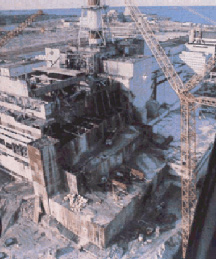 Forest fires around Chernobyl could release radiation, scientists warn, Patrick Evans in Chernobyl, The Guardian, Tuesday 26 April 2011 A consortium of Ukrainian and international scientists is making an urgent call for a $13.5m (£8.28m) programme to prevent potentially catastrophic wildfires inside the exclusion zone surrounding Chernobyl’s ruined nuclear power plant. Continue reading
The power of community decentralised renewable energy
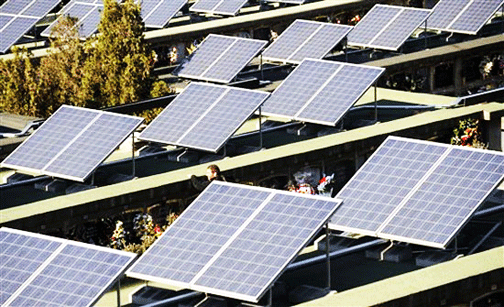 Reach Clean Energy Goals Faster and Cheaper With Community Power, Renewable Energy World, By John Farrell , 25 April 2011 Reaching our renewable energy goals can be met cost-effectively, more quickly, and with greater economics benefits if Californians focus on decentralized renewable energy.
That’s the powerful conclusion in the recently released report, Community Power: Decentralized Renewable Energy in California, and the lessons are applicable in every state across America. These lessons are attracting attention, as large-scale desert solar projects and new transmission lines meet stiff resistance from an increasingly broad-based opposition. The cost-competitiveness of renewable energy is not news to anyone familiar with the industry, but Weinrub shows that for the most prominent decentralized renewable energy source – solar power – decentralized production from photovoltaics (PV) has better economics than centralized solar thermal power plants. His research is reinforced by data from the California Solar Initiative that shows that large majority of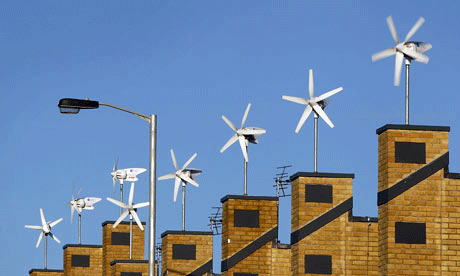 decentralized solar PV’s economies of scale are captured by projects as small as 10 kilowatts. Research from the Institute for Local Self-Reliance shows that wind economies of scale are similarly limited for larger wind projects.
Weinrub also shows that California has plenty of decentralized renewable energy potential – with rooftop solar alone – to meet its ambitious renewable energy target (33% by 2020). As he notes, the actual potential far exceeds the necessary amount required to meet the state standard:…. http://www.renewableenergyworld.com/rea/blog/post/2011/04/reach-clean-energy-goals-faster-and-cheaper-with-community-power
German government under pressure from huge anti nuclear rallies

 Demonstrators in Germany Demand End of Nuclear Power, New York Times, By JUDY DEMPSEY, April 25, 2011 BERLIN — An estimated 120,000 people demonstrated across Germany on Monday, protest organizers said, demanding an end to nuclear power and increasing pressure on Chancellor Angela Merkel’s government to speed up the closing of the country’s 17 nuclear plants.
Demonstrations that take place each year over the Easter holidays have tended in the past to be pacifist, for instance, calling for the end of the war in Afghanistan. But this year, because of the 25th anniversary of the nuclear accident at the Chernobyl plant in Ukraine, in addition the nuclear crisis at the Fukushima nuclear plant in Japan, the rallying theme was nuclear power.
Some of the biggest protests took place in the western state of Lower Saxony, where, according to the organizer’s spokesman, Peter Dickel, more than 20,000 demonstrators gathered near the Grohnde nuclear plant.
In the northern state of Schleswig-Holstein, 17,000 protested at the Krümmel nuclear plant, Mr. Dickel said.
In Bavaria, which has three nuclear plants, more than 15,000 people gathered near the Grafenrheinfeld power plant and thousands of others marched toward the Isar 1 and Isar 2 plants. “We are many, we will be more and we will not keep quiet until the last nuclear power plant is shut,” said Martin Heilig, an organizer of the demonstrations there…….http://www.nytimes.com/2011/04/26/world/europe/26iht-germany26.html
Al Qaida plot to use nuclear weapon?
 WikiLeaks unveils Al-Qa’ida plot, Montreal Gazette, BY HOLLY WATT, LONDON DAILY TELEGRAPH APRIL 25, 2011 LONDON – Guantanamo interrogators have uncovered a determined attempt by Al-Qa’ida to attack Western countries using chemical or nuclear weapons, according to files made public through WikiLeaks…
… One of the terrorist group’s most senior figures warned that Al-Qa’ida had obtained and hidden a nuclear bomb in Europe that would be detonated if Osama bin Laden was killed or captured. Continue reading
“Star” computer virus joins “Stuxnet” attack on Iran’s nuclear program
 Iran: Country under attack by second computer virus, The Washington Post, By Thomas Erdbrink and Joby Warrick, , April 25, TEHRAN —An Iranian military official revealed on Monday that the country had been attacked by a new computer virus apparently aimed at nuclear facilities, an acknowledgment that seemed to suggest a broader campaign by foreign saboteurs to undermine Iran’s atomic energy program.
The new computer worm has been dubbed “Stars” by the Iranians and described as an “espionage virus,” although few details were made public. In the same announcement, the military also confirmed continuing problems with an earlier virus, “Stuxnet,” which began wreaking havoc on Iran’s main uranium enrichment facility in 2009…………..http://www.washingtonpost.com/world/iran-country-under-attack-by-second-computer-virus/2011/04/25/AFudkBjE_story.html
1 This Month
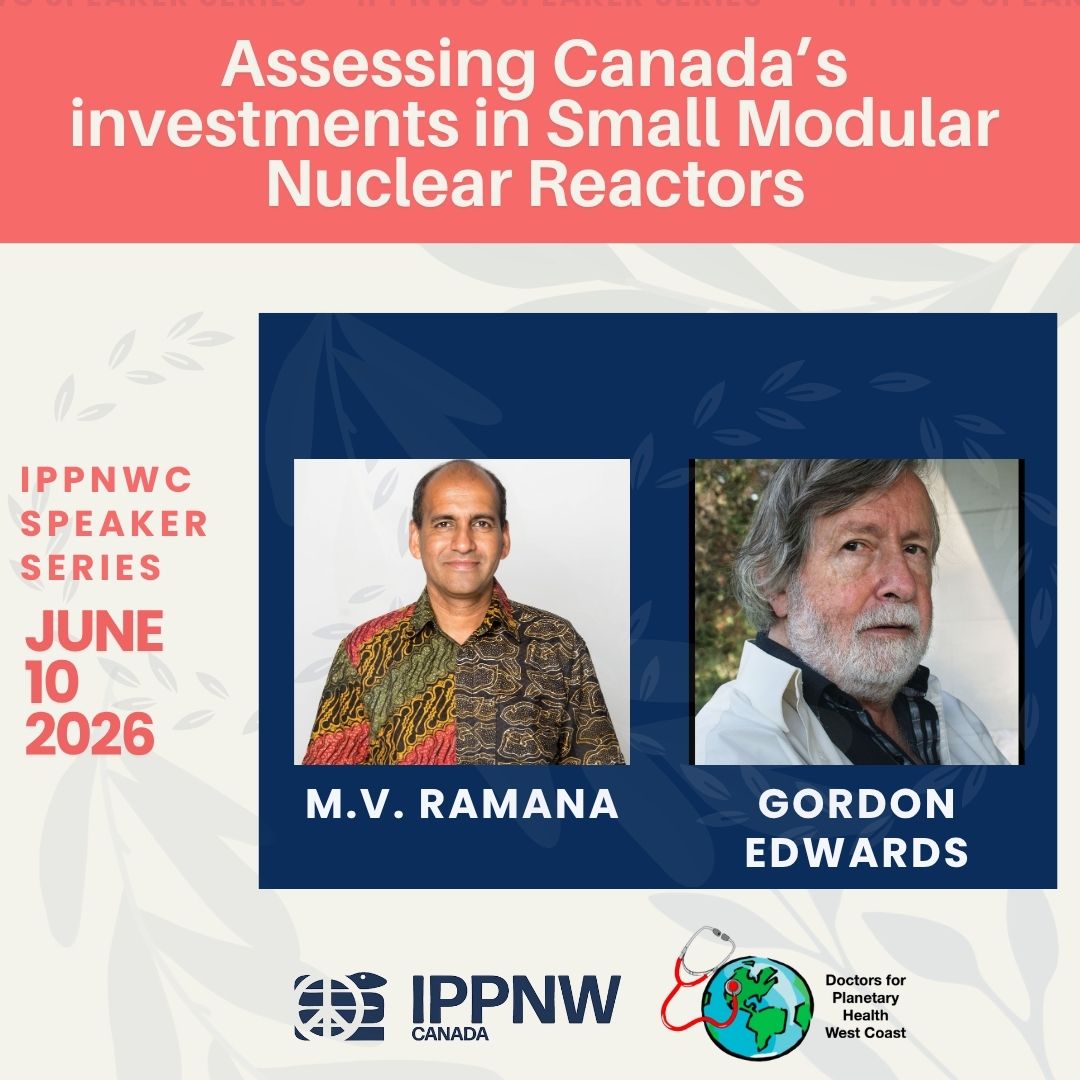
10 June – Assessing Canada’s Investments in Small Modular Nuclear Reactors – https://zoom.us/meeting/register/IiqHA5feRhaEBycOLNTJlA#/registration


Cuba Is Not a Failed State – It Is a Besieged State
PETITION: “Global Appeal to Endorse Palestinian Right of Return of Refugees”
To see nuclear-related stories in greater depth and intensity – go to https://nuclearinformation.wordpress.com
-
Archives
- June 2026 (89)
- May 2026 (306)
- April 2026 (356)
- March 2026 (251)
- February 2026 (268)
- January 2026 (308)
- December 2025 (358)
- November 2025 (359)
- October 2025 (376)
- September 2025 (257)
- August 2025 (319)
- July 2025 (230)
-
Categories
- 1
- 1 NUCLEAR ISSUES
- business and costs
- climate change
- culture and arts
- ENERGY
- environment
- health
- history
- indigenous issues
- Legal
- marketing of nuclear
- media
- opposition to nuclear
- PERSONAL STORIES
- politics
- politics international
- Religion and ethics
- safety
- secrets,lies and civil liberties
- spinbuster
- technology
- Uranium
- wastes
- weapons and war
- Women
- 2 WORLD
- ACTION
- AFRICA
- Atrocities
- AUSTRALIA
- Christina's notes
- Christina's themes
- culture and arts
- Events
- Fuk 2022
- Fuk 2023
- Fukushima 2017
- Fukushima 2018
- fukushima 2019
- Fukushima 2020
- Fukushima 2021
- general
- global warming
- Humour (God we need it)
- Nuclear
- RARE EARTHS
- Reference
- resources – print
- Resources -audiovicual
- Weekly Newsletter
- World
- World Nuclear
- YouTube
-
RSS
Entries RSS
Comments RSS
 nuclear-news