Nuclear energy neither clean nor safe
Nuclear energy neither clean nor safe
Amy Collard, Natural Resources Critic, Green Party of Canada 1 July 09 “Several assumptions need to be corrected. Canada’s energy mix is 59.8 per cent hydro, 16.1 per cent coal, 11.6 per cent nuclear, 6.7 per cent oil, 4.9 per cent natural gas and 0.9 per cent renewables……………………..Replacing all nuclear and fossil fuel energy sources with renewables by 2040 would result in this mix: 47.2 per cent hydro; 13.8 per cent wind; 7.2 per cent solar; 5.5 per cent tidal/wave; 23.1 per cent geothermal; 3.2 per cent other renewables, such as biomass and waste water.
This is a manageable expectation, especially in Ontario where we have made a commitment through the Green Energy Act. The GTA has made significant progress in both renewable sources of energy and energy conservation.
Renewable energy is clean, safe and cost effective. The same cannot be said about nuclear.
Uranium mining is not clean; the transport of radioactive materials is hazardous; waste management solutions do not ensure safety; and nuclear weapons proliferation is a serious threat.
TheStar.com | Opinion | Nuclear energy neither clean nor safe
The nuclear option [Areva]
The nuclear option – AREVA
appomattox’s posterous 2 July 09 “………………………………”Though Niger is the fourth-largest producer of uranium in the world, it sees almost none of the wealth. Because of a long-standing contract, the French consortium* pays only 5.5 percent of its revenue in taxes, and most of it goes to subsidize elites in the dusty capital of Niamey. Almost three-quarters of the people cannot read, and those who survive to the age of forty-five are living on statistically borrowed time. Niger was recently named the most deprived country on earth by the United Nations, ranked dead last among the world’s sovereign nations on a comprehensive scale called the Human Development Index, which charts life expectancy, education, and standard of living…””Uranium: War, Energy, and the Rock that Shaped the World,” by Tom Zoellne……………..…………..President Nicolas Sarkozy has been active in trumpeting his country’s know-how to win French companies new business abroad…Areva needs between eight and 10 billion euros by 2012 to fund its investment program, notably to develop its third-generation EPR nuclear reactor. It also needs an estimated two billion euros to buy out Siemens’ stake in Areva NP, its reactor subsidiary.” ………………….
…………..Areva needs between eight billion and 10 billion euros (11.2 billion and 14.0 billion dollars) by 2012 to fund its investment program, notably to develop its third-generation EPR nuclear reactor. The company also needs an estimated two billion euros to buy out Siemens’ stake in Areva NP, its reactor subsidiary.
http://www.google.com/hostednews/afp/article/ALeqM5i7L4s3lyWXxYV0rTTNpBou6r7Jeg
In other words, it appears Areva is in deep financial doings, and ownership of the company is being diluted from a state-run operation to privatization – a movement that seems to annoy the French government.While financial doings are deep (albeit perhaps not troublesome, depending on the availability of investors), the climate in Africa poses some problems:
“After a visit in late March from French President Nicholas Sarkozy to Niger, residents in the uranium-exporting desert country continue questioning whether AREVA, a company primarily owned by the French government, will honour its promise to protect communities from mining hazards.” On the other side of that coin, Areva faces problems with water shortages in its mining and milling processes.
The nuclear option [Areva]: Virginia Business – News – appomattox’s posterous
Nuclear power and global energy needs
Nuclear power and global energy needs
Earthwitness 3 July 09 Nuclear energy is too expensive, too dangerous and has no place in our energy future, says a Greenpeace reportThe nuclear industry is using the issue of climate change and energy security as a means to win political and financial support for its dirty and dying industry, says a report by Greenpeace released on July 3.Even a massive, four-fold expansion of nuclear power by 2050 would provide only marginal reductions (4 per cent) in greenhouse gas emissions, when we need global emissions to peak at 2015, cuts of 40 per cent by 2020 and to drop by at least 80 per cent by 2050.Nuclear energy’s ‘contribution’ to fighting climate change would come too late (long after 2020), with huge costs (USD10 trillion), and would create a myriad of other serious hazards related to accidents, waste management and proliferation.
Wheels Coming Off Nuclear Bandwagon
Beyond Nuclear 2 July 09 International leaders of the nuclear power “renaissance” have recently announced major delays, or outright cancellations, of new reactors. In the U.S., John Rowe, CEO and Chairman of the largest nuclear utility Exelon, dropped its application to NRC to build two reactors at Victoria County Station, Texas and instead will pursue a more generic Early Site Permit approval without committing to a specific reactor design. This latest stumble is admittedly due to “limited availability of federal loan guarantees.” (See Wall Street Journal coverage with links to more articles). In Ontario, $26 billion in nuclear power plant refurbishment and new reactor construction plans have been suspended, as the Province seeks to bargain down Atomic Energy of Canada Limited’s skyrocketing price tags, especially given the government -owned “Crown Corporation’s” current troubles and uncertain future. (See press coverage). And recent developments in South Africa have likely rung the death knell for the pebble bed modular reactor, once touted as the lead “Generation IV” design for “advanced reactors.” (See The Bulletin of the Atomic Scientists story). ??
New study: Nuclear workers at higher risk for cancer –
New study: Nuclear workers at higher risk for cancer Brattleboro Reformer By BOB AUDETTE, Reformer Staff July 2BRATTLEBORO — Are nuclear power plant workers at higher risk to die of cancer?A study conducted by a Canadian researcher concluded the risk is substantially higher to them than to the general public.The document, “Exposure to Radiation and Health Outcomes” was made public last week. It was written by Mark Lemstra, who was formerly a senior research epidemiologist for the Saskatoon, Canada, Health Region……………………In the radiation report, in which Lemstra reviewed 1,725 articles related to radiation studies, he concluded that nuclear power plant workers have a “relative excess risk” of getting cancer.
In epidemiology, excess risk is defined as the difference between the proportion of subjects in a population with a particular disease who were exposed to a specific risk factor and the proportion of subjects with that same disease who were not exposed.
In the case of nuclear power plant workers, that risk factor is low-dose radiation.
New study: Nuclear workers at higher risk for cancer – Brattleboro Reformer
France imports UK electricity as plants shut
July 3, 2009 France imports UK electricity as plants shut TIMESONLINE
France is being forced to import electricity from Britain to cope with a summer heatwave that has helped to put a third of its nuclear power stations out of action.
With temperatures across much of France surging above 30C this week, EDF’s reactors are generating the lowest level of electricity in six years, forcing the state-owned utility to turn to Britain for additional capacity.
Fourteen of France’s 19 nuclear power stations are located inland and use river water rather than seawater for cooling. When water temperatures rise, EDF is forced to shut down the reactors to prevent their casings from exceeding 50C.
Exxon still aids denialist lobby
Exxon still aids denialist lobby Sydney Morning Herald David Adam in London July 3, 2009
THE world’s largest oil company is continuing to fund lobby groups that question global warming, despite its public pledge to cut support for climate change denial.Company records show ExxonMobil gave hundreds of thousands of dollars to such lobby groups last year. These include the National Centre for Policy Analysis in Dallas, which received $75,000, and the Heritage Foundation in Washington, which received $50,000……………………….According to Bob Ward, policy and communications director at the Grantham Research Institute on Climate Change and the Environment at the London School of Economics, the NCPA and Heritage Foundation have published “misleading and inaccurate information about climate change”…………………………The Heritage Foundation’s December “web memo” said: “Growing scientific evidence casts doubt on whether global warming constitutes a threat, including the fact that 2008 is about to go into the books as a cooler year than 2007.”……………………….Mr Ward said: “ExxonMobil has been briefing journalists for three years that they were going to stop funding these groups [but] … they are still doing it. If [it] wants to fund climate change denial then it should be upfront about it and not tell people it has stopped.”
French Polynesia French nuke vets unhappy with compensation
French Polynesia French nuke vets unhappy with compensation ABC Radio Australia
The French National Assembly has approved a bill to compensate the victims of the nuclear tests it carried out in French Polynesia and Algeria for more than three decades. It’s the first time the French government has acknowledged it has a legal obligation to compensate the 150,000 military personnel and local staff who may have suffered serious health problems due to exposure to radiation.
But the workers aren’t happy, saying the new bill falls short of what they need. Presenter: Meredith Griffiths
Speaker: Roland Oldham, President of Moruroa e Tatou; Nic Maclellan, author We have a very high rate of cancer here in our country and some of the cancer very, very rare. The problem is our system especially the French system of health department, no data has been done about it……………………………..This law is completely controlled by the Ministry of Defence. They have been doing 30 years of nuclear tests here and today they are the same ones who make a law to compensate the people. It is not independent institution at all. It is a committee of compensation that is nominated by the Ministry of Defence. There is no representation of the victims committee. The area of concern is also decided by the Ministry of Defence..
Nuclear site safety probe jobs worry
Nuclear site safety probe The Gazette 2 July 2009 A DECISION on Fylde’s nuclear ambitions could be delayed because of safety concerns around a rival bidder’s Toshiba Westinghouse, owner of Springfields, is in the running to build the reactor for the UK’s new-build nuclear power station.
But the Health and Safety Executive has not yet started examining the company’s designs because of safety concerns around another firm’s proposals.
Rival bidder, French company Areva and EDF, has received confirmation from the Nuclear Installations Inspectorate (NII) of concerns about the technology being used for the four reactors it wants to build across the country.
And the Health and Safety Executive, which oversees the NII, said the design could be rejected for use in the UK if its concerns could not be addressed.
Guardian Newspapers
Tension in Niger as Tandja ‘muscles for third term’ Focus By Ben Ukwuoma 2 July 09 WITH plans of a referendum and constitutional amendment thrown to the dustbin by the country’s highest court, President Mamadou Tandja at the weekend assumed emergency powers, deepening political crisis in the uranium rich country.Like other sit-tight African leaders, Mamadou Tandja, is playing a game with time.He is bent on grinding all opposition in the uranium rich country into the dust in a desperate move to cling to power……………………… According to him people want him to complete large infrastructure projects, including a hydroelectric dam, an oil refinery and French energy giant Areva’s 1.2 billion euro Imouraren uranium mine.
‘No’ to nuclear power
SOUTHDOWN STAR Marlene Lang 30 June 09 “……………………Twenty-six plants nationwide showed shortfalls in the funds they are required by federal law to set aside for dismantling the reactors someday and cleaning up after themselves.–
Every year the Nuclear Regulatory Commission checks on the state of so-called “decommissioning funds.”
Most years there are only a handful of plants running short of having those estimated costs laid up, usually four or five one official said. Those billions set aside for close-down and clean-up don’t just pile up under a mattress, of course; the money is invested in the stock market. According to an Associated Press report, some $4.4 billion in decommissioning funds was lost in the downturn, even as the actual costs for shutting down plants has risen by $4.6 billion because of (I love this part) rising energy costs – and labor costs.–
Illinois’ Braidwood Station, Byron Station and LaSalle County Station, each with two nuclear reactors, and the Clinton Power Station are all on the NRC’s shortfall list……………………… Plans for fund-challenged nuclear power plants are to let them sit for about six decades, or however long it takes to accumulate the cash to safely dismantle those reactors and remove those nasty, hot and highly radioactive uranium fuel pellets. Sixty years, idle, is the time-frame estimate the NRC gave media earlier this month.–……………………. I didn’t need to be an engineer to wonder what happens when things get, well, rusty? But immediately I doubted my common sense; I asked if maybe we, the non-technical public, are ill-informed? Maybe even stupid? Maybe magical nuclear power plants don’t actually rust; maybe they can rest safely forever on waterfronts near our homes and always safely contain that high-level radioactive fuel.–
I tried to believe, but I lacked what the nuclear industry and U.S. government policy refer to as: Waste Confidence. This is a doctrine – and I chose that word carefully – which says that the nuclear industry can continue to function and grow even though it has the big gaping problem of what to do with the its own leftovers, being confident that a solution will be found. When common sense fails, there is always faith.– …………………………. What to do? The better question may be, what not to do. How about we listen to common sense and NOT build any more of these reactors until we have solved the great mystery of what to do with the waste, and can afford to pay for that solution?
http://www.southtownstar.com/news/lang/1644764,063009-colLANG.article
Nuclear Power has Political Meltdowns
Nuclear Power has Political Meltdowns Greentech Pastures Harry Fuller 1 July 09 There’s the on-going issue of nuclear waste, and in Ontario, at least, there’s the problem of the expense of the next generation technology.
Only Finland is currently building the latest and best in nuclear generation tech, the work being done by European firms, Areva and Siemens. The project is now far over budget and at least three years from completion. The plant construction began in 2005 and was supposed to have been completed this year. Situations like Ontario and Finland are not going to encourage other nations to go further into nuclear generation.
Nuclear power problems remain
News.cincinatti.com Bill Cahalan • July 1, 2009 “……………..about Duke Energy’s plan for a nuclear plant in Piketon, Ohio,……………. many decision-makers appear motivated by fear of shortages (and for the nuclear industry, hunger for big profits) to return to this sleeping dog of nuclear electricity.
Despite some improvements in the technology, the following decades-old problems remain: air, water and human contamination from uranium mining, huge up-front construction (and later, decommissioning) costs, lengthy construction times, higher cancer rates and morbidity from other disorders in nearby residents due to routine radioactive releases, the continuing danger of meltdowns as occurred at Three Mile Island, Chernobyl and almost at Davis-Besse in Toledo (2002), high vulnerability to terrorist attacks and the still unsolved problem of radioactive waste passed to our descendants for thousands of years.
I challenge the assumption that, in a world stressed by many transgressed ecological limits besides CO2 emissions, we must resign ourselves to continually increasing population, consumption and energy demands……………
……………..I for one plan to strive even harder now to unplug from Duke and turn to solar cells and conservation,…….
http://news.cincinnati.com/article/20090701/EDIT02/907010374/Nuclear+power+problems+remain
Heatwaves can crimp nuclear power output across Europe
Heatwaves can crimp power output across Europe LONDON, June 30 (Reuters) – Forecasts for warmer temperatures this week in parts of Europe raise the possibility of summer heat waves that can heavily strain the ability of the energy sector to keep supplies flowing.
— French temperatures have been at above 30 degrees Centigrade in some regions and are expected to remain at those levels until the end of the week. Forecasts show tempertures will dip by around 5 degrees next week.
— France, which relies on atomic power plants for 80 percent of its electricity, is especially vulnerable to heat waves. With 14 of its 19 nuclear plants located by rivers, rising temperatures over a longer period of time can trigger cooling problems due to local laws that prevent plants from discharging water in rivers above certain temperature levels.
— Lower output from reactors located near rivers because of cooling problems usually coincides with surging demand as people crank up air conditioners during the summer………………………
GERMANY
— Temperatures in Germany are running between 26 and 31 degrees Centigrade……………….- Some of the plants are on small rivers, which means the ability to draw cooling water from the rivers is reduced when water levels decline in heatwaves.
Heatwaves can crimp power output across Europe | Markets | Markets News | Reuters
Chinese solar billionaire sets out vision for the future
Chinese solar billionaire sets out vision for the future ENDS Europe30 June 2009Dr Zhengrong Shi is the founder, chairman and CEO of Chinese firm Suntech Power, the world’s largest solar photovoltaic (PV) module manufacturer. He tells ENDS how he envisages the future.
ENDS Europe | Chinese solar billionaire sets out vision for the future
1 This Month
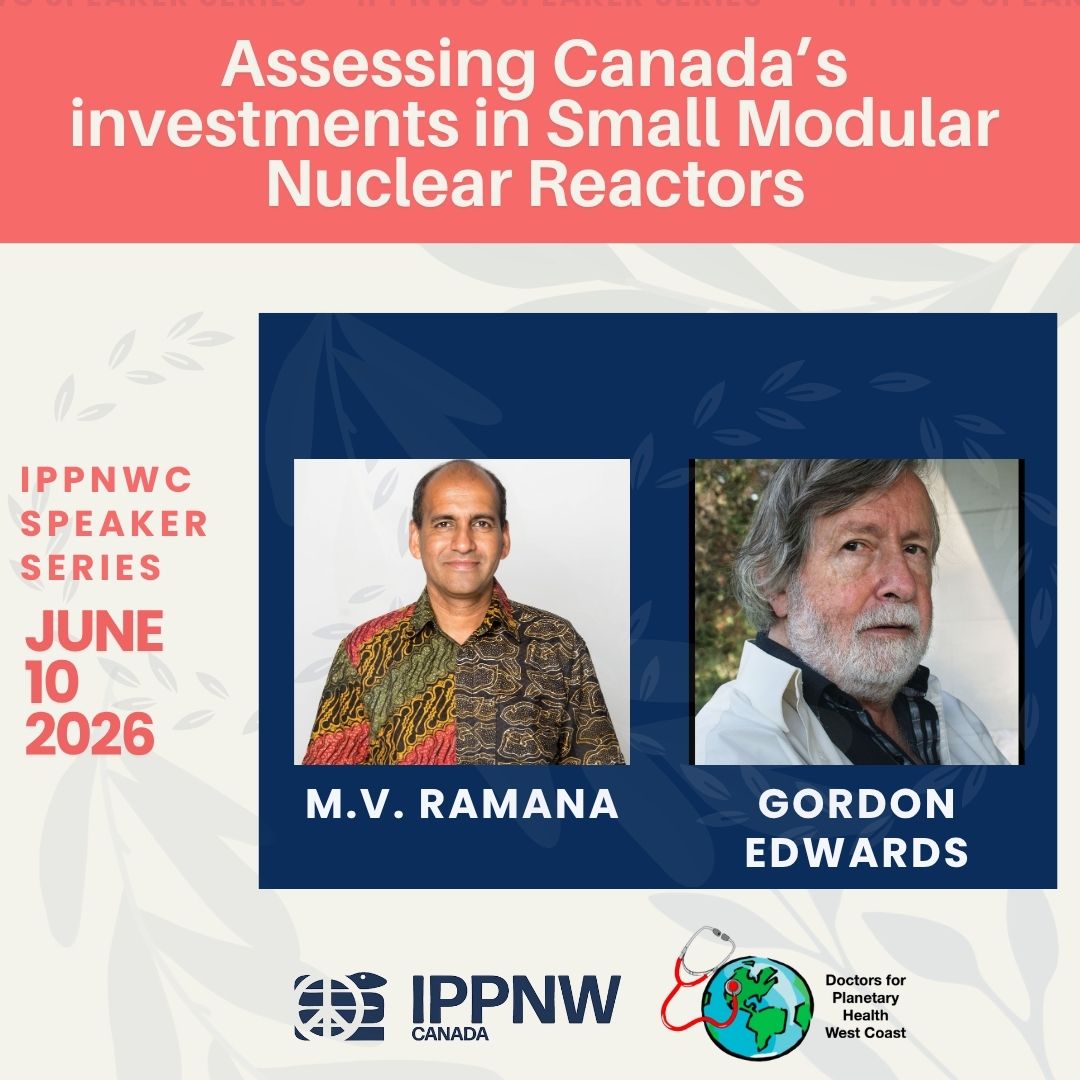
10 June – Assessing Canada’s Investments in Small Modular Nuclear Reactors – https://zoom.us/meeting/register/IiqHA5feRhaEBycOLNTJlA#/registration


Cuba Is Not a Failed State – It Is a Besieged State
PETITION: “Global Appeal to Endorse Palestinian Right of Return of Refugees”
To see nuclear-related stories in greater depth and intensity – go to https://nuclearinformation.wordpress.com
-
Archives
- June 2026 (89)
- May 2026 (306)
- April 2026 (356)
- March 2026 (251)
- February 2026 (268)
- January 2026 (308)
- December 2025 (358)
- November 2025 (359)
- October 2025 (376)
- September 2025 (257)
- August 2025 (319)
- July 2025 (230)
-
Categories
- 1
- 1 NUCLEAR ISSUES
- business and costs
- climate change
- culture and arts
- ENERGY
- environment
- health
- history
- indigenous issues
- Legal
- marketing of nuclear
- media
- opposition to nuclear
- PERSONAL STORIES
- politics
- politics international
- Religion and ethics
- safety
- secrets,lies and civil liberties
- spinbuster
- technology
- Uranium
- wastes
- weapons and war
- Women
- 2 WORLD
- ACTION
- AFRICA
- Atrocities
- AUSTRALIA
- Christina's notes
- Christina's themes
- culture and arts
- Events
- Fuk 2022
- Fuk 2023
- Fukushima 2017
- Fukushima 2018
- fukushima 2019
- Fukushima 2020
- Fukushima 2021
- general
- global warming
- Humour (God we need it)
- Nuclear
- RARE EARTHS
- Reference
- resources – print
- Resources -audiovicual
- Weekly Newsletter
- World
- World Nuclear
- YouTube
-
RSS
Entries RSS
Comments RSS
 nuclear-news