Overweight Get More Radiation and Doctors Admit Ignorance to Damage Caused
Overweight Get More Radiation and Doctors Admit Ignorance to Damage Caused
NaturalNews.com July 08, 2009 by: Jane Jones “………………….Recently, it was uncovered that obese patients are receiving up to 4000 percent more exposure to radiation with each X-ray – and in the ambitious medical world, the number of X-rays people receive is also increasing. The increase of radiation exposure appears to be done on the basis of logic: more radiation is needed to get an accurate exposure due to the excess fat getting in the way.
While more radiation might actually help get a usable x-ray, the question of what damage it’s causing the patient is one an MIT doctor admits hasn’t even been looked at. The question of it being an acceptable risk has also been neglected.
We know that radiation is dangerous. We know that radiation even from X-rays is dangerous…………
……………..Resources:
Obese Get Higher Doses of Radiation for X-Rays
http://news.yahoo.com/s/hsn/2009063…
Radiation Damage
http://www.umm.edu/altmed/articles/…
http://www.naturalnews.com/026570_doctors_overweight_X-rays.html
Vattenfall sacks head of defective nuclear plant
Vattenfall sacks head of defective nuclear plant
Deutsche Welle 08.07.2009
Four days after a technical failure shut down a nuclear power station in northern Germany, operator Vattenfall admitted to having made a mistake, while Social Democrats and Green are urging a boycott.
Vattenfall admitted that a mistake had been made at the Kruemmel nuclear power station and confirmed that it had fired the plant manager. The Swedish operators said the head of the reactor had broken an agreement with German authorities to install discharge detectors on a transformer.
It was a short-circuit on one of the transformers that caused the Kruemmel plant to shut down last weekend, thus restricting power supplies across much of the city of Hamburg.
Vattenfall has now said it will not repair the electrical transformers, responsible for the supply of power to on-site machinery, but will replace them entirely. As a result, the reactor will not resume operations for several months.
The latest incident at Kruemmel, just one of many problems that have dogged the plant over the past years, has sparked furious political debate over the security of nuclear fuel technology.
http://www.dw-world.de/dw/article/0,,4464985,00.html
Tactical Nuclear Weapons, the Menace No One Is Talking About
Politics Daily David Wood 8 July 07 “…………………………Presidents Obama and Medvedev, who agreed on the outlines of the treaty at their Moscow summit, seem to have overlooked thousands of nasty nuclear weapons bristling right under their noses in Europe: Russian and American tactical nukes. About 4,500 of these war-fighting weapons, mostly bombs and short-range missile warheads, are stored in Europe and in western Russia. They are not a subject of the strategic nuclear arms talks announced in Moscow. In fact, they are not part of any arms control treaty or negotiation.
The security of the facilities where they are stored, including underground U.S. bunkers across Western Europe, has come under question. The Russians have at least eight times as many of these weapons as the United States has deployed in Europe, an imbalance that a panel of senior American experts recently called “stark and worrisome.”
In the shifting geopolitics of post-Cold War Europe, tactical nuclear weapons play an increasingly important role in Russian military doctrine, a brute reminder of Russian power against the growing influence of the West along its borders. For instance, the Russians are working to fit tactical nuclear warheads onto submarine-launched cruise missiles, a weapon that “will play a key role” in Russian strategy, according to Vice Adm. Oleg Bursev of the Russian General Staff. “Their range and precision are gradually increasing,” he said this spring.
………………………….. These are bombs carried on ordinary jets, like F-16s, and mounted on short-range ballistic missiles. This class of weapons might still include the nuclear land mines and nuclear artillery shells that were deployed by the tens of thousands in Europe during the Cold War. The United States and Russia both say they’ve gotten rid of these weapons, but intelligence services on each side harbor doubts.
The U.S. tactical weapons, mostly B-61 thermonuclear bombs, are stored in underground vaults in Belgium, Holland, Germany, Italy, and Turkey, where they are under the control of U.S. Air Force munitions support squadrons.
http://www.politicsdaily.com/2009/07/08/tactical-nuclear-weapons-the-menace-no-one-is-talking-about/
Can Nuclear Power Take The Heat?
Can Nuclear Power Take The Heat? The New Republic -Bradford Plumer 7 July 09 Via Climate Progress, the London Times reports that France’s nuclear fleet is once again running into water and heat trouble during the summer……………………….These summer shutdowns are becoming more and more common, and don’t bode well for the future, given that temperatures in Europe have been creeping up faster than the global average, according to a recent European Environmental Agency report, and will almost certainly keep climbing as the world warms. Some countries, like France, Germany, and Spain, have responded to this problem in the past by overriding their own environmental laws and allowing plants to dump hotter water into the rivers—the downside is that this can cause considerable damage to river life.
Nor is this just Europe’s problem: In 2006, Exelon had to cut the power at a nuclear plant in Illinois when the Mississippi River got too warm to be used as cooling water. According to the recent NOAA synthesis report on climate-change impacts in the United States, one of the things we can expect to see across the country in the coming decades is a much greater frequency of hotter-than-90°F (32°C) days—precisely the point at which France’s plants keep running into trouble. Meanwhile, as the AP reported last year, if droughts become more frequent, that could mean additional trouble for nearly one-quarter of the nation’s nuclear plants.
Reprocessing is no solution
Reprocessing is no solution
Rutland Herald July 7, 2009 “………………The Bush administration began the new push for a Global Nuclear Energy Partnership. In 1979 a United States naval nuclear engineer and president, Jimmy Carter, ended this dangerous program.Reprocessing spent nuclear fuel was supposed to be one alternative to lots and lots of mining forever and forever. The biggest experiment in reprocessing was at Sellafield in Britain. In 2005, after decades of contamination and leaks and general spewing of horrible matter into the ocean, air, and land around the reprocessing plant, Sellafield was shut down because a bigger-than-usual leak of fuel dissolved in nitric acid —some tens of thousands of gallons — was discovered. It contained enough plutonium to make about 20 nuclear bombs.A nuclear dump site just six miles from the famous Champagne vineyards in France is leaking radioactive waste into the groundwater. According to the French nuclear safety authority, the “wall of a storage cell fissured” while concrete was being added to a recent layer of nuclear waste.It showed levels of radioactivity leaking from another dump site run by the same company in Normandy — at up to 90 times above European safety limits.That waste has seeped into underground water used by farmers, with contamination spreading into the countryside and threatening dairy production. The Champagne site will receive a total of 4,000 terabequerels of tritium — more than three times the amount of tritiumwaste as the dump site in Normandy.
Reprocessing is not a new idea. In fact, more than $40 billion has been spent globally on reprocessing technologies that have never become commercially successful. A 1996 report by the National Academy of Sciences concluded that the costs of reprocessing and transmutation of irradiated fuel from waste produced by existing U.S. reactors alone easily could be more than $100 billion, in the addition to the cost of a geologic repository.
A new face of nuclear medicine
A new face of nuclear medicine Heart Institute makes own medical isotopes By Tom Spears, The Ottawa Citizen J uly 7, 2009 “…………………In the institute’s basement, there’s a machine with a name like a carnival ride — the cyclotron — that produces medical isotopes (radioactive atoms) without a nuclear reactor.
To anyone who has toured a nuclear reactor building, the contrast is startling. Reactors are huge machines in earthquake-proof buildings running 24 hours a day, surrounded by layer upon layer of security and shutdown systems, and with radioactive waste that will last for millennia.
They cost hundreds of millions of dollars to build (even the smallest ones), and the last pair built in Canada flunked their safety tests last year and therefore have never operated.
The cyclotron at the Heart Institute is a big metal box in a room that measures about eight by 10 metres. You can walk right up to it safely while it’s running.
At night, the staff just turn it off and go home.
This is a new face of nuclear medicine, making medical isotopes that will make pictures of the heart, brain, bones and so on.
De Kemp continues his explanation of the glowing blobs on a compu
Inexplicable leukemias rock small German rural region
Inexplicable leukemias rock small German rural region Google News By Arnaud Bouvier – 7 July 09 GEESTHACHT, Germany (AFP) — For 20 years, children from a small rural northern German region — where Alfred Nobel invented dynamite — have been contracting leukemia at a higher rate than anywhere else in the world and no one knows exactly why.Nineteen cases of leukemia among children under 15 have been recorded since 1989 in the region of Elbmarsch, some 30 kilometres (19 miles) from the city of Hamburg, three or four times the average rate.”Such a high rate of leukemia is unique in the world,” according to Hayo Dieckmann, a health official in the nearby town of Lueneburg who is also a medical doctor…………………………………………..
Campaigners, however, point out that within two kilometres of the region lie the Kruemmel nuclear power station and the GKSS scientific research centre, both of which they believe are to blame for the leukemia outbreaks.
The “citizens’ association against leukemia in Elbmarsch” (BI) believes that a nuclear accident took place at the GKSS centre, only six months after the devastating meltdown at Chernobyl.
The campaigners say that a radiation leak occurred at the centre — which operates a small nuclear reactor for research purposes — on September 12, 1986, which was later covered up by the authorities……………………………
Campaigners also point an accusing finger at the Kruemmel nuclear power plant which reopened on June 24 after a fire broke out there two years ago.
The plant hit headlines again at the weekend in the wake of two further malfunctions, one of which plunged part of Hamburg into darkness and knocked out the city’s traffic lights.
At the end of 2007, a national survey of nuclear power stations in Germany showed that the risk of contracting cancer rose dramatically for children living near a power plant.
If nuclear power is so great, why aren’t we doing it?
If nuclear power is so great, why aren’t we doing it? Thought Leader By Roger Diamond 7 July 09 “………………………..Somewhere, somehow, investors aren’t keen, and my suspicion is that expense is at the heart of their concerns, and not waste (environmental) or accident (social) issues.
The second issue I’d like to raise is that of externalities. These are the real costs not included in the financial cost of an item or service. In the case of nuclear energy, the externalities are associated with mining of uranium, decommissioning and high-level radioactive waste disposal. These are the costs not being added into the price of electricity from nuclear power plants. Specifically, mining of uranium has, like any other mining, a basket of costs that are being put off for future generations to deal with, namely groundwater and surface-water pollution, land disturbance and rehabilitation costs, dust etc. If these were costed into the life-cycle analysis for nuclear power, it would be even more expensive than it is now…………………….Externalities are where renewables get very competitive. Use of coal and uranium has huge externalities, whilst renewables only have the indirect effects associated with energy and resources used to construct and transport the energy-harvesting devices
Thought Leader » Peak Oil Perspectives » If nuclear power is so great, why aren’t we doing it?
Belarussian kids receive care
Belarussian kids receive careBy John Henderson Rocky Mount Telegram July 06, 2009 Children from Belarus who continue to be exposed to radiation from the 1986 Chernobyl nuclear power plant incident have once again traveled to Rocky Mount from the former Soviet Union to receive free medical care.But fewer local “host families” in this down economy have been able pay for the flights and take the children into their homes for six weeks. The host families also take the children to local offices for medical, eye and dental care treatment………………………….
On April 26, 1986, the Chernobyl nuclear power plant reactor exploded, releasing dangerous amounts of radiation into the air. The wind on that day carried it toward Belarus, contaminating the region’s air, soil and water.
“The problem is there is so much unknown radiation material (in Belarus), and it will probably be there for 3,000 or 4,000 years,” Patrone said. “Some of the food is not safe.”………………………………….
“Medically, they are small in size,” Patrone said. “Some have thyroid problems and an occasional immune-deficiency problem. They are still suffering, because basically, radiation is still in the dirt.”
If a child is diagnosed with a major problem here such as thyroid cancer, they are sent back to Belarus for treatment, he said.
“(The trip to Rocky Mount) is a way to get out of the radiation zone and to give kids a second (doctor’s) opinion,” he said.
Downwinders still waiting for RECA coverage
Downwinders still waiting for RECA coverage By Blair Koch Times-News 7 july 09 A common fear among victims of radiation fallout caused by nuclear testing in Nevada during the 1950s and ’60s is that they will not live long enough to see the government take accountability.Ilene Hoisington expressed this sentiment when interviewed by the Times-News in June 2007. At 75, she had seen both her sons die of cancer and had her own larynx removed due to the same disease. Hoisington’s sister also died of cancer.In June 2008, Hoisington lost her battle too, having died before Idaho fallout victims were included in the Radiation Exposure Compensation Act.”I think (the government) is waiting until we all die and then there won’t be anymore downwinders, problem solved,” Hoisington said in 2007.
New Capitalism Old Capitalism Except Taxpayer Money Is At Risk
New Capitalism: Old Capitalism except taxpayer money is at risk Sunday Herald Iain Macwhirter 4 July 09 – “………………………..Old Capitalism has long gone and has been replaced by New Capitalism, which is like the previous system, but without the risk of failure………
…………make lots of profit from running it, but then when they stop making profits they hand the keys back to the government and walk off leaving all the losses with the taxpayer. This is a great improvement on boring old capitalism, because it removes all the danger from the investor, and turns public contracts into a licence to print money…………….
…………..Then there’s the nuclear industry. The cost of decommissioning the last generation of nuclear power stations was around £100bn – paid for by us. It was the most expensive way of producing electricity since the Van Der Graaff generator.The next generation is going to be totally different. Private companies will build and operate super-efficient and totally self-financing nuclear power stations earning healthy profits. Except that, under the deal, when something goes wrong they’ll be handed back to the government.
This is because the insurance costs are so high for these power plants that if the government hadn’t taken on the financial liability for nuclear disasters, the private operators wouldn’t have been able to make a decent profit. And, of course, the bulk of the decommissioning costs and the disposal of the nuclear waste, radioactive for a thousand years, will naturally be the taxpayer’s responsibility.
New Capitalism Old Capitalism Except Taxpayer Money Is At Risk (from Sunday Herald)
Why bring back expensive nuclear power when there are cheaper options? |
Diana Hooley: Why bring back expensive nuclear power when there are cheaper options? Idaho Statesman ENERGY BY DIANA HOOLEY 07/05/09 “………………. ……………Wall Street Journal reporter Keith Johnson (WSJ Blog, June 12) says that the capital costs for nuclear are currently prohibitive……………………………current problems in the European nuclear industry suggests that new reactors would be “no easier or cheaper to build than the ones a generation ago.” The Times said that construction of two “new” generation reactors in France and Finland have been riddled with problems and are well over budget with no end in sight for the project’s construction phase.
The Times also said that in Florida and Georgia, state laws have been changed to raise electricity rates in order to pass on the costs of the expensive construction of new nuclear plants to consumers. Some states like Missouri have balked at these preconstruction costs and suspended any nuclear plant projects for their state.
The New York Times quotes MIT economist Paul L. Jaskow in acknowledging the cost of nuclear. Jaskow says a number of U.S. companies are looking in trepidation at the magnitude of investment necessary to build a reactor………………….. renewables are working toward baseload capacities, and with smart grids and other new storage technology, researchers can see the potential for baseload.
Wind power is just one of several renewable resources supported by current federal legislature that produces no greenhouse gasses or toxic waste and is believed to have the long-term technical potential to be five times total current global energy production or 40 times current electricity demand (“Global wind map shows best wind farm locations,” Environment News Service, May 17, 2005).
Additionally, renewables do not have to be built to scale like nuclear, requiring massive investments in large electrical transmission infrastructures. Evidently, investors know the market potential of renewables; wind power alone is growing at the rate of 30 percent annually (Renewables Global Status Report: 2009 update).
IAEA calls on Serbia to address nuclear waste problem
AEA calls on Serbia to address nuclear waste problem 3 July 2009 | 15:00 | Source: B92 BELGRADE — The head of the International Atomic Energy Association (IAEA) has warned that Serbia must dispose of any remaining atomic fuel as soon as possible. Mohammed ElBaradei and Serbian Science Minister Božidar Đelić today signed an additional protocol on cooperation between Belgrade and the IAEA, after visiting the Vinča Nuclear Science Institute yesterday.
ElBaradei warned that Serbia needed to dispose of its remaining supplies of atomic fuel to prevent any possible incidents.
B92 – News – Society – IAEA calls on Serbia to address nuclear waste problem
Seven proven policies that will help build a cleaner planet
Seven proven policies that will help build a cleaner planet
THE AUSTRALIAN Tony Blair | July 06, 2009 “……………………….A new report from the Breaking the Climate Deadlock project, a strategic partnership between my office and The Climate Group, shows how major reductions even by 2020 are achievable if we focus action on certain key technologies, deploy policies that have been proven to work, and invest now in developing those future technologies that will take time to mature.
Perhaps the most interesting fact to emerge is that fully 70 per cent of the reductions needed by 2020 can be achieved by investing in three areas: increasing energy efficiency, reducing deforestation, and use of lower-carbon energy sources, including nuclear and renewables. Implementing just seven proven policies – renewable energy standards (say, feed-in tariffs or renewable portfolio standards); industry efficiency measures; building codes; vehicle efficiency standards; fuel carbon content standards; appliance standards, and policies for reduced emissions from deforestation and forest degradation – can deliver these reductions.All seven policies have already been successfully implemented in countries around the world, but they need scaling up.
Seven proven policies that will help build a cleaner planet | The Australian
Wall must ignore nuclear hype, make an informed decision
“……………………………..the legitimacy of nuclear power as a cost-efficient energy source was dealt a severe blow this week with the news that the Ontario government has suspended the tender to build two new reactors at Darlington — part of a $26-billion nuclear building refurbishment plan. This development has certainly put a perspective on the foremost problem with nuclear power development — the exorbitant pricetag — that business proponents like the Saskatchewan Chamber of Commerce have sadly been downplaying.
1 This Month
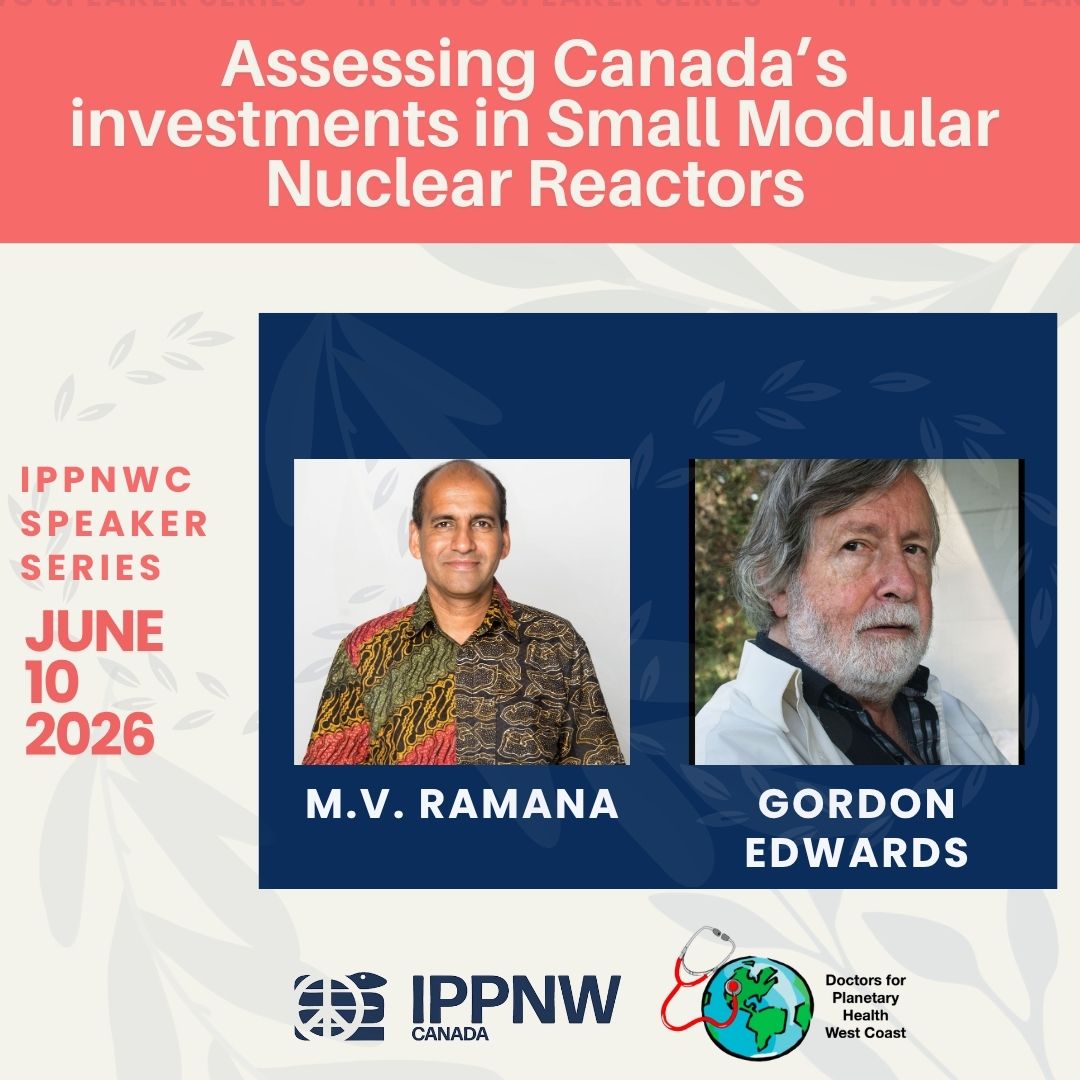
10 June – Assessing Canada’s Investments in Small Modular Nuclear Reactors – https://zoom.us/meeting/register/IiqHA5feRhaEBycOLNTJlA#/registration


Cuba Is Not a Failed State – It Is a Besieged State
PETITION: “Global Appeal to Endorse Palestinian Right of Return of Refugees”
To see nuclear-related stories in greater depth and intensity – go to https://nuclearinformation.wordpress.com
-
Archives
- June 2026 (89)
- May 2026 (306)
- April 2026 (356)
- March 2026 (251)
- February 2026 (268)
- January 2026 (308)
- December 2025 (358)
- November 2025 (359)
- October 2025 (376)
- September 2025 (257)
- August 2025 (319)
- July 2025 (230)
-
Categories
- 1
- 1 NUCLEAR ISSUES
- business and costs
- climate change
- culture and arts
- ENERGY
- environment
- health
- history
- indigenous issues
- Legal
- marketing of nuclear
- media
- opposition to nuclear
- PERSONAL STORIES
- politics
- politics international
- Religion and ethics
- safety
- secrets,lies and civil liberties
- spinbuster
- technology
- Uranium
- wastes
- weapons and war
- Women
- 2 WORLD
- ACTION
- AFRICA
- Atrocities
- AUSTRALIA
- Christina's notes
- Christina's themes
- culture and arts
- Events
- Fuk 2022
- Fuk 2023
- Fukushima 2017
- Fukushima 2018
- fukushima 2019
- Fukushima 2020
- Fukushima 2021
- general
- global warming
- Humour (God we need it)
- Nuclear
- RARE EARTHS
- Reference
- resources – print
- Resources -audiovicual
- Weekly Newsletter
- World
- World Nuclear
- YouTube
-
RSS
Entries RSS
Comments RSS
 nuclear-news