Nuclear Title May Not Be Enough to Push Senate Climate Bill Over the Top –
Nuclear Title May Not Be Enough to Push Senate Climate Bill Over the Top The New York Times By KATHERINE LING Reporters Allison Winter, Alex Kaplun and Darren Samuelsohn contributed. 17 July 09 While supporters of nuclear energy ardently proclaim the power source is necessary to combat climate change, incentives for nuclear power may not be the silver bullet sponsors need to pass climate legislation in the Senate this year…………………………………The energy committee bill has several perks for nuclear energy including a Clean Energy Development Administration, training programs for nuclear education, and exclusion of new nuclear generation or capacity upgrades through efficiency at existing nuclear plants from the power sales baseline used to measure the renewable electricity standard (RE………………..The House climate bill, H.R. 2454 (pdf), also contains a Clean Energy Development Administration — although it prevents any technology from using more than 30 percent of total available funds. It also includes the exclusion of new nuclear generation from the power sales baseline used to calculate the RES………………………………..The underlying question for sponsors: If nuclear incentives are not enough to get undecided senators on board with cap and trade, what is the point of including them at all?…………………..The nuclear issue dominated much of the debate at a hearing on Tuesday………………………”What we are hopeful for in any climate bill are those provisions. One, the recognition of nuclear as a clean energy source so if someone has nuclear in their portfolio they should be recognized for that and, two, recognition that to move forward we are going to have to private-public partnership of government and private enterprise,” said Derrick Freeman, senior director, of NEI’s legislative programs.
Nuclear Title May Not Be Enough to Push Senate Climate Bill Over the Top – NYTimes.com
Sloppy work at Perry nuclear power plant concerns Nuclear Regulatory Commission –
Sloppy work at Perry nuclear power plant concerns Nuclear Regulatory Commission CLEVELAND.COM July 18, 2009 John Funk Plain Dealer Reporter
“The Nuclear Regulatory Commission is concerned about sloppy workmanship and employee inattention to detail at the Perry nuclear power plant.The NRC wants plant owner FirstEnergy Corp. to explain how it plans to correct these problems……………………..orkers have continued to make small mistakes on routine, day-to-day jobs, in a number of unrelated areas.
Such mistakes are not in themselves a safety concern, but they are often the first signs at a nuclear plant that the culture of “safety first” is eroding and attention to safety is slipping……………..”
Sloppy work at Perry nuclear power plant concerns Nuclear Regulatory Commission – Cleveland.com
Too hot for nuke power
Too hot for nuke power Deseret News 16 July 09
Proponents of nuclear power in Utah probably have not noticed an article in the UK Times (July 13, 2009) regarding the problems France is having with its nuclear-power plants, problems that bear on the feasibility of nuclear power in Utah.France is in the grips of another hot summer, with air temperatures in the 80s. Water temperatures have exceeded the limits under which plants cooled by river water can safely operate.As a result of the heat, France has had to reduce power generation by one-third and is now importing power from England. Much the same thing happened during the heat wave of 2003.
Reading this, I couldn’t help thinking about the nuclear plant proposed for Green River, where summer temperatures are regularly in high 90s. T
he water temperature of the Green River at Jensen on July 13, 2009, was 23.5 degrees Celsius, almost as high as the maximum allowed for water returned to rivers from France’s nuclear plants. During the drought of 1999-2005, Green River water temperatures reached 25.4 degrees.
As the earth warms, high river temperatures will become commonplace. Nuclear plants, especially those dependent on rivers, will become untenable. Utah should avoid this boondoggle now.
No nukes for Taidong
No nukes for Taidong
David on Formosa 16 July 09 a”………………………About the search for a nuclear waste storage site in Taiwan. ………….. it is no accident that nuclear waste is imposed on the poorest and most marginalised communities. The pattern of buying off people with promises of infrastructure and jobs continues.The process of developing a nuclear waste storage site also shows a frightening disregard for democratic process. In December the Presbyterian Church reported that the government was spying on church activities in Taidong. In particular government authorities made enquiries about church activities opposed to nuclear waste. At a public hearing on nuclear waste storage in Taidong in April two environmental activists were illegally detained by police for two hours to prevent them from protesting or speaking at the meeting.
I offer no solutions to the intractable problem of nuclear waste storage. The continuing presence of nuclear waste on Orchid Island is an abomination. The relocation of the waste to another indigenous community on the mainland is also unacceptable. How can governments allow the construction of nuclear power plants when they have no clear plan for the long-term storage of nuclear waste?
Uranium & Nuclear: Most Dangerous Con Job
Most Dangerous Con Job Burke Connection Elmer M. Savilla 16 July The biggest and most dangerous con job ever dealt the American people happened in 1953, when the federal government told the people that nuclear generated electrical power was safe power, and would be so cheap that it would not pay to put it through your home’s meter. The electricity may be safe power, but it is not cheap. But the nuclear power used to generate that electricity is the world’s most dangerous threat to mankind today and will remain so for millions of years, if we last that long. The plutonium created by the process of nuclear fission is indestructible and exposure to it can kill in a minute. The results of that scam has cost thousands of innocent Americans, Pacific Islanders, Utah Downwinders and others in our world their lives and that of their families, as well as their property…………………
……………..The serious accident that I refer to here happened the same year as Three Mile Island on July 16, 1979 near the little Native American community of Church Rock, N.M., where the Pueblo people had lived for centuries, peacefully tending their sheep and raising their crops with water from the Puerco River.On July 16, 30 years ago, a dirt dam built by a uranium mine and milling facility was filled to capacity, yet continued to discharge uranium mill waste into the dam. The dam burst its banks and 90 million gallons of liquid radioactive waste, and 1,100 tons of solid mill waste created a flood of deadly material that has permanently contaminated the Puerco River bed with radioactivity.
The spill formed toxic ponds where children splashed unaware of the danger. The flood washed across fields where animals grazed. The tribe’s water supply has been permanently damaged. Flood waters continued downstream into Arizona, contaminating more communities. This was an unpublished tragedy and went unnoticed by most Americans
Yet, five weeks after the dam burst, the mine and mill operator was back in business, while the Church Rock community had to truck in water.
The Department of Energy and the Environmental Protection Agency share responsibility here, but to this date, nothing has been done……………………………………….Three Mile Island received media attention, but in this case, it only involved a Native American community. Could it be that because it was a politically powerless Native American tribe unable to prevent race-based discrimination, that the DOE, EPA, HHS and IHS, all of whom have a trust responsibility for the people, their environment and their safety, do not feel an obligation here? I ask the American people to join in demanding an answer.
Navajos mark 30th anniversary of uranium spill
Navajos mark 30th anniversary of uranium spill
By SUE MAJOR HOLMES (AP) – CHURCH ROCK, N.M. —
The leader of the Navajo Nation marked the 30th anniversary of a massive uranium tailings spill by reaffirming the tribe’s ban on future uranium mining.Speaking in Navajo and English, President Joe Shirley Jr. addressed about 100 people who made a seven-mile walk Thursday to the site of the July 16, 1979 spill and to the land of Navajo ranchers who live near another contaminated site.
What Shirley called “the largest peacetime accidental release of radioactive contaminated materials in the history of the United States” occurred when 94 million gallons of acidic water poured into the north fork of the Rio Puerco after an earthen uranium tailings dam failed.Within days, contaminated tailings liquid was found 50 miles downstream in Arizona.
Shirley said the spill — the same year as the Three Mile Island accident in Pennsylvania — barely registered on the consciousness of the United States but will not be forgotten by the by Navajo and non-Navajo residents “who still worry today about the potential impacts of this tragic accident.
“It also helped mobilize the effort that resulted in the Navajo Nation’s 2005 ban on uranium mining and processing until adverse economic, environmental and human health effects from past uranium activities are eliminated or substantially reduced to the satisfaction of the Navajo Nation Council, Shirley said.”We will stand our ground until the terms of the Dine (Navajo) Natural Resources Protection Act are met,” he said……………
………Shirley said decades of mining activity in the Church Rock area “contributed more radioactivity than the spill did,” adding to the difficulty of tracking the effects of uranium mining and milling and discharges over a long period of time.
The Associated Press: Navajos mark 30th anniversary of uranium spill
No coal, no nuclear, only renewable energy for Scotland by 2030?

Red, Green and Blue by Mridul Chadha
July 15th, 2009
According to a new study, Scotland could shut down all its coal and nuclear power plants in the next 20 years and fulfill all its energy needs using renewable sources. The study commissioned by a consortium of environmental groups and conducted by an independent engineering consultant will soon be presented to the Scottish government. The study hold significant importance as the government has set ambitious goals for cutting carbon emissions and switching to renewable energy sources for power generation. The research studies and evaluates five different scenarios to predict the energy demand and generation trends over the next 20 years……………………… The report is revolutionary as even the worst case scenario (Scenario One) would mean a significant supply (64 percent) of electricity coming from renewable sources. With additional tools of energy efficiency and targeted financial help for small and micro scale energy generation, Scotland would be able to generate a huge power surplus.
At a time when the world leaders are struggling to even promise significant emission cuts, Scottish government’s continuous efforts to promote renewable energy and cut carbon emissions to meet the highly ambitious goals is commendable.
No Coal, No Nuclear, Only Renewable Energy For Scotland By 2030?
Under Chernobyl’s shadow
Jul 15, 2009 21:20
Under Chernobyl’s shadow
Jpost.com By RUTH EGLASH, REPORTING FROM PRIPYAT, UKRAINE “……………..Just two kilometers from the Chernobyl nuclear power station, Pripyat – once home to some 48,000 people working at the nearby plant – was evacuated forever in less than three hours when Reactor No. 4 exploded, filling the air with deadly radioactive fallout.
Within 24 hours of the explosion on April 26, 1986, the entire city was emptied, with residents being told to take only essentials. No one has returned to live here since.
Although eerily empty, Pripyat still remains a symbol of one of the worst man-made ecological disasters in history and the repercussions of Chernobyl, both medically and environmentally, still resonate strongly not just for former residents but for the Ukrainian people in general.
A report released by Greenpeace on the 20th anniversary of the accident, with new data based on cancer statistics in neighboring Belarus, estimated that approximately 270,000 cancers and 93,000 fatal cancers in the area were caused by Chernobyl. Additionally, demographic data from the previous 15 years showed that 60,000 people died in Russia as a result of the fallout and the total death toll for Ukraine and Belarus could reach another 140,000 indirectly.
Radiation from the accident has also had ongoing effects on survivors, including damage to immune and endocrine systems, accelerated aging, cardiovascular and blood illnesses, psychological problems, chromosomal aberrations and an increase in fetal deformities.
Despite these horrific aftereffects and even as many Ukrainians still come to terms with what happened, officials in Kiev are actively seeking to expand the country’s nuclear energy capabilities, even if it comes at the risk of another Chernobyl.
The move to enhance nuclear energy, which can power the country’s large cast iron and steel industries, as well as individual homes, is justified today, say officials, because of the growing tensions between Ukraine and Russia.
Nuclear power regulation becomes political minefield
Nuclear power regulation becomes political minefield
Deutsche Welle 13.07.2009
A short circuit that led to an automatic shutdown at the Kruemmel nuclear power plant in northern Germany sparked a debate over who should oversee nuclear power operations and how tight regulation should be.
The malfunction was the second such incident in several days at the plant in northern Germany, which had only just re-opened after two years of repairs following a malfunction in a transformer that had caused a fire and a shutdown.
Vattenfall, the power plant’s operator, has since said it failed to install an important safety sensor, and that all of Kruemmel’s 80,000 fuel rods had to be checked after some appeared to be defective.
“Peaceful” ? New uranium mine for Australia
Uranium mine linked to US arms dealer
The Age Ben Cubby
July 16, 2009
THE new uranium mine approved by Environment Minister Peter Garrett will be owned by a subsidiary of one of the world’s biggest arms dealers.
A colourful but reclusive billionaire named James Neal Blue, who helped devise the Predator unmanned aircraft being used in the wars in Afghanistan and Iraq, is a director of Quasar Resources, the company that will control the Four Mile mine.
Quasar Resources is an affiliate of General Atomics, a US weapons and nuclear energy corporation that is chaired by Mr Blue, and reportedly holds $US700 million ($A877 million) in Pentagon contracts. Mr Blue first came to prominence during the 1980s as a self-described “enthusiastic supporter” of US involvement in a covert war against the left-wing government in Nicaragua.
Next to the new Four Mile mine is the Beverley uranium mine, which is owned by Heathgate Resources, also affiliated to Mr Blue’s General Atomics.
http://www.theage.com.au/national/uranium-mine-linked-to-us-arms-dealer-20090715-dli7.html
Trapping Carbon Dioxide Or Switching To Nuclear Power Not Enough To Solve Global Warming Problem, Experts Say
Trapping Carbon Dioxide Or Switching To Nuclear Power Not Enough To Solve Global Warming Problem, Experts Say
Science Daily (July 14, 2009) — Attempting to tackle climate change by trapping carbon dioxide or switching to nuclear power will not solve the problem of global warming, according to energy calculations published in the July issue of the International Journal of Global Warming………………………….
Their calculations suggest that most measures to combat global warming, such as reducing our reliance on burning fossil fuels and switching to renewables like wind power and solar energy, will ultimately help in preventing catastrophic climate change in the long term. But the same calculations also show that trapping carbon dioxide, so-called carbon dioxide sequestration, and storing it deep underground or on the sea floor will have very little effect on global warming.
“Since net heat emissions accounts for most of the global warming there is no or little reason for carbon dioxide sequestration,” Nordell explains, “The increasing carbon dioxide emissions merely show how most net heat is produced……………………The researchers also point out a flaw in the nuclear energy argument. Although nuclear power does not produce carbon dioxide emissions in the same way as burning fossil fuels it does produce heat emissions equivalent to three times the energy of the electricity it generates and so contributes to global warming significantly, Nordell adds.
Alarming increase in Thyroid Cancer
Alarming increase in Thyroid Cancer Doctors advise ‘check your neck’ 12 News 14 July 09 by Jill Hanks – Jul. 13, 2009 04:50 PM12 NewsThyroid cancer rates have increased more than 6 percent per year over the last decade, making it the fastest-increasing cancer in the U.S. But experts aren’t sure why…………….
……………Women are much more likely than men to develop thyroid problems, according to Dr. Verso and they are also three times more likely to develop thyroid cancer.
Uranium mining and Indian country
Uranium Mining and Indian Country Native America Discovered and Conquered , Robert J. Miller, 6 July 09 For some “strange” reason, over 50% of the uranium mined in the U.S. has been taken from Indian lands. This has led to numerous problems and claims of cancers and deaths, most notably on the Navajo Nation Reservation.A recent story shows that this problem extends to many other reservations.“A report from the Agency for Toxic Substances and Disease Registry warns members of the Spokane Tribe of Washington not to hunt, fish or gather medicinal plants near a defunct uranium mine.The report also said tribal members shouldn’t use water from the Blue Creek due to contamination from the old Midnite Mine. People who go near the site shouldn’t stay more than an houri in order to limit exposure to radiation, the agency said.
Native America, Discovered and Conquered » Blog Archive » Uranium mining and Indian country
It’s time to stand up to the energy giants
It’s time to stand up to the energy giants Guardian UK, by John Sauven 13 July 2009 Renewable energy will never take off as long as the industry is dominated by European utilities Against the backdrop of the worldwide economic downturn, it is ironic that the area often said to have the least business certainty, the renewables sector, is one of the few success stories. Globally this industry is bucking the trends, creating millions of new green jobs, increasing countries’ energy independence and reducing climate-changing emissions…………………………Not so much the “voice of British business” as the voice of French and German energy monopolies, for too long E.ON, RWE and EDF have dictated the terms of the British energy debate. Today’s CBI report advocating that Britain scale back its renewable ambitions yet further is just the latest tactic by these utilities to shaft British business efforts in clean tech out of fear of new competition and the threat posed to their “business as usual” approach. EDF and E.ON admit they oppose ambition on renewables in case they undermine the economic case for the nuclear power stations they want to build. These arguments are now parroted verbatim by the CBI.
t is no coincidence that Germany and Spain, which have shut the door on new nuclear power, have invested most in renewables and seen their green industries rocket. Spain now generates as much as 40% of its electricity from wind power and studies show the investment in renewables has lowered wholesale electricity prices in Spain by more than the cost of the incentive they used to kickstart the industry. Germany has created almost a quarter of a million new green jobs in renewables as a whole and £8.5bn a year for its economy from wind industry sales alone.While other countries got ahead of the UK in green tech, in a textbook case of the power of special interests operating in Whitehall, energy officials in Britain lobbied together with two German energy giants and the French state-owned atomic industry to systematically undermine and sabotage UK efforts on renewables…………………………….anti-wind nimby groups with links to giant PR firms were set up to whip up anti-renewable hysteria with little transparency and much suspicion about who was really behind them, especially given that national government polling shows that 80% of people support wind power. Plans were even announced to knock down a wind farm to make way for a nuclear plant.
It’s time to stand up to the energy giants | John Sauven | Comment is free | guardian.co.uk
Marking the 50th anniversary of the first U.S. nuclear meltdown
Marking the 50th anniversary of the first U.S. nuclear meltdown Los Angeles Times By Louis Sahagun
July 13, 2009Holly Huff, 58, believes her leukemia and thyroid problems are related to the radioactive gases released from the Atomics International laboratory near her home when she was 8 years old.A reactor in Chatsworth began leaking radioactive gas on July 14, 1959. Some area residents blame the facility for their health issues and say the site remains contaminated……………………………..A reactor at the Atomics International field laboratory in the Santa Susana Mountains had experienced a power surge the night before and spewed radioactive gases into the atmosphere………………………..the Environmental Protection Agency’s plans to spend $40 million in stimulus funds on a comprehensive radioactive survey of the nuclear site.“It’s about time,” said Holly Huff, who was 8 years old when the meltdown occurred a mile from her home.
Standing on a bluff overlooking the 2,850-acre facility, which is now owned by Boeing Co. and NASA, Huff said, “They say it will be cleaned up by 2017 — I doubt it. We’ll wait and see.”………………
………………….For about two weeks, the facility, which employed several thousand people, had been venting colorless and odorless radioactive gas into the environment.
“Radioactivity levels during the accident went off-scale,” said Dan Hirsch, a spokesman for the antinuclear group Committee to Bridge the Gap. “We thus do not know to this day how much radioactivity was released.”
Details of the incident were not disclosed until 1979, when a group of UCLA students discovered documents and photographs that referred to a problem at the site involving a “melted blob.”
Ever since, residents have worried about downstream health risks associated with soil contaminated by years of rocket and nuclear testing.
Radioactive emissions from the accident could have resulted in 260 to 1,800 cases of cancer within 62 miles of the site over a “period of many decades,” according to a study released in 2006…………………………………… Half a century after the accident, nuclear cleanup operations and chemical decontamination remain incomplete.
Marking the 50th anniversary of the first U.S. nuclear meltdown – Los Angeles Times
1 This Month
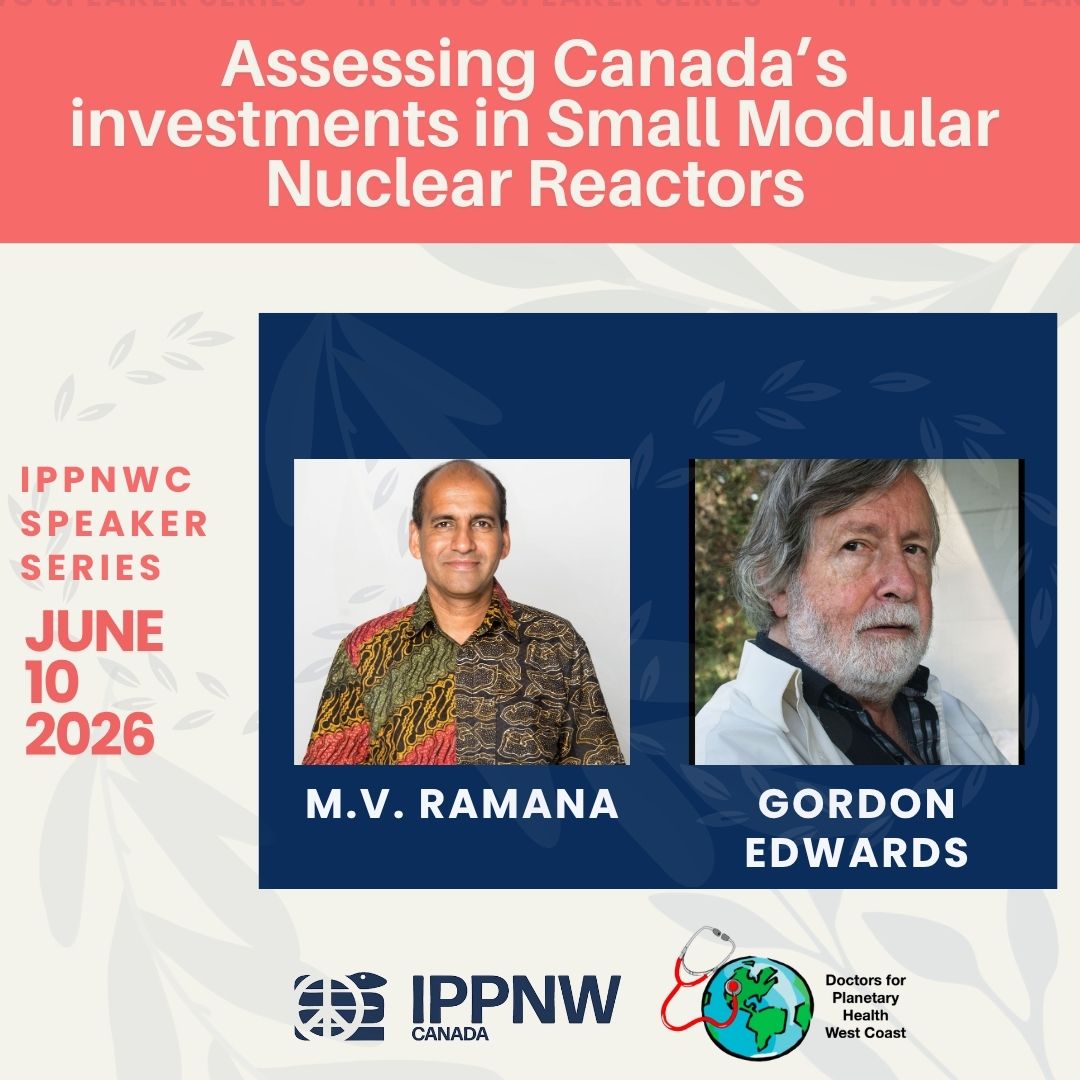
10 June – Assessing Canada’s Investments in Small Modular Nuclear Reactors – https://zoom.us/meeting/register/IiqHA5feRhaEBycOLNTJlA#/registration


Cuba Is Not a Failed State – It Is a Besieged State
PETITION: “Global Appeal to Endorse Palestinian Right of Return of Refugees”
To see nuclear-related stories in greater depth and intensity – go to https://nuclearinformation.wordpress.com
-
Archives
- June 2026 (89)
- May 2026 (306)
- April 2026 (356)
- March 2026 (251)
- February 2026 (268)
- January 2026 (308)
- December 2025 (358)
- November 2025 (359)
- October 2025 (376)
- September 2025 (257)
- August 2025 (319)
- July 2025 (230)
-
Categories
- 1
- 1 NUCLEAR ISSUES
- business and costs
- climate change
- culture and arts
- ENERGY
- environment
- health
- history
- indigenous issues
- Legal
- marketing of nuclear
- media
- opposition to nuclear
- PERSONAL STORIES
- politics
- politics international
- Religion and ethics
- safety
- secrets,lies and civil liberties
- spinbuster
- technology
- Uranium
- wastes
- weapons and war
- Women
- 2 WORLD
- ACTION
- AFRICA
- Atrocities
- AUSTRALIA
- Christina's notes
- Christina's themes
- culture and arts
- Events
- Fuk 2022
- Fuk 2023
- Fukushima 2017
- Fukushima 2018
- fukushima 2019
- Fukushima 2020
- Fukushima 2021
- general
- global warming
- Humour (God we need it)
- Nuclear
- RARE EARTHS
- Reference
- resources – print
- Resources -audiovicual
- Weekly Newsletter
- World
- World Nuclear
- YouTube
-
RSS
Entries RSS
Comments RSS
 nuclear-news