Life under a cloud after nuclear tests – national | Stuff.co.nz
Life under a cloud after nuclear tests
BY LEE UMBERS – Sunday News
Last updated 05:00 14/06/2009“………………………………….He was one of the New Zealand sailors watching a nuclear mushroom cloud from the front of their frigate.Bill isn’t interested in any compensation, which he would give to charity anyway. “I just want someone to stand up and agree that, `Yes, we did send you there (to the testing sites) as guinea pigs.”‘…………………. he began “getting very suspicious” about the after-effects of Operation Grapple when mates from HMNZS Pukaki began having children with severe health problems.
“Spina bifida, different sorts of cancers, heart defects in new-born babies.”……………………..I’ve got melanomas on my back and I’m just waiting to go back into hospital to have a kidney operation,” saysBill an original member of the New Zealand Nuclear Test Veterans Association.
He feels betrayed by both Britain and by New Zealand. “They obviously didn’t know, they just said (to the British) , ‘Yeah, you can have these fellas’. But they didn’t take much responsibility …”
Life under a cloud after nuclear tests – national | Stuff.co.nz
Nuclear disarmament more urgent than ever
Nuclear disarmament more urgent than ever Business Mirror Inter Press Service / Mikhail Gorbachev , 14 June 2009 “…………..Nothing fundamentally new has been achieved in the area of nuclear disarmament in the past decade-and-a-half. Twenty years after the end of the Cold War, the arsenals of the nuclear powers still contain thousands of weapons, and the world is facing the very real possibility of a new arms race……………………
The nuclear nonproliferation regime is in jeopardy. While the two major nuclear powers bear the greatest responsibility for this state of affairs, it was the United States that abrogated the Anti-Ballistic Missile Treaty (ABM Treaty), has failed to ratify the CTBT, and refused to conclude with Russia a legally binding, verifiable treaty on strategic offensive arms.
Only recently have we seen indications that the major nuclear powers understand the current state of affairs is untenable……………………………….Humanity must be wary of a new arms race. Priority is still being given to financing of military programs, and “defense” budgets far exceeding reasonable security requirements keep growing, as does the weapons trade. US military expenditures are almost as high as those of the rest of the world combined. Disregard for international law and for peaceful ways of settling disputes, for the United Nations and its Security Council, is being proclaimed as a kind of policy…………………………..
In the final analysis, the nuclear danger can only be removed by abolishing nuclear weapons. But unless we address the need to demilitarize international relations, reduce military budgets, put an end to the creation of new kinds of weapons, and prevent the weaponization of outer space, all talk about a nuclear-weapon-free world will be just empty rhetoric.
I think that after President Obama’s speech on April 5, there is a real prospect that the United States will ratify the CTBT. This would be an important step forward, particularly in combination with a new strategic arms-reduction treaty between the United States and Russia.
Poor countries could be paid to go nuclear
Poor countries could be paid to go nuclear * New Scientist 10 June 2009
THE prospect of paying poor countries to build nuclear power stations is back in view.
Draft text under negotiation at climate-change talks in Bonn, Germany, includes an option to make nuclear facilities eligible for funding under two schemes meant to help poorer countries develop low-carbon technologies: the Clean Development Mechanism (CDM) and Joint Implementation.
Nuclear power was excluded from these schemes in the Kyoto protocol in 2001, after opposition from both European and some developing countries.
Poor countries could be paid to go nuclear – 10 June 2009 – New Scientist
USA: Nonviolent nuke protester gets gaol
facthaiwordpress.com 13 June 09 USA Non-violent protestor gets gaol Three of the six protesters arrested at the Dominion Resources North Anna Nuclear Power Plant were found guilty of trespassing today in the Louisa County Courthouse. The charges stem from conducting an alternative tour and sit-in at the Dominion Power Nuclear Information Center on August 7th………………………The planned new reactor at Lake Anna is one of the first of many nationwide being touted as a solution to global climate change. The protestors maintain that nuclear power is a false solution to the climate
change problem with costs and dangers that far outweigh any benefits. They cite enormous costs requiring massive government subsidies to construct the plant, dangers to the community caused by the lack of any viable plan to safely transport and store the toxic nuclear waste and project that construction of the plant could take ten years or more. The Louisa County protest is part of a series of international events calling for safe and renewable energy solutions.
Flashpoints where indigenous peoples are fighting to defend their lands
Flashpoints where indigenous peoples are fighting to defend their lands the Guardian 12 June 2009 Arizona
The Navajo nation is fighting uranium mining through the US courts. Radiation levels are 450 times the normal levels. Other uranium mines are opposed by indigenous groups in Australia, India, Canada, Niger and Botswana.
Flashpoints where indigenous peoples are fighting to defend their lands | Environment | The Guardian
PM – China shoots for world leadership on renewable energy
China shoots for world leadership on renewable energy PRINT FRIENDLY EMAIL STORYPM – Friday, 12 June , 2009 18:32:00Reporter: Stephen McDonell”……………………..The Government in Beijing knows it has a massive problem with greenhouse gas emissions and air pollution in general, and in China there’s no solution like an engineering solution.
This country plans to build the biggest wind farms in world and it’s not stopping there.
China has already poured money into renewable energy and the Government is hinting at even further increases in investment in this area.
According to Zhang Xiaoqiang, the vice chairman of the National Development and Reform Commission, China will easily surpass its targets for wind and solar power by 2020; so it is now considering targets three times higher.
He told the Guardian newspaper that while the current goal for wind power over the next 11 years is 30 gigawatts the new target could be more like 100 gigawatts over the same time period.
He also said that the total installed capacity for solar energy would be at least three times the original target of three gigawatts.
China could have a massive one fifth of all its energy from renewable sources by 2020.
World’s biggest open pit operation could be a reality – Part Two — Australian Journal of Mining
World’s biggest open pit operation could be a reality – Part Two AJM By Paula Wallace Jun 11, 2009“……………….The Australian Conservation Foundation (ACF) has criticised the proposal on the basis that BHP’s Draft EIS has not “addressed feasible alternatives as project options to provide a basis for informed public consideration and input and to facilitate Government decisions and conditions in the public interest.”
The ACF’s David Noonan said the Draft EIS should include options where Olympic Dam can trade as a copper venture with all radioactive materials retained on-site; that all copper concentrate should be processed on-site; that mine tailings be disposed of in the pit for 10,000 years as per the Ranger mine agreement; that the plan include use of renewable energy; and that different sites are offered for location of a desalination plant.
Noonan also said that BHP has applied for State Government approval to extract up to one million tonnes of copper product a year, even though the EIS only examines an expansion of up to 750,000 tonnes a year.
“Radioactive waste from the mine, damage to the marine environment from desalination and greenhouse pollution from additional energy demand may all be one third worse than envisaged by the company’s EIS.
“BHP plans to line only 15 per cent of the proposed 44 square kilometre tailings facility that will be up to 65 metres high…This could be leaking 8 million litres of liquid waste by 2020,” he said…………………………The ACF’s concerns around the miner’s plan to send uranium containing copper concentrate overseas are numerous.
“The uranium quarry plan would make BHP and South Australia complicit in selling uranium to nuclear weapons states and in unresolved radioactive waste management problems overseas and at the mine site.”
This raises questions generally about the scope of a uranium mining company’s responsibilities in the nuclear fuel cycle and its interpretation of corporate sustainability………………………Whilst some would consider it to be part of responsible management of uranium and all its by-products, The Uranium Stewardship Principles also don’t make it clear whether mining companies should be involved in the disposal of downstream radioactive waste……………………Whilst mining companies to date have not been expected to take responsibility for the downstream emissions or impacts of the deployment of their products, the recent public concern over coal powered energy may prompt a re-thinking of this issue in the context of the mining industry’s ‘social licence to operate’.
US nuclear industry tries to hijack Obama’s climate change bill
US nuclear industry tries to hijack Obama’s climate change bill The Guardian Suzanne goldenberg 11 June 09 Republicans seek federal financing for 100 new reactors despite huge capital costs and unsolved problems of storing waste America’s nuclear industry and its supporters in Congress have moved to hijack Barack Obama’s agenda for greening the economy by producing a rival plan to build 100 new reactors in 20 years, and staking a claim for the money to come from a proposed clean energy development bank……………….The 152-page Republican bill contains just one reference to climate change, and proposes easing controls for new nuclear plants.
In the Senate, Republican leaders, including the former presidential candidate John McCain, also called this week for loan guarantees for building new reactors to rise from $18.5bn (£11.2bn) to $38bn. Other Republicans have called on the administration to underwrite the $122bn start-up costs of 19 nuclear reactors, whose applications are now under review by the department of energy. …………………..
Ellen Vancko, of the Union of Concerned Scientists, said: “The nuclear industry would like to be able to finance the next generation of nuclear reactors using the faith and credit of the US taxpayer to underwrite the expansion. They don’t want to be responsible for any risk of financing these plants and neither do their lenders.”
No new reactors have been ordered in 30 years, not least due to the challenges of raising $5bn-$12bn to build a new plant………………………If Republican efforts in Congress for a nuclear energy bill and a clean energy bank fail, the US nuclear renaissance is likely to be restricted to new reactors already being built. Jim Riccio, Greenpeace nuclear analyst, said: “The renaissance is on hold or maybe dead on arrival.”
US nuclear industry tries to hijack Obama’s climate change bill | Environment | guardian.co.uk
Critics of Bataan Nuclear Plant Revival Gear for House Battle
By JANESS ANN J. ELLAO Bulatlat MANILA 12 June 09 — The Bataan Nuclear Power Plant (BNPP) is one of the most controversial projects of former president Ferdinand Marcos. The plant construction began in 1977 despite strong opposition from various sectors because of the risks it poses on the life and health of the people…………………..It was the Marcos regime’s milking cow and the same scenario would possible happen upon the revival of BNPP under the current administration. “The people will not forgive the representatives that will pass this folly of a bill,” Dr. Giovanni Tapang, spokesman of Network Opposed to BNPP Revival (NO to BNPP Revival), said. He added that the government would only pass on the responsibility of paying all the unnecessary expenditures that would be used for the construction of the power plant to the tax-paying Filipino people
Critics of Bataan Nuclear Plant Revival Gear for House Battle – Bulatlat
Passionate presentations made at Uranium public consultation in Swift Current
Passionate presentations made at Uranium public consultation in Swift GEORGE BOWDITCHThe Southwest Booster11 June 09 – “………………..The mainly anti-uranium crowd in attendance left no doubt that they were opposed to the development of the Uranium in Saskatchewan. Tom Shelstad was very pleased that everyone had a chance to say what they wanted and the way the meeting was ran impressed him.
“I am very pleased with the format they had here. Everybody had a chance to say what they wanted to say and we got a wide variety of opinions and ideas. I am really impressed. It was a lot better than I expected.”
While Shelstad is opposed to the development of uranium, he did offer ideas on alternative options for energy in Saskatchewan.
“Energy conservation is an untapped area that we could really pursue. We have technologies now that we didn’t have before so we can make our machines run better and more efficient than ever before.
“Solar power, we have enough sunshine and wide open spaces here we could easily have solar farms here. There are a lot of rooftop in Saskatchewan and you could add solar panels to all of them and that would make quite a difference.”
“Nuclear power has been around since the second world war and we have had a lot of experience with it so now we know all the drawbacks and pitfalls with it. There are a lot of them. There are a lot of problems with nuclear power and not only that, economically it seems to be the most expensive form of power around so why would we pursue nuclear power if we have alternatives.”
Fossil Fuel Vs. Renewable Energy Subsidies
Fossil Fuel Vs. Renewable Energy Subsidies Energy Matters 12 June 09 Renewable energy is often thought to be too expensive to be a real solution to our long term electricity generation needs. Coal and various fossil fuels on the other hand appears quite cheap. Or are they? While renewable energy’s opponents might complain about various subsidies and government rebates costing too much, what many people don’t realise is that fossil fuels have been subsidised to the hilt over the years. dditionally, strategies such as a solar feed in tariff scheme do not rely on government funding; in fact, feed in tariffs are stimulus without the public debt.……………………… In the recent Australian federal budget, $4.5 billion was earmarked to go towards clean energy, but over half will go towards low-emissions coal technologies, also known as “clean coal” or “new generation coal“.
With these sorts of massive injections continuing to sustain the fossil fuel industry, it does give pause for thought as to where Australia could be now with equivalent funding poured into the country’s renewable energy sector
Fossil Fuel Vs. Renewable Energy Subsidies : Renewable Energy News
Uranium companies urged to protect industry’s reputation
Uranium companies urged to protect industry’s reputation ABC Rural News 10 June 09 10/06/2009 Junior uranium companies attending an international conference in Darwin have been told to be careful and responsible
(Ha ha – I thought they’d be keen to cover up their bad reputation!!! – Christina Macpherson)
Uranium companies urged to protect industry’s reputation – 10/06/2009
World’s biggest open pit operation could be a reality
World’s biggest open pit operation could be a reality Australian Journal of Mining By Paula Wallace — Jun 11, 2009 “…………………….BHP is not releasing any information in relation to potential costs of the proposed expansion but some industry experts have guessed at a figure between $10 and 15 billion.
Whilst it has outlined a number of aspects of the massive Roxby Downs development, the miner has been criticised by environmental, anti-nuclear and community groups for not providing a wider range of alternatives which for one would take into account concerns about radioactive waste at the mine site and in downstream uses………………………………….In 2007 South Australian Premier Mike Rann reportedly said, “BHP Billiton is expecting the South Australian Government to invest hundreds of millions of dollars into this mine through the provision of infrastructure and services…we want and expect a decent return on our investment,” said Rann…………………BHP said that it is currently “continuing discussions with the South Australian Government about the provision of public infrastructure necessary to support the expansion of the Roxby Downs township.”…………………..The project will require the approval of the South Australian, Northern Territory and Federal Governments to proceed, and in its current form includes huge water and energy demands.
The study states that an expanded mine would consume five times as much power as the current Olympic Dam mine and consume 250 megalitres of water a day – an increase from the current daily level of 37 megalitres.
The plan has a desalination plant being built near Whyalla to provide most of the water required, while a new 105 kilometre rail link will be needed to connect the mine to the Adelaide-Darwin railway.
The effects these water and energy demands will have on the company’s overall carbon footprint and that of South Australia, have concerned environmental and community groups.
Is depleted uranium too hot for Utah site?
 Is depleted uranium too hot for Utah site?
Environment » State Radiation Control Board has decided to look further into the question.
06/10/2009 03
Utah‘s Radiation Control Board will dig deeper into the long-term risks of depleted uranium before it decides whether the unusual form of low-level radioactive waste warrants a moratorium. ………………………..”First of all, I believe the public should be protected and the environment should be protected,” said board vice chair Elizabeth Goryunova, suggesting that the board had a responsibility to consider the need for a moratorium despite hassles that might be involved in imposing one. “That’s absolutely a must.”…………………………
Utah a nuclear dumping ground?
Utah a nuclear dumping ground?
Globe Salt lake community College Tamara M. Wright & Tiffany Jacobs
6/10/09 EnergySolutions, Inc. – moniker of the famed Utah Jazz’s Arena, major political lobbyist, scholarship funder, and international nuclear services company-filed a lawsuit because a regional compact was forbidding them from allowing the disposal in Utah of 1600 tons of low-level radioactive waste (LLRW). The Northwest Compact, made by congress in 1985, is comprised of Utah and seven other states to responsibly oversee the disposal of nuclear waste.
These 3.2 million pounds of waste in question would likely enter the country through the ports of Charleston, South Carolina or New Orleans, Louisiana as 20,000 tons-40 million pounds-of LLRW, get processed in Tennessee, then move to its new home–or final resting place–specially selected in Clive, Utah…………
……..that is, if the Nuclear Regulatory Commission (NRC) grants the company an import license, allowing this glamorous gunk to enter the U.S………
……….Many people in Utah, as well as in the rest of the United States, are concerned about this because the waste was to be coming from out of the country, from Italy. Statewide concern primarily consist of Utahns not wanting nuclear waste-especially not alien waste- in their own backyard; national concern is that this precedent could open the door for other states to be able to do the same thing, further contaminating backyards from foreign sources.
1 This Month
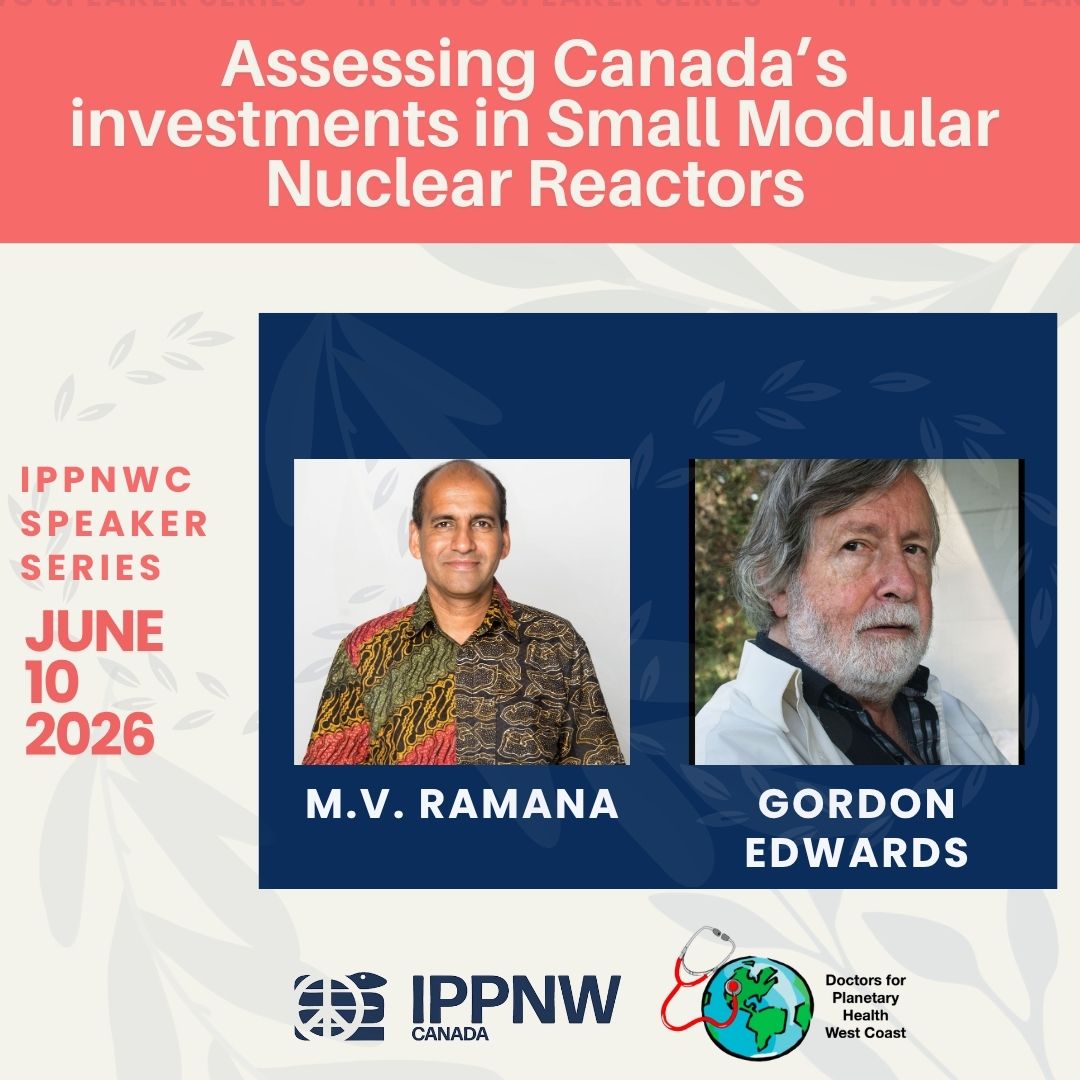
10 June – Assessing Canada’s Investments in Small Modular Nuclear Reactors – https://zoom.us/meeting/register/IiqHA5feRhaEBycOLNTJlA#/registration


Cuba Is Not a Failed State – It Is a Besieged State
PETITION: “Global Appeal to Endorse Palestinian Right of Return of Refugees”
To see nuclear-related stories in greater depth and intensity – go to https://nuclearinformation.wordpress.com
-
Archives
- June 2026 (89)
- May 2026 (306)
- April 2026 (356)
- March 2026 (251)
- February 2026 (268)
- January 2026 (308)
- December 2025 (358)
- November 2025 (359)
- October 2025 (376)
- September 2025 (257)
- August 2025 (319)
- July 2025 (230)
-
Categories
- 1
- 1 NUCLEAR ISSUES
- business and costs
- climate change
- culture and arts
- ENERGY
- environment
- health
- history
- indigenous issues
- Legal
- marketing of nuclear
- media
- opposition to nuclear
- PERSONAL STORIES
- politics
- politics international
- Religion and ethics
- safety
- secrets,lies and civil liberties
- spinbuster
- technology
- Uranium
- wastes
- weapons and war
- Women
- 2 WORLD
- ACTION
- AFRICA
- Atrocities
- AUSTRALIA
- Christina's notes
- Christina's themes
- culture and arts
- Events
- Fuk 2022
- Fuk 2023
- Fukushima 2017
- Fukushima 2018
- fukushima 2019
- Fukushima 2020
- Fukushima 2021
- general
- global warming
- Humour (God we need it)
- Nuclear
- RARE EARTHS
- Reference
- resources – print
- Resources -audiovicual
- Weekly Newsletter
- World
- World Nuclear
- YouTube
-
RSS
Entries RSS
Comments RSS
 nuclear-news