Militarization of Space: Threat of Nuclear War on Earth
Militarization of Space: Threat of Nuclear War on Earth Media Monitors Network by Rick Rozoff June 23, 2009″…American space researcher Matt Hoey stated that an arms race in space would be “increasing the risk of an accidental nuclear war while shortening the time for sanity and diplomacy to come into play to halt crises.”
On June 17, immediately after the historical ninth heads of state summit of the Shanghai Cooperation Organization (SCO) in Yekaterinburg, Russia on the preceding two days, Russian President Dmitry Medvedev and Chinese President Hu Jintao announced that their nations were drafting a joint treaty to ban the deployment of weapons in outer space to be presented to the United Nations General Assembly.
A statement by the presidents reflected a common purpose to avoid the militarization of space and said:
“Russia and China advocate peaceful uses of outer space and oppose the prospect of it being turned into a new area for deploying weapons.
Godzillas Back, This Time He Says He’ll Save Us.
Godzillas Back, This Time He Says He’ll Save Us.SG Gate.com by Peter Coyote Now that Global Warming has penetrated enough frontal lobes to be sufficiently recognized as a threat, the people who have done the most to contribute to it are offering nuclear power as the way to defeat it, describing it as a “carbon-free energy source.” The first problem is that they are lying, knowingly. The construction of a nuclear power plant,the concrete required,itself a major contributor to global warming, the fabrication, the machinery to build it — all release vast amounts of carbon. The discharge of hot water from such plants, heats river to 90 degrees, destroying the life in them. But these are the small quibbles.Let’s set all political and social considerations aside for a moment and examine a single, irrefutable fact: radiation radically alters, damages, or kills any cell with which it comes into contact. Radioactivity per se, even natural radiation, threatens everything with replicating cells — from sperm to sperm whales, and crosses all plant and animal kingdoms with impunity. The implication of this is, that in order to protect the health and well-being of the biosphere, radioactivity must be perfectly sequestered for a minimum of 250,000 years. (After which time it is only half as radioactive as it was.)……………………………The second problem is, “the garbage.” As radioactive materials degenerate, they produce other, less usuable but only marginally less radioactive substances. We have no method for safely containing and sequestering this radioactive waste. Consequently, we have developed a taboo against talking about it or even considering the question, pushing the existence of mounting tons of lethal garbage onto the back-burner of consciousness. It is so lethally dangerous for so interminably long a period that finding any solution for the waste has stymied scientists and industry for the sixty-odd years since it was first fashioned into a bomb. As it is, tons of this deadly poison are leaking into rivers in Hanford, Washington and at the TVA in Tennessee, and just off San Francisco where it was dumped overboard in steel drums which are currently rotting and rusting away near the Farallones Islands, irradiating the fish so important to our “healthy life-style diet.”…………………………..Just so that everyone can consume as much power as they want. Might it not be easier to turn off the lights and turn down the heat a bit, drive less, and use a bit less of everything? Mightn’t that allow us to continue to be happily imperfect a little longer? To remain human?
City Brights: Peter Coyote : Godzillas Back, This Time He Says He’ll Save Us.
Consumers’ fees pile up along with nuclear waste | GreenvilleOnline.com | The Greenville News
Consumers’ fees pile up along with nuclear waste greenvilleOnline.com 22 June 09 Billions collected for disposalbut federal repository nowhere in sight after years of planning Since 1983, consumers in South Carolina and other states with nuclear power plants have paid a special fee on their electricity bills to cover the costs of a long-planned national repository for radioactive waste. The fee has generated more than $30 billion for the federal government’s Nuclear Waste Fund over the years, according to the Department of Energy. South Carolina’s contribution was more than $1.2 billion at the end of last year.And yet the federal government still has no firm plan for disposing of the high-level waste.
Consumers’ fees pile up along with nuclear waste | GreenvilleOnline.com | The Greenville News
SOUTH AMERICA: Anti-Nuclear Activists to Form Common Front
SOUTH AMERICA: Anti-Nuclear Activists to Form Common Front IPS By Daniela Estrada SANTIAGO, Jun 22 (IPS) – Environmental organisations in Chile plan to revive the anti-nuclear movement in the Southern Cone of South America, in response to vigorous lobbying by corporations and politicians in favour of nuclear energy in the region…………………………….. In a bid for survival, the global nuclear industry is desperately trying to extend the useful life of existing nuclear reactors worldwide, sign new contracts in countries that have already opted for nuclear power, and carve a niche for themselves in other nations with pressing energy needs, like Chile, according to Larraín. ………………………………. Sara Larraín, head of the non-governmental Sustainable Chile Programme. said organisations in Argentina and Brazil, which already have nuclear power plants, should play a leading role, alongside those from Chile and Uruguay, where the nuclear debate is in full swing. Nuclear lobbyists have also targeted Mexico, she said……………………… Larraín pointed out that Chile already has two experimental nuclear power plants, at which several accidents have occurred. Two conscripts who were exposed to radioactive material in 1989 later died of leukaemia, while others are suffering serious health effects.
SOUTH AMERICA: Anti-Nuclear Activists to Form Common Front – IPS ipsnews.net
Revealed: catalogue of atomic leaks
Revealed: catalogue of atomic leaks The Fuardian Terry Macalister and Rob Edwards 21 June 09
The scale of safety problems inside Britain’s nuclear power stations has been revealed for the first time in a secret report obtained by the Observer that shows more than 1,750 leaks, breakdowns or other “events” over the past seven years.
The damning document, written by the government’s chief nuclear inspector, Mike Weightman, and released under the Freedom of Information Act, raises serious questions about the dangers of expanding the industry with a new generation of atomic plants. And it came as the managers of the UK’s biggest plant, Sellafield, admitted they had finally halted a radioactive leak many believe has been going on for 50 years.
The report discloses that between 2001-08 there were 1,767 safety incidents across Britain’s nuclear plants. About half were subsequently judged by inspectors as serious enough “to have had the potential to challenge a nuclear safety system”. They were “across all areas of existing nuclear plant”, including Sellafield in Cumbria and Aldermaston and Burghfield in Berkshire, says Weightman, chief inspector of the Nuclear Installations Inspectorate (NII).
Revealed: catalogue of atomic leaks | Environment | The Observer
Homeland Contamination: Destroying Indigenous Lands and Populations
Homeland Contamination: Destroying Indigenous Lands and Populations pacific Free Press 20 June 09 “………………..Homeland Contamination
There is uranium all around the Black Hills, South and North Dakota, Wyoming and Montana. Mining companies came in and dug large holes through these lands to extract uranium in the 1950’s and 1960’s prior to any prohibitive regulations. Abandoned uranium mines in southwestern South Dakota number 142. In the Cave Hills area, another sacred place in South Dakota used for vision quests and burial sites, there are 89 abandoned uranium mines.
In an essay called “Native North America: The Political Economy of Radioactive Colonialism,” political activists Ward Churchill and Winona LaDuke state that former US President Richard Nixon declared the 1868 Treaty Territory a “National Sacrifice Area,” implying that the territory, and its people, were being sacrificed to uranium and nuclear radiation.
The worst part, according to White Face, is that, “None of these abandoned mines have been marked. They never filled them up, they never capped them. There are no warning signs … nothing. The Forest Service even advertises the Picnic Springs Campground as a tourist place. It’s about a mile away from the Cave Hills uranium mines.”
The region is honeycombed with exploratory wells that have been dug as far down as six to eight hundred feet. In the southwestern Black Hills area, there are more than 4,000 uranium exploratory wells. On the Wyoming side of the Black Hills, there are 3,000 wells. Further north into North Dakota, there are more than a thousand wells.
The Black Hills and its surroundings are the recharge area for several major aquifers in the South Dakota, Nebraska, and Wyoming regions. The crisis can be gauged from the simple description that White Face gives: “When the winds come, they pick up the [uranium] dust and carry it; when it rains or snows, it washes it down into the aquifers and groundwater. Much of this radioactive contamination then finds its way into the Missouri River.”…………………………….The Ogala Sioux are engaged in ongoing legal battles with the pro-uranium state of South Dakota. They are aware of the unequal nature of their battle, but they cannot afford to give up. White Face explains how “… Our last court case was lost before learning that the judge was a former lawyer for one of the mining companies. Also, the governor’s sister and brother-in-law work for mining companies [Powertech] and a professor, hired by the Forest Service to test water run-off for contamination, is on contract with a company that works for the mining company. When I found out the judge was a lawyer for the mining company I knew we would lose, but we went ahead with the case for the publicity, because we have to keep waking people up.”
Other tribes, such as the Navajo and Hopi in New Mexico, have been exposed to radioactive material as well. Furthermore, the July 16, 1979, spill of 100 million gallons of radioactive water containing uranium tailings from a tailing pond into the north arm of the Rio Puerco, near the small town of Church Rock, New Mexico, also affected indigenous peoples in Arizona.
Her rage and grief are evident as White Face laments, “When we have our prayer gatherings we ask that no young people come to attend. If you want to have children don’t come to Cave Hills because it’s too radioactive.”
The exploitative approach to the planet’s resources and peoples that led to these environmental and health disasters collides with White Face’s values: “I always say that you have to learn to live with the earth, and not in domination of the earth.”
Homeland Contamination: Destroying Indigenous Lands and Populations
Thousands of consumer products found to contain low levels of radiation
Thousands of consumer products found to contain low levels of radiationBy ISAAC WOLF Scripps Howard News ServiceSunday, June 21, 2009
Thousands of everyday products and materials containing radioactive metals are surfacing across the United States and around the world.
Common kitchen cheese graters, reclining chairs, women’s handbags and tableware manufactured with contaminated metals have been identified, some after having been in circulation for as long as a decade. So have fencing wire and fence posts, shovel blades, elevator buttons, airline parts and steel used in construction.
A Scripps Howard News Service investigation has found that – because of haphazard screening, an absence of oversight and substantial disincentives for businesses to report contamination – no one knows how many tainted goods are in circulation in the United States.
But thousands of consumer goods and millions of pounds of unfinished metal and its byproducts have been found to contain low levels of radioactivity, and experts think the true amount could be much higher, perhaps by a factor of 10.
Renewable Energy Cheaper Than Nuclear Power
Renewable Energy Cheaper Than Nuclear Power Energy Matters 22 June 09 Nuclear power has been increasingly hailed by lobbyists as a source of clean, cheap and safe power; but cost blowouts in the construction and maintenance of new nuclear plants, along with their need for massive amounts of water and continuing radioactive waste storage issues, is again making renewable energy look to be the only really viable option to power our future.
According to a recent study by economist Dr. Mark Cooper, a senior fellow for economic analysis at the Institute for Energy and the Environment at Vermont Law School, the cost of electricity generated by new nuclear reactors would be (USD) 12-20 cents per kilowatt hour, whereas increased energy efficiency and renewable energy sourced power would cost around 6 cents per kilowatt hour.
This translates to USD $1.9 trillion to $4.1 trillion more over the life of 100 new nuclear reactors.
Projected construction and maintenance costs for nuclear plants have quadrupled since the start of the nuclear renaissance in 2000. The required massive subsidies from taxpayers and ratepayers would not change the real cost of nuclear reactors, they would just shift the risks to the public, according to the report.
Renewable Energy Cheaper Than Nuclear Power : Renewable Energy News
FOI reveals catalogue of nuclear near misses
FOI reveals catalogue of nuclear near misses
SNP News 21 June 09 Energy Spokesperson, Mike Weir MP, has expressed disbelief and concern over a secret UK Government report which reveals a woeful safety record inside the UK’s nuclear power stations. The report authored by the UK Government’s chief nuclear inspector Mike Weightman and obtained by the Observer newspaper under the Freedom of Information Act, shows that more than 1750 leaks, breakdowns and other “events” were logged between 2001 and 2008. The reports notes that half of these incidents were deemed “to have the potential to challenge a nuclear safety system” according to inspectors…………………Commenting, Mr Weir said:
“The near disaster at Sizewell revealed last week was just the tip of the iceberg. The potentially catastrophic consequences of any one of these 1750 “incidents” does not bear thinking about.
“The UK Government’s cavalier approach to nuclear safety is a major cause for concern – a lack of safety inspectors will do nothing to reassure the rightfully fearful public.
“The risks and uncertainties of nuclear power, in terms of waste disposal, decommissioning, security and health concerns, or cost, are far too great.
“And it is not good enough for this information to be dragged out through FOI requests rather than made public by Ministers.
FOI reveals catalogue of nuclear near misses | SNP – Scottish National Party
New power-plant drain on rivers sparks debate
New power-plant drain on rivers sparks debate Ny san Antonio 21 June 09 by Antonio Caputo
New power plants planned along the lower Colorado River could use the same water supply that was denied San Antonio for future growth.
The driving force is simple. Power shortages are forecast for Texas’ future — shortages that power companies are rushing to meet with new plants.
But experts, environmental groups and others are beginning to question whether there is enough water available to serve the massive facilities.
The issue pits two fundamental resources critical to the fast-growing state against each other — water and power.
In an indirect way, it even puts San Antonio’s two largest utilities in competition for water from the lower Colorado River, some 200 miles away……………………
Nukes’ take
The lower Colorado River is a microcosm of an issue exploding statewide.
The South Texas Project, which supplies San Antonio with about a third of its energy, wants to build two more nuclear reactors and use the Colorado River water for cooling.
Nuclear renaissance hits trouble
Nuclear renaissance hits trouble
James Kanter The Age June 21, 2009 The cracks are showing in the latest atomic showpiece, writes James Kanter.AS THE world fights climate change by seeking cleaner sources of energy, governments would do well to consider this cautionary tale of a new-generation nuclear reactor site.The massive power plant under construction on the Finnish island of Olkiluoto was supposed to be the showpiece of a nuclear renaissance. The most powerful reactor built to date, its modular design was supposed to make it faster and cheaper to build. And it was supposed to be safer, too.But after four years of construction and thousands of defects and deficiencies, the reactor’s €3 billion price tag ($A5.2 billion) has climbed at least 50 per cent. And while it was meant to be finished this northern summer, Areva, the French company building it, is no longer willing to say when it will go online……………………….Areva has acknowledged that the cost of a new reactor today would be as much as €6 billion, double the price offered to the Finns. Areva announced a steep drop in earnings last year, which it blamed mostly on mounting losses from the project.
In addition, nuclear safety inspectors in France have found cracks in the concrete base and steel reinforcements in the wrong places at the site in Flamanville. They also warned the utility building the reactor that welders working on the steel container were not properly qualified.
On top of such problems come the recession, weaker energy demand, tight credit and uncertainty over future policies, said Caren Byrd, an executive director at the global utility and power group at Morgan Stanley in New York.
“The warning lights now are flashing more brightly than just a year ago about the cost of new nuclear,” she said.
Open your wallet: Electric rates already moving higher to finance new nuclear power
Open your wallet: Electric rates already moving higher to finance new nuclear powerBy: Washington Post Examiner MARK WILLIAMSAssociated Press 06/21/09 8:30 PM EDTCOLUMBUS, OHIO — A ghost from the nuclear industry’s early years has reappeared.It is not public apprehension about safety or disposal issues this time, but the staggering cost of building nuclear reactors.A wave of new reactors now in the works is intended to solve at least part of the nation’s energy problems as it attempts to shift away from fossil fuels. But cost is likely to plague every upcoming nuclear project.This month in Missouri the first of the next generation reactors was put on hold because of the $6 billion price tag.Whether or not AmerenUE’s Missouri reactor was a casualty of the current economic climate, the legal fight in several states shows how big the cost hurdle will be.Some states have altered laws so that consumers begin footing the bill now, even before construction begins. Missouri did not…………………………………………cost, critics say, is a too great and there are better ways to power homes.
“It is so phenomenally costly that it crowds out capital needed for energy efficiency and renewable energy,” said Mark Haim of Missourians for Safe Energy, a group that has been fighting Ameren’s plans.
Yet Republican lawmakers in Washington want more government funding for nuclear power……………………
The nuclear energy industry lobbied hard for $50 billion worth of federal loan guarantees, but that was stripped from the stimulus bill.
So states are revamping laws to help raise money………………………
Utilities say allowing them to charge consumers before reactors are built, rather than after, will save hundreds of millions in financing costs, which would also have to be paid by consumers.
In Georgia, customers of Georgia Power, a subsidiary of the Southern Co., will pay $1.30 extra a month beginning in 2011. However, to cover the cost of two new nuclear reactors that will cost $14 billion, consumers will be paying an extra $9.10 a month by 2017.
Because the utility is allowed to collect money before the plants are on line, rates will increase by 9 percent, compared with the 12 percent they would jump if rates were raised only after completion, the company said.
Big Nuke’s Radioactive Hoax in Impoverished Ohio
Signs of Desperation?
Big Nuke’s Radioactive Hoax in Impoverished Ohio counterpunch 20 June 09 By HARVEY WASSERMANJob-starved southern Ohioans are being promised a shiny new nuclear plant. But the announcement has come with a cruel reminder, and the scent of a desperate hoax.Using the gargantuan corpse of the shuttered Portsmouth-Piketon uranium enrichment plant as his backdrop, U.S. Senator George Voinovich (R-OH) punctuated his enthusiastic endorsement the new nuke by proclaiming that, with his support, the US government has paid thousands of Ohio workers hundreds of millions of dollars in compensation for the health damage they suffered from being irradiated while working there…………………………….
Now the heaviest of nuclear hitters want to use this same site for a 1600-megawatt French-designed plant that would anchor a “Clean Energy Park.” In a region devastated by the enrichment plant’s shutdown, and by the decimation of the American industrial economy, it would be a flagship for the “nuclear power renaissance.”
It is a cruel hoax
……………………………….the most critical spot was occupied by Anne Lauvergeon, CEO of AREVA, the French government’s nuclear front group. She ended her brief speech with a heavily inflected “Go Buckeyes!”
Lauvergeon is a top A-List industry hitter, the flamboyant, hard-nosed chief of the world’s number one reactor pusher. But AREVA’s finances have been hard-hit by an outdated technology teetering at the brink of collapse, even as its supporters push ahead with high-profile—but hollow—events like this one…………………………Other bothersome details remain to be solved, most importantly: who will actually pay for all this?……………….Nor has the insurance industry come forward to provide liability coverage in case of a major accident.
Harvey Wasserman: Big Nuke’s Radioactive Hoax in Impoverished Ohio
So-called “CLEAN” nuclear energy
Ohio Governor, Duke Power, UniStar, USEC, and France merge to build “clean energy park” at DOE site
Beyond Nuclear 20 June 09 Background: An alliance involving Ohio Governor Ted Strickland, Duke Power company, United States Enrichment Corporation (USEC), UniStar Nuclear Energy, and France’s troubled nuclear power giant AREVA is being forged to build a new 1600 megawatt Evolutionary Power Reactor (EPR) at the now closed atomic bomb and nuclear fuel enrichment factory site in Piketon, Ohio. The proposed site is at the U.S. Department of Energy’s old Portsmouth Gaseous Diffusion Plant which was leased to USEC for the enrichment of uranium. USEC ceased operations in May 2001. The Piketon site is also the USEC pilot project for new uranium enrichment technology with the construction of the American Centrifuge Demonstration Facility.
Our View: There is nothing “clean” about this proposed first-of-a-kind nuclear energy park for the enrichment of nuclear fuel alongside a new nuclear power plant including the secret dumping of radioactive contamination from the Cold War Piketon bomb factory. The Piketon facility is still the focus of more than $100 million in long overdue cleanup money from industrial contamination dating back to the bomb factory’s opening in 1952. The construction of a new uranium enrichment and now a new power reactor will likely result in widening contamination and divert vital resources from truly clean renewable energy resources and energy efficiency.
Nuclear waste cargo sailing the Barents Sea –
Nuclear waste cargo sailing the Barents Sea barents Observer 19 June 09
40 year old rusty spent nuclear fuel containers from Russia’s abounded submarine base Gremikha were shipped to Murmansk this week.The voyage from Gremikha to Murmansk normally takes one day. This is the same route as the Russian retired submarine K-159 took when it sank northeast of the inlet to the Kola Bay in August 2003. The vessel which is sailing with the highly radioactive spent fuel this week is the 35 year old Serebryanka.
The rusty spent nuclear fuel containers have been stored outdoor at Gremikha for 40 years, posing a grave radiation threat. They contain uranium fuel from some of the Soviet Union’s first nuclear powered submarines, which at that time were based at Gremikha. The submarines reloaded their deadly radioactive spent fuel to the onshore open-air storage site.
Nuclear waste cargo sailing the Barents Sea – BarentsObserver
1 This Month
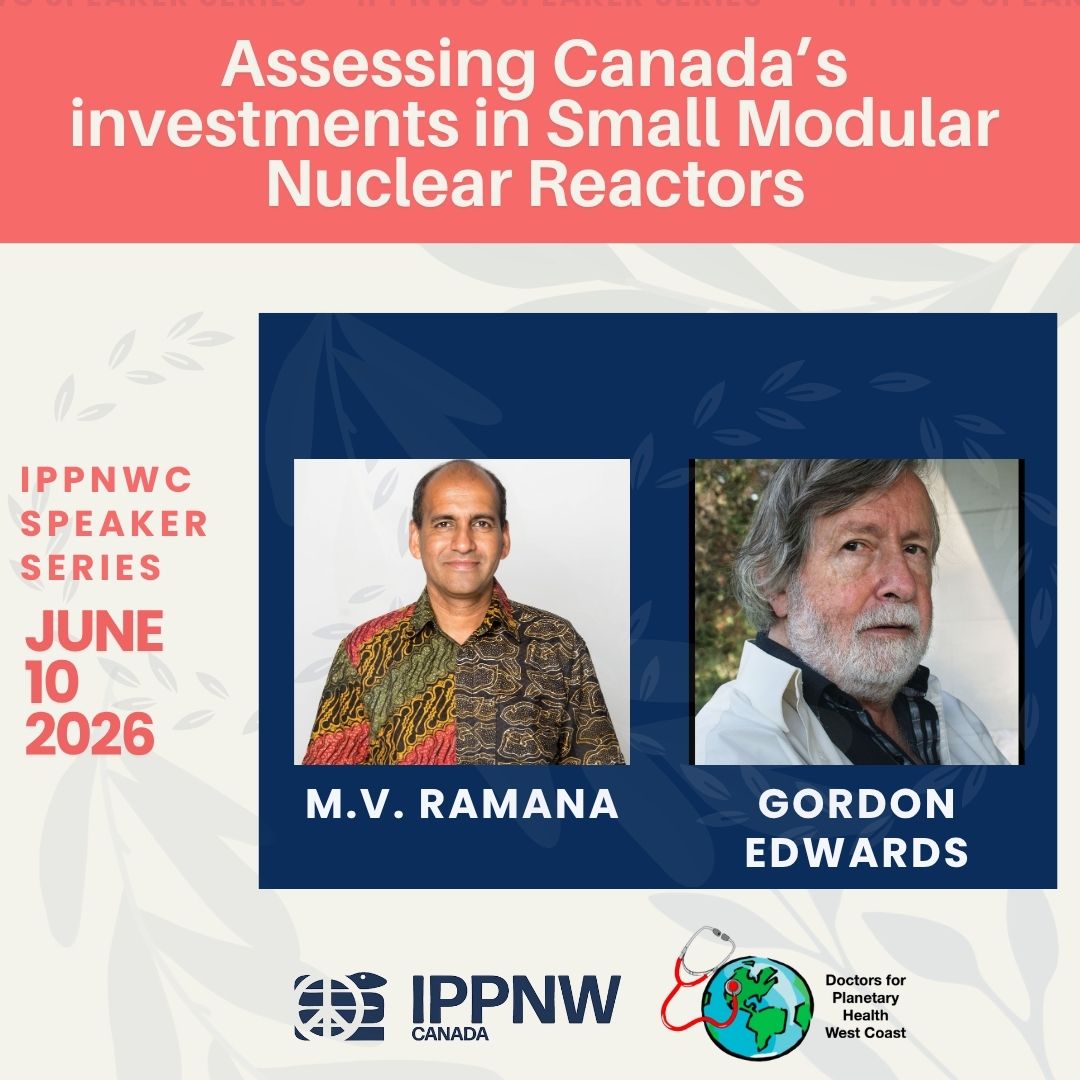
10 June – Assessing Canada’s Investments in Small Modular Nuclear Reactors – https://zoom.us/meeting/register/IiqHA5feRhaEBycOLNTJlA#/registration


Cuba Is Not a Failed State – It Is a Besieged State
PETITION: “Global Appeal to Endorse Palestinian Right of Return of Refugees”
To see nuclear-related stories in greater depth and intensity – go to https://nuclearinformation.wordpress.com
-
Archives
- June 2026 (89)
- May 2026 (306)
- April 2026 (356)
- March 2026 (251)
- February 2026 (268)
- January 2026 (308)
- December 2025 (358)
- November 2025 (359)
- October 2025 (376)
- September 2025 (257)
- August 2025 (319)
- July 2025 (230)
-
Categories
- 1
- 1 NUCLEAR ISSUES
- business and costs
- climate change
- culture and arts
- ENERGY
- environment
- health
- history
- indigenous issues
- Legal
- marketing of nuclear
- media
- opposition to nuclear
- PERSONAL STORIES
- politics
- politics international
- Religion and ethics
- safety
- secrets,lies and civil liberties
- spinbuster
- technology
- Uranium
- wastes
- weapons and war
- Women
- 2 WORLD
- ACTION
- AFRICA
- Atrocities
- AUSTRALIA
- Christina's notes
- Christina's themes
- culture and arts
- Events
- Fuk 2022
- Fuk 2023
- Fukushima 2017
- Fukushima 2018
- fukushima 2019
- Fukushima 2020
- Fukushima 2021
- general
- global warming
- Humour (God we need it)
- Nuclear
- RARE EARTHS
- Reference
- resources – print
- Resources -audiovicual
- Weekly Newsletter
- World
- World Nuclear
- YouTube
-
RSS
Entries RSS
Comments RSS
 nuclear-news