Fears Taliban could gain Pakistans nuclear weapons
Fears Taliban could gain Pakistan’s nuclear weapons
Australian Broadcasting Corporation
Broadcast: 05/05/2009
KAREN BARLOW: A.Q., or Abdul Qadeer Khan, the father of Pakistan’s nuclear weapons program, confessed to secretly sending nuclear material to Libya, North Korea and Iran over two decades. Karen Barlow, Lateline.
Lateline – 05/05/2009: Fears Taliban could gain Pakistans nuclear weapons
Nuclear solution comes with a huge price tag
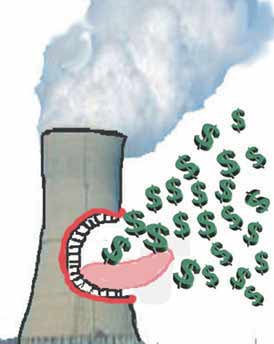 Nuclear solution comes with a huge price tag
North County Times By MARK WILLIAMS – AP Energy Writer | Saturday, May 2, 2009
COLUMBUS, Ohio —- A ghost from the nuclear industry’s early years has reappeared.
It is not public apprehension about safety or disposal issues this time, but the staggering cost of building nuclear reactors.
A wave of new reactors now in the works is intended to solve at least part of the nation’s energy problems as it attempts to shift away from fossil fuels. But cost is likely to plague every upcoming nuclear project.
This month in Missouri, the first of the next-generation reactors was put on hold because of the $6 billion price tag.
Whether or not AmerenUE’s Missouri reactor was a casualty of the current economic climate, the legal fight in several states shows how big the cost hurdle will be.
Some states have altered laws so that consumers begin footing the bill now, even before construction begins. Missouri did not.
“A large plant would be difficult to finance under the best of conditions, but in today’s credit-constrained markets, without supportive state energy policies, we believe getting financial backing for these projects is impossible,” said Thomas Voss, AmerenUE’s president and chief executive.
Reactors were expensive even 40 years ago at around $1 billion. The cost of AmerenUE’s Missouri project dwarfed even the market value of its parent company………………….. “It is so phenomenally costly that it crowds out capital needed for energy-efficiency and renewable energy,” said Mark Haim of Missourians for Safe Energy, a group that has been fighting Ameren’s plans.
Yet Republican lawmakers in Washington want more government funding for nuclear power…………….
http://www.nctimes.com/articles/2009/05/02/business/z6edbd99928ffa519882575a6006f16a6.txt
Can Clean Energy Revive Manufacturing?
Can Clean Energy Revive Manufacturing?
The New York Times By Kate Galbraith 4 May 09The manufacturing sector in the United States continues to shrink — but could the renewable-energy rush spur a manufacturing revival?
A number of solar-panel factories are coming online in the United States, as I reported on Sunday. Makers of wind turbines are also establishing factories in the heartland, where the factories’ proximity to wind farms on the Plains slashes the cost of shipping the giant machines from Europe…………………. many renewable-equipment manufacturers want to set up operations in the United States because they perceive it to be the largest market for the technologies in the years ahead. (Tax credits in the stimulus package for domestic production of renewable-energy equipment also help.) A key factor in bringing SolarWorld to Oregon, said Mr. Klebensberger, was the work force — and especially Oregonians’ “belief in change and how important renewables are.” Proximity to a cluster of semiconductor factories, some of whose workers SolarWorld has recently poached, was another attraction…………………….
http://greeninc.blogs.nytimes.com/2009/05/04/can-clean-energy-revive-manufacturing/.
Project to move 15 million tons of radioactive waste begins
http://www.nctimes.com/articles/2009/05/02/business/z6edbd99928ffa519882575a6006f16a6.txt
Project to move 15 million tons of radioactive waste begins KSLTV 4 May 09 “…………………..They’re finally moving 16 million tons of radioactive dirt away from the town of Moab.
The radioactive dirt is going into big boxes, the boxes onto rail cars: a project that will cost about $1 billion. “You cannot put a price on the image and reputation of the state,” said Gov. Jon Huntsman. “The fact that 50 years ago, during the height of the Cold War, the decision was to make this dump 3 miles out of town, nobody would have thought twice about it. And today, it seems absolutely ludicrous that ever would have been done.”
Moab has been trying to get rid of it almost ever since the uranium mill that produced it shut down 25 years ago. “It’s sitting in the flood plain of the Colorado River and draining into the river,” explained Bill Hedden, executive director of Grand County Trust.
Nuclear power foes not stilled in N.E.
Nuclear power foes not stilled in N.E.
Boston.com 4 May 09 “………………….A march in Montpelier last week was only the latest reminder of ongoing opposition to Vermont Yankee’s bid to extend its operating license 20 more years.
The Vermont Public Interest Research Group wants the Vermont Yankee plant shut down, and assurances that its owner, Entergy Corp., will pay the full cost of decommissioning it. “There are millions of people that live within a dangerous distance of this facility,” said James Moore, clean energy advocate for the group, known as VPIRG…………………… A cadre of activists who oppose Vermont Yankee have built a statewide coalition to oppose the 20-year renewal of the plant’s current license, which expires in 2012. The issue will be subject to a vote by the Vermont Legislature in the coming year.
At last week’s demonstration, activists marched from Montpelier’s City Hall to the State House to urge lawmakers to back development of clean sources of energy such as wind and solar. The marchers also announced they had gathered 12,000 signatures in support of closing Vermont Yankee……………………. Environmentalists and others remain concerned that there is no national plan for long-term storage of nuclear waste.
Safety issues revealed at nuclear facility
Safety issues revealed at nuclear facility
Contractors used substandard materials
The State 3 May 09 By James Rosen WASHINGTON — Contractors at the Savannah River Site — one of the country’s major nuclear-weapons complexes — repeatedly procured dangerous construction materials and components that failed to meet federal safety standards, according to a recently completed internal government probe.
One of the substandard materials revealed at the Savannah River Site on the South Carolina-Georgia border “could have resulted in a spill of up to 15,000 gallons of high-level radioactive waste,” the inspector general of the U.S. Energy Department found.
The five-month investigation also disclosed the purchase of 9,500 tons of substandard reinforcing steel at the SRS site near Aiken……………………. Many employees are engaged in a huge environmental cleanup effort to mediate decades of toxic nuclear waste production……………………. Some environmentalists and other critics cast the NRC as a weak regulator plagued by cozy relationships with the power utilities that own and operate the civilian nuclear reactors it is charged with licensing and overseeing.
Heads of the Energy Department’s Office of Environmental Management, in charge of waste cleanup at SRS and other nuclear complexes, didn’t dispute the inspector general’s findings. http://www.thestate.com/local/story/772791.html
Russia To Ring The Arctic With Floating Nuclear Power Stations
GIZMODO
Jack Loftus (information from The Guardian) May 4, 2009
Mr. Polar Bear and his brethren will be sharing real estate with a ring of floating, self-sustained nuclear power stations. It’s all part of Russia’s—and the world’s—ongoing thirst for energy.Environmentalists are understandably outraged over the impact said stations could have on an already endangered area of the globe, and if polar bears could talk, I imagine they’d be outraged too.
Said a rep from Bellona, a Scandinavian environmental watchdog group, “[The plan] is highly risky. The risk of a nuclear accident on a floating power plant is increased. The plants’ potential impact on the fragile Arctic environment through emissions of radioactivity and heat remains a major concern. If there is an accident, it would be impossible to handle.
“Oh, and there’s this fear that Russia will simply dump the radioactive waste into the Arctic Sea anyway, which they’ve done before on several occasions. To date at least 12 nuclear reactors from decommissioned Russian submarines have been dumped, along with more than 5,000 containers of solid and liquid waste.Pretty soon the ocean will be like a 24/7 aurora borealis up there. A wonderful, cancer-causing aurora borealis.
Russia To Ring The Arctic With Floating Nuclear Power Stations – Gizmodo Australia
Iraq’s Wrecked Environment
Half Life of a Toxic War Iraq’s Wrecked Environment ounterpunch May 1 By JEFFREY ST. CLAIR and JOSHUA FRANK – “………………….
Months of bombing during the first Gulf War by the United States and Great Britain left a deadly and insidious legacy: tons of shell casings, bullets and bomb fragments laced with depleted uranium. In all, the United States hit Iraqi targets with more than 970 radioactive bombs and missiles.
Depleted uranium (DU) is a rather benign sounding name for uranium-238, the trace element left behind when fissionable material is extracted from uranium-235 for nuclear reactors and weapons. For decades, this waste was a nuisance; by the late 1980s there were nearly a billion tons of the radioactive material piled at plutonium processing plants across the country. Then Pentagon weapons designers discovered a use for the tailings: they could be molded into bullets and bombs. Uranium is denser than lead, making it perfect for armor penetrating weapons designed to destroy tanks, armored personnel carriers and bunkers. When tank-busting bombs explode, depleted uranium oxidizes into microscopic fragments that float through the air, carried on the desert winds for decades. Inhaled, the lethal bits of carcinogenic dust stick to the lungs, eventually wreaking havoc in the form of tumors, hemorrhages, ravaged immune systems, and leukemia.
More than 15 years later, the dire health consequences of our first radioactive bombing campaign in this region are coming into focus. Since 1990, the incidence rate of leukemia in Iraq has increased over 600 percent.
Jeffrey St. Clair and Joshua Frank: Iraq’s Wrecked Environment
Olympic Dam EIS: Impact of the world’s biggest mine
Incomparable and unimaginable are not synonymous, but Olympic Dam is both. It will be the world’s biggest hole-in-the-ground, the largest copper and uranium quarry on the planet, the highest artificial mountain range on Earth and the richest mine since King Solomon………………….
The company will ultimately dig a hole 7.5 kilometres long, five kilometres wide and more than a kilometre deep.
Stacked up, the 44 billion tonnes or so of overburden would effectively create a new mountain range. Depending on its shape, it might be 20 kilometres wide in each direction and almost as high as Mt Lofty’s 720 metres………………………BHP has said it will not comment on the EIS after the weekend even though reporters can’t possibly read all the documents in the time available………..
………….The Independent Weekly understands that the Federal Government is planning much tougher safeguards relating to uranium sales to China, even if it’s gift-wrapped in copper concentrate. BHP does not yet have export permits for that uranium. In May next year nuclear non-proliferation nations, Australia included, will meet in New York. Australia may want a new international treaty to make sure Olympic Dam uranium does not end up in Chinese bombs………….
…………….here’s a prediction. Tomorrow’s EIS will say the project can go ahead on environmental grounds. The company will start moving to begin expansion and hope for a global economic recovery to coincide with increased production. BHP will pass the break-even point on its multi-billion investment within the first two decades, and after that it’s money in the bank all the way down to the year 2100.
But first, there’ll be new legislation presented in State Parliament to legalise the process. It will be a new form of the 1982 Roxby Downs Indenture Ratification Act. It will, once again, over-ride every other Act of Parliament passed up to now and into the future. The first that South Australians see of that legislation will be after the state election.
And BHP Billiton’s Olympic Dam will have an economic and environmental impact that is synonymous with mining on this scale: incomparable and unimaginable.
To cut coal reliance, better step on the gas
To cut coal reliance, better step on the gas The Age Paddy Manning May 4, 2009
Australia’s gas industry deserves better government support, to play a bigger role in power generation.
IF CARBON capture and storage seems dubious, gas-fired power stations can deliver 80 per cent of the emissions reductions it promises — now.
Australia may be the Saudi Arabia of coal but (like the Saudis) we are also rich in gas —………………Gas promises a bridge between coal and renewables and can meet growing demand for base load power in this country without incurring substantial job losses in the transition, or jacking up electricity prices by more than 10 per cent, industry lobbyists say.
A cautionary history of the nuclear age | Cautionary tales
The nuclear age Cautionary tales
Apr 30th 2009 The Economist …………….The expectation of electricity “too cheap to meter” brought hopes in some quarters of an end to world poverty. Yet nuclear power proved costly and far from risk-free. Some presumed that by the turn of the 20th century there could be more than 500 fast-breeder reactors, fuelled by expanding stockpiles of plutonium.
By the millennium’s end not a single fast-breeder was in commercial operation (the necessary experimental forerunners produce plutonium in quantities useful for bomb-making). The Bush administration’s Global Nuclear Energy Partnership sought to revive the breeder idea (renaming it a fast-burner), but plans had to be shrunk due to cost, technological complexity and the danger of proliferation.
Whatever the nuclear technology used, the by-products thus far have been accidents (Three Mile Island and Chernobyl were among the worst but there have been plenty of others), pollution and piles of nuclear waste. Meanwhile technologies and materials acquired to keep the lights on can be misused in weapons.
Spread around generously in the 1950s and 1960s, “atoms for peace” helped get Argentina, Brazil, India, Israel, Pakistan, South Africa, South Korea, Taiwan and others started in the bomb business. (Other secretive programmes—in Iran, Libya, North Korea—thrived mostly on black-market connections.)
Now, once again, nuclear suppliers are signing up governments with nuclear ambitions, arguing that co-operation will help ensure the technology is put to proper use. But history suggests that no one can be sure where all this will lead.
A cautionary history of the nuclear age | Cautionary tales | The Economist
BHP to ‘dump mine tailings on ground’ | The Australian
BHP to ‘dump mine tailings on ground’
Gavin Lower | May 01, 2009
Article from: The AustralianBHP BILLITON plans to store radioactive mine tailings from its proposed Olympic Dam expansion on the surface, rather than return the material to the pit as the Northern Territory’s Ranger uranium mine is required to do, a key environmental group says.
Australian Conservation Foundation nuclear-free campaigner David Noonan said yesterday the company’s plan, coming on the eve of the public release of the 3750-page draft environmental impact statement for the expansion, could see the company create the world’s largest radioactive tailings pile over the life of the mine.
“I understand the BHP EIS will set out the company plan to accumulate and store the radioactive mine tailings on the surface and to leave those tailings on the surface in perpetuity,” he said.
“BHP have told me that what they intend to do with their tailings is not put it back into the pit.”
A company spokesman said yesterday he could not comment on the contents of the EIS.
BHP Billiton proposes to turn its Olympic Dam copper, gold and uranium mine, 560km north of Adelaide, from an underground mine into an open-cut operation.
Mr Noonan said the BHP plan would be in contrast to existing regulations governing the Ranger mine and a Labor Party pledge before the last election to follow world best practice for uranium mining………………….the proposed expansion of Olympic Dam would produce 70 million tonnes of radioactive mine tailings each year, significantly more than the 10 million tonnes of radioactive tailings now produced each year.
BHP to ‘dump mine tailings on ground’ | The Australian
BHP to ‘dump mine tailings on ground’
Gavin Lower | May 01, 2009
Article from: The AustralianBHP BILLITON plans to store radioactive mine tailings from its proposed Olympic Dam expansion on the surface, rather than return the material to the pit as the Northern Territory’s Ranger uranium mine is required to do, a key environmental group says.
Australian Conservation Foundation nuclear-free campaigner David Noonan said yesterday the company’s plan, coming on the eve of the public release of the 3750-page draft environmental impact statement for the expansion, could see the company create the world’s largest radioactive tailings pile over the life of the mine.
“I understand the BHP EIS will set out the company plan to accumulate and store the radioactive mine tailings on the surface and to leave those tailings on the surface in perpetuity,” he said.
“BHP have told me that what they intend to do with their tailings is not put it back into the pit.”
A company spokesman said yesterday he could not comment on the contents of the EIS.
BHP Billiton proposes to turn its Olympic Dam copper, gold and uranium mine, 560km north of Adelaide, from an underground mine into an open-cut operation.
Mr Noonan said the BHP plan would be in contrast to existing regulations governing the Ranger mine and a Labor Party pledge before the last election to follow world best practice for uranium mining………………….the proposed expansion of Olympic Dam would produce 70 million tonnes of radioactive mine tailings each year, significantly more than the 10 million tonnes of radioactive tailings now produced each year.
Ferguson firm on scrapping nuclear waste dump – ABC News (Australian Broadcasting Corporation)
Ferguson firm on scrapping nuclear waste dump ABC News 30 April 09 Federal Resources Minister Martin Ferguson says the Commonwealth will keep its promise to repeal legislation that could force a nuclear waste dump on the Northern Territory.
But Mr Ferguson will not say when the law will be changed.
The Labor Party promised to repeal the legislation during the last federal election campaign.
Mr Ferguson says it is a simple legislative process, but it will not be done until he has seen scientific assessments of the proposed sites and the Government has finalised its policy on community consultation.
Ferguson firm on scrapping nuclear waste dump – ABC News (Australian Broadcasting Corporation)
1 This Month
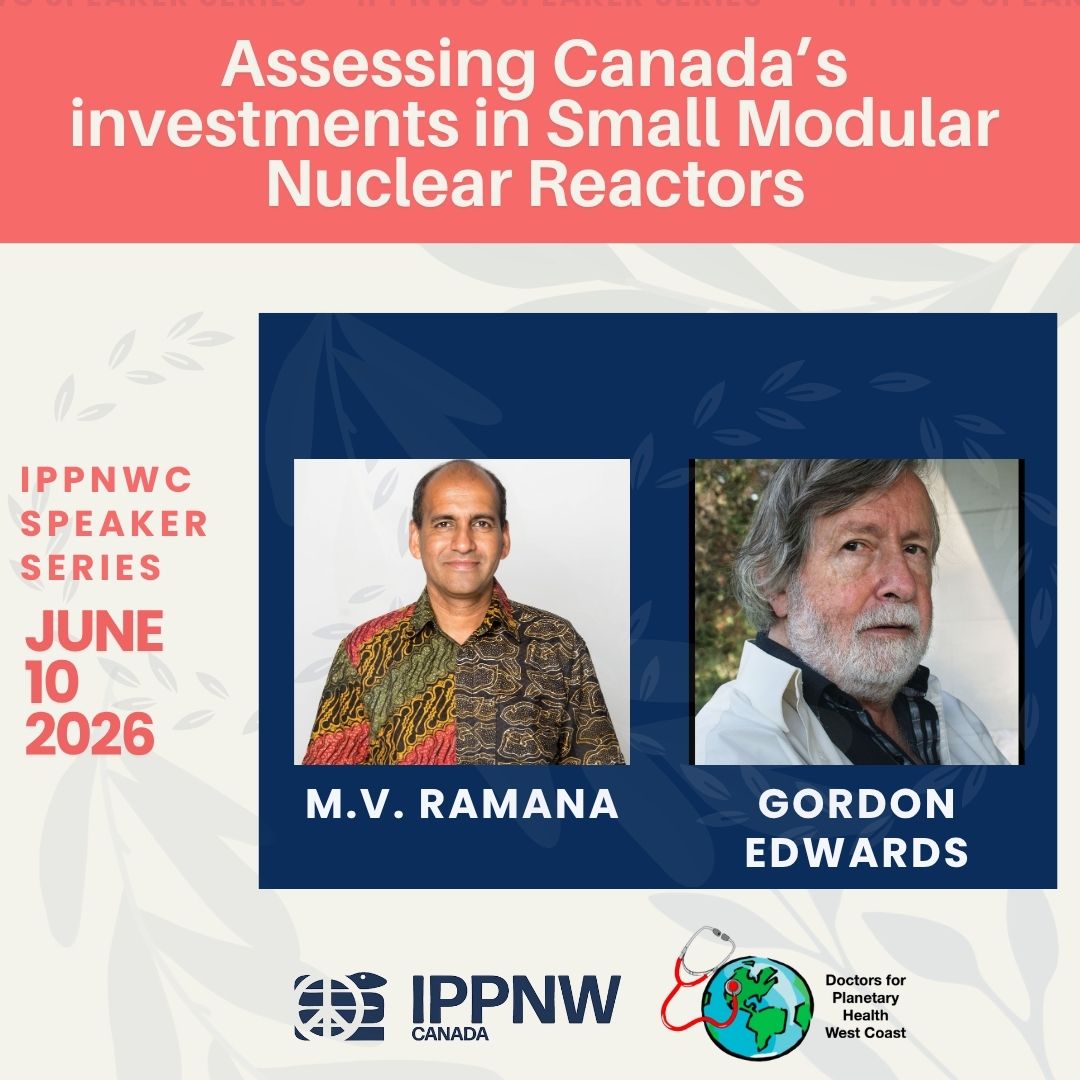
10 June – Assessing Canada’s Investments in Small Modular Nuclear Reactors – https://zoom.us/meeting/register/IiqHA5feRhaEBycOLNTJlA#/registration


Cuba Is Not a Failed State – It Is a Besieged State
PETITION: “Global Appeal to Endorse Palestinian Right of Return of Refugees”
To see nuclear-related stories in greater depth and intensity – go to https://nuclearinformation.wordpress.com
-
Archives
- June 2026 (89)
- May 2026 (306)
- April 2026 (356)
- March 2026 (251)
- February 2026 (268)
- January 2026 (308)
- December 2025 (358)
- November 2025 (359)
- October 2025 (376)
- September 2025 (257)
- August 2025 (319)
- July 2025 (230)
-
Categories
- 1
- 1 NUCLEAR ISSUES
- business and costs
- climate change
- culture and arts
- ENERGY
- environment
- health
- history
- indigenous issues
- Legal
- marketing of nuclear
- media
- opposition to nuclear
- PERSONAL STORIES
- politics
- politics international
- Religion and ethics
- safety
- secrets,lies and civil liberties
- spinbuster
- technology
- Uranium
- wastes
- weapons and war
- Women
- 2 WORLD
- ACTION
- AFRICA
- Atrocities
- AUSTRALIA
- Christina's notes
- Christina's themes
- culture and arts
- Events
- Fuk 2022
- Fuk 2023
- Fukushima 2017
- Fukushima 2018
- fukushima 2019
- Fukushima 2020
- Fukushima 2021
- general
- global warming
- Humour (God we need it)
- Nuclear
- RARE EARTHS
- Reference
- resources – print
- Resources -audiovicual
- Weekly Newsletter
- World
- World Nuclear
- YouTube
-
RSS
Entries RSS
Comments RSS
 nuclear-news