33 Towns Support Closing Of Nuke Plant – News- msnbc.com
33 Towns Support Closing Of Nuke Plant msnbc 4 March 09 Non-Binding Resolution Speaks To Bigger Picture Thirty-nine communities around the state voted on whether or not they think the nuclear power plant’s license should be extended, and most of those communities voted an overwhelming “no.”
Towns Weigh In On VT Yankee Future Organizers of a campaign to close Vermont Yankee nuclear plant say 33 towns voted in favor a measure urging state lawmakers to pull the plug on it.
The non-binding resolution was passed Tuesday at town meetings in Brattleboro, Brookline, Calais, Charlotte, Corinth, Charleston, Craftsbury, Dummerston, Duxbury, East Montpelier, Greensboro, Guilford, Halifax, Hinesburg, Holland, Lincoln, Marshfield, Middlesex, Marlboro, Montpelier, Newfane, Plainfield, Putney, Richmond, Shrewsbury, Townshend, Tunbridge, Warren, Westfield, Westminster, Windham, Woodbury and Worcester……………………….The vote was an advisory vote, which means that the Legislature has no obligation to act on its results.
Leadership: Nuclear Pressure
Nuclear Pressure STRATEGY PAGE March 4, 2009: For the second time in three years, the U.S. Navy has had to discipline sailors who maintain nuclear power plants. Back in 2007, several members of the nuclear power department on a nuclear submarine were disciplined for not maintaining logs properly………….
…….A similar situation arose recently in the nuclear power department of the carrier Eisenhower. There, seventeen senior NCOs and a junior officer were punished for cheating on a requalification examination.
Nuclear reactor from HMS Vanguard being dismantled in Plymouth’s Devonport Dockyard
Nuclear reactor being dismantled in Devonport The Herald (UK) March 04 2009
A massive section of the reactor from HMS Vanguard – which was refitted and refuelled at Devonport dockyard between 2002 and 2004 – is being dismantled at the city dockyard.
Royal Navy sources have said it was the first time a submarine reactor had been cut up in the UK.
And campaigners against the storage of nuclear waste at the naval base claimed they knew nothing of the scheme and accused the Ministry of Defence of ignoring public opposition to reactor disposal work in the city.
They fear it is a precursor to the reactors aboard seven redundant submarines stored in the naval yard being cut up at Devonport…………………….an Avent, of the Campaign Against Nuclear Storage and Radiation (Cansar), said: “This is the first phase in Plymouth becoming a nuclear scrapyard.
“The Ministry of Defence are going to use this project to justify doing all the other submarines here. What makes it worse is that they are doing it behind our backs.”………………………Five years ago, the public rejected any plans to manage or store nuclear waste at Devonport after consultation on the Ministry of Defence’s controversial Interim Storage of Laid Up Submarines (ISOLUS) project.

Nuclear reactor from HMS Vanguard being dismantled in Plymouth’s Devonport Dockyard
AREVA in trouble?
Areva May Sue Siemens on Nuclear Deal With Rosatom, Figaro Says
By Francois de Beaupuy
March 4 (Bloomberg) — Areva SA may sue Siemens AG because it agreed to create a venture with Rosatom Corp. to design, build and operate nuclear power plants, Le Figaro said, citing people close to Areva it didn’t name.
Siemens, which decided earlier this year that it would sell its 34 percent stake in a nuclear reactor building venture with Areva, must respect a clause that prevents it from competing with the French company on nuclear issues until 2020, the newspaper said.
UPDATE 1-IAEA approves extra nuclear inspection pact for India | Reuters
IAEA approves extra nuclear inspection pact for India – “………..
VIENNA, March 4 (Reuters) – U.N. nuclear watchdog governors on Tuesday approved a deal allowing extra inspections of India’s atomic industry, a condition of a U.S.-led deal allowing New Delhi to import nuclear technology after a 33-year freeze.
Passage of an “Additional Protocol” somewhat expanding the International Atomic Energy Agency’s monitoring rights in India came a month after New Delhi signed a basic nuclear safeguards accord opening its civilian nuclear plants to U.N. inspections……………………………..
Sceptics felt that while heightened U.N. safeguards were a net gain for a country outside the Non-Proliferation Treaty (NPT), they could have been stronger had there been more time for negotiations, they added.
“Switzerland, Ireland, Cuba and South Africa protested that the agreement was handed to the board only two days ago, too late to thoroughly assess whether it will really contribute to disarmament,” one diplomat in the closed-door meeting said.
“It doesn’t because there are no provisions to ensure India cannot divert into its military nuclear sector nuclear materials and know-how it obtains abroad for the civilian sector.”
The protocol, entitled “Nuclear Verification — The Conclusion of Safeguards Agreements and Additional Protocols” — would give inspectors wider access to India’s programme but not as much as in countries that have signed the NPT.
UPDATE 1-IAEA approves extra nuclear inspection pact for India | Reuters
Iran Says Its Missiles Can Reach Israel Nuclear Installations
Iran Says Its Missiles Can Reach Israel Nuclear Installations
By Ladane Nasseri
March 4 (Bloomberg) — Iran’s Revolutionary Guards Corps said Israeli nuclear sites are within the range of its missiles and warned that the Persian Gulf country will defend itself in the eventuality of military strikes.
“All of the facilities in different areas of the land occupied by the Zionist regimes are within reach of Iran’s missile defenses,” the Corps’ head, Mohammad Ali Jafari, was quoted as saying by the state-run Iranian Students News Agency………………….
Israel has indicated that it may hit Iran’s nuclear sites to cut short Iran’s progress in the nuclear field. The U.S. and Israel claim that Iran’s atomic program is aimed at developing weapons while the Middle-Eastern country says it only seeks to produce electricity.
Iran has missiles with a range of more than 2,000 kilometers (1,240 miles) putting all of Israel’s land including its nuclear sites within reach, Jafari said. Iran doesn’t recognize the legitimacy of the Jewish state.
Overexposed: Imaging tests boost U.S. radiation dose
Overexposed: Imaging tests boost U.S. radiation dose
By Julie Steenhuysen
CHICAGO (Reuters) Mar 4, 2009 – Americans are exposed to seven times more radiation from diagnostic scans than in 1980, a report found on Tuesday as experts said doctors are overusing the tests for profit and raising health risks for patients.
The findings, issued by National Council on Radiation Protection and Measurement, add to already mounting evidence that doctors are ordering too many diagnostic tests, driving up the cost of healthcare in the United States and potentially harming patients.
While diagnostic scans give doctors valuable information and many times are necessary, doctors fear too much radiation exposure can cause cancer, especially in younger people………………………”Unfortunately, one of the things we have seen in the imaging world is that many physicians look at imaging as the solution to their financial problems,” Thrall, head of radiology at Massachusetts General Hospital in Boston, said in a telephone interview.
Overexposed: Imaging tests boost U.S. radiation dose | Reuters
Radio New Zealand News : Stories : 2009 : 03 : 04 : Nuclear waste ships can’t be stopped – Greens
Nuclear waste ships can’t be stopped – Greens Radio New Zealand 4 March 2009
Green Party co-leader Jeanette Fitzsimons says there’s nothing the Government can do to stop ships carrying reprocessed nuclear fuel travelling in New Zealand waters.
Greenpeace says two vessels carrying 1.8 tonnes of mixed oxide have left France for Japan and could travel near New Zealand.
It claims the shipments are the largest-ever of reprocessed uranium and plutonium.
Ms Fitzsimons says the Government cannot force the vessels to stay out of New Zealand waters, but should demand that they stay out of New Zealand’s exclusive economic zone.
Anti-nuclear legislation can only keep them out of New Zealand harbours.
Environment Minister Nick Smith says he will send a strong message to the Governments of Japan and France that the vessels keep to the high seas.
Radio New Zealand News : Stories : 2009 : 03 : 04 : Nuclear waste ships can’t be stopped – Greens
Japan – nuclear power woes
Hiccups causing major delays at nuclear plant THE ASAHI SHIMBUN BY EISUKE SASAKI AND HIDENORI TSUBOYA 3 March 09 “……………….technical failures, responsible for yet another delay in two- decade-old efforts to launch the plant, are far from last-minute crinkles.
Not only have they proved frustratingly difficult to iron out, the problems at the Rokkasho Reprocessing Plant, conceived as a major link in Japan’s nuclear fuel recycling program, could shake the program to its foundations.
Plant operator Japan Nuclear Fuel Ltd. (JNFL) announced Jan. 30 it would postpone the end of testing from February to August–the 16th time it has delayed completion of the plant, which was originally due to go into full operation more than a decade ago, in 1997.
The technical troubles affecting one of its two glass melting furnaces, built to treat complex, heat-generating radioactive materials so that they can be buried safely in the ground, continue to confound JNFL.
When in operation, the Rokkasho plant will reprocess spent fuel from nuclear power stations in Japan to extract plutonium, which will be burned again to generate electricity. But the latest delay could jeopardize the nation’s nuclear fuel recycling policy.
The last five delays were due to malfunctions that occurred in the furnace in the process of vitrifying the liquid high-level radioactive waste…………………the Rokkasho plant employs technology developed in France,……………………Meanwhile, Japan’s fuel recycling program has come under scrutiny from the international community, which has asked questions about the country’s handling of weapons-grade plutonium. Among non-nuclear nations, Japan is the only country allowed under the international nonproliferation regime to produce plutonium in its reprocessing plant………………………….will leave a vast quantity of weapons-grade plutonium from the 31 tons already possessed by Japan–25 tons of which are in storage in Britain and France, where Japan sent spent fuel to be reprocessed from the 1980s, and 6 tons in Japan…………………the changing international political climate could affect Japan’s plans. Under the new administration of President Barack Obama, the United States will likely shift away from its nuclear fuel recycling policy.
asahi.com(朝日新聞社):Hiccups causing major delays at nuclear plant – English
Nuclear Waste
Nuclear Waste The Herald (UK) “……………………A large nuclear power station will produce up to 30 tonnes of high-level waste per year.After reprocessing and vitrification, using current technology, this reduces to a volume of three cubic metres.advertisementWorldwide, to date, there are just over 120,000 tonnes of high-level waste stored above ground at power stations and other sites.
When all this waste is treated, it will have a volume of 12,000 cubic metres; or it will fit into a cube 23 metres on each side.In other words, all of the high-level nuclear waste produced by all the commercial power reactors in the world would fit into 180 40ft shipping containers.
There are 438 commercial power reactors operating in the world today, producing 12,000 tonnes of high-level waste each year.So, our storage problems are increasing at the rate of 18 shipping containers per year………………………..
these numbers only take account of nuclear reactors used to generate electricity: the nuclear weapons industries produce much more high-level waste than commercial power generation (99 times more in the US).
Also, I don’t think shipping containers are the best place to store vitrified nuclear waste.”
Thomas W Durning,
Nuclear Darkness and Climate Change
NUCLEAR DARKNESS AND GLOBAL CLIMATE CHANGE – The deadly consequences of nuclear war 3 March 09 5 million tons of smoke created by 100 Hiroshima-size nuclear weapons Following a war between India and Pakistan, in which 100 Hiroshima-size (15 kiloton) nuclear weapons are detonated in the large cities of these nations, 5 million tons of smoke is lofted high into the stratosphere and is quickly spread around the world. A smoke layer forms around both Hemispheres which will remain in place for many years to block sunlight from reaching the surface of the Earth. One year after the smoke injection there would be temperature drops of several degrees C within the grain-growing interiors of Eurasia and North America. There would be a corresponding shortening of growing seasons by up to 30 days and a 10% reduction in average global precipitation.
No nukes or coal for clean energy future
David K eppel March 1, 2009 The Utilities and Energy Committee of the Indiana Senate is considering a bill that would include so-called “clean coal” and nuclear power in a Renewable Energy Standard.
Public relations campaigns notwithstanding, coal is not clean, and nuclear is not safe. Carbon capture and sequestration technology is uncertain. Carbon capture will reduce the power output of a coal plant, and it does nothing to address the environmental devastation of coal mining. With nuclear power, the issue of long-term disposal of nuclear waste remains unsolved. The transport of nuclear fuel and waste involves risks of theft and terrorism, and a nuclear plant itself is a potential terrorist target. Unlike wind and solar, neither coal plants nor uranium-based nuclear reactors are renewable energy. Breeder nuclear reactors would invite weapons proliferation.
The point of a Renewable Energy Standard is to facilitate widespread adoption of truly clean technologies such as wind, solar and geothermal. Wider use will make them cheaper, as manufacturers achieve economies of scale.
Scientists tell us we must reduce carbon emissions by 25 percent to 40 percent compared to 1990 levels by 2020 to avoid a climate catastrophe. Coal and nuclear would be a fatal distraction from this task.
Nuclear power: Unacceptable risk
Last week the Catholic Bishops’ Conference of the Philippines (CBCP) threw its weight behind the opposition to the proposed rehabilitation of the mothballed Bataan Nuclear Power Plant. It rejected the opening of the nuclear plant as “the most dangerous and expensive way to generate electricity.” It said multiple risks and the possibility of corruption (again!) outweigh imagined benefits.
We join the CBCP and other groups opposing the opening of the nuclear power plant because we believe that nuclear power is an unacceptable risk to the environment and to humanity. Greenpeace and other organizations have made a strong case against nuclear power plants:
Nuclear power produces radioactive waste that remains dangerous for tens of thousands of years. No proven solution exists for dealing with radioactive waste.
The technology of generating electricity from nuclear fission can also be used to produce nuclear weapons.
Nuclear power plants are a target for terrorist attacks.
Nuclear power is not carbon free. Fossil fuels are needed to run the nuclear cycle, from mining uranium ore to disposing of the radioactive waste.
Nuclear power is expensive and nuclear plants take a long time to build……………..Developments in the field of energy are moving in the right direction. In November 2000 the world recognized nuclear power as a dirty, dangerous and unnecessary technology by refusing to give it greenhouse gas credits during the UN Climate Change talks in The Hague. In April 2001, the world dealt nuclear power another blow when the UN Sustainable Development Conference refused to label nuclear power a sustainable technology.
Greenpeace has rightly said that nuclear power “belongs in the dustbin of history.” There are many safe, renewable, reliable and less expensive sources of energy. Why not study these alternatives, and find out which can be adopted in our country?
Slovenia: Erjavec Worried By Waste, Optimistic About Renewables (interview)
Erjavec Worried By Waste, Optimistic About Renewables (interview)
Ljubljana, 2 March (STA) – Discussing Slovenia’s major environmental challenges with STA, Environment Minister Karl Erjavec highlighted the problem of waste disposal, transport and the need to curb energy consumption.
The rest of this news item is available to subscribers.
Officials Fear Vermont Could Be Home To Nuclear Waste
5 WPTZ.com February 27, 2009 BRATTLEBORO, Vt. — Officials in Vermont, Massachusetts and New York say a federal rule change could mean used nuclear fuel will be stored for decades on the site of the Vermont Yankee nuclear power plant in Vernon.
The attorneys general from the three states say the Nuclear Regulatory Commission’s proposed rule change is unsupported by science and history and violates the National Environmental Protection Act.
The NRC’s proposed rule change would allow spent nuclear fuel to be stored on the site until a permanent disposal facility can reasonably be expected to be available. But Vermont officials said it could be decades, if ever, before a long-term storage facility for spent waste is open. http://www.wptz.com/news/18811594/detail.html
1 This Month
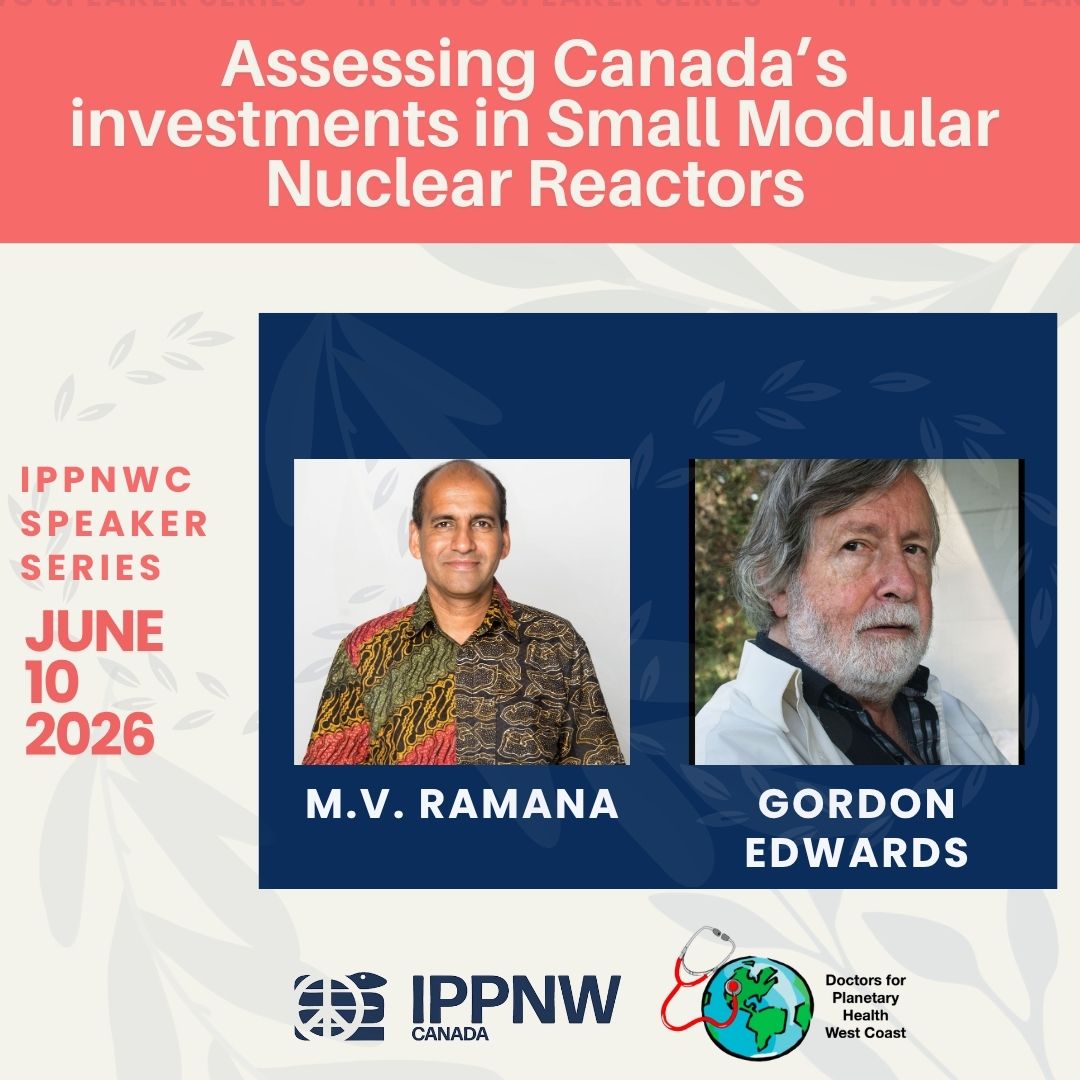
10 June – Assessing Canada’s Investments in Small Modular Nuclear Reactors – https://zoom.us/meeting/register/IiqHA5feRhaEBycOLNTJlA#/registration


Cuba Is Not a Failed State – It Is a Besieged State
PETITION: “Global Appeal to Endorse Palestinian Right of Return of Refugees”
To see nuclear-related stories in greater depth and intensity – go to https://nuclearinformation.wordpress.com
-
Archives
- June 2026 (89)
- May 2026 (306)
- April 2026 (356)
- March 2026 (251)
- February 2026 (268)
- January 2026 (308)
- December 2025 (358)
- November 2025 (359)
- October 2025 (376)
- September 2025 (257)
- August 2025 (319)
- July 2025 (230)
-
Categories
- 1
- 1 NUCLEAR ISSUES
- business and costs
- climate change
- culture and arts
- ENERGY
- environment
- health
- history
- indigenous issues
- Legal
- marketing of nuclear
- media
- opposition to nuclear
- PERSONAL STORIES
- politics
- politics international
- Religion and ethics
- safety
- secrets,lies and civil liberties
- spinbuster
- technology
- Uranium
- wastes
- weapons and war
- Women
- 2 WORLD
- ACTION
- AFRICA
- Atrocities
- AUSTRALIA
- Christina's notes
- Christina's themes
- culture and arts
- Events
- Fuk 2022
- Fuk 2023
- Fukushima 2017
- Fukushima 2018
- fukushima 2019
- Fukushima 2020
- Fukushima 2021
- general
- global warming
- Humour (God we need it)
- Nuclear
- RARE EARTHS
- Reference
- resources – print
- Resources -audiovicual
- Weekly Newsletter
- World
- World Nuclear
- YouTube
-
RSS
Entries RSS
Comments RSS
 nuclear-news