Nuclear waste has no place to go
Nuclear waste has no place to go
Obama budget kills Nevada storage site for used radioactive fuel rods piling up near power plants
In a pool of water just a football field away from Lake Michigan, about 1,000 tons of highly radioactive fuel from the scuttled Zion Nuclear Power Station is waiting for someplace else to spend a few thousand years…………………………..
More than 57,000 tons of spent fuel rods already are stored next to reactors, just a few yards away from containment buildings where they once generated nuclear-heated steam to drive massive electrical turbines. More than 7,100 tons are stored in Illinois, including at the Zion facility in Chicago’s northern suburbs.The lack of a permanent solution poses a serious challenge to the industry’s plans to build more than 30 new reactors. Existing nuclear plants already produce 2,000 tons of the long-lived waste each year, most of which is moved into pools of chilled water that allow the spent—but still highly lethal—uranium-235 to slowly and safely decay.But containment pools never were intended to store all of the spent fuel that a reactor creates. The idea was that the cool water would stabilize the enriched uranium until it could be sent to a reprocessing plant or stored in a centralized location.Instead it keeps piling up. And though industry officials insist the waste is safely stored in fenced-off buildings lined with concrete and lead, concerns remain that a leak or a terrorist attack could create an environmental catastrophe.As power companies run out of space in their containment pools, they increasingly are storing the waste above ground in concrete and metal casks; the Zion plant’s spent fuel rods eventually are to be moved into casks a little farther away from Lake Michigan.
“We continue to ask the federal government to provide a clear solution for what the long-term storage of spent fuel will be,” said Marshall Murphy, spokesman for Exelon Nuclear, which owns Illinois’ plants.
Federal Court Rules that Certain Types of Radioactive Waste Can’t Be Stored at Hanford Indefinitely
Federal Court Rules that Certain Types of Radioactive Waste Can’t Be Stored at Hanford Indefinitely
KPLU 88.5 Anna King RICHLAND, WA (2009-03-11) The federal Ninth District Court of Appeals has ruled that Washington State doesn’t have to store other states’ dangerous radioactive waste forever. It also ruled that the state has the right to enforce cleanup deadlines for certain kinds of waste at the Hanford Nuclear Reservation near the Tri-Cities.
Groups petition against new nuclear plant
Groups petition against new nuclear plant
Monroe News by Charles Slat ,March 10. 2009 A coalition of citizen groups is asking federal regulators reject DTE Energy’s plans to build a new Fermi 3 nuclear plant, contending that it would pose a range of threats to public health and the environment.
The groups have filed 14 contentions with the federal Nuclear Regulatory Commission, claiming that a new plant would pose “radioactive, toxic and thermal impacts on Lake Erie’s vulnerable western basin.”DTE Energy, which already operates the Fermi 2 reactor near Newport, is considering building a Fermi 3 plant at the same site, using a new and as-yet unapproved, design.“For starters, this plant is not needed and we’re prepared to demonstrate that,” said Michael Keegan of Monroe and member of Don’t Waste Michigan, one of the groups opposing the project. “We have national experts and former NRC commissioners — some of the nation’s best minds — who helped compile this document.”
“The proposed Fermi 3 would represent another half-century of safety and security risks for the Great Lakes shoreline,” he said. “Many concerned local residents don’t want to play yet another round of radioactive Russian roulette.”The groups say that the environmental impacts of the proposed plant have not been determined adequately and the government probably should determine the plant’s environmental impact on a regional basis rather than more local impact.Other contentions are that there is no good way to dispose of the radioactive wastes and fuel the plant generates and that the design of the plant DTE is considering should be approved before the licensing process begins.
Greenpeace energy report projects cheap, clean power — and more jobs |
Greenpeace energy report predicts cheap, lean power – and more jobs Los Angeles Times March 11, 2009 “…………………… by 2050, the United States could sever ties with coal and nuclear power, draw nearly all its electricity from renewable sources and cut its greenhouse gas emissions by more than 80% –- all with existing technology and with a net gain of 14 million jobs to the domestic economy.
The report, commissioned by Greenpeace and the European Renewable Energy Council and conducted by Germany’s equivalent of NASA, was released this morning at a press briefing in Washington. It is heavy on charts and supporting data and transparent on some key assumptions. And its sponsors call its findings “conservative.”At its core, the report envisions a steep drop in the United States’ energy use, both in absolute terms and compared with International Energy Agency predictions — driven by strict efficiency standards. It also projects dramatic changes in the nation’s electricity mix, with wind and solar power mushrooming to replace coal, oil and nuclear sources that would gradually go offline.
The report includes some fairly stark trade-offs. More than 10 million coal-related jobs would disappear by 2050, it concludes, but they’d be more than replaced by 9 million efficiency-related jobs, 11 million solar-related jobs and 4 million wind-related jobs.
Because solar and wind plants don’t require recurring fuel costs to operate, the authors say, the long-term fuel savings would more than double the up-front investment needed to spur those changes. And they’re not counting what they call massive additional savings from reducing greenhouse gas emissions to avoid what many scientists warn could be catastrophic economic effects from global warming.
Wind Energy And Solar Power – 40% By 2050? :
Wind Energy And Solar Power – 40% By 2050? 12 MARCH, 2009 he International Scientific Congress on Climate Change is currently taking place in Copenhagen. The congress has received almost 1,600 scientific contributions from researchers from more than 70 countries, including Australia.
Among the submissions and presentations is research from the Helsinki University of Technology’s Advanced Energy Systems that states renewable energy technologies like wind and solar power could supply 40 percent of the world’s electricity by 2050.
According to the University’s Peter Lund, the findings show that with global political support and suitable investment, previous estimations for the potential for renewables making up a much smaller fraction of world demand were wrong – the issue is simply one of prioritisation. All the renewable energy industry needs is the same level of support as provided to fossil fuel and nuclear power generation industries………………………..The results of the conference will be presented to world leaders later this year in Copenhagen for the post-Kyoto negotiations at the United Nations Climate Change Conference (COP15
Wind Energy And Solar Power – 40% By 2050? : Renewable Energy News
How France Sees Its Nuclear-Powered Future
How France Sees Its Nuclear-Powered Future It expands the use of nuclear energy at home and seeks to increase nuclear-technology sales abroad USNews.com By Eduardo Cue March 10, 2009 PARIS—……………………..Opponents are warning that the new nuclear plants are too costly and will produce more dangerous waste that contains significantly higher levels of radioactive material. …………………..
The lack of real debate here until recently, critics say, was less a vote of public support than a failure in the French political system. “Nobody asked the French people what they thought,” remarks Jean-Philippe Desbordes, author of Atomic Park, a book critical of the French program. “France is much less democratic than the United States.”…………………………In January, President Nicolas Sarkozy announced the construction of a new-generation European pressurized water reactor, or EPR, in Penly in northern France………………………….The decision to build the Penly plant was quickly challenged by environmentalists, who say high levels ofradioactivity from the new plant will pose a serious health risk to workers and that nuclear waste will have to be stored above ground for a longer period than has been the case to date. “Despite the French government’s global marketing of its flagship European Pressurized Reactor as cheap and safe,” the environmental group Greenpeace said in a statement, “nuclear energy is rapidly becoming the most expensive way to produce electricity, and its highly radioactive waste poses an ever- increasing problem.”
In announcing the construction of the Penly plant, the second in the series, the French government is hoping that building the reactor will persuade potential foreign clients to import the technology. Although no EPRs are now operating, two are currently under construction, one in Finland at Olkiluoto and the other in Flamanville in France’s Normandy region. The Finnish reactor has faced serious construction problems, including flawed pipes and waterlogged concrete, that have delayed its original April 2009 completion date by three years and led to cost overruns of 50 percent……………….
…………….The downside, according to critics, is that in the case of the French program, the government simply decided to trivialize the risks by placing the nuclear power plants near where people live, thereby giving a false sense of security as the installations came to be seen as part of the landscape.
Truth short-lived at EnergySolutions
Truth short-lived at EnergySolutions
Deseret News By Vanessa Pierce March 10, 2009 If truth were a type of nuclear waste, it might have a very short half-life. At times, anyway, it seems to decay faster in the hands of Energy-Solutions.
Take, for instance, the proclamation CEO Steve Creamer made to this newspaper in 2005 when asked what he would ask in return for giving up his company’s push to bring hotter classes of waste to Utah: “Not a thing. . . . We’re not going to be back asking for anything else. We’re happy.”
Two weeks later, the company quietly announced plans to double the size of its commercial radioactive waste dump—already the country’s largest. How long did it take for truth to decay in that instance? Two weeks.
Sometimes the truth at Energy?Solutions takes a little longer to decay. The company now wants to bring the world’s nuclear waste to Utah. But eight years ago, the state of Utah was given the company’s promise by then-Vice President Ken Alkema “that it will not take out-of-country wastes.” Not only has the company reneged on that commitment, apparently, it reneged on its word that same year.
Company spokeswoman Jill Sigal announced last week on RadioWest that EnergySolutions has been accepting “internationally generated material at Clive for over eight years.”
Do the math and you realize that EnergySolutions has been accepting foreign waste since 2001 — the same year the company informed the state that it would not be accepting such waste streams.
But even though it can be hard to determine how long the truth will last at EnergySolutions, we’re now being asked to take the company’s word that foreign nuclear waste is harmless, will take up the tiniest portion of its dump site and bring us billions.
France’s nuclear wastes
Obama overturns war on science Rolling Stone 9 March 09 “…………………………………………………….There is a reason why France can get away will looking like it has clean nuclear energy. France ships the waste to Russia (big security risk for France). The U.S. can’t do that. Few states will take the waste and few states even want a reactor in their back yard. …………………………
Obama Overturns War on Science : Rolling Stone : National Affairs Daily
Paladin Energy chairman sells 500,000 shares – Insiders – FP Trading Desk
Paladin Energy chairman sells 500,000 shares – Insiders Financial Post Trading Desk March 10, 2009, by Jonathan RatnerUranium, Market Call, SEDI, Insiders, PaladinRick Crabb, chairman at Paladin Energy Ltd., sold 500,000 company shares through Rick Wayne Crabb and Carol Jean Crabb between Feb. 27 and March 6, 2009. These shares were sold for prices ranging from $2.29 to $2.45 each, bringing these holdings to 4,698,050 shares. Paladin………… focuses on uranium projects in Africa and Australia, ……….
……… In an interview with WA Business News last week, Mr. Crabb said his recent share sales were part of an effort to improve his “personal balance sheet” …………………………………
Paladin Energy chairman sells 500,000 shares – Insiders – FP Trading Desk
New Nuclear Reactors Will Produce More Radiation
 New Nuclear Reactors Will Produce More Radiation Along With More Electricity
About by Larry West March 9, 2009
A new generation of nuclear reactors designed to generate more electricity more safely than previous technology may actually produce radioactive waste that is more toxic and would be released more quickly in case of a nuclear accident, according to information contained in industry documents and brought to light by Greenpeace.
……………….. Safety features built into EPR reactors would make a nuclear accident less likely than ever before, but one study suggests that an EPR reactor or waste accident could kill nearly twice as many people as an accident at one of the atomic reactors they are designed to replace.
The study, conducted by independent nuclear consultant John Large, compared the consequences of an accident at the new EPR reactor being constructed in Normandy with one at an existing reactor in the same area. Large concluded that, in the worst case, the number of deaths would increase from 16,000 to more than 28,000.
EPR reactors are designed to burn nuclear fuel almost twice as thoroughly as atomic reactors, but that process also increases the toxicity of the nuclear waste EPR reactors produce. Various industry documents show that, compared to atomic reactors, EPR nuclear reactors would produce:
- Four more radioactive bromine, rubidium, iodine and caesium, according to a report by EDF, the French company that is planning to build four EPR reactors in the UK;
- Seven times as much iodine 129, according to Posiva Oy, a nuclear waste company owned by two Finnish companies that build nuclear reactors; and
- Eleven times as much caesium 135 and 137, according to the Swiss National Cooperative for the Disposal of Radioactive Waste.
The most troubling thing about these reports is not the specter of a potentially deadly nuclear accident—despite some problems, the nuclear industry has a remarkably good safety record when it comes to operating reactors—but rather that the nuclear industry failed to put all of its cards on the table while selling EPR technology as a safer alternative to atomic reactors.
Future Dim for Nuclear Waste Repository
Future Dim for Nuclear Waste Repository
The New York Times By MATTHEW L. WALD
Published: March 5, 2009
WASHINGTON — President Obama’s proposed budget cuts off most money for the Yucca Mountain nuclear waste project, a decision that fulfills a campaign promise and wins the president political points in Nevada — but raises new questions about what to do with radioactive waste from the nation’s nuclear power plants.
The decision could cost the federal government additional billions in payments to the utility industry, and if it holds up, it would mean that most of the $10.4 billion spent since 1983 to find a place to put nuclear waste was wasted.
A final decision to abandon the repository would leave the nation with no solution to a problem it has struggled with for half a century.
Lawyers are predicting tens of billions of dollars in damage suits from utilities that must pay to store their wastes instead of having the government bury them, with the figure rising by about a half-billion dollars for each year of additional delay.
The courts have already awarded the companies about $1 billion, because the government signed contracts obligating it to begin taking the waste in 1998, but seems unlikely to do so for years. The nuclear industry says it may demand the return of the $22 billion that it has paid to the Energy Department to establish a repository, but that the government has not yet spent.
The spent fuel that emerges from nuclear power plants has been accumulating for decades in steel-lined pools or giant steel-and-concrete casks near the reactors……………………….. Scientific concerns have since emerged, including the realization that water flows through Yucca Mountain a lot faster than initially believed. That raises the prospect that the nuclear waste would leach over time, polluting the water table. The scientific merit of the site has not been established by independent judges……………… Opponents of nuclear power contend that the nation’s failure to find a permanent repository for the waste is a reason to shut down nuclear reactors and forget about building more.
Abandonment of the Yucca Mountain depository would be a blow for the nuclear industry, which is hoping to begin work on new reactors for the first time in 30 years.
Washington Century: Safe investments
Washington Century: Safe investments
Seattle.pi.com March 8, 2009 The legacy of dangerous waste at the Hanford Nuclear Reservation has defied resolution for decades.
The federal government must meet its responsibility to the public, the land and the environment. The state’s responsibility is to hold the feds to their promises and their larger moral obligations to a region that gave unselfishly to the atomic efforts judged necessary by the nation’s leadership during World War II.
…………………. The Bush administration’s dangerous pro-nuclear agendas on both electrical power and weapons were problems, even as Energy Secretary Samuel Bodman tried to maintain a decent commitment to cleaning up waste at Hanford.
The signs are more encouraging with President Barack Obama. As Murray noted recently, the federal stimulus bill gave a good boost to an environmental management account that has traditionally helped Hanford.
No one should fool themselves about the likelihood of smooth, steady progress on remediating the huge amounts of waste that threaten workers and the environment, especially the Columbia River. The nation has done a remarkably poor job of addressing even the most blatant human consequences of nuclear weapons testing and production even in this country. As Seattle author Holly Barker says, it’s been even worse for those who were abroad, including Marshall Island residents, some of whom some now live here. They were essentially treated as human guinea pigs, and still have little help in dealing with the consequences.
Solving Hanford’s waste problems cannot be separated from larger decisions. Society may well continue to create troubles faster than a cleanup resolves them, from Hanford to Pakistan. The allure of nuclear reactors continues to grip many, despite the decades of failure to secure waste permanently from natural or terrorist forces.
EnergySolutions clarifies controversial remarks
EnergySolutions clarifies controversial remarks
March 9th, 2009 @ 8:53am
By Mary Richards
SALT LAKE CITY — EnergySolutions is on the defensive after its top company official made some claims about the safety of its radioactive waste.
A group fighting EnergySolutions, Healthy Environment Alliance (HEAL) of Utah, is asking state officials to look into claims about the company’s nuclear waste.
HEAL Utah says EnergySolutions is making public claims that imply the waste is safer than it really is. For example, a state senator asked EnergySolutions CEO Steve Creamer if the company’s nuclear waste was safe enough to use in a garden. He said it probably was. …………………… The Salt Lake Tribune reports a lobbyist suggested the waste is safe enough to eat. HEAL Utah’s executive director, Vanessa Pierce, says Creamer told the Deseret News that in 100 years the EnergySolutions site would be clean enough for people to build homes and grow potatoes there.
“We feel that it’s dangerous for the company to be downplaying the danger of the waste they take in such a flippant way,” Pierce said.
She says she has asked the state’s radiation control board to take up the issue at its meeting tomorrow.
“We just felt like it was time to have the state speak up and say look, you can’t grow food at a nuclear waste dump site, even 100 years from now,” she said.
Radioactive waste to be kept above ground at Diablo Canyon
Radioactive waste to be kept above ground at Diablo Canyon
KSBY-TV
March 6, 2009
Reported by: Kelly Bush
The Diablo Canyon nuclear power plant will have to keep its radioactive waste in above ground containers, at least for now.
…………. he proposed Yucca Mountain storage facility in Nevada is no longer an option.
At a hearing Thursday, Chu said the waste can stay at power plants while the Obama administration comes up with another plan.
Last August PG&E won a lawsuit against the Department of Energy. The court ruled the company should get back more than $200 million it spent on storage while waiting for the Nevada facility to be completed.
One island for nuke waste?
One island for nuke waste?
Mb.com .ph By Atty. Romeo V. Pefianco
March 10, 2009, 12:00am
(Editor’s note: Telling 92.2 M of us that one island, of our 7,000, can be converted into a safe nuclear waste facility won’t do as noted by the author.
EVERYTHING seems easy to some proponents to make the Bataan nuclear plant generate energy for the first time in the unseen future: 1) only $1 billion R48,500,000,000) is needed and 2) just one of our 7,000 islands for waste disposal will suffice……………….. Of course, the 113,000 people living within 50 miles of Carlsbad, and the many New Mexicans beyond that radius were understandably opposed and fought its operation since the site was first proposed in 1974.
Carlsbad is not a facility for hazardous/radioactive waste from nuclear plant/reactor fuel as represented by the geologist………………
1 This Month
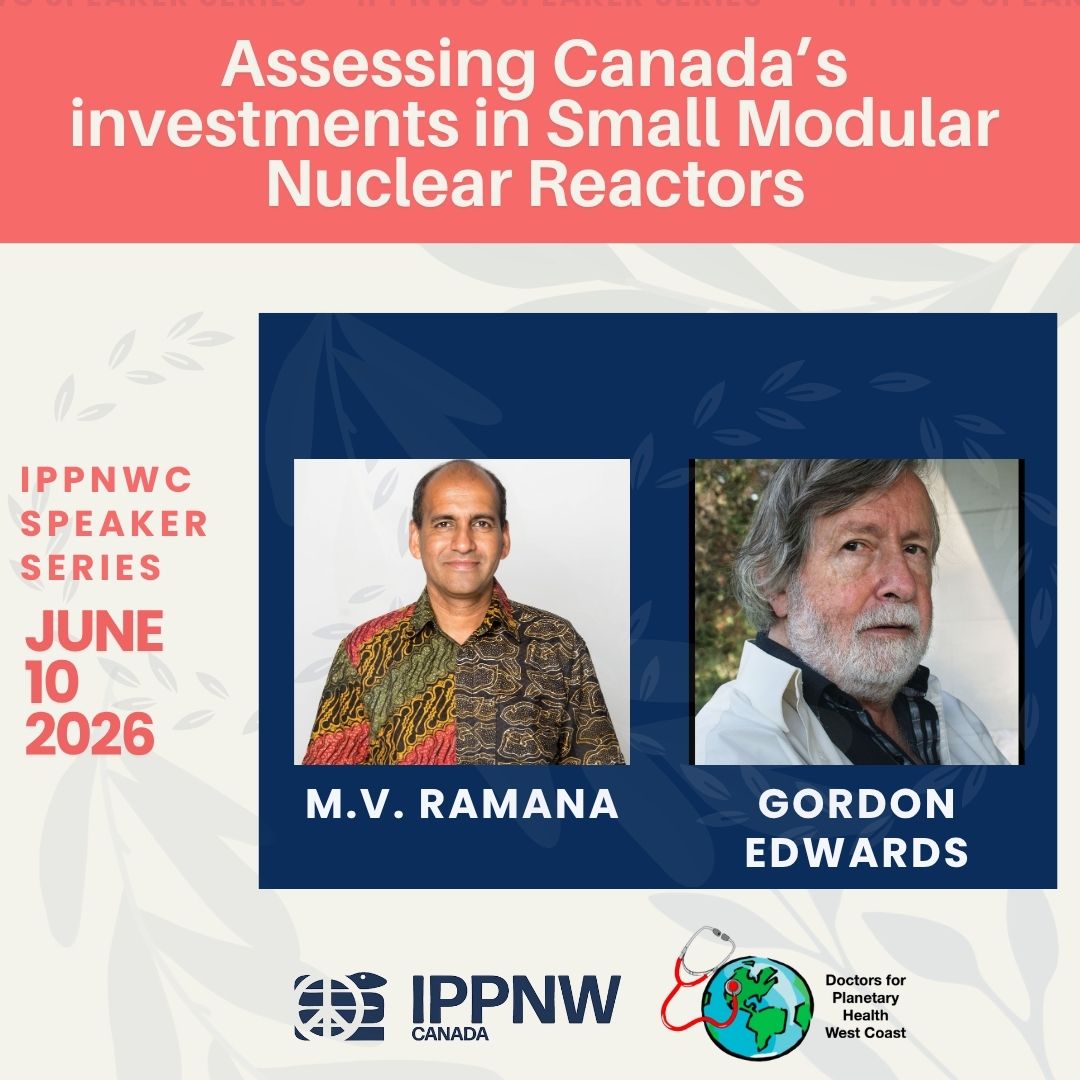
10 June – Assessing Canada’s Investments in Small Modular Nuclear Reactors – https://zoom.us/meeting/register/IiqHA5feRhaEBycOLNTJlA#/registration


Cuba Is Not a Failed State – It Is a Besieged State
PETITION: “Global Appeal to Endorse Palestinian Right of Return of Refugees”
To see nuclear-related stories in greater depth and intensity – go to https://nuclearinformation.wordpress.com
-
Archives
- June 2026 (89)
- May 2026 (306)
- April 2026 (356)
- March 2026 (251)
- February 2026 (268)
- January 2026 (308)
- December 2025 (358)
- November 2025 (359)
- October 2025 (376)
- September 2025 (257)
- August 2025 (319)
- July 2025 (230)
-
Categories
- 1
- 1 NUCLEAR ISSUES
- business and costs
- climate change
- culture and arts
- ENERGY
- environment
- health
- history
- indigenous issues
- Legal
- marketing of nuclear
- media
- opposition to nuclear
- PERSONAL STORIES
- politics
- politics international
- Religion and ethics
- safety
- secrets,lies and civil liberties
- spinbuster
- technology
- Uranium
- wastes
- weapons and war
- Women
- 2 WORLD
- ACTION
- AFRICA
- Atrocities
- AUSTRALIA
- Christina's notes
- Christina's themes
- culture and arts
- Events
- Fuk 2022
- Fuk 2023
- Fukushima 2017
- Fukushima 2018
- fukushima 2019
- Fukushima 2020
- Fukushima 2021
- general
- global warming
- Humour (God we need it)
- Nuclear
- RARE EARTHS
- Reference
- resources – print
- Resources -audiovicual
- Weekly Newsletter
- World
- World Nuclear
- YouTube
-
RSS
Entries RSS
Comments RSS
 nuclear-news